LITERARY APPROACHES:
STRUCTURALISM/FORMALISM
EN10RC-IIIA-22
OBJECTIVES:
1.Define Structuralism and Formalist approach
2.Differentiate Structuralism from Formalist approach
3.Critique a literary selection based on the following
approaches:
Structuralism
Formalism
REVIEW
1. This is an element of the story that refers to the people or
person who faces the conflict in the story.
2. This is an element of the story that refers to place and time the
story happens.
3. This is an element of the story that narrates the sequence of the
story.
4. This is an element of the story that refers to the central idea of
the story.
5. This is the struggle of the protagonist that he needs to face. This
gives the sense and highlight of the story.
FORMALISM
studies text as a text
CHARACTERS
Static- character who does not change overtime.
Dynamic- character whose personality changes
overtime.
Are the characters physically described? How detailed are these
descriptions, and who gives them to you? (a narrator? or another
character? reliability?)
How do the character's words and actions characterize him/her/it?
What is the character's motivation for the decisions and actions he/she/it
makes?
Are the character's actions believable, given the setting and situations in
the novel?
How do the characters, their actions and motivations, contribute to the
novel's theme?
SETTING
an existing circumstance, situation or state affecting the life,
welfare and relations of human beings in community.
weather condition and social condition
SETTING
poverty
quality of housing
homelessness
unemployment
wage levels (income)
rates of crime
accessibility of safe places to play and
exercise
availability of transportation to jobs that
provide a living wage
availability of sources of nutritious food in a
neighborhood.
Does the setting play an important role in revealing
any element of the novel?
What information does the setting give me about a
situation or a character?
What influence does the setting have on the
characters or their actions?
Does the setting contribute to the novel's theme?
PLOT
It shows the beginning of the conflict
How the character faces the conflict
The effect of the character’s action toward the conflict
How the conflict is solved
POINT OF VIEW
THEME
SYMBOLISM
Who speaks in the story?
What is the story all about?
deeper meaning
How does the author's choice of point of view affect the
reader's understanding and feelings about the story?
Does the point of view in the novel have a particular use?
What advantages does the author gain by using this viewpoint?
What changes in the novel would have to be made if the point
of view were changed?
Does the author's choice of point of view reveal or illuminate
his/her theme?
THEME
What lesson does the author want me (the reader)
to learn about life?
1. Which of the following refers to the evaluation,
analysis, description, or interpretation of literary
works?
A. Literary criticism
B. Literary approach
C. Literary device
2. What element in a literary work is described as the
series of related events?
A. Theme
B. Setting
C. Plot
3. What do you call the opposition of forces which is
essential to the plot?
A. Climax
B. Conflict
C. Exposition
4. What is the most exciting part of a story?
A. Exposition
B. Climax
C. Rising Action
5. Which of the following is the central or main
character in a story?
A. Antagonist
B. Protagonist
C. Confidant
6. Which among the elements of a short story refers to
the perspective of the character or narrator telling the
story?
A. Symbolism
B. Point of view
C. Theme
7. What literary criticism approach analyzes the
structure or form of each individual part of a story and
it focuses only on the text itself?
A. Moralist Approach
B. Formalist Approach
C. Marxist Approach
8. How to analyze a text using formalist approach?
A. Examine a text including the biographical information about
the author
and the effect on the reader.
B. Scrutinize the point of view, structure, social and political
ideas.
C. Analyze how the elements work together to give meaning to
the text.
9. Which of the following is TRUE about formalism?
A. It is concerned with the historical events outside of
the story, cultural, and religious beliefs.
B. It uses quick reading to get the main idea of the
text and compare it with other related works.
C. It analyzes the work as a whole, the form of each
individual part of the text from the individual scenes
and chapters, elements, and literary devices.
10.Which of these features of a text would a
formalist critic be most interested in?
A. Structure
B. Author
C. Reader
STRUCTURALISM
open to interpretation
it depends on how the reader views the meaning
on the text base on his /her understanding, which
may involve personal belief, environment,
behavior or moral perception
the main focus is on the arrangement of language, rather than
on the implications of the words, or on the biographical and
historical relevance of the work in question.
the study of literature should be exclusively about
literary devices.
excluding the cultural and sociopolitical background of a text
from its study.
exclusion of biographical, historical, or intellectual contexts.
studies should be the text itself, and not the author's life or
social class.
All the things about culture, politics, and the author’s
intent or societal influences are excluded
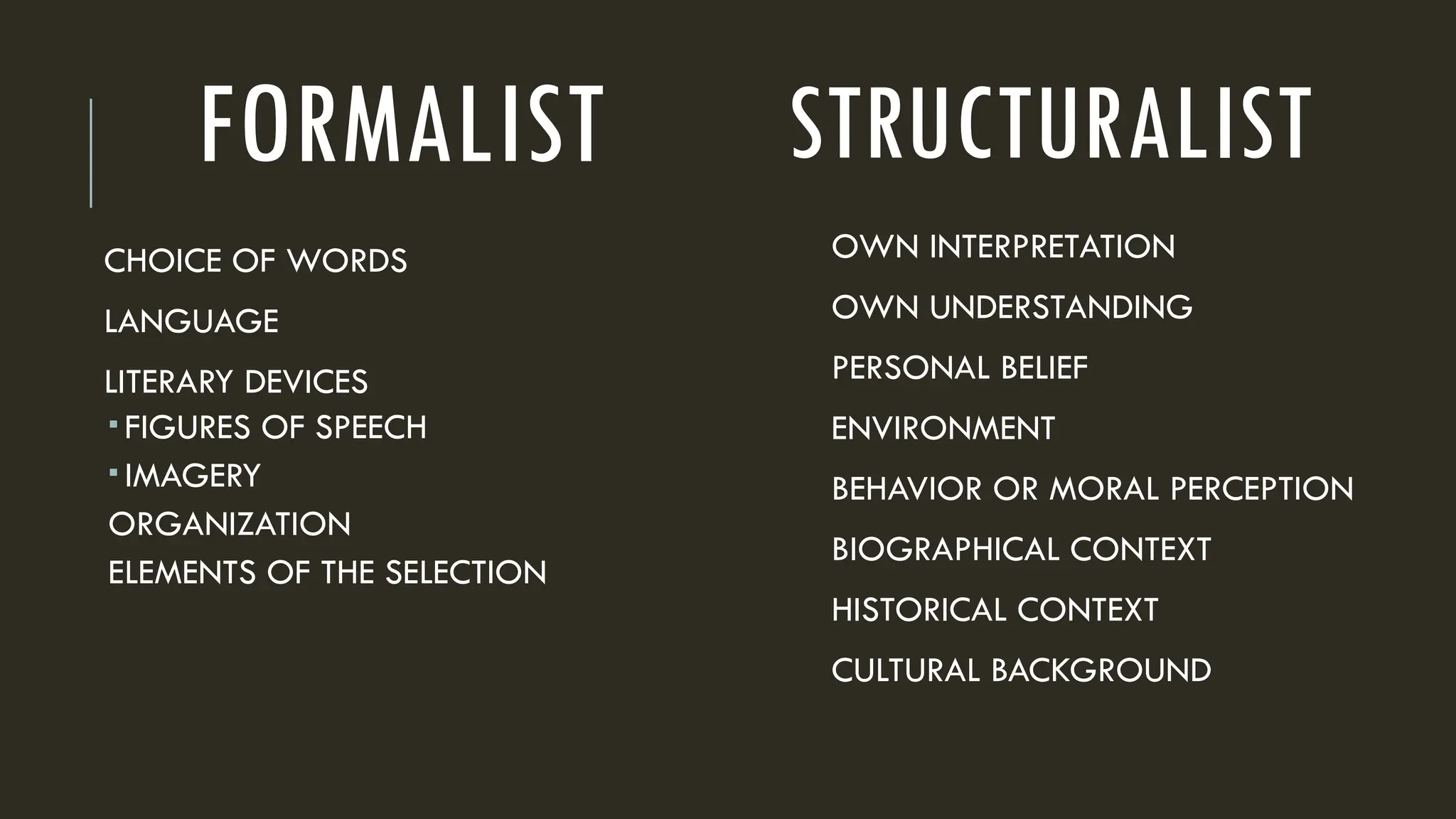
FORMALIST
CHOICE OF WORDS
LANGUAGE
LITERARY DEVICES
 FIGURES OF SPEECH
 IMAGERY
ORGANIZATION
ELEMENTS OF THE SELECTION
STRUCTURALIST
OWN INTERPRETATION
OWN UNDERSTANDING
PERSONAL BELIEF
ENVIRONMENT
BEHAVIOR OR MORAL PERCEPTION
BIOGRAPHICAL CONTEXT
HISTORICAL CONTEXT
CULTURAL BACKGROUND

GROUP1_FORMALIST-STRUCTURALIST literary approach.pptx

  • 1.
  • 2.
    OBJECTIVES: 1.Define Structuralism andFormalist approach 2.Differentiate Structuralism from Formalist approach 3.Critique a literary selection based on the following approaches: Structuralism Formalism
  • 3.
    REVIEW 1. This isan element of the story that refers to the people or person who faces the conflict in the story. 2. This is an element of the story that refers to place and time the story happens. 3. This is an element of the story that narrates the sequence of the story. 4. This is an element of the story that refers to the central idea of the story. 5. This is the struggle of the protagonist that he needs to face. This gives the sense and highlight of the story.
  • 4.
  • 5.
    CHARACTERS Static- character whodoes not change overtime. Dynamic- character whose personality changes overtime.
  • 6.
    Are the charactersphysically described? How detailed are these descriptions, and who gives them to you? (a narrator? or another character? reliability?) How do the character's words and actions characterize him/her/it? What is the character's motivation for the decisions and actions he/she/it makes? Are the character's actions believable, given the setting and situations in the novel? How do the characters, their actions and motivations, contribute to the novel's theme?
  • 7.
    SETTING an existing circumstance,situation or state affecting the life, welfare and relations of human beings in community. weather condition and social condition
  • 8.
    SETTING poverty quality of housing homelessness unemployment wagelevels (income) rates of crime accessibility of safe places to play and exercise availability of transportation to jobs that provide a living wage availability of sources of nutritious food in a neighborhood.
  • 9.
    Does the settingplay an important role in revealing any element of the novel? What information does the setting give me about a situation or a character? What influence does the setting have on the characters or their actions? Does the setting contribute to the novel's theme?
  • 10.
    PLOT It shows thebeginning of the conflict How the character faces the conflict The effect of the character’s action toward the conflict How the conflict is solved
  • 11.
    POINT OF VIEW THEME SYMBOLISM Whospeaks in the story? What is the story all about? deeper meaning
  • 12.
    How does theauthor's choice of point of view affect the reader's understanding and feelings about the story? Does the point of view in the novel have a particular use? What advantages does the author gain by using this viewpoint? What changes in the novel would have to be made if the point of view were changed? Does the author's choice of point of view reveal or illuminate his/her theme?
  • 13.
    THEME What lesson doesthe author want me (the reader) to learn about life?
  • 14.
    1. Which ofthe following refers to the evaluation, analysis, description, or interpretation of literary works? A. Literary criticism B. Literary approach C. Literary device
  • 15.
    2. What elementin a literary work is described as the series of related events? A. Theme B. Setting C. Plot
  • 16.
    3. What doyou call the opposition of forces which is essential to the plot? A. Climax B. Conflict C. Exposition
  • 17.
    4. What isthe most exciting part of a story? A. Exposition B. Climax C. Rising Action
  • 18.
    5. Which ofthe following is the central or main character in a story? A. Antagonist B. Protagonist C. Confidant
  • 19.
    6. Which amongthe elements of a short story refers to the perspective of the character or narrator telling the story? A. Symbolism B. Point of view C. Theme
  • 20.
    7. What literarycriticism approach analyzes the structure or form of each individual part of a story and it focuses only on the text itself? A. Moralist Approach B. Formalist Approach C. Marxist Approach
  • 21.
    8. How toanalyze a text using formalist approach? A. Examine a text including the biographical information about the author and the effect on the reader. B. Scrutinize the point of view, structure, social and political ideas. C. Analyze how the elements work together to give meaning to the text.
  • 22.
    9. Which ofthe following is TRUE about formalism? A. It is concerned with the historical events outside of the story, cultural, and religious beliefs. B. It uses quick reading to get the main idea of the text and compare it with other related works. C. It analyzes the work as a whole, the form of each individual part of the text from the individual scenes and chapters, elements, and literary devices.
  • 23.
    10.Which of thesefeatures of a text would a formalist critic be most interested in? A. Structure B. Author C. Reader
  • 24.
    STRUCTURALISM open to interpretation itdepends on how the reader views the meaning on the text base on his /her understanding, which may involve personal belief, environment, behavior or moral perception
  • 25.
    the main focusis on the arrangement of language, rather than on the implications of the words, or on the biographical and historical relevance of the work in question. the study of literature should be exclusively about literary devices. excluding the cultural and sociopolitical background of a text from its study. exclusion of biographical, historical, or intellectual contexts. studies should be the text itself, and not the author's life or social class.
  • 26.
    All the thingsabout culture, politics, and the author’s intent or societal influences are excluded
  • 27.
    FORMALIST CHOICE OF WORDS LANGUAGE LITERARYDEVICES  FIGURES OF SPEECH  IMAGERY ORGANIZATION ELEMENTS OF THE SELECTION STRUCTURALIST OWN INTERPRETATION OWN UNDERSTANDING PERSONAL BELIEF ENVIRONMENT BEHAVIOR OR MORAL PERCEPTION BIOGRAPHICAL CONTEXT HISTORICAL CONTEXT CULTURAL BACKGROUND

Editor's Notes

  • #4 It emphasizes the value of the text as an entity in itself. It studies how the elements work together to form unity and to give meaning to a text. It does not concern the historical events outside of the story, social, cultural, religious nor political ideas.
  • #9 How is the setting related to what we know of the characters and their actions? To what extent is the setting symbolic?