WARM-UP AND COOL-DOWN
EXERCISES
A. WARM-UP EXERCISES
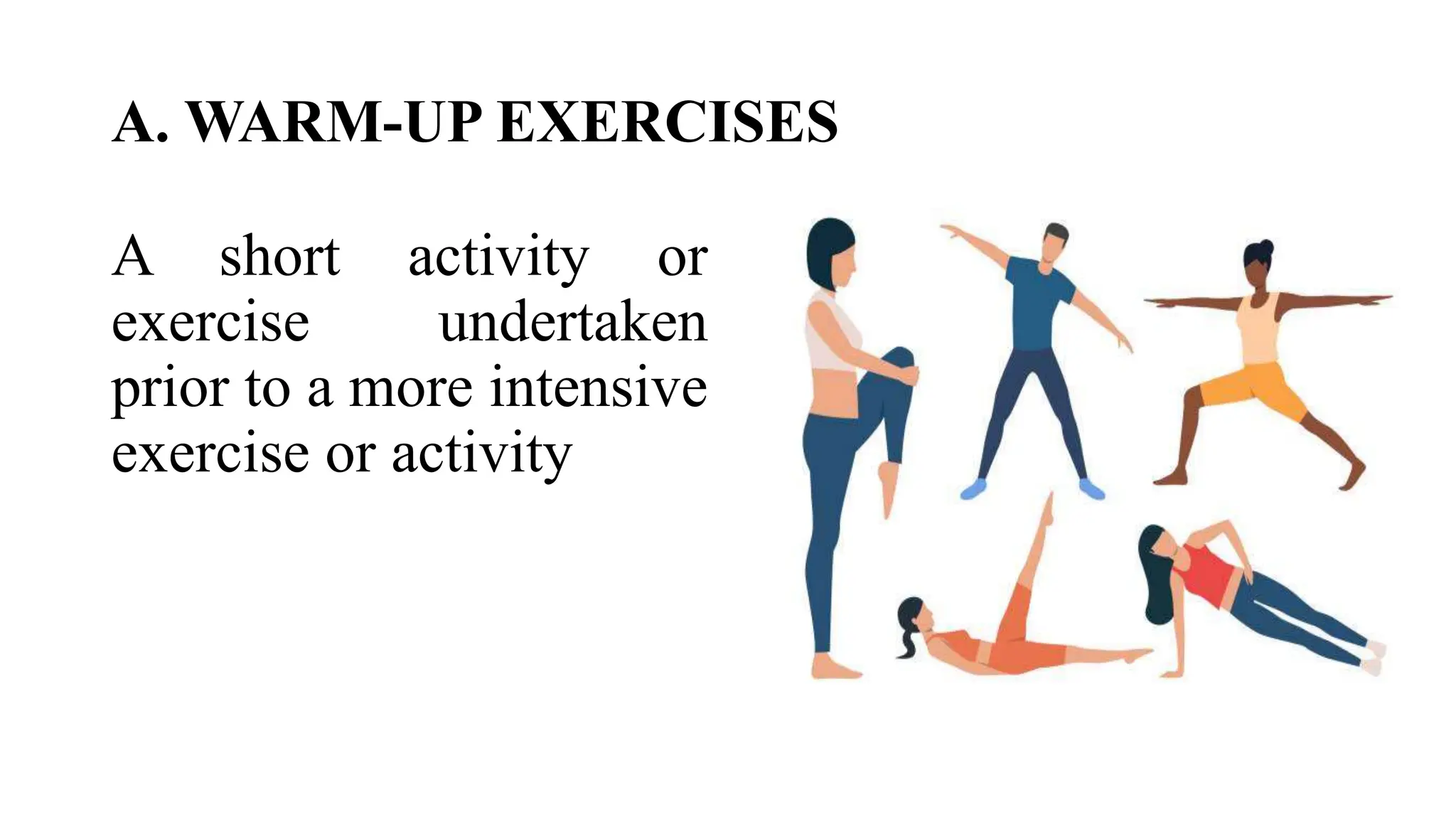
A short activity or
exercise undertaken
prior to a more intensive
exercise or activity
B. COOL-DOWN EXERCISES
The cool-down aids in
your body’s recovery after
exercise and allows blood
to return to your heart
from your muscles. This
will reduce the chance of
your muscles being sore
after exercise.
Your Body Conditions During
Moderate to Vigorous Physical
DEHYDRATION
Occurs when you use or
lose more fluid than you
take in, and your body
doesn’t have enough
water and other fluids to
carry out its normal
functions.
HEATSTROKE
A condition marked by
fever and often by
unconsciousness, caused
by failure of the body’s
temperature-regulating
mechanism when exposed
to excessively high
temperatures.
HYPOTHERMIA
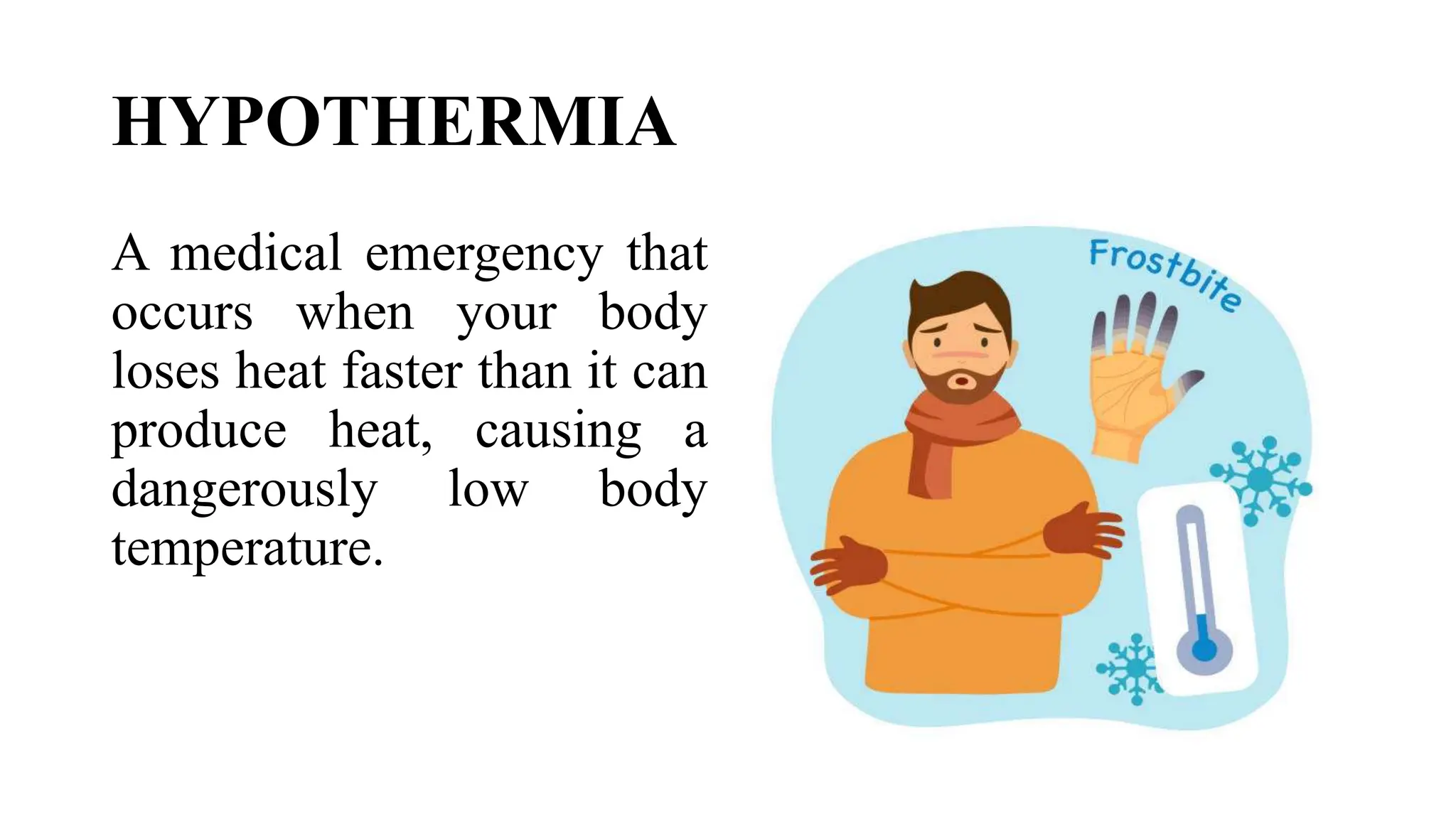
A medical emergency that
occurs when your body
loses heat faster than it can
produce heat, causing a
dangerously low body
temperature.
OVEREXERCISING/OVERTRAINING
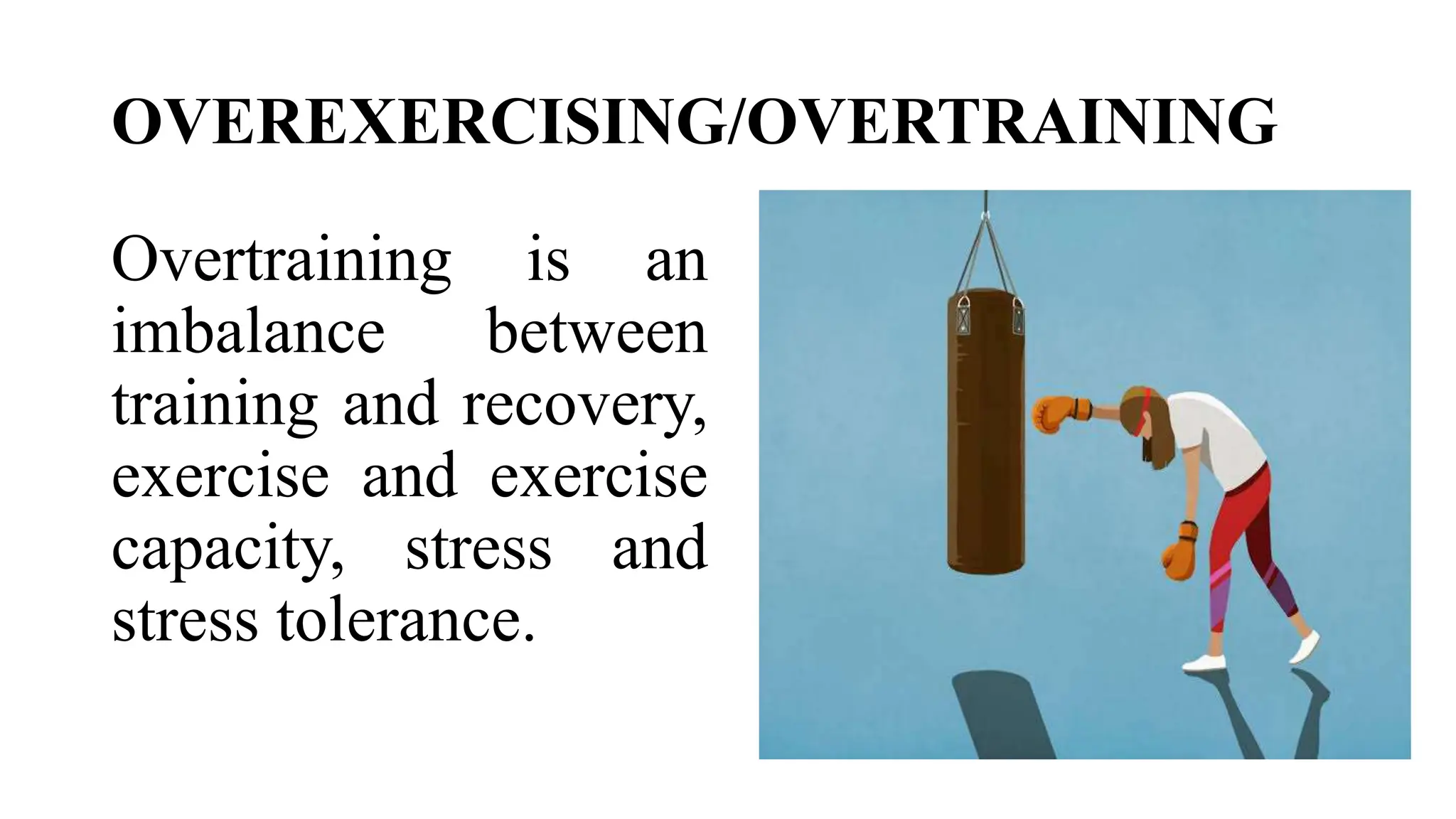
Overtraining is an
imbalance between
training and recovery,
exercise and exercise
capacity, stress and
stress tolerance.
Proper Use of Equipment and Facilities
The longevity and usefulness
of equipment depends almost
completely upon appropriate
maintenance.
A. General tips in taking care of physical
equipment and facilities (6)
1. Be sure to handle and
adjust equipment properly.
2. Keep equipment in a
permanent place to lessen
wear and tear.
3. Handle all equipment
carefully. Observe safety rules
in handling complex
apparatuses.
4. Inspect equipment regularly
for unfastened parts.
5. Apply lubrication when
needed to avoid early
deterioration.
6. Keep miscellaneous
equipment in their designated
cabinets or racks.
B. Provisions for Safety (12)
1. The place where the physical
activity is held should be cleared
of hazardous objects.
2. Risks should be eliminated.
When class is not in session, avoid
using any of the equipment in the
physical activity area. This
regulation protects the unskilled
student against attempting to
practice skills beyond the extent of
his/her ability.
3. Avoid attempting a skill beyond your
ability. Refrain from trying a skill until
your level of ability allows it.
4. Warm-up properly at the start of every
physical activity. Include slow
stretches in you warm-up routine.
5. Support classmates in order that they
may experience kinesthetic feel of a new
skill and being supported in turn. You
should be eager and willing to help
others learn new skills.
6. Develop the willingness to assist
one another. Be personally
responsible in being a “spotter” who
is always around to assist others
while performing an activity (e.g.
gymnastics, weight lifting). A
“spotter” is someone who can assist
others who are having a hard time
doing an activity.
7. Be safety conscious. Never play
with the apparatus and other
equipment. Adhere strictly to all
safety rules. Your safety is your own
responsibility.
8. Refrain from bringing food items
in the physical activity area. You
should not chew gums, eat candies,
or drink soft drinks during physical
activities.
9. Wear the proper attire when
engaged in physical activities. Proper
dress and proper shoes must be worn
at all times during practice and actual
participation. Wear the right footwear
for the specific activity you are doing
to prevent injury and to improve your
performance.
10. Remove all articles of jewelry and refrain from
using pins in your clothing.
11. Refrain from horseplay in the activity area.
Avoid running indiscriminately to avoid injury.
Behave as young ladies and gentlemen at all times.
12. Avoid loitering before or after practice. Leave
the activity area promptly after the activity.

GROUP 8 PE REPORTING.pptx

  • 1.
  • 2.
    A. WARM-UP EXERCISES Ashort activity or exercise undertaken prior to a more intensive exercise or activity
  • 3.
    B. COOL-DOWN EXERCISES Thecool-down aids in your body’s recovery after exercise and allows blood to return to your heart from your muscles. This will reduce the chance of your muscles being sore after exercise.
  • 4.
    Your Body ConditionsDuring Moderate to Vigorous Physical
  • 5.
    DEHYDRATION Occurs when youuse or lose more fluid than you take in, and your body doesn’t have enough water and other fluids to carry out its normal functions.
  • 6.
    HEATSTROKE A condition markedby fever and often by unconsciousness, caused by failure of the body’s temperature-regulating mechanism when exposed to excessively high temperatures.
  • 7.
    HYPOTHERMIA A medical emergencythat occurs when your body loses heat faster than it can produce heat, causing a dangerously low body temperature.
  • 8.
    OVEREXERCISING/OVERTRAINING Overtraining is an imbalancebetween training and recovery, exercise and exercise capacity, stress and stress tolerance.
  • 9.
    Proper Use ofEquipment and Facilities The longevity and usefulness of equipment depends almost completely upon appropriate maintenance.
  • 10.
    A. General tipsin taking care of physical equipment and facilities (6) 1. Be sure to handle and adjust equipment properly. 2. Keep equipment in a permanent place to lessen wear and tear. 3. Handle all equipment carefully. Observe safety rules in handling complex apparatuses. 4. Inspect equipment regularly for unfastened parts. 5. Apply lubrication when needed to avoid early deterioration. 6. Keep miscellaneous equipment in their designated cabinets or racks.
  • 11.
    B. Provisions forSafety (12) 1. The place where the physical activity is held should be cleared of hazardous objects. 2. Risks should be eliminated. When class is not in session, avoid using any of the equipment in the physical activity area. This regulation protects the unskilled student against attempting to practice skills beyond the extent of his/her ability. 3. Avoid attempting a skill beyond your ability. Refrain from trying a skill until your level of ability allows it. 4. Warm-up properly at the start of every physical activity. Include slow stretches in you warm-up routine. 5. Support classmates in order that they may experience kinesthetic feel of a new skill and being supported in turn. You should be eager and willing to help others learn new skills.
  • 12.
    6. Develop thewillingness to assist one another. Be personally responsible in being a “spotter” who is always around to assist others while performing an activity (e.g. gymnastics, weight lifting). A “spotter” is someone who can assist others who are having a hard time doing an activity. 7. Be safety conscious. Never play with the apparatus and other equipment. Adhere strictly to all safety rules. Your safety is your own responsibility. 8. Refrain from bringing food items in the physical activity area. You should not chew gums, eat candies, or drink soft drinks during physical activities. 9. Wear the proper attire when engaged in physical activities. Proper dress and proper shoes must be worn at all times during practice and actual participation. Wear the right footwear for the specific activity you are doing to prevent injury and to improve your performance.
  • 13.
    10. Remove allarticles of jewelry and refrain from using pins in your clothing. 11. Refrain from horseplay in the activity area. Avoid running indiscriminately to avoid injury. Behave as young ladies and gentlemen at all times. 12. Avoid loitering before or after practice. Leave the activity area promptly after the activity.