Creating Customer Value, Satisfaction,  and LoyaltyByGroup No 5AbhijeetJyotishiAparajita BhattHimansuBeheraKaranti Kumar
ContentsCustomer ValueOrganizational ChartsCustomer Perceived ValueCustomer Value AnalysisLoyaltyTotal Customer SatisfactionCustomer lifetime valueCustomer relationship managementCustomer RetentionLoyalty BuildingDatabase Management
Difference between what a customer gets from a product, and what he or she has to give in order to get it.“ the only value your company will create is the value that comes from your customers, the ones that you have now and ones you will have in the future. ”Customer Value
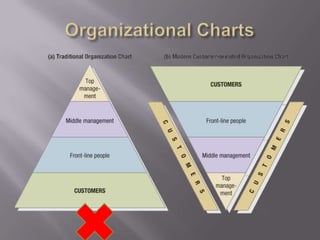
Organizational Charts
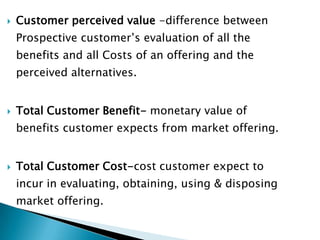
Customer perceived value -difference between Prospective customer’s evaluation of all the benefits and all Costs of an offering and the perceived alternatives.Total Customer Benefit- monetary value of benefits customer expects from market offering.Total Customer Cost-cost customer expect to incur in evaluating, obtaining, using & disposing market offering.
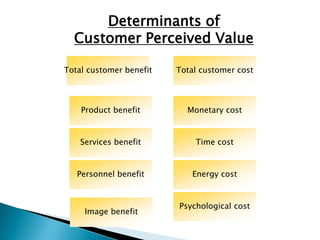
Determinants of Customer Perceived ValueTotal customer benefitTotal customer costProduct benefitMonetary costServices benefitTime costPersonnel benefitEnergy costPsychological costImage benefit
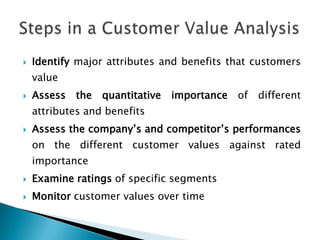
Identify major attributes and benefits that customers valueAssess the quantitative importance of different attributes and benefitsAssess the company’s and competitor’s performances on the different customer values against rated importanceExamine ratings of specific segmentsMonitor customer values over timeSteps in a Customer Value Analysis
Loyalty is a deeply held commitment to re-buy or re-patronize a preferred product or service in the future despite situational influences and marketing efforts having the potential to cause switching behavior.Value Proposition cluster of benefits company promises to the customer.What is Loyalty?
Degree of satisfaction provided by the goods or services of a firm as measured by the number of repeat customers.DissatisfiedSatisfiedDelightTotal Customer Satisfaction
Measuring SatisfactionPeriodic SurveysCustomer Loss RateMystery ShoppersMonitor Competitive Performance
Quality is the totality of features and characteristics of a product or service that bear on its ability to satisfy stated or implied needs.Conformance QualityPerformance QualityWhat is Quality?
Total profit (or loss) estimated to result from an ongoing business relationship with a customer over the life of relationship.Pareto Law (80:20 Rule)– For most of the events, roughly 80% affects come from 20% of the causes.Profitable Customer- a customer who over the time yields the revenue stream that exceeds by an acceptable amount the companies cost stream, for attracting/selling & servicing that customer.Customer Lifetime Value
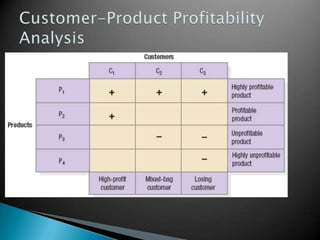
Customer-Product Profitability Analysis
CRM is the process of carefully managing detailed information about individual customers and all customer touch points to maximize customer loyalty.Customer Touch Points- Any association on which a customer encounters a brand or a product from actual experience to personal or mss communication to casual observation.What is Customer Relationship Management?
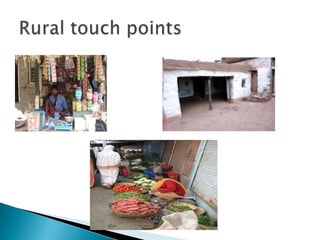
Rural touch points
Rural touch points
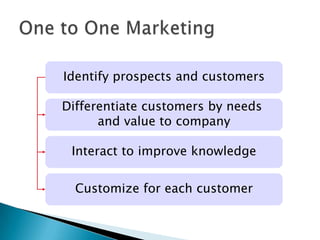
One to One MarketingIdentify prospects and customersDifferentiate customers by needs and value to companyInteract to improve knowledgeCustomize for each customer
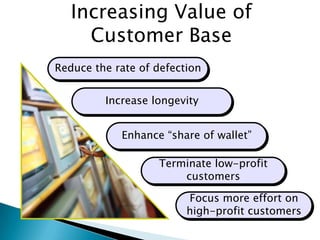
Increasing Value of Customer BaseReduce the rate of defectionIncrease longevityEnhance “share of wallet”Terminate low-profit customersFocus more effort on high-profit customers
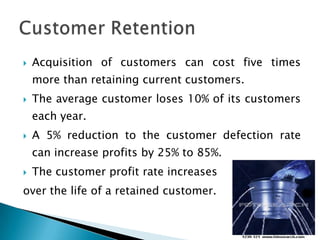
Acquisition of customers can cost five times more than retaining current customers.The average customer loses 10% of its customers each year.A 5% reduction to the customer defection rate can increase profits by 25% to 85%.The customer profit rate increases over the life of a retained customer.Customer Retention
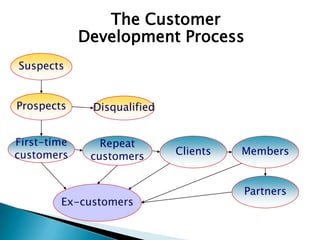
The Customer Development ProcessSuspectsProspectsDisqualifiedFirst-timecustomersRepeatcustomersClientsMembersPartnersEx-customers
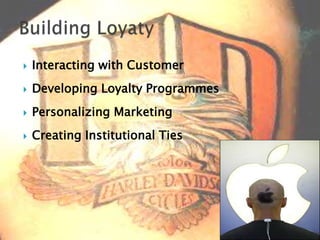
Interacting with CustomerDeveloping Loyalty ProgrammesPersonalizing MarketingCreating Institutional TiesBuilding Loyaty
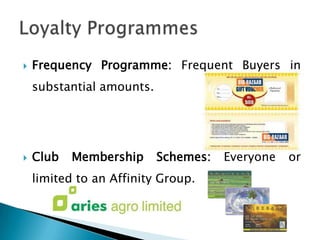
Frequency Programme: Frequent Buyers in substantial amounts.Club Membership Schemes: Everyone or limited to an Affinity Group. Loyalty Programmes
Process of building, maintaining & using Customer Databases and other Data Bases       ( product, suppliers, resellers) to contact, transact and build customer relationship.Database Marketing
Database Key ConceptsCustomer databaseDatabase marketingMailing listBusiness databaseData warehouseData mining
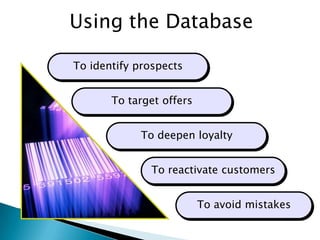
Using the DatabaseTo identify prospectsTo target offersTo deepen loyaltyTo reactivate customersTo avoid mistakes
The product is a once-in-a-lifetime purchaseCustomers do not show loyaltyThe unit sale is very smallThe cost of gathering information is too high Don’t Build a Database When
Group 5 (1)

Group 5 (1)

  • 1.
    Creating Customer Value,Satisfaction, and LoyaltyByGroup No 5AbhijeetJyotishiAparajita BhattHimansuBeheraKaranti Kumar
  • 2.
    ContentsCustomer ValueOrganizational ChartsCustomerPerceived ValueCustomer Value AnalysisLoyaltyTotal Customer SatisfactionCustomer lifetime valueCustomer relationship managementCustomer RetentionLoyalty BuildingDatabase Management
  • 3.
    Difference between whata customer gets from a product, and what he or she has to give in order to get it.“ the only value your company will create is the value that comes from your customers, the ones that you have now and ones you will have in the future. ”Customer Value
  • 4.
  • 5.
    Customer perceived value-difference between Prospective customer’s evaluation of all the benefits and all Costs of an offering and the perceived alternatives.Total Customer Benefit- monetary value of benefits customer expects from market offering.Total Customer Cost-cost customer expect to incur in evaluating, obtaining, using & disposing market offering.
  • 6.
    Determinants of CustomerPerceived ValueTotal customer benefitTotal customer costProduct benefitMonetary costServices benefitTime costPersonnel benefitEnergy costPsychological costImage benefit
  • 7.
    Identify major attributesand benefits that customers valueAssess the quantitative importance of different attributes and benefitsAssess the company’s and competitor’s performances on the different customer values against rated importanceExamine ratings of specific segmentsMonitor customer values over timeSteps in a Customer Value Analysis
  • 8.
    Loyalty is adeeply held commitment to re-buy or re-patronize a preferred product or service in the future despite situational influences and marketing efforts having the potential to cause switching behavior.Value Proposition cluster of benefits company promises to the customer.What is Loyalty?
  • 9.
    Degree of satisfactionprovided by the goods or services of a firm as measured by the number of repeat customers.DissatisfiedSatisfiedDelightTotal Customer Satisfaction
  • 10.
    Measuring SatisfactionPeriodic SurveysCustomerLoss RateMystery ShoppersMonitor Competitive Performance
  • 11.
    Quality is thetotality of features and characteristics of a product or service that bear on its ability to satisfy stated or implied needs.Conformance QualityPerformance QualityWhat is Quality?
  • 12.
    Total profit (orloss) estimated to result from an ongoing business relationship with a customer over the life of relationship.Pareto Law (80:20 Rule)– For most of the events, roughly 80% affects come from 20% of the causes.Profitable Customer- a customer who over the time yields the revenue stream that exceeds by an acceptable amount the companies cost stream, for attracting/selling & servicing that customer.Customer Lifetime Value
  • 13.
  • 14.
    CRM is theprocess of carefully managing detailed information about individual customers and all customer touch points to maximize customer loyalty.Customer Touch Points- Any association on which a customer encounters a brand or a product from actual experience to personal or mss communication to casual observation.What is Customer Relationship Management?
  • 15.
  • 16.
  • 17.
    One to OneMarketingIdentify prospects and customersDifferentiate customers by needs and value to companyInteract to improve knowledgeCustomize for each customer
  • 18.
    Increasing Value ofCustomer BaseReduce the rate of defectionIncrease longevityEnhance “share of wallet”Terminate low-profit customersFocus more effort on high-profit customers
  • 19.
    Acquisition of customerscan cost five times more than retaining current customers.The average customer loses 10% of its customers each year.A 5% reduction to the customer defection rate can increase profits by 25% to 85%.The customer profit rate increases over the life of a retained customer.Customer Retention
  • 20.
    The Customer DevelopmentProcessSuspectsProspectsDisqualifiedFirst-timecustomersRepeatcustomersClientsMembersPartnersEx-customers
  • 21.
    Interacting with CustomerDevelopingLoyalty ProgrammesPersonalizing MarketingCreating Institutional TiesBuilding Loyaty
  • 22.
    Frequency Programme: FrequentBuyers in substantial amounts.Club Membership Schemes: Everyone or limited to an Affinity Group. Loyalty Programmes
  • 23.
    Process of building,maintaining & using Customer Databases and other Data Bases ( product, suppliers, resellers) to contact, transact and build customer relationship.Database Marketing
  • 24.
    Database Key ConceptsCustomerdatabaseDatabase marketingMailing listBusiness databaseData warehouseData mining
  • 25.
    Using the DatabaseToidentify prospectsTo target offersTo deepen loyaltyTo reactivate customersTo avoid mistakes
  • 26.
    The product isa once-in-a-lifetime purchaseCustomers do not show loyaltyThe unit sale is very smallThe cost of gathering information is too high Don’t Build a Database When