Benefits of 3D BIM in Engineering Project
(For Hospital Building)
(Session 2023-24)
Presented by:
Vaibhav Kumar (2000290000051)
Sachin Gupta (2000290000035)
Amit Kumar Yadav (2100290009002)
Prashant Kumar (2000290000032)
Shivang Baghel (2000290000042)
Guided by:
MR. SIDDHARTH JAIN
KIET GROUP OF INSTITUTIONS, GHAZIABAD
Contents:
 Abstract
 Introduction
 Literature Review
 3D Modeling process
 Conclusion
Abstract
 3D modeling is the process of developing a mathematical representation of any surface
of an object in three dimensions via specialized software. The product is called a 3D
model.
 Using 3D building models is extremely helpful throughout the architecture engineering
and construction (AEC) lifecycle. Such models coupled with virtual walk through can
enable customers to decide and be satisfied with their dream building.
 This seminar introduces and reviews a mechanism for applying interior and exterior
design constructs after the conversion of 2D drawings into 3D Building Information
Model (BIM) using BIM software
 BIM software incorporates an object orientated modeling concept where building
elements are represented in 3D with rich semantic objects and attributes containing
information about each building element.
 Revit the latest innovation in BIM which is taking an already impressive piece of
programming to the next level with a new array of features and capabilities. Revit has
changed the architecture design, drafting and modeling processes by accomplishing
substantial improvements in precision and efficiency.
 With Revit software, architectural designers can now rapidly sketch out rough layouts of
a floor plan, or make changes to the standard set of building designs and instantly let their
customers preview their future homes.
Building information modeling (BIM)
 BIM is the foundation of digital transformation
 Intelligent Model Based Process
 Connects teams, workflows and data across the entire project lifecycle
 Allows better outcomes for the business, industry, and the built world
 Facilitates the development of digital twins
 Supports connected construction by improving collaboration, reducing risk, and delivering
better construction projects
 BIM data is best realized by all project partners in a common data environment (CDE)
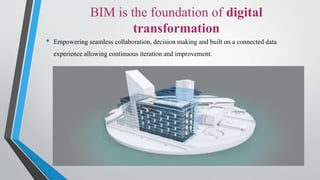
BIM is the foundation of digital
transformation
• Empowering seamless collaboration, decision making and built on a connected data
experience allowing continuous iteration and improvement.
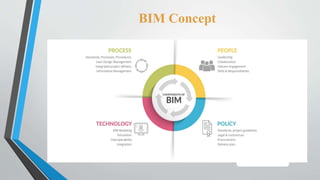
BIM Concept
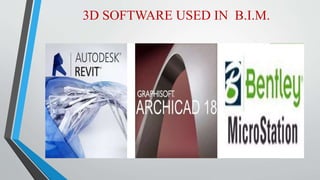
3D SOFTWARE USED IN B.I.M.
DESIGN ANALYSIS SOFTWARE USED IN
B.I.M.
SCHEDULING SOFTWARE USED IN B.I.M.
LITERATURE REVIEW
1. Build-IT - An Interactive Web Application for 3D Construction, Interior & Exterior design by
Renien Joseph & Udayangi Perera:
This project introduces and reviews a mechanism for applying interior and exterior design
constructs after the conversion of 2D drawings into 3D Building Information Model (BIM). This
research demonstrates an automated 3D model reconstruction of real world object from an un-
calibrated image sequence targeting the same scene; which can be used for interior and exterior
design. This module will help to create a 2D architectural drawing and automatically converts to 3D
architectural drawing. This is where the project Build-IT attempts to be developed with unique
features to solve the above critical problems. Build-IT framework is a user friendly 3D visualizer
and 3D editor which help to design the users dream building without needless expenses and in a
short time period. The 3D editor will use mathematical techniques to convert the 2D structural
sketches to 3D models specially using BIM software.
2. BIM Standard in Off-Site Construction by Nawari O. Nawari :
Building Construction is known among the most complex of all undertakings. This study
reviews the importance of BIM standard in off-site construction and its role in data exchanges.
It describes exchanges for the complete cycle of information sharing between all parties to the
process and outlines many directions in which further development is required. The paper
focuses on the IDM development and addresses progresses and needs to advance BIM
standard in off-site construction. The development of IDM for off-site construction begins
with definitions of data exchange functional requirements and workflow scenarios for
exchanges between architects, engineers, manufacturers, erectors, and general contractors. The
definitions of workflows in this IDM are tied into an overall process, as a typical illustrative
schedule, not as a prescriptive process. It is laid out to provide a structure for addressing
different off-site construction case exchanges. BIM standard in off-site construction will
facilitate more reliable information exchange between project participants, improve
information quality, and improve decision making more effectively.
3. Photo based 3D modelling of Construction Resouces for Visualisation of Operations :
Simulation case of Modeling Precast Facade by Fei Dai & Ming
In this paper, algorithms of Photogrammatery is been computed and application of modeling
was present to produce a model of Facade in 3D based on Digital pictures taken at a building
site. 3D Modeling of components have been largely created by Computer Aided Design(CAD)
or by proprietary code for virtual reality development. In general, such 3D modeling methods
entail accurate geometric definition but prove to be time consuming and expensive. Unlike
CAD modeling, the surveying technique of Photogrammetry takes a completely different
approach by deriving metric information about an object through measurements conducted on
photos of the objects. The resultant 3D models may well satisfy application needs in
construction simulation visualisation in 3D. In this study 3D Facade model was found to be
acceptable and Realistic for being incorporated into a 3D animation of the Facade installation
operations simulation.
4. Innovative Approach to the Substation Design using Building Information
Modeling (BIM) Technology by Mario Kokorus & Wolfgang Eyrich:
The rising power demand, on aging infrastructure, causes more and more issues, right
up to blackouts. There is a national need for grid rebuilding of the power network over
the next decade. The fact that large number of power engineers will be required in the
next years, forces the power industries to look for efficient design solutions. For this
reason, it is important to achieve shortened project time, costs reduction, efficiency
and accuracy, in substation design. Software which fulfills these requirements, using
Building Information Modeling (BIM), is described in this paper. This technology
provides planning, designing, building and managing 2D or 3D models, having the
intelligence, geometry and data utilizing contained elements.REVIT has proved to be a
very useful tool for substation design. The software provides engineering access. BIM
process, which is the base of the software, is the most effective new approach in the
world of design and provides solutions for plenty of issues that engineers deal with on
each project, everyday. Substation design time is reduced considerably and the design
process is simplified and logical.
Summary of Literature:
From the above literature papers we can summarize that the adoption of 3D modeling in
construction process not only speeds up the design process but also enables architects and
designers play around with different ideas and identify potential design problems before they
become actual issues.
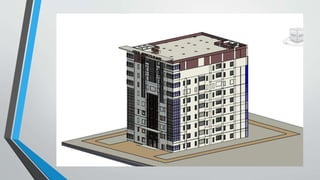
3D modeling in construction, by putting all the pieces together, provides a real view of the
finished project. 3D modelling brings a project to life without even moving a single speck of dust.
3D model enables the client to get a feel of how things are laid out.
This all can be achieved by the use of 3D modeling software called REVIT which speeds up the
process and saves time. The advantages of 3D modeling software includes checking the errors
,having virtual tours through walkthroughs, getting renderings and customized interiors and
achieving all this in lesser cost and saving the time.
Design Process
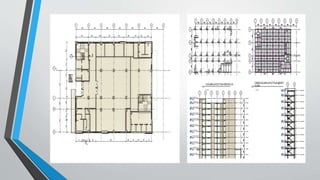
• Design Modelling and Coordination
• Design Documentation
• Quantity Take Off [QTO], Scheduling and Estimation
• Fabrication, Modelling and Clash detection.
CONCLUSION
• Building Information Modeling (BIM) along with a 3D model is emerging as an innovative
way to manage projects.
• 3D modelling brings a project to life without even moving a single speck of dust. 3D model
enables the client to get a feel of how things are laid out. They can walk through the entry of
Future home, reach the lobby and even can visualize the situations of an area. They can see all
this even before a brick has been laid out.
• The advantages of 3D modeling software includes checking the errors ,having virtual tours
through walkthroughs, getting renderings and customized interiors and achieving all this in lesser
cost and saving the time.
• 3D model also guides the structural engineer to work on the design of building elements,
which helps in getting the output as per the dream of client.
• 3D Modeling using BIM software gives a clear picture of the cost of the project(in
lumpsome), quantity and quality of materials that has to be used for different parts of building.
• 3D modeling in construction results in better designing and material utilization. 3D models
can be rotated for different perspectives and gather additional views. This all can be achieved by
the use of 3D modeling software called REVIT which speeds up the process and saves time.
• Revit and other applications made for BIM help designers design, simulate, visualize and
collaborate in order to capitalize on the advantages of the interconnected data within a BIM
mode.
THE END

Group 14 presentation.pptx

  • 1.
    Benefits of 3DBIM in Engineering Project (For Hospital Building) (Session 2023-24) Presented by: Vaibhav Kumar (2000290000051) Sachin Gupta (2000290000035) Amit Kumar Yadav (2100290009002) Prashant Kumar (2000290000032) Shivang Baghel (2000290000042) Guided by: MR. SIDDHARTH JAIN KIET GROUP OF INSTITUTIONS, GHAZIABAD
  • 2.
    Contents:  Abstract  Introduction Literature Review  3D Modeling process  Conclusion
  • 3.
    Abstract  3D modelingis the process of developing a mathematical representation of any surface of an object in three dimensions via specialized software. The product is called a 3D model.  Using 3D building models is extremely helpful throughout the architecture engineering and construction (AEC) lifecycle. Such models coupled with virtual walk through can enable customers to decide and be satisfied with their dream building.  This seminar introduces and reviews a mechanism for applying interior and exterior design constructs after the conversion of 2D drawings into 3D Building Information Model (BIM) using BIM software  BIM software incorporates an object orientated modeling concept where building elements are represented in 3D with rich semantic objects and attributes containing information about each building element.  Revit the latest innovation in BIM which is taking an already impressive piece of programming to the next level with a new array of features and capabilities. Revit has changed the architecture design, drafting and modeling processes by accomplishing substantial improvements in precision and efficiency.  With Revit software, architectural designers can now rapidly sketch out rough layouts of a floor plan, or make changes to the standard set of building designs and instantly let their customers preview their future homes.
  • 4.
    Building information modeling(BIM)  BIM is the foundation of digital transformation  Intelligent Model Based Process  Connects teams, workflows and data across the entire project lifecycle  Allows better outcomes for the business, industry, and the built world  Facilitates the development of digital twins  Supports connected construction by improving collaboration, reducing risk, and delivering better construction projects  BIM data is best realized by all project partners in a common data environment (CDE)
  • 5.
    BIM is thefoundation of digital transformation • Empowering seamless collaboration, decision making and built on a connected data experience allowing continuous iteration and improvement.
  • 7.
  • 8.
  • 9.
    DESIGN ANALYSIS SOFTWAREUSED IN B.I.M. SCHEDULING SOFTWARE USED IN B.I.M.
  • 12.
    LITERATURE REVIEW 1. Build-IT- An Interactive Web Application for 3D Construction, Interior & Exterior design by Renien Joseph & Udayangi Perera: This project introduces and reviews a mechanism for applying interior and exterior design constructs after the conversion of 2D drawings into 3D Building Information Model (BIM). This research demonstrates an automated 3D model reconstruction of real world object from an un- calibrated image sequence targeting the same scene; which can be used for interior and exterior design. This module will help to create a 2D architectural drawing and automatically converts to 3D architectural drawing. This is where the project Build-IT attempts to be developed with unique features to solve the above critical problems. Build-IT framework is a user friendly 3D visualizer and 3D editor which help to design the users dream building without needless expenses and in a short time period. The 3D editor will use mathematical techniques to convert the 2D structural sketches to 3D models specially using BIM software.
  • 13.
    2. BIM Standardin Off-Site Construction by Nawari O. Nawari : Building Construction is known among the most complex of all undertakings. This study reviews the importance of BIM standard in off-site construction and its role in data exchanges. It describes exchanges for the complete cycle of information sharing between all parties to the process and outlines many directions in which further development is required. The paper focuses on the IDM development and addresses progresses and needs to advance BIM standard in off-site construction. The development of IDM for off-site construction begins with definitions of data exchange functional requirements and workflow scenarios for exchanges between architects, engineers, manufacturers, erectors, and general contractors. The definitions of workflows in this IDM are tied into an overall process, as a typical illustrative schedule, not as a prescriptive process. It is laid out to provide a structure for addressing different off-site construction case exchanges. BIM standard in off-site construction will facilitate more reliable information exchange between project participants, improve information quality, and improve decision making more effectively.
  • 14.
    3. Photo based3D modelling of Construction Resouces for Visualisation of Operations : Simulation case of Modeling Precast Facade by Fei Dai & Ming In this paper, algorithms of Photogrammatery is been computed and application of modeling was present to produce a model of Facade in 3D based on Digital pictures taken at a building site. 3D Modeling of components have been largely created by Computer Aided Design(CAD) or by proprietary code for virtual reality development. In general, such 3D modeling methods entail accurate geometric definition but prove to be time consuming and expensive. Unlike CAD modeling, the surveying technique of Photogrammetry takes a completely different approach by deriving metric information about an object through measurements conducted on photos of the objects. The resultant 3D models may well satisfy application needs in construction simulation visualisation in 3D. In this study 3D Facade model was found to be acceptable and Realistic for being incorporated into a 3D animation of the Facade installation operations simulation.
  • 15.
    4. Innovative Approachto the Substation Design using Building Information Modeling (BIM) Technology by Mario Kokorus & Wolfgang Eyrich: The rising power demand, on aging infrastructure, causes more and more issues, right up to blackouts. There is a national need for grid rebuilding of the power network over the next decade. The fact that large number of power engineers will be required in the next years, forces the power industries to look for efficient design solutions. For this reason, it is important to achieve shortened project time, costs reduction, efficiency and accuracy, in substation design. Software which fulfills these requirements, using Building Information Modeling (BIM), is described in this paper. This technology provides planning, designing, building and managing 2D or 3D models, having the intelligence, geometry and data utilizing contained elements.REVIT has proved to be a very useful tool for substation design. The software provides engineering access. BIM process, which is the base of the software, is the most effective new approach in the world of design and provides solutions for plenty of issues that engineers deal with on each project, everyday. Substation design time is reduced considerably and the design process is simplified and logical.
  • 16.
    Summary of Literature: Fromthe above literature papers we can summarize that the adoption of 3D modeling in construction process not only speeds up the design process but also enables architects and designers play around with different ideas and identify potential design problems before they become actual issues. 3D modeling in construction, by putting all the pieces together, provides a real view of the finished project. 3D modelling brings a project to life without even moving a single speck of dust. 3D model enables the client to get a feel of how things are laid out. This all can be achieved by the use of 3D modeling software called REVIT which speeds up the process and saves time. The advantages of 3D modeling software includes checking the errors ,having virtual tours through walkthroughs, getting renderings and customized interiors and achieving all this in lesser cost and saving the time.
  • 17.
    Design Process • DesignModelling and Coordination • Design Documentation • Quantity Take Off [QTO], Scheduling and Estimation • Fabrication, Modelling and Clash detection.
  • 18.
    CONCLUSION • Building InformationModeling (BIM) along with a 3D model is emerging as an innovative way to manage projects. • 3D modelling brings a project to life without even moving a single speck of dust. 3D model enables the client to get a feel of how things are laid out. They can walk through the entry of Future home, reach the lobby and even can visualize the situations of an area. They can see all this even before a brick has been laid out. • The advantages of 3D modeling software includes checking the errors ,having virtual tours through walkthroughs, getting renderings and customized interiors and achieving all this in lesser cost and saving the time. • 3D model also guides the structural engineer to work on the design of building elements, which helps in getting the output as per the dream of client. • 3D Modeling using BIM software gives a clear picture of the cost of the project(in lumpsome), quantity and quality of materials that has to be used for different parts of building. • 3D modeling in construction results in better designing and material utilization. 3D models can be rotated for different perspectives and gather additional views. This all can be achieved by the use of 3D modeling software called REVIT which speeds up the process and saves time. • Revit and other applications made for BIM help designers design, simulate, visualize and collaborate in order to capitalize on the advantages of the interconnected data within a BIM mode.
  • 19.