Information Technology
Presentation By: Ali Haider
Presenting To: Prof. Umair Chaudhary
Academic Record
 I Had Passed Matric From Eden High School
 I Had Passed Intermediate From Punjab
College Campus-4. I Done ICS From There.
 Then I got admission in NUML University-
Lahore Campus. I'm Doing BBA Here.
Grid Computing
 Introduction
 What is Grid Computing?
 Why we Need Grid Computing?
 Grid Computing Works
 Advantages and Disadvantages of Grid
Computing
Introduction
The idea of Grid Computing was First established in the Early 1990s
by Carl Kesselman. They developed the Globus Toolkit Standard, which
included Grids for Data Storage Management, Data Processing and
Intensive Computation Management.
Grid computing is:
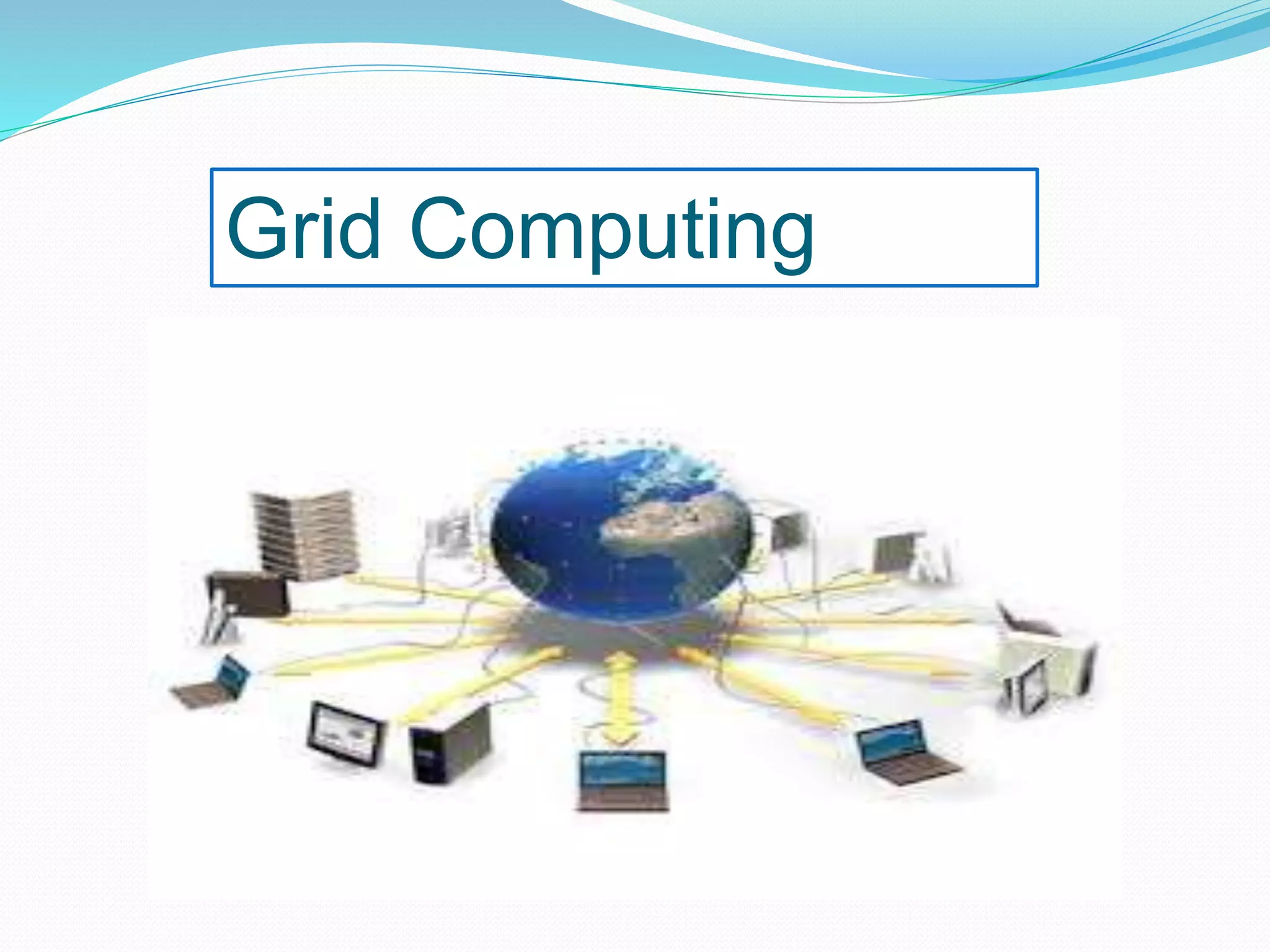
A distributed computing system
Where a group of computers are connected
 To create and work as one large virtual
computing power, storage, database,
application, and service.
Grid Computing allows group of computers to
share the system securely.
Networking technology now accelerates
at a much faster rate than advances in
microprocessor speeds.
For Collaboration of Virtual resources
and virtual organizations.
It can Provide Access to additional
resources.
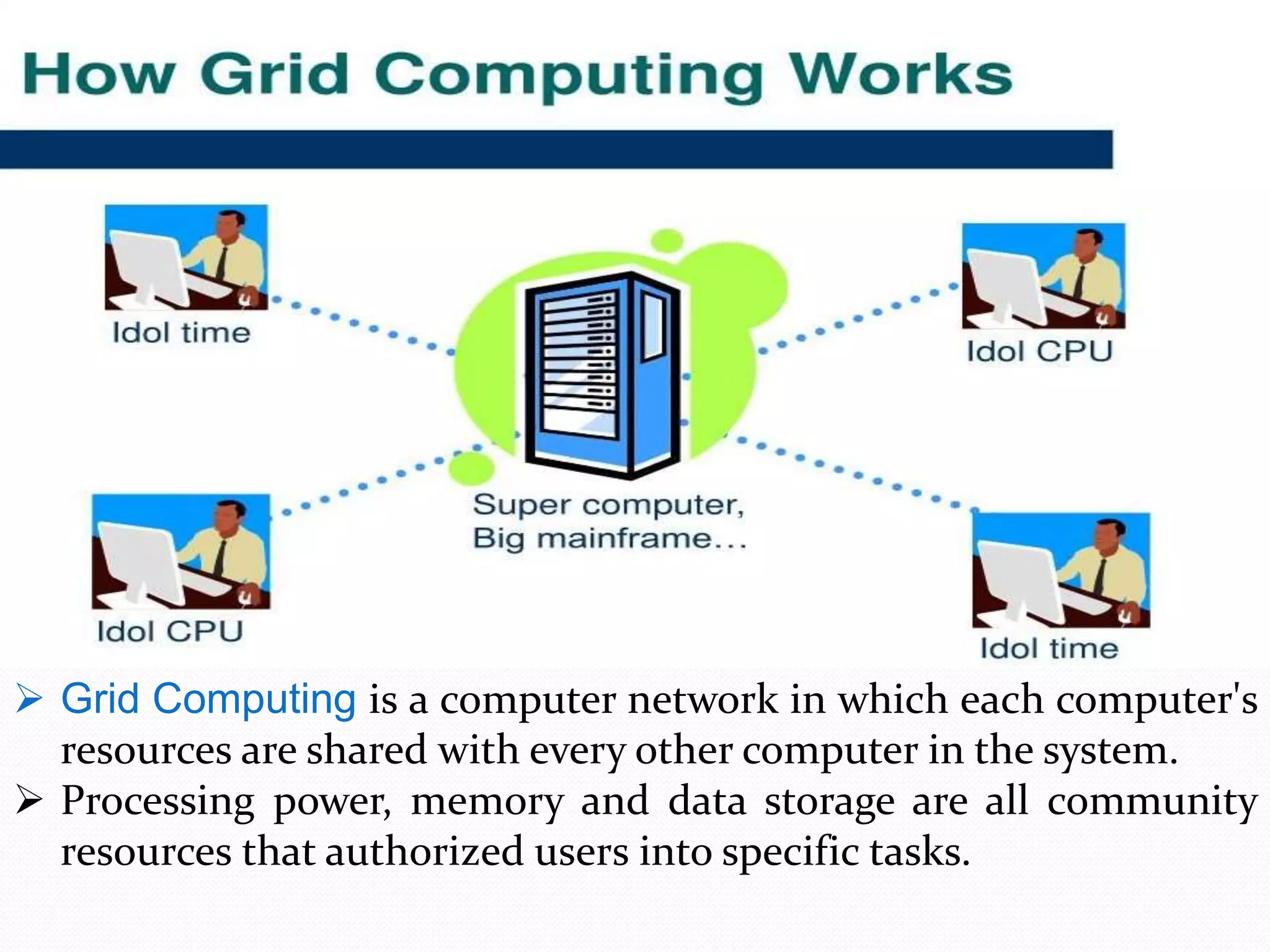
 Grid Computing is a computer network in which each computer's
resources are shared with every other computer in the system.
 Processing power, memory and data storage are all community
resources that authorized users into specific tasks.
Grid Computing
Advantages
i. Can solve larger and
more complex
problems in a shorter
time.
ii. Easier to collaborate
with other
organizations.
iii. Make better use of
existing hardware.
Disadvantages
i. Grid software and
standards are still
evolving.
ii. Learning curve to get
started.
iii. Non-interactive job
submission.
Thank You

Grid computing

  • 2.
    Information Technology Presentation By:Ali Haider Presenting To: Prof. Umair Chaudhary
  • 3.
    Academic Record  IHad Passed Matric From Eden High School  I Had Passed Intermediate From Punjab College Campus-4. I Done ICS From There.  Then I got admission in NUML University- Lahore Campus. I'm Doing BBA Here.
  • 4.
  • 5.
     Introduction  Whatis Grid Computing?  Why we Need Grid Computing?  Grid Computing Works  Advantages and Disadvantages of Grid Computing
  • 6.
    Introduction The idea ofGrid Computing was First established in the Early 1990s by Carl Kesselman. They developed the Globus Toolkit Standard, which included Grids for Data Storage Management, Data Processing and Intensive Computation Management.
  • 7.
    Grid computing is: Adistributed computing system Where a group of computers are connected  To create and work as one large virtual computing power, storage, database, application, and service. Grid Computing allows group of computers to share the system securely.
  • 8.
    Networking technology nowaccelerates at a much faster rate than advances in microprocessor speeds. For Collaboration of Virtual resources and virtual organizations. It can Provide Access to additional resources.
  • 9.
     Grid Computingis a computer network in which each computer's resources are shared with every other computer in the system.  Processing power, memory and data storage are all community resources that authorized users into specific tasks.
  • 10.
    Grid Computing Advantages i. Cansolve larger and more complex problems in a shorter time. ii. Easier to collaborate with other organizations. iii. Make better use of existing hardware. Disadvantages i. Grid software and standards are still evolving. ii. Learning curve to get started. iii. Non-interactive job submission.
  • 11.