Green Tea 
Jennifer McQuay 
Kaplan University 
October, 2014
Welcome! 
 Today we welcome you to our 
community center’s health lecture series 
 You spoke, we listened! You wanted to 
know more about green tea and how you 
can implement it into your daily life 
 We’ll go over the benefits, research, 
precautions, and more! 
 Then we’ll try a few varieties!
What if we told you… 
 There was a great tasting drink that could 
be served hot or cold that has health 
benefits 
 It’s very easy to find and prepare, at 
home, work, or on the go 
 It’s fairly inexpensive 
 It can even be a form of stress relief 
Would you think it’s just a gimmick?
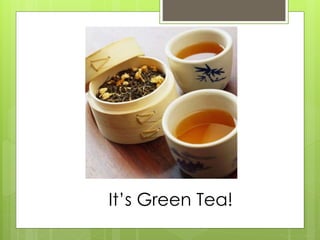
It’s Green Tea!
The U.S. joins in! 
 Green tea has been used for centuries in countries 
such as China and India, however it’s just recently 
gained popularity here in the United States 
 “Tea is considered the most consumed beverage 
in the world behind water, however 78% of the tea 
consumed worldwide is black and only about 20% 
is green” 
 “All types of tea except herbal tea are brewed 
from the dried leaves of the Camellia sinensis bush. 
The level of oxidation of the leaves determines the 
type of tea. Green tea is made from un-oxidized 
leaves and is one of the less processed types of 
tea (with white tea the least) and therefore 
contains one of the most antioxidants and 
beneficial polyphenols.” 
Medical News Today, 2014
Possible Health Benefits 
 Cancer (National Cancer Institute study) 
 Polyphenols, such as those in green tea have been shown to 
decrease tumor growth and reduce damage from UVB rays. 
 Studies have shown that green tea drinkers were less likely to 
develop pancreatic cancer, especially in women 
 There have also been studies done on the reduced chance 
of breast, bladder, ovarian, colorectal, esophageal, lung, 
prostate, skin and stomach cancer. 
 Heart Disease (American Medical Association study) 
 Reduced mortality, including cardiovascular disease 
 Type II Diabetes 
 Some studies have shown lower risk, others were inconsistent 
 Weight Loss 
 Overweight or obese-small chance of weight loss, 
inconsistent results again 
 “Other studies have found that green tea is helpful in 
preventing dental cavities, stress, chronic fatigue, treating skin 
conditions and improving arthritis by reducing inflammation.” 
Medical News Today, 2014
Medical News Today (2014) 
Cont… 
“Recent developments on the benefits of green tea from MNT news 
Green tea or coffee may reduce stroke risk. Drinking green tea or coffee 
on a regular basis is associated with a reduced risk of stroke, according to 
a study published in the journal Stroke: Journal of the American Heart 
Association. 
Green tea may help fight prostate cancer. British researchers have 
scientifically proven that broccoli, turmeric, green tea and pomegranate 
help fight the most common cancer in men in the United States and the 
United Kingdom - prostate cancer. 
Green tea may boost our working memory. New research published in the 
journal Psychopharmacology suggests green tea can enhance our brain's 
cognitive functions, particularly the working memory. 
Green tea component upsets cancer cell metabolism. A new study 
reveals how an active component of green tea disrupts the metabolism 
of cancer cells in pancreatic cancer, offering an explanation for its effect 
on reducing risk of cancer and slowing its progression. The researchers 
believe the discovery signals a new approach to studying cancer 
prevention. 
Reported in the journal Metabolomics, the study explores the effect of 
epigallocatechin gallate or "EGCG," an active biological agent of green 
tea. “ 
Medical News Today, 2014
Precautions 
 Even though there are little to no side 
effects, caution should still be taken for 
those with caffeine sensitivity 
 Those taking anticoagulants should take 
caution due to the vitamin K content 
 Green tea is an active substance that 
can interact with other vitamins, herbs, 
supplements, and medications 
 Always check with your doctor and 
disclose ALL herbs and other substances 
being consumed. 
Medical News Today, 2014
Weight loss supplements 
 You may have seen or heard about green 
tea as a weight loss product. Supplement 
companies love to take products that have a 
small study that shows weight loss and run 
with it! 
 Green tea extracts are being marketed for 
weight loss and are being added to 
sometimes dangerous weight loss pills. 
 When the extract is consumed in excess it can 
potentially cause liver issues. 
 Another issue with the extract is the large 
amount of caffeine that it contains 
 Advice: drink the tea, avoid gimmicky 
supplements that claim weight loss! 
NIH, 2012
Tea is everywhere! 
 Grocery stores 
 Restaurants 
 Starbucks/café’s 
 Malls (Teavana is a tea lover’s paradise!) 
 Convenience stores 
 You just have to look! Many places that 
have coffee have a hot water station and 
tea bags! -or- Bring your own tea and just 
use the hot water!
Brewing Tips 
Water temperature: too hot-bitter and 
aroma lost…too cool-full flavor isn’t 
extracted. 140-185 degrees Fahrenheit is 
recommended. 
 Steeping time: 1-3 minutes, balance with 
water temperature. The lower the 
temperature, the longer you can steep 
 Add some honey for additional 
sweetness, flavor, and health benefits 
The Fragrant Leaf, 2012
Tea for stress relief? 
 Drinking tea can be a relaxing and calming 
practice to help reduce stress 
 Create an environment/atmosphere of calm, 
quiet with minimal distractions. Comfortable 
seating, cozy blanket, calming music or a 
good book 
 Enjoy and saver the flavor and smell 
 Even in stressful situations (commuting, work, 
meetings) the smell and taste of the tea can 
bring a calming presence if regularly enjoyed 
in the calm environment. Picture yourself in 
your “tea zone” with comfort and calmness
Get out there and try it! 
 Now you know the basics! 
 Get out there and try the many different 
varieties and flavors all while working 
towards a healthier lifestyle! 
 Sit back, relax, and sip some tea! 
 Enjoy! 
 Visit us next time for another series 
presentation!
References 
Medical News Today. (2014). What are the health 
benefits of green tea? Retrieved from 
http://www.medicalnewstoday.com/articles/2695 
38.php. 
NIH. (2012). Green Tea. Retrieved from 
http://nccam.nih.gov/health/greentea. 
The Fragrant Leaf. (2012). Green Tea Brewing Tips. 
Retrieved from 
http://www.thefragrantleaf.com/green-tea-brewing- 
tips.

Green Tea Presentation

  • 1.
    Green Tea JenniferMcQuay Kaplan University October, 2014
  • 2.
    Welcome!  Todaywe welcome you to our community center’s health lecture series  You spoke, we listened! You wanted to know more about green tea and how you can implement it into your daily life  We’ll go over the benefits, research, precautions, and more!  Then we’ll try a few varieties!
  • 3.
    What if wetold you…  There was a great tasting drink that could be served hot or cold that has health benefits  It’s very easy to find and prepare, at home, work, or on the go  It’s fairly inexpensive  It can even be a form of stress relief Would you think it’s just a gimmick?
  • 4.
  • 5.
    The U.S. joinsin!  Green tea has been used for centuries in countries such as China and India, however it’s just recently gained popularity here in the United States  “Tea is considered the most consumed beverage in the world behind water, however 78% of the tea consumed worldwide is black and only about 20% is green”  “All types of tea except herbal tea are brewed from the dried leaves of the Camellia sinensis bush. The level of oxidation of the leaves determines the type of tea. Green tea is made from un-oxidized leaves and is one of the less processed types of tea (with white tea the least) and therefore contains one of the most antioxidants and beneficial polyphenols.” Medical News Today, 2014
  • 6.
    Possible Health Benefits  Cancer (National Cancer Institute study)  Polyphenols, such as those in green tea have been shown to decrease tumor growth and reduce damage from UVB rays.  Studies have shown that green tea drinkers were less likely to develop pancreatic cancer, especially in women  There have also been studies done on the reduced chance of breast, bladder, ovarian, colorectal, esophageal, lung, prostate, skin and stomach cancer.  Heart Disease (American Medical Association study)  Reduced mortality, including cardiovascular disease  Type II Diabetes  Some studies have shown lower risk, others were inconsistent  Weight Loss  Overweight or obese-small chance of weight loss, inconsistent results again  “Other studies have found that green tea is helpful in preventing dental cavities, stress, chronic fatigue, treating skin conditions and improving arthritis by reducing inflammation.” Medical News Today, 2014
  • 7.
    Medical News Today(2014) Cont… “Recent developments on the benefits of green tea from MNT news Green tea or coffee may reduce stroke risk. Drinking green tea or coffee on a regular basis is associated with a reduced risk of stroke, according to a study published in the journal Stroke: Journal of the American Heart Association. Green tea may help fight prostate cancer. British researchers have scientifically proven that broccoli, turmeric, green tea and pomegranate help fight the most common cancer in men in the United States and the United Kingdom - prostate cancer. Green tea may boost our working memory. New research published in the journal Psychopharmacology suggests green tea can enhance our brain's cognitive functions, particularly the working memory. Green tea component upsets cancer cell metabolism. A new study reveals how an active component of green tea disrupts the metabolism of cancer cells in pancreatic cancer, offering an explanation for its effect on reducing risk of cancer and slowing its progression. The researchers believe the discovery signals a new approach to studying cancer prevention. Reported in the journal Metabolomics, the study explores the effect of epigallocatechin gallate or "EGCG," an active biological agent of green tea. “ Medical News Today, 2014
  • 8.
    Precautions  Eventhough there are little to no side effects, caution should still be taken for those with caffeine sensitivity  Those taking anticoagulants should take caution due to the vitamin K content  Green tea is an active substance that can interact with other vitamins, herbs, supplements, and medications  Always check with your doctor and disclose ALL herbs and other substances being consumed. Medical News Today, 2014
  • 9.
    Weight loss supplements  You may have seen or heard about green tea as a weight loss product. Supplement companies love to take products that have a small study that shows weight loss and run with it!  Green tea extracts are being marketed for weight loss and are being added to sometimes dangerous weight loss pills.  When the extract is consumed in excess it can potentially cause liver issues.  Another issue with the extract is the large amount of caffeine that it contains  Advice: drink the tea, avoid gimmicky supplements that claim weight loss! NIH, 2012
  • 10.
    Tea is everywhere!  Grocery stores  Restaurants  Starbucks/café’s  Malls (Teavana is a tea lover’s paradise!)  Convenience stores  You just have to look! Many places that have coffee have a hot water station and tea bags! -or- Bring your own tea and just use the hot water!
  • 11.
    Brewing Tips Watertemperature: too hot-bitter and aroma lost…too cool-full flavor isn’t extracted. 140-185 degrees Fahrenheit is recommended.  Steeping time: 1-3 minutes, balance with water temperature. The lower the temperature, the longer you can steep  Add some honey for additional sweetness, flavor, and health benefits The Fragrant Leaf, 2012
  • 12.
    Tea for stressrelief?  Drinking tea can be a relaxing and calming practice to help reduce stress  Create an environment/atmosphere of calm, quiet with minimal distractions. Comfortable seating, cozy blanket, calming music or a good book  Enjoy and saver the flavor and smell  Even in stressful situations (commuting, work, meetings) the smell and taste of the tea can bring a calming presence if regularly enjoyed in the calm environment. Picture yourself in your “tea zone” with comfort and calmness
  • 13.
    Get out thereand try it!  Now you know the basics!  Get out there and try the many different varieties and flavors all while working towards a healthier lifestyle!  Sit back, relax, and sip some tea!  Enjoy!  Visit us next time for another series presentation!
  • 14.
    References Medical NewsToday. (2014). What are the health benefits of green tea? Retrieved from http://www.medicalnewstoday.com/articles/2695 38.php. NIH. (2012). Green Tea. Retrieved from http://nccam.nih.gov/health/greentea. The Fragrant Leaf. (2012). Green Tea Brewing Tips. Retrieved from http://www.thefragrantleaf.com/green-tea-brewing- tips.