INTERNATIONAL GREEN IT
AWARENESS WEEK 1-7 JUNE 2010
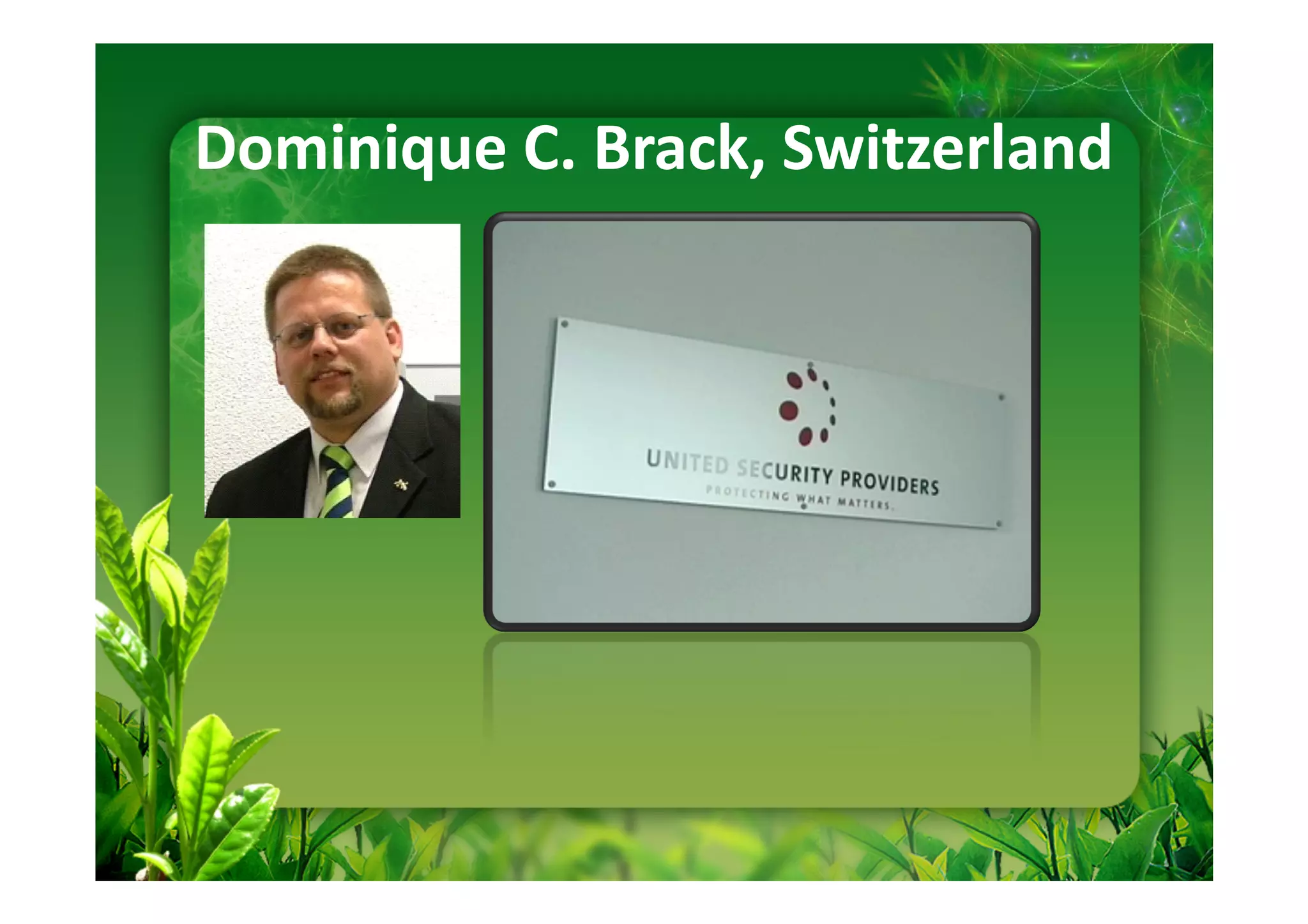
 Dominique C. Brack, Switzerland
SESSION:
FROM KPIS TO THE BUSINESS CASE-
RETURN ON INVESTMENT ON GREEN IT
 Dominique C. Brack, Switzerland
Dominique C. Brack, Switzerland
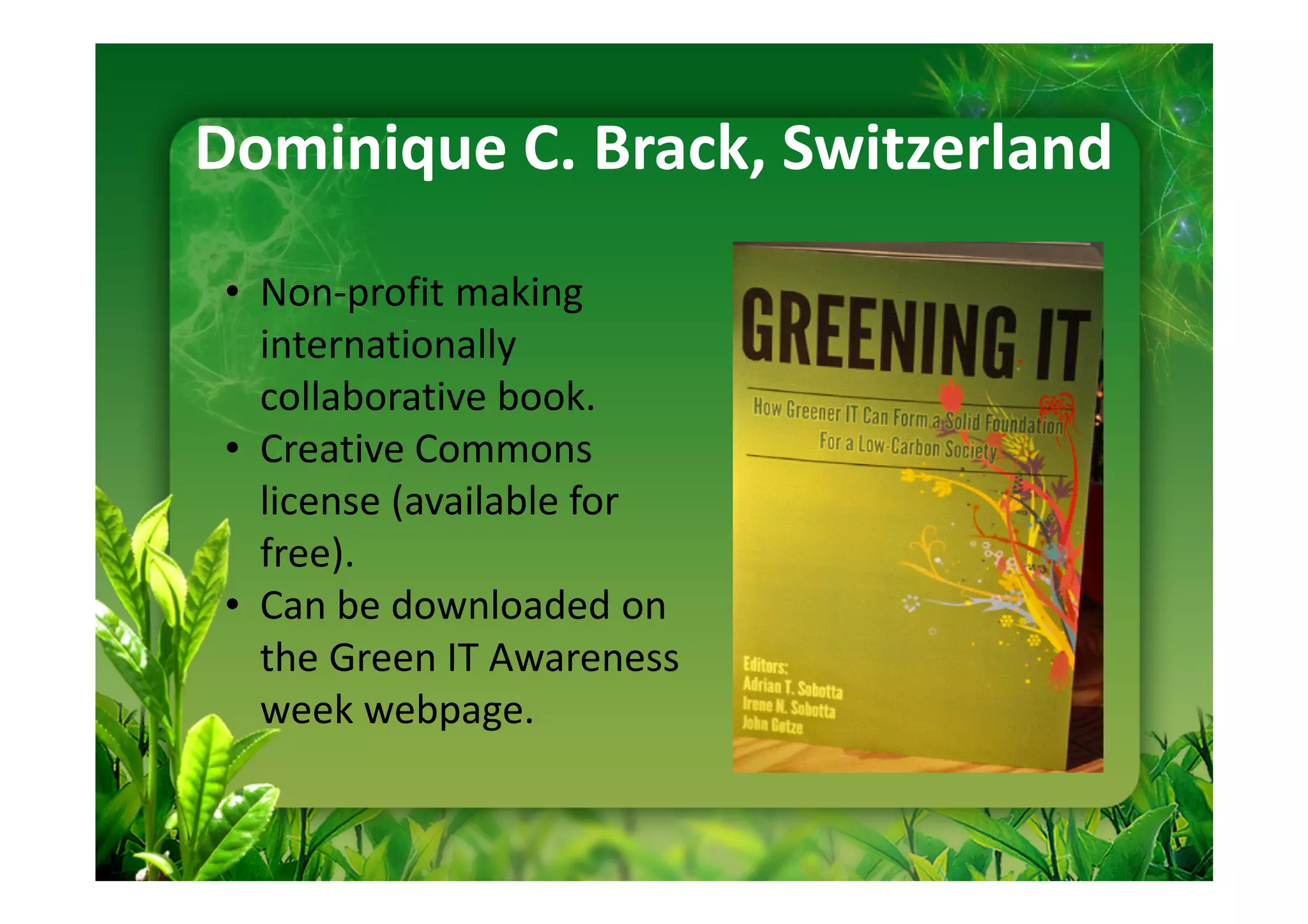
 • Non-profit making
   internationally
   collaborative book.
 • Creative Commons
   license (available for
   free).
 • Can be downloaded on
   the Green IT Awareness
   week webpage.
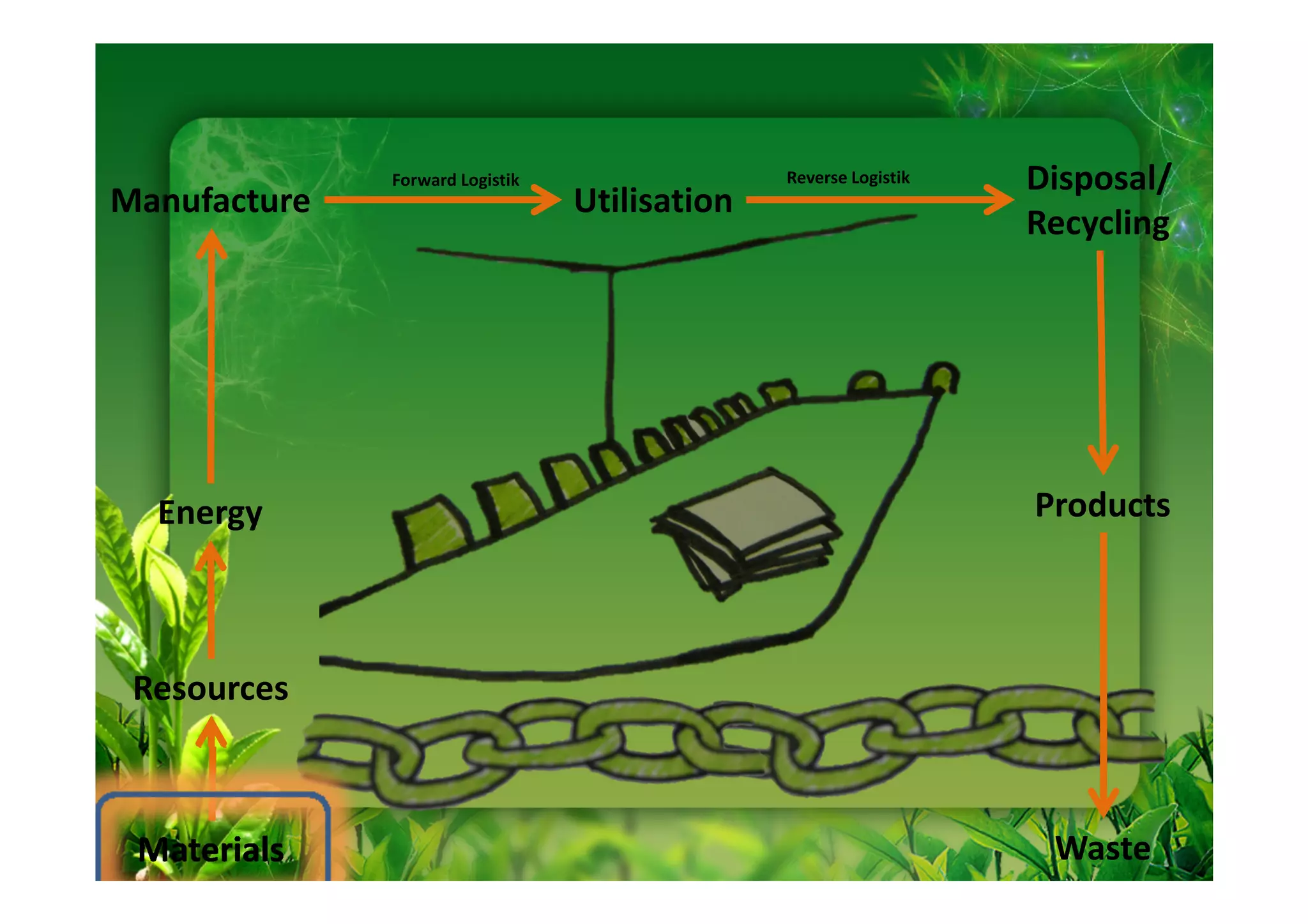
Forward Logistik                 Reverse Logistik   Disposal/
Manufacture                      Utilisation
                                                                  Recycling


  Energy                                                          Products


 Resources


 Materials                                                         Waste
AROUND KPIS
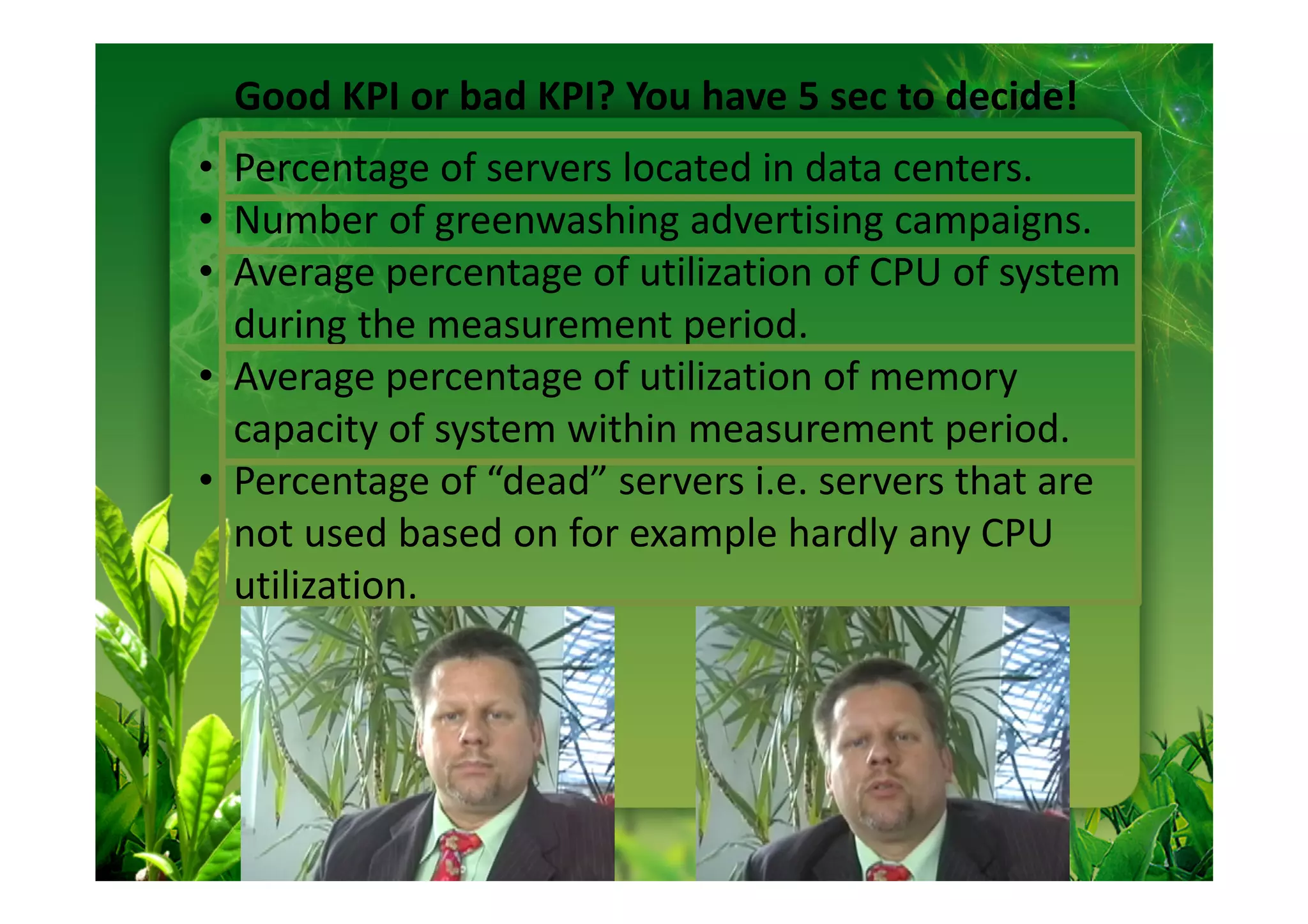
Good KPI or bad KPI? You have 5 sec to decide!
• Percentage of servers located in data centers.
• Number of greenwashing advertising campaigns.
• Average percentage of utilization of CPU of system
  during the measurement period.
• Average percentage of utilization of memory
  capacity of system within measurement period.
• Percentage of “dead” servers i.e. servers that are
  not used based on for example hardly any CPU
  utilization.
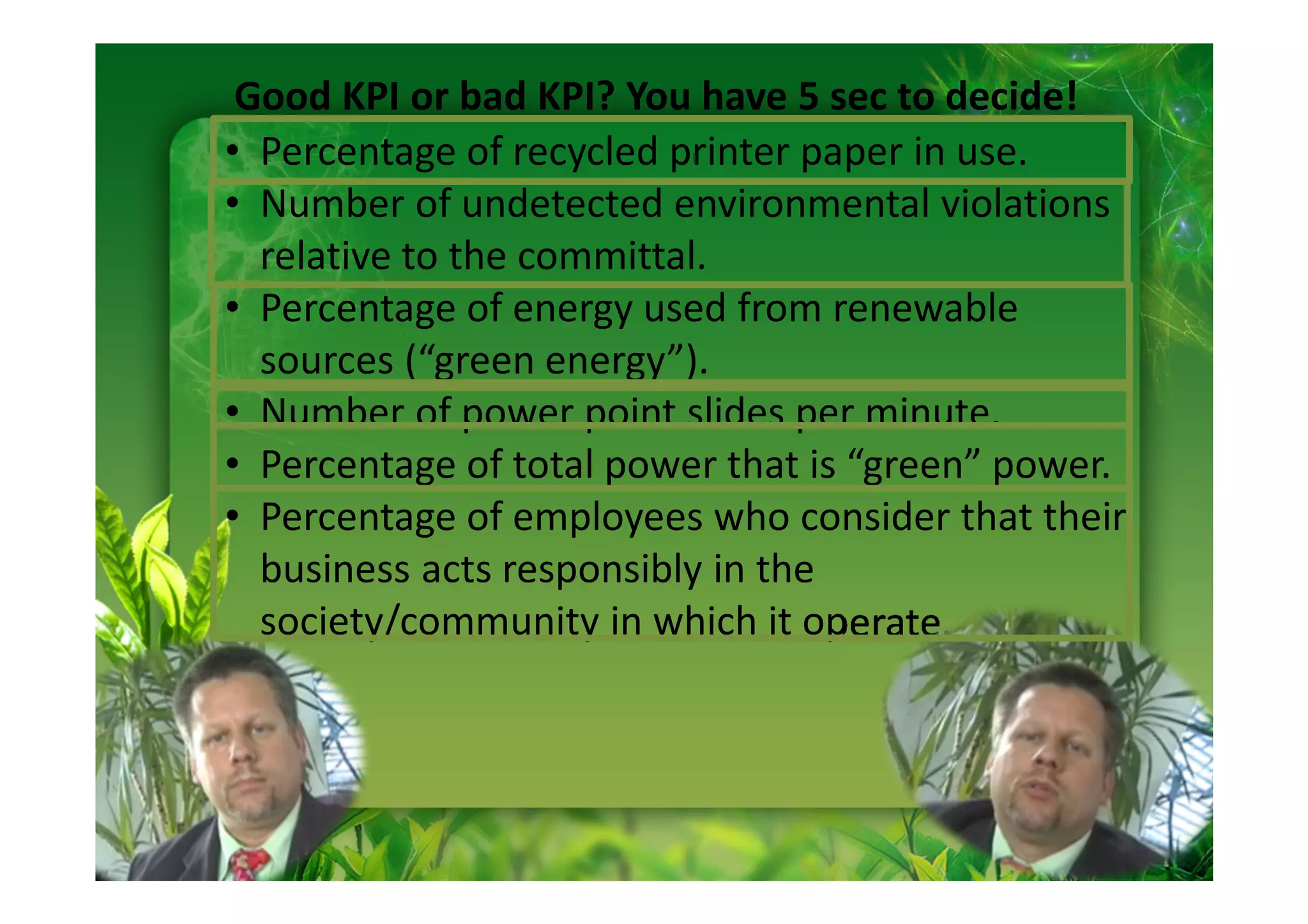
Good KPI or bad KPI? You have 5 sec to decide!
• Percentage of recycled printer paper in use.
• Number of undetected environmental violations
  relative to the committal.
• Percentage of energy used from renewable
  sources (“green energy”).
• Number of power point slides per minute.
• Percentage of total power that is “green” power.
• Percentage of employees who consider that their
  business acts responsibly in the
  society/community in which it operate.
QUANTIFIABLE AND KEY TO
ORGANISATIONAL SUCCESS
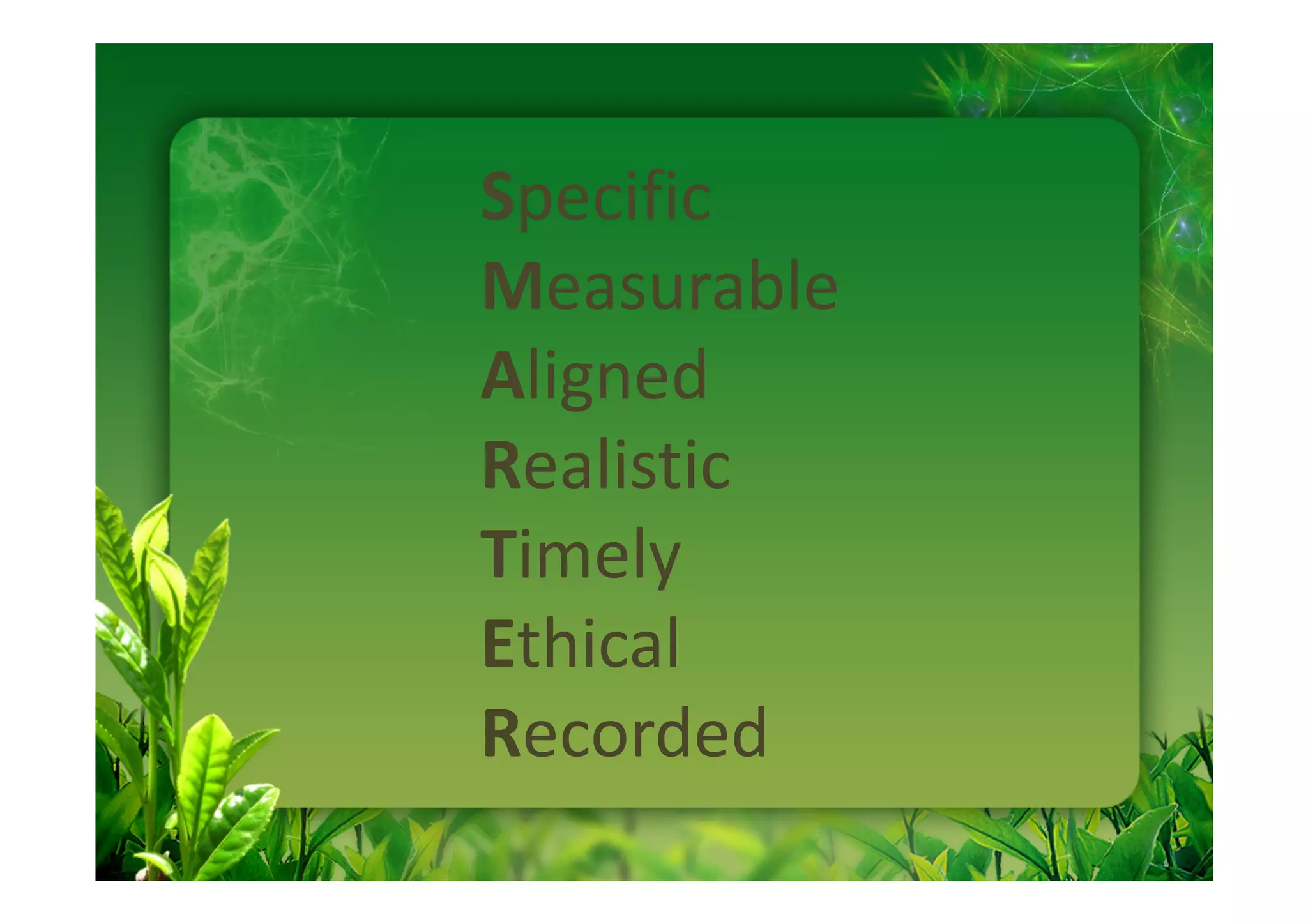
Specific
Measurable
Aligned
Realistic
Timely
Ethical
Recorded
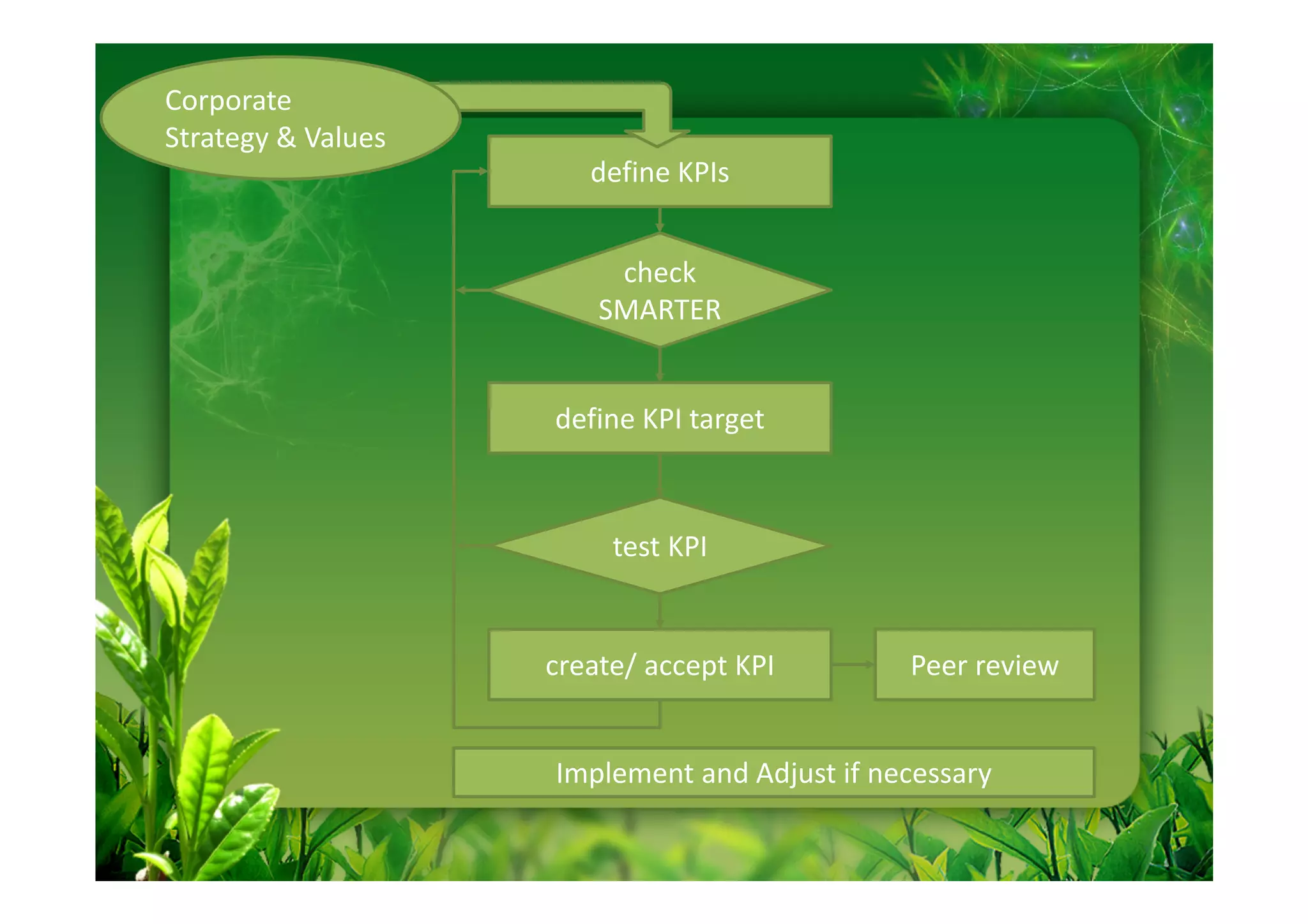
Corporate
Strategy & Values
                       define KPIs

                         check
                        SMARTER


                    define KPI target



                         test KPI


                    create/ accept KPI        Peer review


                    Implement and Adjust if necessary
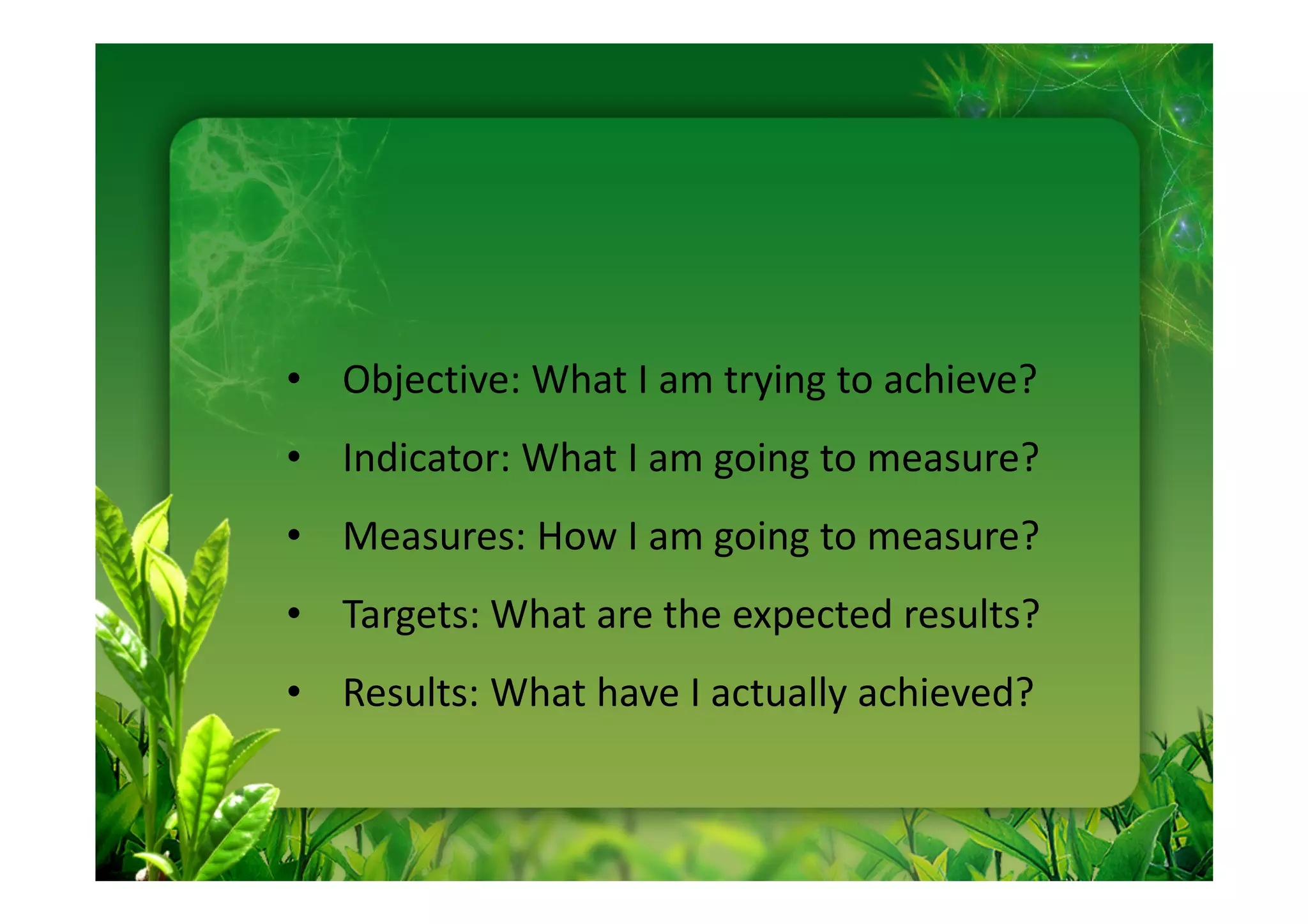
• Objective: What I am trying to achieve?
• Indicator: What I am going to measure?
• Measures: How I am going to measure?
• Targets: What are the expected results?
• Results: What have I actually achieved?
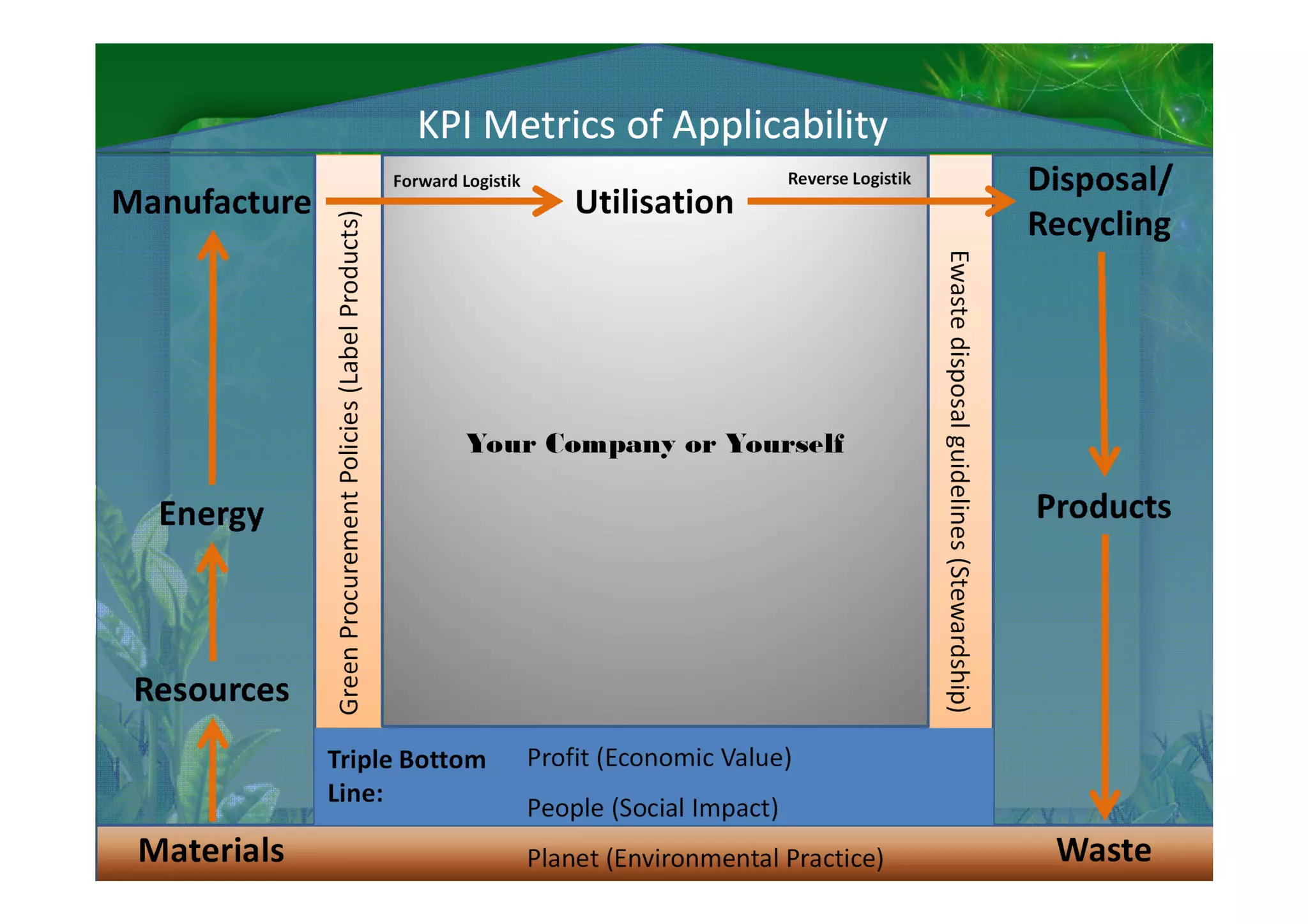
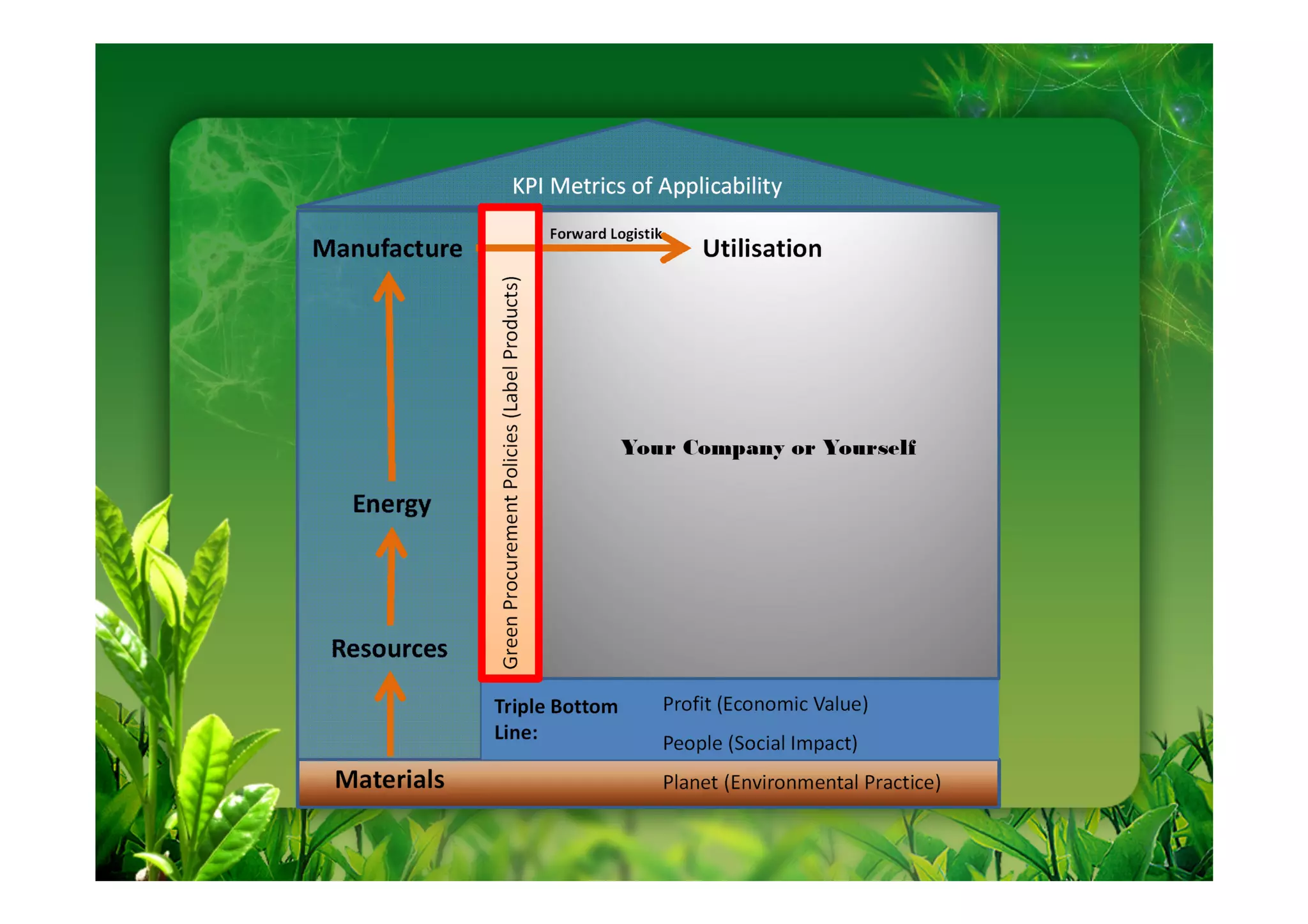
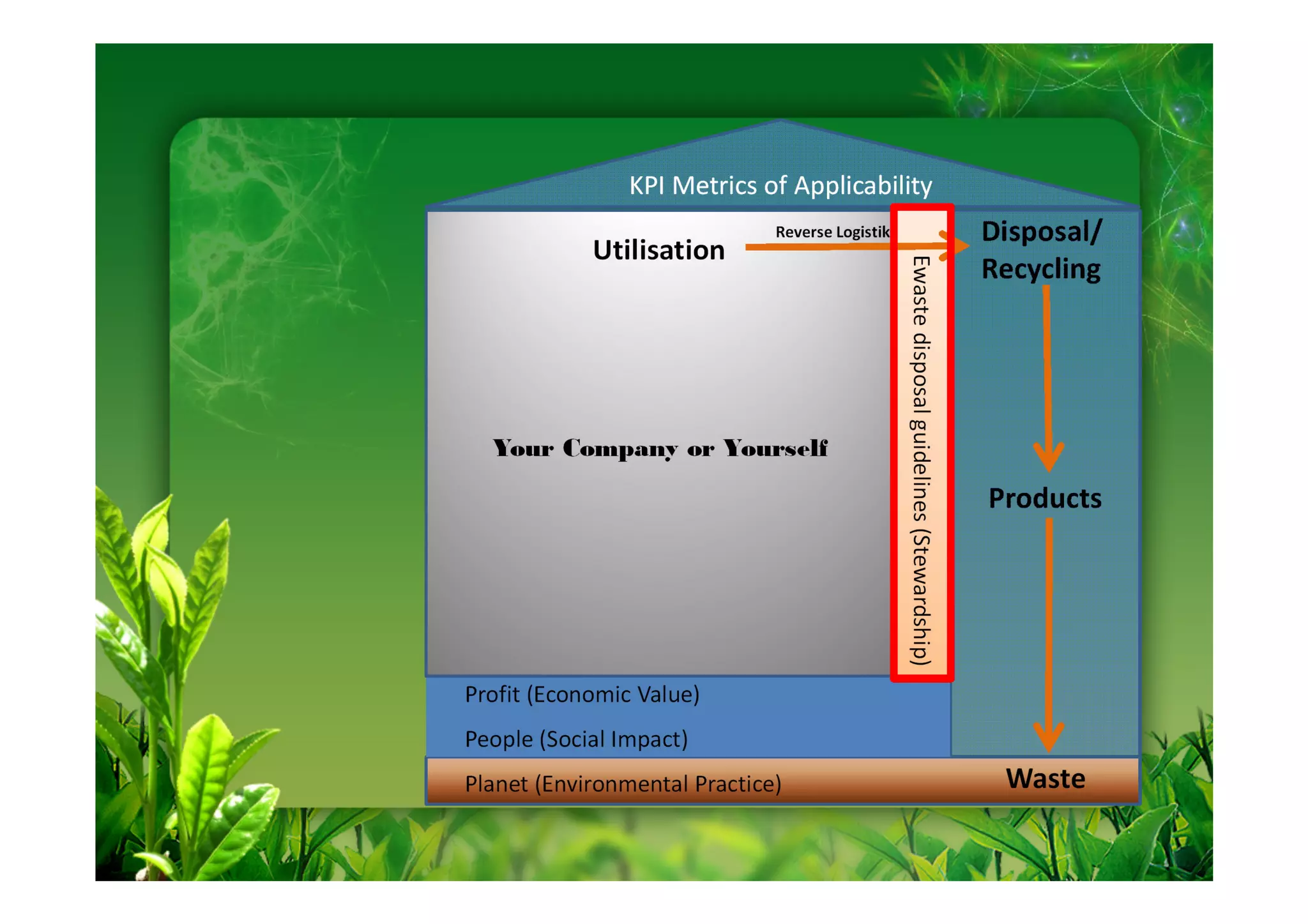
KPI METRICS OF APPLICABILITY
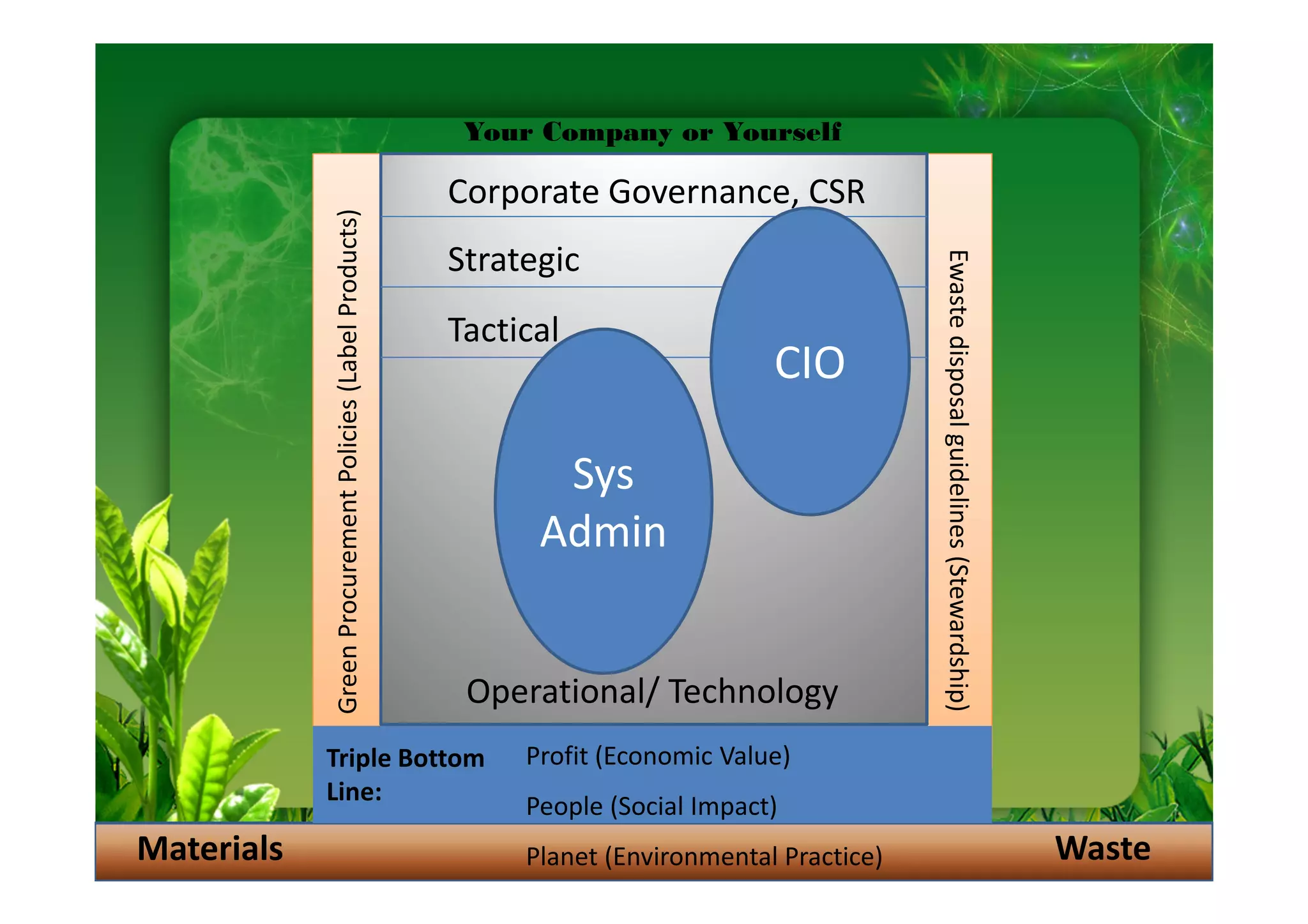
Your Company or Yourself

                                                          Corporate Governance, CSR


            Green Procurement Policies (Label Products)
                                                          Strategic


                                                                                                 Ewaste disposal guidelines (Stewardship)
                                                          Tactical
                                                                                    CIO

                                                                 Sys
                                                                Admin


                                                           Operational/ Technology
            Triple Bottom                                      Profit (Economic Value)
            Line:
                                                               People (Social Impact)
Materials                                                      Planet (Environmental Practice)                                              Waste
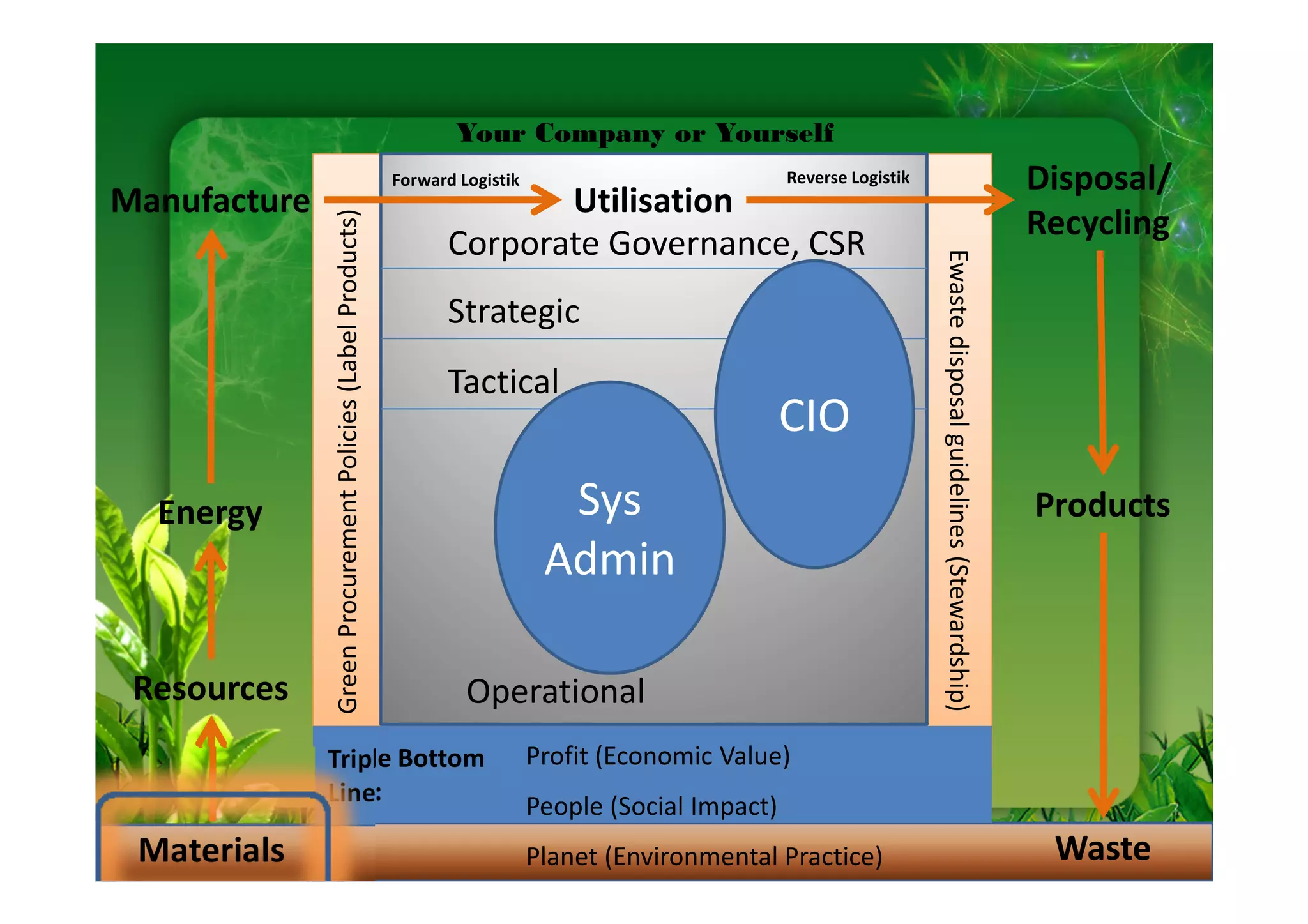
Your Company or Yourself
                                                            Forward Logistik                            Reverse Logistik                                              Disposal/
Manufacture                                                              Utilisation
                                                                                                                                                                      Recycling


              Green Procurement Policies (Label Products)
                                                                  Corporate Governance, CSR


                                                                                                                           Ewaste disposal guidelines (Stewardship)
                                                                  Strategic
                                                                  Tactical
                                                                                                        CIO
  Energy                                                                         Sys                                                                                  Products
                                                                                Admin

 Resources                                                           Operational
              Triple Bottom                                                    Profit (Economic Value)
              Line:
                                                                               People (Social Impact)
 Materials                                                                     Planet (Environmental Practice)                                                         Waste
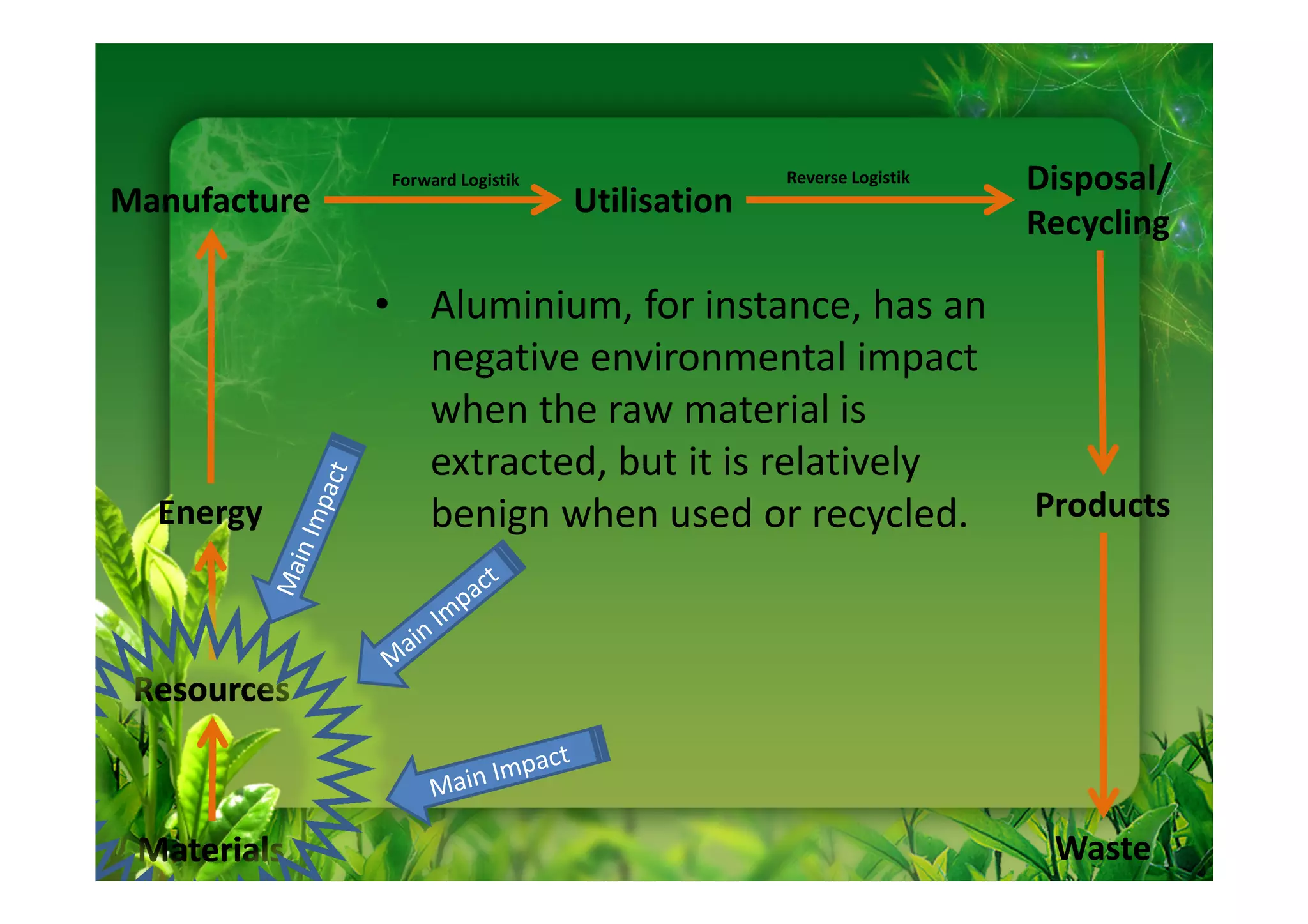
Forward Logistik                 Reverse Logistik   Disposal/
Manufacture                      Utilisation
                                                                  Recycling

              • Aluminium, for instance, has an
                negative environmental impact
                when the raw material is
                extracted, but it is relatively
  Energy        benign when used or recycled.                     Products


 Resources


 Materials                                                         Waste
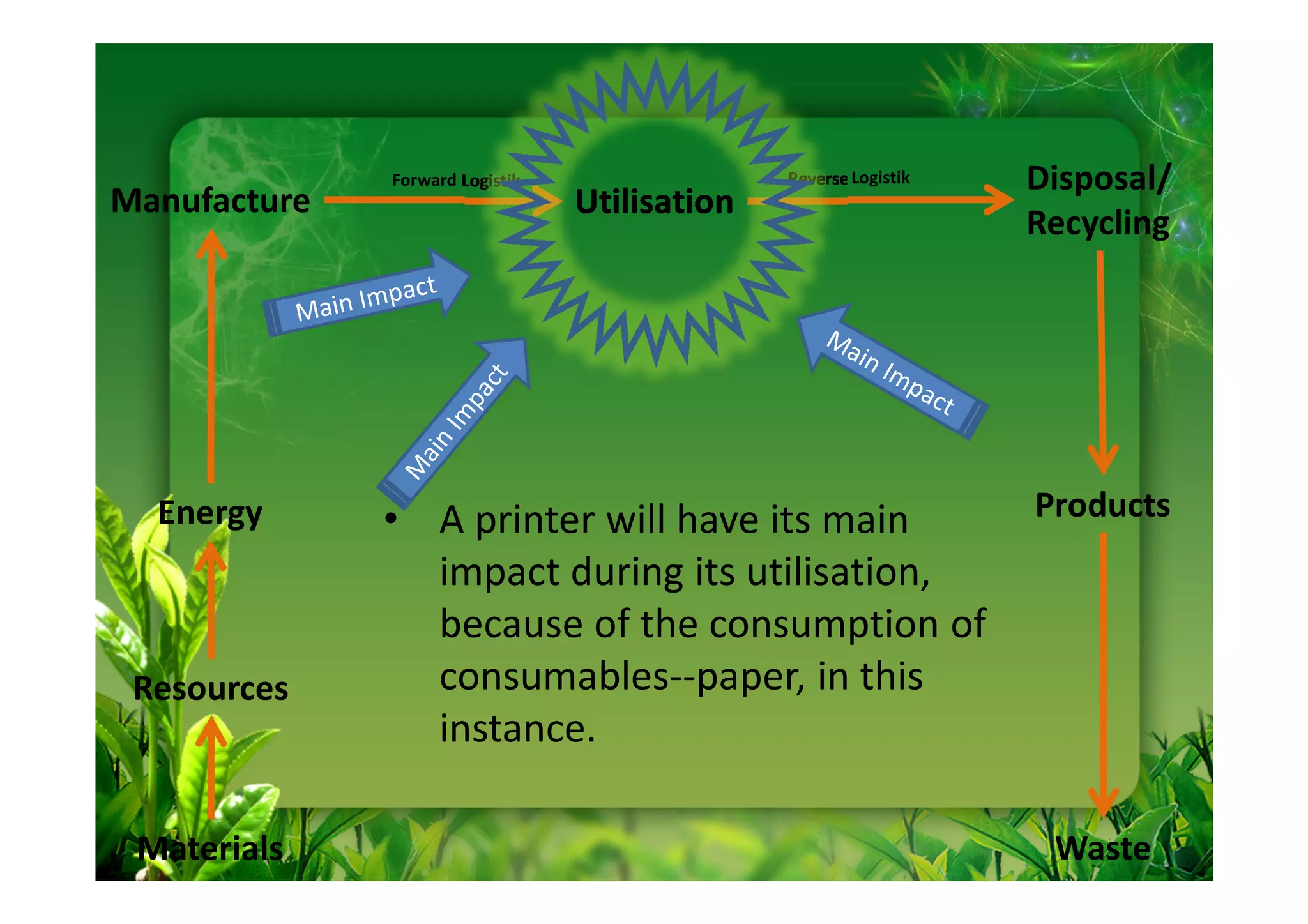
Forward Logistik                 Reverse Logistik   Disposal/
Manufacture                      Utilisation
                                                                  Recycling


  Energy      • A printer will have its main                      Products
                impact during its utilisation,
                because of the consumption of
 Resources      consumables--paper, in this
                instance.

 Materials                                                         Waste
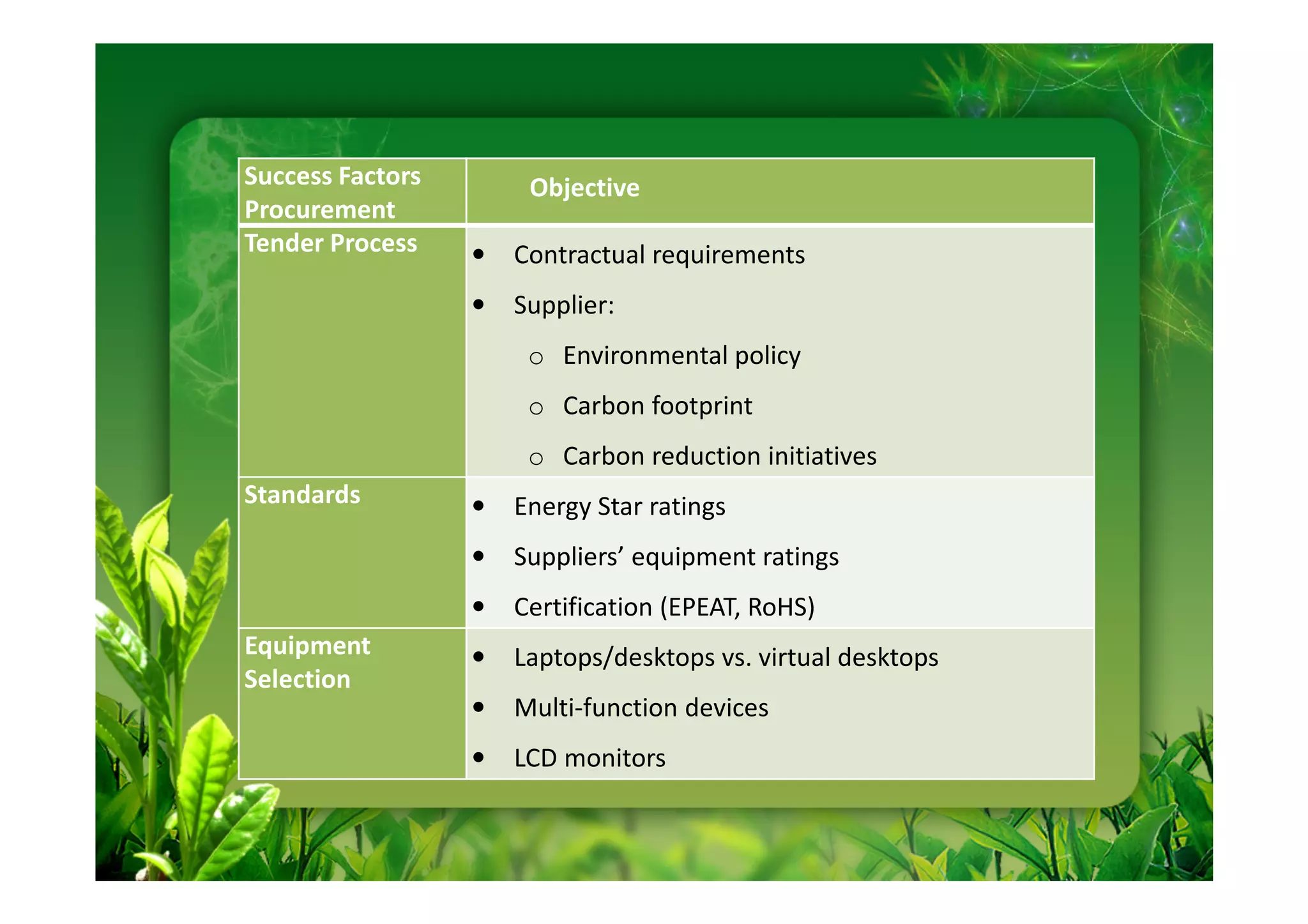
GREEN PROCUREMENT
Success Factors        Objective
Procurement
Tender Process    •   Contractual requirements
                  •   Supplier:
                       o Environmental policy
                       o Carbon footprint
                       o Carbon reduction initiatives
Standards         •   Energy Star ratings
                  •   Suppliers’ equipment ratings
                  •   Certification (EPEAT, RoHS)
Equipment         •   Laptops/desktops vs. virtual desktops
Selection
                  •   Multi-function devices
                  •   LCD monitors
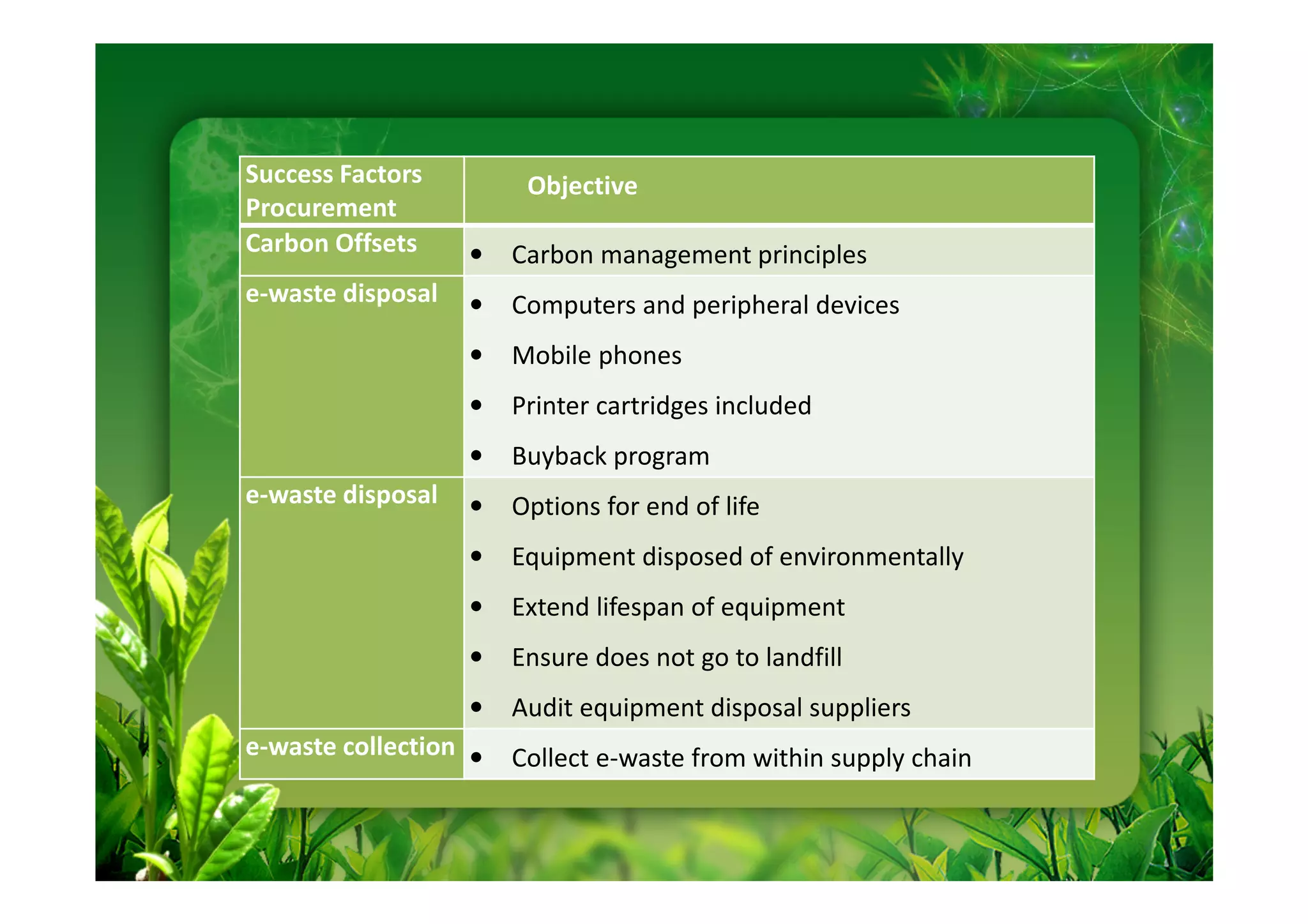
Success Factors         Objective
Procurement
Carbon Offsets     •   Carbon management principles
e-waste disposal   •   Computers and peripheral devices
                   •   Mobile phones
                   •   Printer cartridges included
                   •   Buyback program
e-waste disposal   •   Options for end of life
                   •   Equipment disposed of environmentally
                   •   Extend lifespan of equipment
                   •   Ensure does not go to landfill
                   •   Audit equipment disposal suppliers
e-waste collection •   Collect e-waste from within supply chain
GREEN PROCUREMENT CONTINUED
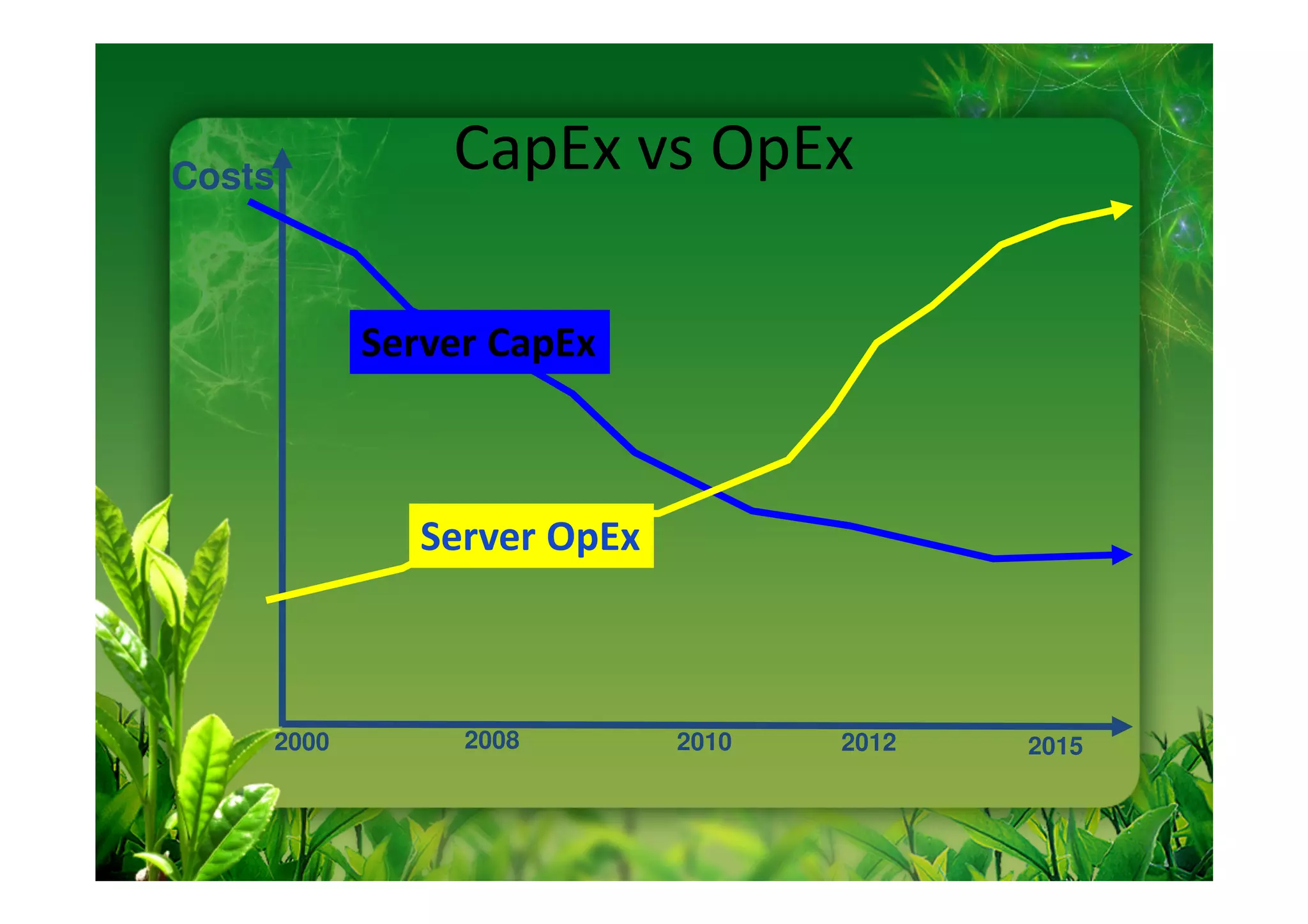
Costs
               CapEx vs OpEx

           Server CapEx


              Server OpEx


    2000        2008        2010   2012   2015
“GREENWASHING”
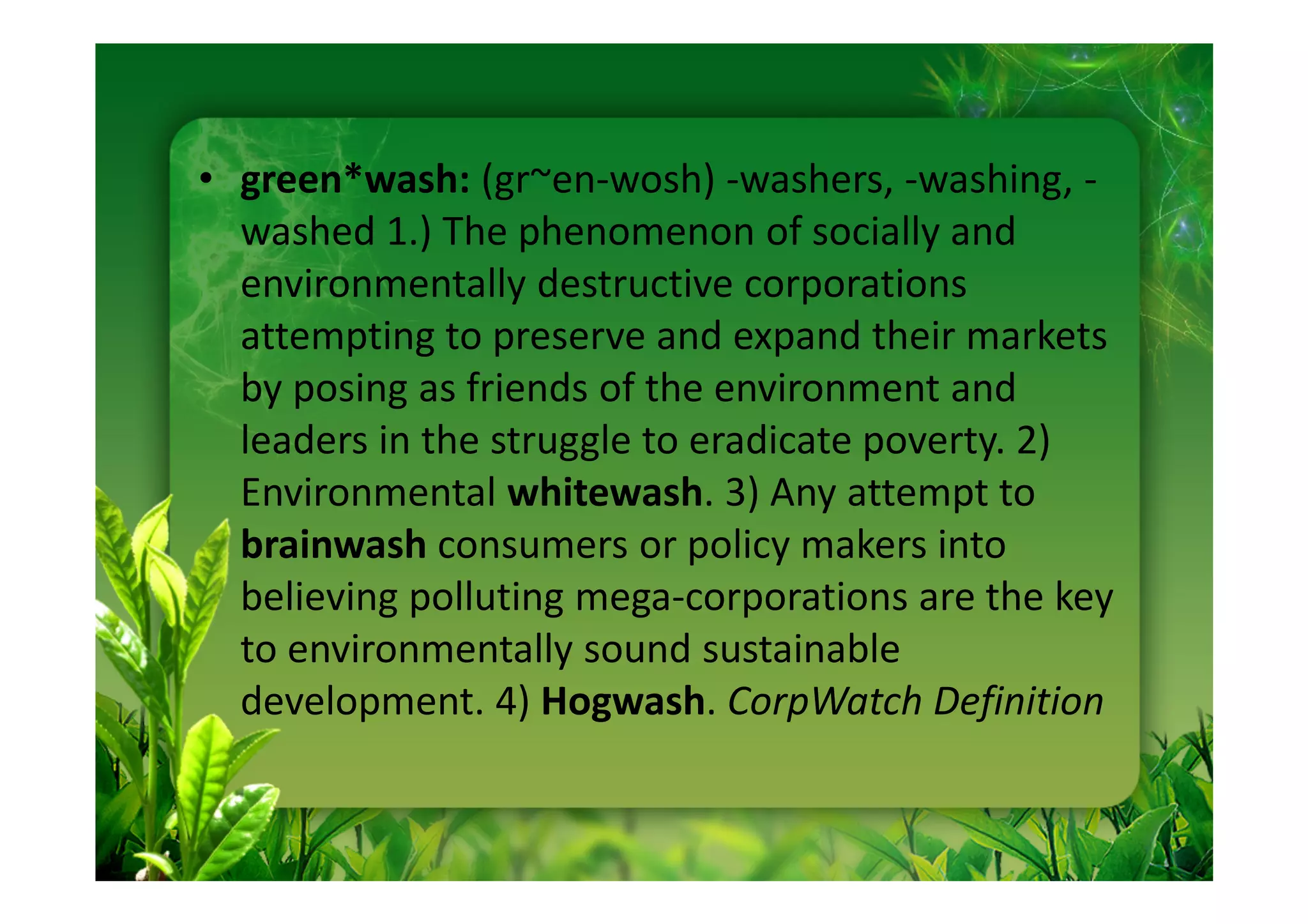
• green*wash: (gr~en-wosh) -washers, -washing, -
  washed 1.) The phenomenon of socially and
  environmentally destructive corporations
  attempting to preserve and expand their markets
  by posing as friends of the environment and
  leaders in the struggle to eradicate poverty. 2)
  Environmental whitewash. 3) Any attempt to
  brainwash consumers or policy makers into
  believing polluting mega-corporations are the key
  to environmentally sound sustainable
  development. 4) Hogwash. CorpWatch Definition
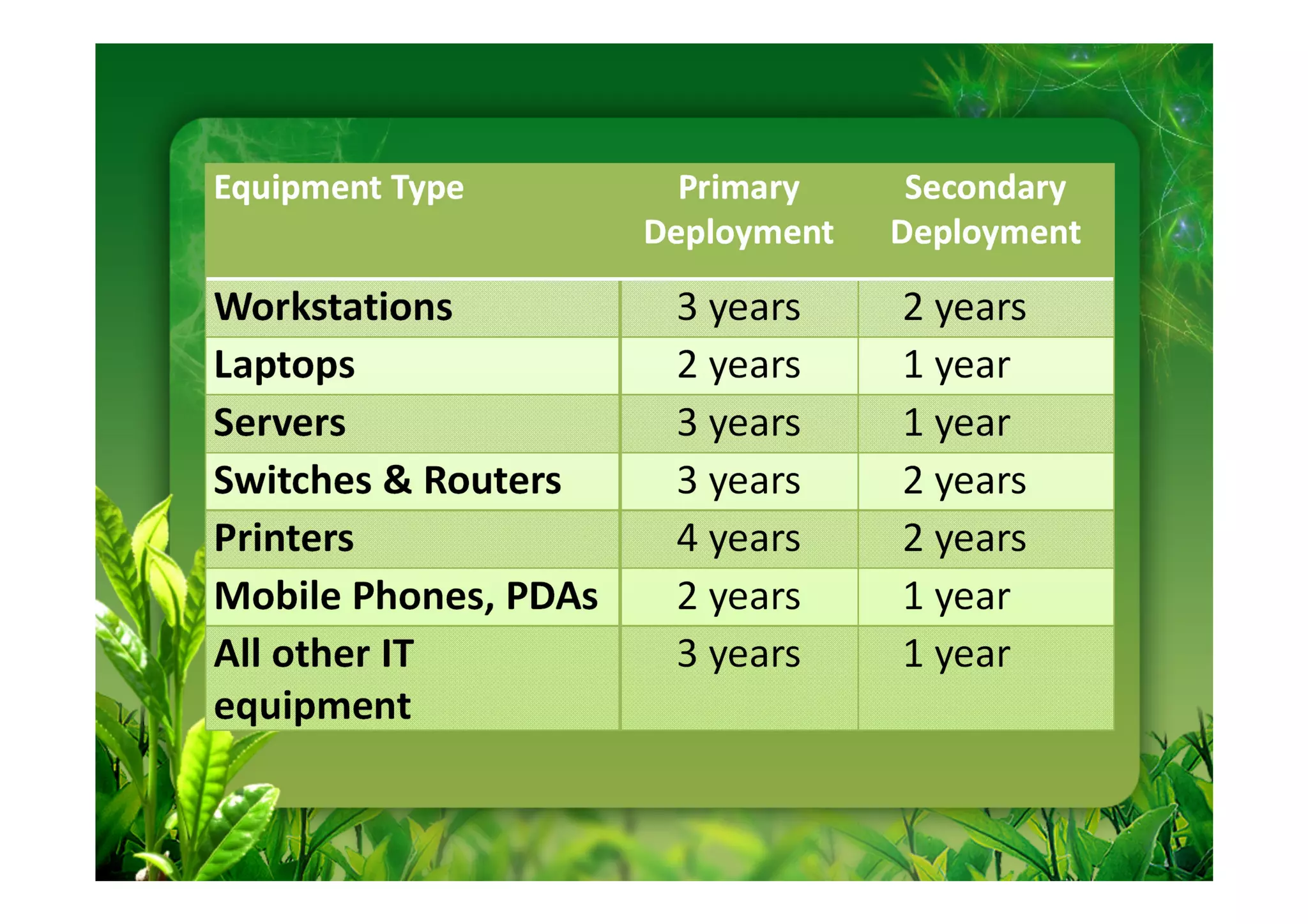
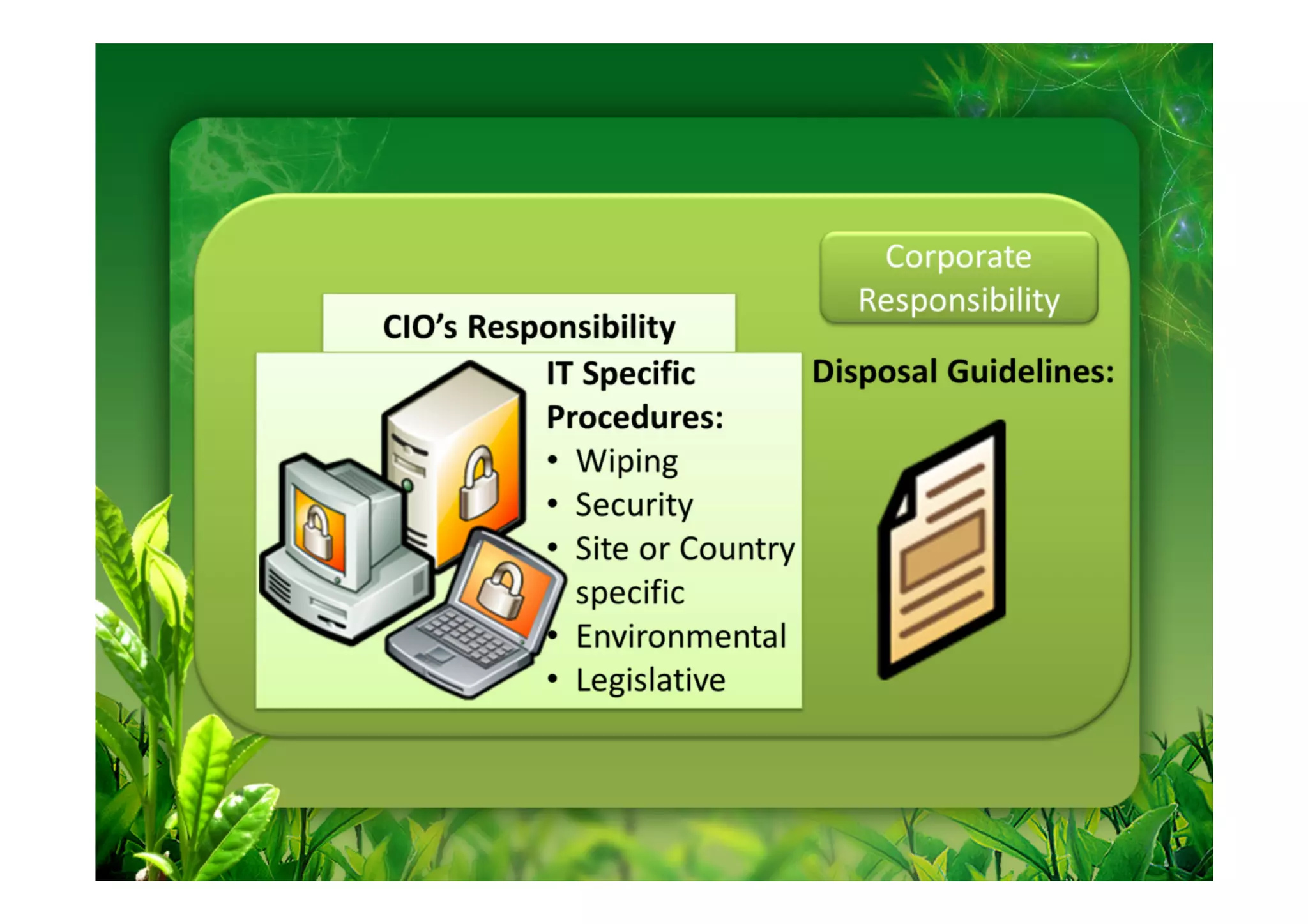
GREEN E-WASTE DISPOSAL
GUIDELINES
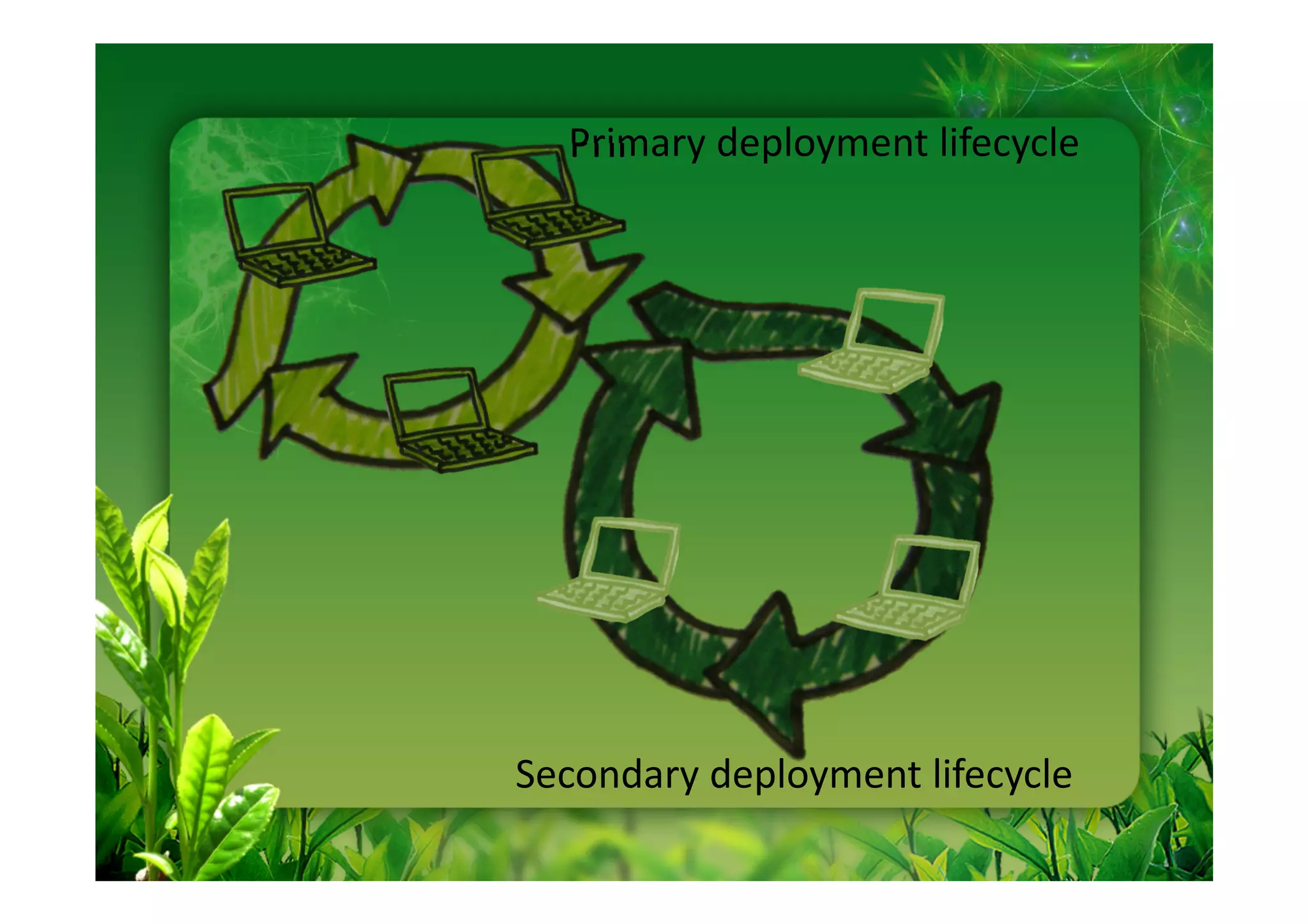
Primary deployment lifecycle


Secondary deployment lifecycle
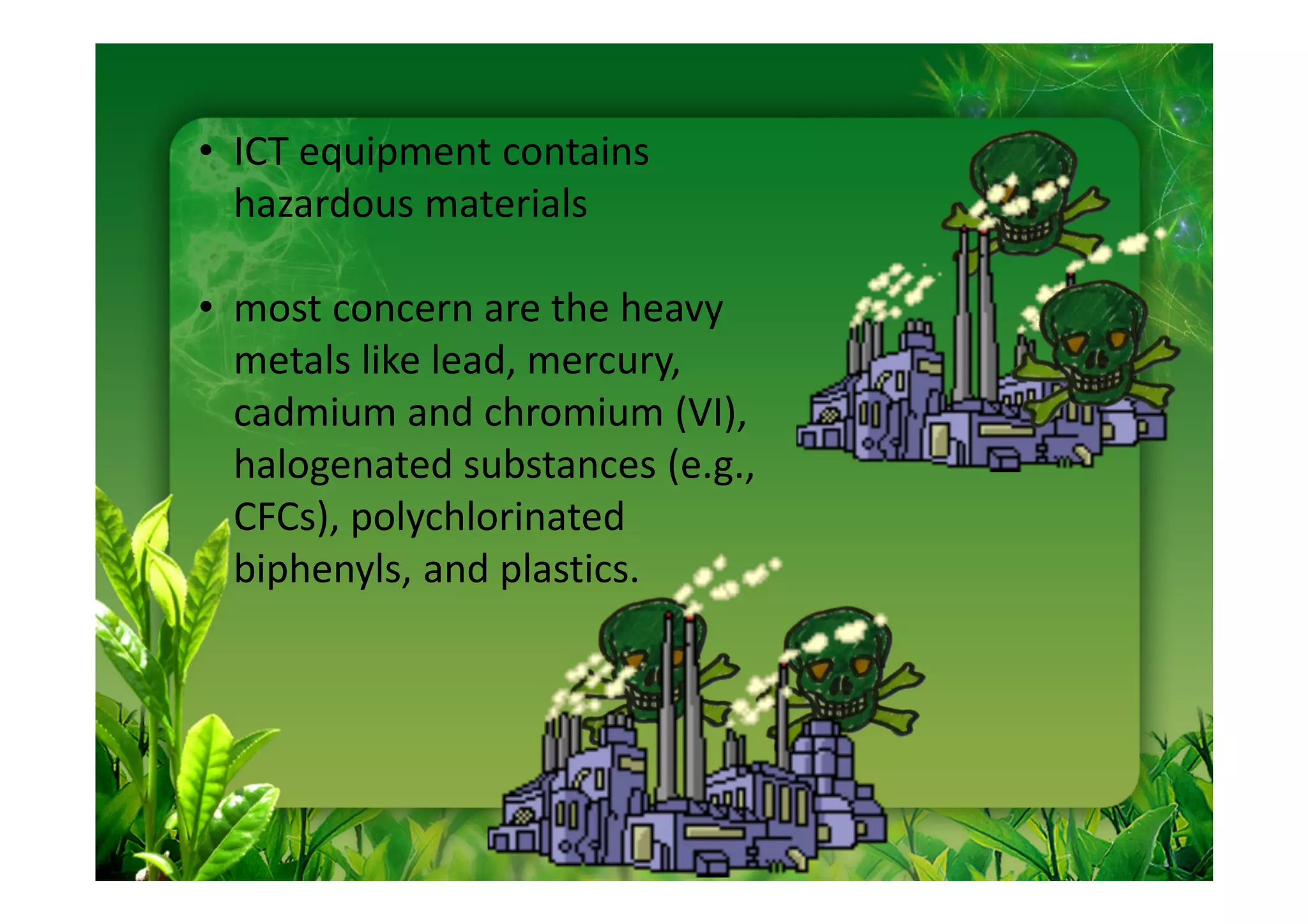
• ICT equipment contains
  hazardous materials

• most concern are the heavy
  metals like lead, mercury,
  cadmium and chromium (VI),
  halogenated substances (e.g.,
  CFCs), polychlorinated
  biphenyls, and plastics.
SELECTING A VIABLE RECYCLING OR
DISPOSAL PARTNER
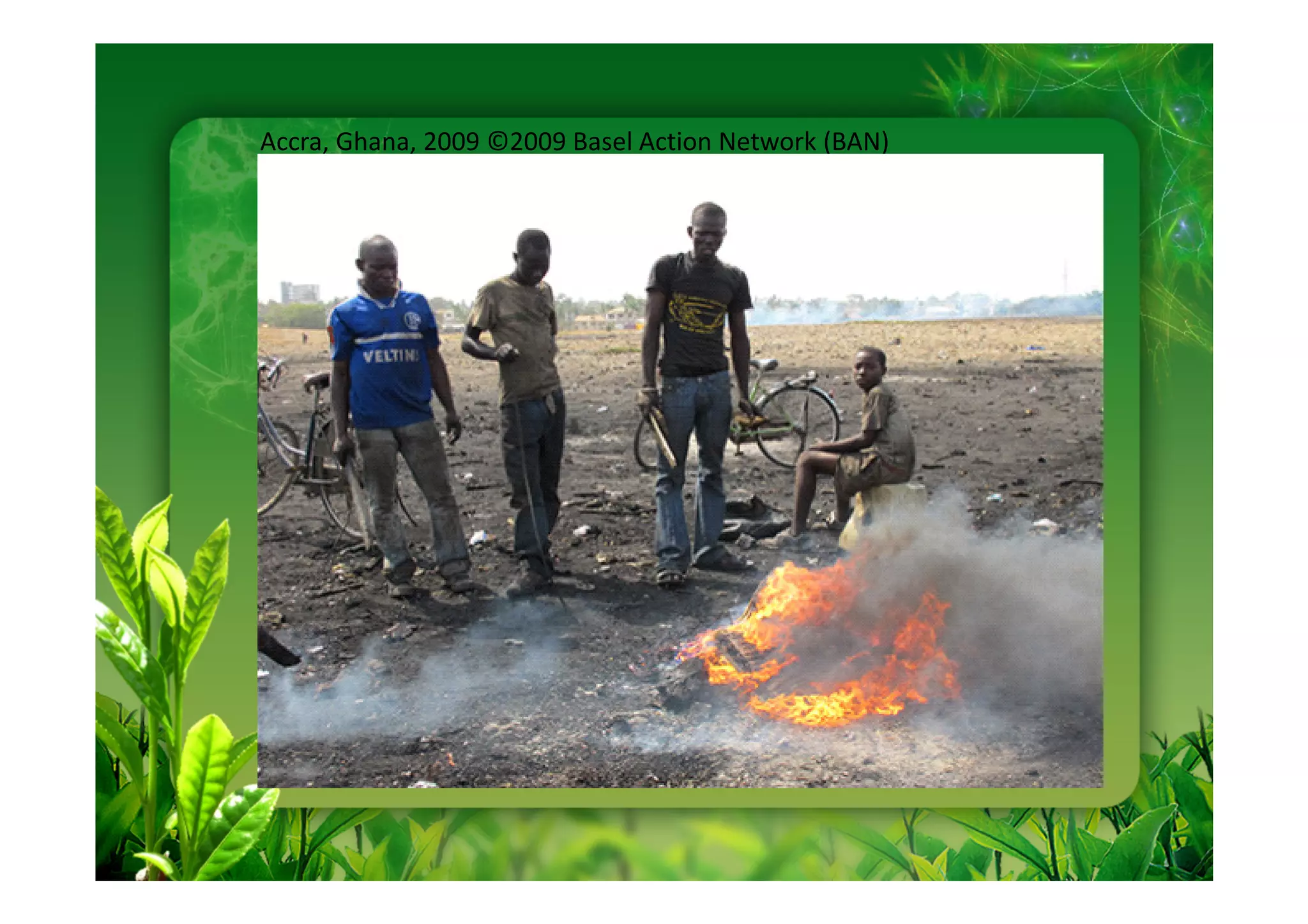
Accra, Ghana, 2009 ©2009 Basel Action Network (BAN)
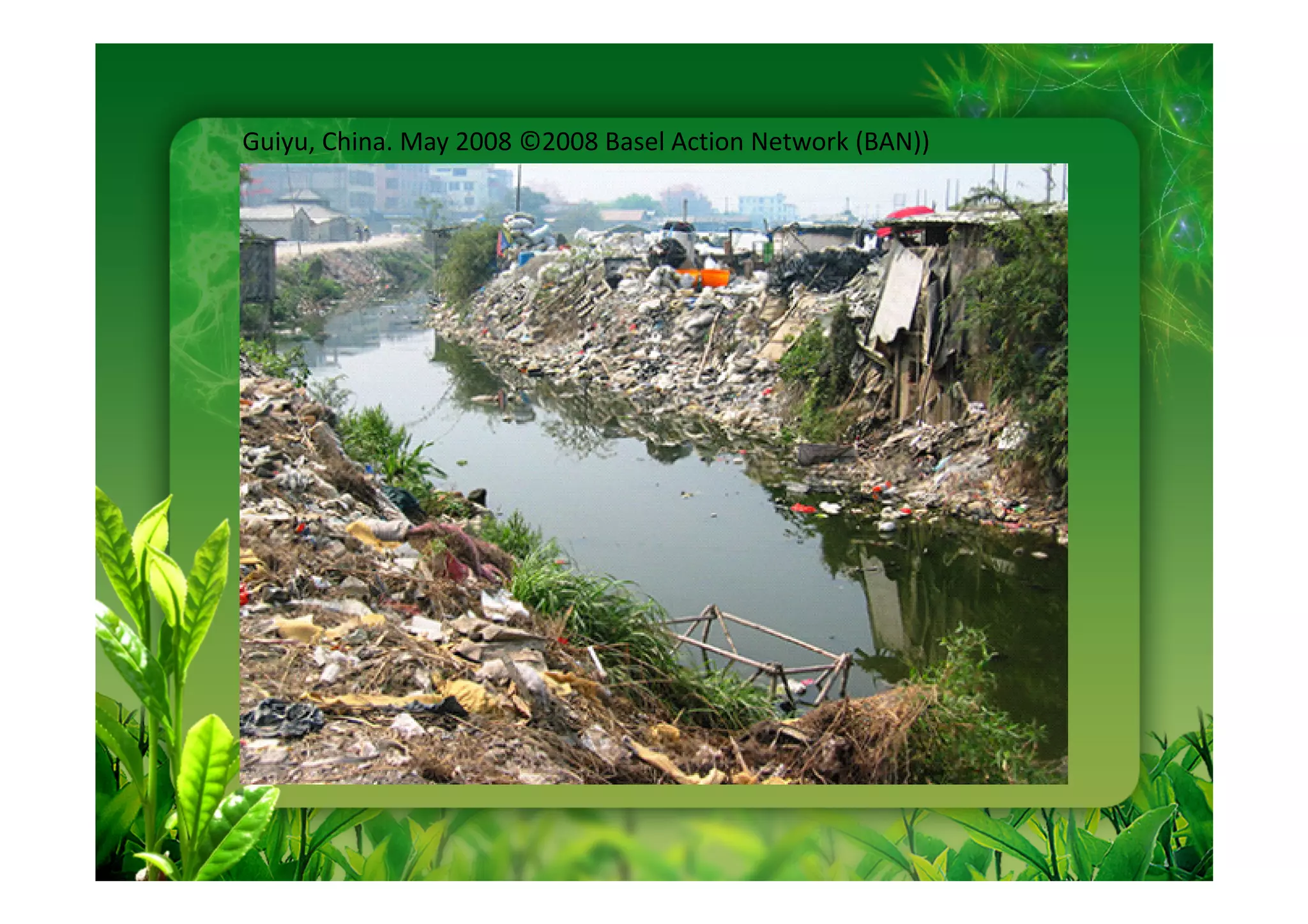
Guiyu, China. May 2008 ©2008 Basel Action Network (BAN))
BASEL ACTION NETWORK (BAN)
• Toxic Trade -- BAN serves as the information clearinghouse for
  journalists, academics, and the general public on the subject of
  waste trade. BAN maintains a website on international toxic trade
  that can be accessed at www.ban.org.
• Policy Advocacy -- Recognised by the United Nations Environment
  Program as the leading organization dedicated exclusively to issues
  of “toxic trade,” BAN is regularly invited to participate as an NGO
  expert at internal meetings and policy deliberations.
• Research – BAN conducts field investigations in developing
  countries as well as providing photographic and video
  documentation of toxic trade.
• Campaigns -- BAN works with NGO organizations around the globe
  in campaigns to counter any form of toxic trade.
BLAH
 BLAH
              BLAH
       BLAH

                     BL
   BLAH       BLAH
Coffee Break!

            With
         compliments!
A parish priest is to offer ‘eco-sinners’ the chance
to confess in what is thought to be the first
‘green’ confessional booth. Obviously you can’t
confess all your sins in one go but must separate
bottle, paper and plastic confessions.
GREEN IT BUSINESS CASE
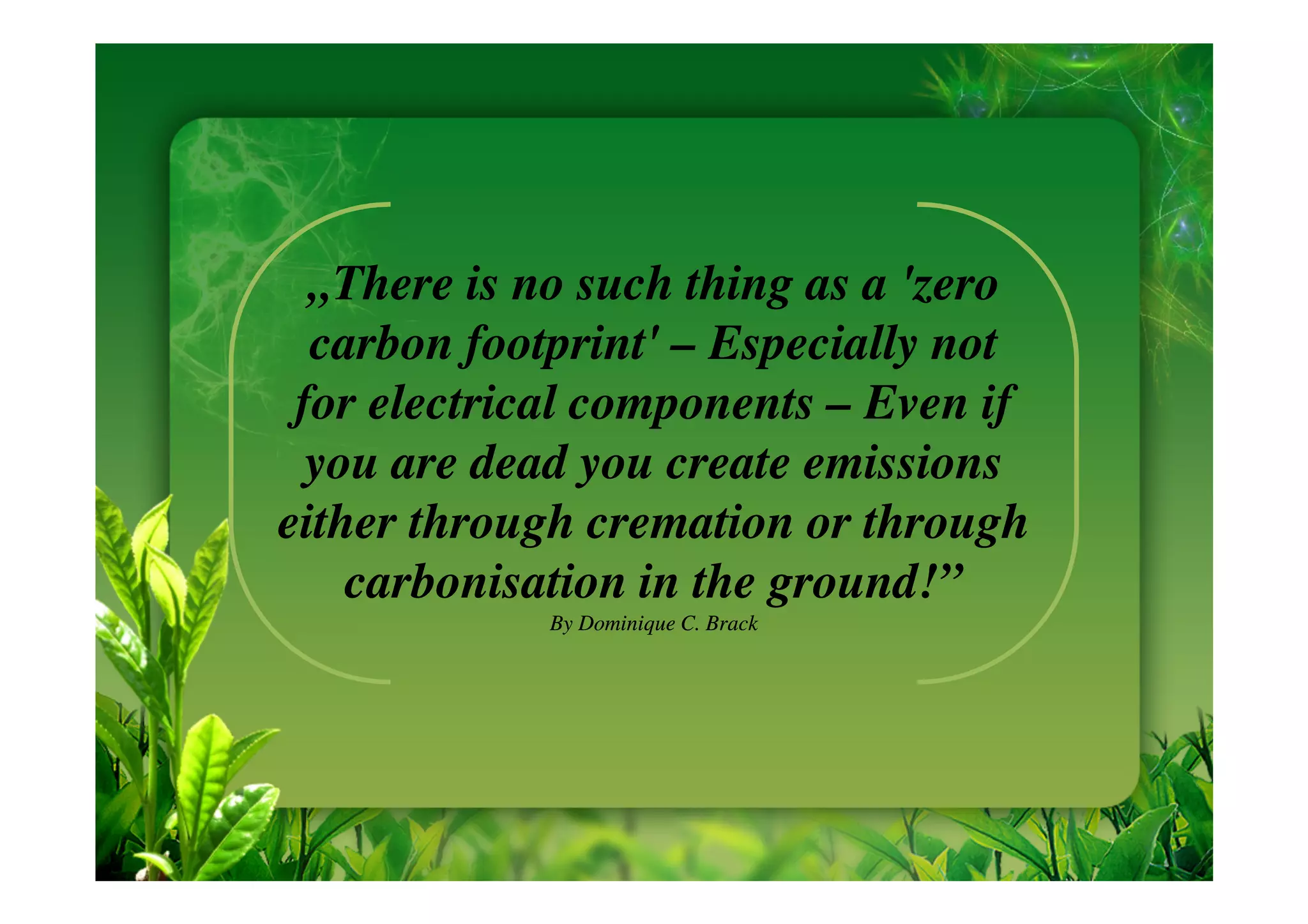
„There is no such thing as a 'zero
  carbon footprint' – Especially not
 for electrical components – Even if
  you are dead you create emissions
either through cremation or through
    carbonisation in the ground!”
             By Dominique C. Brack
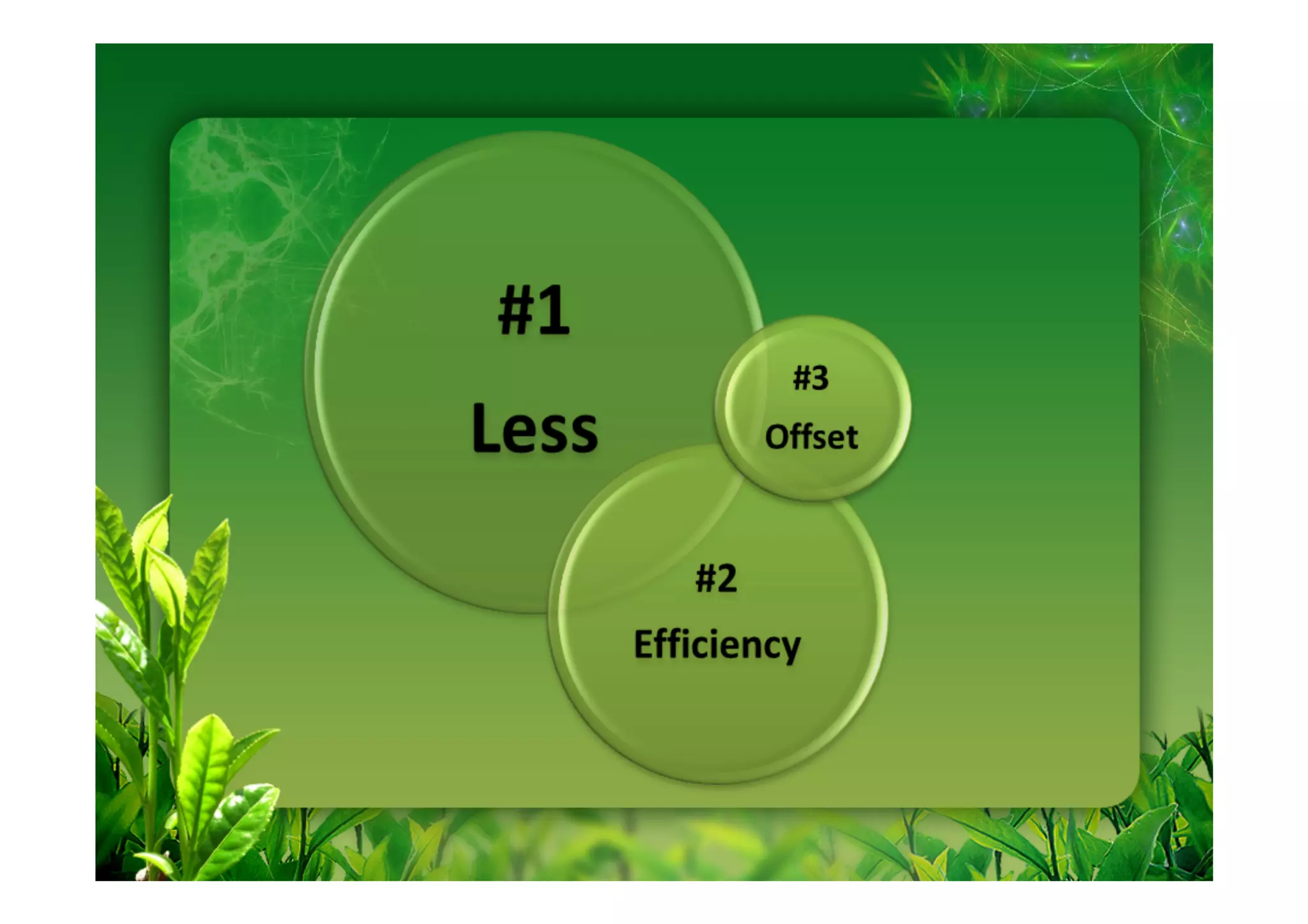
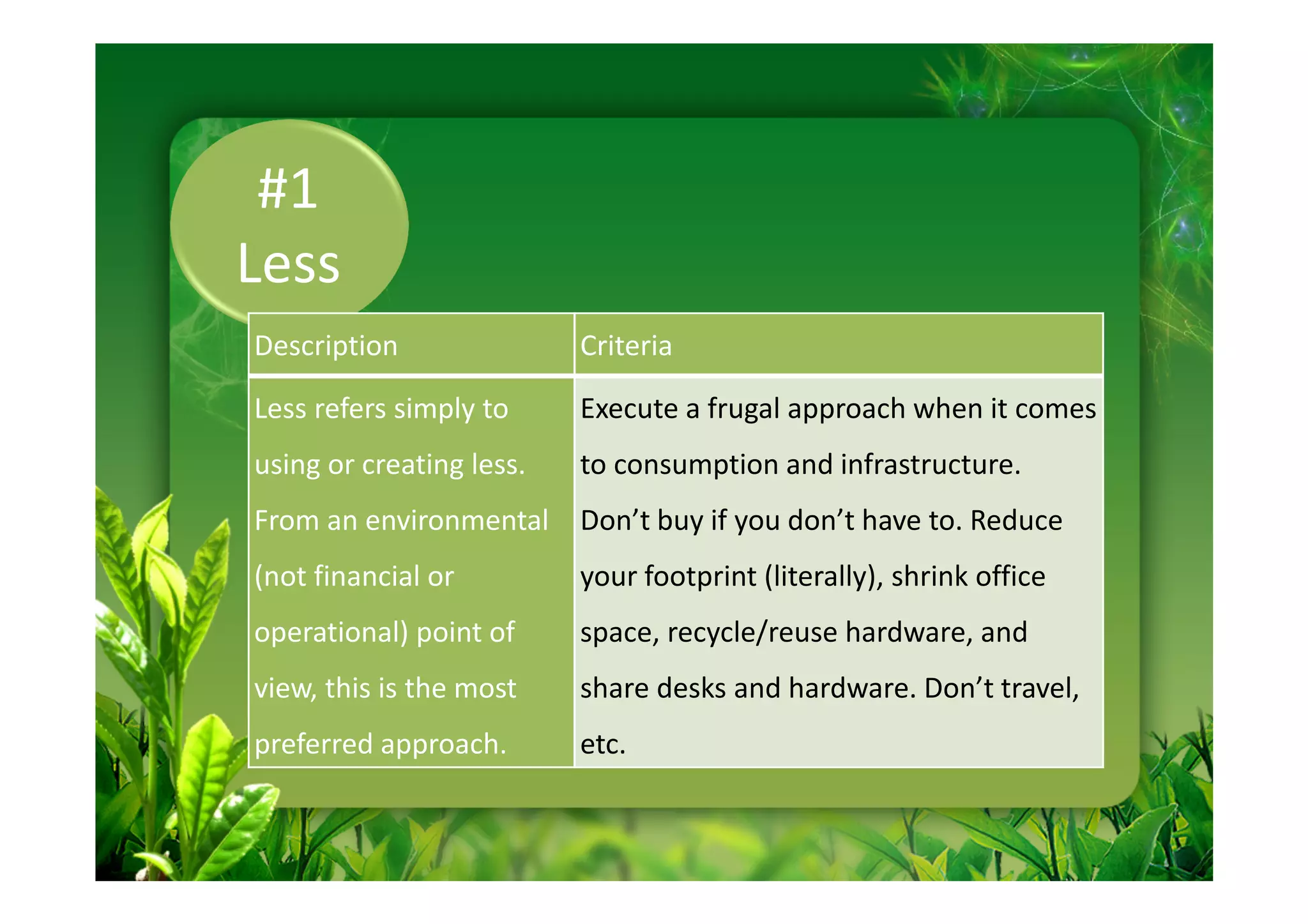
#1
Less
Description               Criteria

Less refers simply to     Execute a frugal approach when it comes
using or creating less.   to consumption and infrastructure.
From an environmental Don’t buy if you don’t have to. Reduce
(not financial or         your footprint (literally), shrink office
operational) point of     space, recycle/reuse hardware, and
view, this is the most    share desks and hardware. Don’t travel,
preferred approach.       etc.
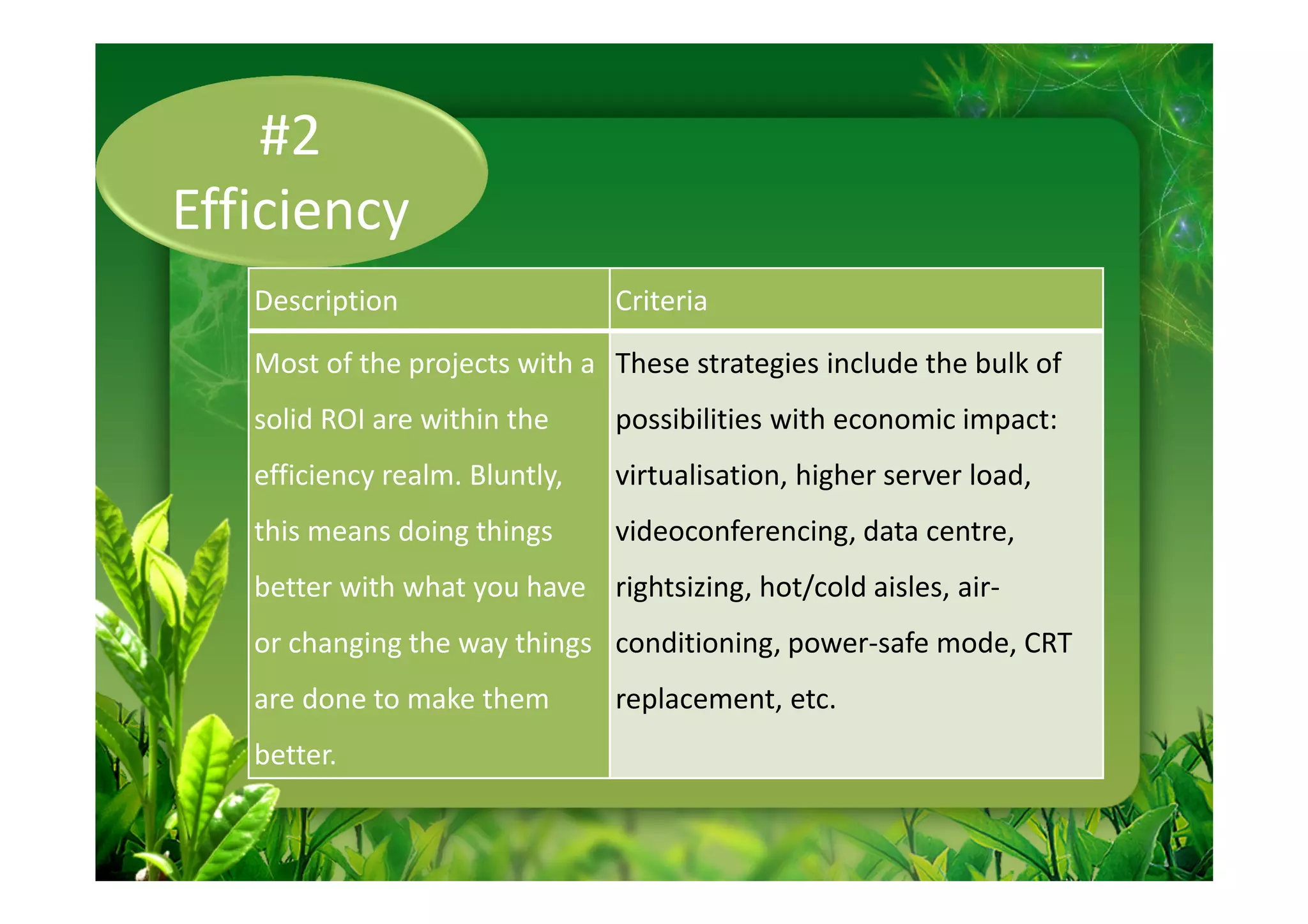
#2
Efficiency
   Description                  Criteria

   Most of the projects with a These strategies include the bulk of
   solid ROI are within the     possibilities with economic impact:
   efficiency realm. Bluntly,   virtualisation, higher server load,
   this means doing things      videoconferencing, data centre,
   better with what you have rightsizing, hot/cold aisles, air-
   or changing the way things conditioning, power-safe mode, CRT
   are done to make them        replacement, etc.
   better.
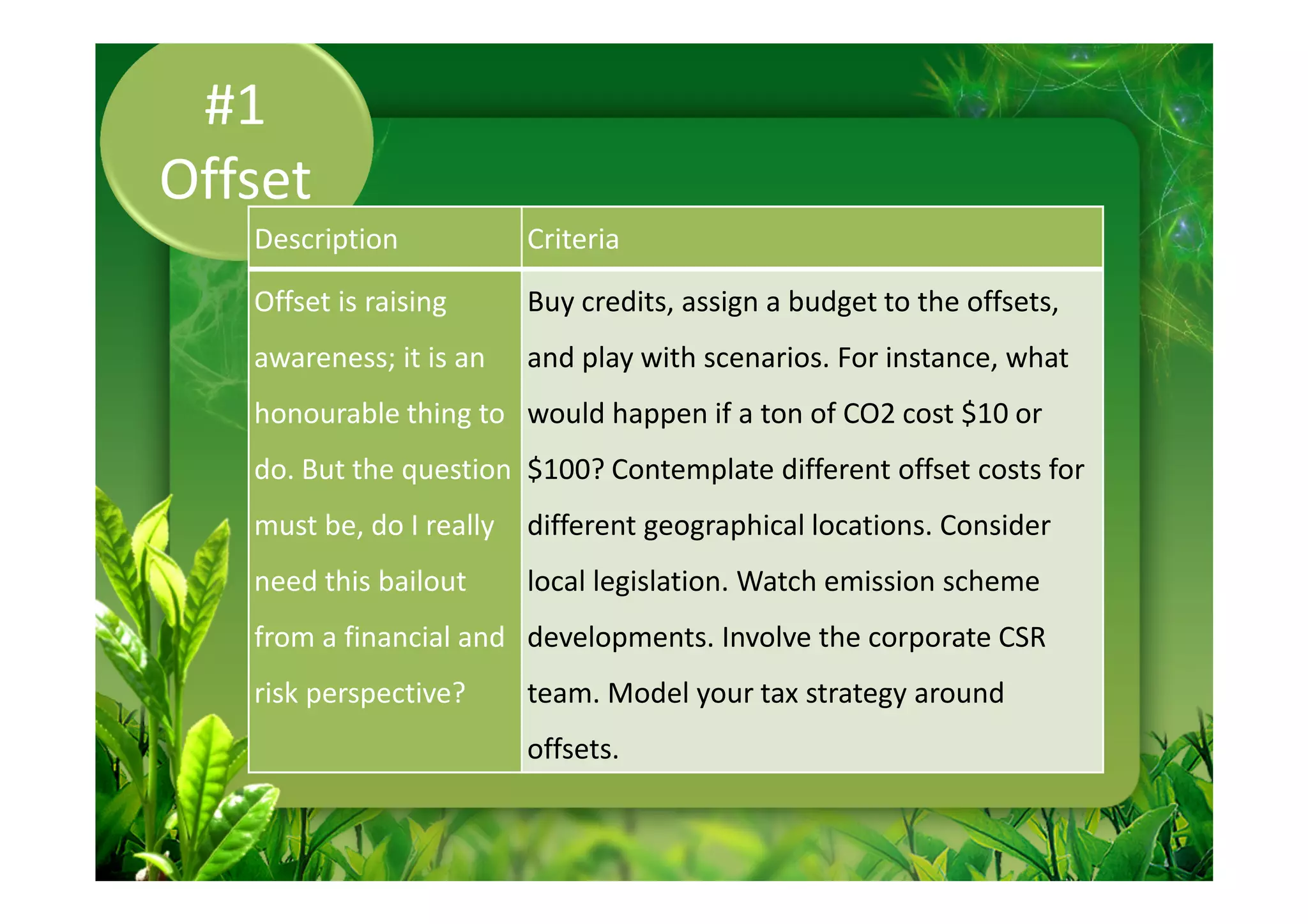
#1
Offset
   Description            Criteria

   Offset is raising      Buy credits, assign a budget to the offsets,
   awareness; it is an    and play with scenarios. For instance, what
   honourable thing to would happen if a ton of CO2 cost $10 or
   do. But the question $100? Contemplate different offset costs for
   must be, do I really   different geographical locations. Consider
   need this bailout      local legislation. Watch emission scheme
   from a financial and developments. Involve the corporate CSR
   risk perspective?      team. Model your tax strategy around
                          offsets.
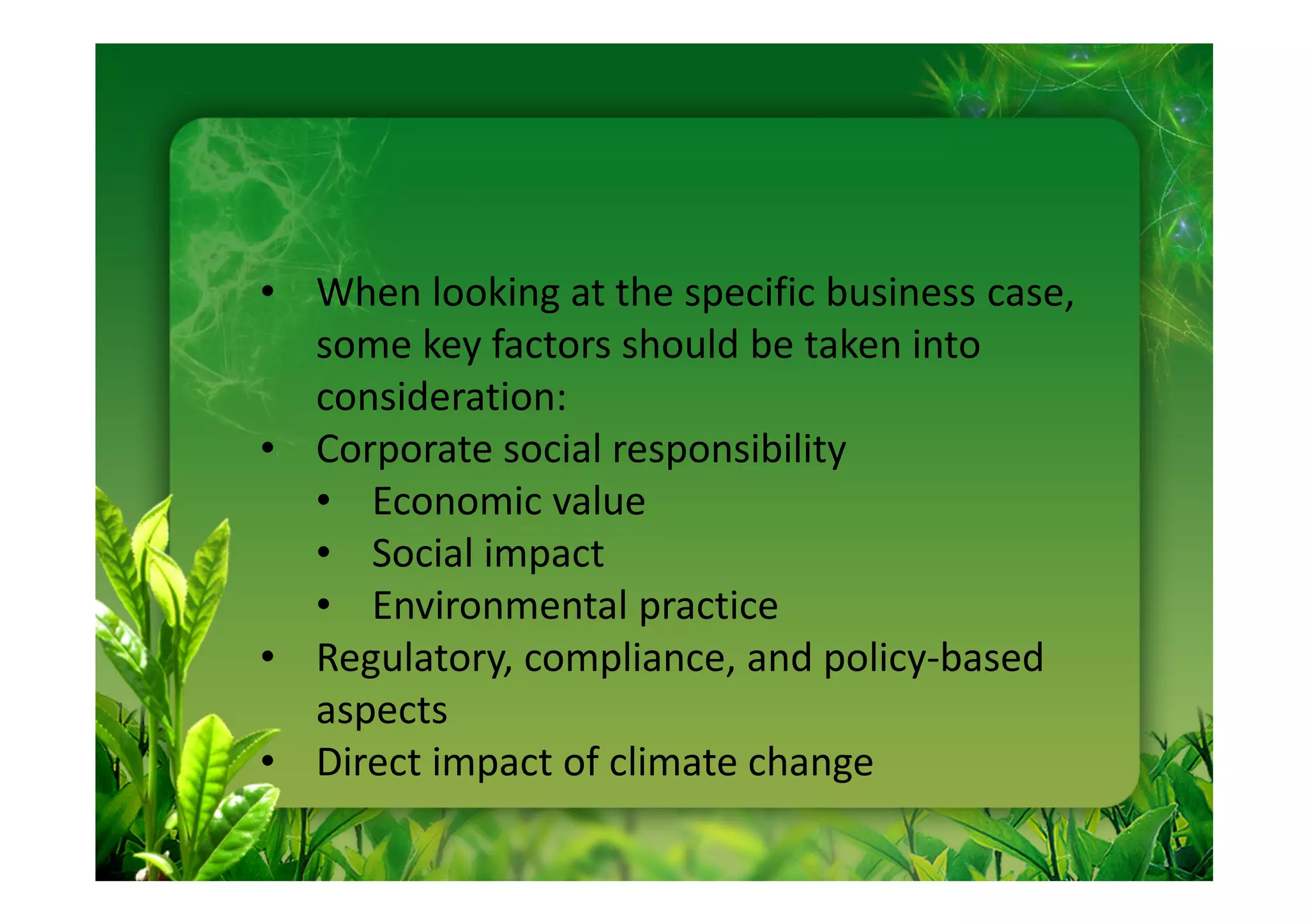
• When looking at the specific business case,
  some key factors should be taken into
  consideration:
• Corporate social responsibility
  • Economic value
  • Social impact
  • Environmental practice
• Regulatory, compliance, and policy-based
  aspects
• Direct impact of climate change
GREEN RETURN ON INVESTMENT
(GROI)
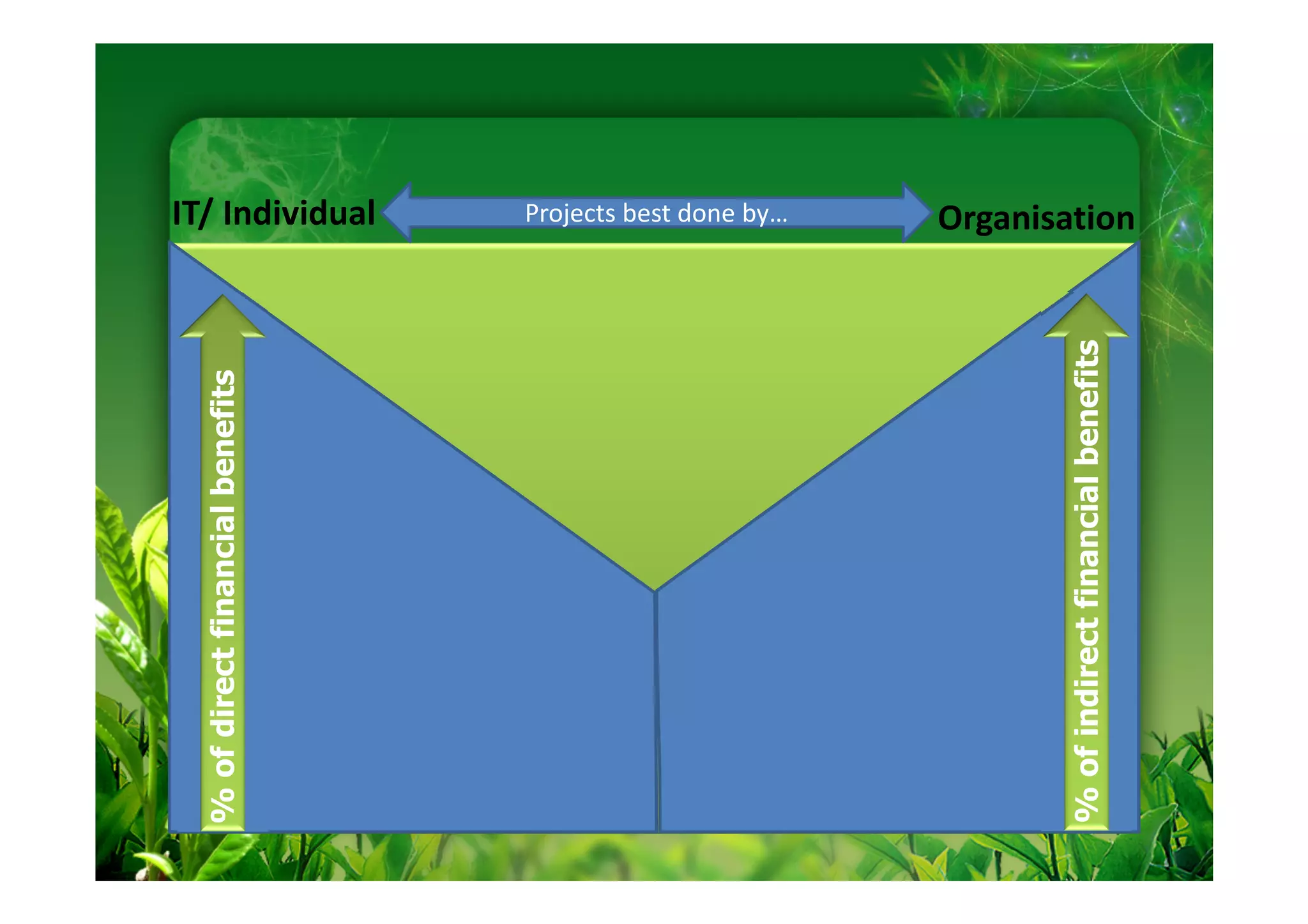
% of direct financial benefits      IT/ Individual
                                      Projects best done by…


% of indirect financial benefits
                                   Organisation
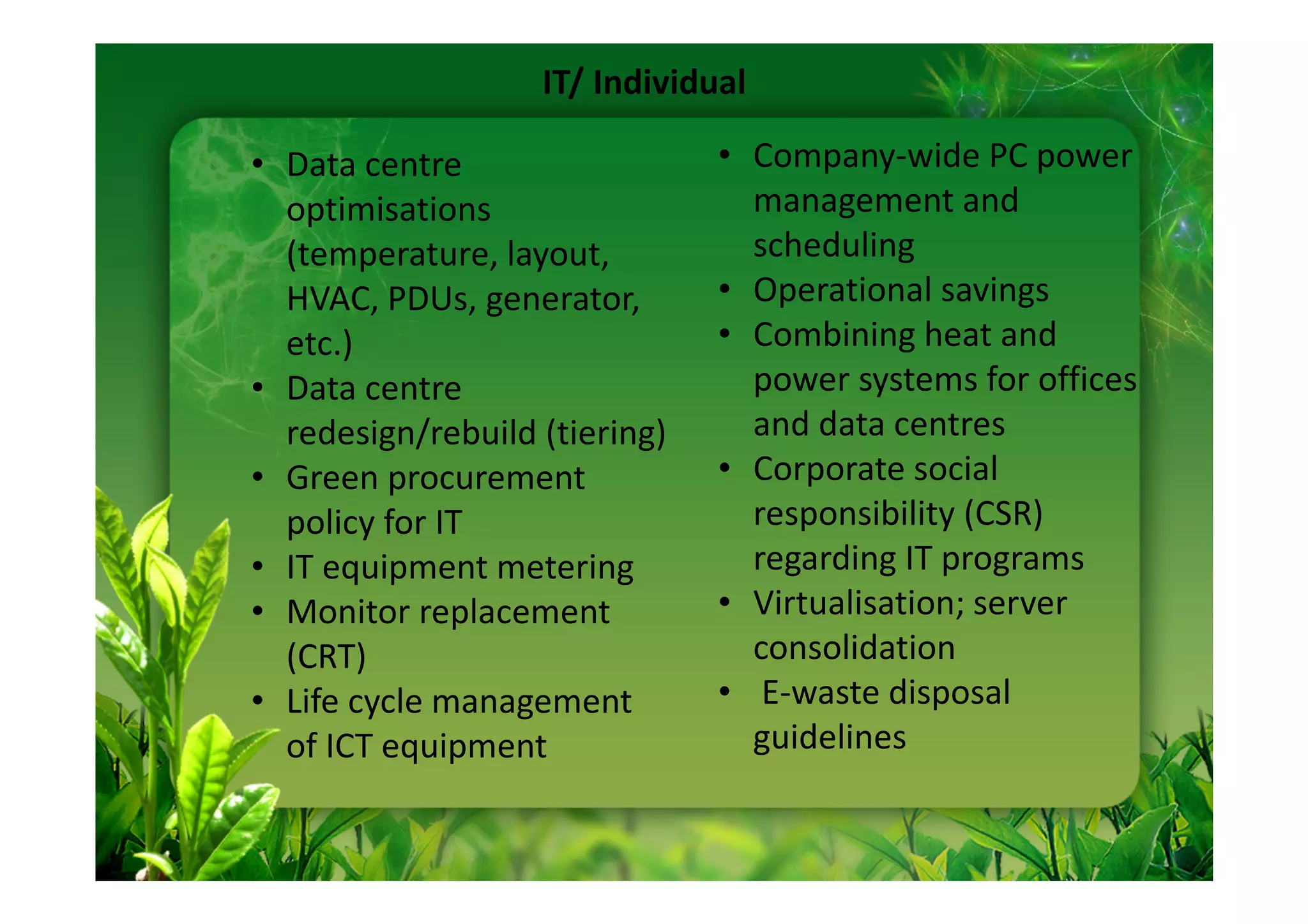
IT/ Individual

• Data centre                  • Company-wide PC power
  optimisations                  management and
  (temperature, layout,          scheduling
  HVAC, PDUs, generator,       • Operational savings
  etc.)                        • Combining heat and
• Data centre                    power systems for offices
  redesign/rebuild (tiering)     and data centres
• Green procurement            • Corporate social
  policy for IT                  responsibility (CSR)
• IT equipment metering          regarding IT programs
• Monitor replacement          • Virtualisation; server
  (CRT)                          consolidation
• Life cycle management        • E-waste disposal
  of ICT equipment               guidelines
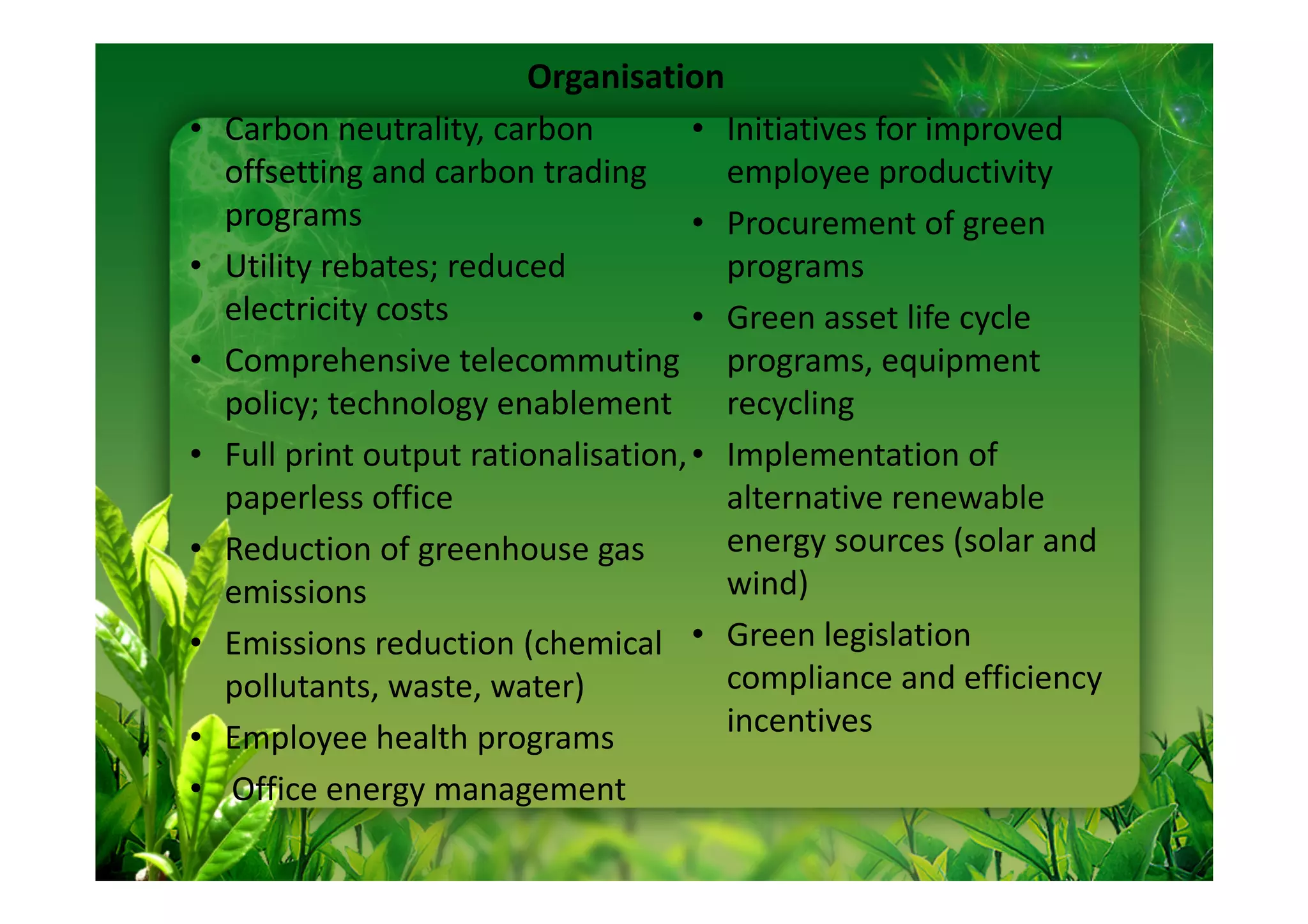
Organisation
•   Carbon neutrality, carbon          • Initiatives for improved
    offsetting and carbon trading        employee productivity
    programs                           • Procurement of green
•   Utility rebates; reduced             programs
    electricity costs                  • Green asset life cycle
•   Comprehensive telecommuting programs, equipment
    policy; technology enablement        recycling
•   Full print output rationalisation, • Implementation of
    paperless office                     alternative renewable
•   Reduction of greenhouse gas          energy sources (solar and
    emissions                            wind)
•   Emissions reduction (chemical • Green legislation
    pollutants, waste, water)            compliance and efficiency
•   Employee health programs             incentives
•   Office energy management
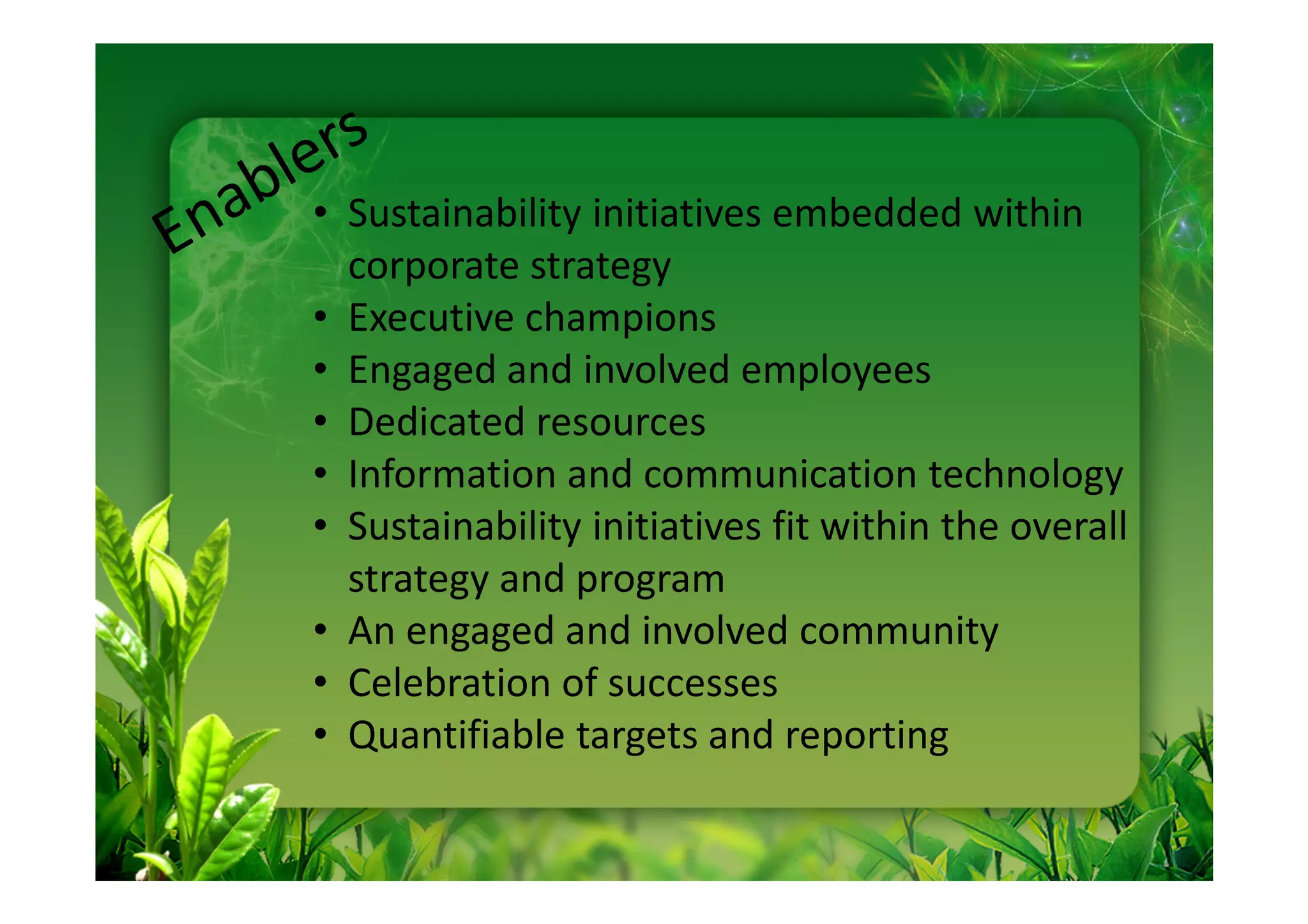
KEY SUCCESS FACTORS
• Sustainability initiatives embedded within
  corporate strategy
• Executive champions
• Engaged and involved employees
• Dedicated resources
• Information and communication technology
• Sustainability initiatives fit within the overall
  strategy and program
• An engaged and involved community
• Celebration of successes
• Quantifiable targets and reporting
•   Insufficient resources/budget
•   Corporate commitment
•   Insufficient priority/importance
•   Unclear targets
•   Culture
•   Legacy technology infrastructure
•   Requirement for short-term ROI
•   Inability to monitor/measure progress
•   Knowledge/understanding
•   Recognised standards
•   Relevant research
•   Independent advice
•   Training
•   Peer support group
DOMINIQUE’S QUICK ETHICS CHECK
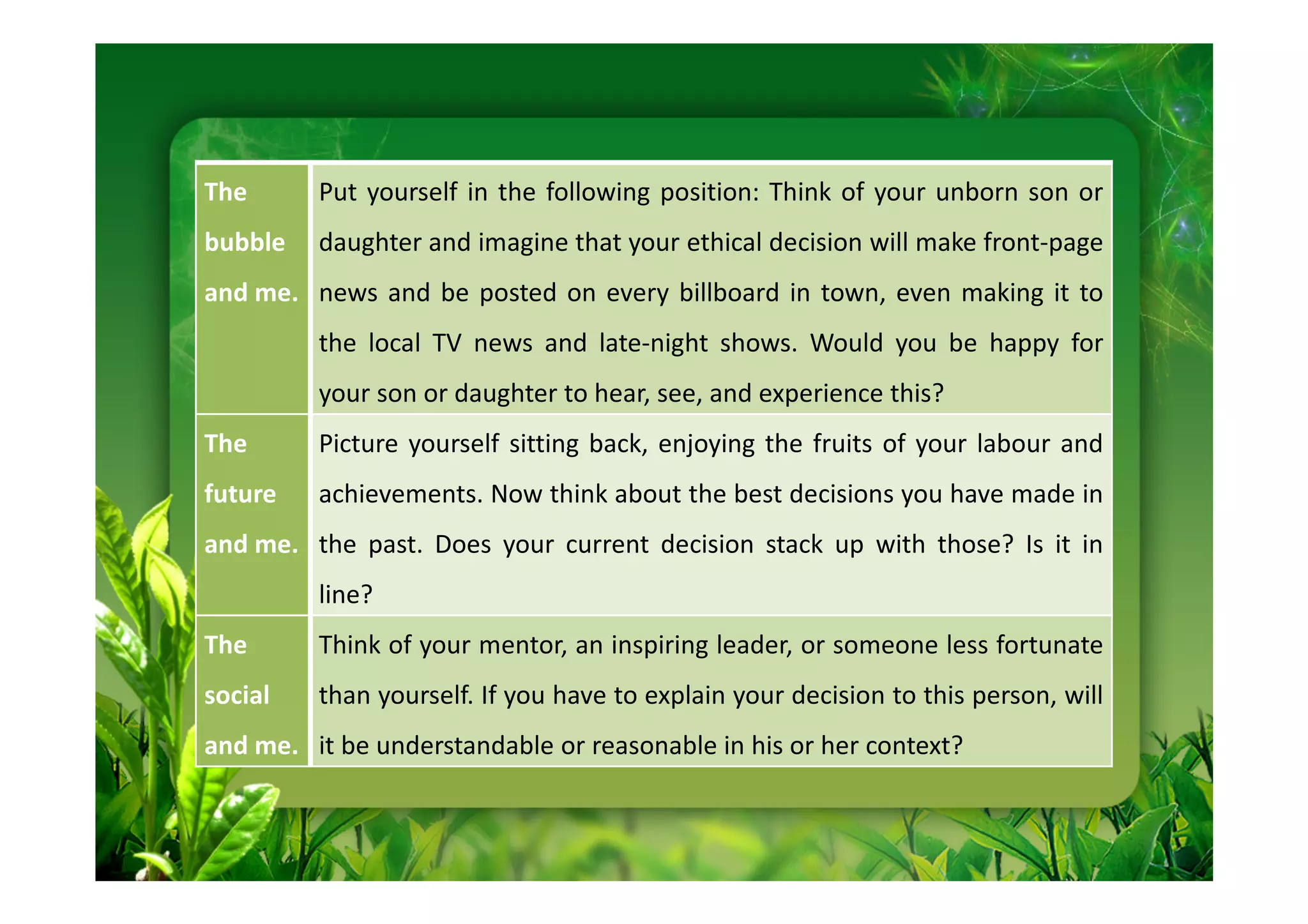
The      Put yourself in the following position: Think of your unborn son or
bubble   daughter and imagine that your ethical decision will make front-page
and me. news and be posted on every billboard in town, even making it to
         the local TV news and late-night shows. Would you be happy for
         your son or daughter to hear, see, and experience this?
The      Picture yourself sitting back, enjoying the fruits of your labour and
future   achievements. Now think about the best decisions you have made in
and me. the past. Does your current decision stack up with those? Is it in
         line?
The      Think of your mentor, an inspiring leader, or someone less fortunate
social   than yourself. If you have to explain your decision to this person, will
and me. it be understandable or reasonable in his or her context?
CLOSING
“Decisions
                  shape the
                present and
                 future–not
                intentions!”
                   —Dominique C. Brack


For complaints, suggestions, praise, and warm fuzzies, please contact
me at GreenIT@807am.com. Yours sincerely, Dominique C. Brack.

Green I.T. Awareness Week Speaker Dominique C. Brack Slideset

  • 1.
    INTERNATIONAL GREEN IT AWARENESSWEEK 1-7 JUNE 2010 Dominique C. Brack, Switzerland
  • 2.
    SESSION: FROM KPIS TOTHE BUSINESS CASE- RETURN ON INVESTMENT ON GREEN IT Dominique C. Brack, Switzerland
  • 3.
  • 4.
    Dominique C. Brack,Switzerland • Non-profit making internationally collaborative book. • Creative Commons license (available for free). • Can be downloaded on the Green IT Awareness week webpage.
  • 5.
    Forward Logistik Reverse Logistik Disposal/ Manufacture Utilisation Recycling Energy Products Resources Materials Waste
  • 6.
  • 7.
    Good KPI orbad KPI? You have 5 sec to decide! • Percentage of servers located in data centers. • Number of greenwashing advertising campaigns. • Average percentage of utilization of CPU of system during the measurement period. • Average percentage of utilization of memory capacity of system within measurement period. • Percentage of “dead” servers i.e. servers that are not used based on for example hardly any CPU utilization.
  • 8.
    Good KPI orbad KPI? You have 5 sec to decide! • Percentage of recycled printer paper in use. • Number of undetected environmental violations relative to the committal. • Percentage of energy used from renewable sources (“green energy”). • Number of power point slides per minute. • Percentage of total power that is “green” power. • Percentage of employees who consider that their business acts responsibly in the society/community in which it operate.
  • 9.
    QUANTIFIABLE AND KEYTO ORGANISATIONAL SUCCESS
  • 10.
  • 11.
    Corporate Strategy & Values define KPIs check SMARTER define KPI target test KPI create/ accept KPI Peer review Implement and Adjust if necessary
  • 12.
    • Objective: WhatI am trying to achieve? • Indicator: What I am going to measure? • Measures: How I am going to measure? • Targets: What are the expected results? • Results: What have I actually achieved?
  • 13.
    KPI METRICS OFAPPLICABILITY
  • 15.
    Your Company orYourself Corporate Governance, CSR Green Procurement Policies (Label Products) Strategic Ewaste disposal guidelines (Stewardship) Tactical CIO Sys Admin Operational/ Technology Triple Bottom Profit (Economic Value) Line: People (Social Impact) Materials Planet (Environmental Practice) Waste
  • 16.
    Your Company orYourself Forward Logistik Reverse Logistik Disposal/ Manufacture Utilisation Recycling Green Procurement Policies (Label Products) Corporate Governance, CSR Ewaste disposal guidelines (Stewardship) Strategic Tactical CIO Energy Sys Products Admin Resources Operational Triple Bottom Profit (Economic Value) Line: People (Social Impact) Materials Planet (Environmental Practice) Waste
  • 17.
    Forward Logistik Reverse Logistik Disposal/ Manufacture Utilisation Recycling • Aluminium, for instance, has an negative environmental impact when the raw material is extracted, but it is relatively Energy benign when used or recycled. Products Resources Materials Waste
  • 18.
    Forward Logistik Reverse Logistik Disposal/ Manufacture Utilisation Recycling Energy • A printer will have its main Products impact during its utilisation, because of the consumption of Resources consumables--paper, in this instance. Materials Waste
  • 19.
  • 21.
    Success Factors Objective Procurement Tender Process • Contractual requirements • Supplier: o Environmental policy o Carbon footprint o Carbon reduction initiatives Standards • Energy Star ratings • Suppliers’ equipment ratings • Certification (EPEAT, RoHS) Equipment • Laptops/desktops vs. virtual desktops Selection • Multi-function devices • LCD monitors
  • 22.
    Success Factors Objective Procurement Carbon Offsets • Carbon management principles e-waste disposal • Computers and peripheral devices • Mobile phones • Printer cartridges included • Buyback program e-waste disposal • Options for end of life • Equipment disposed of environmentally • Extend lifespan of equipment • Ensure does not go to landfill • Audit equipment disposal suppliers e-waste collection • Collect e-waste from within supply chain
  • 23.
  • 25.
    Costs CapEx vs OpEx Server CapEx Server OpEx 2000 2008 2010 2012 2015
  • 26.
  • 28.
    • green*wash: (gr~en-wosh)-washers, -washing, - washed 1.) The phenomenon of socially and environmentally destructive corporations attempting to preserve and expand their markets by posing as friends of the environment and leaders in the struggle to eradicate poverty. 2) Environmental whitewash. 3) Any attempt to brainwash consumers or policy makers into believing polluting mega-corporations are the key to environmentally sound sustainable development. 4) Hogwash. CorpWatch Definition
  • 29.
  • 31.
  • 34.
    • ICT equipmentcontains hazardous materials • most concern are the heavy metals like lead, mercury, cadmium and chromium (VI), halogenated substances (e.g., CFCs), polychlorinated biphenyls, and plastics.
  • 35.
    SELECTING A VIABLERECYCLING OR DISPOSAL PARTNER
  • 36.
    Accra, Ghana, 2009©2009 Basel Action Network (BAN)
  • 37.
    Guiyu, China. May2008 ©2008 Basel Action Network (BAN))
  • 38.
  • 39.
    • Toxic Trade-- BAN serves as the information clearinghouse for journalists, academics, and the general public on the subject of waste trade. BAN maintains a website on international toxic trade that can be accessed at www.ban.org. • Policy Advocacy -- Recognised by the United Nations Environment Program as the leading organization dedicated exclusively to issues of “toxic trade,” BAN is regularly invited to participate as an NGO expert at internal meetings and policy deliberations. • Research – BAN conducts field investigations in developing countries as well as providing photographic and video documentation of toxic trade. • Campaigns -- BAN works with NGO organizations around the globe in campaigns to counter any form of toxic trade.
  • 40.
    BLAH BLAH BLAH BLAH BL BLAH BLAH
  • 41.
    Coffee Break! With compliments!
  • 42.
    A parish priestis to offer ‘eco-sinners’ the chance to confess in what is thought to be the first ‘green’ confessional booth. Obviously you can’t confess all your sins in one go but must separate bottle, paper and plastic confessions.
  • 43.
  • 44.
    „There is nosuch thing as a 'zero carbon footprint' – Especially not for electrical components – Even if you are dead you create emissions either through cremation or through carbonisation in the ground!” By Dominique C. Brack
  • 46.
    #1 Less Description Criteria Less refers simply to Execute a frugal approach when it comes using or creating less. to consumption and infrastructure. From an environmental Don’t buy if you don’t have to. Reduce (not financial or your footprint (literally), shrink office operational) point of space, recycle/reuse hardware, and view, this is the most share desks and hardware. Don’t travel, preferred approach. etc.
  • 47.
    #2 Efficiency Description Criteria Most of the projects with a These strategies include the bulk of solid ROI are within the possibilities with economic impact: efficiency realm. Bluntly, virtualisation, higher server load, this means doing things videoconferencing, data centre, better with what you have rightsizing, hot/cold aisles, air- or changing the way things conditioning, power-safe mode, CRT are done to make them replacement, etc. better.
  • 48.
    #1 Offset Description Criteria Offset is raising Buy credits, assign a budget to the offsets, awareness; it is an and play with scenarios. For instance, what honourable thing to would happen if a ton of CO2 cost $10 or do. But the question $100? Contemplate different offset costs for must be, do I really different geographical locations. Consider need this bailout local legislation. Watch emission scheme from a financial and developments. Involve the corporate CSR risk perspective? team. Model your tax strategy around offsets.
  • 49.
    • When lookingat the specific business case, some key factors should be taken into consideration: • Corporate social responsibility • Economic value • Social impact • Environmental practice • Regulatory, compliance, and policy-based aspects • Direct impact of climate change
  • 50.
    GREEN RETURN ONINVESTMENT (GROI)
  • 51.
    % of directfinancial benefits IT/ Individual Projects best done by… % of indirect financial benefits Organisation
  • 52.
    IT/ Individual • Datacentre • Company-wide PC power optimisations management and (temperature, layout, scheduling HVAC, PDUs, generator, • Operational savings etc.) • Combining heat and • Data centre power systems for offices redesign/rebuild (tiering) and data centres • Green procurement • Corporate social policy for IT responsibility (CSR) • IT equipment metering regarding IT programs • Monitor replacement • Virtualisation; server (CRT) consolidation • Life cycle management • E-waste disposal of ICT equipment guidelines
  • 53.
    Organisation • Carbon neutrality, carbon • Initiatives for improved offsetting and carbon trading employee productivity programs • Procurement of green • Utility rebates; reduced programs electricity costs • Green asset life cycle • Comprehensive telecommuting programs, equipment policy; technology enablement recycling • Full print output rationalisation, • Implementation of paperless office alternative renewable • Reduction of greenhouse gas energy sources (solar and emissions wind) • Emissions reduction (chemical • Green legislation pollutants, waste, water) compliance and efficiency • Employee health programs incentives • Office energy management
  • 54.
  • 55.
    • Sustainability initiativesembedded within corporate strategy • Executive champions • Engaged and involved employees • Dedicated resources • Information and communication technology • Sustainability initiatives fit within the overall strategy and program • An engaged and involved community • Celebration of successes • Quantifiable targets and reporting
  • 56.
    Insufficient resources/budget • Corporate commitment • Insufficient priority/importance • Unclear targets • Culture • Legacy technology infrastructure • Requirement for short-term ROI • Inability to monitor/measure progress • Knowledge/understanding
  • 57.
    Recognised standards • Relevant research • Independent advice • Training • Peer support group
  • 58.
  • 59.
    The Put yourself in the following position: Think of your unborn son or bubble daughter and imagine that your ethical decision will make front-page and me. news and be posted on every billboard in town, even making it to the local TV news and late-night shows. Would you be happy for your son or daughter to hear, see, and experience this? The Picture yourself sitting back, enjoying the fruits of your labour and future achievements. Now think about the best decisions you have made in and me. the past. Does your current decision stack up with those? Is it in line? The Think of your mentor, an inspiring leader, or someone less fortunate social than yourself. If you have to explain your decision to this person, will and me. it be understandable or reasonable in his or her context?
  • 60.
  • 61.
    “Decisions shape the present and future–not intentions!” —Dominique C. Brack For complaints, suggestions, praise, and warm fuzzies, please contact me at GreenIT@807am.com. Yours sincerely, Dominique C. Brack.