Presented By
M.C.Mullai
3rd year, ECE
Sri Sai Ram Engineering College
contents
 DEFINITION :GREEN COMPUTING
 NEED FOR GREEN COMPUTING
 APPROACHES TO REDUCE POWER CONSUMPTION VIA GREEN
COMPUTING
 Green Data Center
 Virtualization
 Cloud Computing
 IMPLEMENTATIONS OF GREEN COMPUTING
 Blackle
 Zonbu Computer
 IDEAS TO ADOPT GREEN COMPUTING
 CONCLUSION
GREEN COMPUTING
Green computing can be defined as environmentally
responsible use of computers and their resources.
Such practice includes designing manufacturing, using
and disposing of computer server s and its subsystems
with no impact on the environment .
NEED FOR GREEN COMPUTING
 Today almost all the streams uses computers which
requires large amount of power for its effective
functioning.
The increase in the use of computers also increases power
consumption and generate a greater amount of heat.
There are toxic chemicals used in the manufacturing of
computers , those chemicals cause ill effect on
environment during its disposal.
To decrease these impacts the term green computing
comes into existence.
APPROACHES TO reduce power consumption via GREEN
COMPUTING
Green Data Center
Virtualization
Cloud Computing
Green Data Center
 A large group of networked computer servers typically
used by organizations for the remote storage,
processing, or distribution of large amounts of data is
called data center.
 A green data center is a data center which has effective
& efficient management .
 The mechanical, electrical and computer systems are
designed for maximum energy efficiency and
minimum environmental impact.
Virtualization
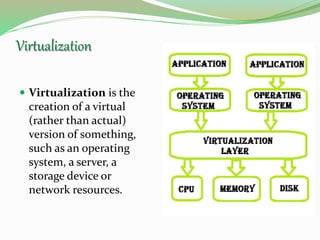
 Virtualization is the
creation of a virtual
(rather than actual)
version of something,
such as an operating
system, a server, a
storage device or
network resources.
 Telecommuting, e-commuting, e-work, working at
(/from) home (WAH, WFH) are some of the
examples of virtualization.
 Voice over Internet Protocol (VoIP) facilitates
virtualization. It is just the delivery of voice
communications over the Internet or other packet-
switched networks.
 Voice over IP (VoIP) reduces the telephony wiring
infrastructure , thus reduce the use of metallic
waste.
Cloud Computing
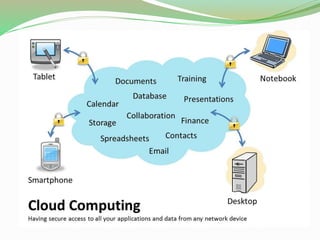
Cloud computing delivers the computing resources as
a service over the internet.
User can use the cloud services or cloud application
through a web browser or a mobile app while the
software and user’s data is stored on remote data
server.
Cloud computing allows companies to avoid high cost
on infrastructure and maintenance for storage.
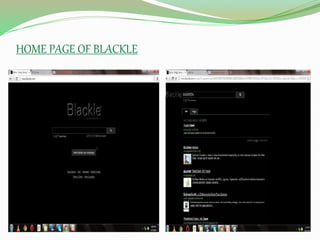
BlACKLE
Blackle is a search-engine site powered by Google
Search.
The principle behind Blackle is based on the fact that
the display of different colors consumes different
amounts of energy on computer monitors.
When a computer screen is white it consumes 74W.
When the screen is black it consumes only 59W.
If everyone switched from Google to Blackle, mother
earth would save750MW each year.
implementations of Green Computing
HOME PAGE OF BLACKLE
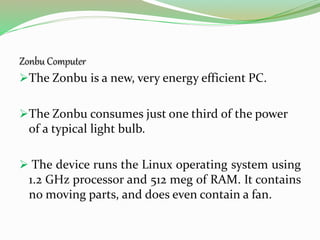
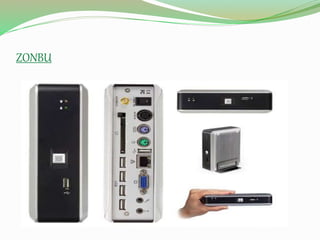
Zonbu Computer
The Zonbu is a new, very energy efficient PC.
The Zonbu consumes just one third of the power
of a typical light bulb.
 The device runs the Linux operating system using
1.2 GHz processor and 512 meg of RAM. It contains
no moving parts, and does even contain a fan.
ZONBU
Ideas to adopt green computing
 The computer shouldn’t be left running overnight.
 The brightness level of monitor can be reduced
while working for long time. It saves energy and
increases monitor longevity.
 The monitor should be turned OFF when its not in
use. The best screen saver is no screen saver at all.
 The power management features in your
computers are enabled.
 The monitor is bought only of required size . A large
monitor might seem more attractive , but it
consumes more power than the smaller one. A 17-
inch monitor uses 40 percent more energy than a 14-
inch monitor. Also, the higher the resolution, the
more energy it needs.
 Printers consume energy even while they are idling.
So printers should not be turned ON until you are
ready to print.
 The "paperless" methods of communication such as
email and fax-modems should be used.
 Copies of email should not be taken unless
necessary.
 The document should be reviewed on the screen
instead of printing it.
 Non-petroleum-based inks can be used. These
printer inks are made from renewable resources;
require fewer hazardous solvents; and in many
cases produce brighter, cleaner colors.
Conclusion
 Green computing developments can enable individuals
and businesses to adopt greener lifestyles and work
styles .
 Apart from ecological issues, this is also beneficial on
economic view.
 Going green is very much important to make ourselves,
our surroundings and the planet healthy.
Green computing

Green computing

  • 1.
    Presented By M.C.Mullai 3rd year,ECE Sri Sai Ram Engineering College
  • 2.
    contents  DEFINITION :GREENCOMPUTING  NEED FOR GREEN COMPUTING  APPROACHES TO REDUCE POWER CONSUMPTION VIA GREEN COMPUTING  Green Data Center  Virtualization  Cloud Computing  IMPLEMENTATIONS OF GREEN COMPUTING  Blackle  Zonbu Computer  IDEAS TO ADOPT GREEN COMPUTING  CONCLUSION
  • 3.
    GREEN COMPUTING Green computingcan be defined as environmentally responsible use of computers and their resources. Such practice includes designing manufacturing, using and disposing of computer server s and its subsystems with no impact on the environment .
  • 4.
    NEED FOR GREENCOMPUTING  Today almost all the streams uses computers which requires large amount of power for its effective functioning. The increase in the use of computers also increases power consumption and generate a greater amount of heat. There are toxic chemicals used in the manufacturing of computers , those chemicals cause ill effect on environment during its disposal. To decrease these impacts the term green computing comes into existence.
  • 5.
    APPROACHES TO reducepower consumption via GREEN COMPUTING Green Data Center Virtualization Cloud Computing
  • 6.
    Green Data Center A large group of networked computer servers typically used by organizations for the remote storage, processing, or distribution of large amounts of data is called data center.  A green data center is a data center which has effective & efficient management .  The mechanical, electrical and computer systems are designed for maximum energy efficiency and minimum environmental impact.
  • 7.
    Virtualization  Virtualization isthe creation of a virtual (rather than actual) version of something, such as an operating system, a server, a storage device or network resources.
  • 8.
     Telecommuting, e-commuting,e-work, working at (/from) home (WAH, WFH) are some of the examples of virtualization.  Voice over Internet Protocol (VoIP) facilitates virtualization. It is just the delivery of voice communications over the Internet or other packet- switched networks.  Voice over IP (VoIP) reduces the telephony wiring infrastructure , thus reduce the use of metallic waste.
  • 9.
    Cloud Computing Cloud computingdelivers the computing resources as a service over the internet. User can use the cloud services or cloud application through a web browser or a mobile app while the software and user’s data is stored on remote data server. Cloud computing allows companies to avoid high cost on infrastructure and maintenance for storage.
  • 11.
    BlACKLE Blackle is asearch-engine site powered by Google Search. The principle behind Blackle is based on the fact that the display of different colors consumes different amounts of energy on computer monitors. When a computer screen is white it consumes 74W. When the screen is black it consumes only 59W. If everyone switched from Google to Blackle, mother earth would save750MW each year. implementations of Green Computing
  • 12.
    HOME PAGE OFBLACKLE
  • 13.
    Zonbu Computer The Zonbuis a new, very energy efficient PC. The Zonbu consumes just one third of the power of a typical light bulb.  The device runs the Linux operating system using 1.2 GHz processor and 512 meg of RAM. It contains no moving parts, and does even contain a fan.
  • 14.
  • 15.
    Ideas to adoptgreen computing  The computer shouldn’t be left running overnight.  The brightness level of monitor can be reduced while working for long time. It saves energy and increases monitor longevity.  The monitor should be turned OFF when its not in use. The best screen saver is no screen saver at all.  The power management features in your computers are enabled.
  • 16.
     The monitoris bought only of required size . A large monitor might seem more attractive , but it consumes more power than the smaller one. A 17- inch monitor uses 40 percent more energy than a 14- inch monitor. Also, the higher the resolution, the more energy it needs.  Printers consume energy even while they are idling. So printers should not be turned ON until you are ready to print.  The "paperless" methods of communication such as email and fax-modems should be used.
  • 17.
     Copies ofemail should not be taken unless necessary.  The document should be reviewed on the screen instead of printing it.  Non-petroleum-based inks can be used. These printer inks are made from renewable resources; require fewer hazardous solvents; and in many cases produce brighter, cleaner colors.
  • 18.
    Conclusion  Green computingdevelopments can enable individuals and businesses to adopt greener lifestyles and work styles .  Apart from ecological issues, this is also beneficial on economic view.  Going green is very much important to make ourselves, our surroundings and the planet healthy.