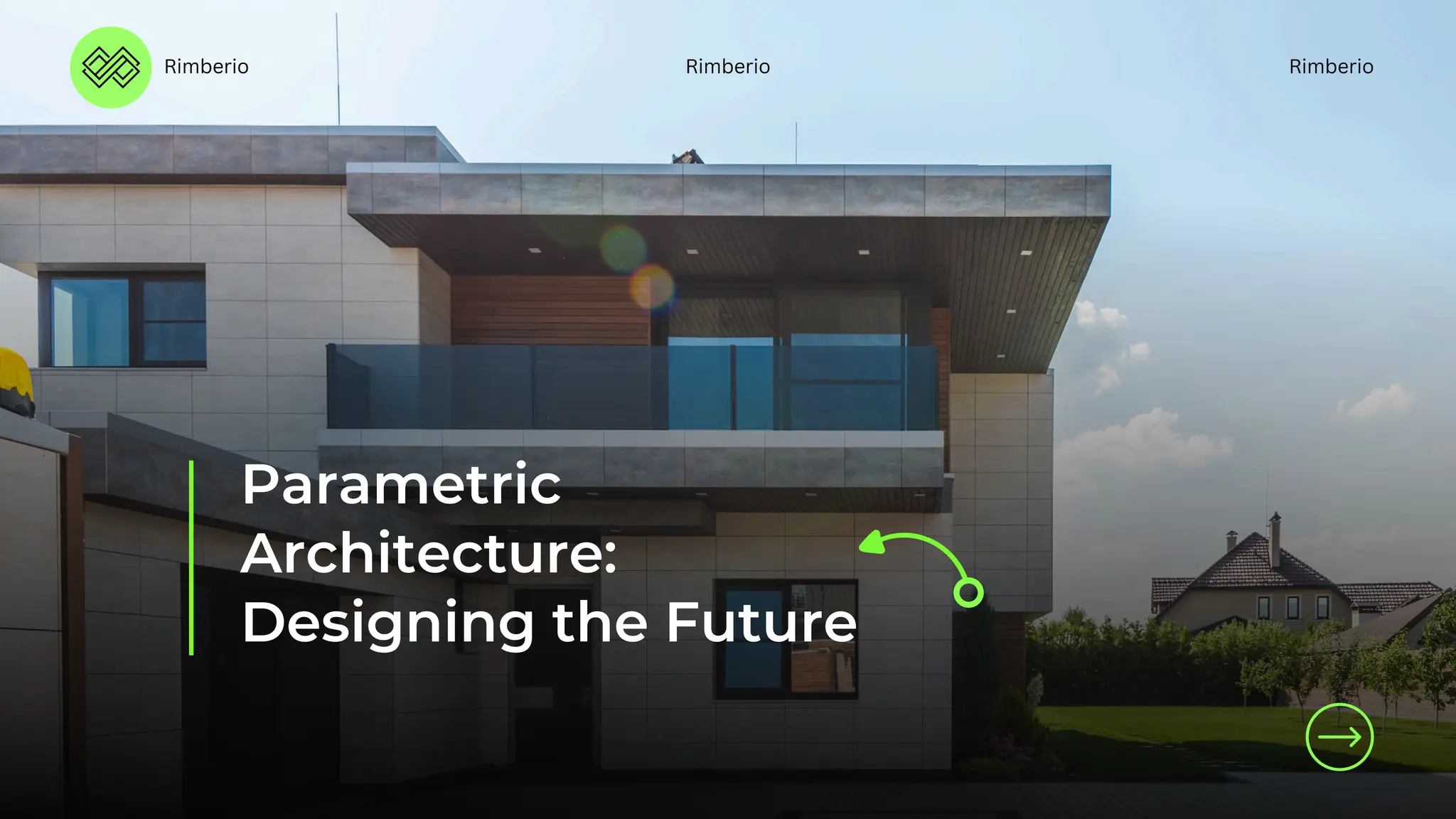
Parametric
Architecture:
Designing the Future
Rimberio Rimberio
Rimberio
What is Parametric
Architecture?
Parametric architecture uses
algorithms to define the
relationships between design
elements, allowing for dynamic
and adaptable models.
Design parameters can be
adjusted to explore a wide
range of possibilities and
generate unique, optimized
solutions.
Algorithmic Design Flexible Parameters
Parametric tools enable
architects to create complex,
multi-dimensional models that
can be easily modified and
simulated.
Digital Modeling
Parametric design focuses on
optimizing a building's
performance, functionality,
and aesthetics based on
defined criteria.
Performance-Driven
Cutting-edge algorithms are revolutionizing the design process, empowering
architects to explore complex geometries, optimize performance, and generate
innovative solutions. Parametric tools unlock a new frontier of computational
creativity, blending human vision with machine intelligence.
By harnessing the power of algorithms, designers can rapidly iterate, analyze
tradeoffs, and uncover design possibilities beyond the limitations of manual
methods. This synergy between technology and creativity is transforming the
built environment.
The Power of
Algorithms in Design
Embracing
Computational
Thinking
Parametric architecture
requires breaking down
complex design challenges
into systematic, step-by-
step algorithms that can be
executed by computers.
Parametric tools enable the
creation of dynamic 3D
models that can be iteratively
tested and optimized through
computational simulations.
Algorithmic
Problem-Solving
Modeling and
Simulation
By defining parameters and
constraints, designers can
harness the power of algorithms
to generate a vast array of
design alternatives and explore
new creative possibilities.
Generative Design
Parametric architecture
necessitates close collaboration
between designers, engineers,
and computer scientists to
integrate data, algorithms, and
digital tools effectively.
Interdisciplinary
Collaboration
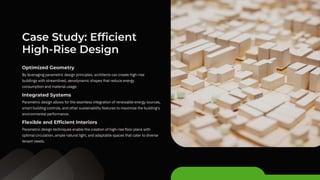
By leveraging parametric design principles, architects can create high-rise
buildings with streamlined, aerodynamic shapes that reduce energy
consumption and material usage.
Parametric design allows for the seamless integration of renewable energy sources,
smart building controls, and other sustainability features to maximize the building's
environmental performance.
Parametric design techniques enable the creation of high-rise floor plans with
optimal circulation, ample natural light, and adaptable spaces that cater to diverse
tenant needs.
Case Study: Efficient
High-Rise Design
Optimized Geometry
Integrated Systems
Flexible and Efficient Interiors
Optimization for
Performance and
Aesthetics
Parametric design allows
architects to optimize a
building's performance, such as
energy efficiency, while also
maintaining exceptional
aesthetic appeal.
Algorithms can simulate and
test countless design variations
to find the ideal balance
between functional and visual
criteria.
Balancing Priorities Computational
Exploration
Adjusting parameters enables
designers to nimbly respond to
changes in project requirements
or environmental conditions.
Parametric Flexibility
Parametric tools integrate
performance analysis directly
into the design process,
ensuring optimal outcomes
from the start.
Seamless Integration
Responsive Architecture:
Adapting to the
Environment
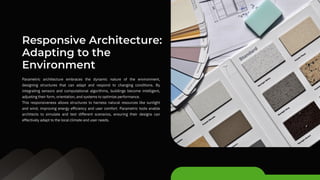
Parametric architecture embraces the dynamic nature of the environment,
designing structures that can adapt and respond to changing conditions. By
integrating sensors and computational algorithms, buildings become intelligent,
adjusting their form, orientation, and systems to optimize performance.
This responsiveness allows structures to harness natural resources like sunlight
and wind, improving energy efficiency and user comfort. Parametric tools enable
architects to simulate and test different scenarios, ensuring their designs can
effectively adapt to the local climate and user needs.
Parametric Tools and
Software
A visual programming language
for Rhino that allows designers
to create complex parametric
models.
A graphical programming
interface for Autodesk
programs, enabling parametric
workflows and generative
design.
Grasshopper Dynamo
A powerful parametric design
tool that integrates with
Building Information Modeling
(BIM) software.
Generative
Components
Advanced tools like
Galapagos, Octopus, and
Wallacei that optimize
designs based on various
parameters.
Computational
Design Platforms
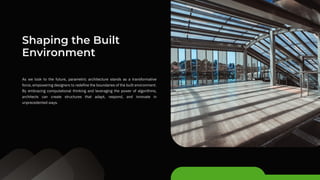
Shaping the Built
Environment
As we look to the future, parametric architecture stands as a transformative
force, empowering designers to redefine the boundaries of the built environment.
By embracing computational thinking and leveraging the power of algorithms,
architects can create structures that adapt, respond, and innovate in
unprecedented ways.
The Future of
Architectural Design
AI-powered algorithms will
generate novel, optimized
design solutions, empowering
architects to explore countless
possibilities.
Robotic construction and 3D
printing will streamline building
processes, reducing waste and
accelerating project timelines.
Generative Design Intelligent
Automation
Buildings will dynamically adapt
to user needs and
environmental conditions,
enhancing efficiency, comfort,
and sustainability.
Responsive
Environments
Virtual and augmented reality
will revolutionize the design
process, allowing for immersive
visualization and collaboration.
Immersive
Experiences

Green and Black Modern Architecture Presentation.pdf

  • 1.
  • 2.
    What is Parametric Architecture? Parametricarchitecture uses algorithms to define the relationships between design elements, allowing for dynamic and adaptable models. Design parameters can be adjusted to explore a wide range of possibilities and generate unique, optimized solutions. Algorithmic Design Flexible Parameters Parametric tools enable architects to create complex, multi-dimensional models that can be easily modified and simulated. Digital Modeling Parametric design focuses on optimizing a building's performance, functionality, and aesthetics based on defined criteria. Performance-Driven
  • 3.
    Cutting-edge algorithms arerevolutionizing the design process, empowering architects to explore complex geometries, optimize performance, and generate innovative solutions. Parametric tools unlock a new frontier of computational creativity, blending human vision with machine intelligence. By harnessing the power of algorithms, designers can rapidly iterate, analyze tradeoffs, and uncover design possibilities beyond the limitations of manual methods. This synergy between technology and creativity is transforming the built environment. The Power of Algorithms in Design
  • 4.
    Embracing Computational Thinking Parametric architecture requires breakingdown complex design challenges into systematic, step-by- step algorithms that can be executed by computers. Parametric tools enable the creation of dynamic 3D models that can be iteratively tested and optimized through computational simulations. Algorithmic Problem-Solving Modeling and Simulation By defining parameters and constraints, designers can harness the power of algorithms to generate a vast array of design alternatives and explore new creative possibilities. Generative Design Parametric architecture necessitates close collaboration between designers, engineers, and computer scientists to integrate data, algorithms, and digital tools effectively. Interdisciplinary Collaboration
  • 5.
    By leveraging parametricdesign principles, architects can create high-rise buildings with streamlined, aerodynamic shapes that reduce energy consumption and material usage. Parametric design allows for the seamless integration of renewable energy sources, smart building controls, and other sustainability features to maximize the building's environmental performance. Parametric design techniques enable the creation of high-rise floor plans with optimal circulation, ample natural light, and adaptable spaces that cater to diverse tenant needs. Case Study: Efficient High-Rise Design Optimized Geometry Integrated Systems Flexible and Efficient Interiors
  • 6.
    Optimization for Performance and Aesthetics Parametricdesign allows architects to optimize a building's performance, such as energy efficiency, while also maintaining exceptional aesthetic appeal. Algorithms can simulate and test countless design variations to find the ideal balance between functional and visual criteria. Balancing Priorities Computational Exploration Adjusting parameters enables designers to nimbly respond to changes in project requirements or environmental conditions. Parametric Flexibility Parametric tools integrate performance analysis directly into the design process, ensuring optimal outcomes from the start. Seamless Integration
  • 7.
    Responsive Architecture: Adapting tothe Environment Parametric architecture embraces the dynamic nature of the environment, designing structures that can adapt and respond to changing conditions. By integrating sensors and computational algorithms, buildings become intelligent, adjusting their form, orientation, and systems to optimize performance. This responsiveness allows structures to harness natural resources like sunlight and wind, improving energy efficiency and user comfort. Parametric tools enable architects to simulate and test different scenarios, ensuring their designs can effectively adapt to the local climate and user needs.
  • 8.
    Parametric Tools and Software Avisual programming language for Rhino that allows designers to create complex parametric models. A graphical programming interface for Autodesk programs, enabling parametric workflows and generative design. Grasshopper Dynamo A powerful parametric design tool that integrates with Building Information Modeling (BIM) software. Generative Components Advanced tools like Galapagos, Octopus, and Wallacei that optimize designs based on various parameters. Computational Design Platforms
  • 9.
    Shaping the Built Environment Aswe look to the future, parametric architecture stands as a transformative force, empowering designers to redefine the boundaries of the built environment. By embracing computational thinking and leveraging the power of algorithms, architects can create structures that adapt, respond, and innovate in unprecedented ways.
  • 10.
    The Future of ArchitecturalDesign AI-powered algorithms will generate novel, optimized design solutions, empowering architects to explore countless possibilities. Robotic construction and 3D printing will streamline building processes, reducing waste and accelerating project timelines. Generative Design Intelligent Automation Buildings will dynamically adapt to user needs and environmental conditions, enhancing efficiency, comfort, and sustainability. Responsive Environments Virtual and augmented reality will revolutionize the design process, allowing for immersive visualization and collaboration. Immersive Experiences