Download to read offline
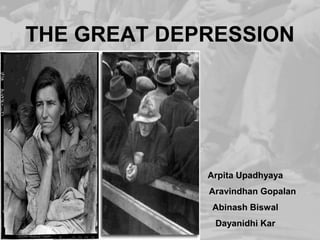


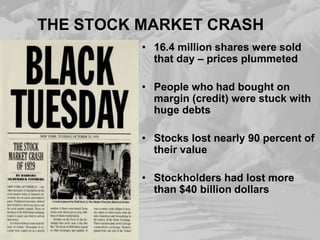
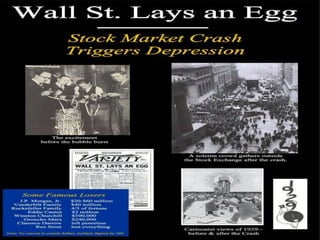
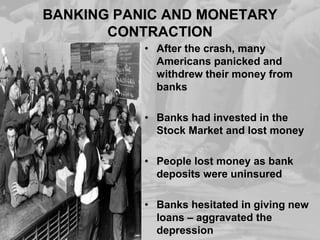
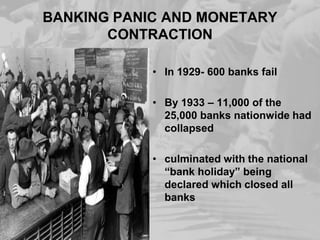
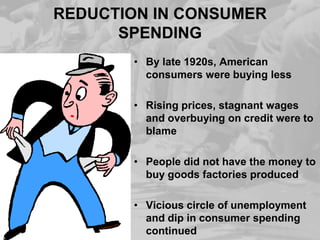
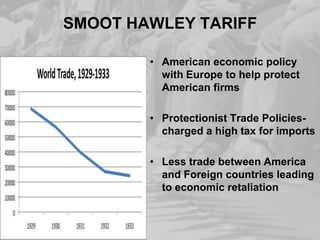
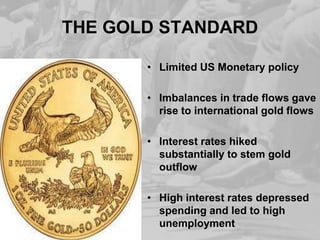

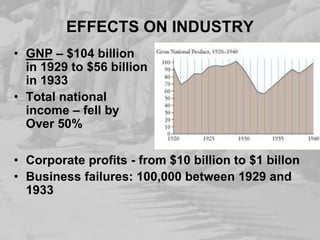
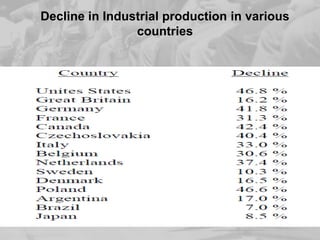
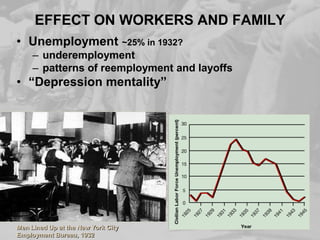
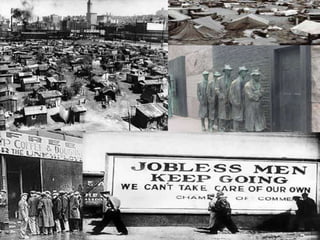
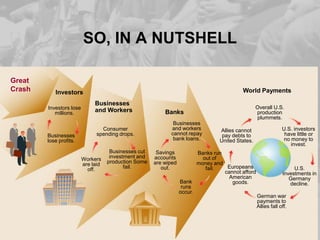
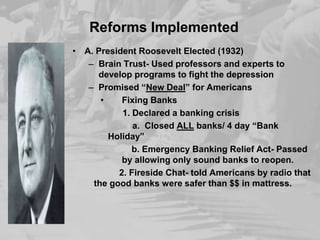
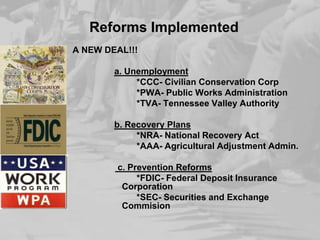
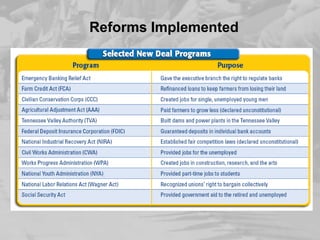
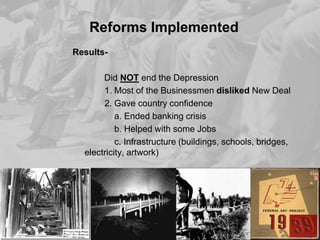


The document provides an overview of the causes and impact of the Great Depression, as well as reforms implemented in response. It discusses how the stock market crash of 1929 led to a banking panic and monetary contraction as people withdrew money from banks. This caused a reduction in consumer spending and a vicious cycle of unemployment. The Smoot-Hawley Tariff and adherence to the gold standard exacerbated the situation. The Depression had severe effects on industry, workers, and families. Unemployment rose to 25% and people lost homes and jobs. In response, President Roosevelt was elected and implemented a "New Deal" including programs to fix banks, provide unemployment and recovery plans, and prevent future crises through new agencies and regulations.


