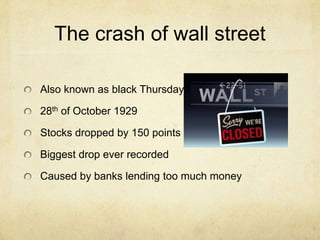
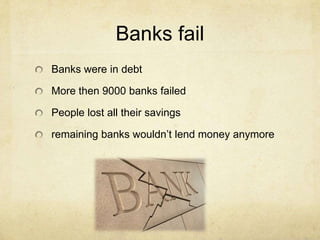
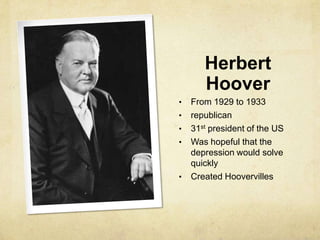
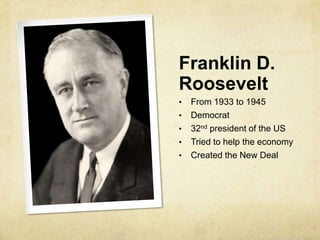
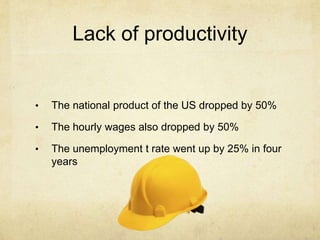
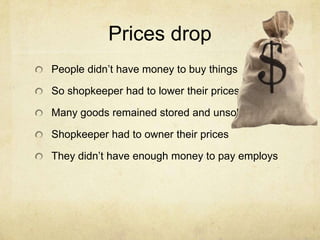
The Great Depression was caused by the stock market crash of 1929 and the following bank failures. As banks failed and people lost their savings, consumer spending declined sharply. This led to reduced production, mass unemployment, and further economic decline in a vicious cycle. The drought in the 1930s exacerbated the crisis by hurting farmers. President Hoover was initially hopeful the depression would end quickly but failed to turn the economy around. His successor, Franklin D. Roosevelt, introduced the New Deal which aimed to stimulate the economy through government work programs with some positive effects. The depression lasted until WWII mobilization increased production and jobs.





![Causes of The Great Depression [slideshow]](https://cdn.slidesharecdn.com/ss_thumbnails/causesofthegreatdepressionshow-150909215502-lva1-app6891-thumbnail.jpg?width=640&height=640&fit=bounds)


