Hoover and the Crash
Chapter 23 Section 1
Beginning of the Crash
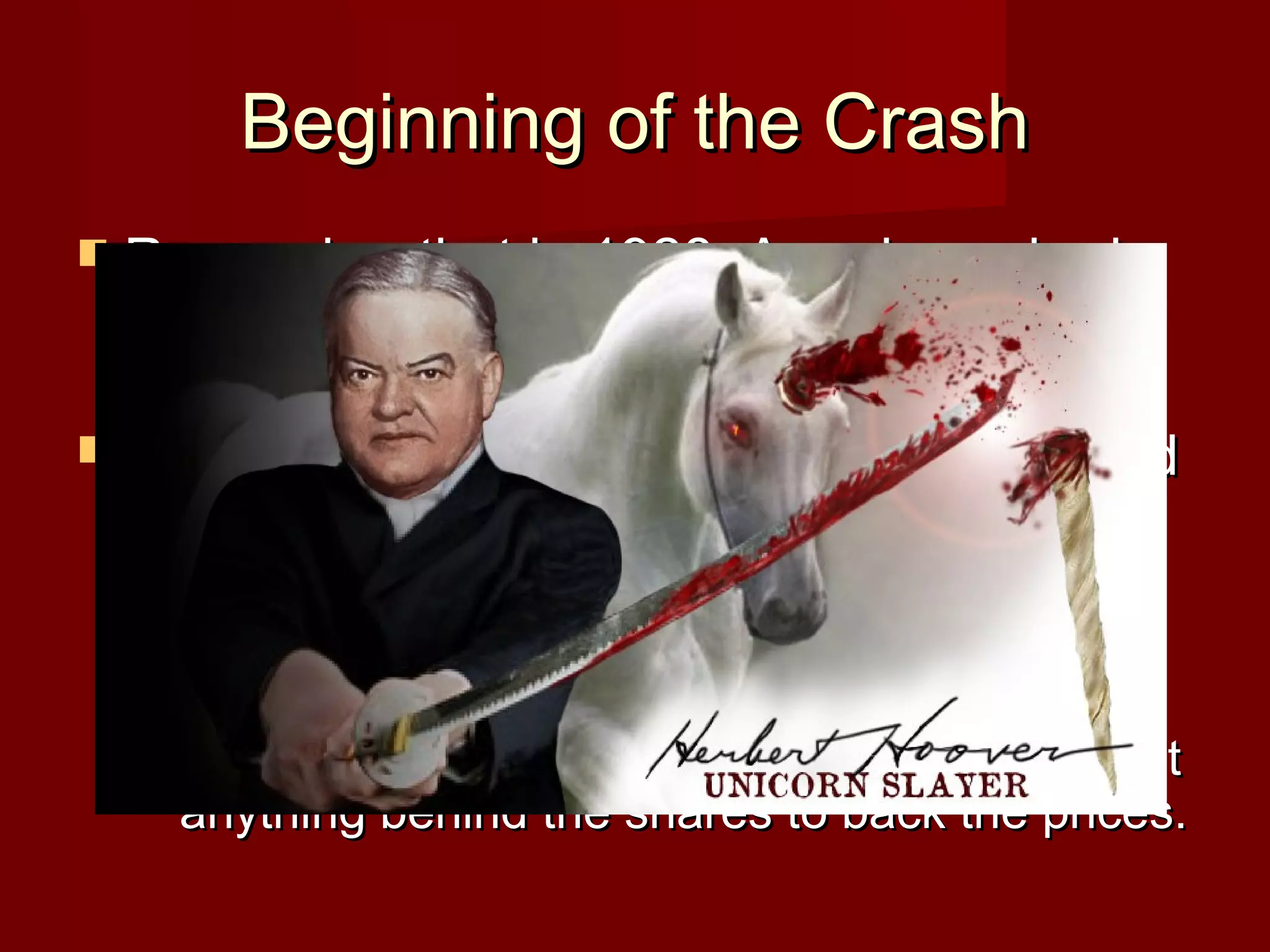
 Remember that in 1928, Americans had

chosen Herbert Hoover to be the 31st
president of the United States
 American economy was still in pretty good
shape when he gets elected

– But older industries, such as
agriculture/farming, started to fail as other
countries can’t buy our products
– The Stock market kept rising, but there wasn’t
anything behind the shares to back the prices.
Causes of the Great
Depression

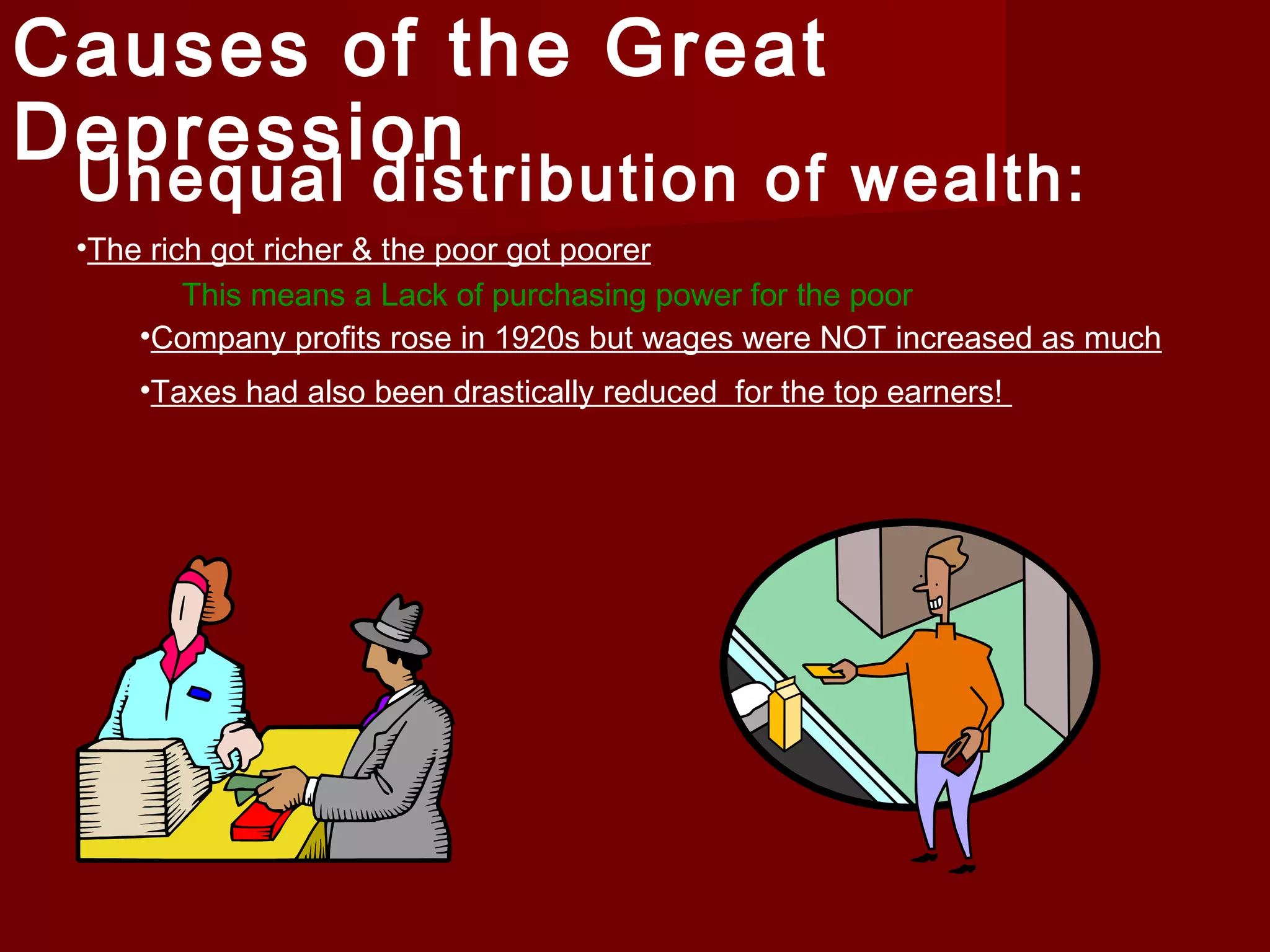
Unequal distribution of wealth:
•The rich got richer & the poor got poorer
This means a Lack of purchasing power for the poor
•Company profits rose in 1920s but wages were NOT increased as much
•Taxes had also been drastically reduced for the top earners!
Causes of the Great
Depression
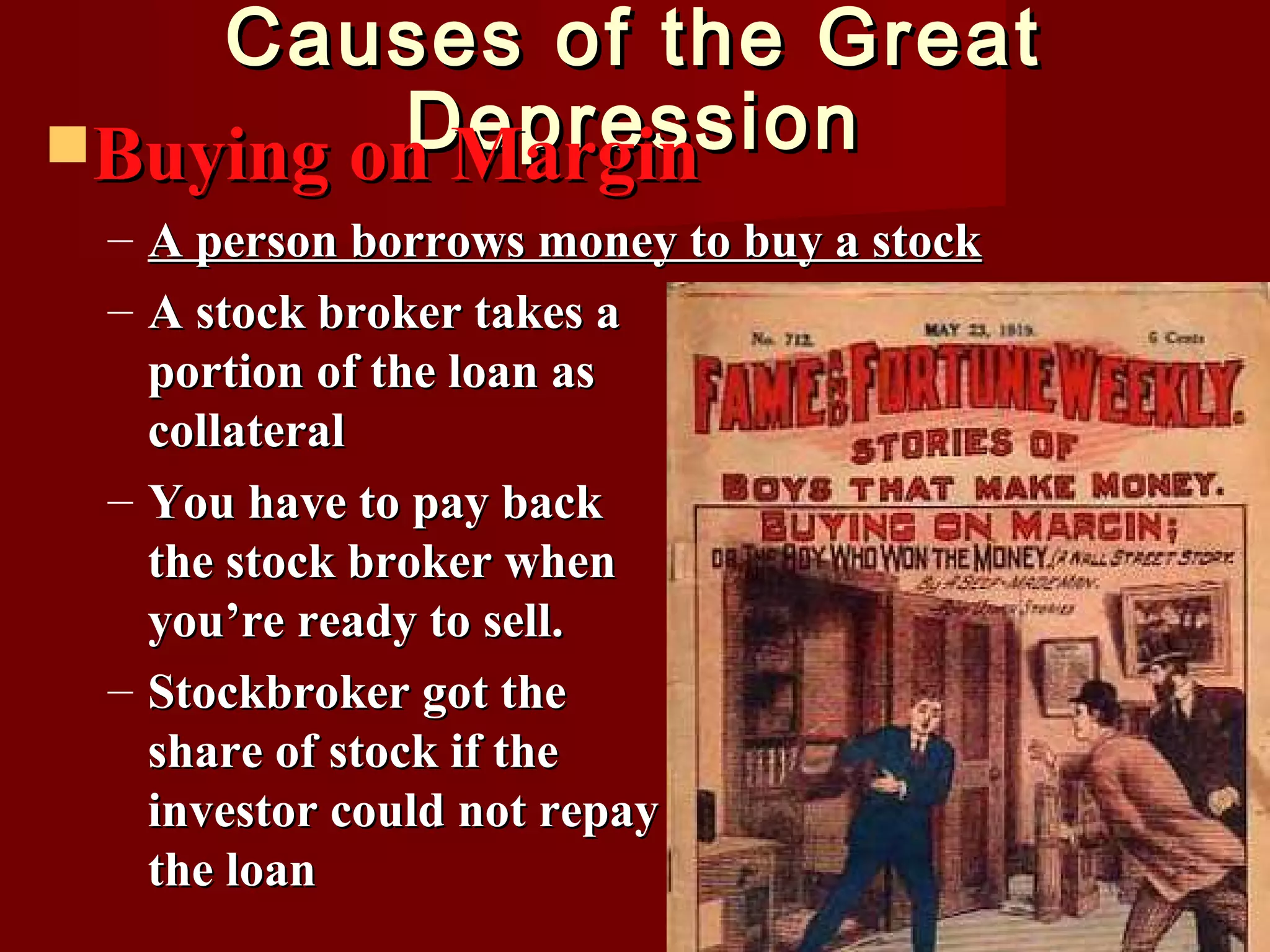
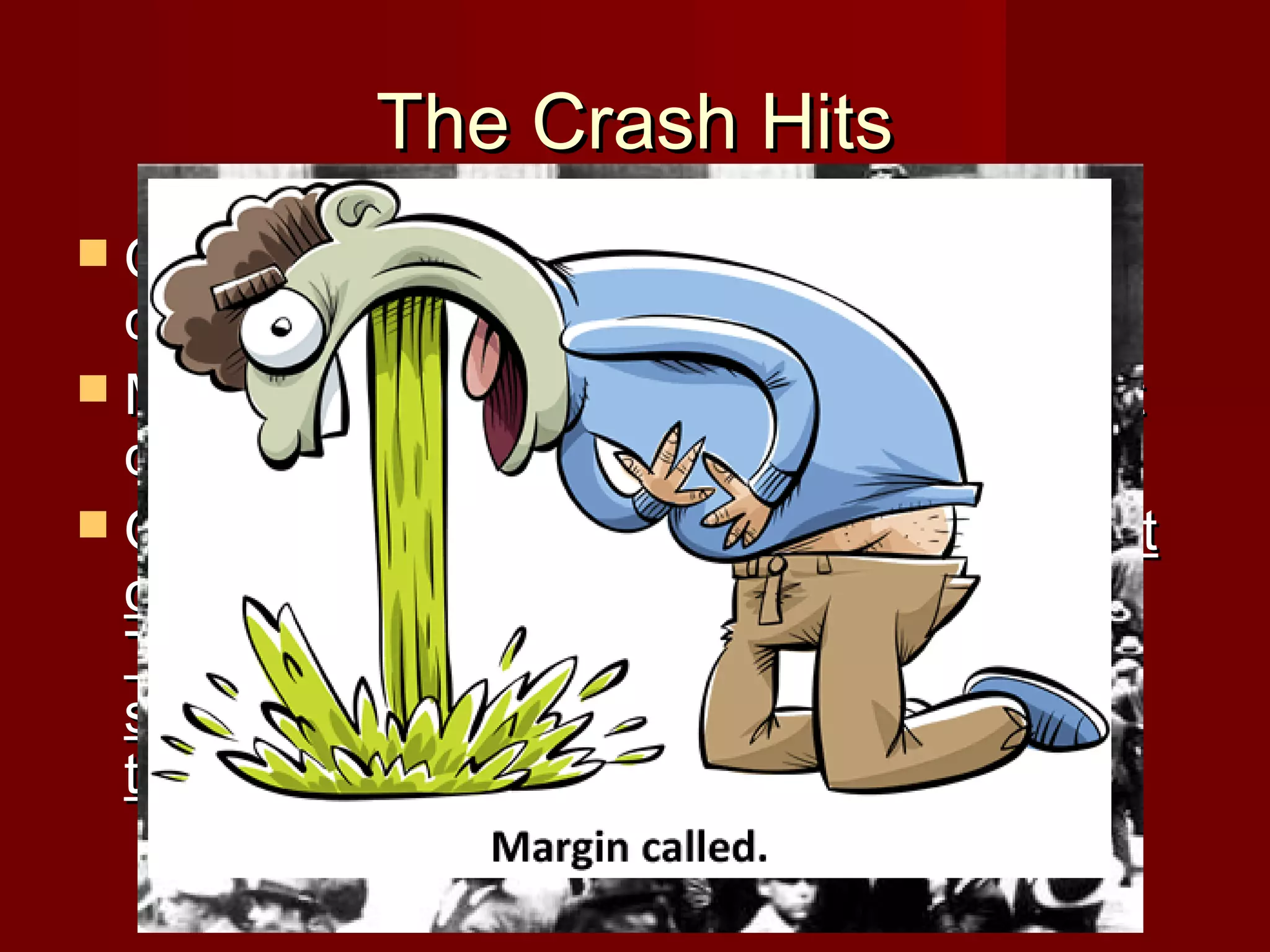
Buying on Margin
– A person borrows money to buy a stock
– A stock broker takes a
portion of the loan as
collateral
– You have to pay back
the stock broker when
you’re ready to sell.
– Stockbroker got the
share of stock if the
investor could not repay
the loan
Causes of the Great
Depression

Overspeculation:

You buy stocks you
THINK will rise in price
•Based on borrowed $$
$ & optimism…NOT the
real value of the stock!
Causes of the Great
Let me remind you Depression It is just as important

that business keep out
that credit is the
 lifeblood of
of government as that
government keep out of
business, the
– Manyprices in the economic sectors of business stated
business.
lifeblood of people
and jobs. stocks were overpriced and the crash brought them
that the
It’s good for some banks and
back to normal levels
people to fail! This is all a part
of economic competition!

Stocks were overpriced

 Federal Reserve Policy

– Raised the rates on stock brokers who tried to take loans
fromGive more cash to losses.
banks to cover
banks throughout
the 1920’s! Then
we will reduce the
amount of cash
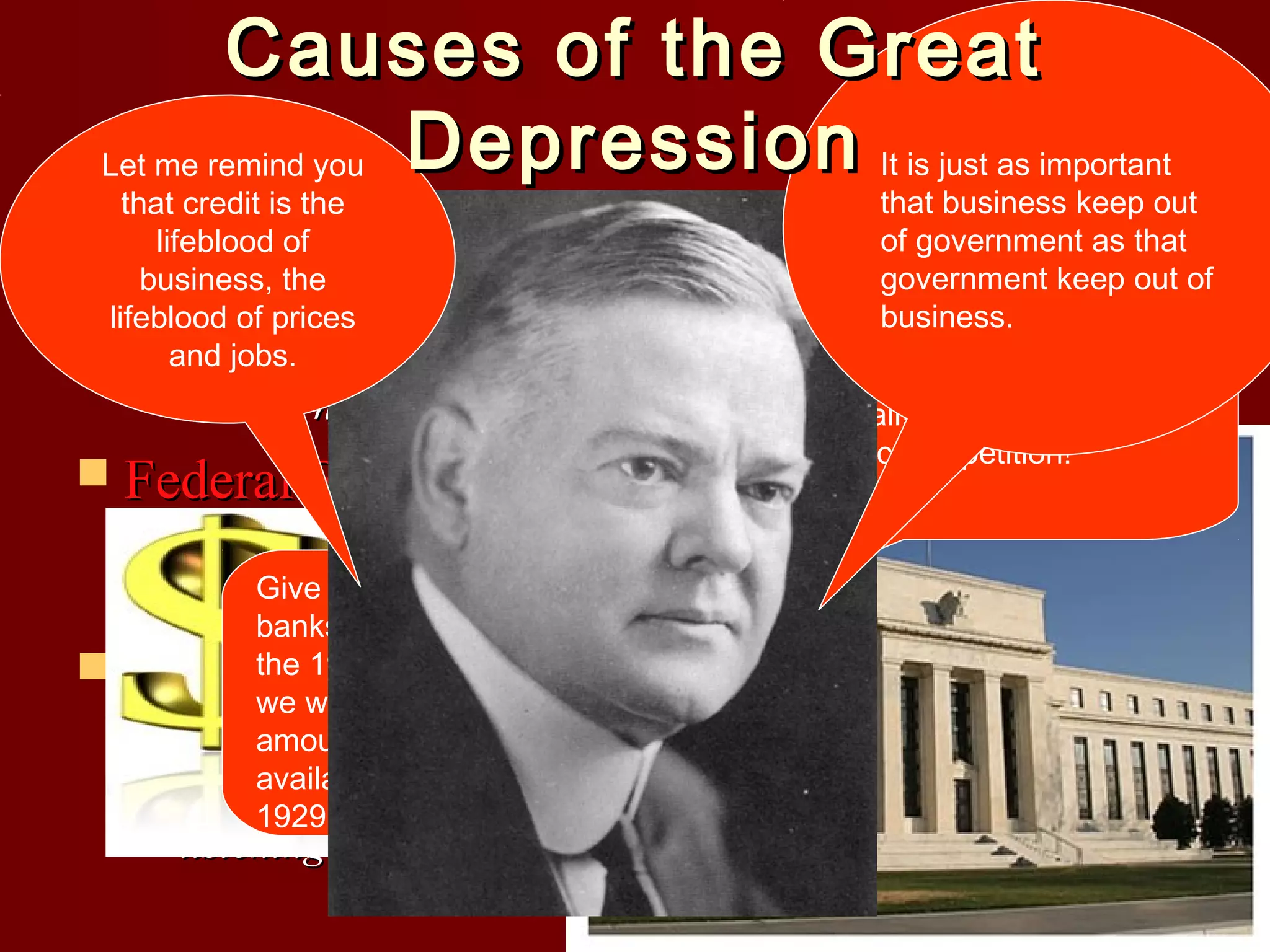
Hoover, Andrew Mellon, and others were telling people
available to banks
that the stock pricesin
were wrong…people weren’t
1929!!!

 Comments by Public Officials
–

listening…
The Crash Hits
 On Wednesday October 23, 1929

– 6 Million shares are bought and sold by big
investors in the stock market.
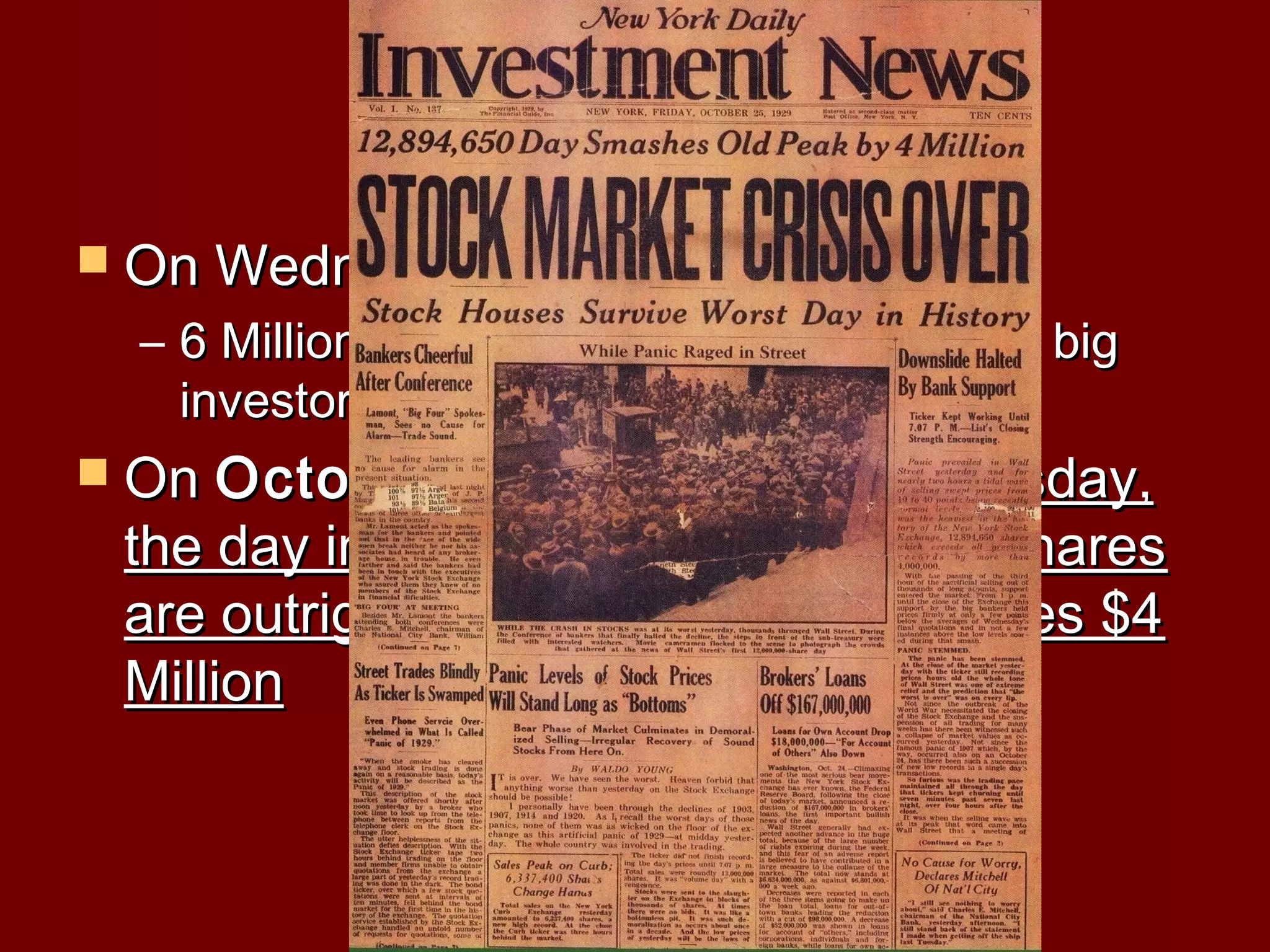
 On October

24, 1929 Black Thursday,
the day in which almost 2.5 million shares
are outright sold, and the market loses $4
Million
The Crash Hits
 On Friday, many investors talk, and

decide the stock market will stabilize.
 Monday again sees people skeptical, but
deciding to hold out.
 On October 29, 1929 the stock market
officially crashes, known as Black
Tuesday. Most investors try to sell their
stocks back, but there is no one to buy
them, and values plummet drastically.
Was the Stock Market the only cause?
 NO!!!! A number of events lead up to the

crash, not just the market.
 Farmers run into some serious problems!
– Review the Graphic Organizer, Duh!!!
 Big-time manufacturing businesses were

having similar problems to their farming
friends.
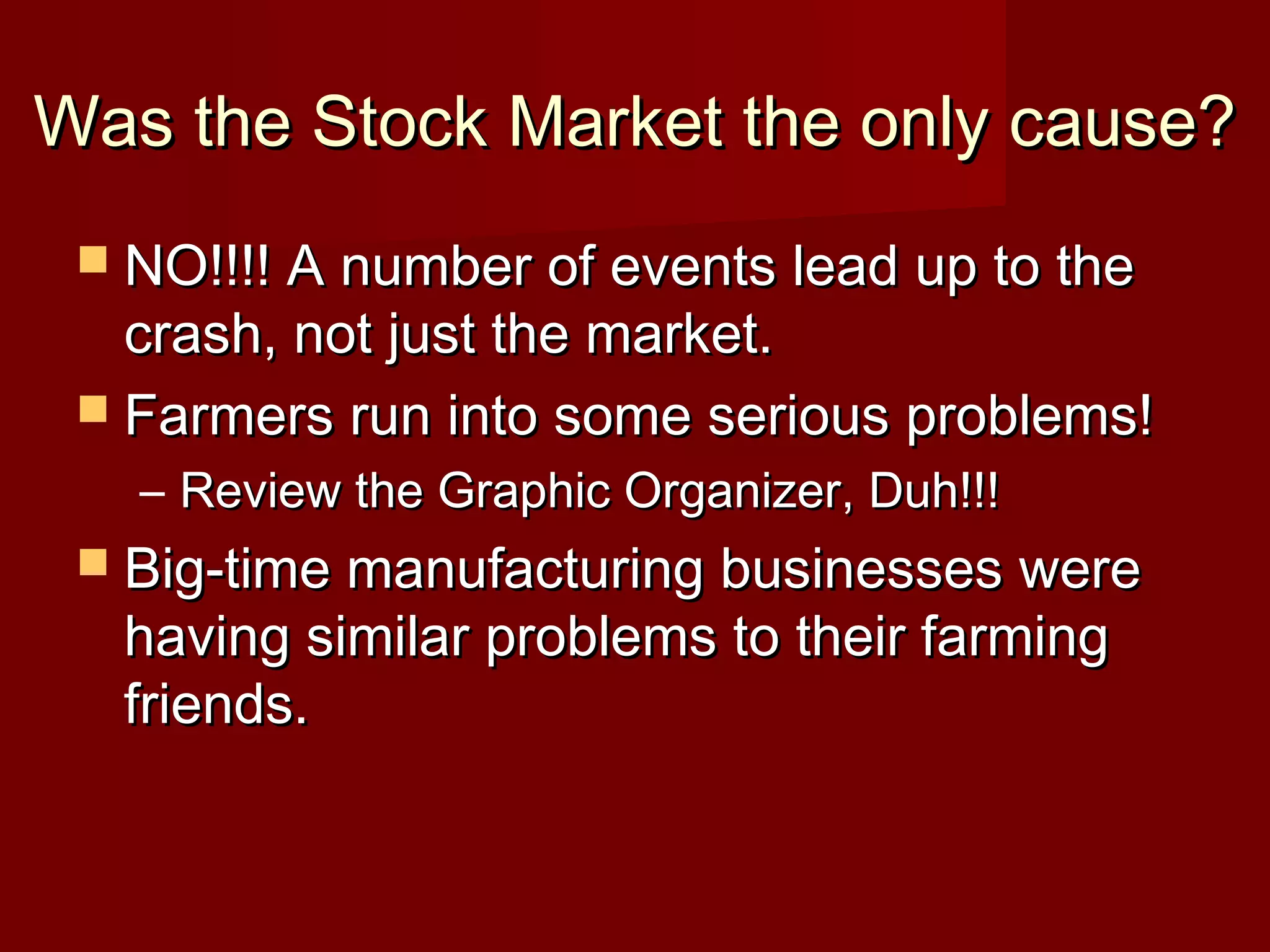
Human Causes of the Dust
Over-plowing, OverGrazing, and
Bowl
Drought!

Areas Hit By
The Dust Bowl

Problems
with
Overgrazing!

The Eventual Outcome…
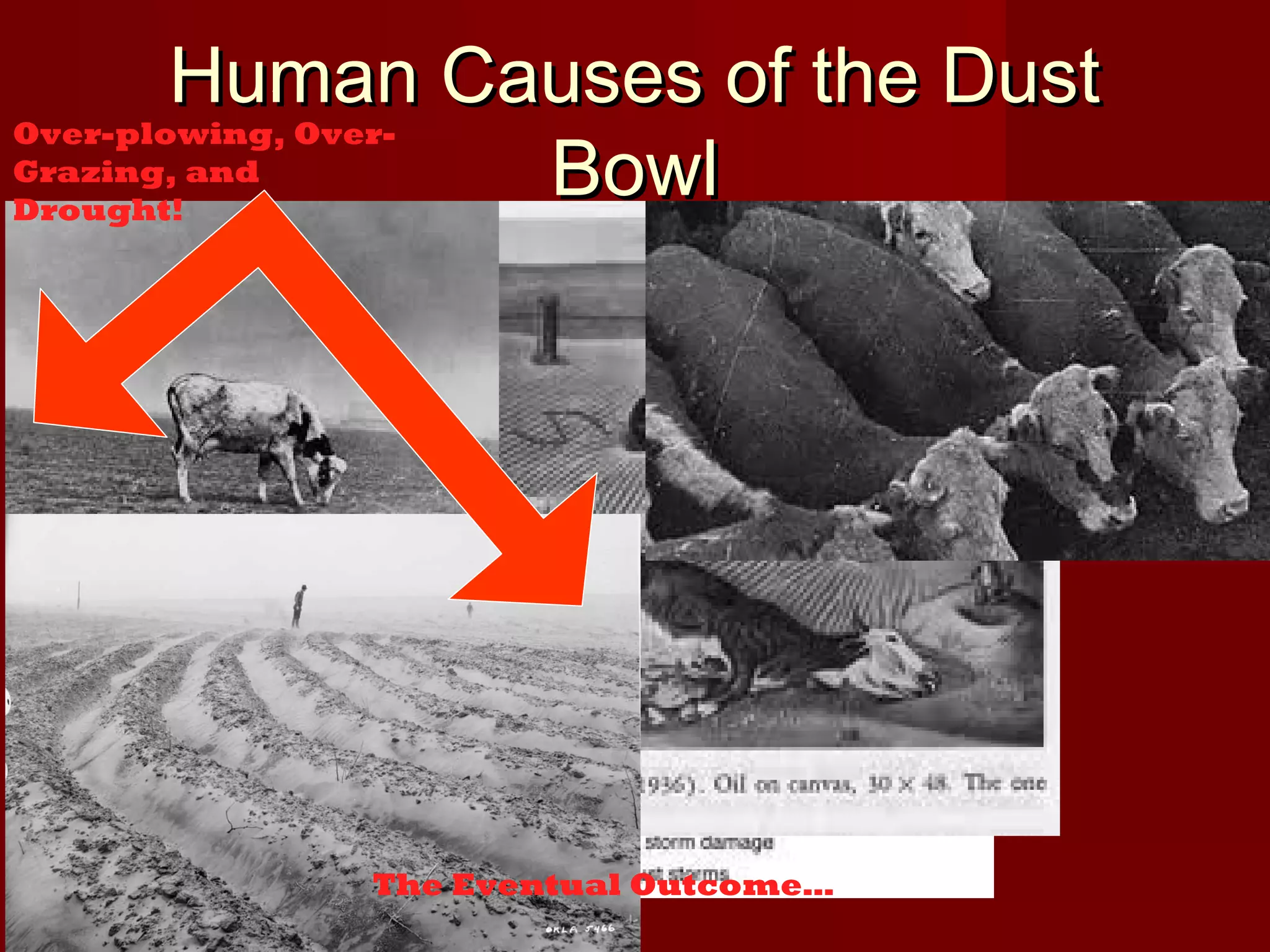
Environmental Causes of the
Dust Bowl

Drought

(Lack of Rain)

No Crops

Wind
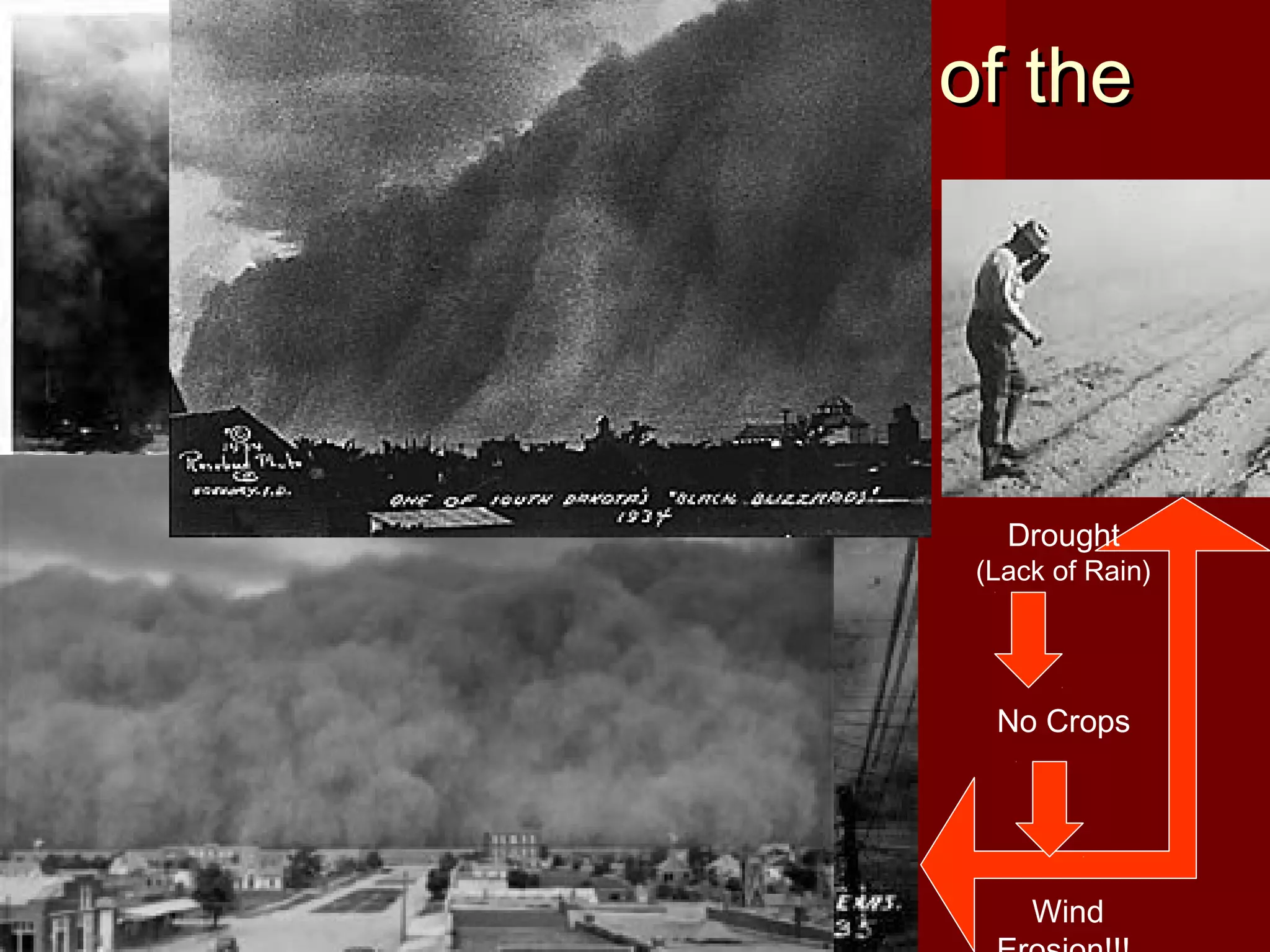
As a Result…
Farmers and
their Families
Have to Leave
The Land, many
move West
Farms and
Homesteads are
Destroyed!!!

Little Kids are
WAAAAAYYYY
Bummed Out
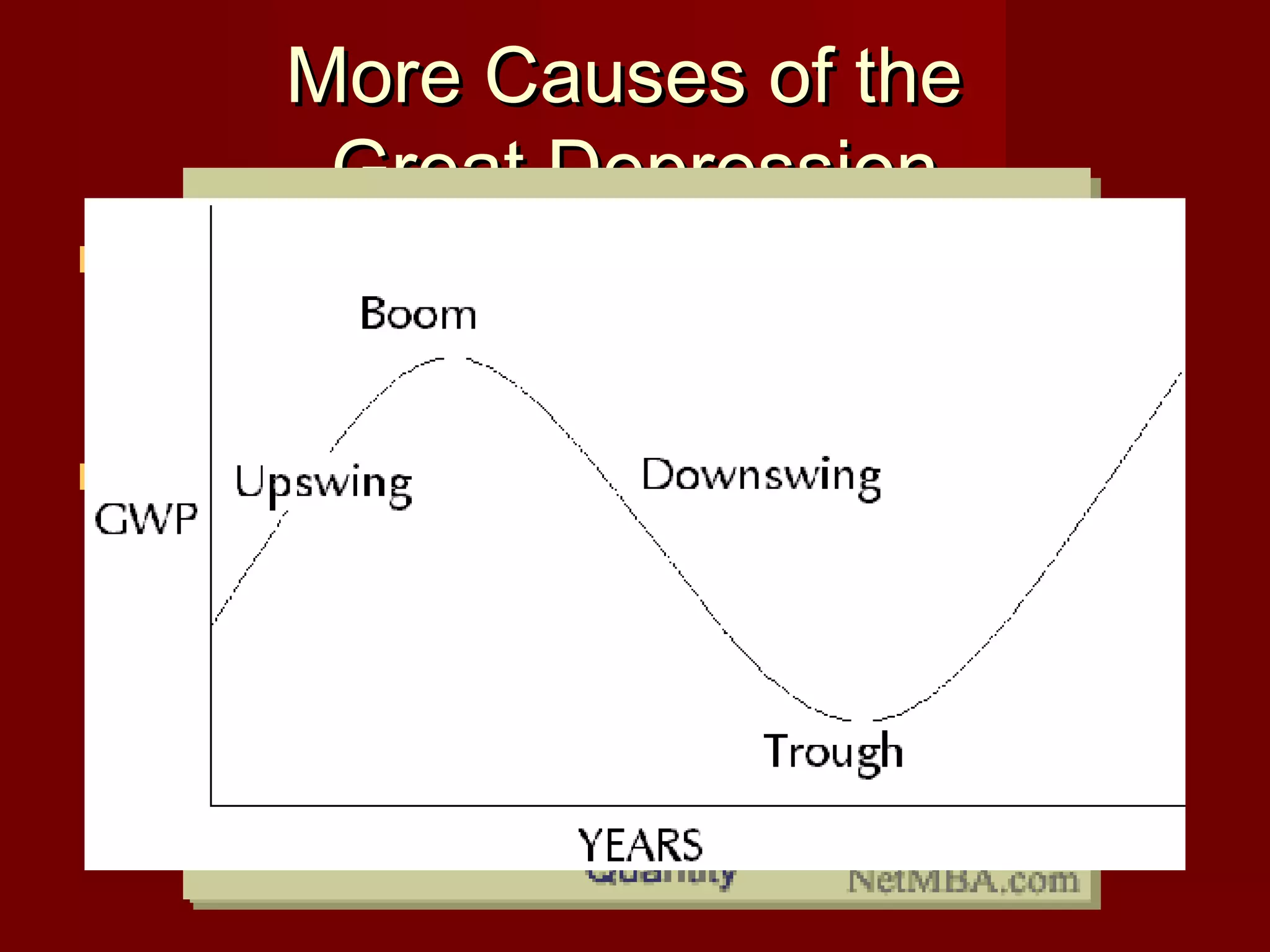
More Causes of the
Great Depression
 Overproduction

or a situation where
supply of manufactured goods is greater
than demand, also occurred.
 The problem with this is, when there is too
many goods not being sold, and not
enough people to buy them, the goods
become worth less…the company’s worth
then goes down.
More Causes of the Great Depression
Overextension of credit:

Too much Installment
Buying, or buy now, pay
later…kind of like credit
cards!
More Causes of the Great
Depression
 Remember Buying

on Margin ????
 Well, banks used people’s money to play
stock market
 The market did poorly
 They lose innocent people’s money.
 Banks then had to close…
– which meant even those people who hadn’t
played the market lost out.
The Role of Banks







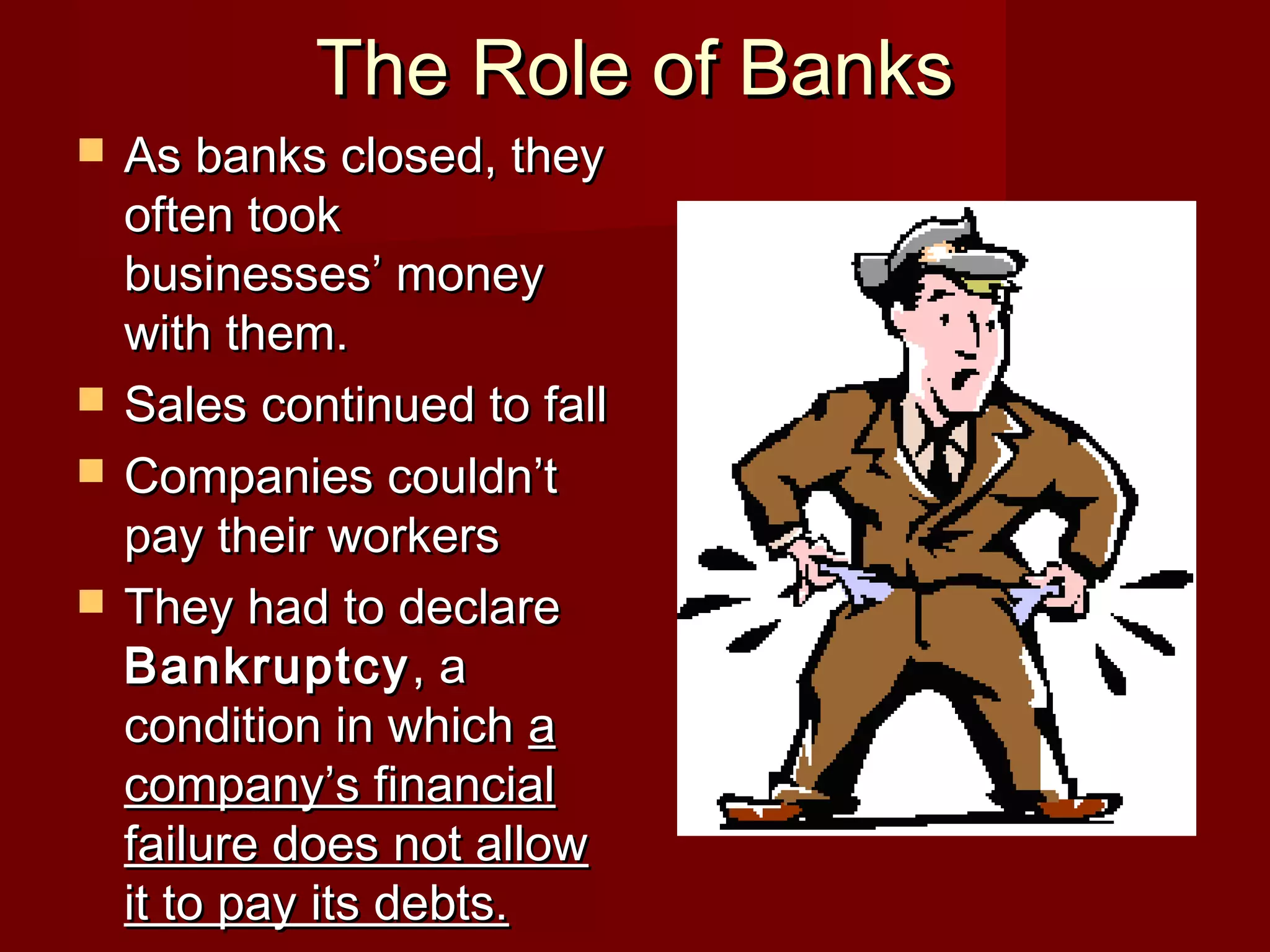
As banks closed, they
often took
businesses’ money
with them.
Sales continued to fall
Companies couldn’t
pay their workers
They had to declare
Bankruptcy , a
condition in which a
company’s financial
failure does not allow
it to pay its debts.
The Role of Banks
 It wasn’t just companies that were affected

by this.
 Remember that countries purchase goods
from each other on loan for things like war
and other essential functions.
 When the depression hit, they couldn’t pay
these loans back and were forced to
Default or failed to repay their loans.
The Effects of the Depression
 In

1930, Unemployment rose from 3
to 25 percent , and people that were
working weren’t making any money.
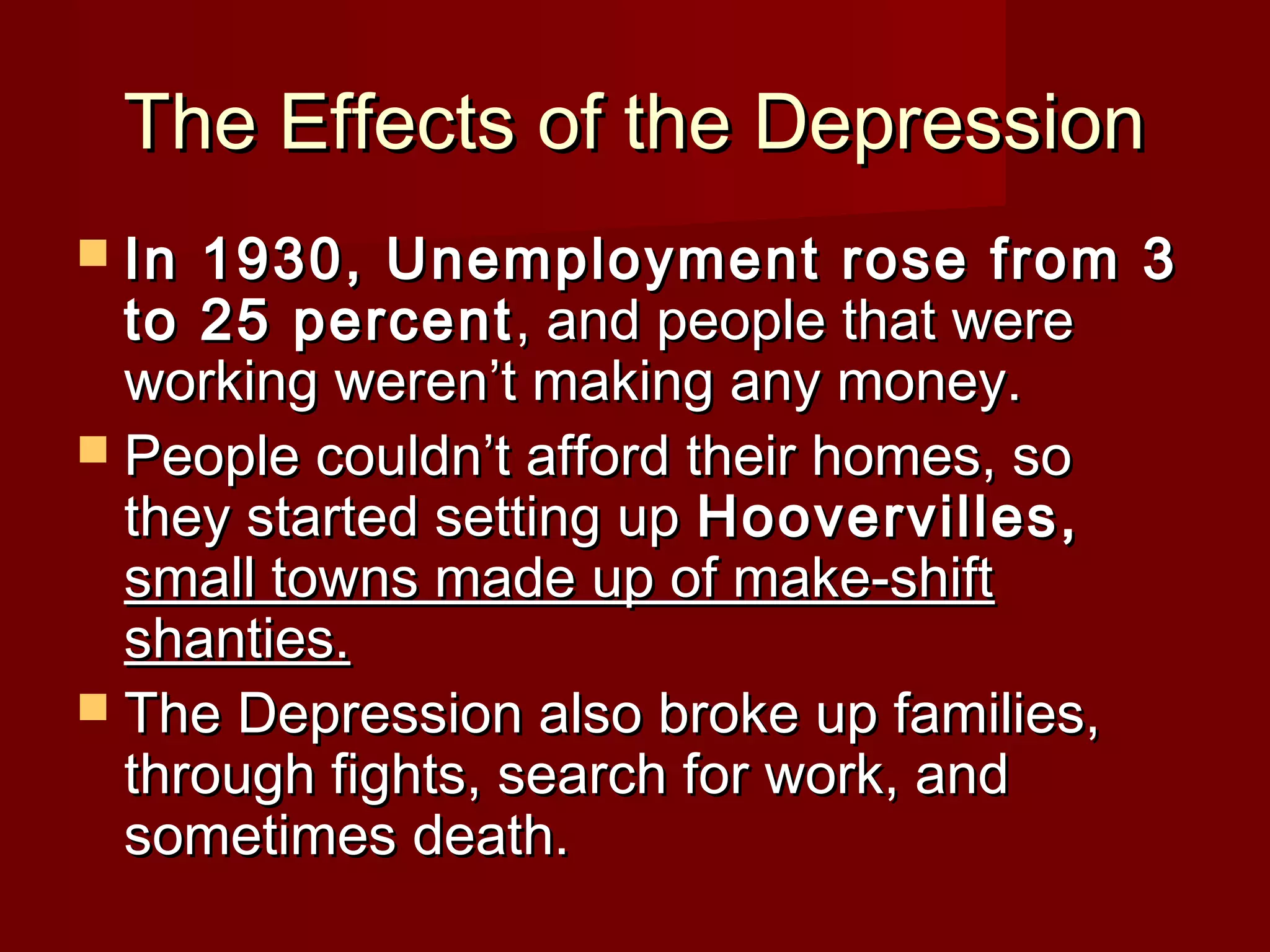
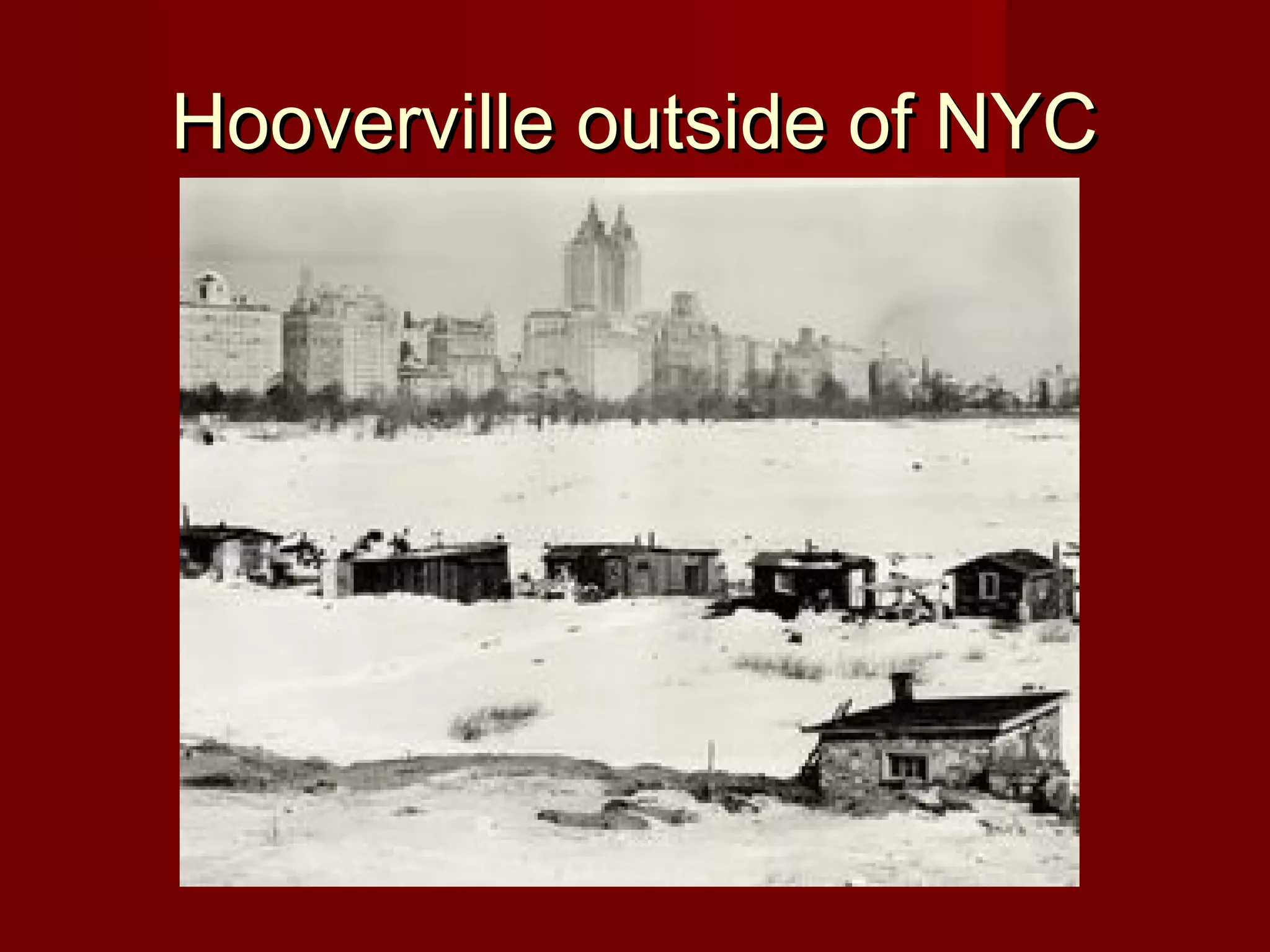
 People couldn’t afford their homes, so
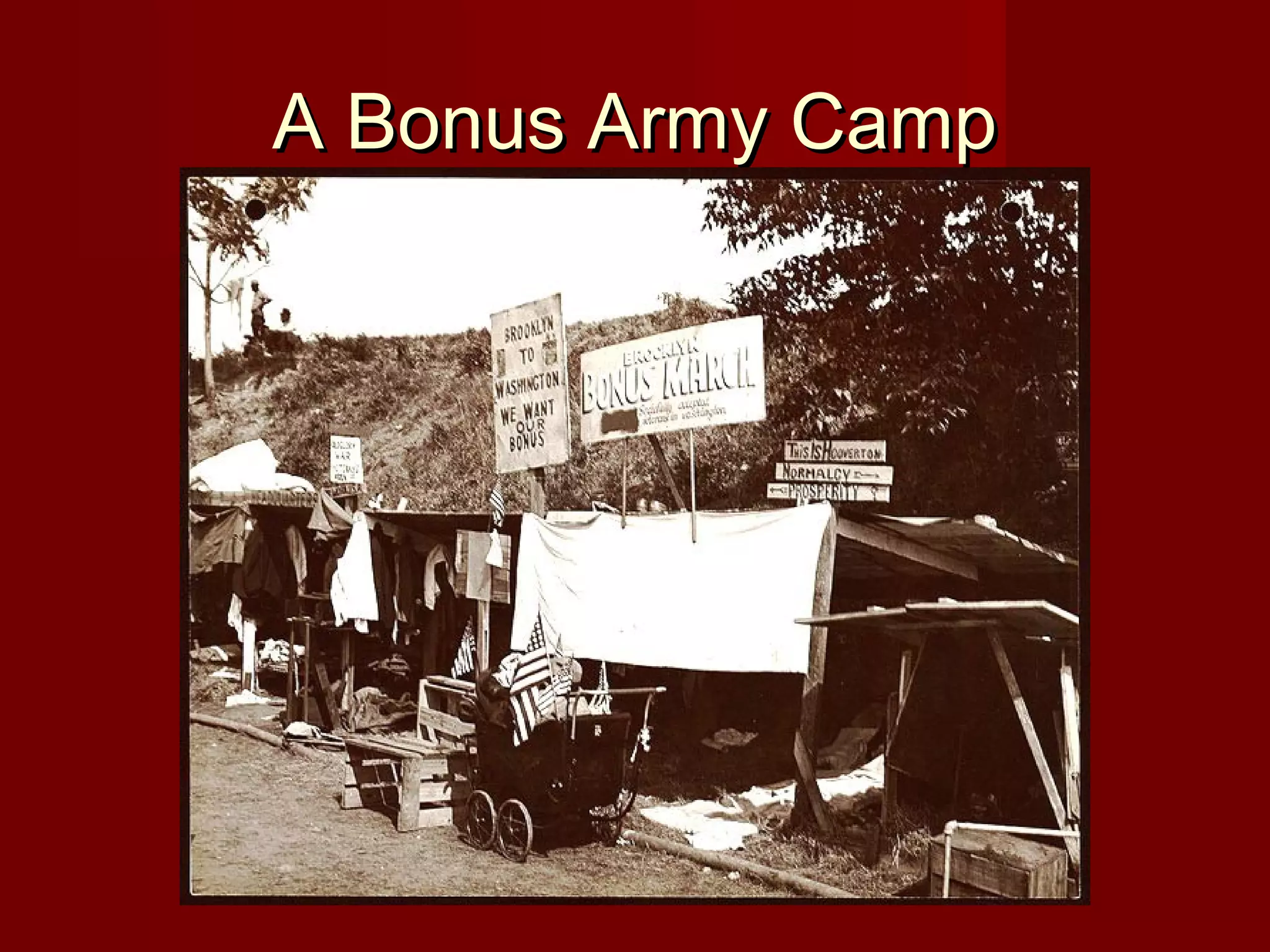
they started setting up Hoovervilles,
small towns made up of make-shift
shanties.
 The Depression also broke up families,
through fights, search for work, and
sometimes death.
Hooverville outside of NYC
Hooverville in Seattle
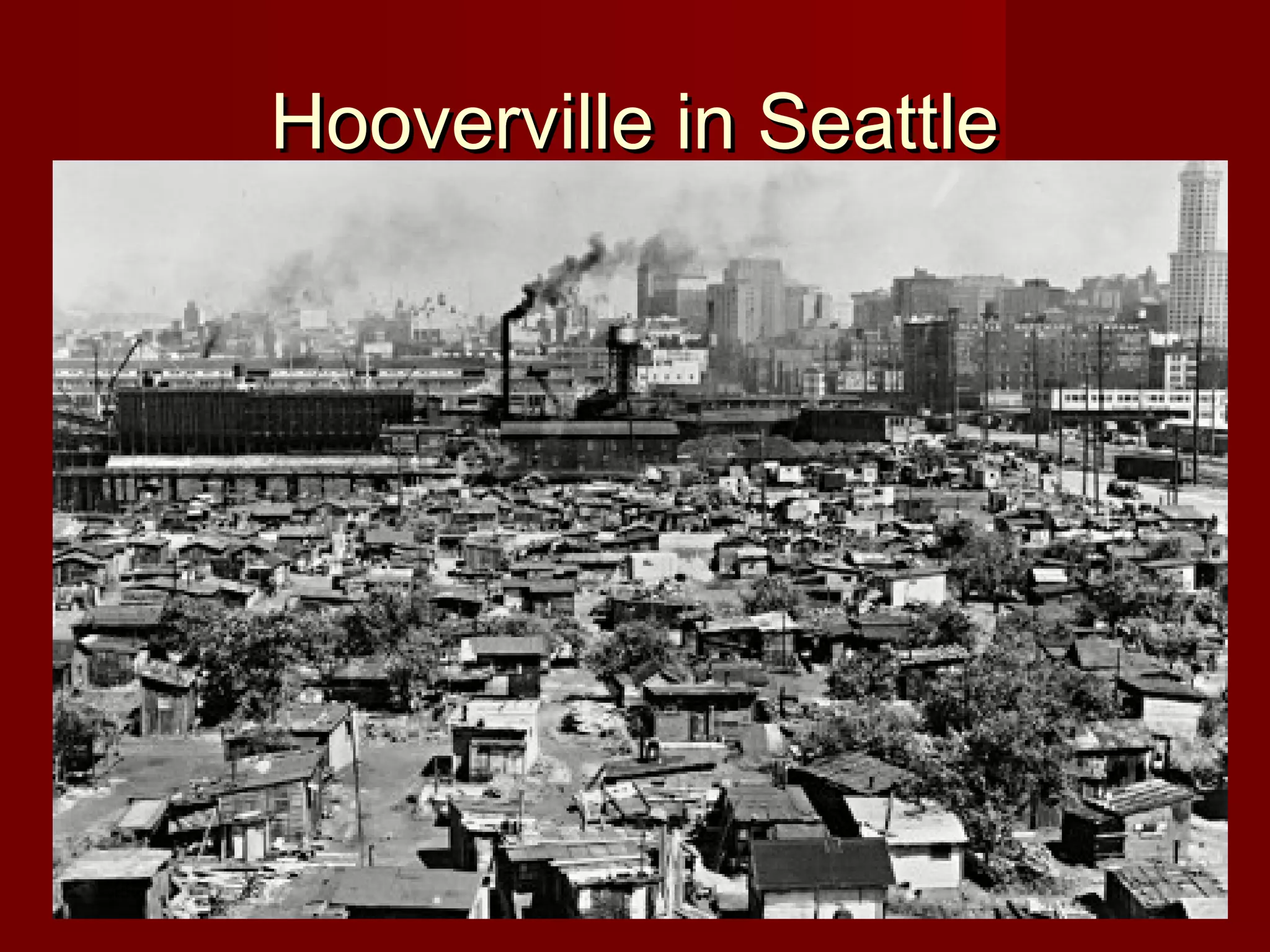
Hoover’s Failures
Hoover’s Response
 Hoover will rely on Voluntarism

or

asking big business and local
governments to begin supporting the
people of America at their own will.
 Hoover realizes that this isn’t the only way
to recover, so he sets up the
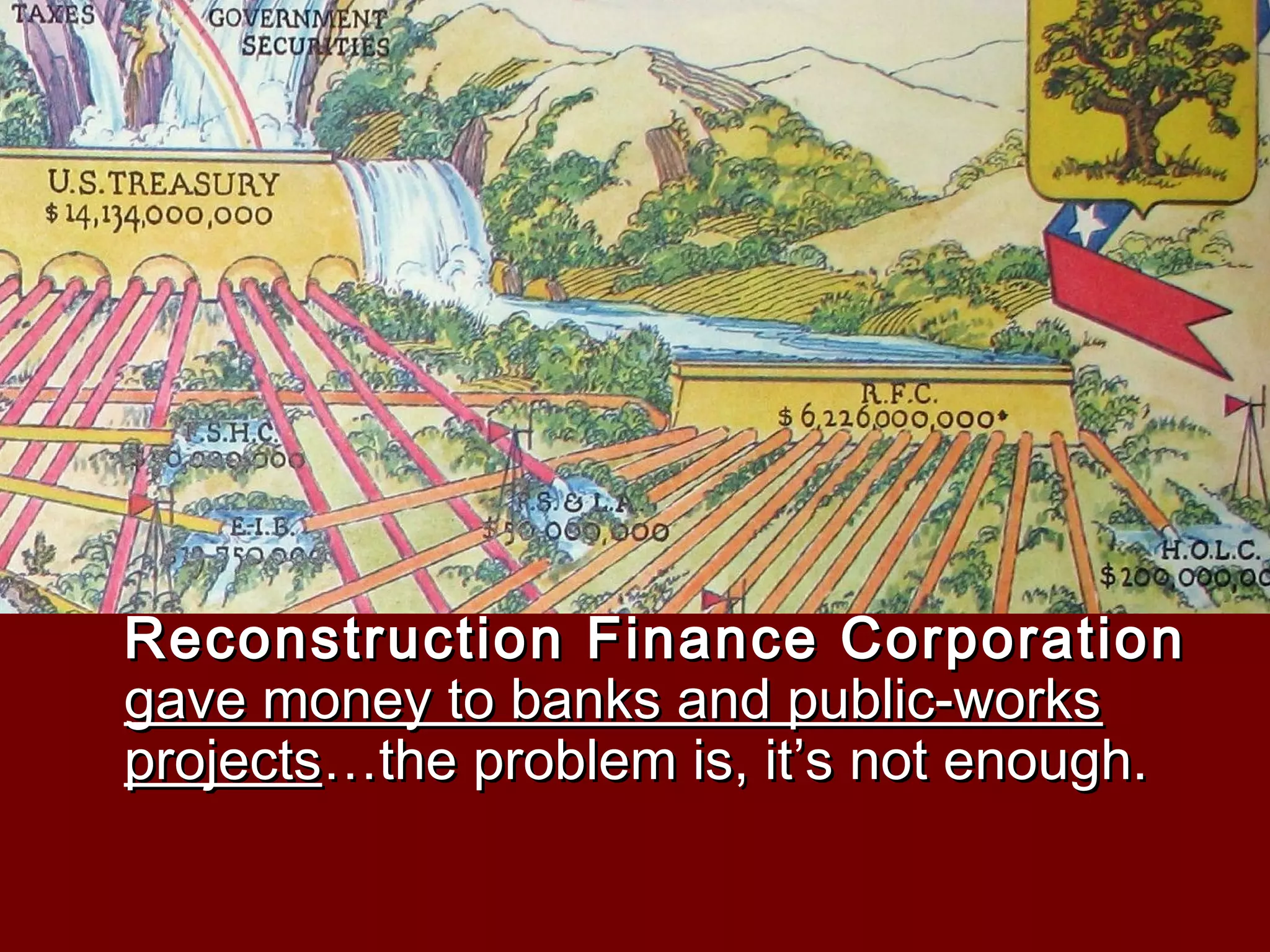
Reconstruction Finance Corporation
gave money to banks and public-works
projects…the problem is, it’s not enough.
The Last Stab at Hoover
(View “March of the Bonus Army” - 16:00 – 21:40)

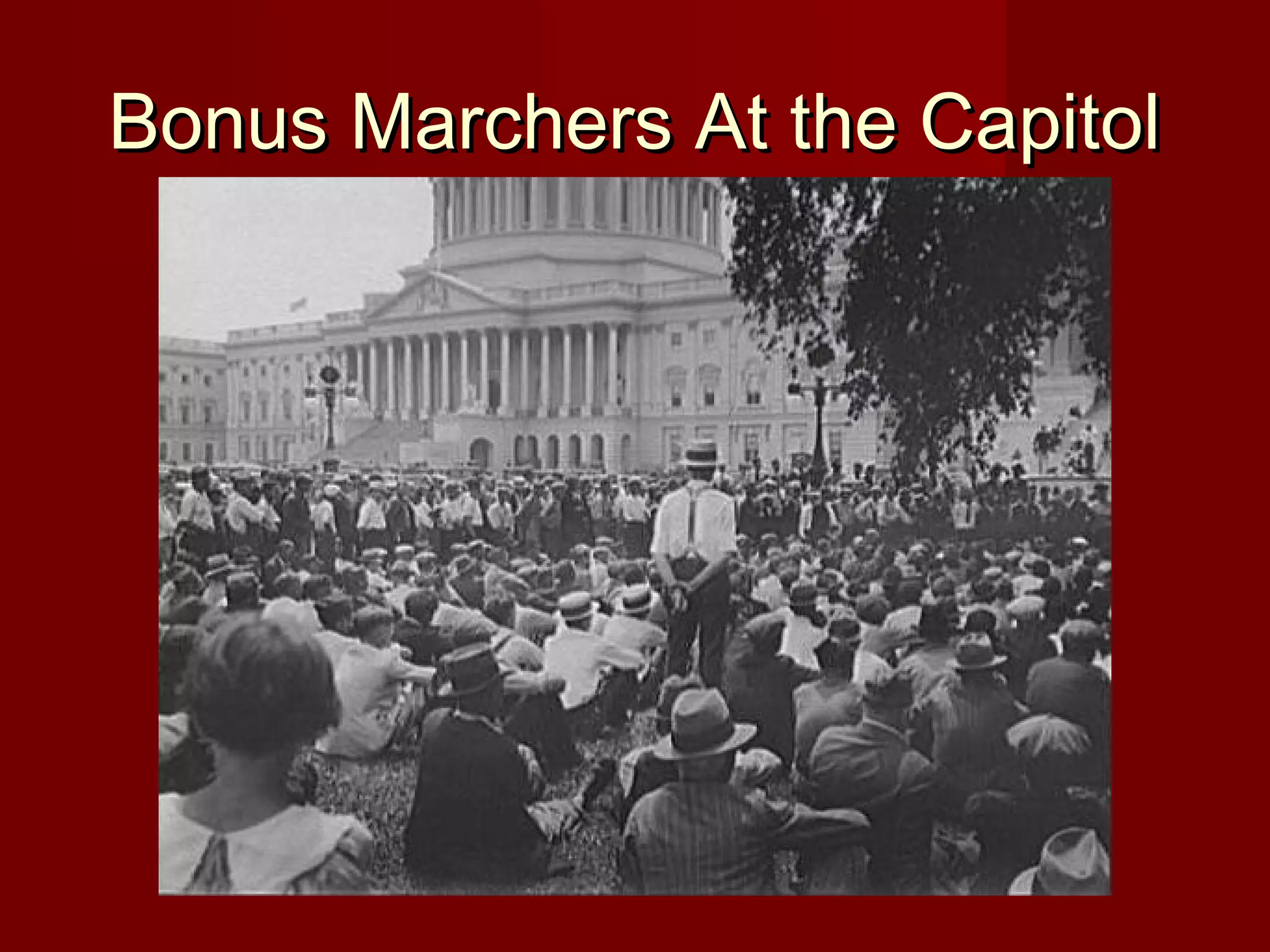
 In 1932, the Bonus

Army marched on
Washington, these were a group of
soldiers from World War 1, who asked for
their service bonus pay during the
Depression to help their situations
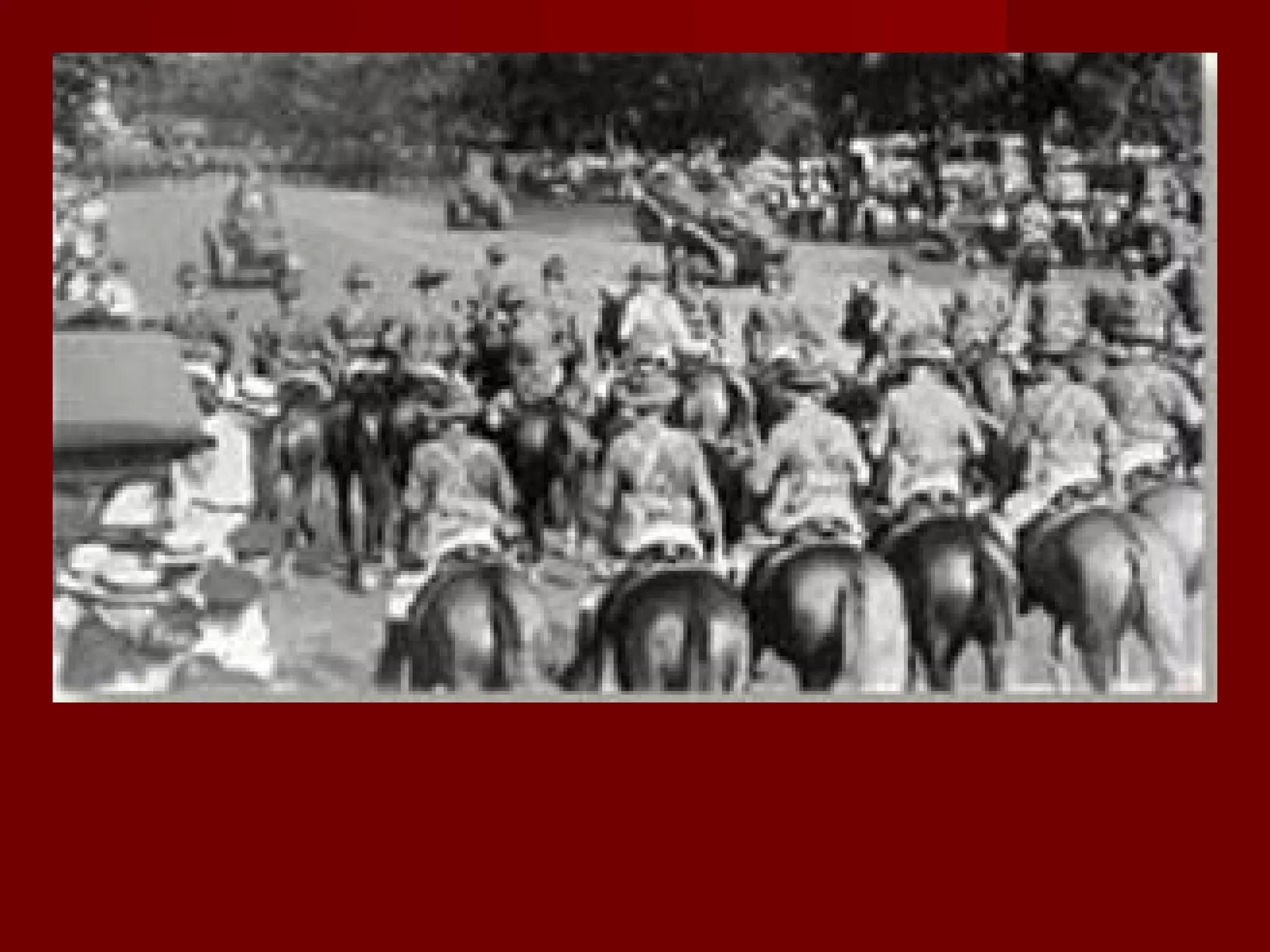
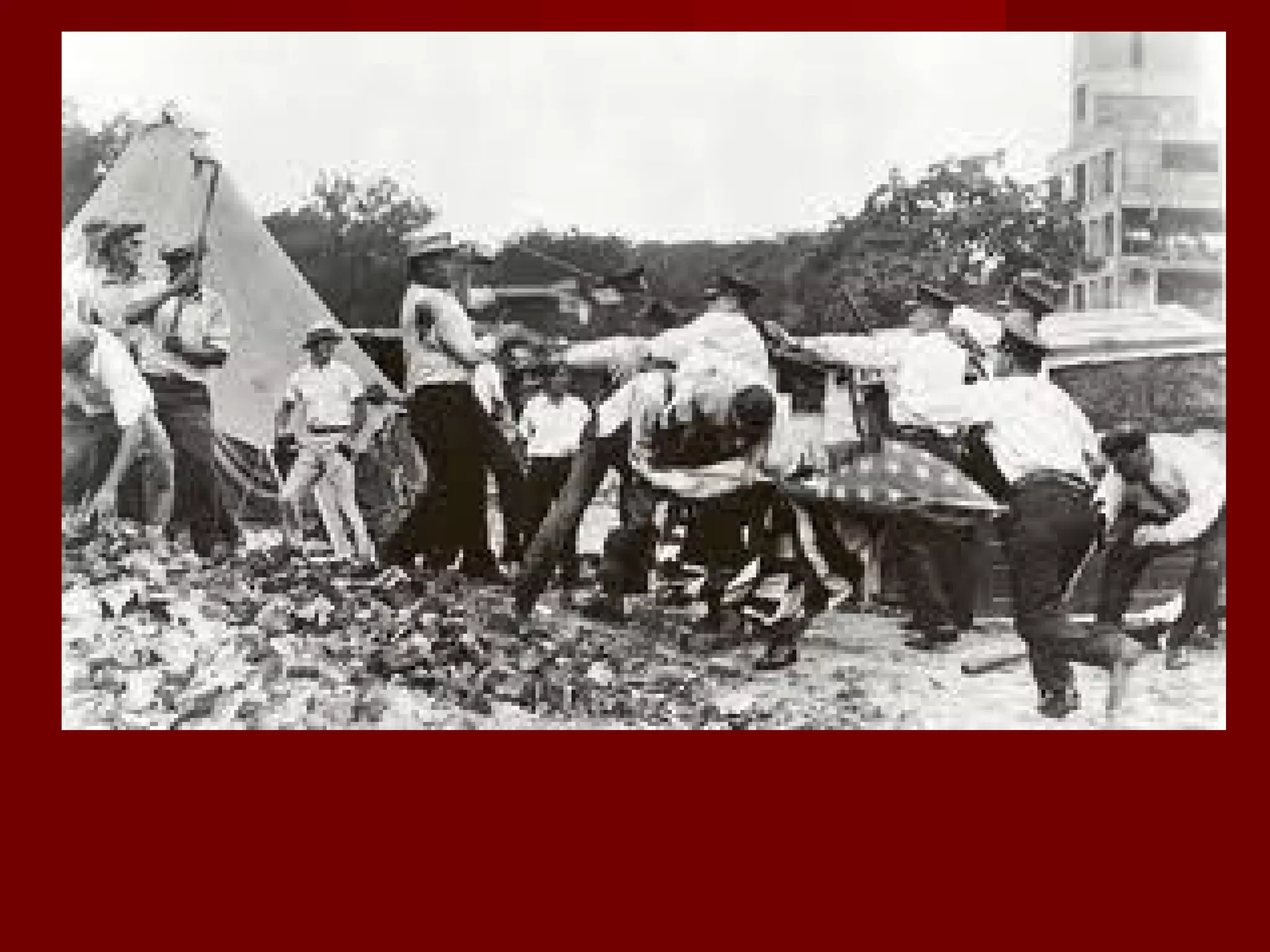
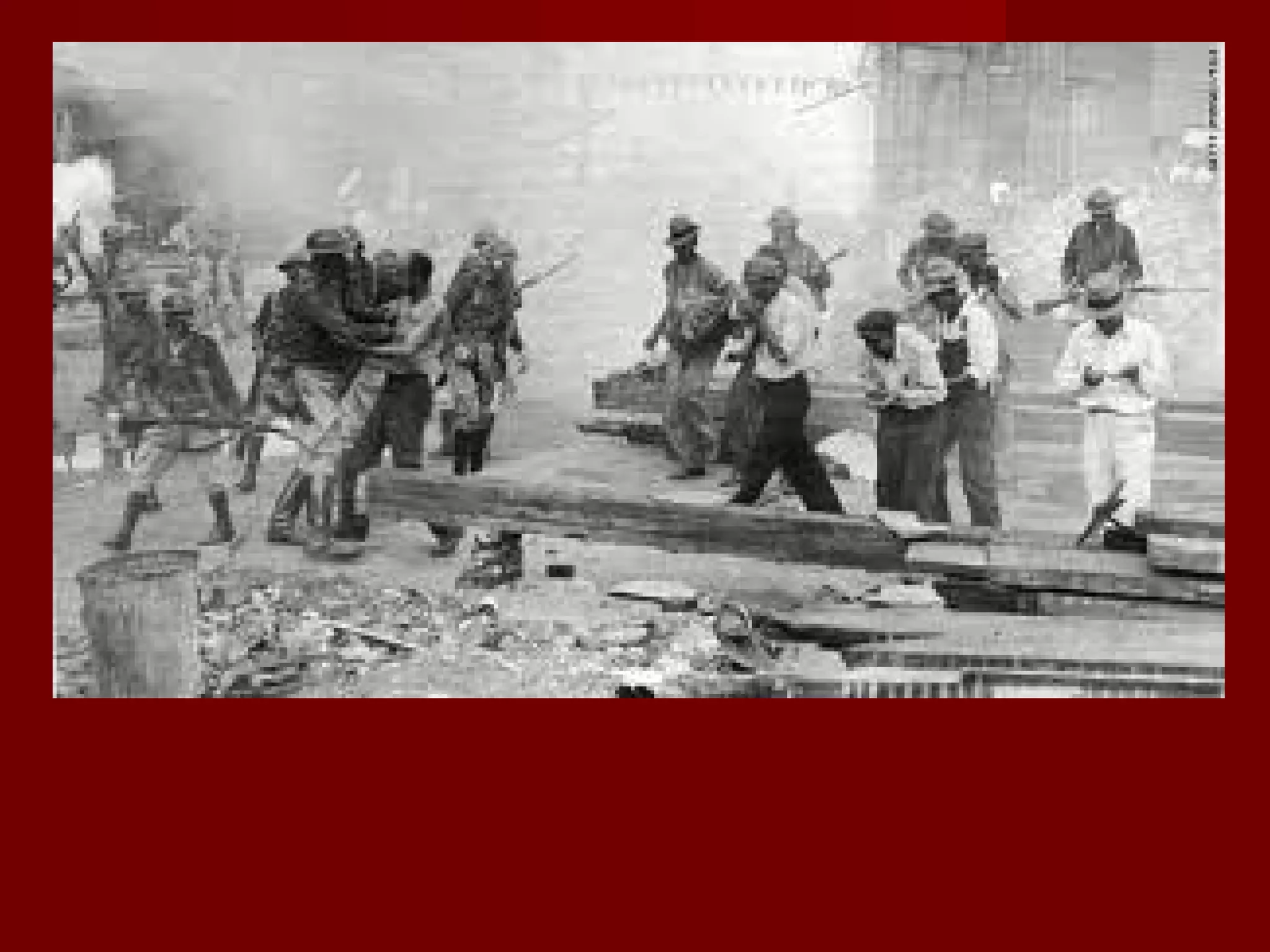
 Hoover refuses to pay, and actually sent
Major George Patton and General
MacArthur to get the soldiers out of
Washington, using military force.
A Bonus Army Camp
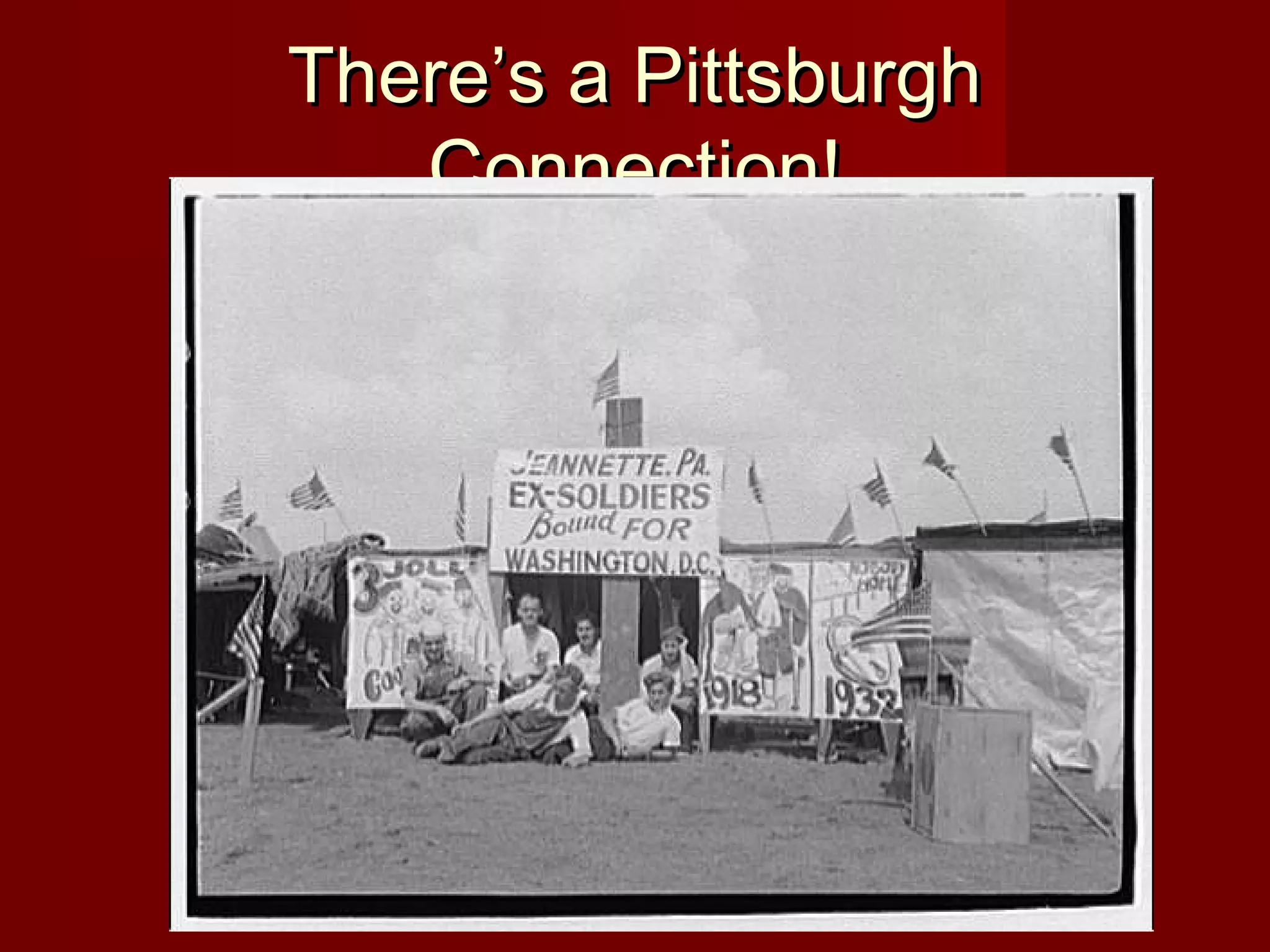
There’s a Pittsburgh
Connection!
Bonus Marchers At the Capitol
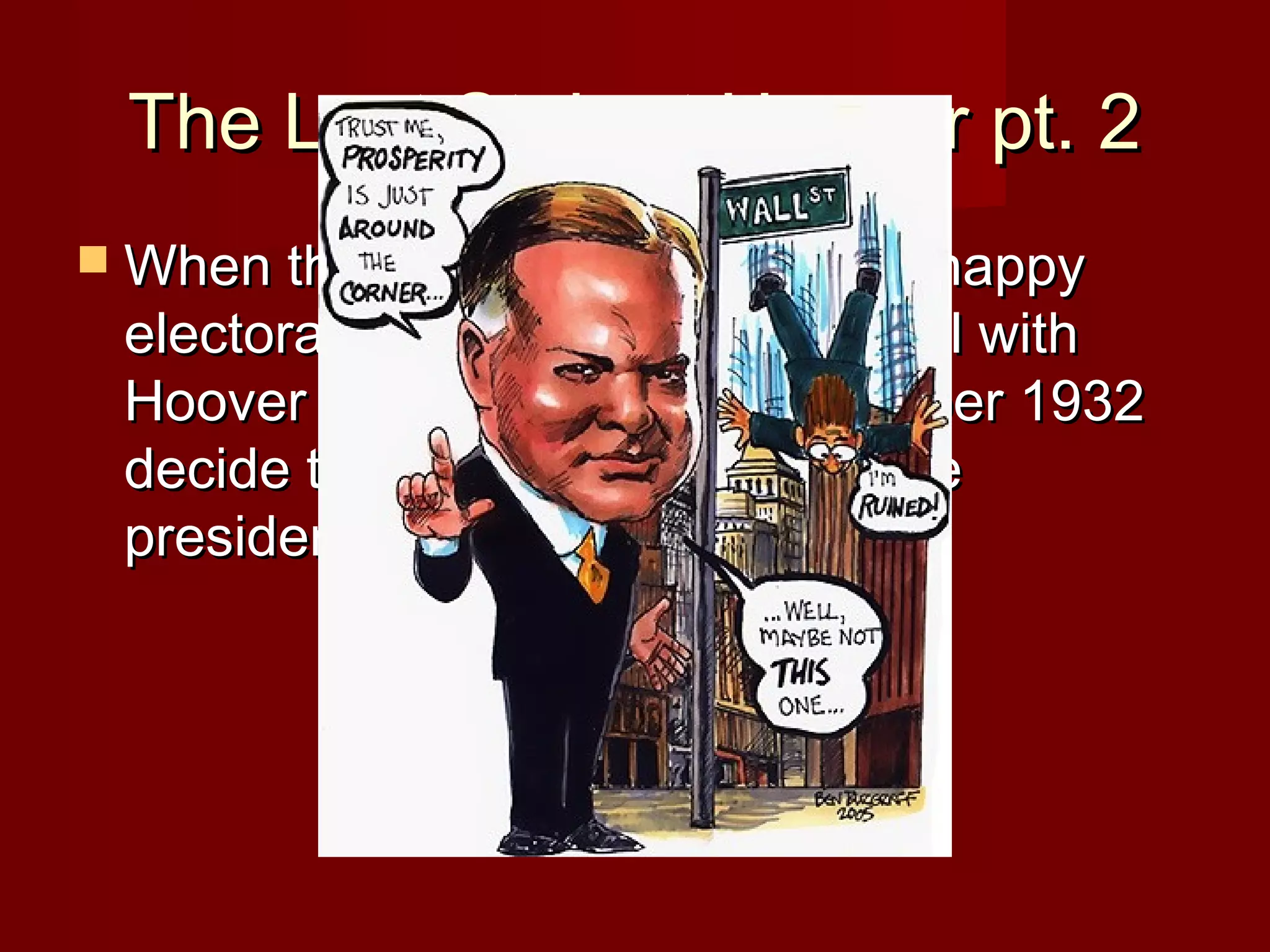
The Last Stab at Hoover pt. 2
 When this occurs, an already unhappy

electorate decides they can’t deal with
Hoover anymore, and in November 1932
decide to elect another man to be
president.

Chapter 23 section 1: Hoover and the Crash

  • 1.
    Hoover and theCrash Chapter 23 Section 1
  • 2.
    Beginning of theCrash  Remember that in 1928, Americans had chosen Herbert Hoover to be the 31st president of the United States  American economy was still in pretty good shape when he gets elected – But older industries, such as agriculture/farming, started to fail as other countries can’t buy our products – The Stock market kept rising, but there wasn’t anything behind the shares to back the prices.
  • 3.
    Causes of theGreat Depression Unequal distribution of wealth: •The rich got richer & the poor got poorer This means a Lack of purchasing power for the poor •Company profits rose in 1920s but wages were NOT increased as much •Taxes had also been drastically reduced for the top earners!
  • 4.
    Causes of theGreat Depression Buying on Margin – A person borrows money to buy a stock – A stock broker takes a portion of the loan as collateral – You have to pay back the stock broker when you’re ready to sell. – Stockbroker got the share of stock if the investor could not repay the loan
  • 5.
    Causes of theGreat Depression Overspeculation: You buy stocks you THINK will rise in price •Based on borrowed $$ $ & optimism…NOT the real value of the stock!
  • 6.
    Causes of theGreat Let me remind you Depression It is just as important that business keep out that credit is the  lifeblood of of government as that government keep out of business, the – Manyprices in the economic sectors of business stated business. lifeblood of people and jobs. stocks were overpriced and the crash brought them that the It’s good for some banks and back to normal levels people to fail! This is all a part of economic competition! Stocks were overpriced  Federal Reserve Policy – Raised the rates on stock brokers who tried to take loans fromGive more cash to losses. banks to cover banks throughout the 1920’s! Then we will reduce the amount of cash Hoover, Andrew Mellon, and others were telling people available to banks that the stock pricesin were wrong…people weren’t 1929!!!  Comments by Public Officials – listening…
  • 7.
    The Crash Hits On Wednesday October 23, 1929 – 6 Million shares are bought and sold by big investors in the stock market.  On October 24, 1929 Black Thursday, the day in which almost 2.5 million shares are outright sold, and the market loses $4 Million
  • 8.
    The Crash Hits On Friday, many investors talk, and decide the stock market will stabilize.  Monday again sees people skeptical, but deciding to hold out.  On October 29, 1929 the stock market officially crashes, known as Black Tuesday. Most investors try to sell their stocks back, but there is no one to buy them, and values plummet drastically.
  • 9.
    Was the StockMarket the only cause?  NO!!!! A number of events lead up to the crash, not just the market.  Farmers run into some serious problems! – Review the Graphic Organizer, Duh!!!  Big-time manufacturing businesses were having similar problems to their farming friends.
  • 10.
    Human Causes ofthe Dust Over-plowing, OverGrazing, and Bowl Drought! Areas Hit By The Dust Bowl Problems with Overgrazing! The Eventual Outcome…
  • 11.
    Environmental Causes ofthe Dust Bowl Drought (Lack of Rain) No Crops Wind
  • 12.
    As a Result… Farmersand their Families Have to Leave The Land, many move West Farms and Homesteads are Destroyed!!! Little Kids are WAAAAAYYYY Bummed Out
  • 13.
    More Causes ofthe Great Depression  Overproduction or a situation where supply of manufactured goods is greater than demand, also occurred.  The problem with this is, when there is too many goods not being sold, and not enough people to buy them, the goods become worth less…the company’s worth then goes down.
  • 14.
    More Causes ofthe Great Depression Overextension of credit: Too much Installment Buying, or buy now, pay later…kind of like credit cards!
  • 15.
    More Causes ofthe Great Depression  Remember Buying on Margin ????  Well, banks used people’s money to play stock market  The market did poorly  They lose innocent people’s money.  Banks then had to close… – which meant even those people who hadn’t played the market lost out.
  • 16.
    The Role ofBanks     As banks closed, they often took businesses’ money with them. Sales continued to fall Companies couldn’t pay their workers They had to declare Bankruptcy , a condition in which a company’s financial failure does not allow it to pay its debts.
  • 17.
    The Role ofBanks  It wasn’t just companies that were affected by this.  Remember that countries purchase goods from each other on loan for things like war and other essential functions.  When the depression hit, they couldn’t pay these loans back and were forced to Default or failed to repay their loans.
  • 18.
    The Effects ofthe Depression  In 1930, Unemployment rose from 3 to 25 percent , and people that were working weren’t making any money.  People couldn’t afford their homes, so they started setting up Hoovervilles, small towns made up of make-shift shanties.  The Depression also broke up families, through fights, search for work, and sometimes death.
  • 19.
  • 20.
  • 21.
  • 22.
    Hoover’s Response  Hooverwill rely on Voluntarism or asking big business and local governments to begin supporting the people of America at their own will.  Hoover realizes that this isn’t the only way to recover, so he sets up the Reconstruction Finance Corporation gave money to banks and public-works projects…the problem is, it’s not enough.
  • 23.
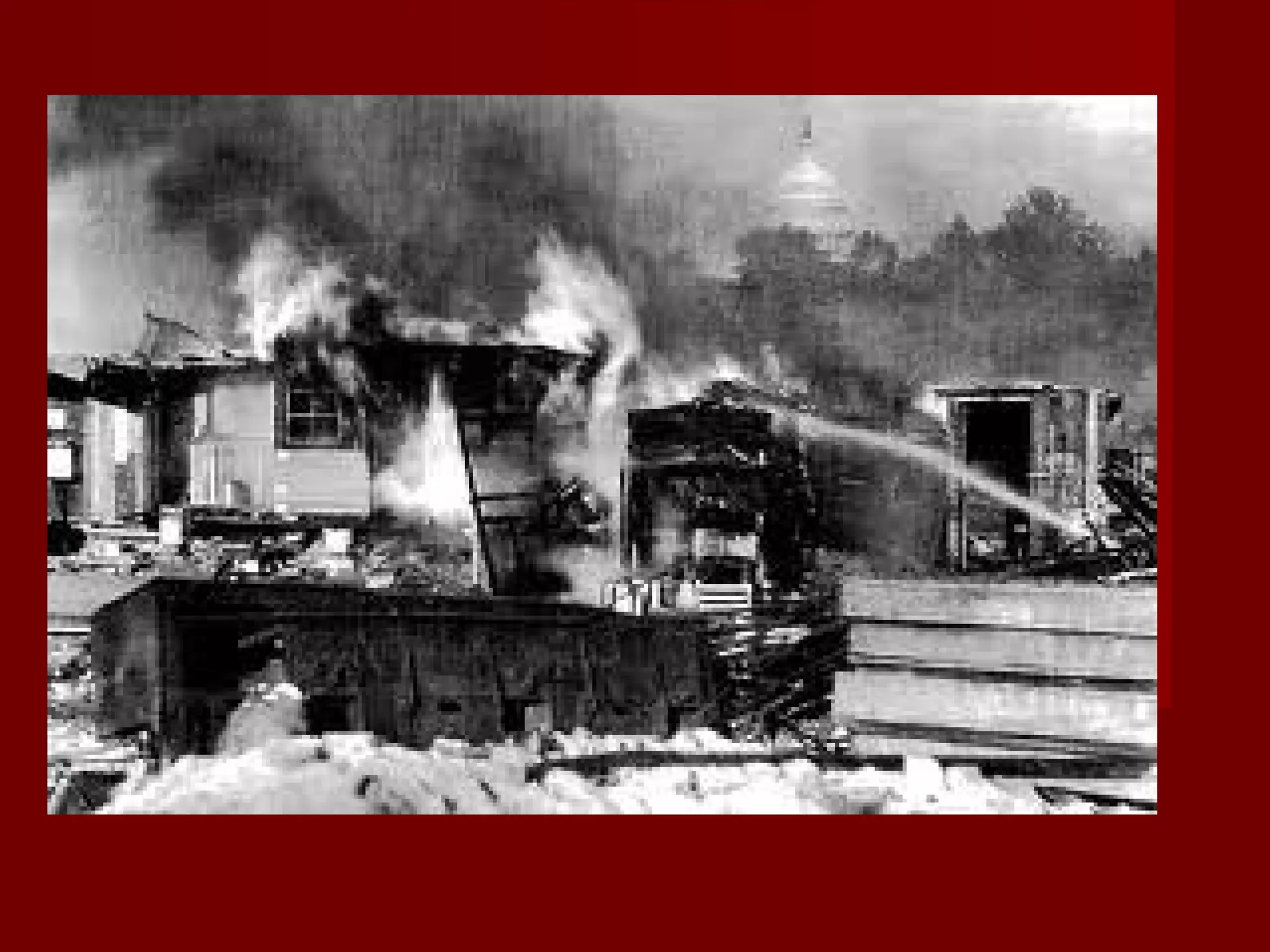
    The Last Stabat Hoover (View “March of the Bonus Army” - 16:00 – 21:40)  In 1932, the Bonus Army marched on Washington, these were a group of soldiers from World War 1, who asked for their service bonus pay during the Depression to help their situations  Hoover refuses to pay, and actually sent Major George Patton and General MacArthur to get the soldiers out of Washington, using military force.
  • 24.
  • 25.
  • 26.
    Bonus Marchers Atthe Capitol
  • 34.
    The Last Stabat Hoover pt. 2  When this occurs, an already unhappy electorate decides they can’t deal with Hoover anymore, and in November 1932 decide to elect another man to be president.