Savannas have comfortable weather year round.
There are 2 very different seasons in the Savanna.
One, is a long, dry, rainless season (winter), the other
is a wet, cold season (summer), which is odd
compared to us. In the winter, the hot season, most
of the trees and plants die, and the waterholes and
rivers dry up and all of the animals migrate to find
food.
Savannas are always found in warm climates
where the annual rainfall per year is from
about 50.8-127cm (20-50 inches). A regular
Savanna is fairly warm but unfortunately has
not enough rain for trees to grow.
Central North America
Central Russia
Siberia
Africa
South America
South India
Northern Australia
Grasslands and Savannas are scattered all
around the world. They are located in
central North America, central Russia and
Siberia, Africa, South America, South India
and Northern Australia. All together
Grasslands cover about 15-20% of the
Earth’s surface.
Here are a few of the grassland animals…

 Cheetah            Emu
 Giraffe            Mongoose
 Elephants          Nile Crocodile
 Cape Buffalo       Koala Bear
 Rhino              Baboon
 Zebra              Black Mamba
 Termite            Cricket
 Leopard            Nigriceps Ants
 Lion               Hyena
 Meerkat            Antelopes
 Wild Dog           Ostrich
 Aardvark           Snakes
 Gazelle            Impala
 Harvester ants     Mice
Mongooses are usually found in the grasslands of Africa. They are
generally terrestrial mammals, but some are semi-aquatic and others
are at home in the treetops. Ranging in size from 7 inches long
(18cm long dwarf mongoose) to 2 foot long (60cm long Egyption
mongoose).They normally have brown or gray grizzled fur and ringed
tails. They live in burrows and feed on
rodents, birds, reptiles, frogs, insects, and worms. Some supplement
their diet with fruit, nuts, and seeds. They have been seen breaking
intobirds eggs and throwing them away, aiming for a hard, solid
object.
Elephants are the largest land mammals on Earth
today. There are elephants that live in Africa and
elephants that live in Asia. African elephants are larger
than Asian elephants and have larger ears. Males are
called bulls, females are called cows and baby
elephants are called calves. Elephants stop feeding
from their mother at about 2 years old and get their
guidance from other adult elephants in their herd.
Elephants are herbivores, and feed on
fruits, vegetables, leaves, grass, seeds, weeds and
other plants. Elephants have more than 50,000
muscles in their trunk!!!!
Some plants of the Grasslands are:

Acacia Senegal
Jackalberry Tree
Kangaroo Paw
Whistling Thorn
River Bushwillow
Gum Tree Eucalyptus
Jarrah Trees
Baobab
Red Oat Grass
Star Grass
The Eucalyptus Gum Tree usually grows in the savannas of
Australia because the cold weather does not allow the
existence of the tree. The Eucalyptus Gum Tree grows from
an average of 20-30 feet tall. They can live through the
longest periods of drought and usually grow in more sandy
parts of the grasslands. The Eucalyptus Gum Tree provides
a huge amount of shade for the animals. Only 15 other
species of Gum Trees are living outside Australia. Doctors
around Australia use Eucalyptus in medicines to cure sore
throats, colds, flus, infections and aches.
The whistling thorn is commonly seen in the East Africa. It can grow to 18
feet tall but is often stunted in its growth. It protects itself with its 3 inch
long thorns.
During the winter (dry season) it will drop all its leaves to conserve water.
At the beginning of the summer (rainy season) creamy white flowers
bloom before leaves grow back.
The blossums look like puffballs. They resemble the mimosa tree that are
in the same family as the whistling thorn
Sun


Grass   Grasshopper   Toad   Snake   Hawk
Lion


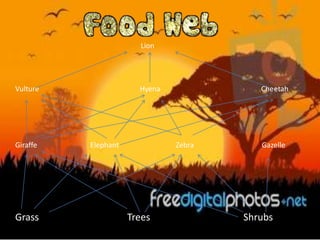
Vulture                Hyena              Cheetah


Giraffe   Elephant             Zebra      Gazelle


Grass                Trees             Shrubs
 Most of the animals of the grasslands have long legs or wings to
  migrate long distances.
 Savannas cover more than 2 fifths of Africa
 Elephants listen through the ground, they can pick up the
  vibrations from the ground to identify other elephants.
MAIN:
Blue planet biomes
OTHER
Mbgnet.net
Climate change.org

Grassland cassidy

  • 2.
    Savannas have comfortableweather year round. There are 2 very different seasons in the Savanna. One, is a long, dry, rainless season (winter), the other is a wet, cold season (summer), which is odd compared to us. In the winter, the hot season, most of the trees and plants die, and the waterholes and rivers dry up and all of the animals migrate to find food.
  • 3.
    Savannas are alwaysfound in warm climates where the annual rainfall per year is from about 50.8-127cm (20-50 inches). A regular Savanna is fairly warm but unfortunately has not enough rain for trees to grow.
  • 4.
    Central North America CentralRussia Siberia Africa South America South India Northern Australia
  • 5.
    Grasslands and Savannasare scattered all around the world. They are located in central North America, central Russia and Siberia, Africa, South America, South India and Northern Australia. All together Grasslands cover about 15-20% of the Earth’s surface.
  • 6.
    Here are afew of the grassland animals… Cheetah Emu Giraffe Mongoose Elephants Nile Crocodile Cape Buffalo Koala Bear Rhino Baboon Zebra Black Mamba Termite Cricket Leopard Nigriceps Ants Lion Hyena Meerkat Antelopes Wild Dog Ostrich Aardvark Snakes Gazelle Impala Harvester ants Mice
  • 7.
    Mongooses are usuallyfound in the grasslands of Africa. They are generally terrestrial mammals, but some are semi-aquatic and others are at home in the treetops. Ranging in size from 7 inches long (18cm long dwarf mongoose) to 2 foot long (60cm long Egyption mongoose).They normally have brown or gray grizzled fur and ringed tails. They live in burrows and feed on rodents, birds, reptiles, frogs, insects, and worms. Some supplement their diet with fruit, nuts, and seeds. They have been seen breaking intobirds eggs and throwing them away, aiming for a hard, solid object.
  • 8.
    Elephants are thelargest land mammals on Earth today. There are elephants that live in Africa and elephants that live in Asia. African elephants are larger than Asian elephants and have larger ears. Males are called bulls, females are called cows and baby elephants are called calves. Elephants stop feeding from their mother at about 2 years old and get their guidance from other adult elephants in their herd. Elephants are herbivores, and feed on fruits, vegetables, leaves, grass, seeds, weeds and other plants. Elephants have more than 50,000 muscles in their trunk!!!!
  • 9.
    Some plants ofthe Grasslands are: Acacia Senegal Jackalberry Tree Kangaroo Paw Whistling Thorn River Bushwillow Gum Tree Eucalyptus Jarrah Trees Baobab Red Oat Grass Star Grass
  • 10.
    The Eucalyptus GumTree usually grows in the savannas of Australia because the cold weather does not allow the existence of the tree. The Eucalyptus Gum Tree grows from an average of 20-30 feet tall. They can live through the longest periods of drought and usually grow in more sandy parts of the grasslands. The Eucalyptus Gum Tree provides a huge amount of shade for the animals. Only 15 other species of Gum Trees are living outside Australia. Doctors around Australia use Eucalyptus in medicines to cure sore throats, colds, flus, infections and aches.
  • 11.
    The whistling thornis commonly seen in the East Africa. It can grow to 18 feet tall but is often stunted in its growth. It protects itself with its 3 inch long thorns. During the winter (dry season) it will drop all its leaves to conserve water. At the beginning of the summer (rainy season) creamy white flowers bloom before leaves grow back. The blossums look like puffballs. They resemble the mimosa tree that are in the same family as the whistling thorn
  • 12.
    Sun Grass Grasshopper Toad Snake Hawk
  • 13.
    Lion Vulture Hyena Cheetah Giraffe Elephant Zebra Gazelle Grass Trees Shrubs
  • 14.
     Most ofthe animals of the grasslands have long legs or wings to migrate long distances.  Savannas cover more than 2 fifths of Africa  Elephants listen through the ground, they can pick up the vibrations from the ground to identify other elephants.
  • 16.