COMPARE AND CONTRAST
SAME TOPIC IN DIFFERENT
MULTIMODAL TEXTS
ACTIVITY: SPOT ME!
similarities and differences of
the information presented.
Fill in the venn diagram using
the words found in the box.
Directions: Observe the
OBJECTIVES:
• Identify the similarities and differences of
information presented in different multimodal
texts;
• Analyze and interpret information of the same
topic presented in different multimodal text; and
• Compare and contrast information of the same
topic in multimodal text (diagram)
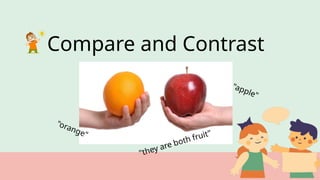
Compare and Contrast
"they are both fruit"
"apple"
"orange"
Multimodal Texts
Multimodal Texts are often
live, digital text, or paper-
based. It requires the
processing of more than one
method and the recognition of
the interconnections between
information.
LIVE MULTIMODAL TEXT -
texts is shown through
combinations of different
modes such as gestural,
spatial, audio, and oral
language.
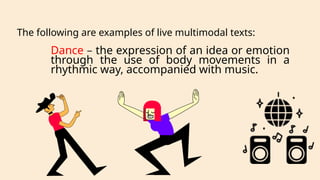
Dance – the expression of an idea or emotion
through the use of body movements in a
rhythmic way, accompanied with music.
The following are examples of live multimodal texts:
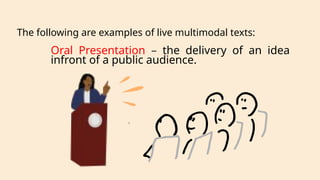
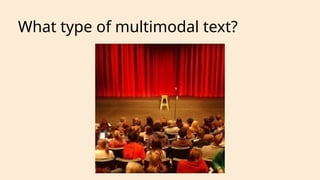
Oral Presentation – the delivery of an idea
infront of a public audience.
The following are examples of live multimodal texts:
DIGITAL MULTIMODAL TEXT -
is presented through dynamic
combinations of various modes across
written and spoken language, still and
moving visual image, audio, gesture,
and spatial communicative resources.
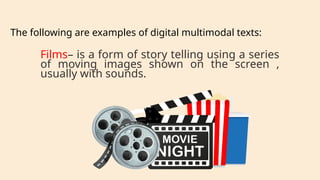
Films– is a form of story telling using a series
of moving images shown on the screen ,
usually with sounds.
The following are examples of digital multimodal texts:
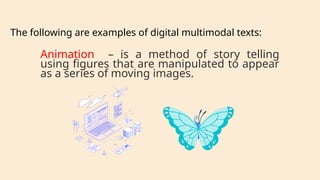
Animation – is a method of story telling
using figures that are manipulated to appear
as a series of moving images.
The following are examples of digital multimodal texts:
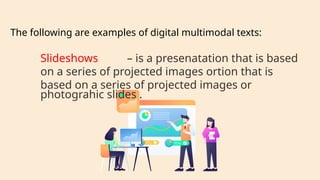
Slideshows – is a presenatation that is based
on a series of projected images ortion that is
based on a series of projected images or
photograhic slides .
The following are examples of digital multimodal texts:
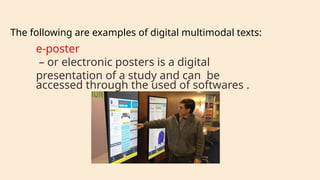
e-poster
– or electronic posters is a digital
presentation of a study and can be
accessed through the used of softwares .
The following are examples of digital multimodal texts:
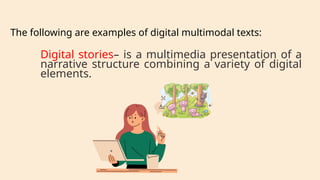
Digital stories– is a multimedia presentation of a
narrative structure combining a variety of digital
elements.
The following are examples of digital multimodal texts:
PAPER-BASED MULTIMODAL TEXT -
is conveyed to the reader through
varying combinations of written
language and still images.
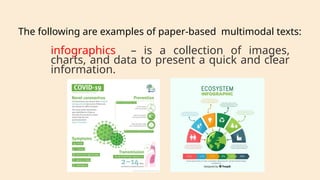
infographics – is a collection of images,
charts, and data to present a quick and clear
information.
The following are examples of paper-based multimodal texts:
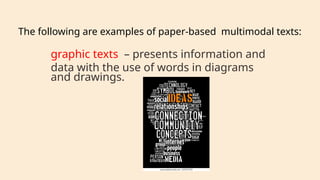
graphic texts – presents information and
data with the use of words in diagrams
and drawings.
The following are examples of paper-based multimodal texts:
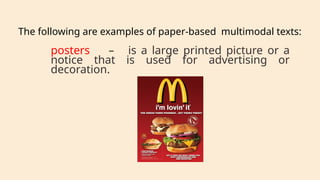
posters – is a large printed picture or a
notice that is used for advertising or
decoration.
The following are examples of paper-based multimodal texts:
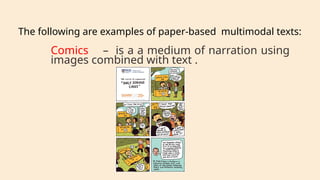
Comics – is a a medium of narration using
images combined with text .
The following are examples of paper-based multimodal texts:
Picture – is an image or drawing that
represent a certain topic.
The following are examples of paper-based multimodal texts:
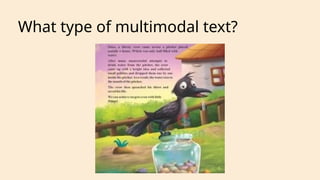
What type of multimodal text?
ACTIVITY: COMPARE AND CONTRAST
The multimodal texts below show
information about Native Africans and
their Traditional Clothing. Look at the
picture collage and the word cloud
below. Answer the following questions.
Direction
s:
ACTIVITY: COMPARE AND CONTRAST
1. Analyze and describe the two multimodal
presentations.
2. Comparing the two multimodal presentations,
what similarities and differences do you
see?
3. Are the information presented in the picture
collage and word cloud the same?
Assessment
Time!
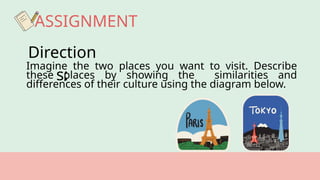
ASSIGNMENT
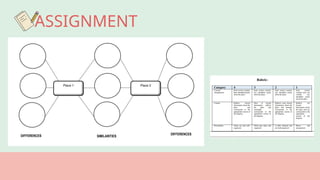
Imagine the two places you want to visit. Describe
these places by showing the similarities and
differences of their culture using the diagram below.
Direction
s:
ASSIGNMENT
Thank
you!
yoyoyoyoyo

Grade 8 Lesson-Q2: Compare and Contrast Same Topic in Different Multimodal Texts

  • 2.
    COMPARE AND CONTRAST SAMETOPIC IN DIFFERENT MULTIMODAL TEXTS
  • 3.
    ACTIVITY: SPOT ME! similaritiesand differences of the information presented. Fill in the venn diagram using the words found in the box. Directions: Observe the
  • 4.
    OBJECTIVES: • Identify thesimilarities and differences of information presented in different multimodal texts; • Analyze and interpret information of the same topic presented in different multimodal text; and • Compare and contrast information of the same topic in multimodal text (diagram)
  • 5.
    Compare and Contrast "theyare both fruit" "apple" "orange"
  • 6.
    Multimodal Texts Multimodal Textsare often live, digital text, or paper- based. It requires the processing of more than one method and the recognition of the interconnections between information.
  • 7.
    LIVE MULTIMODAL TEXT- texts is shown through combinations of different modes such as gestural, spatial, audio, and oral language.
  • 8.
    Dance – theexpression of an idea or emotion through the use of body movements in a rhythmic way, accompanied with music. The following are examples of live multimodal texts:
  • 9.
    Oral Presentation –the delivery of an idea infront of a public audience. The following are examples of live multimodal texts:
  • 10.
    DIGITAL MULTIMODAL TEXT- is presented through dynamic combinations of various modes across written and spoken language, still and moving visual image, audio, gesture, and spatial communicative resources.
  • 11.
    Films– is aform of story telling using a series of moving images shown on the screen , usually with sounds. The following are examples of digital multimodal texts:
  • 12.
    Animation – isa method of story telling using figures that are manipulated to appear as a series of moving images. The following are examples of digital multimodal texts:
  • 13.
    Slideshows – isa presenatation that is based on a series of projected images ortion that is based on a series of projected images or photograhic slides . The following are examples of digital multimodal texts:
  • 14.
    e-poster – or electronicposters is a digital presentation of a study and can be accessed through the used of softwares . The following are examples of digital multimodal texts:
  • 15.
    Digital stories– isa multimedia presentation of a narrative structure combining a variety of digital elements. The following are examples of digital multimodal texts:
  • 16.
    PAPER-BASED MULTIMODAL TEXT- is conveyed to the reader through varying combinations of written language and still images.
  • 17.
    infographics – isa collection of images, charts, and data to present a quick and clear information. The following are examples of paper-based multimodal texts:
  • 18.
    graphic texts –presents information and data with the use of words in diagrams and drawings. The following are examples of paper-based multimodal texts:
  • 19.
    posters – isa large printed picture or a notice that is used for advertising or decoration. The following are examples of paper-based multimodal texts:
  • 20.
    Comics – isa a medium of narration using images combined with text . The following are examples of paper-based multimodal texts:
  • 21.
    Picture – isan image or drawing that represent a certain topic. The following are examples of paper-based multimodal texts:
  • 22.
    What type ofmultimodal text?
  • 23.
    What type ofmultimodal text?
  • 24.
    What type ofmultimodal text?
  • 25.
    ACTIVITY: COMPARE ANDCONTRAST The multimodal texts below show information about Native Africans and their Traditional Clothing. Look at the picture collage and the word cloud below. Answer the following questions. Direction s:
  • 26.
    ACTIVITY: COMPARE ANDCONTRAST 1. Analyze and describe the two multimodal presentations. 2. Comparing the two multimodal presentations, what similarities and differences do you see? 3. Are the information presented in the picture collage and word cloud the same?
  • 27.
  • 28.
    ASSIGNMENT Imagine the twoplaces you want to visit. Describe these places by showing the similarities and differences of their culture using the diagram below. Direction s:
  • 29.
  • 30.