Gold Plates
Picasso
A collection of gold plates by Pablo Picasso
in Private Collection
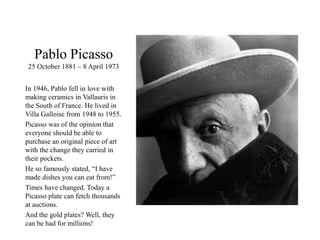
Pablo Picasso
25 October 1881 – 8 April 1973
In 1946, Pablo fell in love with
making ceramics in Vallauris in
the South of France. He lived in
Villa Galloise from 1948 to 1955.
Picasso was of the opinion that
everyone should be able to
purchase an original piece of art
with the change they carried in
their pockets.
He so famously stated, “I have
made dishes you can eat from!”
Times have changed. Today a
Picasso plate can fetch thousands
at auctions.
And the gold plates? Well, they
can be had for millions!
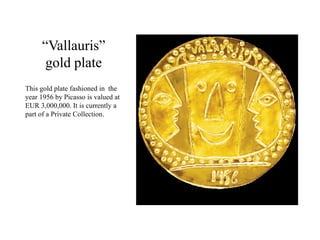
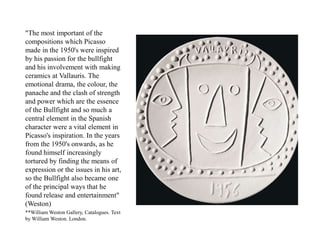
“Vallauris”
gold plate
This gold plate fashioned in the
year 1956 by Picasso is valued at
EUR 3,000,000. It is currently a
part of a Private Collection.
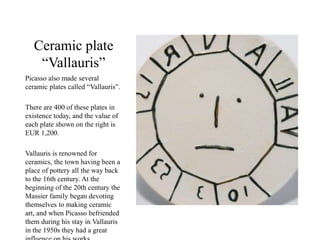
Ceramic plate
“Vallauris”
Picasso also made several
ceramic plates called “Vallauris”.
There are 400 of these plates in
existence today, and the value of
each plate shown on the right is
EUR 1,200.
Vallauris is renowned for
ceramics, the town having been a
place of pottery all the way back
to the 16th century. At the
beginning of the 20th century the
Massier family began devoting
themselves to making ceramic
art, and when Picasso befriended
them during his stay in Vallauris
in the 1950s they had a great
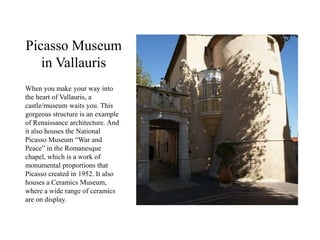
Picasso Museum
in Vallauris
When you make your way into
the heart of Vallauris, a
castle/museum waits you. This
gorgeous structure is an example
of Renaissance architecture. And
it also houses the National
Picasso Museum “War and
Peace” in the Romanesque
chapel, which is a work of
monumental proportions that
Picasso created in 1952. It also
houses a Ceramics Museum,
where a wide range of ceramics
are on display.
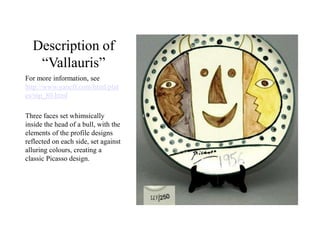
Why Vallauris?
Why did Pablo Picasso name his
gold plate “Vallauris”? Who are
the three people depicted on the
plate? Does the man in the center
represent Picasso himself? Is
Picasso being doted on by two
women? If you look carefully,
you will see that the three faces
are actually inside of a bull’s
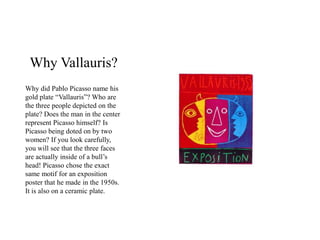
head! Picasso chose the exact
same motif for an exposition
poster that he made in the 1950s.
It is also on a ceramic plate.
Description of
“Vallauris”
For more information, see
http://www.yaneff.com/html/plat
es/mp_80.html
Three faces set whimsically
inside the head of a bull, with the
elements of the profile designs
reflected on each side, set against
alluring colours, creating a
classic Picasso design.
"The most important of the
compositions which Picasso
made in the 1950's were inspired
by his passion for the bullfight
and his involvement with making
ceramics at Vallauris. The
emotional drama, the colour, the
panache and the clash of strength
and power which are the essence
of the Bullfight and so much a
central element in the Spanish
character were a vital element in
Picasso's inspiration. In the years
from the 1950's onwards, as he
found himself increasingly
tortured by finding the means of
expression or the issues in his art,
so the Bullfight also became one
of the principal ways that he
found release and entertainment"
(Weston)
**William Weston Gallery, Catalogues. Text
by William Weston. London.
Gold plates picasso 1

Gold plates picasso 1

  • 1.
    Gold Plates Picasso A collectionof gold plates by Pablo Picasso in Private Collection
  • 2.
    Pablo Picasso 25 October1881 – 8 April 1973 In 1946, Pablo fell in love with making ceramics in Vallauris in the South of France. He lived in Villa Galloise from 1948 to 1955. Picasso was of the opinion that everyone should be able to purchase an original piece of art with the change they carried in their pockets. He so famously stated, “I have made dishes you can eat from!” Times have changed. Today a Picasso plate can fetch thousands at auctions. And the gold plates? Well, they can be had for millions!
  • 3.
    “Vallauris” gold plate This goldplate fashioned in the year 1956 by Picasso is valued at EUR 3,000,000. It is currently a part of a Private Collection.
  • 4.
    Ceramic plate “Vallauris” Picasso alsomade several ceramic plates called “Vallauris”. There are 400 of these plates in existence today, and the value of each plate shown on the right is EUR 1,200. Vallauris is renowned for ceramics, the town having been a place of pottery all the way back to the 16th century. At the beginning of the 20th century the Massier family began devoting themselves to making ceramic art, and when Picasso befriended them during his stay in Vallauris in the 1950s they had a great
  • 5.
    Picasso Museum in Vallauris Whenyou make your way into the heart of Vallauris, a castle/museum waits you. This gorgeous structure is an example of Renaissance architecture. And it also houses the National Picasso Museum “War and Peace” in the Romanesque chapel, which is a work of monumental proportions that Picasso created in 1952. It also houses a Ceramics Museum, where a wide range of ceramics are on display.
  • 6.
    Why Vallauris? Why didPablo Picasso name his gold plate “Vallauris”? Who are the three people depicted on the plate? Does the man in the center represent Picasso himself? Is Picasso being doted on by two women? If you look carefully, you will see that the three faces are actually inside of a bull’s head! Picasso chose the exact same motif for an exposition poster that he made in the 1950s. It is also on a ceramic plate.
  • 7.
    Description of “Vallauris” For moreinformation, see http://www.yaneff.com/html/plat es/mp_80.html Three faces set whimsically inside the head of a bull, with the elements of the profile designs reflected on each side, set against alluring colours, creating a classic Picasso design.
  • 8.
    "The most importantof the compositions which Picasso made in the 1950's were inspired by his passion for the bullfight and his involvement with making ceramics at Vallauris. The emotional drama, the colour, the panache and the clash of strength and power which are the essence of the Bullfight and so much a central element in the Spanish character were a vital element in Picasso's inspiration. In the years from the 1950's onwards, as he found himself increasingly tortured by finding the means of expression or the issues in his art, so the Bullfight also became one of the principal ways that he found release and entertainment" (Weston) **William Weston Gallery, Catalogues. Text by William Weston. London.