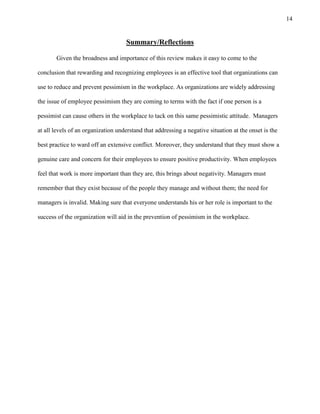
This document discusses managing workplace pessimism. It outlines various causes of pessimism including lack of competence, community, control, and clear communication. There are different types of pessimists such as locomotive, perfectionist, rumormonger, and criticizer. Managing pessimism requires addressing its causes, avoiding common pitfalls, and implementing elements like vision, incentives, skills training, action plans, and resources to facilitate positive change. Intergroup conflicts and social identities can also influence levels of pessimism in an organization.