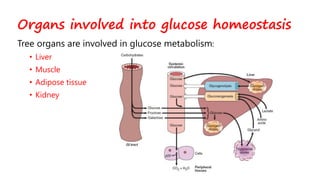
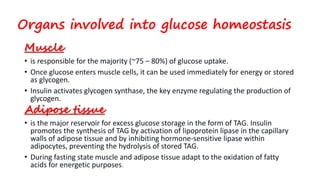
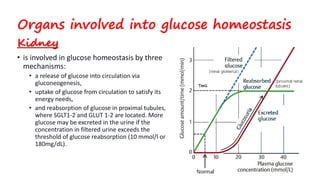
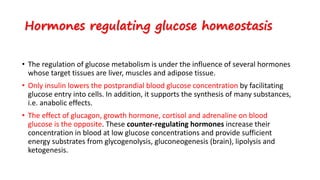
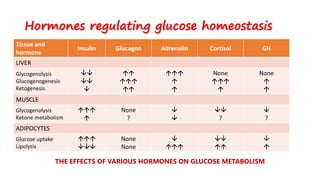
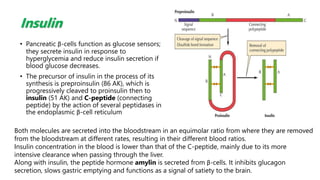
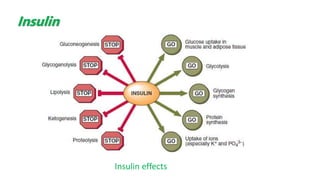
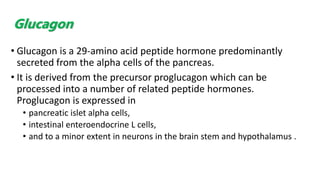
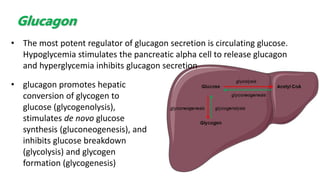
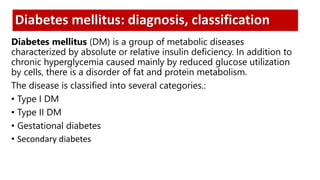
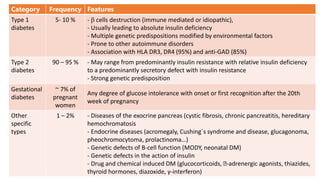
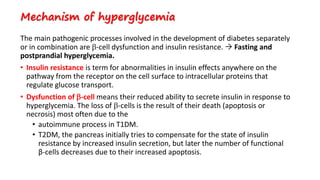
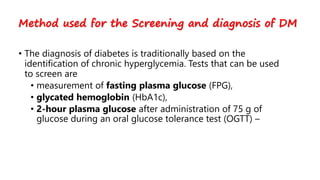
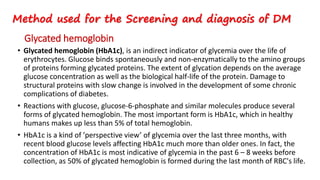
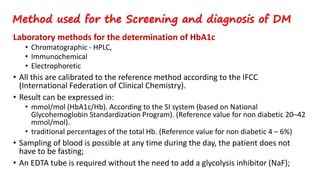
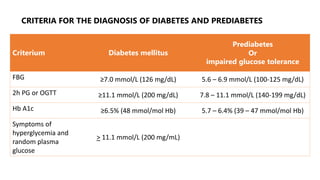
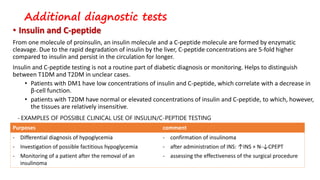
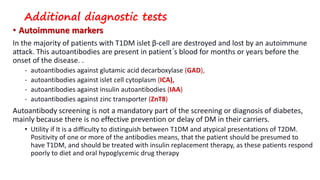
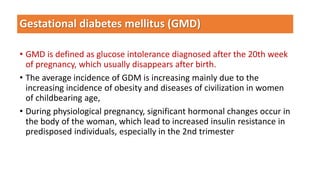
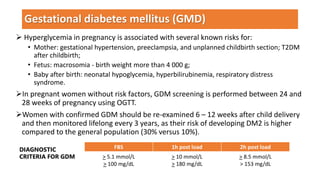
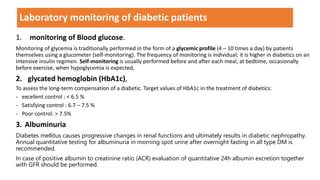
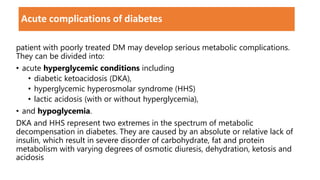
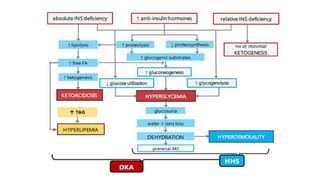
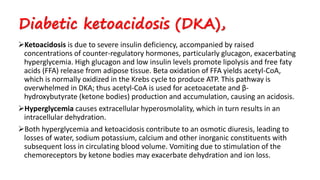
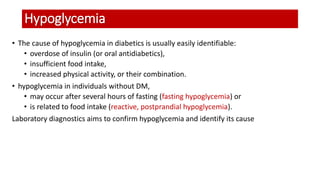
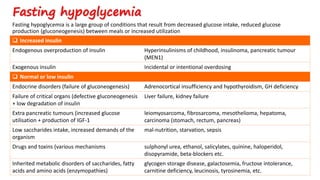
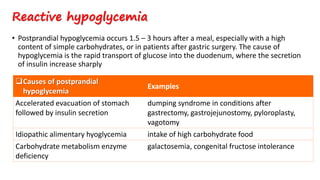
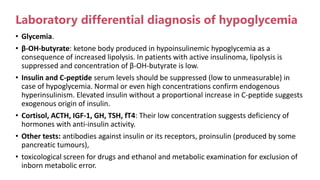
This document summarizes key aspects of glucose homeostasis and diabetes mellitus. It discusses how glucose levels are tightly regulated within the physiological range through a balance of intake, utilization, storage and excretion across organs like the liver, muscle and adipose tissue. Insulin and glucagon are the main hormones that regulate glucose levels by facilitating glucose uptake and storage or promoting gluconeogenesis and glycogenolysis. The diagnosis of diabetes is based on tests measuring fasting glucose, oral glucose tolerance, and HbA1c levels according to defined criteria. Type 1 diabetes involves autoimmune destruction of beta cells while type 2 diabetes ranges from insulin resistance to deficient insulin secretion.
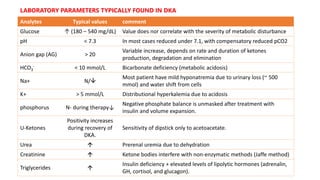
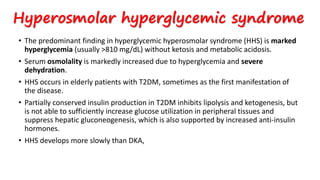
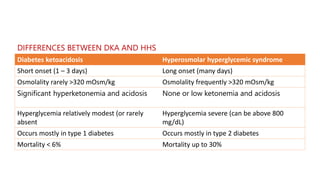
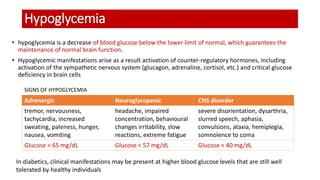



![ghhhgmnite[1].pptx](https://cdn.slidesharecdn.com/ss_thumbnails/ghhhgmnite1-230305132421-51f02753-thumbnail.jpg?width=640&height=640&fit=bounds)
![mnite[1].pptx](https://cdn.slidesharecdn.com/ss_thumbnails/mnite1-230305121116-cf51da84-thumbnail.jpg?width=640&height=640&fit=bounds)


