Presented by:-
Sheheryar Gull
Reg # 130101071
Aerospace 12A
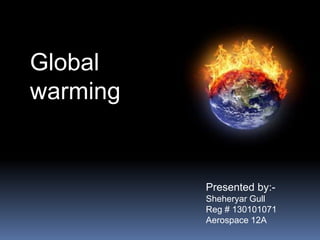
Global
warming
Objectives
• What is the Global warming?
• Causes of the Global warming.
• Green house effect
• Advantages and disadvantages of greenhouse effect
• Threats due to global warming
• Solution of threats
• Conclusion
What is Global warming?
The earth heats up (the temperature rises)
What causes global warming?
One thing that causes global warming is electrical pollution.
Electricity causes pollution in many ways, some worse than
others.
In most cases, fossil fuels are burned to create electricity.
Fossil fuels are made of dead plants and animals.
Some common examples
Turning on a light
Watching T.V.
Listening to a stereo
Washing or drying clothes
Using a hair dryer
Riding in a car
Heating a meal in the microwave
Using an air conditioner
Playing a video game
Using a dish washer
Deforestation
the woods are lovely, dark and deep.
They’re our respite. Our places of peace. Our
natural air filters. Our water factories. Our
medicine cabinets. We literally can’t live without
them.
So why are they disappearing?
About half of the world's tropical forests have been
cleared, according to the United Nations' Food
and Agriculture Organization.(FAO)
Forests currently cover about 30 percent of the
world’s land mass (National Geographic)
Forest loss contributes between 12 percent and
17 percent of annual global greenhouse gas
emissions (World Resources Institute)
Deforestation
Climate change
When forests are cleared, they emit CO2 back into the
atmosphere and put humanity on a dangerous collision
course with the worst of climate change. And the problem
is enormous. Deforestation accounts for about 11% of
global greenhouse gas emissions caused by humans —
that's comparable to the emissions from all of the cars and
trucks on Earth combined. It gives us a safe, low-cost way
to remove carbon from the atmosphere while also
providing benefits to people.
• The heat and light can get through the atmosphere,
but it can’t get out. As a result, the temperature rises.
•Sometimes the temperature can change in a way that
helps us.
What is greenhouse effect?
• The greenhouse effect is when the temperature rises
because the sun’s heat and light is trapped in the earth’s
atmosphere.
The greenhouse effect makes the earth appropriate
for people to liveon.
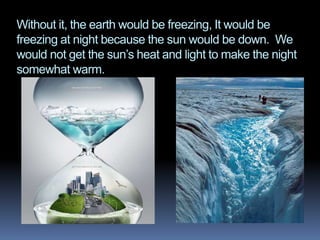
Without it, the earth would be freezing, It would be
freezing at night because the sun would be down. We
would not get the sun’s heat and light to make the night
somewhat warm.
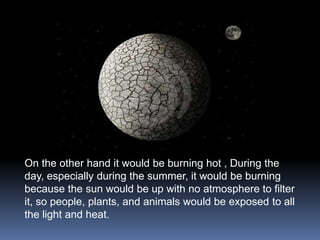
On the other hand it would be burning hot , During the
day, especially during the summer, it would be burning
because the sun would be up with no atmosphere to filter
it, so people, plants, and animals would be exposed to all
the light and heat.
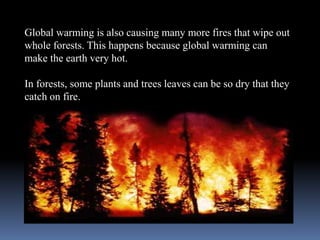
Global warming is also causing many more fires that wipe out
whole forests. This happens because global warming can
make the earth very hot.
In forests, some plants and trees leaves can be so dry that they
catch on fire.
What is global warming doing to the
environment?
Makes the sea rise : the water covers many low land
islands, the plants and causes some of them to die so,
the animals lose a source of food, along with their habitat
, but people lose two sources of food, plant food and
animal food.
What is Acid Rain?
Acid rain is a mixture of wet and dry deposition (deposited
material) from the atmosphere containing higher than normal
amounts of nitric and sulfuric acids.
The precursors, or chemical forerunners, of acid rain
formation result from both natural sources, such as volcanoes
and decaying vegetation, and man-made sources, primarily
emissions of sulfur dioxide (SO2) and nitrogen oxides (NOx)
resulting from fossil fuel combustion.
Acid Rain
Effect of acid rain
Taj Mahal color due to acid rain. Acid rain reacted with the
marble (calcium carbonate) of Taj Mahal. This caused
damage to this wonderful structure, ...
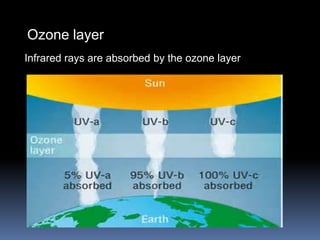
Infrared rays are absorbed by the ozone layer
Ozone layer
DNA damaged by UV light can cause skin cancer.
Infrared rays are harmful for life
Depletion of ozone layer
Chlorofluorocarbons (CFCs)
The most widely used ODS, accounting for over 80% of total stratospheric
ozone depletion.
Used as coolants in refrigerators, freezers and air conditioners in buildings
and cars manufactured before 1995.
Found in industrial solvents, dry-cleaning agents and hospital sterilants.
Also used in foam products — such as soft-foam padding (e.g. cushions and
mattresses) and rigid foam (e.g. home insulation).
Halons
Used in some fire extinguishers, in cases where materials and equipment
would be destroyed by water or other fire extinguisher chemicals. In B.C.,
halons cause greater damage to the ozone layer than do CFCs from
automobile air conditioners.
Methyl Chloroform
Used mainly in industry — for vapour degreasing, some aerosols, cold
cleaning, adhesives and chemical processing.
Carbon Tetrachloride
Used in solvents and some fire extinguishers.
Hydrofluorocarbons (HCFCs)
HCFCs have become major, “transitional” substitutes for CFCs. They are
much less harmful to stratospheric ozone than CFCs are. But HCFCs they
still cause some ozone destruction and are potent greenhouse gases.
In this section:
Depletion of ozone layer
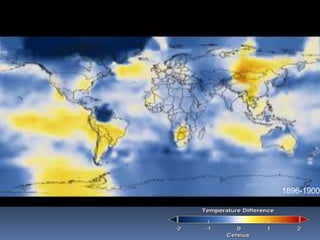
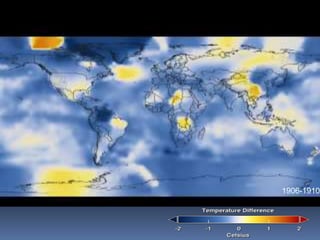
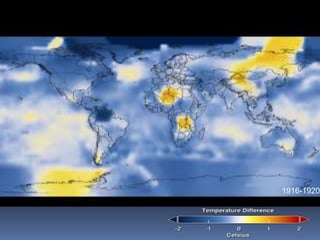
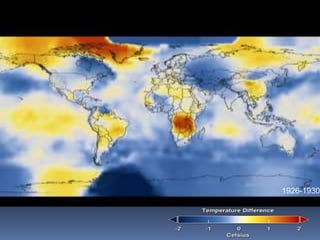
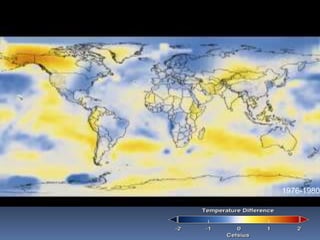
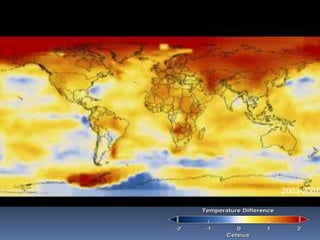
Temperature Change
Data
1880188
4
1886-
1890
1896-1900
1906-1910
1916-1920
1926-1930
1936-1940
1946-1950
1956-1960
1966-1970
1976-1980
1986-1990
1996-2000
2003-2007
How we can minimize the Global
warming?
Small changes really add up
Replacing just 1 incandescent light bulb with 1 compact
florescent bulb saves about 150 pounds of
carbon dioxide per year!
Drive JUST 10 fewer
miles per week
Annual savings:
$80; 520 pounds
CO2
Wash clothes in cold
water only
Annual savings:
$70; 500
pounds CO2
Reduce your garbage
by 10% through
greater recycling or
reduced packaging
Annual savings:
1200 pounds CO2
Replace your old
refrigerator with a
new Energy Star:
Annual savings:
$90; 700
pounds CO2
Set your
thermostat down a
few degrees in the
winter
Annual savings:
$135; 1400
pounds CO2
Global warming awareness
Through seed distribution, agroforestory training, and our
country programs, we have empowered rural groups to
restore tree cover to their lands.
Planting trees protects the environment and helps to preserve
traditional livelihoods and cultures for generations.
Global warming
Global warming
Global warming

Global warming

  • 1.
    Presented by:- Sheheryar Gull Reg# 130101071 Aerospace 12A Global warming
  • 2.
    Objectives • What isthe Global warming? • Causes of the Global warming. • Green house effect • Advantages and disadvantages of greenhouse effect • Threats due to global warming • Solution of threats • Conclusion
  • 3.
    What is Globalwarming? The earth heats up (the temperature rises)
  • 4.
    What causes globalwarming? One thing that causes global warming is electrical pollution. Electricity causes pollution in many ways, some worse than others. In most cases, fossil fuels are burned to create electricity. Fossil fuels are made of dead plants and animals.
  • 5.
    Some common examples Turningon a light Watching T.V. Listening to a stereo Washing or drying clothes Using a hair dryer Riding in a car Heating a meal in the microwave Using an air conditioner Playing a video game Using a dish washer
  • 6.
    Deforestation the woods arelovely, dark and deep. They’re our respite. Our places of peace. Our natural air filters. Our water factories. Our medicine cabinets. We literally can’t live without them. So why are they disappearing?
  • 7.
    About half ofthe world's tropical forests have been cleared, according to the United Nations' Food and Agriculture Organization.(FAO) Forests currently cover about 30 percent of the world’s land mass (National Geographic) Forest loss contributes between 12 percent and 17 percent of annual global greenhouse gas emissions (World Resources Institute) Deforestation
  • 8.
    Climate change When forestsare cleared, they emit CO2 back into the atmosphere and put humanity on a dangerous collision course with the worst of climate change. And the problem is enormous. Deforestation accounts for about 11% of global greenhouse gas emissions caused by humans — that's comparable to the emissions from all of the cars and trucks on Earth combined. It gives us a safe, low-cost way to remove carbon from the atmosphere while also providing benefits to people.
  • 9.
    • The heatand light can get through the atmosphere, but it can’t get out. As a result, the temperature rises. •Sometimes the temperature can change in a way that helps us. What is greenhouse effect? • The greenhouse effect is when the temperature rises because the sun’s heat and light is trapped in the earth’s atmosphere.
  • 10.
    The greenhouse effectmakes the earth appropriate for people to liveon.
  • 11.
    Without it, theearth would be freezing, It would be freezing at night because the sun would be down. We would not get the sun’s heat and light to make the night somewhat warm.
  • 12.
    On the otherhand it would be burning hot , During the day, especially during the summer, it would be burning because the sun would be up with no atmosphere to filter it, so people, plants, and animals would be exposed to all the light and heat.
  • 13.
    Global warming isalso causing many more fires that wipe out whole forests. This happens because global warming can make the earth very hot. In forests, some plants and trees leaves can be so dry that they catch on fire.
  • 14.
    What is globalwarming doing to the environment? Makes the sea rise : the water covers many low land islands, the plants and causes some of them to die so, the animals lose a source of food, along with their habitat , but people lose two sources of food, plant food and animal food.
  • 15.
    What is AcidRain? Acid rain is a mixture of wet and dry deposition (deposited material) from the atmosphere containing higher than normal amounts of nitric and sulfuric acids. The precursors, or chemical forerunners, of acid rain formation result from both natural sources, such as volcanoes and decaying vegetation, and man-made sources, primarily emissions of sulfur dioxide (SO2) and nitrogen oxides (NOx) resulting from fossil fuel combustion.
  • 16.
  • 17.
    Effect of acidrain Taj Mahal color due to acid rain. Acid rain reacted with the marble (calcium carbonate) of Taj Mahal. This caused damage to this wonderful structure, ...
  • 18.
    Infrared rays areabsorbed by the ozone layer Ozone layer
  • 19.
    DNA damaged byUV light can cause skin cancer. Infrared rays are harmful for life
  • 20.
    Depletion of ozonelayer Chlorofluorocarbons (CFCs) The most widely used ODS, accounting for over 80% of total stratospheric ozone depletion. Used as coolants in refrigerators, freezers and air conditioners in buildings and cars manufactured before 1995. Found in industrial solvents, dry-cleaning agents and hospital sterilants. Also used in foam products — such as soft-foam padding (e.g. cushions and mattresses) and rigid foam (e.g. home insulation). Halons Used in some fire extinguishers, in cases where materials and equipment would be destroyed by water or other fire extinguisher chemicals. In B.C., halons cause greater damage to the ozone layer than do CFCs from automobile air conditioners. Methyl Chloroform Used mainly in industry — for vapour degreasing, some aerosols, cold cleaning, adhesives and chemical processing. Carbon Tetrachloride Used in solvents and some fire extinguishers. Hydrofluorocarbons (HCFCs) HCFCs have become major, “transitional” substitutes for CFCs. They are much less harmful to stratospheric ozone than CFCs are. But HCFCs they still cause some ozone destruction and are potent greenhouse gases. In this section:
  • 21.
  • 22.
  • 23.
  • 24.
  • 25.
  • 26.
  • 27.
  • 28.
  • 29.
  • 30.
  • 31.
  • 32.
  • 33.
  • 34.
  • 35.
  • 36.
    How we canminimize the Global warming? Small changes really add up Replacing just 1 incandescent light bulb with 1 compact florescent bulb saves about 150 pounds of carbon dioxide per year!
  • 37.
    Drive JUST 10fewer miles per week Annual savings: $80; 520 pounds CO2 Wash clothes in cold water only Annual savings: $70; 500 pounds CO2 Reduce your garbage by 10% through greater recycling or reduced packaging Annual savings: 1200 pounds CO2 Replace your old refrigerator with a new Energy Star: Annual savings: $90; 700 pounds CO2 Set your thermostat down a few degrees in the winter Annual savings: $135; 1400 pounds CO2
  • 38.
    Global warming awareness Throughseed distribution, agroforestory training, and our country programs, we have empowered rural groups to restore tree cover to their lands. Planting trees protects the environment and helps to preserve traditional livelihoods and cultures for generations.