COMMUNITY AND ACADEMIC PARTNERSHIPS: REALITIES AND POSSIBILITIESPresenter: So`Nia L. Gilkey, PhD, LCSW, CmdrConference Title: Best Practices Disaster Mental Health and ResilienceTulane University School of Social WorkMarch 20, 2009
General OverviewCommunity and Academic Partnerships DefinedGeneral Characteristics of Successful PartnershipsTruths and Myths of PartnershipsUsing Strengths-based approachForging Partnerships in Post-Disaster EraTwo Case ExamplesDisaster Mental Health Recovery ProgramHomeless Services ProgramsConclusion
Traditional - partnerships between community-based programs and academic institutions to address needs of targeted populations and/or issues of communityPartnerships viewed as collaborative and supportiveBoth parties bring various expertise on issue/problemResearch and/or evaluation activities major part of partnershipCommunity and Academic Partnerships
Partnerships ContinuedPost-Disaster – partnerships can be defined as having mutually collaborative interests, but where disaster-related impact is included as significant component of the partnershipPartnerships based in cooperative, problem-solving framework where benefits of the relationship are balanced and activities of the partnership designed to promote resilience and well-being of the community-based programPractice-based activities in addition to research and evaluation are key components of partnership
General interest in partneringGeneral desire to improve client servicesGoals and products mutually negotiatedActivities focused on strengths Challenges and barriers considered and solutions soughtCommitment to partnering viewed as valuable and relevantGeneral Characteristics of Successful Partnerships
Truths and Myths of PartnershipsTruthsRelationships between community and universities encouragedCommunity-based programs have access to university expertiseUniversities have access to practice expertisePartnership commitments responsibility of both partiesImproved understanding of systems impactIncreased opportunities to demonstrate program-related outcomes Increased opportunities to improve client services
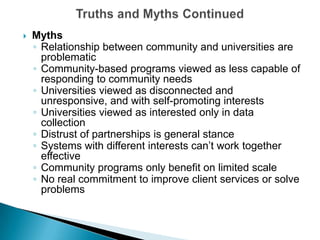
Truths and Myths ContinuedMyths
Relationship between community and universities are problematic
Community-based programs viewed as less capable of responding to community needs
Universities viewed as disconnected and unresponsive, and with self-promoting interests
Universities viewed as interested only in data collection
Distrust of partnerships is general stance
Systems with different interests can’t work together effective
Community programs only benefit on limited scale

"Community and Academic Partnerships: Realities and Possibilities" by Dr. So'Nia Gilkey

  • 1.
    COMMUNITY AND ACADEMICPARTNERSHIPS: REALITIES AND POSSIBILITIESPresenter: So`Nia L. Gilkey, PhD, LCSW, CmdrConference Title: Best Practices Disaster Mental Health and ResilienceTulane University School of Social WorkMarch 20, 2009
  • 2.
    General OverviewCommunity andAcademic Partnerships DefinedGeneral Characteristics of Successful PartnershipsTruths and Myths of PartnershipsUsing Strengths-based approachForging Partnerships in Post-Disaster EraTwo Case ExamplesDisaster Mental Health Recovery ProgramHomeless Services ProgramsConclusion
  • 3.
    Traditional - partnershipsbetween community-based programs and academic institutions to address needs of targeted populations and/or issues of communityPartnerships viewed as collaborative and supportiveBoth parties bring various expertise on issue/problemResearch and/or evaluation activities major part of partnershipCommunity and Academic Partnerships
  • 4.
    Partnerships ContinuedPost-Disaster –partnerships can be defined as having mutually collaborative interests, but where disaster-related impact is included as significant component of the partnershipPartnerships based in cooperative, problem-solving framework where benefits of the relationship are balanced and activities of the partnership designed to promote resilience and well-being of the community-based programPractice-based activities in addition to research and evaluation are key components of partnership
  • 5.
    General interest inpartneringGeneral desire to improve client servicesGoals and products mutually negotiatedActivities focused on strengths Challenges and barriers considered and solutions soughtCommitment to partnering viewed as valuable and relevantGeneral Characteristics of Successful Partnerships
  • 6.
    Truths and Mythsof PartnershipsTruthsRelationships between community and universities encouragedCommunity-based programs have access to university expertiseUniversities have access to practice expertisePartnership commitments responsibility of both partiesImproved understanding of systems impactIncreased opportunities to demonstrate program-related outcomes Increased opportunities to improve client services
  • 7.
    Truths and MythsContinuedMyths
  • 8.
    Relationship between communityand universities are problematic
  • 9.
    Community-based programs viewedas less capable of responding to community needs
  • 10.
    Universities viewed asdisconnected and unresponsive, and with self-promoting interests
  • 11.
    Universities viewed asinterested only in data collection
  • 12.
    Distrust of partnershipsis general stance
  • 13.
    Systems with differentinterests can’t work together effective
  • 14.
    Community programs onlybenefit on limited scale