Research and GreenICT
Dr. Andrew Thomas and 
Venkatesh Vijay
BCU/TEE, April 2013
What are we going to do?
This is what we hope to cover in 1½ hours:
• An introduction to sensors and their uses.
• Some demos of sensors and graphics.
• A talk about being ‘green’ in research.
• A tour of the TEE/BCU workshop.
What are we going to do?
This is what we hope to cover in 1½ hours:
• An introduction to sensors and their uses.
• Some demos of sensors and graphics.
• A talk about being ‘green’ in research.
• A tour of the TEE/BCU workshop.
What are we going to do?
This is what we hope to cover in 1½ hours:
• An introduction to sensors and their uses.
• Some demos of sensors and graphics.
• A talk about being ‘green’ in research.
• A tour of the TEE/BCU workshop.
What are we going to do?
This is what we hope to cover in 1½ hours:
• An introduction to sensors and their uses.
• Some demos of sensors and graphics.
• A talk about being ‘green’ in research.
• A tour of the TEE/BCU workshop.
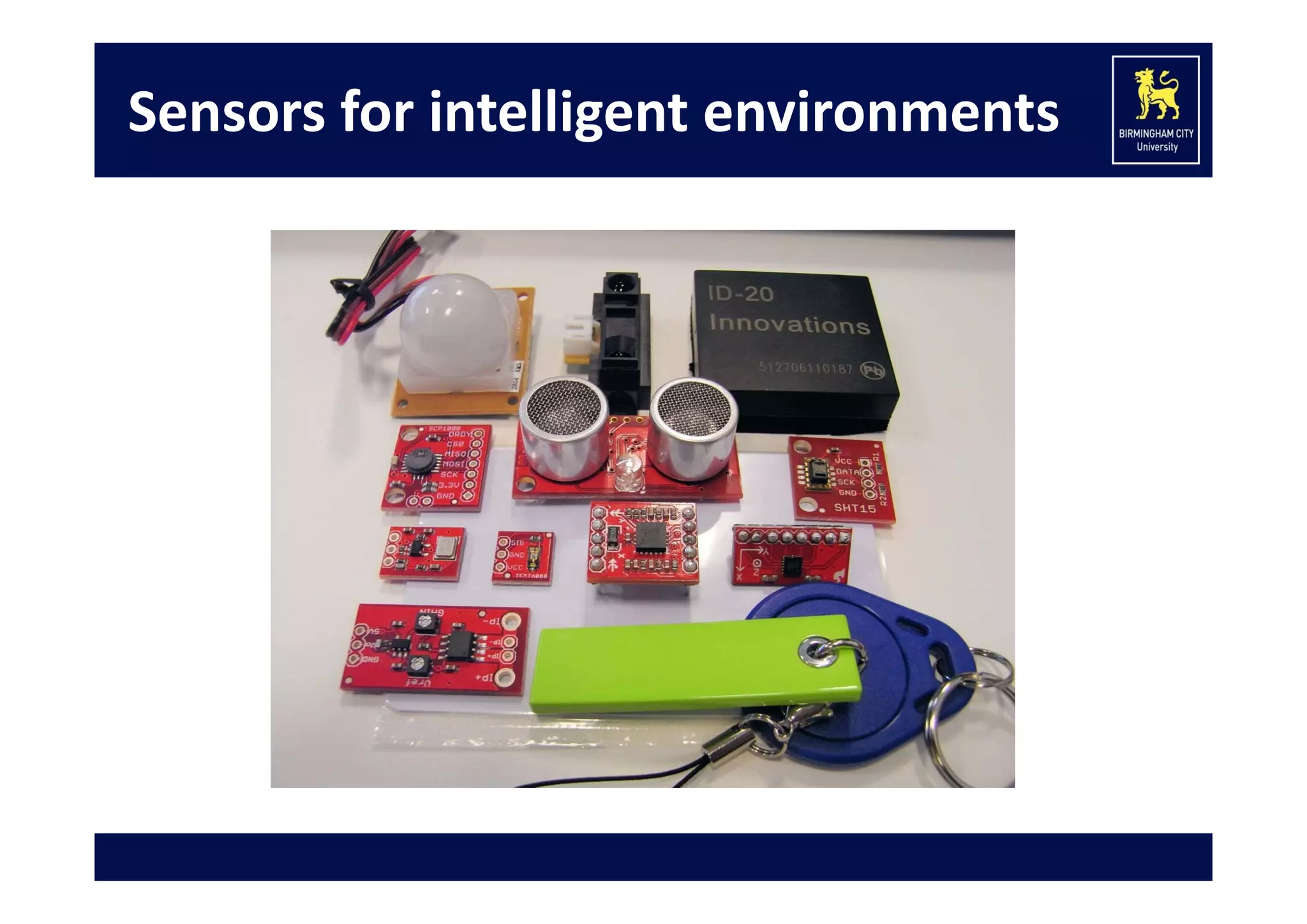
Sensors for intelligent environments
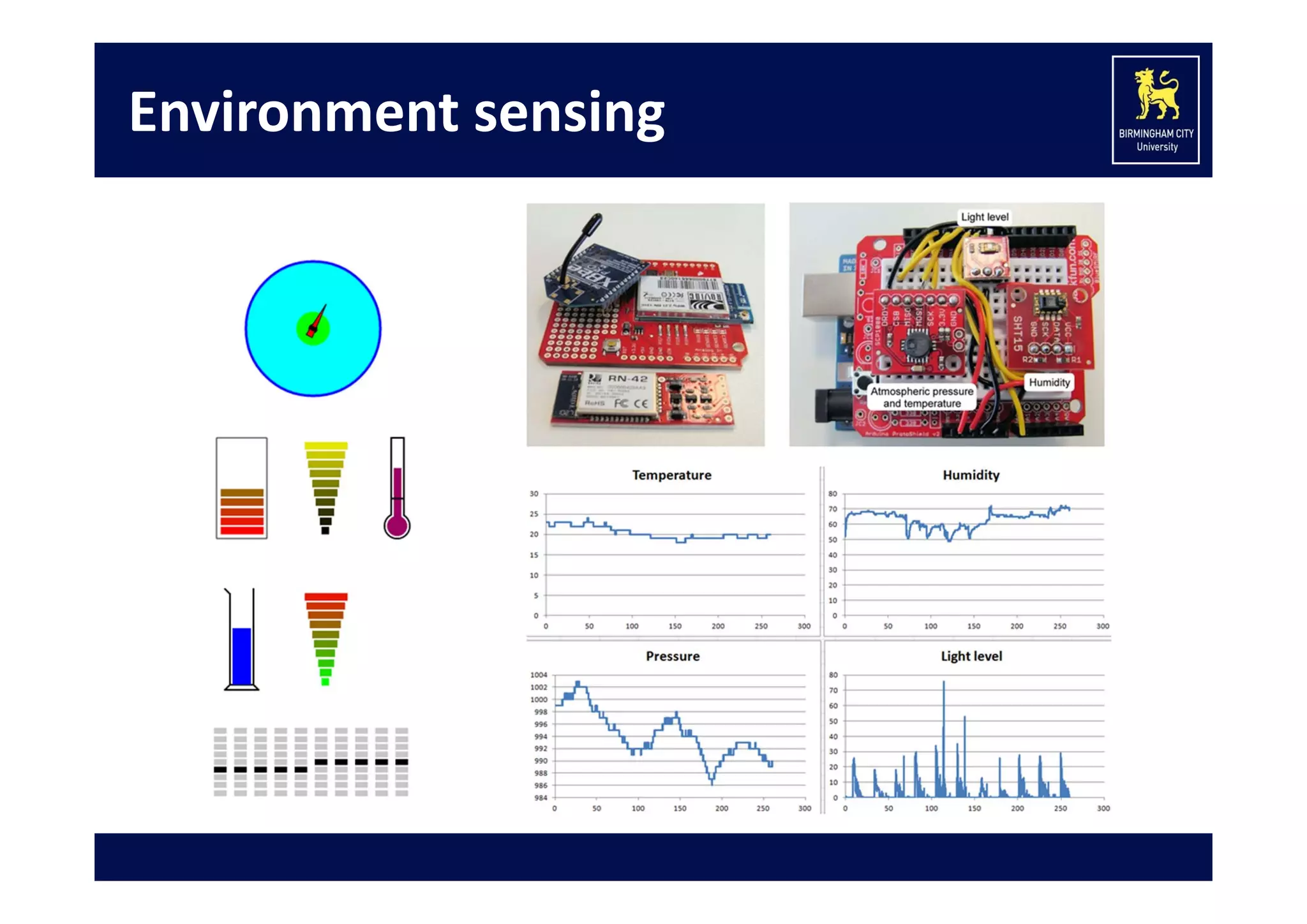
Environment sensing
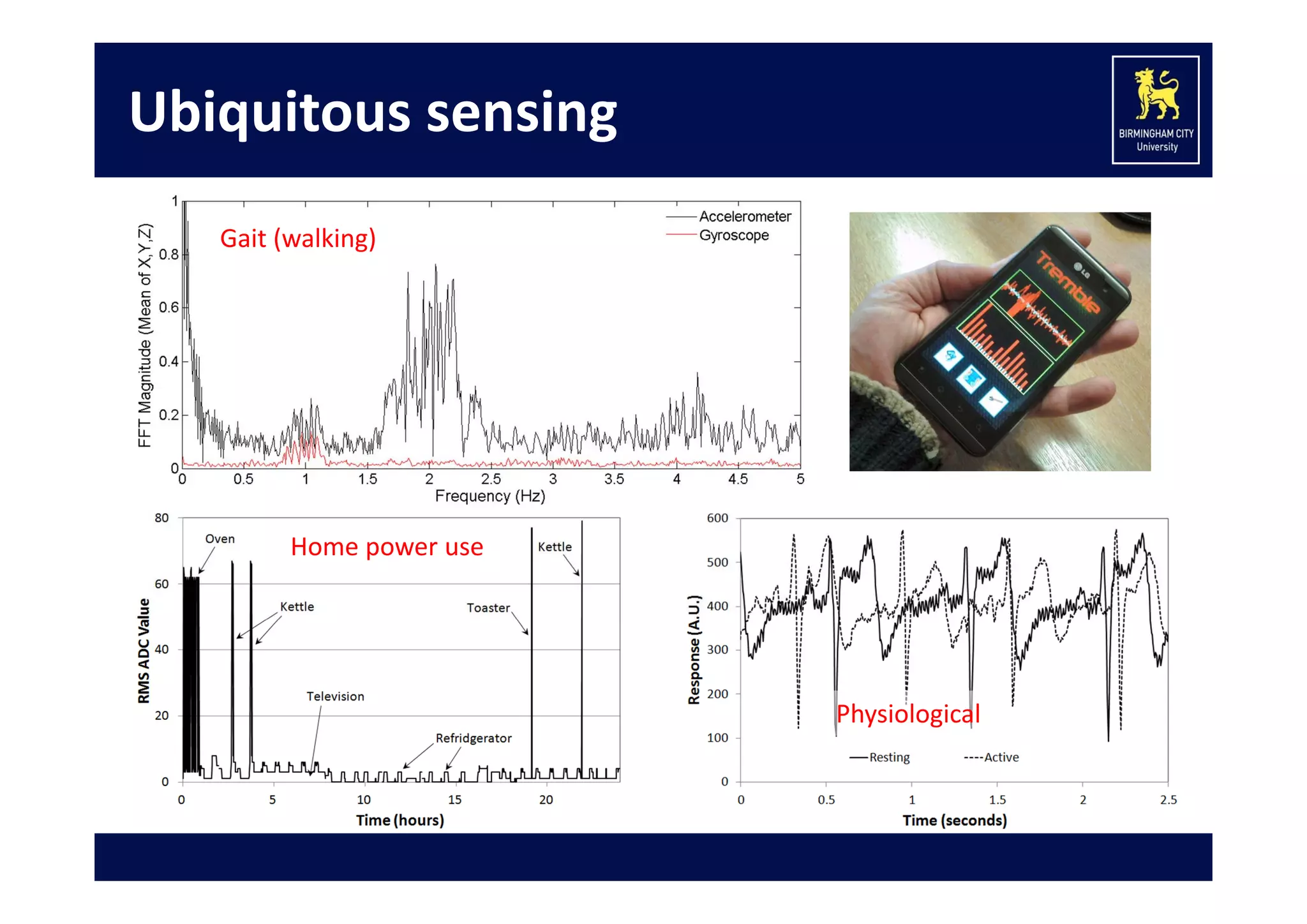
Ubiquitous sensing
Gait (walking)

Home power use

Physiological
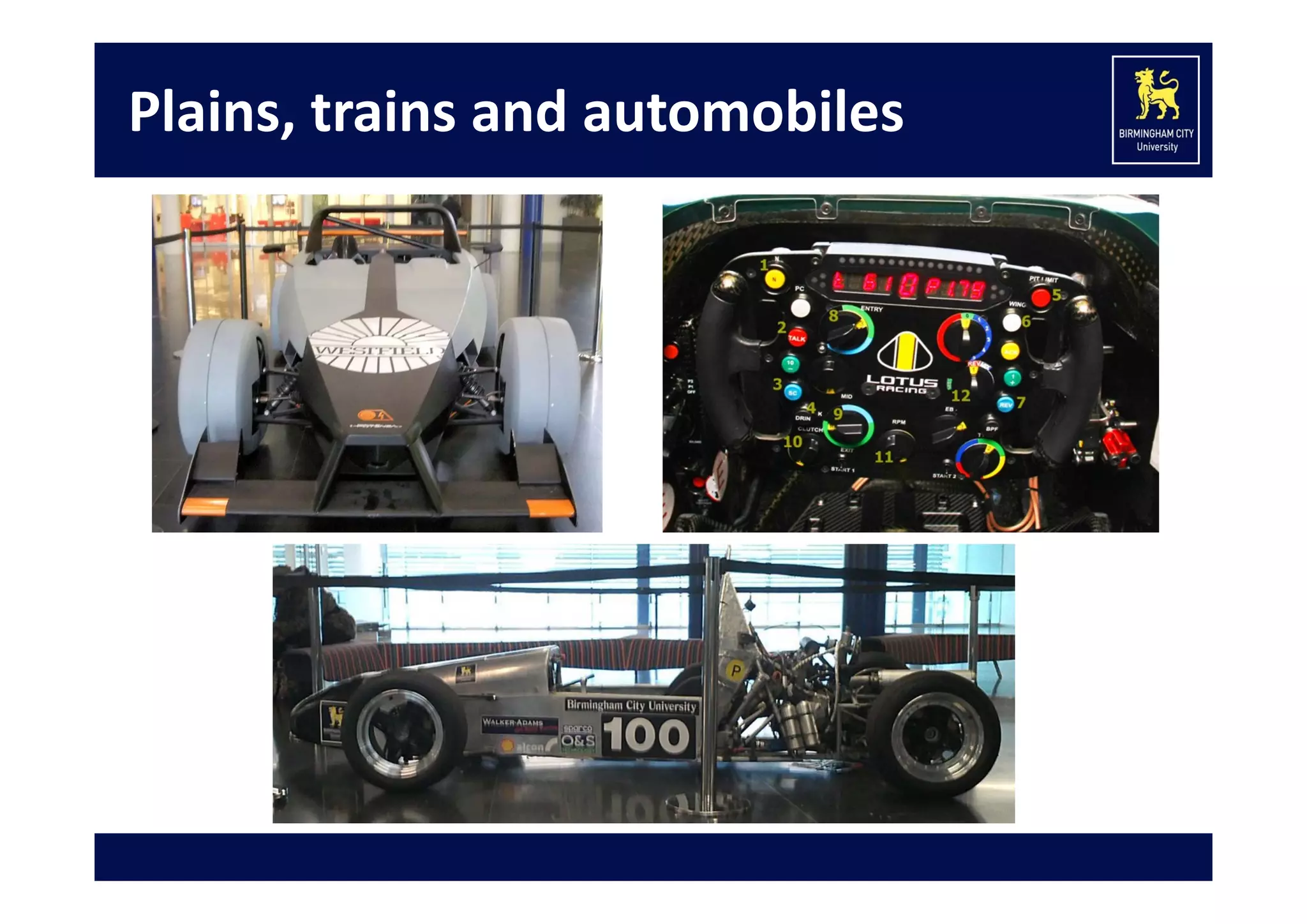
Plains, trains and automobiles
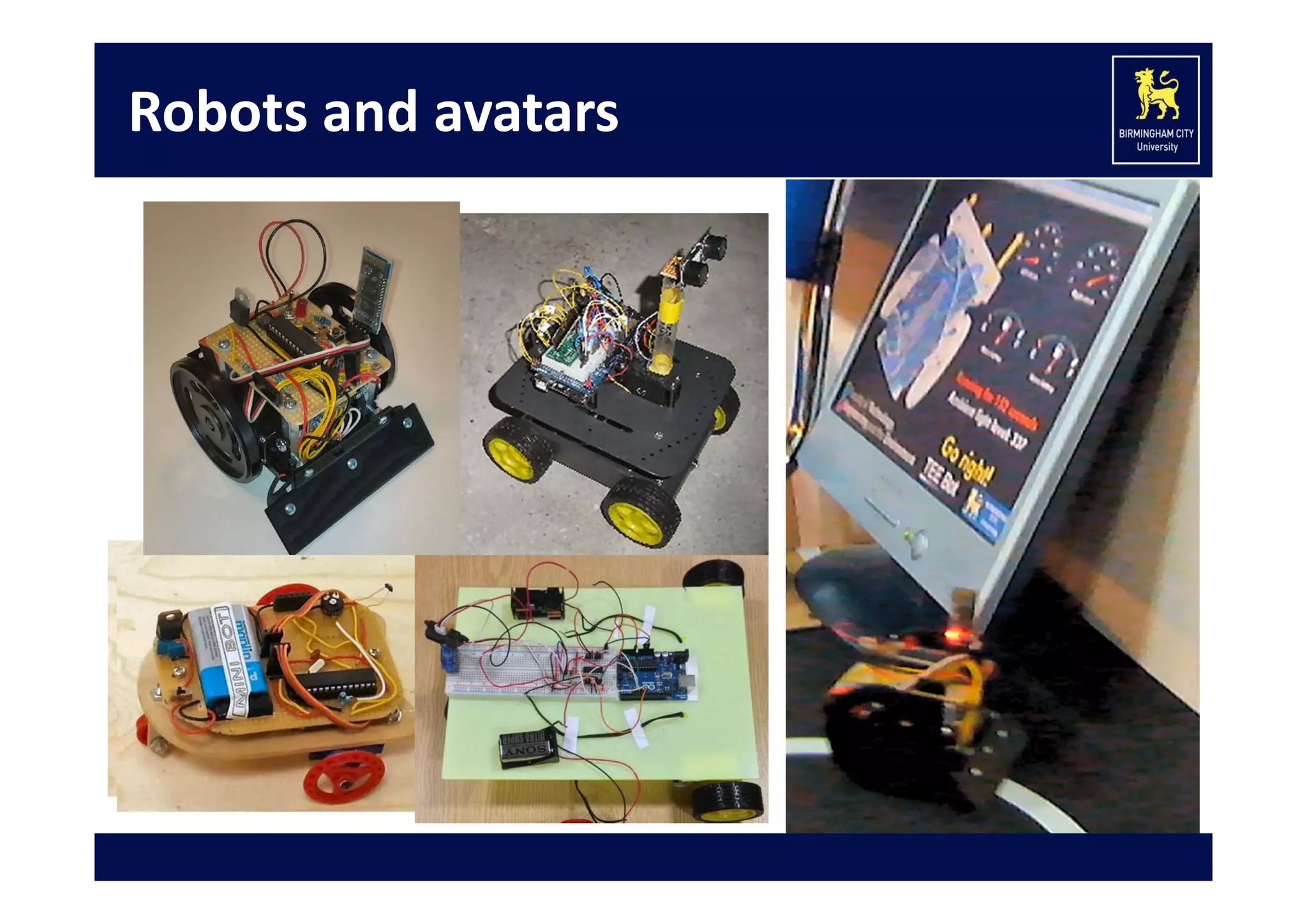
Robots and avatars
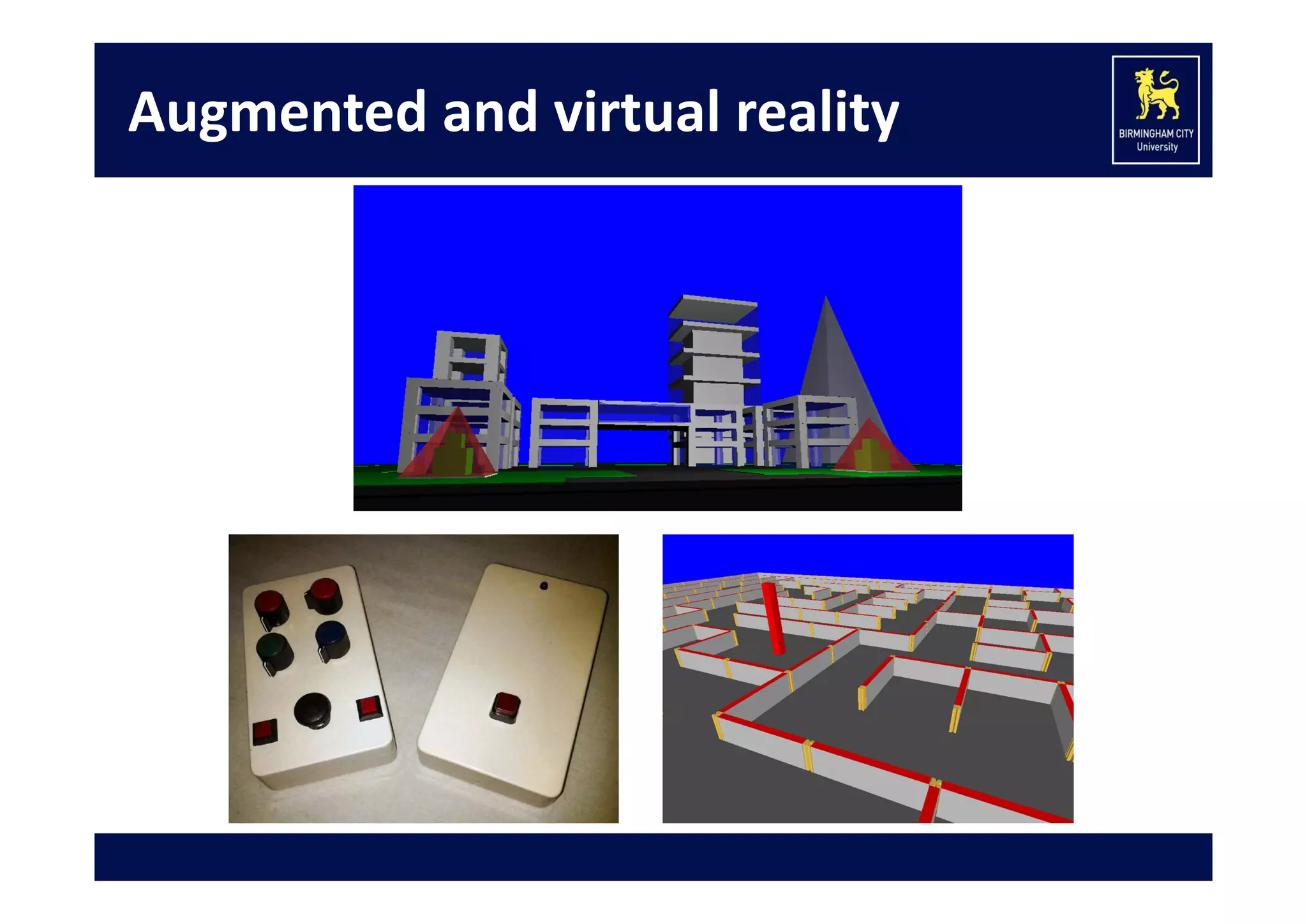
Augmented and virtual reality
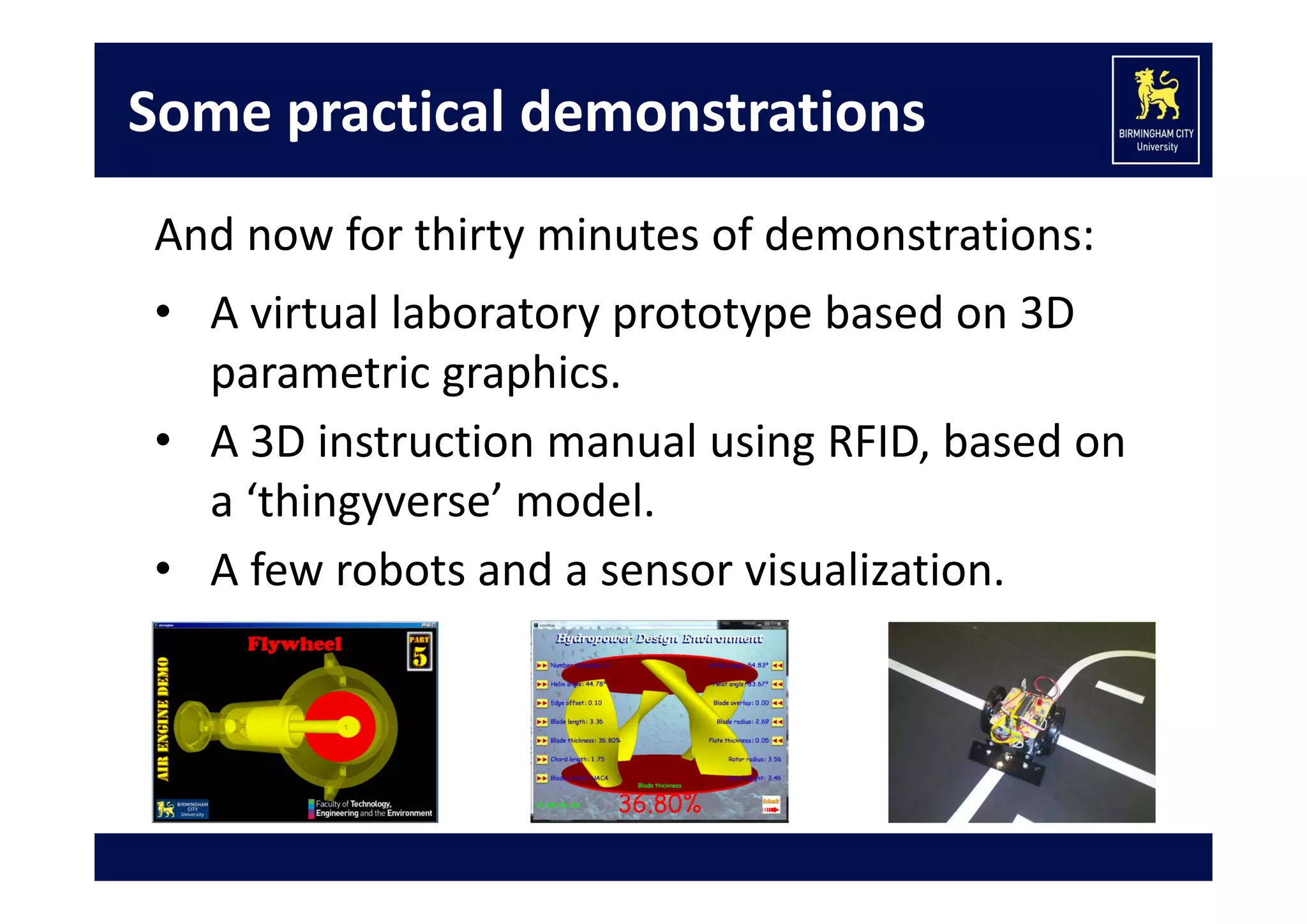
Some practical demonstrations
And now for thirty minutes of demonstrations:
• A virtual laboratory prototype based on 3D 
parametric graphics.
• A 3D instruction manual using RFID, based on 
a ‘thingyverse’ model.
• A few robots and a sensor visualization.
What about Watts?

Some insights into 
power and research
Watt’s power all about?
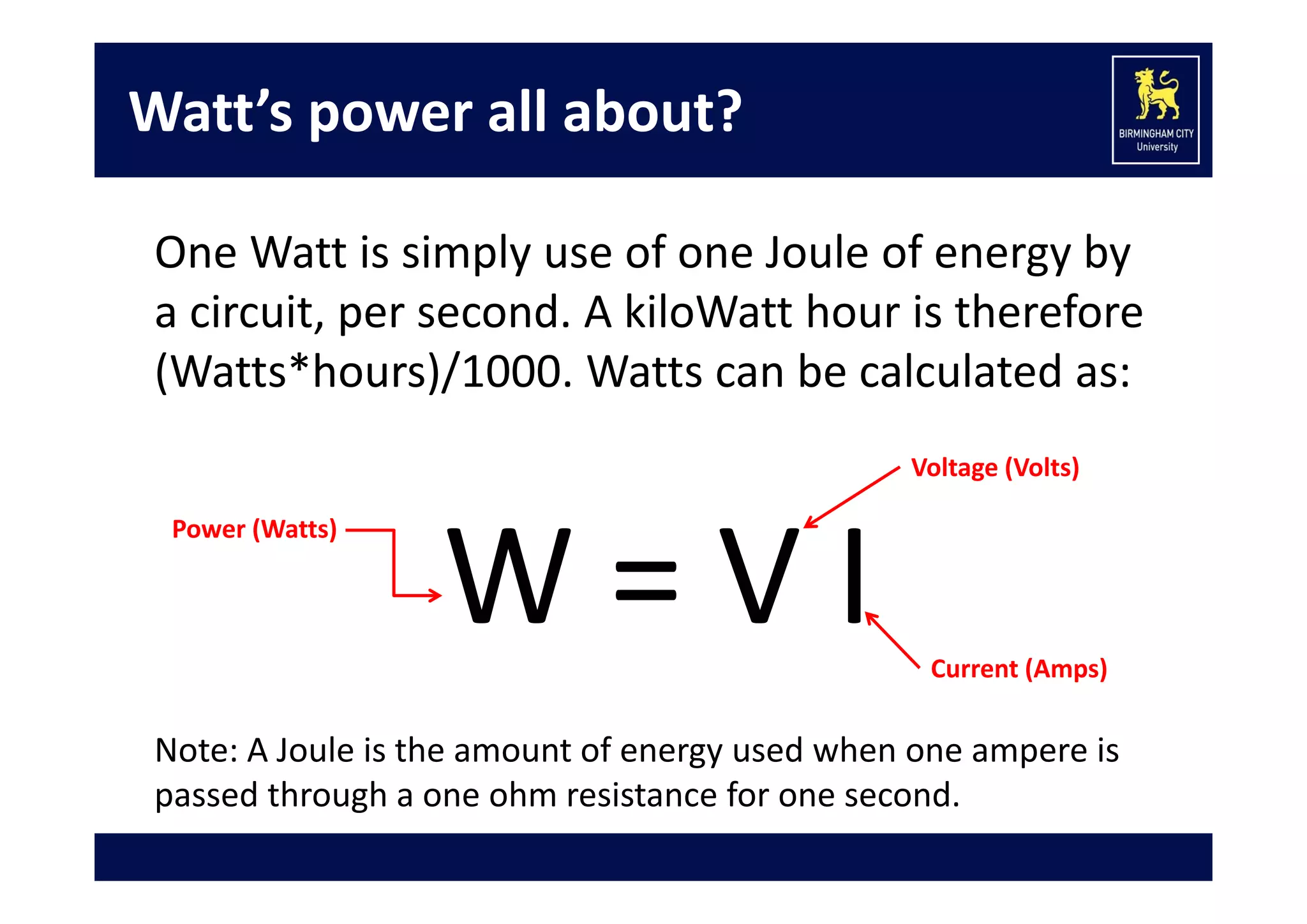
One Watt is simply use of one Joule of energy by 
a circuit, per second. A kiloWatt hour is therefore 
(Watts*hours)/1000. Watts can be calculated as:
Voltage (Volts)
Power (Watts)

W = V I

Current (Amps)

Note: A Joule is the amount of energy used when one ampere is 
passed through a one ohm resistance for one second.
How does that help GreenICT?
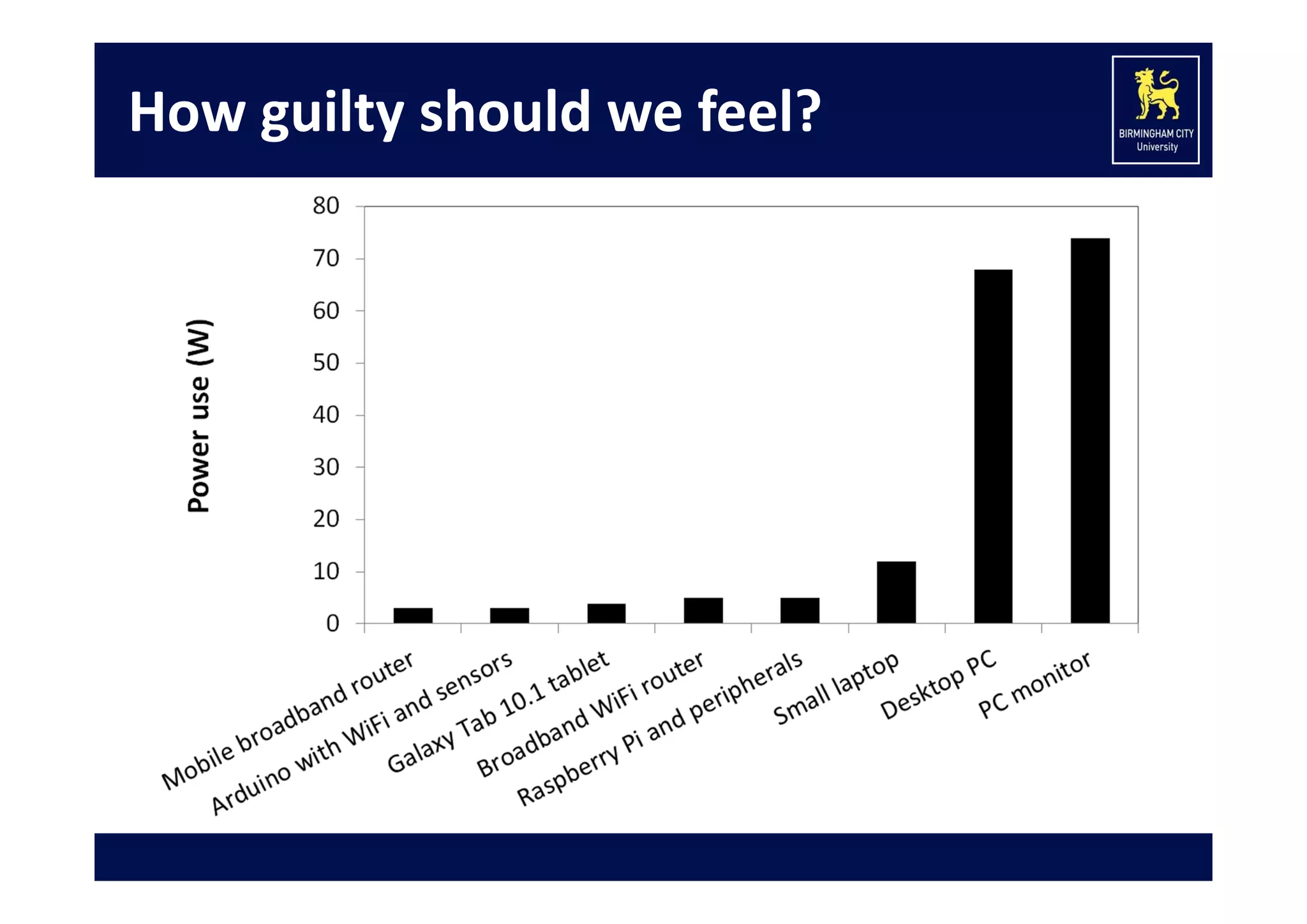
That tells us three things we can change to 
improve power consumption:
How does that help GreenICT?
That tells us three things we can change to 
improve power consumption:

Volts
How does that help GreenICT?
That tells us three things we can change to 
improve power consumption:

Volts
Amps
How does that help GreenICT?
That tells us three things we can change to 
improve power consumption:

Volts
Amps

Time
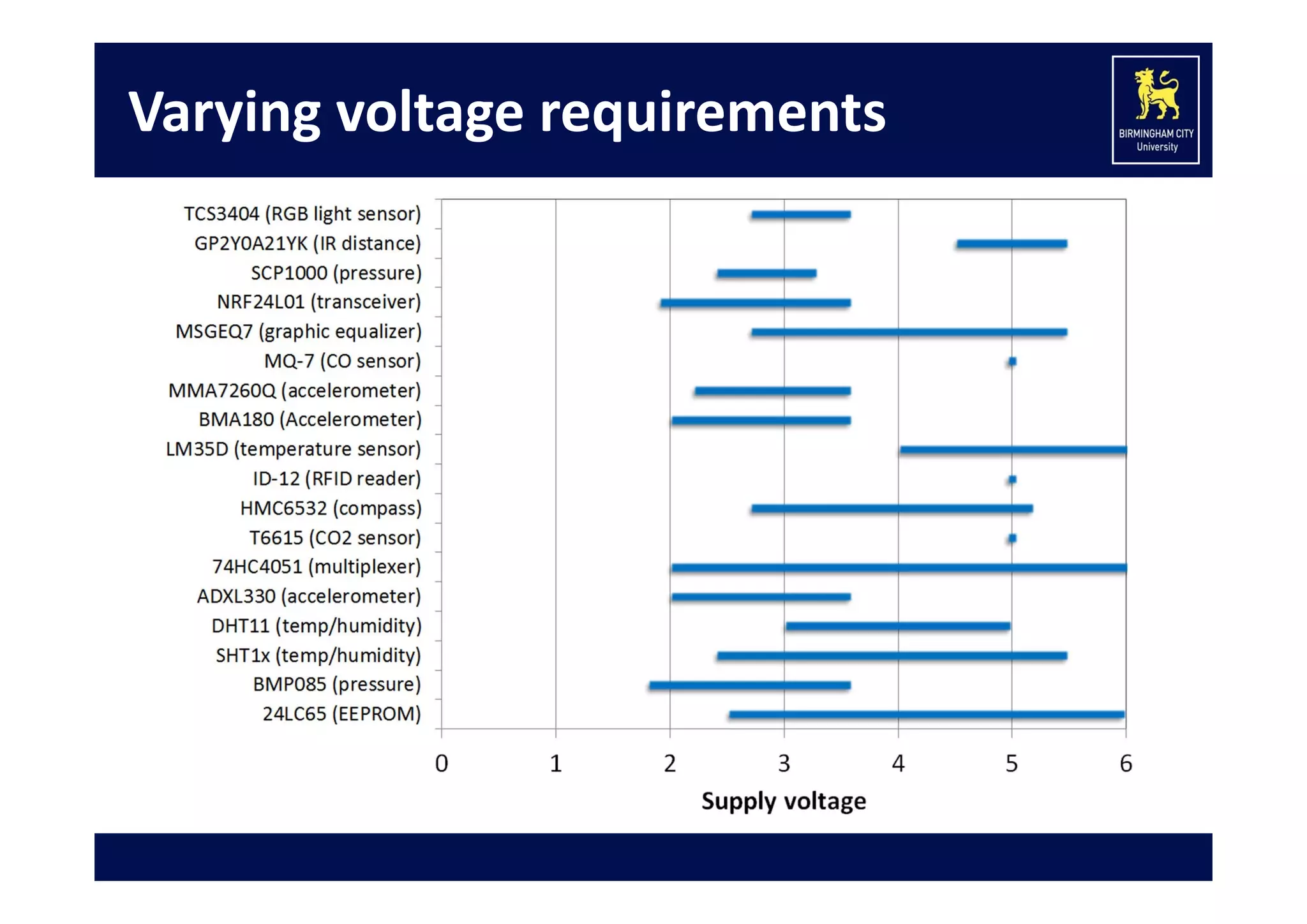
Varying voltage requirements
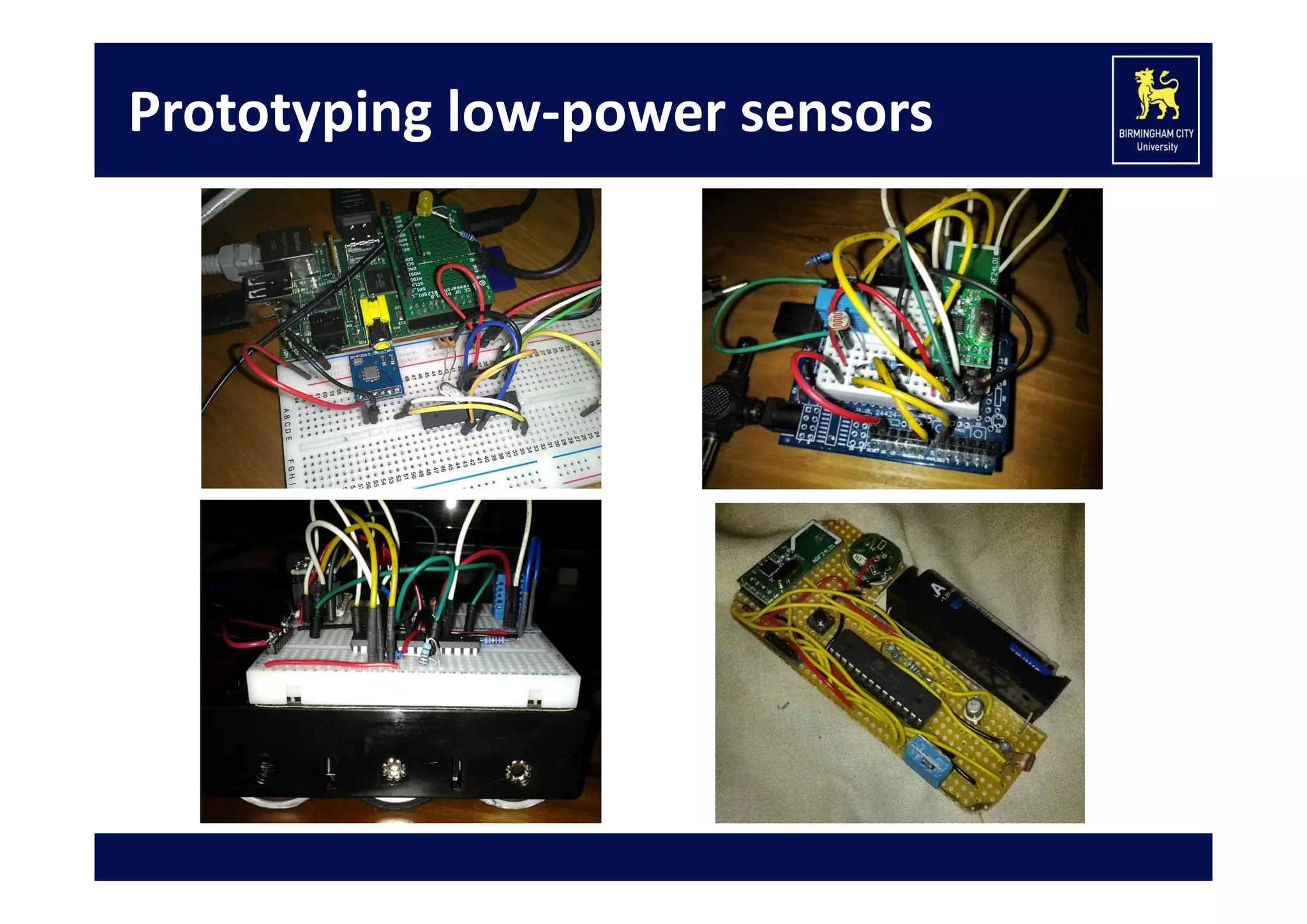
Prototyping low‐power sensors
How guilty should we feel?
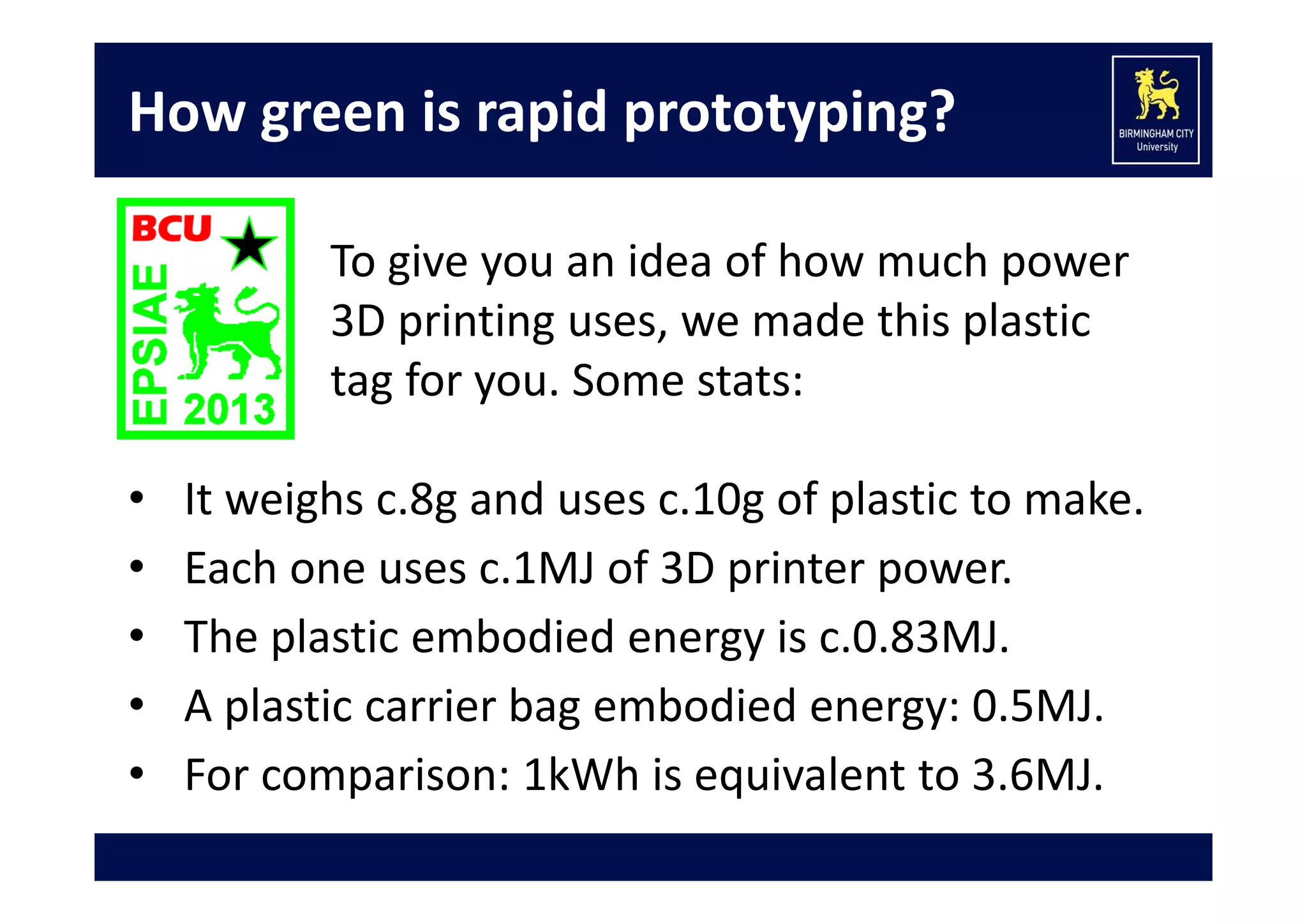
How green is rapid prototyping?
To give you an idea of how much power 
3D printing uses, we made this plastic 
tag for you. Some stats:
•
•
•
•
•

It weighs c.8g and uses c.10g of plastic to make.
Each one uses c.1MJ of 3D printer power.
The plastic embodied energy is c.0.83MJ.
A plastic carrier bag embodied energy: 0.5MJ.
For comparison: 1kWh is equivalent to 3.6MJ.
A different view

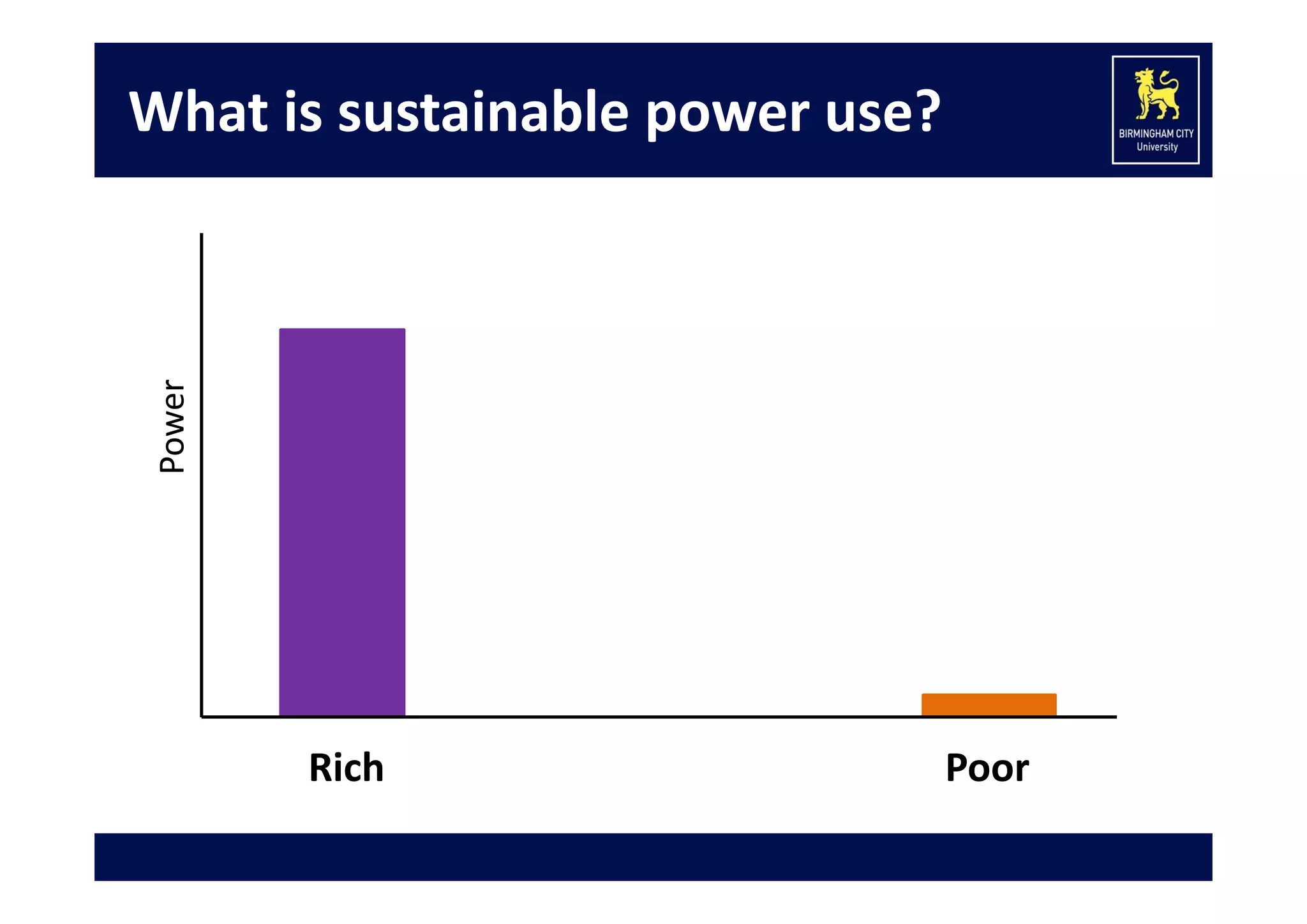
Does everyone need 
to reduce power 
consumption?
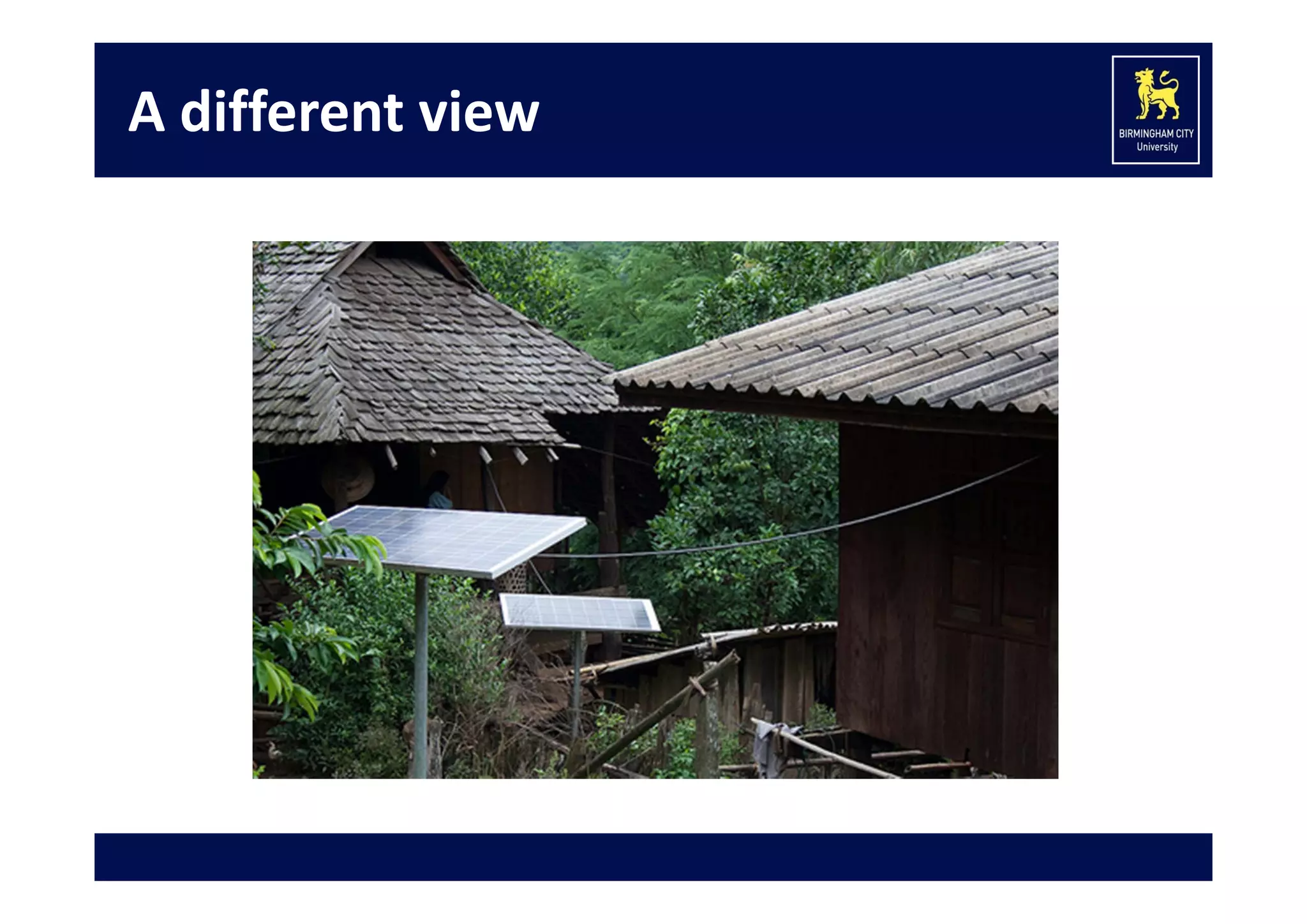
A different view
Power 

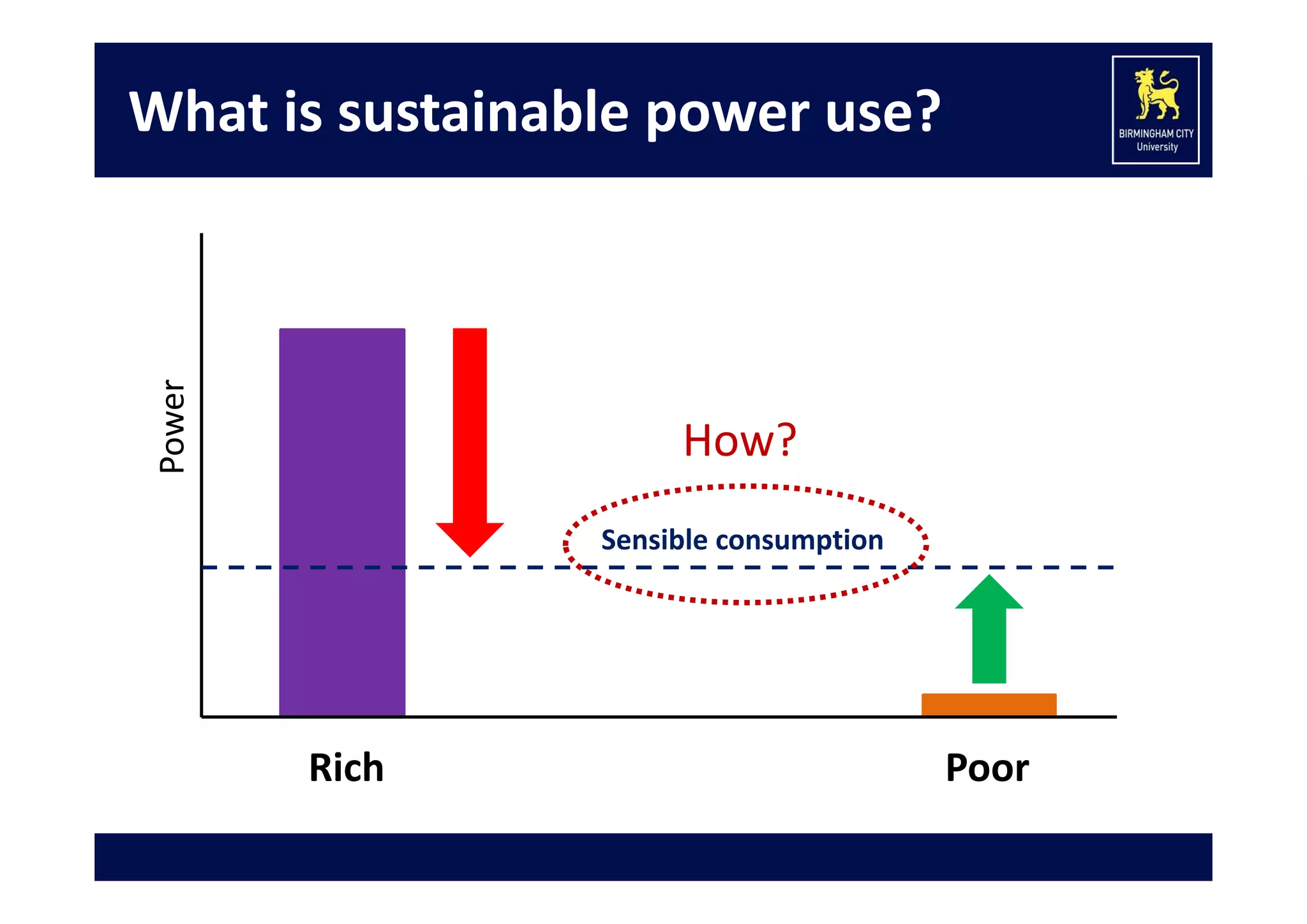
What is sustainable power use?

Rich

Poor
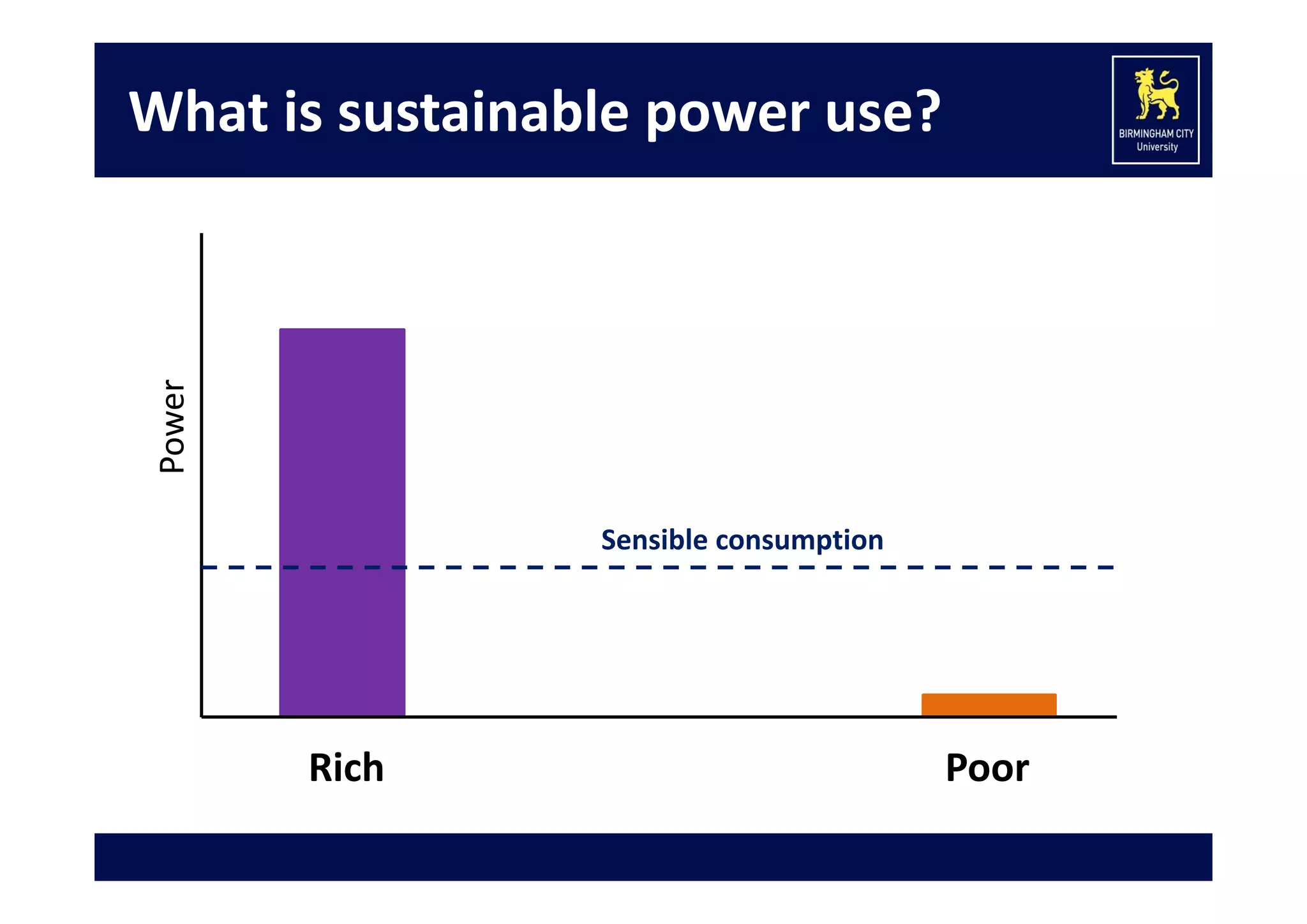
Power 

What is sustainable power use?

Sensible consumption 

Rich

Poor
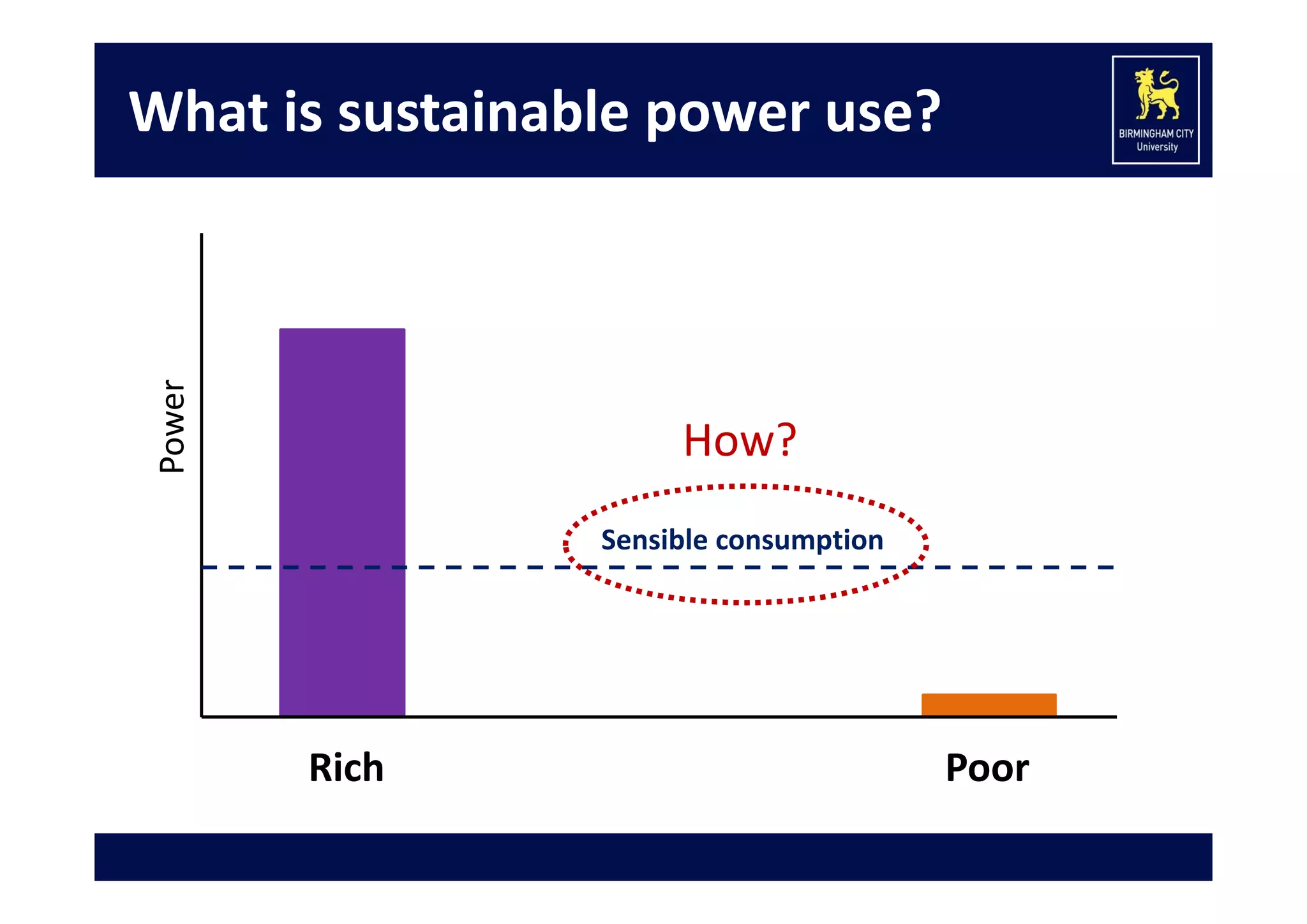
Power 

What is sustainable power use?

How? 
Sensible consumption 

Rich

Poor
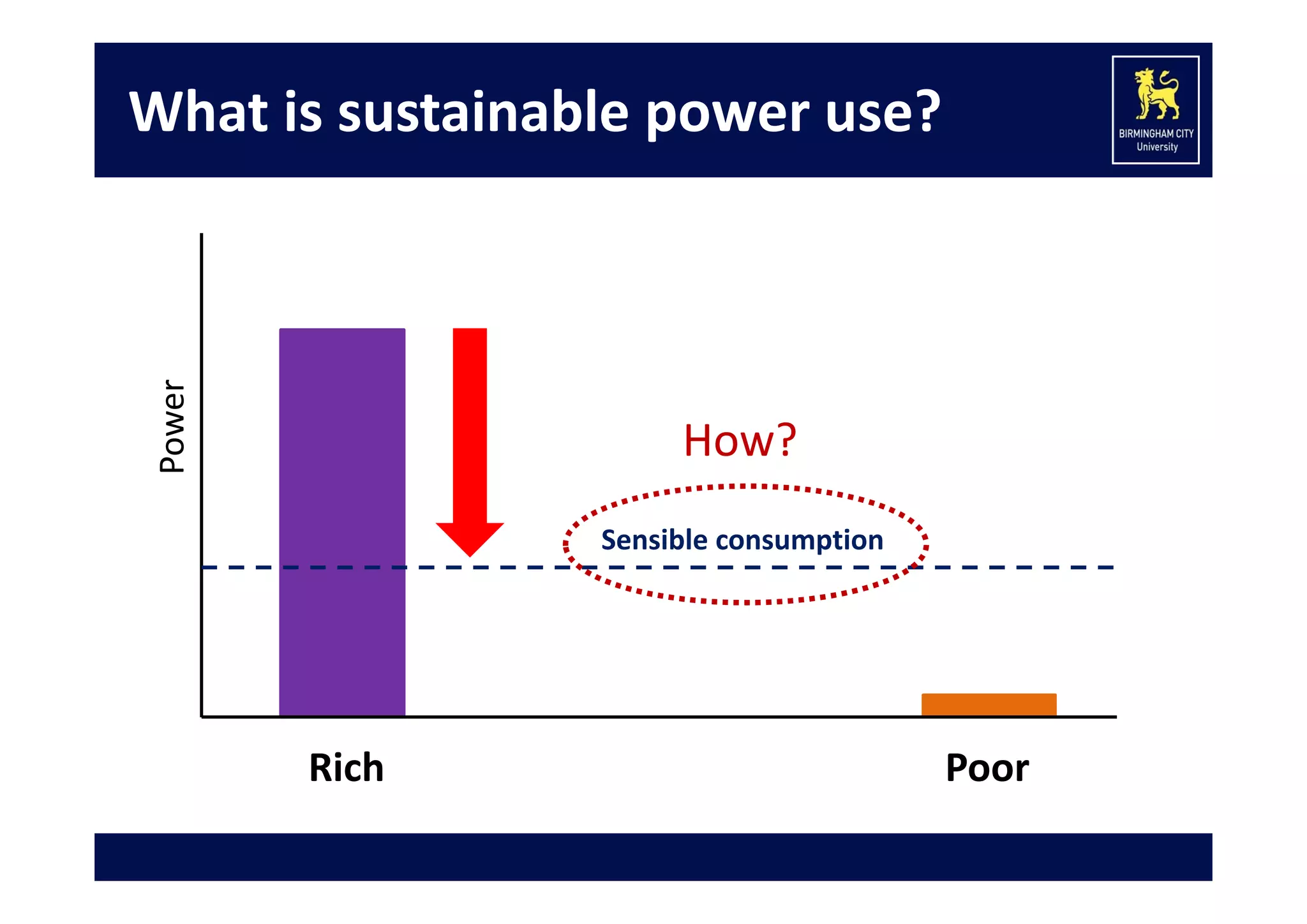
Power 

What is sustainable power use?

How? 
Sensible consumption 

Rich

Poor
Power 

What is sustainable power use?

How? 
Sensible consumption 

Rich

Poor
Power and learning
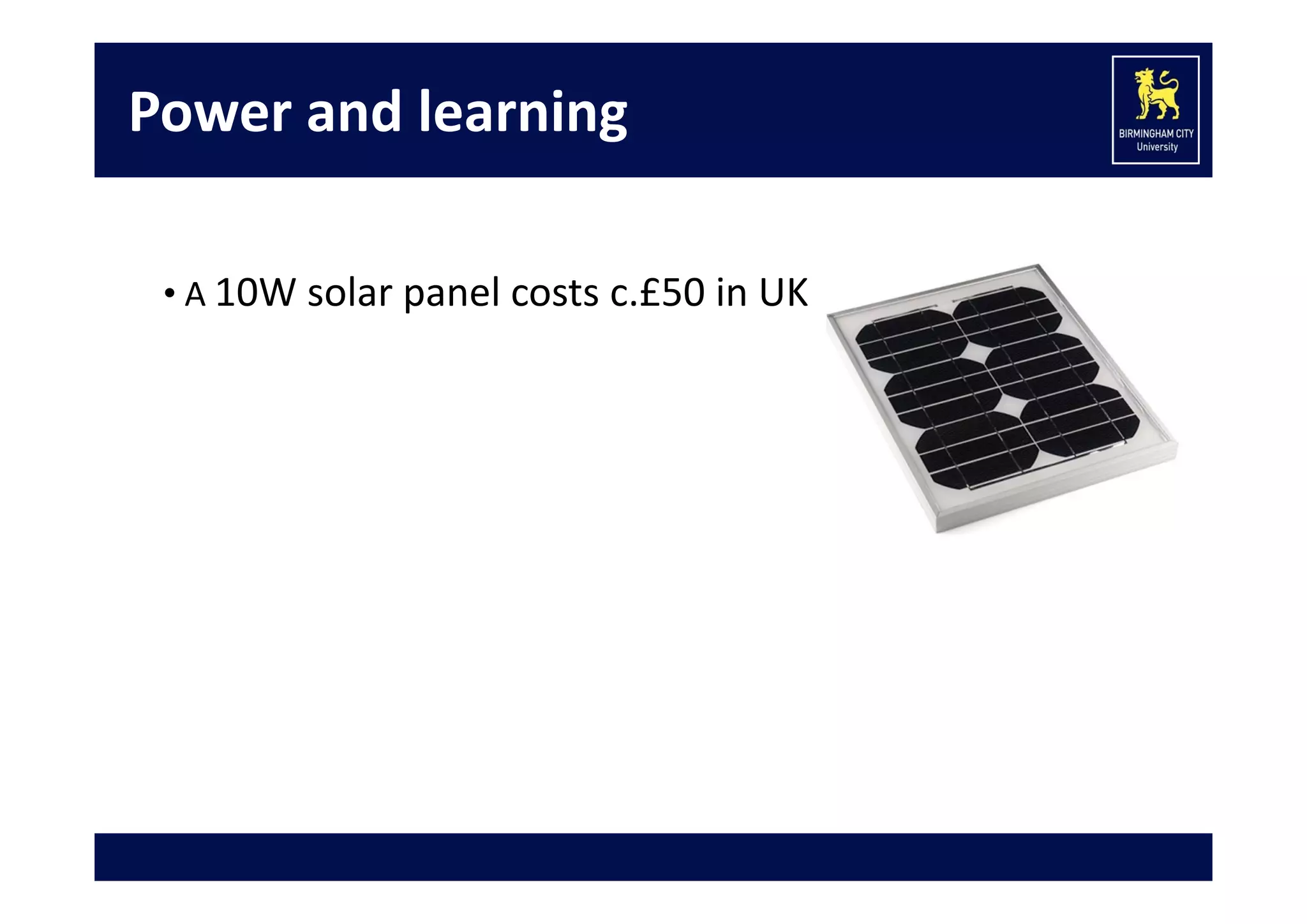
• A 10W solar panel costs c.£50 in UK

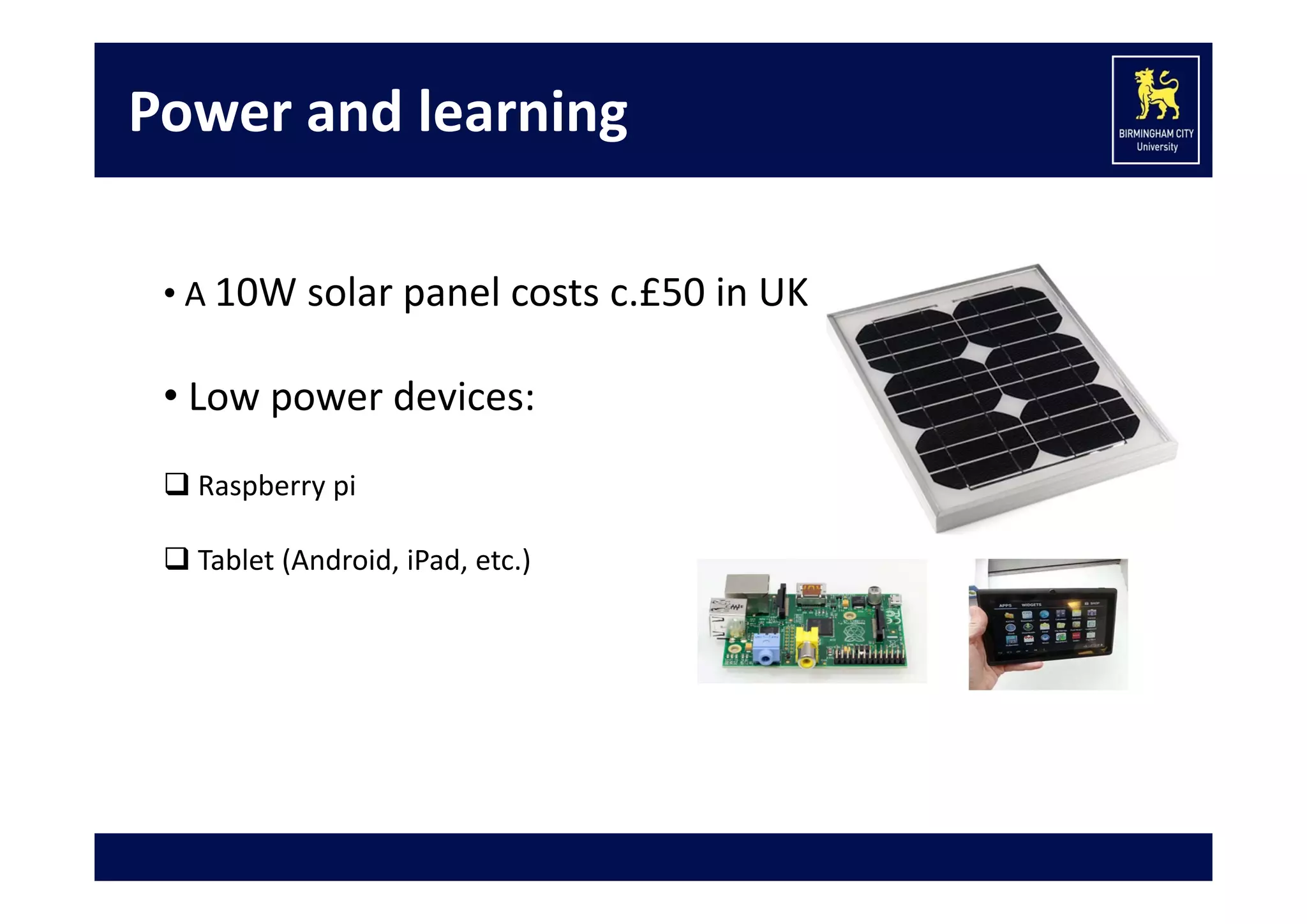
• Low power devices:
 Raspberry pi 
 Tablet (Android, iPad, etc.)
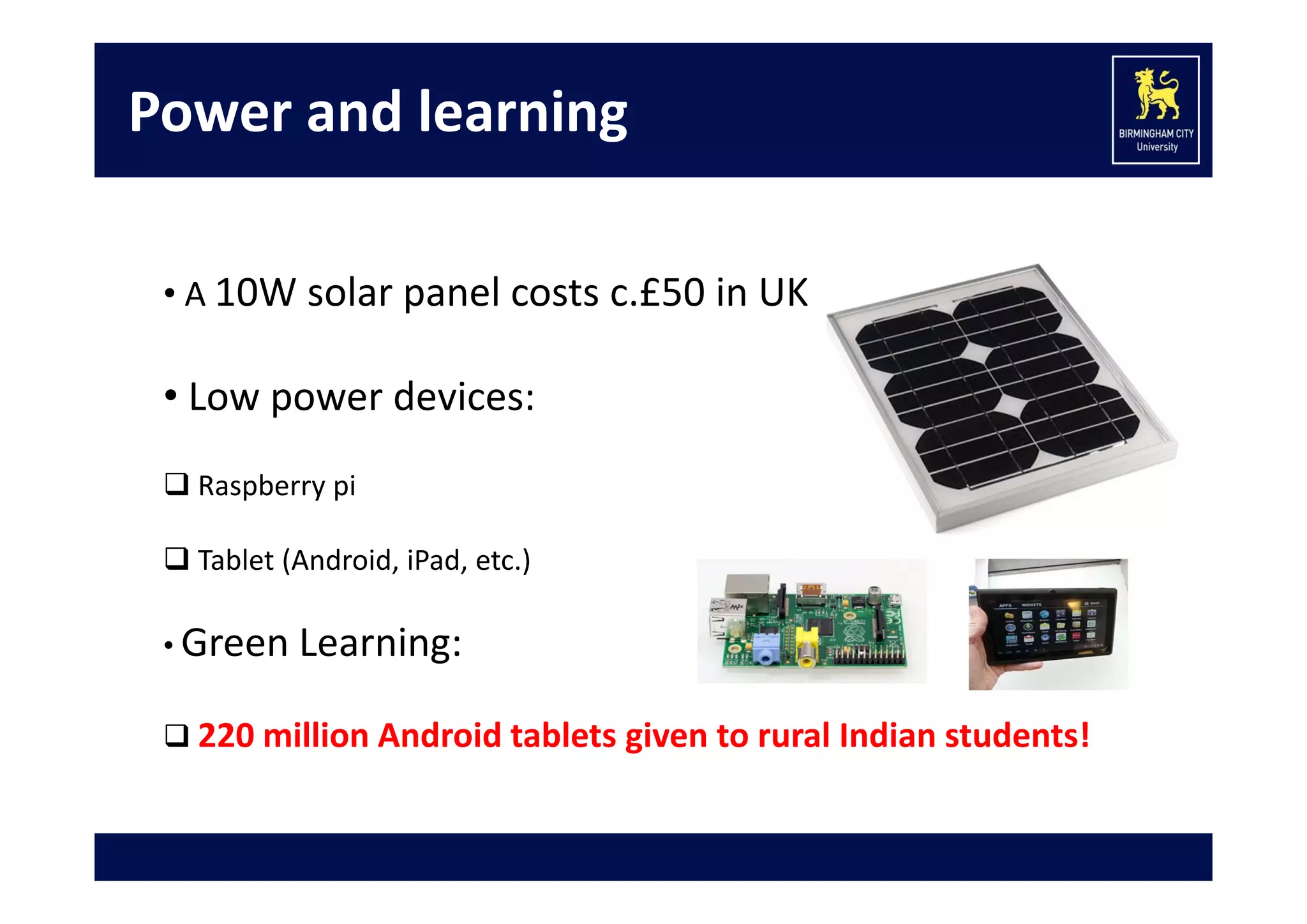
• Green Learning:  
 220 million Android tablets given to rural Indian students! 
Power and learning
• A 10W solar panel costs c.£50 in UK

• Low power devices:
 Raspberry pi 
 Tablet (Android, iPad, etc.)
• Green Learning:  
 220 million Android tablets given to rural Indian students! 
Power and learning
• A 10W solar panel costs c.£50 in UK

• Low power devices:
 Raspberry pi 
 Tablet (Android, iPad, etc.)
• Green Learning:  
 220 million Android tablets given to rural Indian students! 
Conclusions
• Being ‘green’ is largely a matter of making the 
right choices, but sometimes the right choice 
isn’t the most obvious one.
• It can include using mobile devices and other 
low‐power systems, rather than power hungry 
PCs, where appropriate.
• Turning things off when not in use saves power, 
whether sensors or peripherals (e.g. PC 
displays).
Conclusions
• Being ‘green’ is largely a matter of making the 
right choices, but sometimes the right choice 
isn’t the most obvious one.
• It can include using mobile devices and other 
low‐power systems, rather than power hungry 
PCs, where appropriate.
• Turning things off when not in use saves power, 
whether sensors or peripherals (e.g. PC 
displays).
Conclusions
• Being ‘green’ is largely a matter of making the 
right choices, but sometimes the right choice 
isn’t the most obvious one.
• It can include using mobile devices and other 
low‐power systems, rather than power hungry 
PCs, where appropriate.
• Turning things off when not in use saves 
power, whether sensors or peripherals (e.g. PC 
displays).
Conclusions
• Careful design of sensors and systems can 
significantly reduce power use and extend 
operating times.
• So, if we act sensibly we can move toward 
GreenICT in research…
• … which means we won’t have to feel so 
guilty about our environmental footprint 
Conclusions
• Careful design of sensors and systems can 
significantly reduce power use and extend 
operating times.
• So, if we act sensibly we can move toward 
GreenICT in research…
• … which means we won’t have to feel so 
guilty about our environmental footprint 
Conclusions
• Careful design of sensors and systems can 
significantly reduce power use and extend 
operating times.
• So, if we act sensibly we can move toward 
GreenICT in research…
• … which means we won’t have to feel so 
guilty about our environmental footprint 
The end
Thanks for listening 

Any questions?

EPSIAE GreenICT presentation