






Launching a new spirits brand can be expensive – and unless you’re lucky enough to
be wealthy or have wealthy friends and family, you will need investment.

This presentation helps you work out what you should do to be ready for investment,
and how to pitch successfully to land the deal.
When you pitch, you have to leave
one thing in the room…
When you leave the room, you need everyone there to believe in the
opportunity, and to believe in your ability to land that opportunity
brilliantly. We’ll come on and talk about how you build belief later in this
presentation.
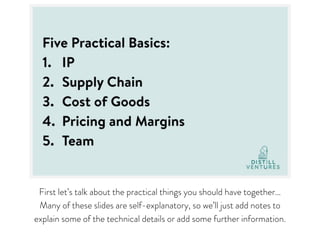
First let’s talk about the practical things you should have together…

Many of these slides are self-explanatory, so we’ll just add notes to
explain some of the technical details or add some further information.
We’ll use this structure for each area to highlight what you need as a
minimum, and what else you could add to be really well prepared.
IP
A CTM is a “Community Trade Mark” covering the EU.

Instagram and Twitter are the most important social media handles you should have.

The Top Tip is around ensuring that unless you have something very simple, it is better to use specialist IP
lawyers. You can be smart about seeking fixed price deals to control costs, or even doing contingent deals
where they’ll be paid only when you raise funds – but working with specialists almost always works out
better than using a general lawyer with no IP specialism.
Supply Chain
A scalable supply solution is about having a supply chain which could cope
with your order volume doubling every six months, and could take you
through to producing 20-30,000 nine-litre cases per year.
cost of 

goods
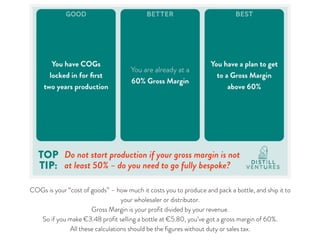
COGs is your “cost of goods” – how much it costs you to produce and pack a bottle, and ship it to
your wholesaler or distributor.

Gross Margin is your profit divided by your revenue.

So if you make €3.48 profit selling a bottle at €5.80, you’ve got a gross margin of 60%.

All these calculations should be the figures without duty or sales tax.
pricing and margin
Please see our separate session on pricing above.
This is where we start talking about the additional elements – beyond
the basics – which can build belief with investors.

The first area is your TEAM.
1.
People invest in teams
2.
Look for people better than you
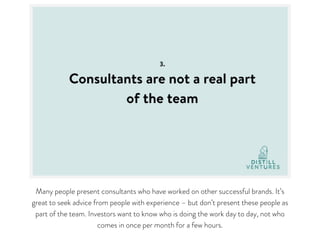
Many people present consultants who have worked on other successful brands. It’s
great to seek advice from people with experience – but don’t present these people as
part of the team. Investors want to know who is doing the work day to day, not who
comes in once per month for a few hours.
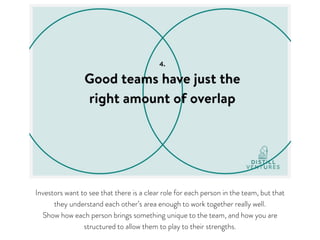
Investors want to see that there is a clear role for each person in the team, but that
they understand each other’s area enough to work together really well. 

Show how each person brings something unique to the team, and how you are
structured to allow them to play to their strengths.
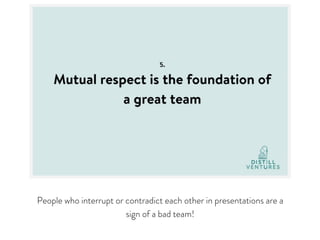
People who interrupt or contradict each other in presentations are a
sign of a bad team!
You’re going to be going through ups and downs when you launch a
business, so choosing a co-founder is as significant as choosing a
husband or wife!
GREAT TEAMS WIN
21
Building Belief
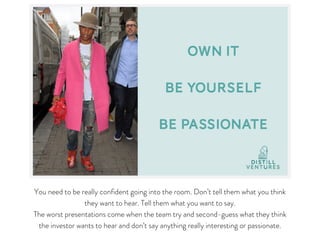
You need to be really confident going into the room. Don’t tell them what you think
they want to hear. Tell them what you want to say.

The worst presentations come when the team try and second-guess what they think
the investor wants to hear and don’t say anything really interesting or passionate.
KNOW YOUR
UNFAIR ADVANTAGE
(AND DON’T LEAVE THE ROOM

UNTIL THEY KNOW IT TOO)
You want to be a brilliant combination of these two things.

Realistic in that you know the market, have analysed pricing, have researched
everything about competitors, have plenty of research…

But be magical by presenting a vision about how you’re going to do something
amazing!
Starting a business is hard – and a love for what you do is a really important factor in
being a great entrepreneur. So smart investors look for people with passion for what
they do, and who love it. If you communicate this, it’s really infectious.
GOOD LUCK!

Getting Ready for Investment

  • 1.
    Launching a newspirits brand can be expensive – and unless you’re lucky enough to be wealthy or have wealthy friends and family, you will need investment. This presentation helps you work out what you should do to be ready for investment, and how to pitch successfully to land the deal.
  • 2.
    When you pitch,you have to leave one thing in the room…
  • 3.
    When you leavethe room, you need everyone there to believe in the opportunity, and to believe in your ability to land that opportunity brilliantly. We’ll come on and talk about how you build belief later in this presentation.
  • 4.
    First let’s talkabout the practical things you should have together… Many of these slides are self-explanatory, so we’ll just add notes to explain some of the technical details or add some further information.
  • 5.
    We’ll use thisstructure for each area to highlight what you need as a minimum, and what else you could add to be really well prepared.
  • 6.
  • 7.
    A CTM isa “Community Trade Mark” covering the EU. Instagram and Twitter are the most important social media handles you should have. The Top Tip is around ensuring that unless you have something very simple, it is better to use specialist IP lawyers. You can be smart about seeking fixed price deals to control costs, or even doing contingent deals where they’ll be paid only when you raise funds – but working with specialists almost always works out better than using a general lawyer with no IP specialism.
  • 8.
  • 9.
    A scalable supplysolution is about having a supply chain which could cope with your order volume doubling every six months, and could take you through to producing 20-30,000 nine-litre cases per year.
  • 10.
  • 11.
    COGs is your“cost of goods” – how much it costs you to produce and pack a bottle, and ship it to your wholesaler or distributor. Gross Margin is your profit divided by your revenue. So if you make €3.48 profit selling a bottle at €5.80, you’ve got a gross margin of 60%. All these calculations should be the figures without duty or sales tax.
  • 12.
  • 13.
    Please see ourseparate session on pricing above.
  • 14.
    This is wherewe start talking about the additional elements – beyond the basics – which can build belief with investors. The first area is your TEAM.
  • 15.
  • 16.
    2. Look for peoplebetter than you
  • 17.
    Many people presentconsultants who have worked on other successful brands. It’s great to seek advice from people with experience – but don’t present these people as part of the team. Investors want to know who is doing the work day to day, not who comes in once per month for a few hours.
  • 18.
    Investors want tosee that there is a clear role for each person in the team, but that they understand each other’s area enough to work together really well. Show how each person brings something unique to the team, and how you are structured to allow them to play to their strengths.
  • 19.
    People who interruptor contradict each other in presentations are a sign of a bad team!
  • 20.
    You’re going tobe going through ups and downs when you launch a business, so choosing a co-founder is as significant as choosing a husband or wife!
  • 21.
  • 22.
  • 23.
    You need tobe really confident going into the room. Don’t tell them what you think they want to hear. Tell them what you want to say. The worst presentations come when the team try and second-guess what they think the investor wants to hear and don’t say anything really interesting or passionate.
  • 24.
    KNOW YOUR UNFAIR ADVANTAGE (ANDDON’T LEAVE THE ROOM
 UNTIL THEY KNOW IT TOO)
  • 25.
    You want tobe a brilliant combination of these two things. Realistic in that you know the market, have analysed pricing, have researched everything about competitors, have plenty of research… But be magical by presenting a vision about how you’re going to do something amazing!
  • 26.
    Starting a businessis hard – and a love for what you do is a really important factor in being a great entrepreneur. So smart investors look for people with passion for what they do, and who love it. If you communicate this, it’s really infectious.
  • 27.