PSYCHOLOGY
Alloy, Jasmine S.
Larioza, Bernadine
GESTALT
Objectives:
• Describe the different gestalt principles.
• List ways of applying gestalt psychology in
the teaching-learning process.
• Demonstrate appreciation of the
usefulness of gestalt principle in the
teaching-learning process.
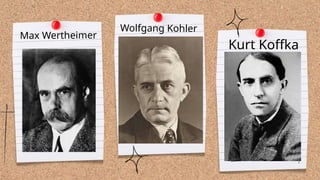
Max Wertheimer
Wolfgang Kohler
Kurt Koffka
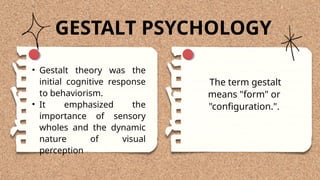
The term gestalt
means "form" or
"configuration.".
GESTALT PSYCHOLOGY
• Gestalt theory was the
initial cognitive response
to behaviorism.
• It emphasized the
importance of sensory
wholes and the dynamic
nature of visual
perception
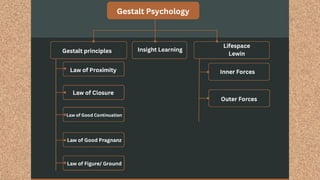
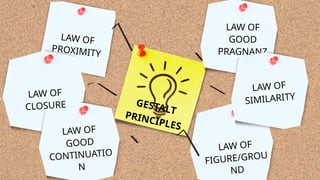
LAW OF
PROXIMITY
LAW OF
CLOSURE
LAW OF
GOOD
CONTINUATIO
N
LAW OF
GOOD
PRAGNANZ
LAW OF
FIGURE/GROU
ND
GESTALT
PRINCIPLES
LAW OF
SIMILARITY
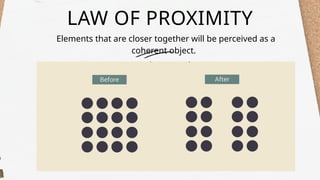
LAW OF PROXIMITY
Elements that are closer together will be perceived as a
coherent object.
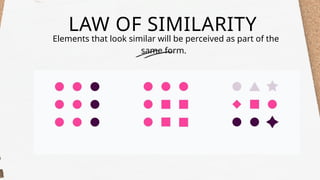
LAW OF SIMILARITY
Elements that look similar will be perceived as part of the
same form.
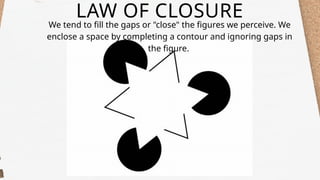
LAW OF CLOSURE
We tend to fill the gaps or "close" the figures we perceive. We
enclose a space by completing a contour and ignoring gaps in
the figure.
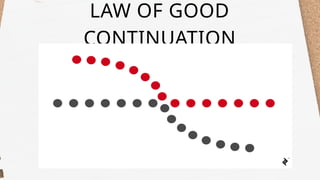
LAW OF GOOD
CONTINUATION
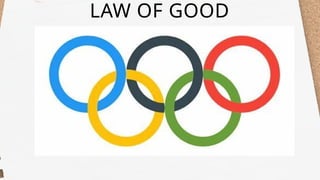
LAW OF GOOD
PRAGNANZ
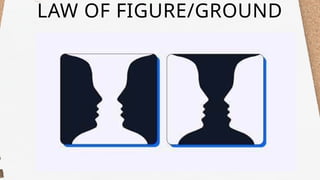
LAW OF FIGURE/GROUND
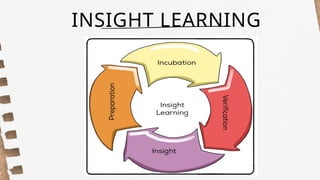
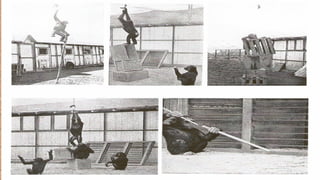
INSIGHT LEARNING
INSIGHT LEARNING
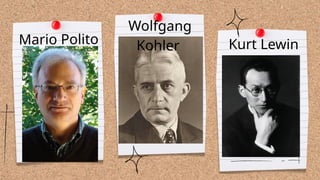
Mario Polito
Wolfgang
Kohler Kurt Lewin
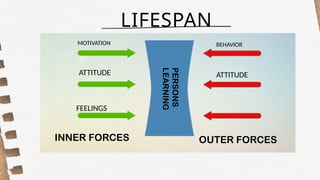
LIFESPAN
INNER FORCES OUTER FORCES
PERSONS
LEARNING
MOTIVATION
ATTITUDE
FEELINGS
BEHAVIOR
ATTITUDE
Thanks!

GESTALT-PSYCHOLOGY- INSIGHT LEARNINGREPORT.pptx