 German Expressionism is a cultural 
movement that is challenging to define as it 
is not distinguished by a singular style or 
method of creation, but rather is better 
described by both the mind-set of the artist 
creating the work and the generation he or 
she lived in.
 German Expressionism came into the cinema 
and architecture artwork. Expressionist films 
often revealed things such as sharp edges, 
tall buildings, crowded environments etc. 
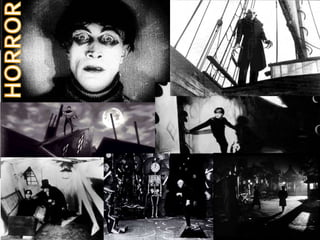
Two genres which were influenced by 
German Expressionism are horror and film 
noir. There is an unusual approach to how 
these films are set.
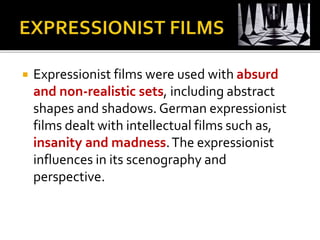
 Expressionist films were used with absurd 
and non-realistic sets, including abstract 
shapes and shadows. German expressionist 
films dealt with intellectual films such as, 
insanity and madness. The expressionist 
influences in its scenography and 
perspective.
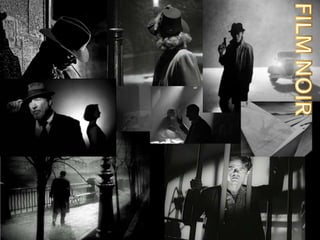
 Hostile, threatening world. 
 Difficulty of determining truth or reality. 
 Protagonist must solve a sensational crime, usually murder. 
 The alluring, independent, usually dangerous woman is often a mystery, 
requiring solution. 
 Sexuality a driving force. 
 Expressionist distortion of protagonist’s perceptions, state of mind, 
obsessions, anxieties, desires. 
 Hard-boiled, cynical, disillusioned characters. 
 Strong sense of insecurity, betrayal, or being trapped, with an unhappy 
ending. 
 Use of shadows and deep focus to express the protagonist’s isolation. 
 Filmed in black and white, often at night. 
 Extreme tracking shots. 
 Voice overs. 
 Examples: DOA, The Postman Always Rings Twice, Double Indemnity, 
Touch of Evil, Strangers on a Train, 
 Maltese Falcon, Key Largo, The Big Sleep, The Third Man
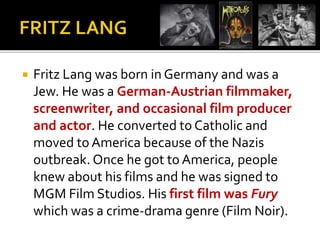
 Fritz Lang was born in Germany and was a 
Jew. He was a German-Austrian filmmaker, 
screenwriter, and occasional film producer 
and actor. He converted to Catholic and 
moved to America because of the Nazis 
outbreak. Once he got to America, people 
knew about his films and he was signed to 
MGM Film Studios. His first film was Fury 
which was a crime-drama genre (Film Noir).
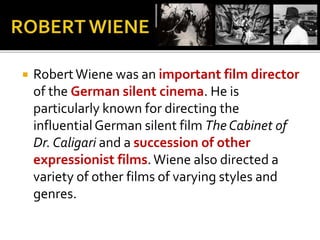
 Robert Wiene was an important film director 
of the German silent cinema. He is 
particularly known for directing the 
influential German silent film The Cabinet of 
Dr. Caligari and a succession of other 
expressionist films. Wiene also directed a 
variety of other films of varying styles and 
genres.
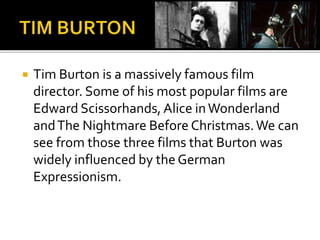
 Tim Burton is a massively famous film 
director. Some of his most popular films are 
Edward Scissorhands, Alice in Wonderland 
and The Nightmare Before Christmas. We can 
see from those three films that Burton was 
widely influenced by the German 
Expressionism.
 The Cabinet of Doctor Caligari (1920) 
 Nosferatu (1922) 
 Last Laugh (1924) 
 Faust (1926) 
 Sunrise: A Song of Two Humans (1927) 
 Metropolis (1927) 
 M (1931) 
 The Bride of Frankenstein (1935)
German expressionism, film noir & horror

German expressionism, film noir & horror

  • 2.
     German Expressionismis a cultural movement that is challenging to define as it is not distinguished by a singular style or method of creation, but rather is better described by both the mind-set of the artist creating the work and the generation he or she lived in.
  • 3.
     German Expressionismcame into the cinema and architecture artwork. Expressionist films often revealed things such as sharp edges, tall buildings, crowded environments etc. Two genres which were influenced by German Expressionism are horror and film noir. There is an unusual approach to how these films are set.
  • 4.
     Expressionist filmswere used with absurd and non-realistic sets, including abstract shapes and shadows. German expressionist films dealt with intellectual films such as, insanity and madness. The expressionist influences in its scenography and perspective.
  • 5.
     Hostile, threateningworld.  Difficulty of determining truth or reality.  Protagonist must solve a sensational crime, usually murder.  The alluring, independent, usually dangerous woman is often a mystery, requiring solution.  Sexuality a driving force.  Expressionist distortion of protagonist’s perceptions, state of mind, obsessions, anxieties, desires.  Hard-boiled, cynical, disillusioned characters.  Strong sense of insecurity, betrayal, or being trapped, with an unhappy ending.  Use of shadows and deep focus to express the protagonist’s isolation.  Filmed in black and white, often at night.  Extreme tracking shots.  Voice overs.  Examples: DOA, The Postman Always Rings Twice, Double Indemnity, Touch of Evil, Strangers on a Train,  Maltese Falcon, Key Largo, The Big Sleep, The Third Man
  • 6.
     Fritz Langwas born in Germany and was a Jew. He was a German-Austrian filmmaker, screenwriter, and occasional film producer and actor. He converted to Catholic and moved to America because of the Nazis outbreak. Once he got to America, people knew about his films and he was signed to MGM Film Studios. His first film was Fury which was a crime-drama genre (Film Noir).
  • 7.
     Robert Wienewas an important film director of the German silent cinema. He is particularly known for directing the influential German silent film The Cabinet of Dr. Caligari and a succession of other expressionist films. Wiene also directed a variety of other films of varying styles and genres.
  • 8.
     Tim Burtonis a massively famous film director. Some of his most popular films are Edward Scissorhands, Alice in Wonderland and The Nightmare Before Christmas. We can see from those three films that Burton was widely influenced by the German Expressionism.
  • 9.
     The Cabinetof Doctor Caligari (1920)  Nosferatu (1922)  Last Laugh (1924)  Faust (1926)  Sunrise: A Song of Two Humans (1927)  Metropolis (1927)  M (1931)  The Bride of Frankenstein (1935)