Georgia BASICS :
Evaluation Results from Five Years of
Intervention for Risky Drinking and
Substance Use in Urban Emergency
Departments

Gabriel P. Kuperminc, Ph.D
Professor of Psychology
Georgia State University
Outline
• Adult patients in urban emergency depts
• SBIRT – A public health approach to
addressing alcohol and substance misuse
• How does it work?
• Does it make a difference?
• Can it be sustained?
Urban Emergency Department
Patients
• Conditions of Risk
– High rates of poverty, housing instability
– Lack of consistent health care, unmet needs
– Behavioral risks (e.g., alcohol, drug use) often
associated with health concerns

• ED as “Teachable Moment”
– Failure to help patients make the connection as
lost opportunity
– When alcohol/drug use does come up, usually
focus on blaming pt for poor choices, need for
abstinence
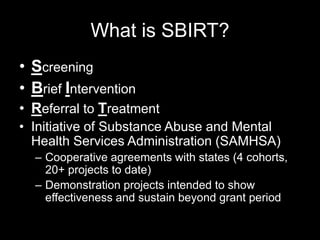
What is SBIRT?
• Screening
• Brief Intervention
• Referral to Treatment
• Initiative of Substance Abuse and Mental
Health Services Administration (SAMHSA)
– Cooperative agreements with states (4 cohorts,
20+ projects to date)
– Demonstration projects intended to show
effectiveness and sustain beyond grant period
Georgia BASICS
• Overview
– Routine screening for risky drinking,
substance use
– Motivational Interviewing (15-30 minutes) to
discuss motivation for change, set goals
– Availability of alternatives incl. additional
therapy, referral to treatment

• Settings
– Grady Health System (Atlanta)
– Medical Center of Central Georgia (Macon)
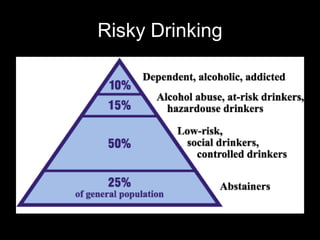
Risky Drinking
Patient
Enters ED

Nurse

Health Educators

54% LowModerate Risk
BI

BI = Brief Intervention
BT = Brief Therapy
RT = Referral to Treatment

3 Question
Prescreen:
25% Positive

60% of positive
prescreens
receive ASSIST
Full Screen

7% High
Risk
BI + BT

32%
Screening
Feedback

7% Very High
Risk
BI+ RT

10% Sample enrolled For 6 month Follow Up
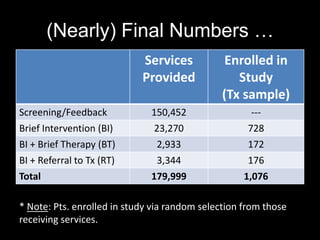
(Nearly) Final Numbers …
Services
Provided

Enrolled in
Study
(Tx sample)

Screening/Feedback
Brief Intervention (BI)

150,452
23,270

--728

BI + Brief Therapy (BT)
BI + Referral to Tx (RT)
Total

2,933
3,344
179,999

172
176
1,076

* Note: Pts. enrolled in study via random selection from those
receiving services.
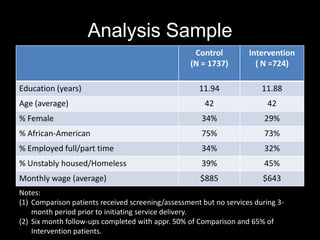
Analysis Sample
Control
(N = 1737)

Intervention
( N =724)

11.94

11.88

42

42

% Female

34%

29%

% African-American

75%

73%

% Employed full/part time

34%

32%

% Unstably housed/Homeless

39%

45%

Monthly wage (average)

$885

$643

Education (years)
Age (average)

Notes:
(1) Comparison patients received screening/assessment but no services during 3month period prior to initiating service delivery.
(2) Six month follow-ups completed with appr. 50% of Comparison and 65% of
Intervention patients.
Reductions in Risky Drinking
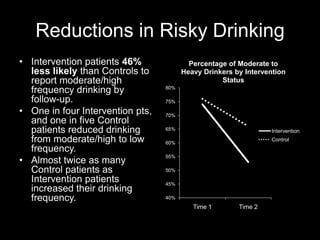
• Intervention patients 46%
less likely than Controls to
report moderate/high
frequency drinking by
follow-up.
• One in four Intervention pts,
and one in five Control
patients reduced drinking
from moderate/high to low
frequency.
• Almost twice as many
Control patients as
Intervention patients
increased their drinking
frequency.

Percentage of Moderate to
Heavy Drinkers by Intervention
Status
80%

75%
70%
65%

Intervention
Control

60%
55%
50%
45%
40%

Time 1

Time 2
Increased Engagement in
Treatment
• Highest Risk Pts
referred to treatment
facilities in the local
community
• 15-30% of these pts.
engaged treatment by
3 months after
receiving SBIRT
services (MCCG)
• Higher than national
estimate of 5%
Improvements in Mental Health
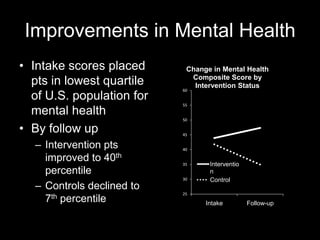
• Intake scores placed
pts in lowest quartile
of U.S. population for
mental health
• By follow up
– Intervention pts
improved to 40th
percentile
– Controls declined to
7th percentile

Change in Mental Health
Composite Score by
Intervention Status

60
55
50

45
40
35
30

Interventio
n
Control

25

Intake

Follow-up
Improved Social Support
Networks
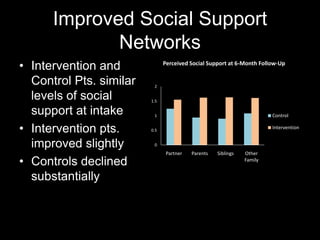
• Intervention and
Control Pts. similar
levels of social
support at intake
• Intervention pts.
improved slightly
• Controls declined
substantially

Perceived Social Support at 6-Month Follow-Up

2
1.5

Control

1

Intervention

0.5

0

Partner

Parents

Siblings

Other
Family
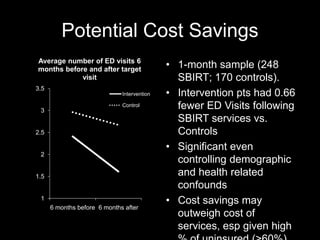
Potential Cost Savings
Average number of ED visits 6
months before and after target
visit
3.5
Intervention

3

Control

2.5

2

1.5

1
6 months before 6 months after

• 1-month sample (248
SBIRT; 170 controls).
• Intervention pts had 0.66
fewer ED Visits following
SBIRT services vs.
Controls
• Significant even
controlling demographic
and health related
confounds
• Cost savings may
outweigh cost of
services, esp given high
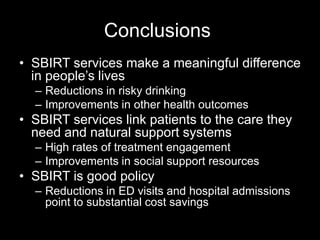
Conclusions
• SBIRT services make a meaningful difference
in people’s lives
– Reductions in risky drinking
– Improvements in other health outcomes

• SBIRT services link patients to the care they
need and natural support systems
– High rates of treatment engagement
– Improvements in social support resources

• SBIRT is good policy
– Reductions in ED visits and hospital admissions
point to substantial cost savings
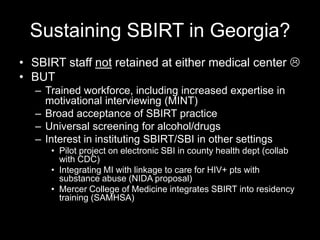
Sustaining SBIRT in Georgia?
• SBIRT staff not retained at either medical center 
• BUT
– Trained workforce, including increased expertise in
motivational interviewing (MINT)
– Broad acceptance of SBIRT practice
– Universal screening for alcohol/drugs
– Interest in instituting SBIRT/SBI in other settings
• Pilot project on electronic SBI in county health dept (collab
with CDC)
• Integrating MI with linkage to care for HIV+ pts with
substance abuse (NIDA proposal)
• Mercer College of Medicine integrates SBIRT into residency
training (SAMHSA)
Thanks to
• Funding from Substance Abuse and Mental Health
Services Administration (SAMHSA), #TI019545
• GSU Colleagues and Students
– Jim Emshoff, Dom Parrott, Jennifer Zorland, Joanna
Akin, Lindsey Cochran, Adam Carton, Devin Gilmore, Robyn
Borgman, Nick Tarantino, NerissaGermain, Doyanne
Darnell, Natalie Wilkins, and others

• Georgia Division of Behavioral Health and
Developmental Disabilities: Steve O’Neill
• Partners at Grady Health System and Medical
Center of Central Georgia
– Too many to name!
Questions?

Georgia BASICS : Evaluation Results from Five Years of Intervention for Risky Drinking and Substance Use in Urban Emergency Departments

  • 1.
    Georgia BASICS : EvaluationResults from Five Years of Intervention for Risky Drinking and Substance Use in Urban Emergency Departments Gabriel P. Kuperminc, Ph.D Professor of Psychology Georgia State University
  • 2.
    Outline • Adult patientsin urban emergency depts • SBIRT – A public health approach to addressing alcohol and substance misuse • How does it work? • Does it make a difference? • Can it be sustained?
  • 3.
    Urban Emergency Department Patients •Conditions of Risk – High rates of poverty, housing instability – Lack of consistent health care, unmet needs – Behavioral risks (e.g., alcohol, drug use) often associated with health concerns • ED as “Teachable Moment” – Failure to help patients make the connection as lost opportunity – When alcohol/drug use does come up, usually focus on blaming pt for poor choices, need for abstinence
  • 4.
    What is SBIRT? •Screening • Brief Intervention • Referral to Treatment • Initiative of Substance Abuse and Mental Health Services Administration (SAMHSA) – Cooperative agreements with states (4 cohorts, 20+ projects to date) – Demonstration projects intended to show effectiveness and sustain beyond grant period
  • 5.
    Georgia BASICS • Overview –Routine screening for risky drinking, substance use – Motivational Interviewing (15-30 minutes) to discuss motivation for change, set goals – Availability of alternatives incl. additional therapy, referral to treatment • Settings – Grady Health System (Atlanta) – Medical Center of Central Georgia (Macon)
  • 6.
  • 7.
    Patient Enters ED Nurse Health Educators 54%LowModerate Risk BI BI = Brief Intervention BT = Brief Therapy RT = Referral to Treatment 3 Question Prescreen: 25% Positive 60% of positive prescreens receive ASSIST Full Screen 7% High Risk BI + BT 32% Screening Feedback 7% Very High Risk BI+ RT 10% Sample enrolled For 6 month Follow Up
  • 8.
    (Nearly) Final Numbers… Services Provided Enrolled in Study (Tx sample) Screening/Feedback Brief Intervention (BI) 150,452 23,270 --728 BI + Brief Therapy (BT) BI + Referral to Tx (RT) Total 2,933 3,344 179,999 172 176 1,076 * Note: Pts. enrolled in study via random selection from those receiving services.
  • 9.
    Analysis Sample Control (N =1737) Intervention ( N =724) 11.94 11.88 42 42 % Female 34% 29% % African-American 75% 73% % Employed full/part time 34% 32% % Unstably housed/Homeless 39% 45% Monthly wage (average) $885 $643 Education (years) Age (average) Notes: (1) Comparison patients received screening/assessment but no services during 3month period prior to initiating service delivery. (2) Six month follow-ups completed with appr. 50% of Comparison and 65% of Intervention patients.
  • 10.
    Reductions in RiskyDrinking • Intervention patients 46% less likely than Controls to report moderate/high frequency drinking by follow-up. • One in four Intervention pts, and one in five Control patients reduced drinking from moderate/high to low frequency. • Almost twice as many Control patients as Intervention patients increased their drinking frequency. Percentage of Moderate to Heavy Drinkers by Intervention Status 80% 75% 70% 65% Intervention Control 60% 55% 50% 45% 40% Time 1 Time 2
  • 11.
    Increased Engagement in Treatment •Highest Risk Pts referred to treatment facilities in the local community • 15-30% of these pts. engaged treatment by 3 months after receiving SBIRT services (MCCG) • Higher than national estimate of 5%
  • 12.
    Improvements in MentalHealth • Intake scores placed pts in lowest quartile of U.S. population for mental health • By follow up – Intervention pts improved to 40th percentile – Controls declined to 7th percentile Change in Mental Health Composite Score by Intervention Status 60 55 50 45 40 35 30 Interventio n Control 25 Intake Follow-up
  • 13.
    Improved Social Support Networks •Intervention and Control Pts. similar levels of social support at intake • Intervention pts. improved slightly • Controls declined substantially Perceived Social Support at 6-Month Follow-Up 2 1.5 Control 1 Intervention 0.5 0 Partner Parents Siblings Other Family
  • 14.
    Potential Cost Savings Averagenumber of ED visits 6 months before and after target visit 3.5 Intervention 3 Control 2.5 2 1.5 1 6 months before 6 months after • 1-month sample (248 SBIRT; 170 controls). • Intervention pts had 0.66 fewer ED Visits following SBIRT services vs. Controls • Significant even controlling demographic and health related confounds • Cost savings may outweigh cost of services, esp given high
  • 15.
    Conclusions • SBIRT servicesmake a meaningful difference in people’s lives – Reductions in risky drinking – Improvements in other health outcomes • SBIRT services link patients to the care they need and natural support systems – High rates of treatment engagement – Improvements in social support resources • SBIRT is good policy – Reductions in ED visits and hospital admissions point to substantial cost savings
  • 16.
    Sustaining SBIRT inGeorgia? • SBIRT staff not retained at either medical center  • BUT – Trained workforce, including increased expertise in motivational interviewing (MINT) – Broad acceptance of SBIRT practice – Universal screening for alcohol/drugs – Interest in instituting SBIRT/SBI in other settings • Pilot project on electronic SBI in county health dept (collab with CDC) • Integrating MI with linkage to care for HIV+ pts with substance abuse (NIDA proposal) • Mercer College of Medicine integrates SBIRT into residency training (SAMHSA)
  • 17.
    Thanks to • Fundingfrom Substance Abuse and Mental Health Services Administration (SAMHSA), #TI019545 • GSU Colleagues and Students – Jim Emshoff, Dom Parrott, Jennifer Zorland, Joanna Akin, Lindsey Cochran, Adam Carton, Devin Gilmore, Robyn Borgman, Nick Tarantino, NerissaGermain, Doyanne Darnell, Natalie Wilkins, and others • Georgia Division of Behavioral Health and Developmental Disabilities: Steve O’Neill • Partners at Grady Health System and Medical Center of Central Georgia – Too many to name!
  • 18.

Editor's Notes

  • #8 This diagram helps explain the patient flow in the 2 ga emergency departments, and also shows you the breakdown in the delivery of services.