GEOGRAPHY
Just the basics
Dr. Sivabala Naidu
Academic Traditions

1.

2.
3.

4.

Consists of four academic traditions:
Spatial Tradition – study of distribution.
Area Studies Tradition –study of an area on Earth
Human-Land Tradition – study of human interactions with
the environment.
Earth Science Tradition –study of natural phenomena from
a spatial perspective.
History of Geography
 Stretches over many centuries
 Main purpose was to map locations and describe places and

regions to explorers
 According to historical records, the Greeks were the first to
practice geography; one of the first Greek geographers was
Herodotus
Elements of Geography
There are six elements in the study of geography:

The World in Spatial Terms

Places and Regions.

Physical Systems.

Human Systems

Environment and Society

The uses (of Geography)
Branches of Geography






Human and Physical Geography
Environmental Geography
Geomatics
Regional Geography
Components of Human Geography
 Cultural geography
 Political geography

 Population geography
 Urban geography
 Economic geography

 Behavioral geography
 Social geography
Components of Physical Geography
 Geomorphology: the study of the surface of the Earth and

the process by which it is shaped
 Pedology: the study of soils in its natural environment
 Biogeography: the science that investigates the spatial
relationships of plants and animals
Components of Physical Geography
(continued)
 Hydrology: the study of fresh water in all its forms
 Climatology: the study of the climate
 Oceanography: the study of the Earth’s seas and

oceans
 Glaciology: the study of glaciers and ice sheets
 Palaeogeography: the study of the distribution of the
continents through geologic time
Environmental Planning
 Environment - refers to the physical and biological systems

which provide our basic life support
 The scientific study of the environment began around the
seventeenth century
 Came about from our awareness of the negative impact on
the environment
Environmental Issues
 Climate change
 Overpopulation

 Pollution
 Environmental degradation
 Resource depletion
Environmental Planning



Environmental planning is concerned with a society’s
responsibility over resources
Elements of Environmental Planning:
sustainable development, equity, environmental justice,
green building technologies, and preservation of
environmentally sensitive areas
Environmental Planning Process
 Legislative planning framework
 Administrative planning framework

 Environmental resource management planning
 Landscape ecological planning
 Ecological urban planning

 Information dissemination
 Decision making
Natural Resource Management
 Activities that focus on improving human interaction with

the natural environment
 Congruent with the concept of sustainable development
 Sustainable development: resource use which aims to meet
human needs while preserving the environment
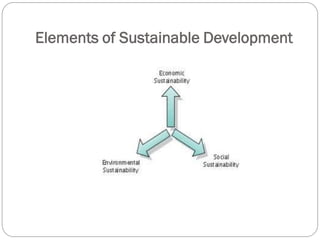
Elements of Sustainable Development
Natural Resource Management
Implementation Strategies
1.

2.

Environmental governance:institutional frameworks, laws,
policies and incentive mechanisms that form a system of
governance over natural resources
Knowledge sharing and learning networks: a tool for
disseminating best practices in resource management

Geography for beginners

  • 1.
  • 2.
    Academic Traditions  1. 2. 3. 4. Consists offour academic traditions: Spatial Tradition – study of distribution. Area Studies Tradition –study of an area on Earth Human-Land Tradition – study of human interactions with the environment. Earth Science Tradition –study of natural phenomena from a spatial perspective.
  • 3.
    History of Geography Stretches over many centuries  Main purpose was to map locations and describe places and regions to explorers  According to historical records, the Greeks were the first to practice geography; one of the first Greek geographers was Herodotus
  • 4.
    Elements of Geography Thereare six elements in the study of geography:  The World in Spatial Terms  Places and Regions.  Physical Systems.  Human Systems  Environment and Society  The uses (of Geography)
  • 5.
    Branches of Geography     Humanand Physical Geography Environmental Geography Geomatics Regional Geography
  • 6.
    Components of HumanGeography  Cultural geography  Political geography  Population geography  Urban geography  Economic geography  Behavioral geography  Social geography
  • 7.
    Components of PhysicalGeography  Geomorphology: the study of the surface of the Earth and the process by which it is shaped  Pedology: the study of soils in its natural environment  Biogeography: the science that investigates the spatial relationships of plants and animals
  • 8.
    Components of PhysicalGeography (continued)  Hydrology: the study of fresh water in all its forms  Climatology: the study of the climate  Oceanography: the study of the Earth’s seas and oceans  Glaciology: the study of glaciers and ice sheets  Palaeogeography: the study of the distribution of the continents through geologic time
  • 9.
    Environmental Planning  Environment- refers to the physical and biological systems which provide our basic life support  The scientific study of the environment began around the seventeenth century  Came about from our awareness of the negative impact on the environment
  • 10.
    Environmental Issues  Climatechange  Overpopulation  Pollution  Environmental degradation  Resource depletion
  • 11.
    Environmental Planning   Environmental planningis concerned with a society’s responsibility over resources Elements of Environmental Planning: sustainable development, equity, environmental justice, green building technologies, and preservation of environmentally sensitive areas
  • 12.
    Environmental Planning Process Legislative planning framework  Administrative planning framework  Environmental resource management planning  Landscape ecological planning  Ecological urban planning  Information dissemination  Decision making
  • 13.
    Natural Resource Management Activities that focus on improving human interaction with the natural environment  Congruent with the concept of sustainable development  Sustainable development: resource use which aims to meet human needs while preserving the environment
  • 14.
  • 15.
    Natural Resource Management ImplementationStrategies 1. 2. Environmental governance:institutional frameworks, laws, policies and incentive mechanisms that form a system of governance over natural resources Knowledge sharing and learning networks: a tool for disseminating best practices in resource management