© 2015 Gensler
Academic Incubators:
Garage innovation meets higher education
© 2015 Gensler
The traditional model of graduating
college and finding a job has been
turned upside down.
Are today’s universities preparing students
for lifelong learning and to succeed in the
workforce?
© 2015 Gensler
Today’s tech success stories are idolized by
millennials...
And were also famously founded
by college drop-outs.
*Pew Research: http://www.pewresearch.org/fact-tank/2014/05/30/5-facts-about-todays-college-graduates
** **Federal Reserve Bank of New York: http://www.newyorkfed.org/research/current_issues/ci20-1.pdf
$
25,000
© 2015 Gensler
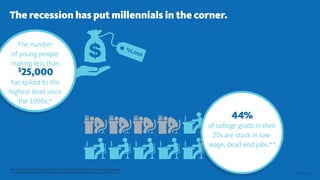
The number
of young people
making less than
$
25,000
has spiked to the
highest level since
the 1990s.*
44%
of college grads in their
20s are stuck in low-
wage, dead-end jobs.**
The recession has put millennials in the corner.
© 2015 Gensler
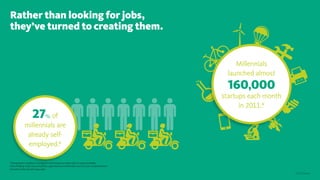
27% of
millennials are
already self-
employed.*
Millennials
launched almost
160,000
startups each month
in 2011.*
Rather than looking for jobs,
they’ve turned to creating them.
*Ewing Marion Kauffman Foundation and Young Invincibles (2011) Young Invincibles
Policy Briefing. http://www.kauffman.org/newsroom/millennials-want-to-start-companieswhen-
economy-rebounds-poll-says.aspx
© 2015 Gensler
*US Chamber of Commerce
**Kauffman Foundation - http://www.kauffman.org/newsroom/2012/11/an-entrepreneurial-generation-
	of-18-to-34yearolds-wants-to-start-companies-when-economy-rebounds-according-to-new-poll
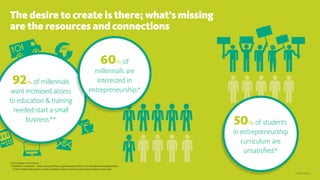
92% of millennials
want increased access
to education & training
needed start a small
business.** 50% of students
in entrepreneurship
curriculum are
unsatisfied.*
60% of
millennials are
interested in
entrepreneurship.*
The desire to create is there; what’s missing
are the resources and connections
© 2015 Gensler
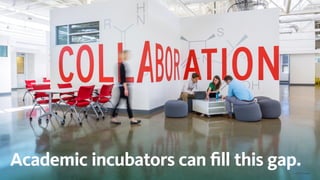
Academic incubators can fill this gap.
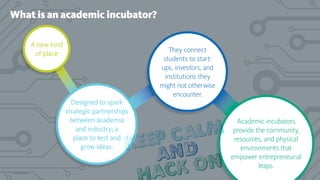
What is an academic incubator?
A new kind
of place
Designed to spark
strategic partnerships
between academia
and industry; a
place to test and
grow ideas.
They connect
students to start-
ups, investors, and
institutions they
might not otherwise
encounter.
Academic incubators
provide the community,
resources, and physical
environments that
empower entrepreneurial
leaps.
© 2015 Gensler
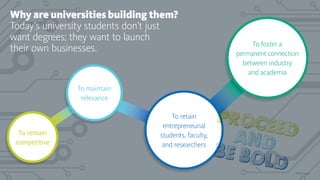
To foster a
permanent connection
between industry
and academia
To retain
entrepreneurial
students, faculty,
and researchers
To remain
competitive
To maintain
relevance
Why are universities building them?
Today’s university students don’t just
want degrees; they want to launch
their own businesses.
© 2015 Gensler
© 2015 Gensler
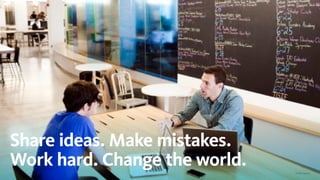
Share ideas. Make mistakes.
Work hard. Change the world.
© 2015 Gensler
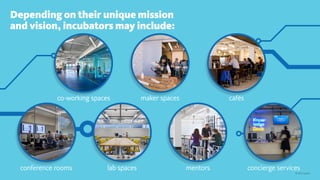
Depending on their unique mission
and vision, incubators may include:
co-working spaces maker spaces cafés
conference rooms lab spaces mentors concierge services
© 2015 Gensler
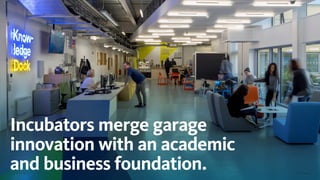
Incubators merge garage
innovation with an academic
and business foundation.
© 2015 Gensler
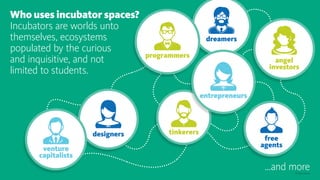
dreamers
angel
investors
...and more
venture
capitalists
tinkerers
free
agents
programmers
entrepreneurs
designers
Who uses incubator spaces?
Incubators are worlds unto
themselves, ecosystems
populated by the curious
and inquisitive, and not
limited to students.
© 2015 Gensler
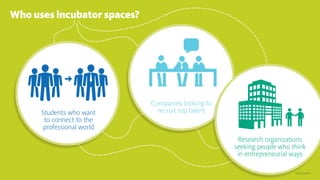
Students who want
to connect to the
professional world
Research organizations
seeking people who think
in entrepreneurial ways
Companies looking to
recruit top talent
Who uses incubator spaces?
© 2015 Gensler
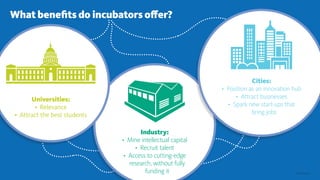
Industry:
•	 Mine intellectual capital
•	 Recruit talent
•	 Access to cutting-edge
research, without fully
funding it
Cities:
•	 Position as an innovation hub
•	 Attract businesses
•	 Spark new start-ups that
bring jobs
Universities:
•	 Relevance
•	 Attract the best students
What benefits do incubators offer?
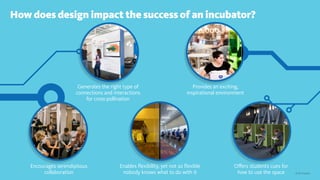
How does design impact the success of an incubator?
Generates the right type of
connections and interactions
for cross-pollination
Provides an exciting,
inspirational environment
Encourages serendipitous
collaboration
Enables flexibility, yet not so flexible
nobody knows what to do with it
Offers students cues for
how to use the space © 2015 Gensler
© 2015 Gensler
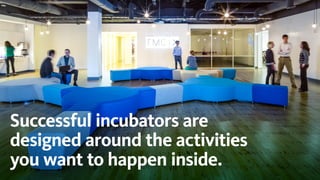
Successful incubators are
designed around the activities
you want to happen inside.
© 2015 Gensler
For more information on
Academic Incuabors:
www.Gensler.com/education

Gensler: Academic Incubators

  • 1.
    © 2015 Gensler AcademicIncubators: Garage innovation meets higher education
  • 2.
    © 2015 Gensler Thetraditional model of graduating college and finding a job has been turned upside down. Are today’s universities preparing students for lifelong learning and to succeed in the workforce?
  • 3.
    © 2015 Gensler Today’stech success stories are idolized by millennials... And were also famously founded by college drop-outs.
  • 4.
    *Pew Research: http://www.pewresearch.org/fact-tank/2014/05/30/5-facts-about-todays-college-graduates ****Federal Reserve Bank of New York: http://www.newyorkfed.org/research/current_issues/ci20-1.pdf $ 25,000 © 2015 Gensler The number of young people making less than $ 25,000 has spiked to the highest level since the 1990s.* 44% of college grads in their 20s are stuck in low- wage, dead-end jobs.** The recession has put millennials in the corner.
  • 5.
    © 2015 Gensler 27%of millennials are already self- employed.* Millennials launched almost 160,000 startups each month in 2011.* Rather than looking for jobs, they’ve turned to creating them. *Ewing Marion Kauffman Foundation and Young Invincibles (2011) Young Invincibles Policy Briefing. http://www.kauffman.org/newsroom/millennials-want-to-start-companieswhen- economy-rebounds-poll-says.aspx
  • 6.
    © 2015 Gensler *USChamber of Commerce **Kauffman Foundation - http://www.kauffman.org/newsroom/2012/11/an-entrepreneurial-generation- of-18-to-34yearolds-wants-to-start-companies-when-economy-rebounds-according-to-new-poll 92% of millennials want increased access to education & training needed start a small business.** 50% of students in entrepreneurship curriculum are unsatisfied.* 60% of millennials are interested in entrepreneurship.* The desire to create is there; what’s missing are the resources and connections
  • 7.
    © 2015 Gensler Academicincubators can fill this gap.
  • 8.
    What is anacademic incubator? A new kind of place Designed to spark strategic partnerships between academia and industry; a place to test and grow ideas. They connect students to start- ups, investors, and institutions they might not otherwise encounter. Academic incubators provide the community, resources, and physical environments that empower entrepreneurial leaps. © 2015 Gensler
  • 9.
    To foster a permanentconnection between industry and academia To retain entrepreneurial students, faculty, and researchers To remain competitive To maintain relevance Why are universities building them? Today’s university students don’t just want degrees; they want to launch their own businesses. © 2015 Gensler
  • 10.
    © 2015 Gensler Shareideas. Make mistakes. Work hard. Change the world.
  • 11.
    © 2015 Gensler Dependingon their unique mission and vision, incubators may include: co-working spaces maker spaces cafés conference rooms lab spaces mentors concierge services
  • 12.
    © 2015 Gensler Incubatorsmerge garage innovation with an academic and business foundation.
  • 13.
    © 2015 Gensler dreamers angel investors ...andmore venture capitalists tinkerers free agents programmers entrepreneurs designers Who uses incubator spaces? Incubators are worlds unto themselves, ecosystems populated by the curious and inquisitive, and not limited to students.
  • 14.
    © 2015 Gensler Studentswho want to connect to the professional world Research organizations seeking people who think in entrepreneurial ways Companies looking to recruit top talent Who uses incubator spaces?
  • 15.
    © 2015 Gensler Industry: • Mine intellectual capital • Recruit talent • Access to cutting-edge research, without fully funding it Cities: • Position as an innovation hub • Attract businesses • Spark new start-ups that bring jobs Universities: • Relevance • Attract the best students What benefits do incubators offer?
  • 16.
    How does designimpact the success of an incubator? Generates the right type of connections and interactions for cross-pollination Provides an exciting, inspirational environment Encourages serendipitous collaboration Enables flexibility, yet not so flexible nobody knows what to do with it Offers students cues for how to use the space © 2015 Gensler
  • 17.
    © 2015 Gensler Successfulincubators are designed around the activities you want to happen inside.
  • 18.
    © 2015 Gensler Formore information on Academic Incuabors: www.Gensler.com/education