




Social Media & Beyond
2014 Outlook
Daniel McKean
Digital Analyst
Los Angeles, California
Geneva Switzerland
Presentation given as an introduction to a LinkedIn Employer Branding event in Geneva Switzerland on May 24, 2014.
It touches us each and every
day.
We can't escape it.
Whether it's in our personal
lives...
Daily
or... as a business
professionals.
DailyProfessional
From Facebook, Twitter &
YouTube...
to more specialized or
niche networks,
to mobile apps.
Social Media…
has changed the way the
world communicates.
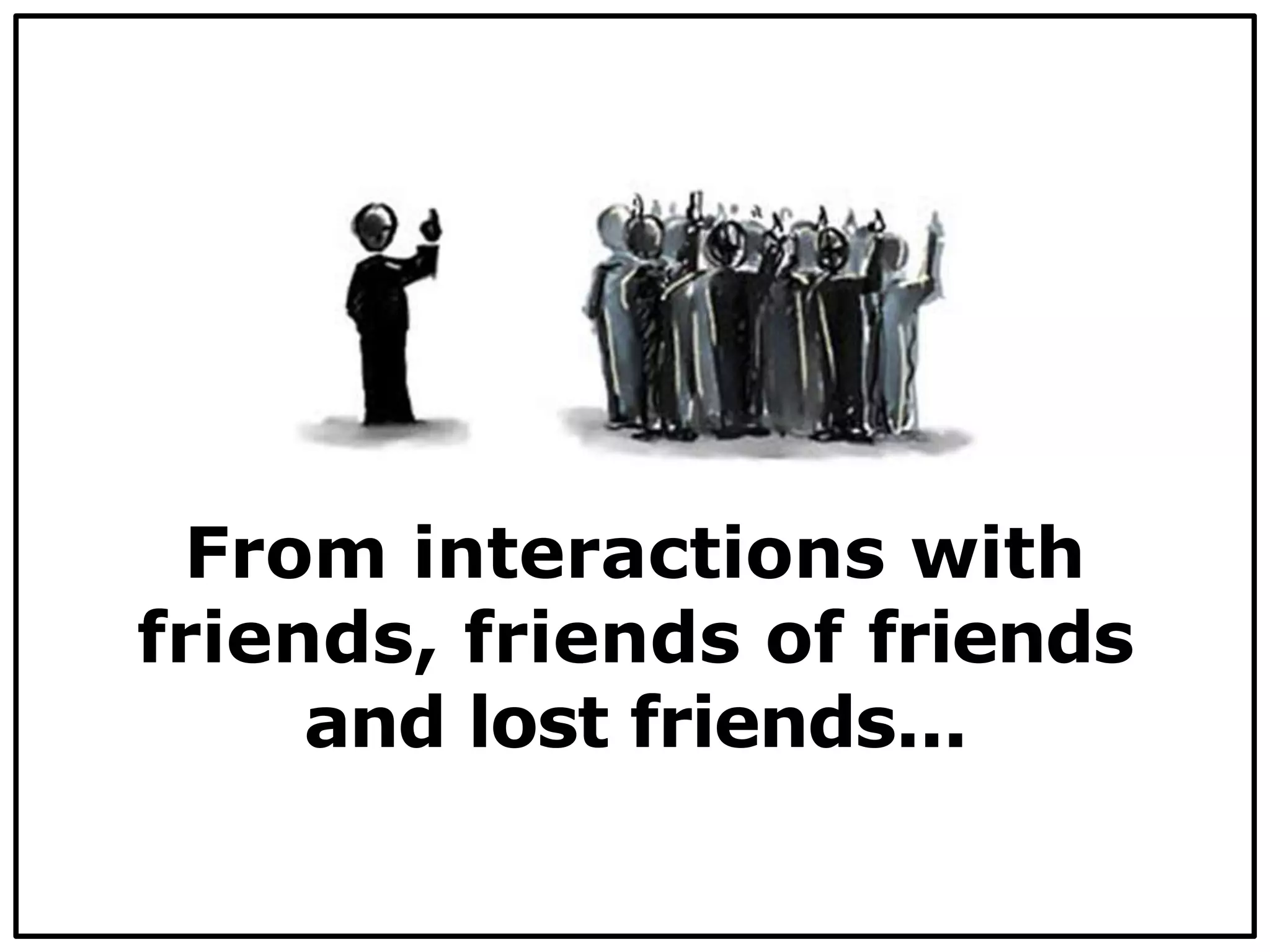
From interactions with
friends, friends of friends
and lost friends...
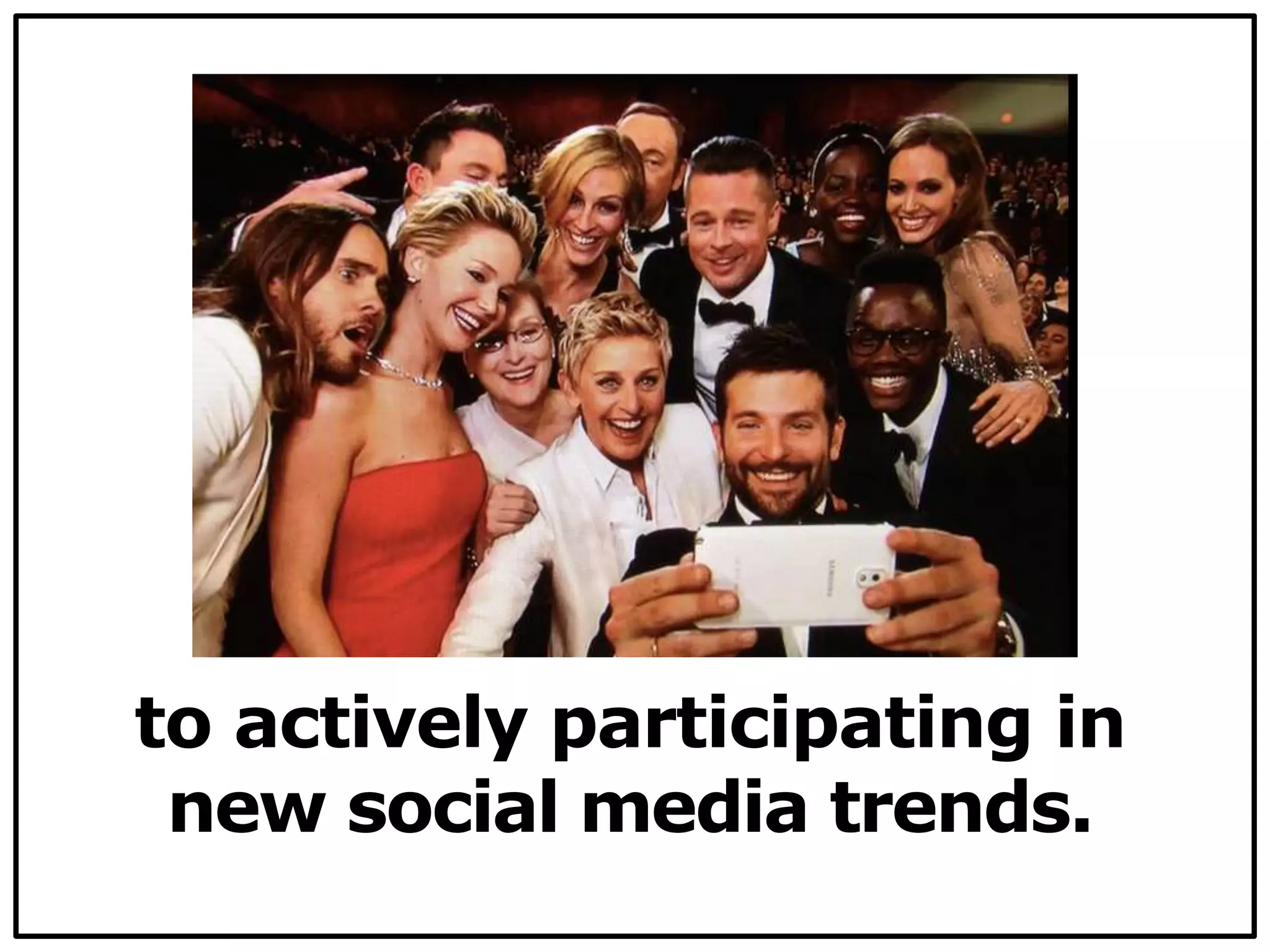
to actively participating in
new social media trends.
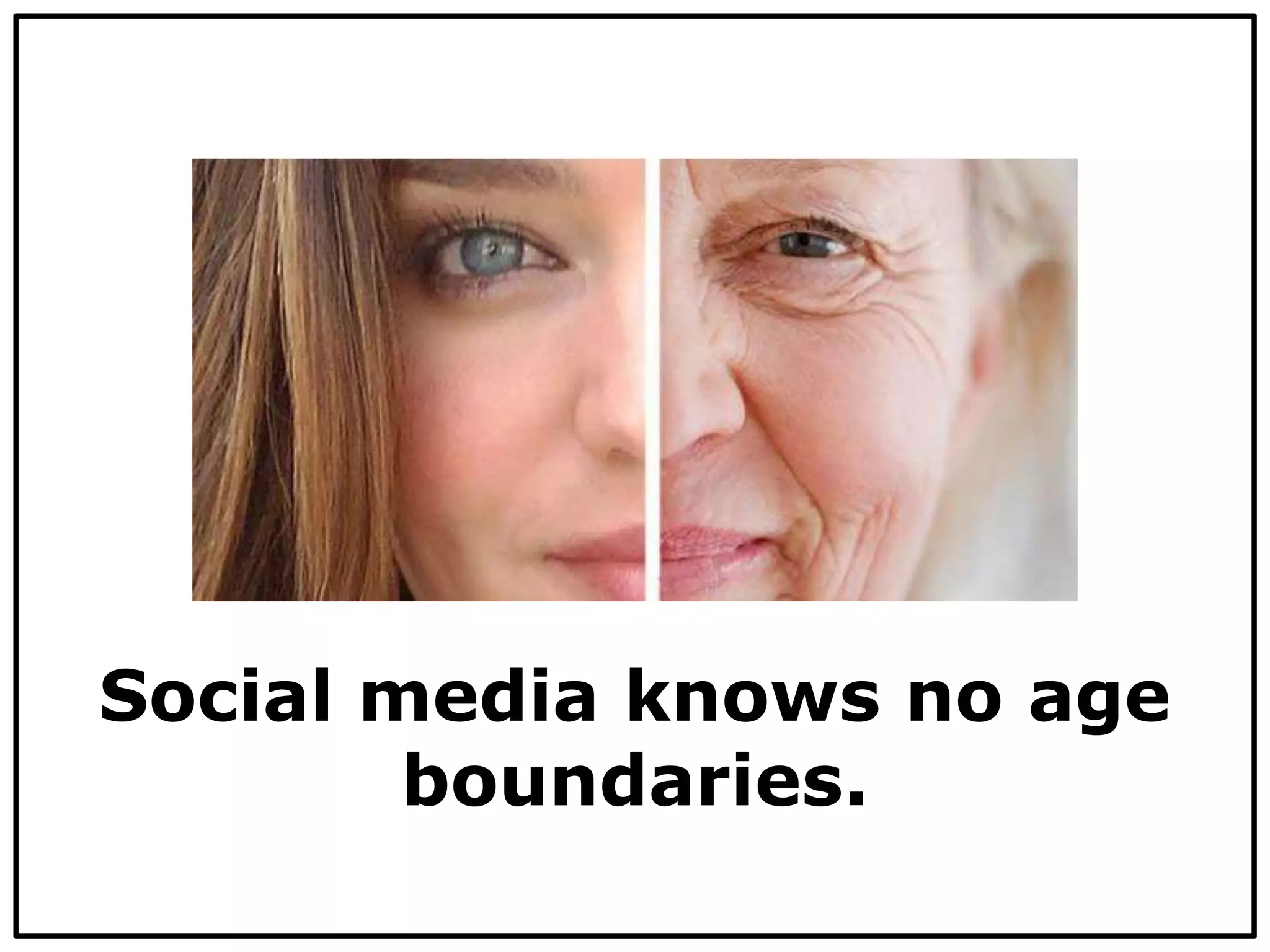
Social media knows no age
boundaries.
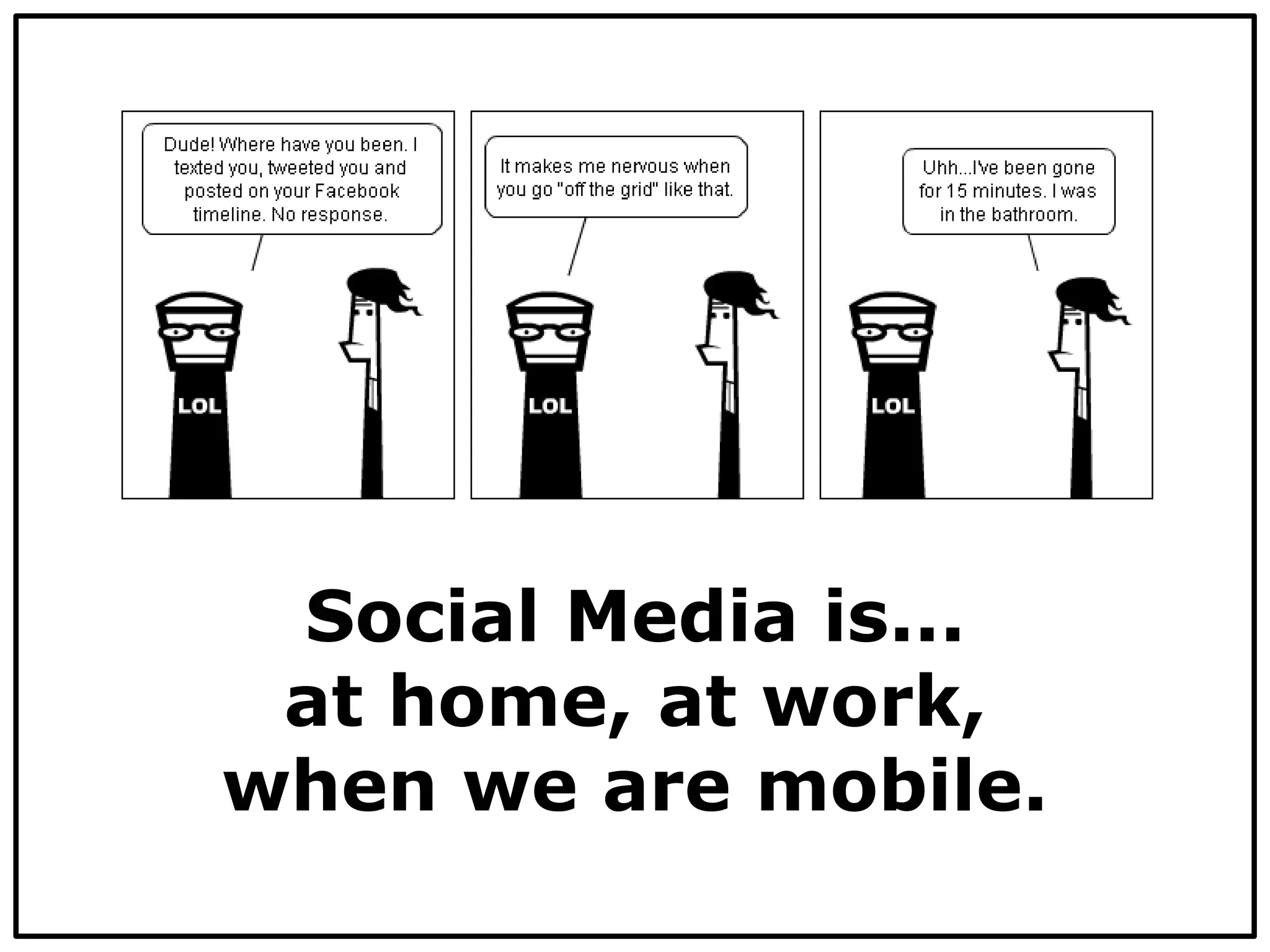
Social Media is...
at home, at work,
when we are mobile.
Social Media…
as a primary news source.
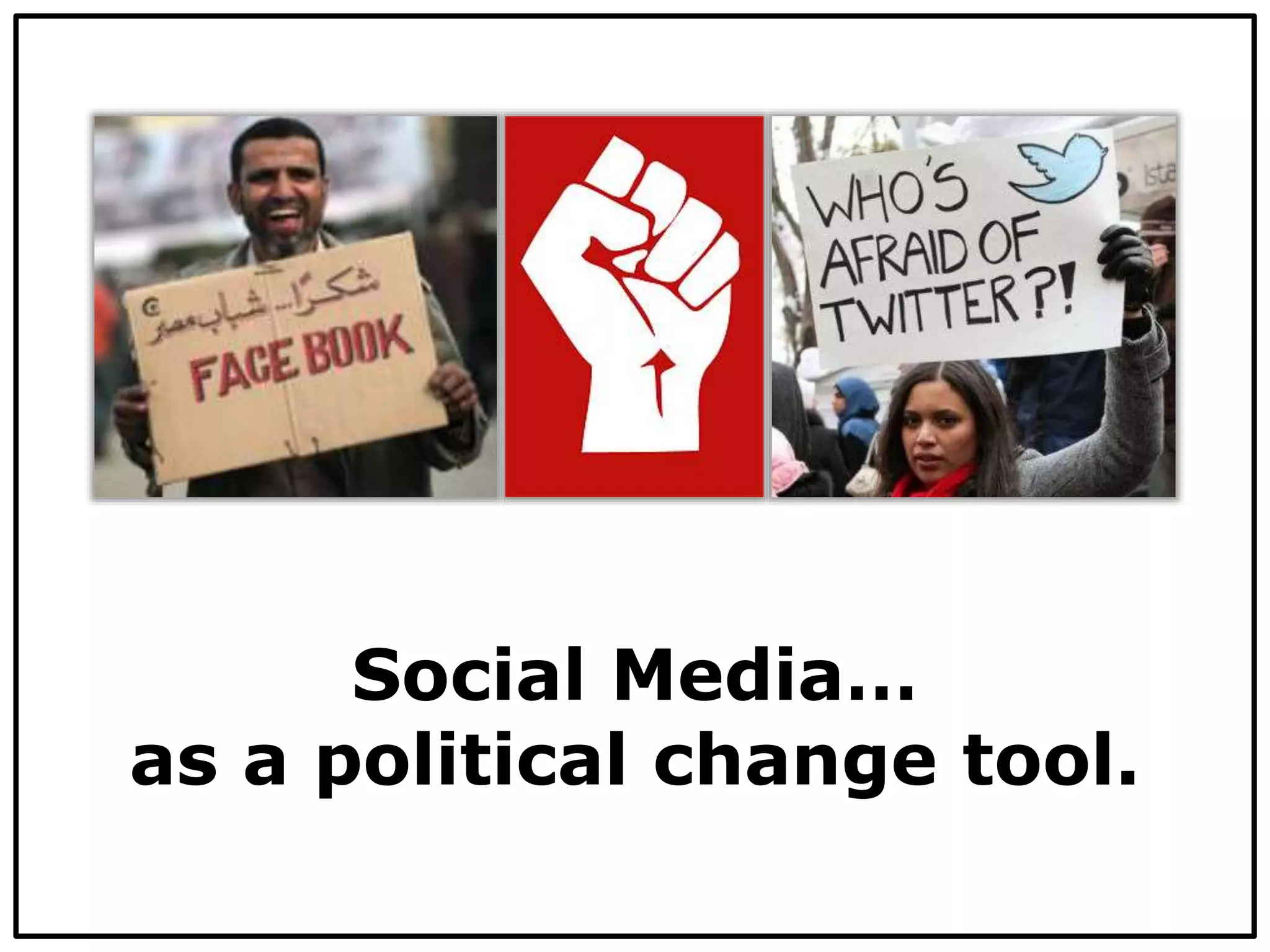
Social Media…
as a political change tool.
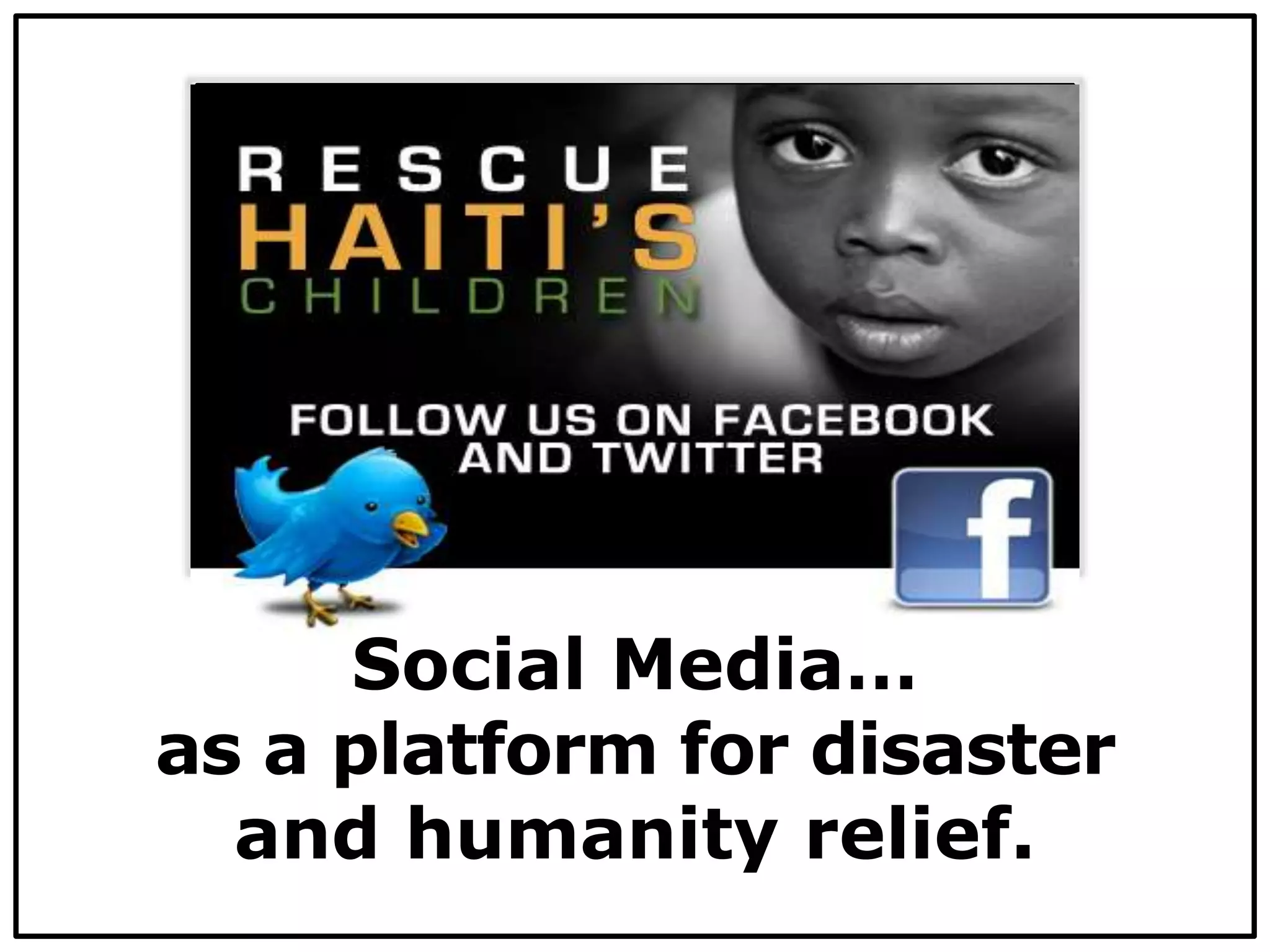
Social Media…
as a platform for disaster
and humanity relief.
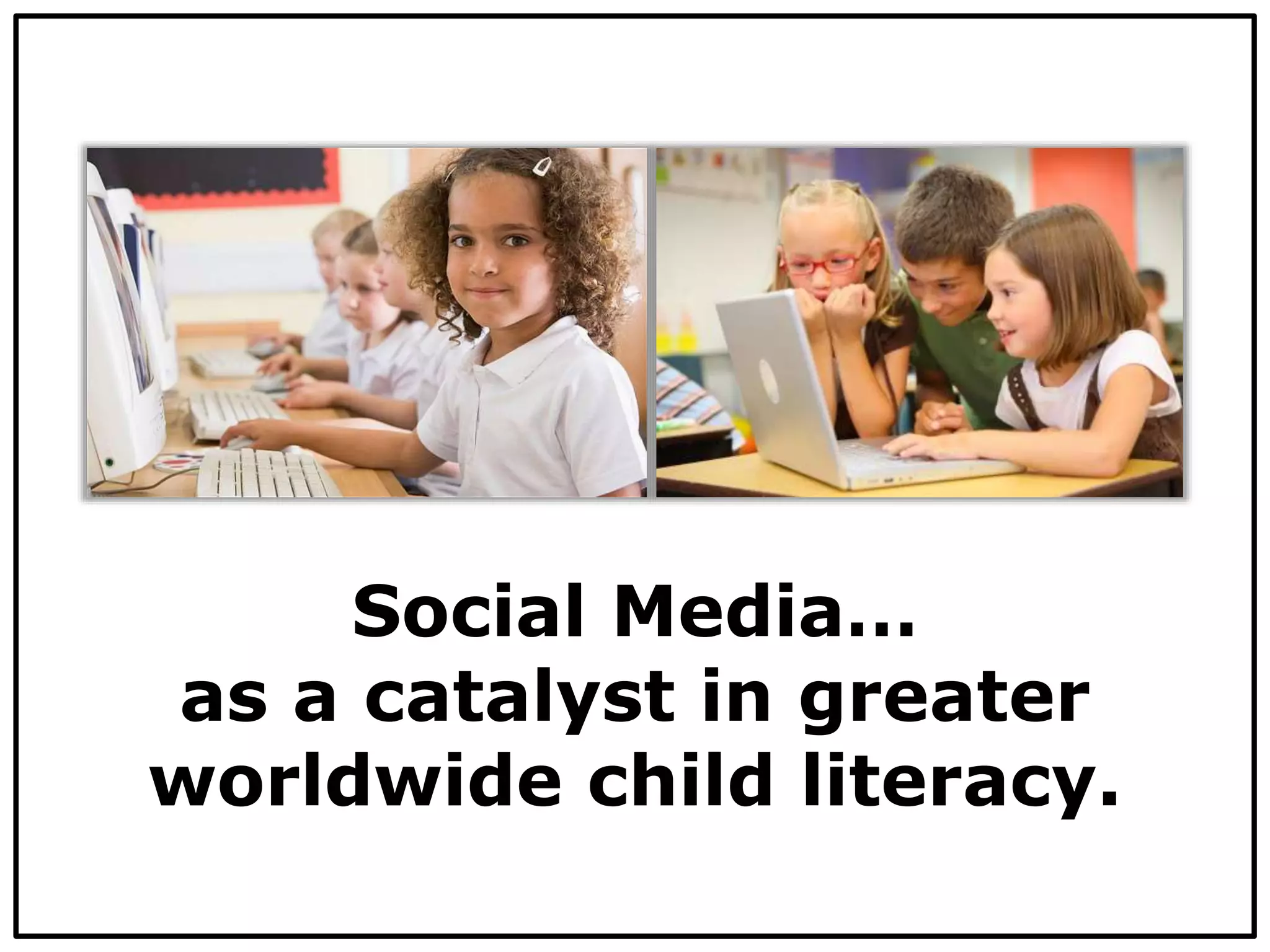
Social Media…
as a catalyst in greater
worldwide child literacy.
Social Media…
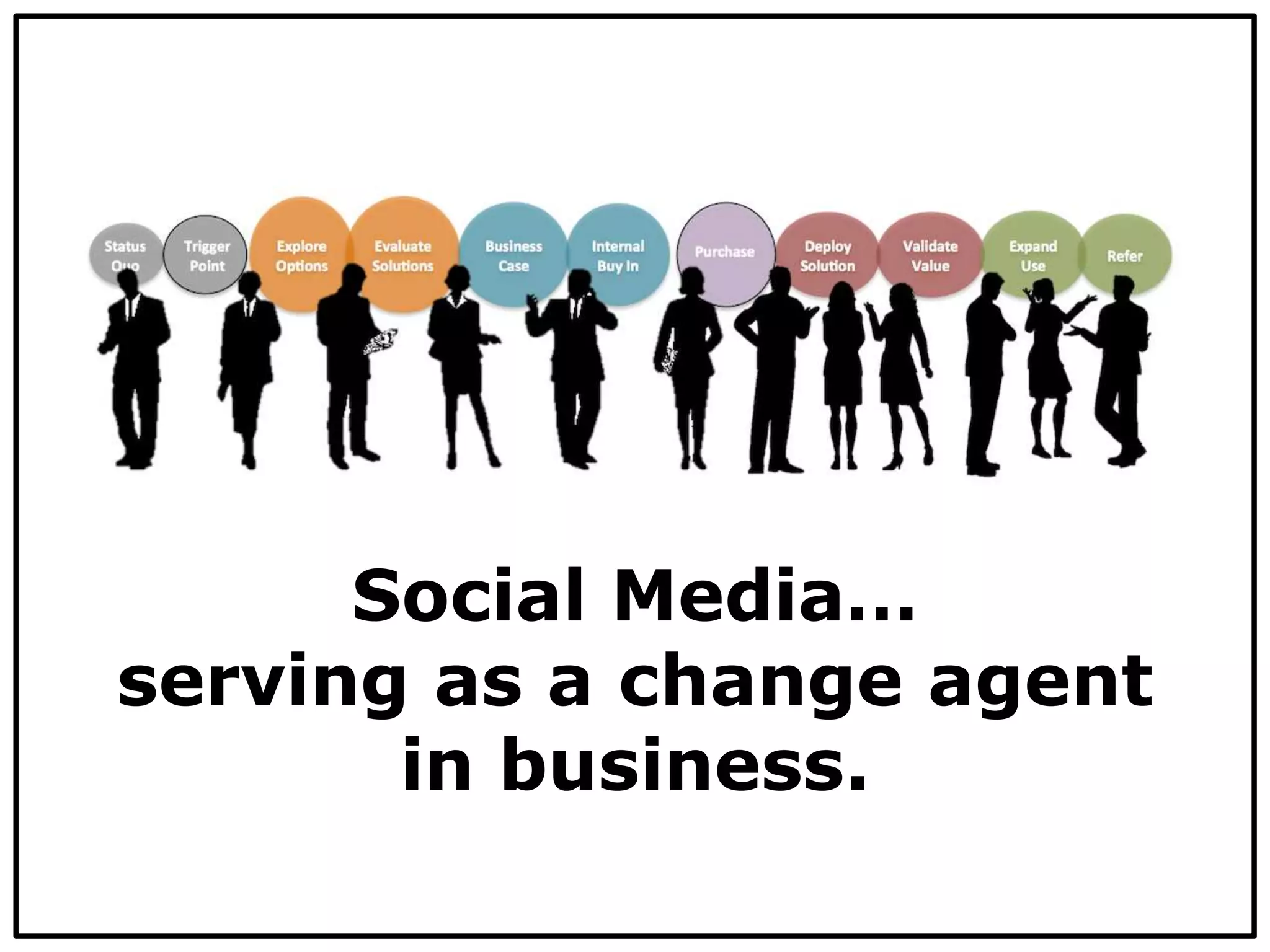
serving as a change agent
in business.
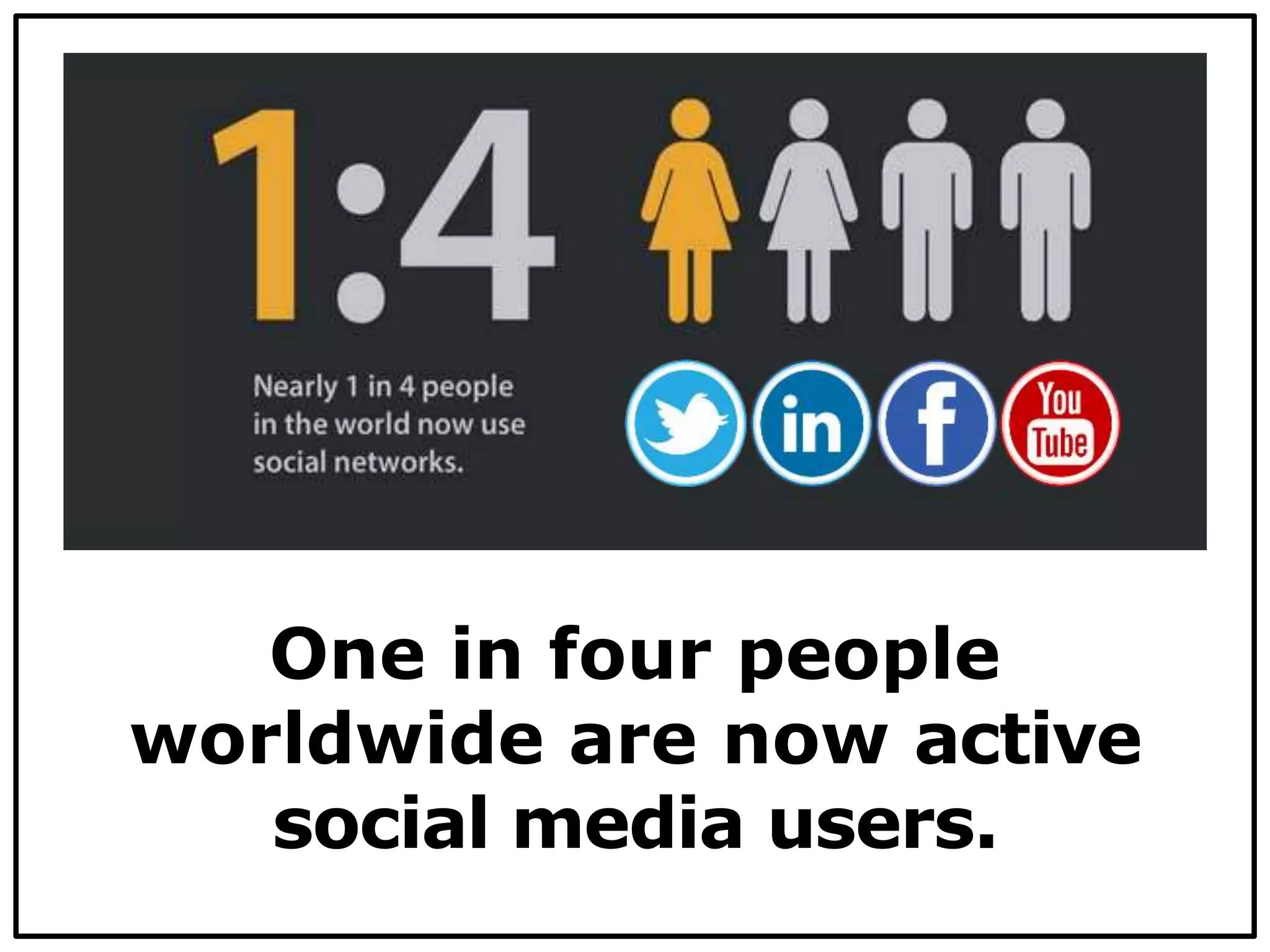
One in four people
worldwide are now active
social media users.
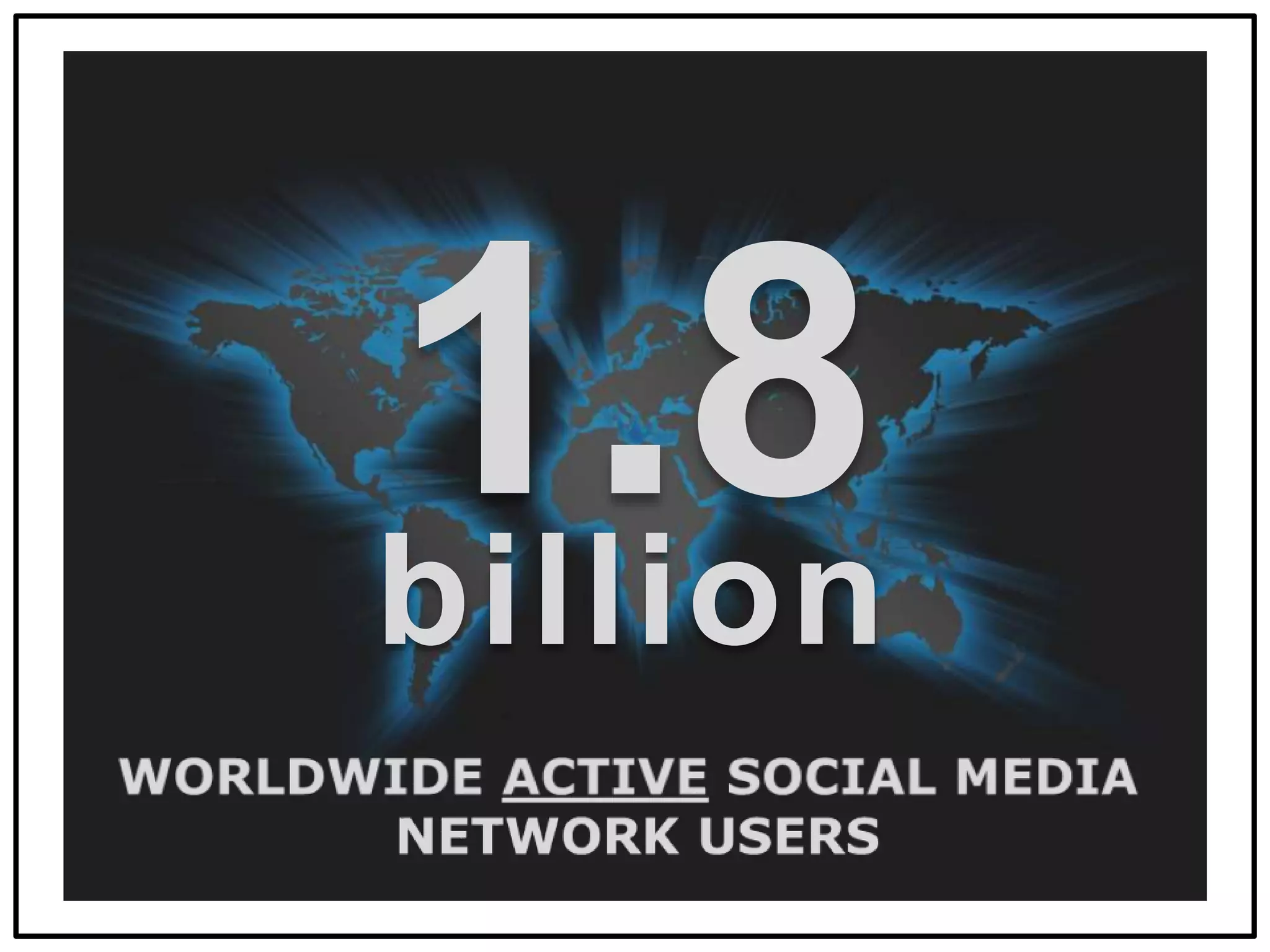
1.8billion
Facebook alone has 1.2+
Billion users.
If Facebook were a
country, it would rank #3
behind China and India.
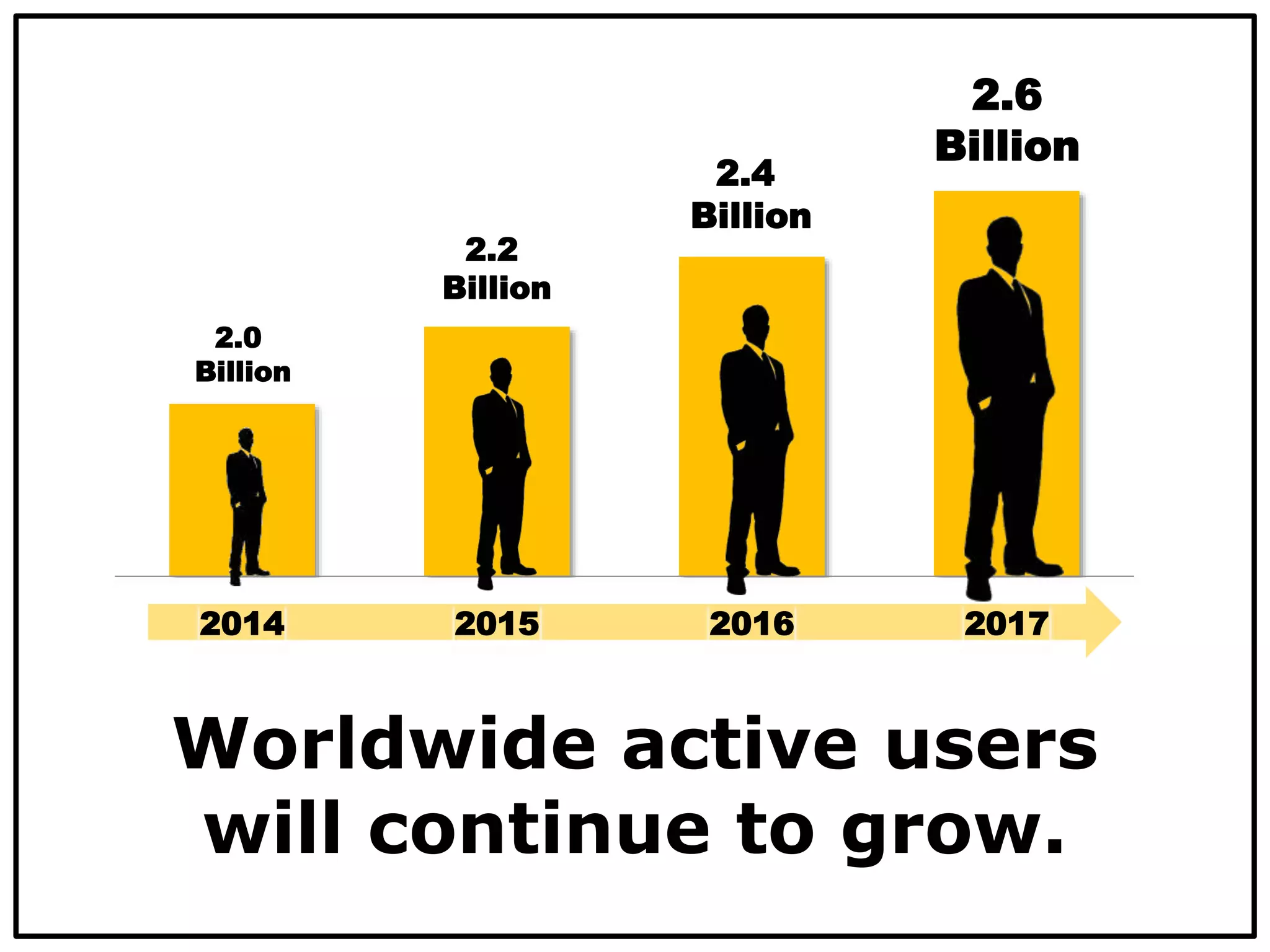
2014 2015 2016 2017
2.0
Billion
2.2
Billion
2.4
Billion
2.6
Billion
Worldwide active users
will continue to grow.
So What's Your Game Plan?
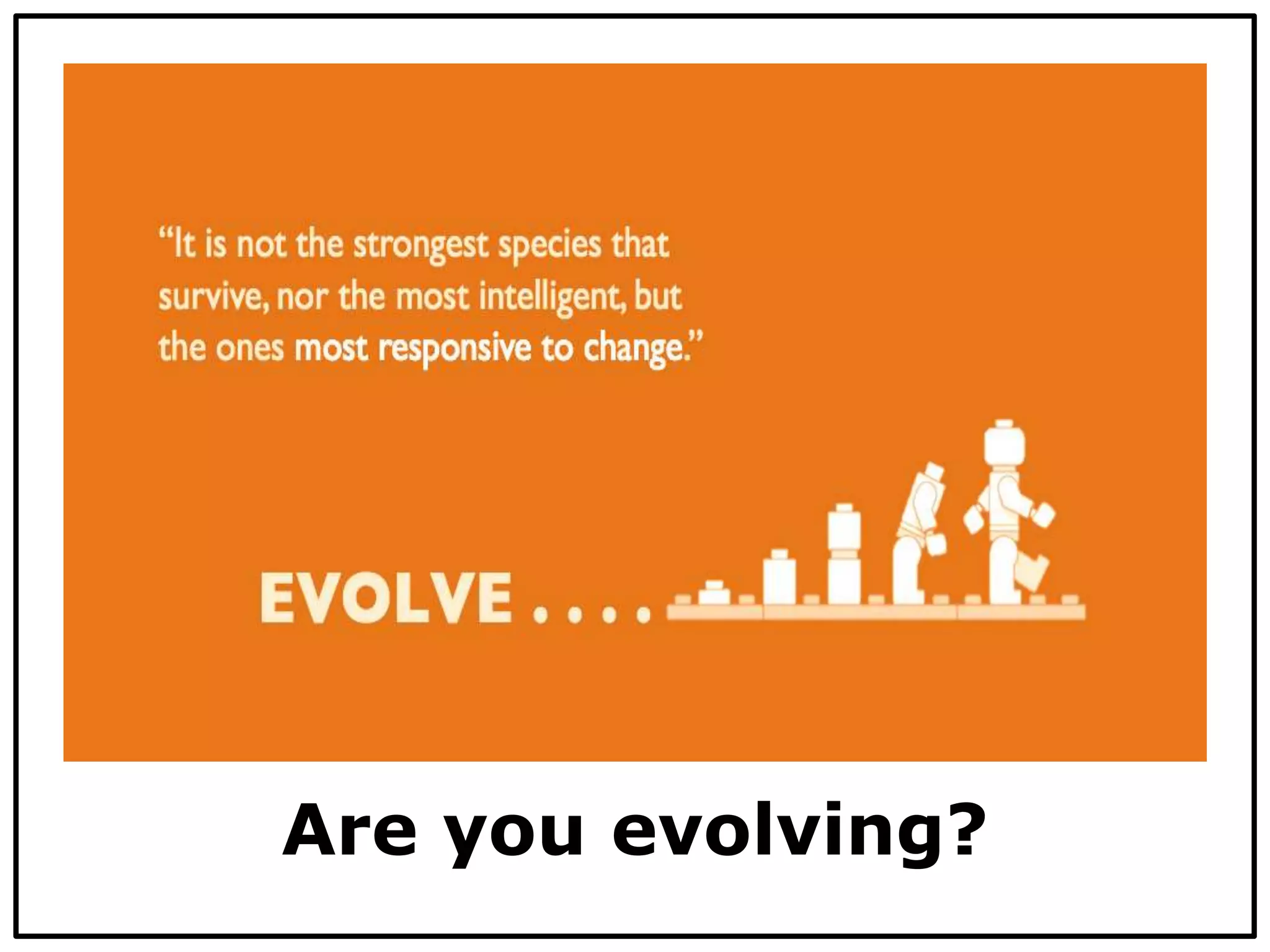
Are you evolving?
Are you adapting?
Do you have a clear direction?
Social Media Matures, Yet Many Companies
Still Lack a Strategic Foundation
THE STATE OF SOCIAL BUSINESS
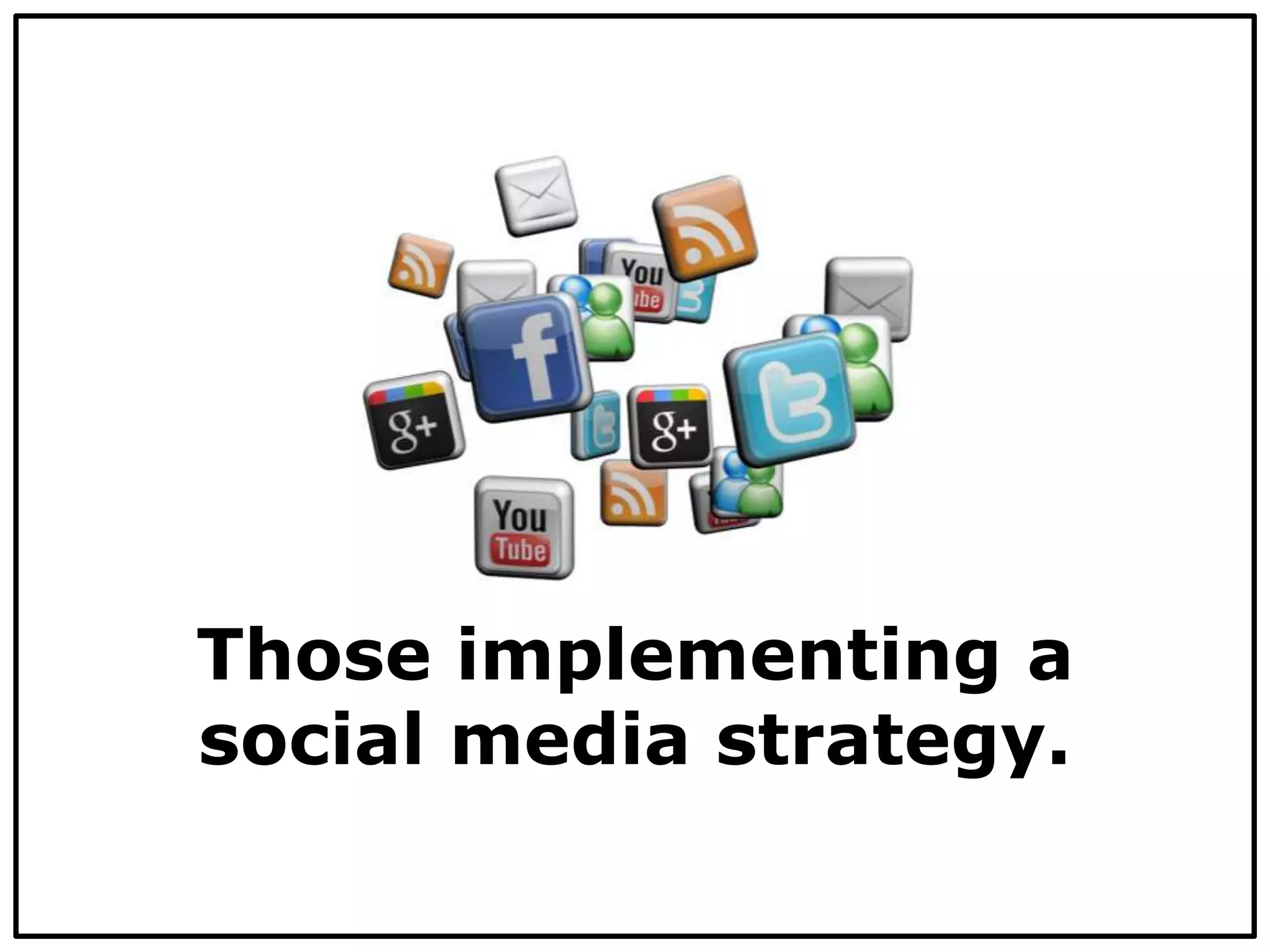
Those implementing a
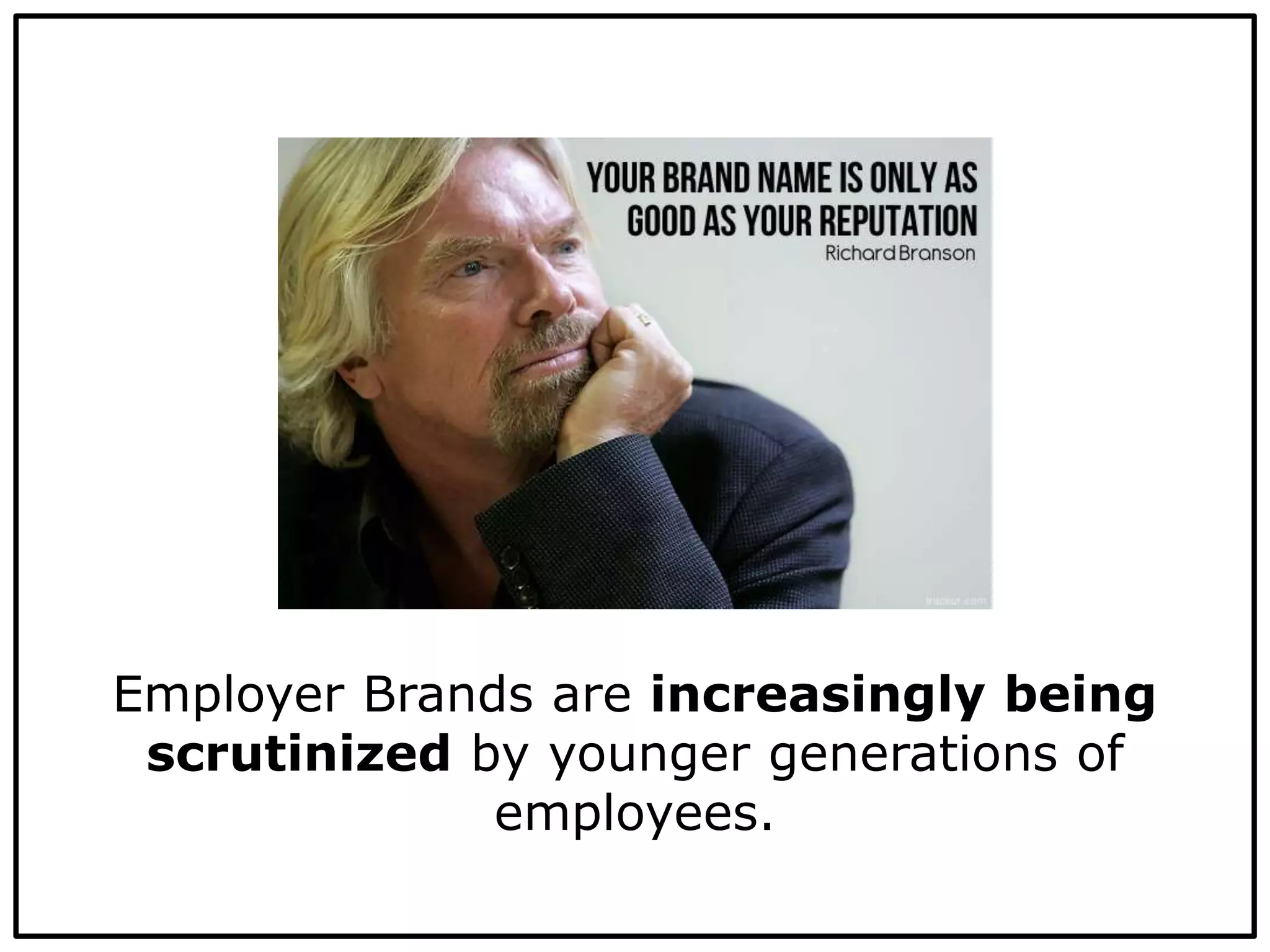
social media strategy.
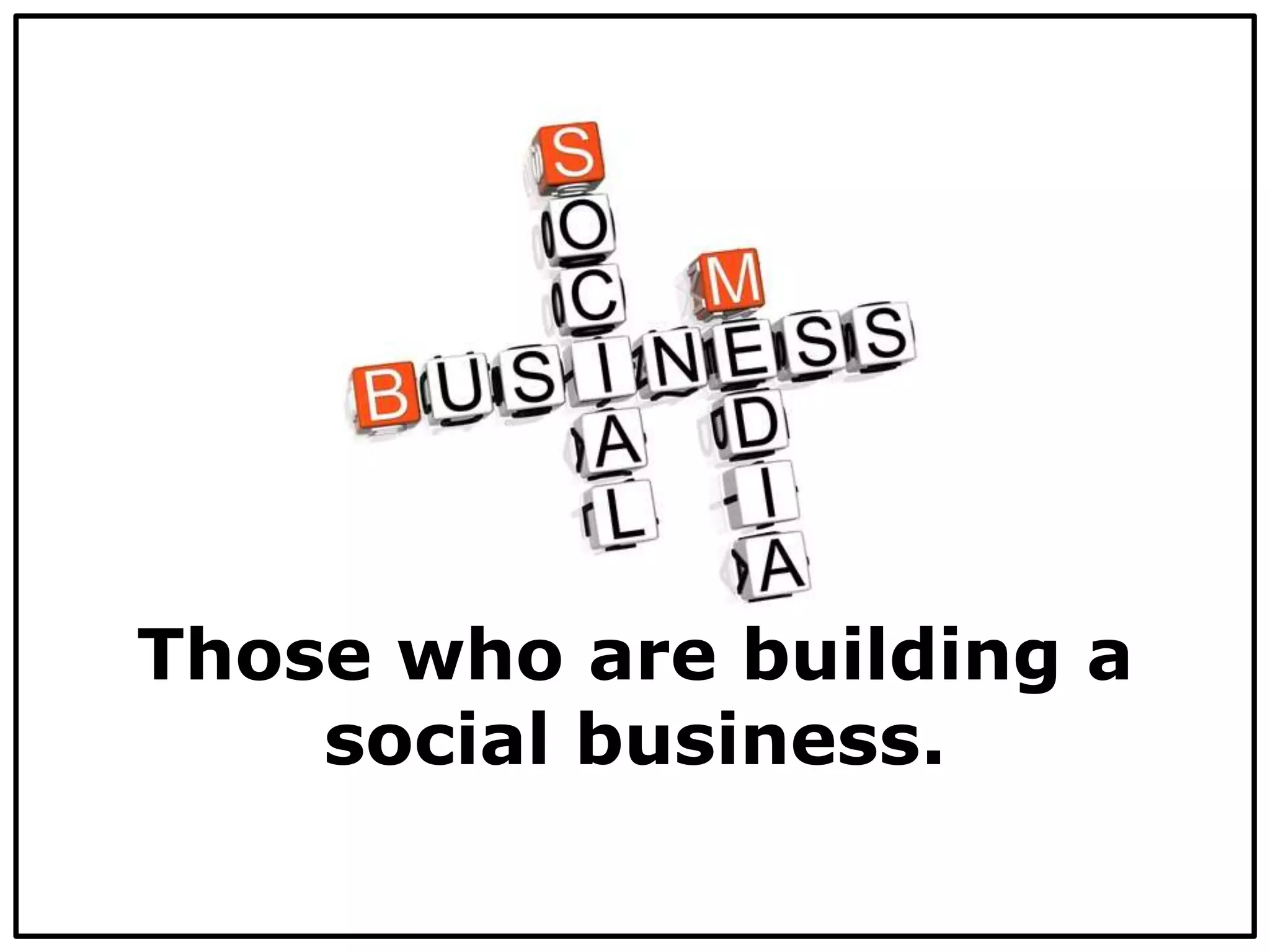
Those who are building a
social business.
WHERE DO YOU FIT?
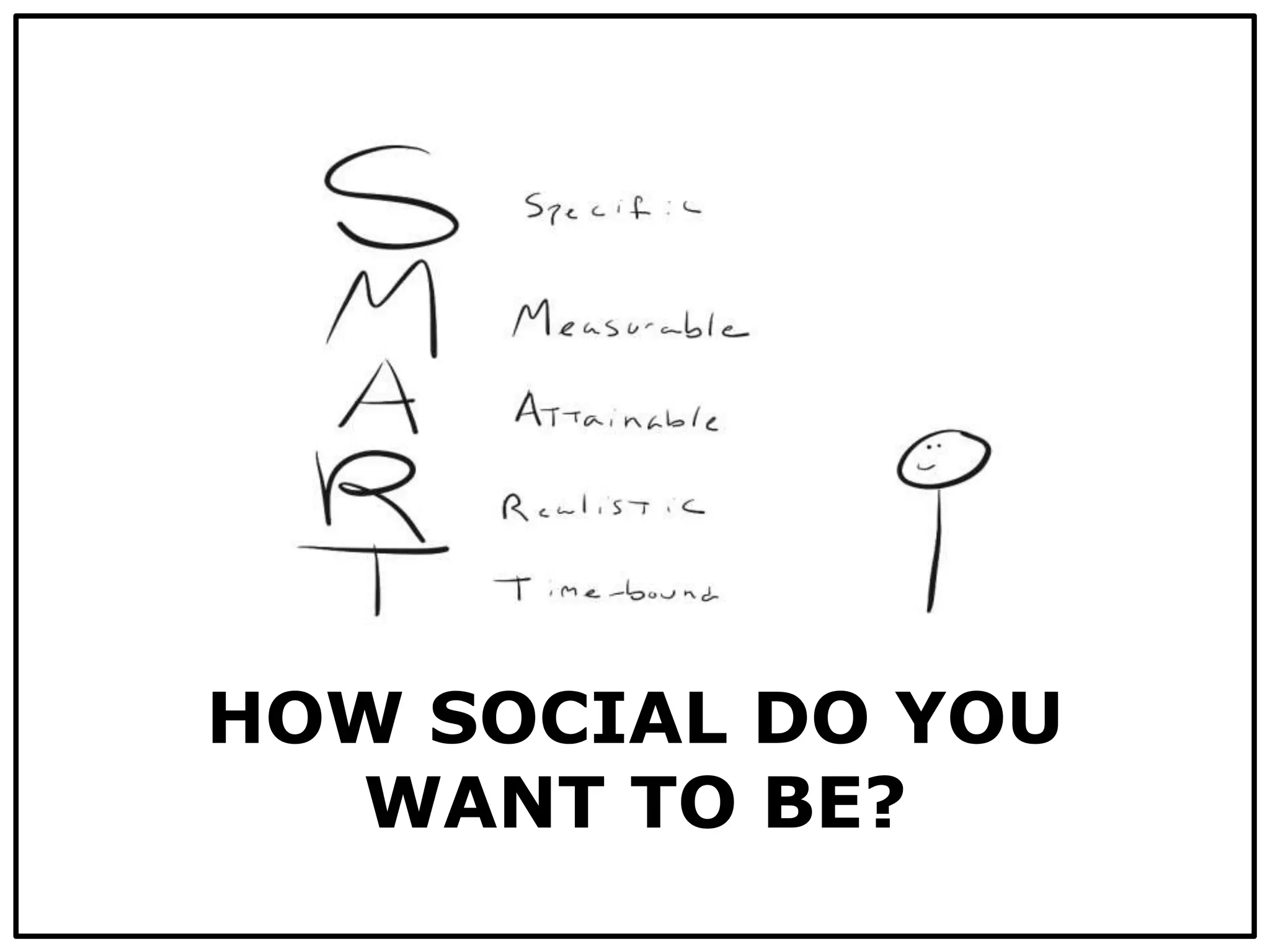
HOW SOCIAL DO YOU
WANT TO BE?
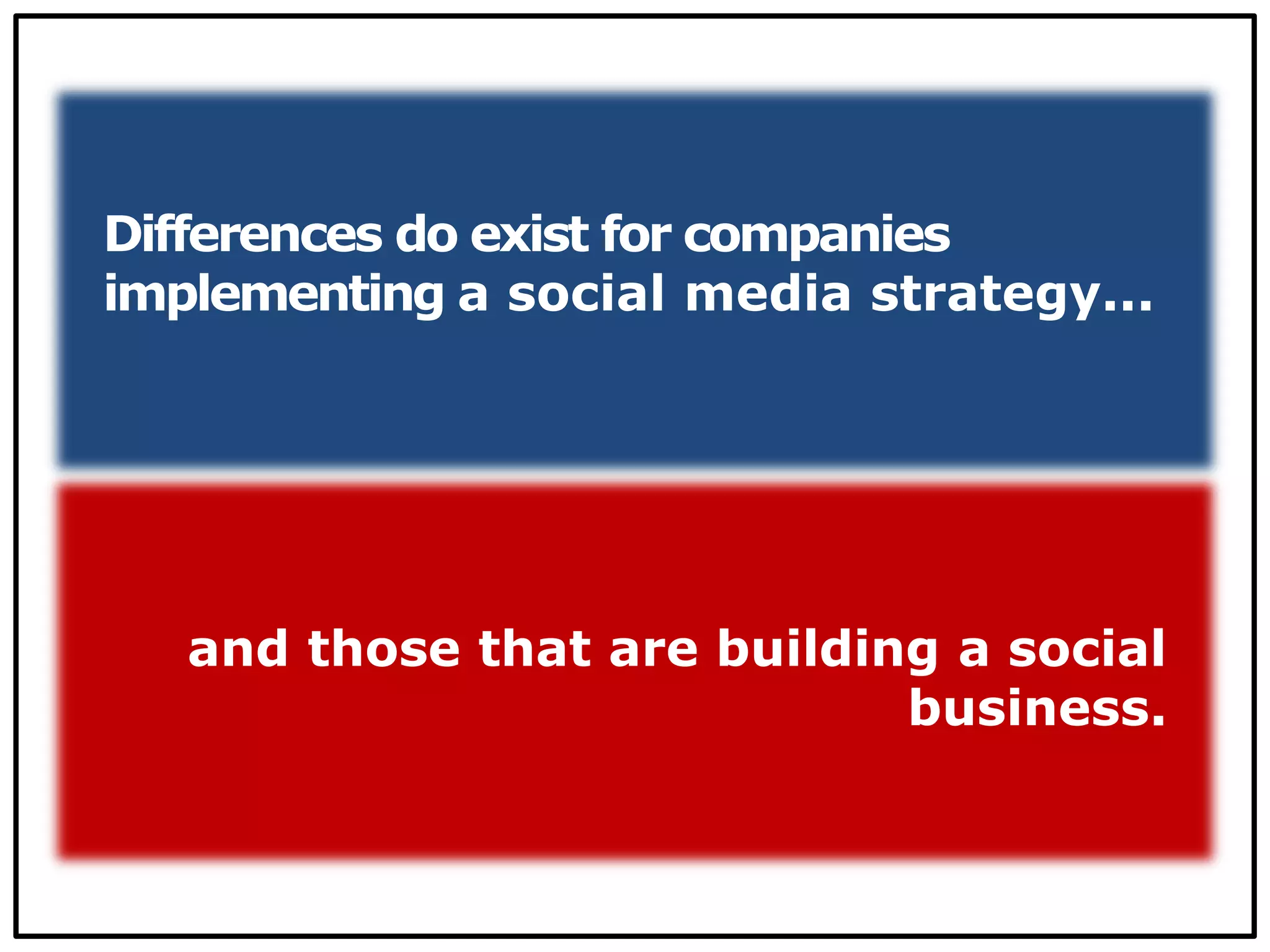
Differences do exist for companies
implementing a social media strategy...
and those that are building a social
business.
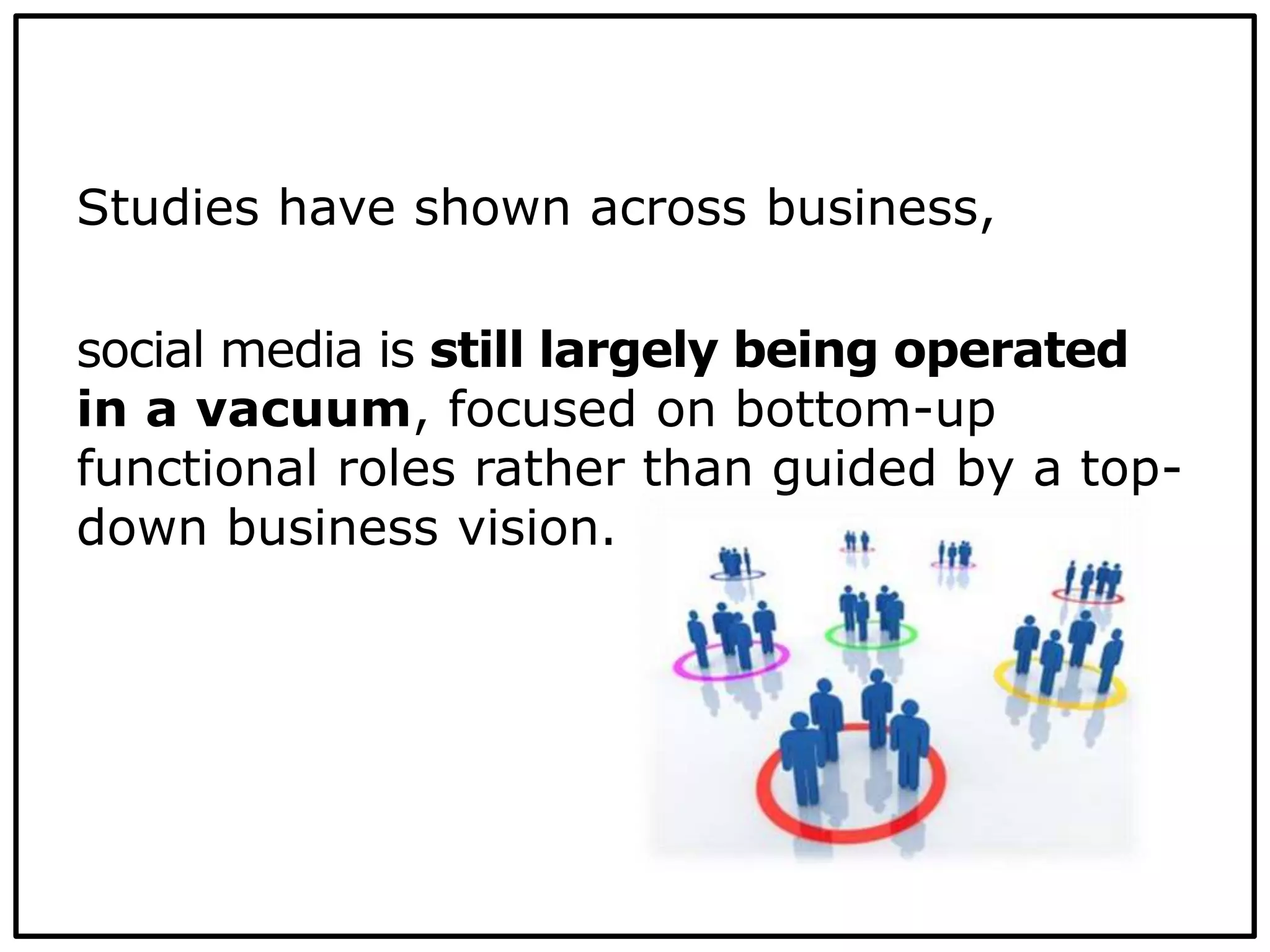
Studies have shown across business,
social media is still largely being operated
in a vacuum, focused on bottom-up
functional roles rather than guided by a top-
down business vision.
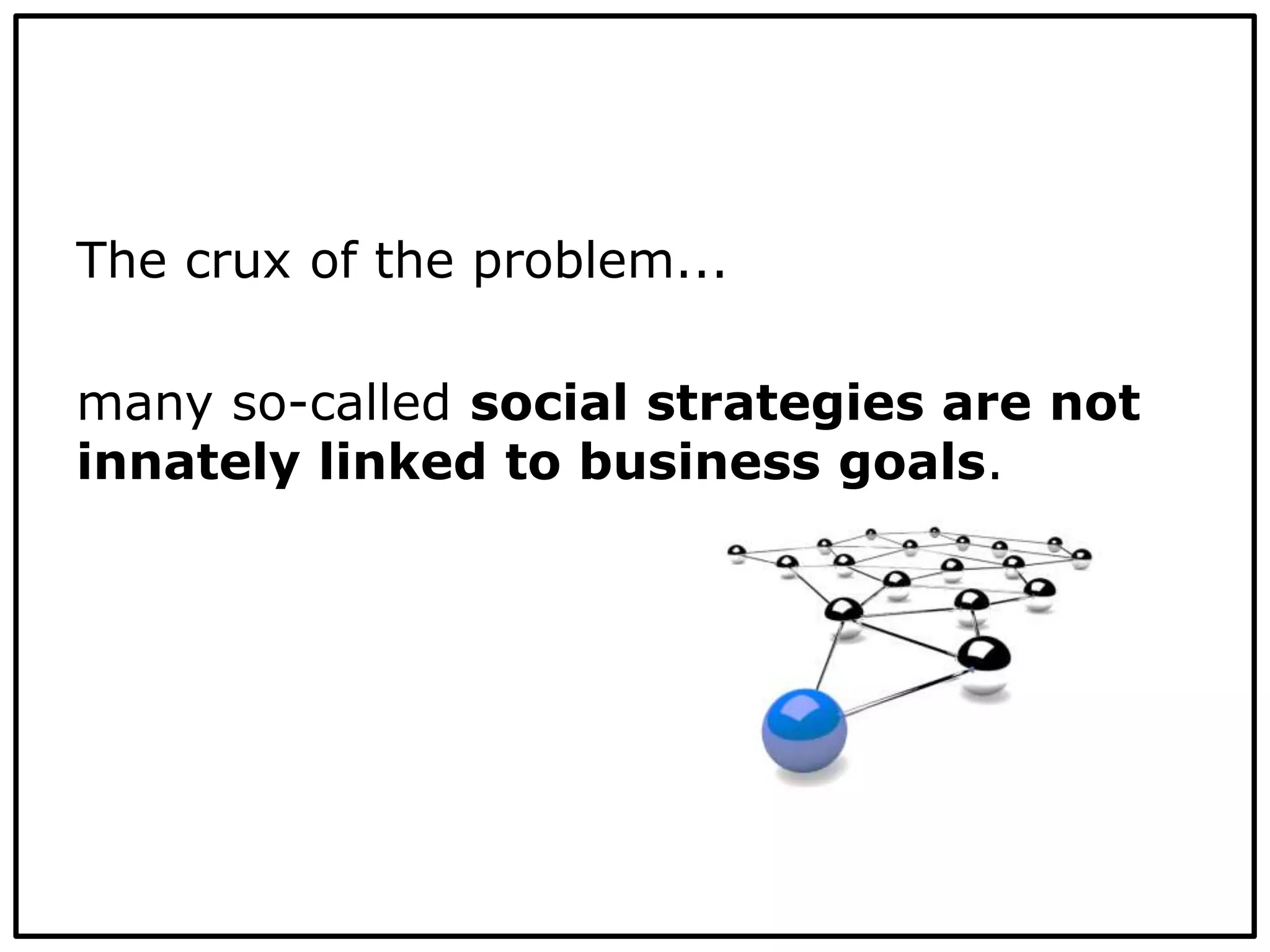
The crux of the problem...
many so-called social strategies are not
innately linked to business goals.
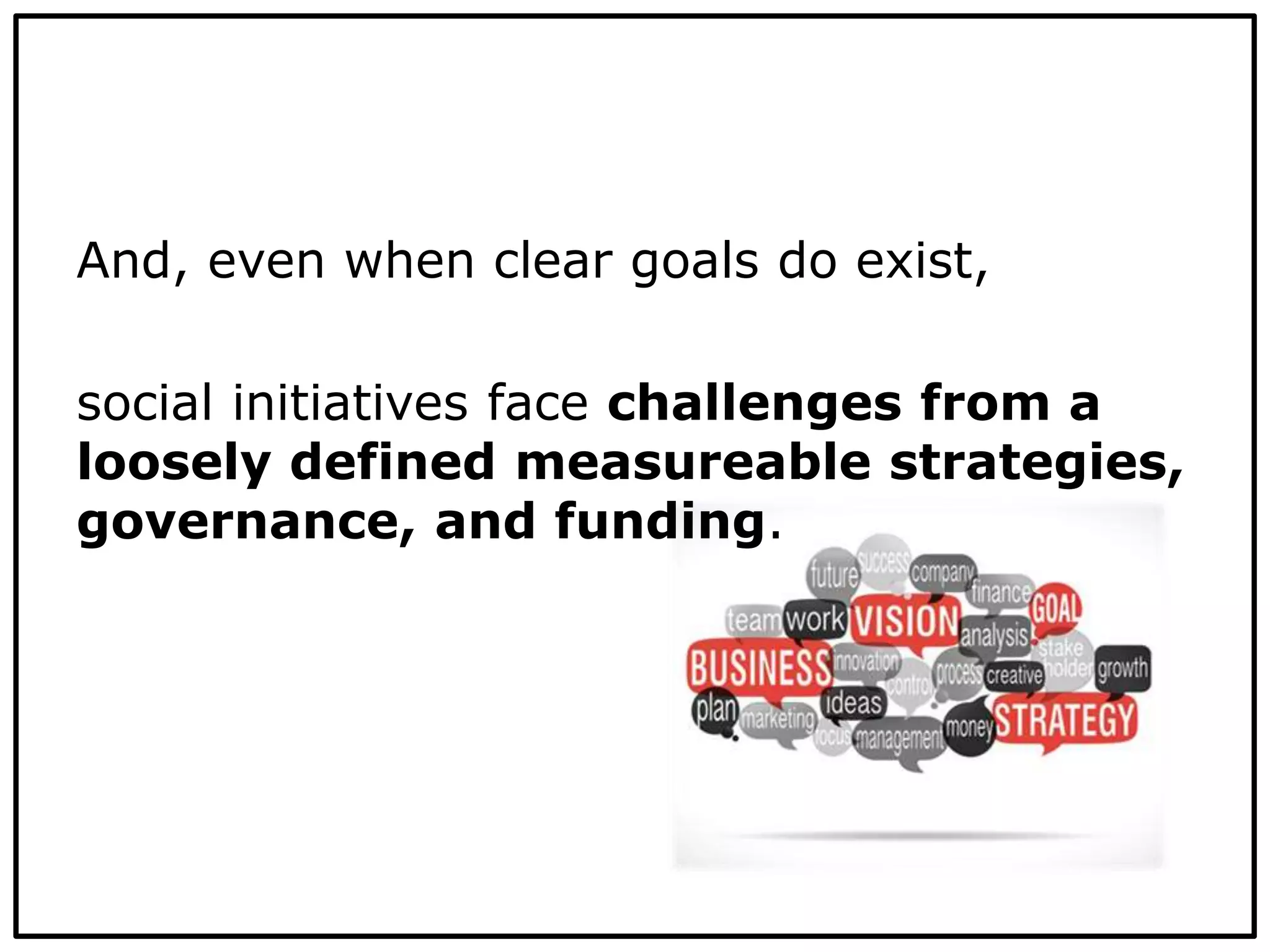
And, even when clear goals do exist,
social initiatives face challenges from a
loosely defined measureable strategies,
governance, and funding.
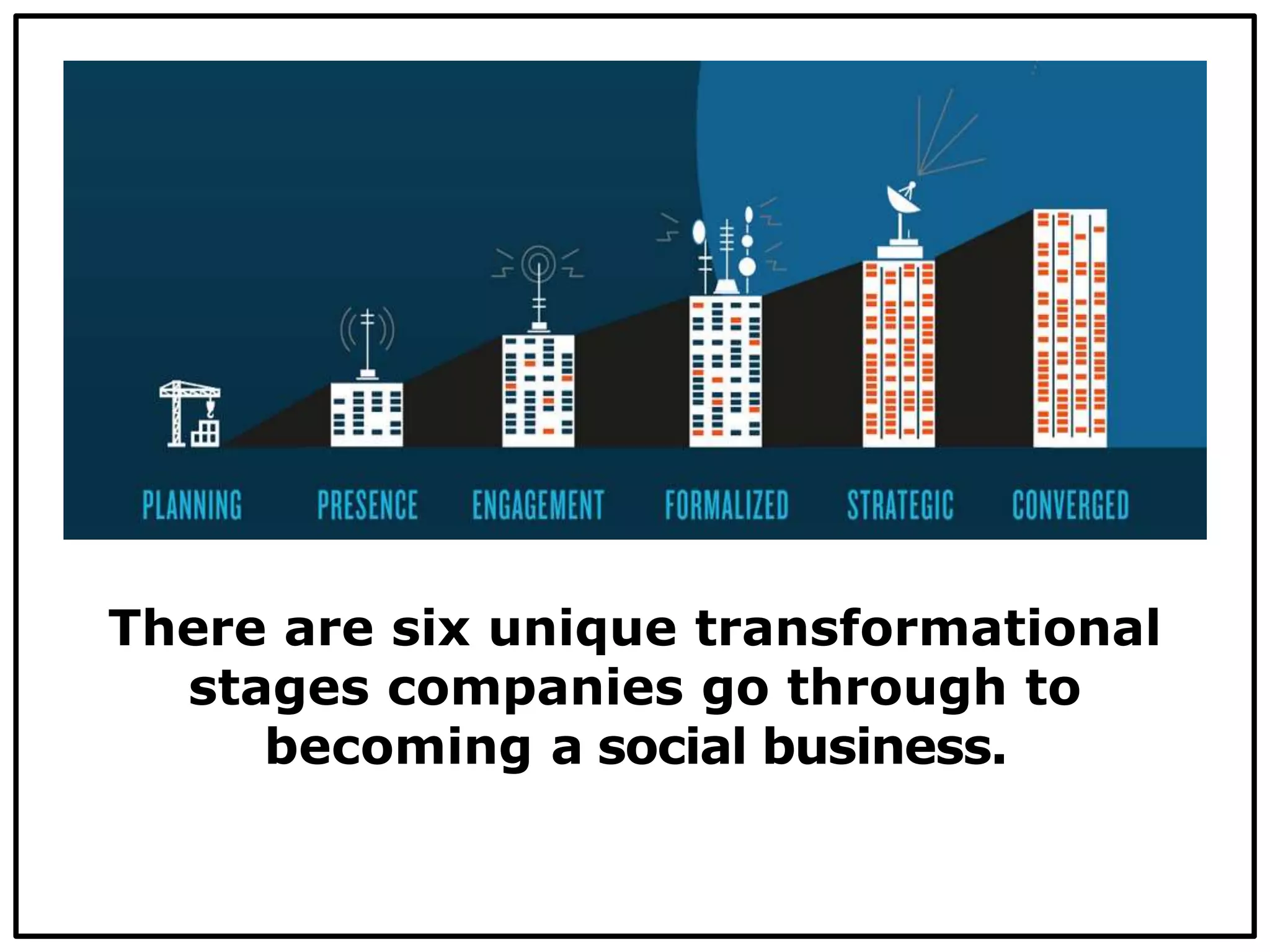
There are six unique transformational
stages companies go through to
becoming a social business.
Learn how customers use
social channels and identify
which business goals can be
best met by social.
P l a n n i n g
Test the waters to
understand what works,
amplify existing content and
stake claims on channels
with the goal for building
engagements through
content sharing.
P r e s e n c e
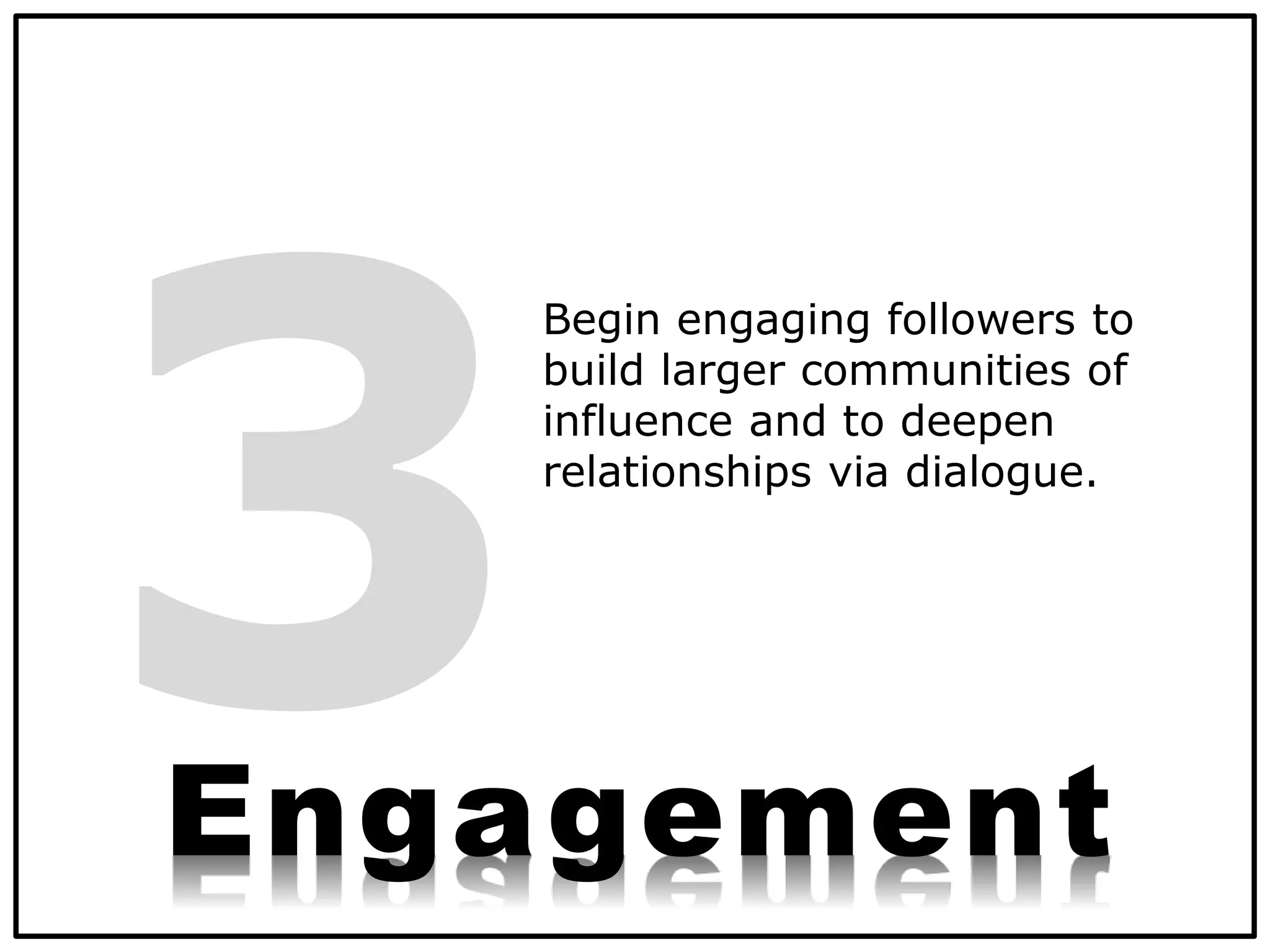
Begin engaging followers to
build larger communities of
influence and to deepen
relationships via dialogue.
Engagement
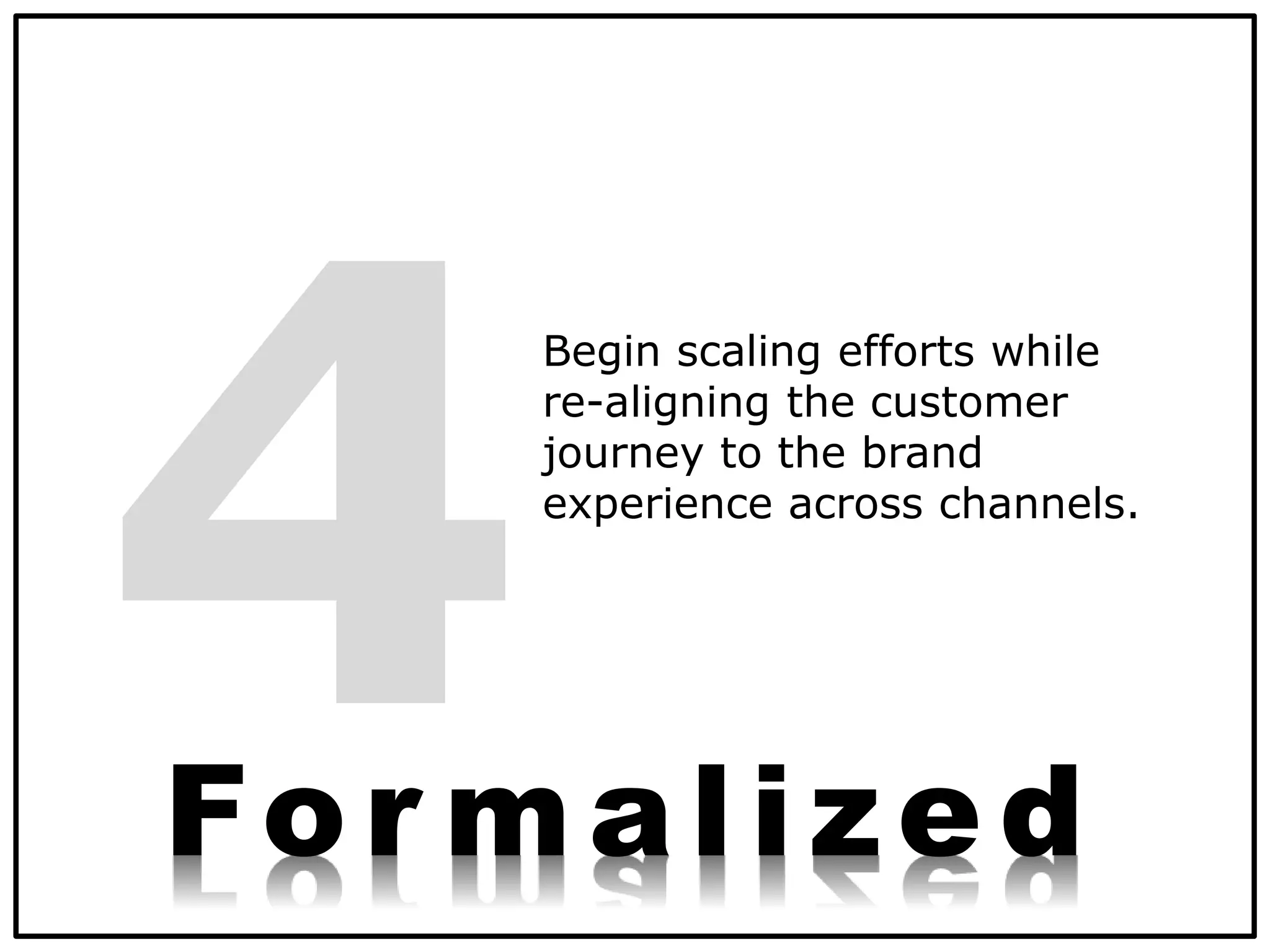
Begin scaling efforts while
re-aligning the customer
journey to the brand
experience across channels.
For malized
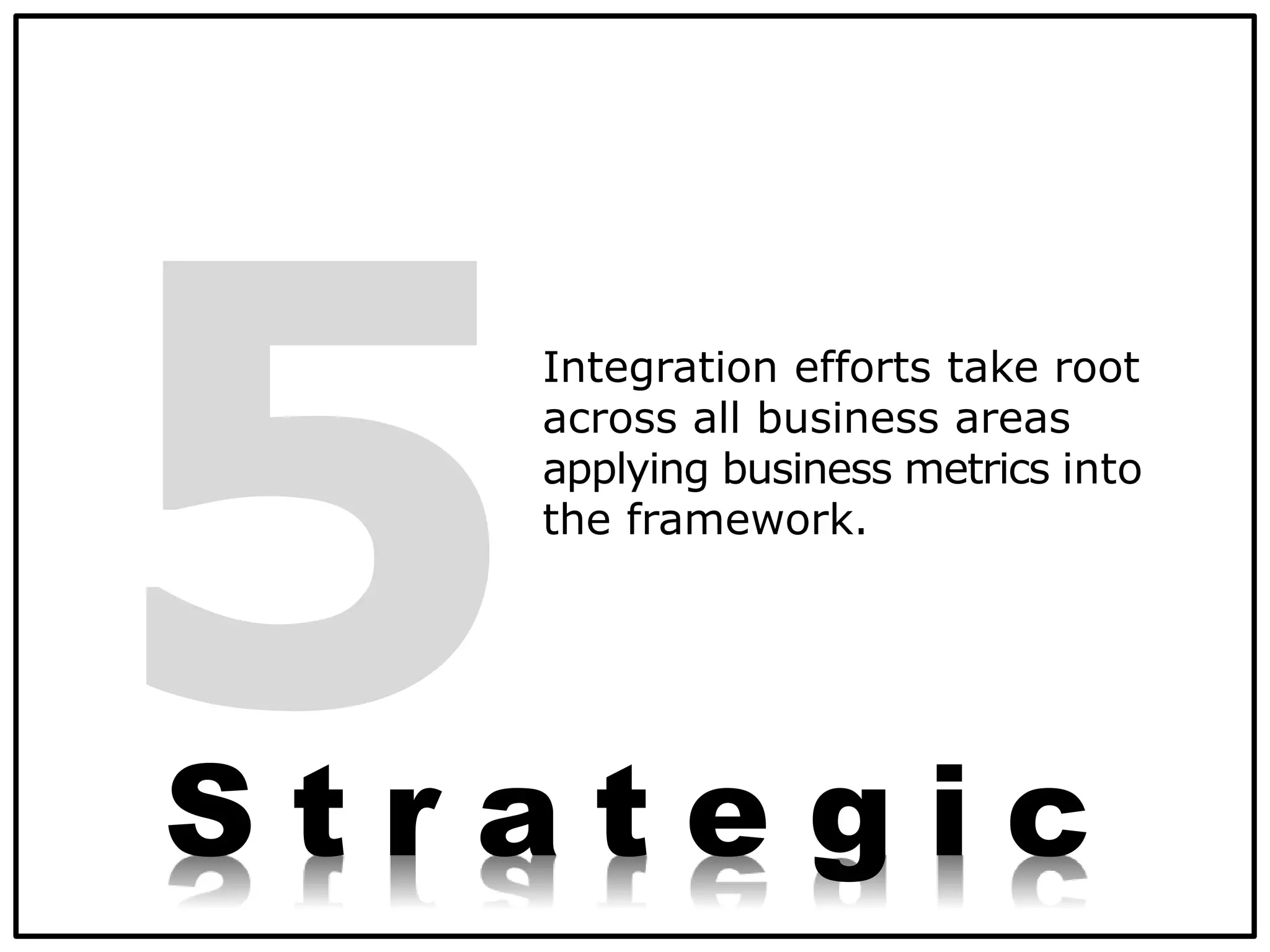
Integration efforts take root
across all business areas
applying business metrics into
the framework.
S t r a t e g i c
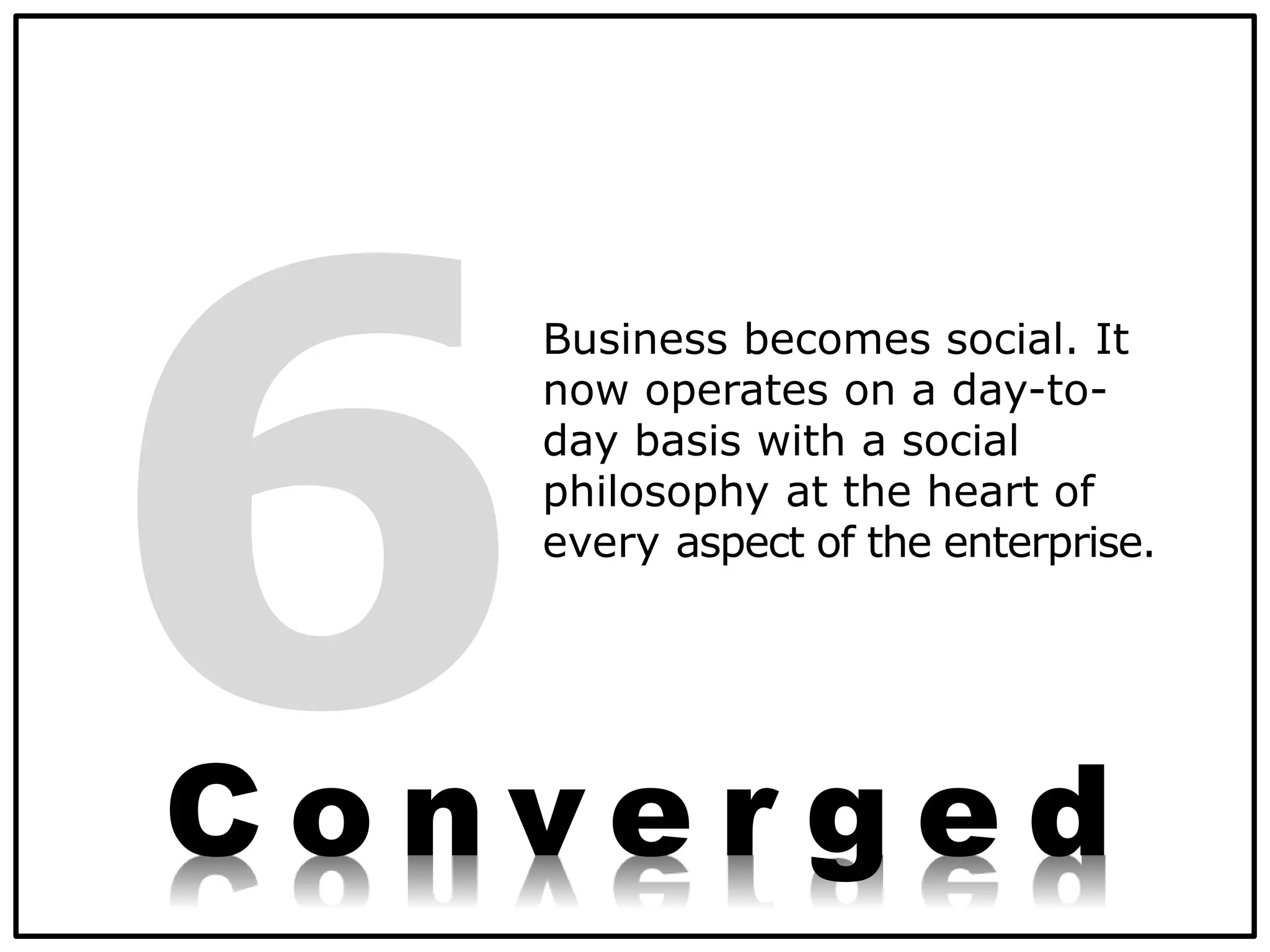
Business becomes social. It
now operates on a day-to-
day basis with a social
philosophy at the heart of
every aspect of the enterprise.
C o n v e r g e d
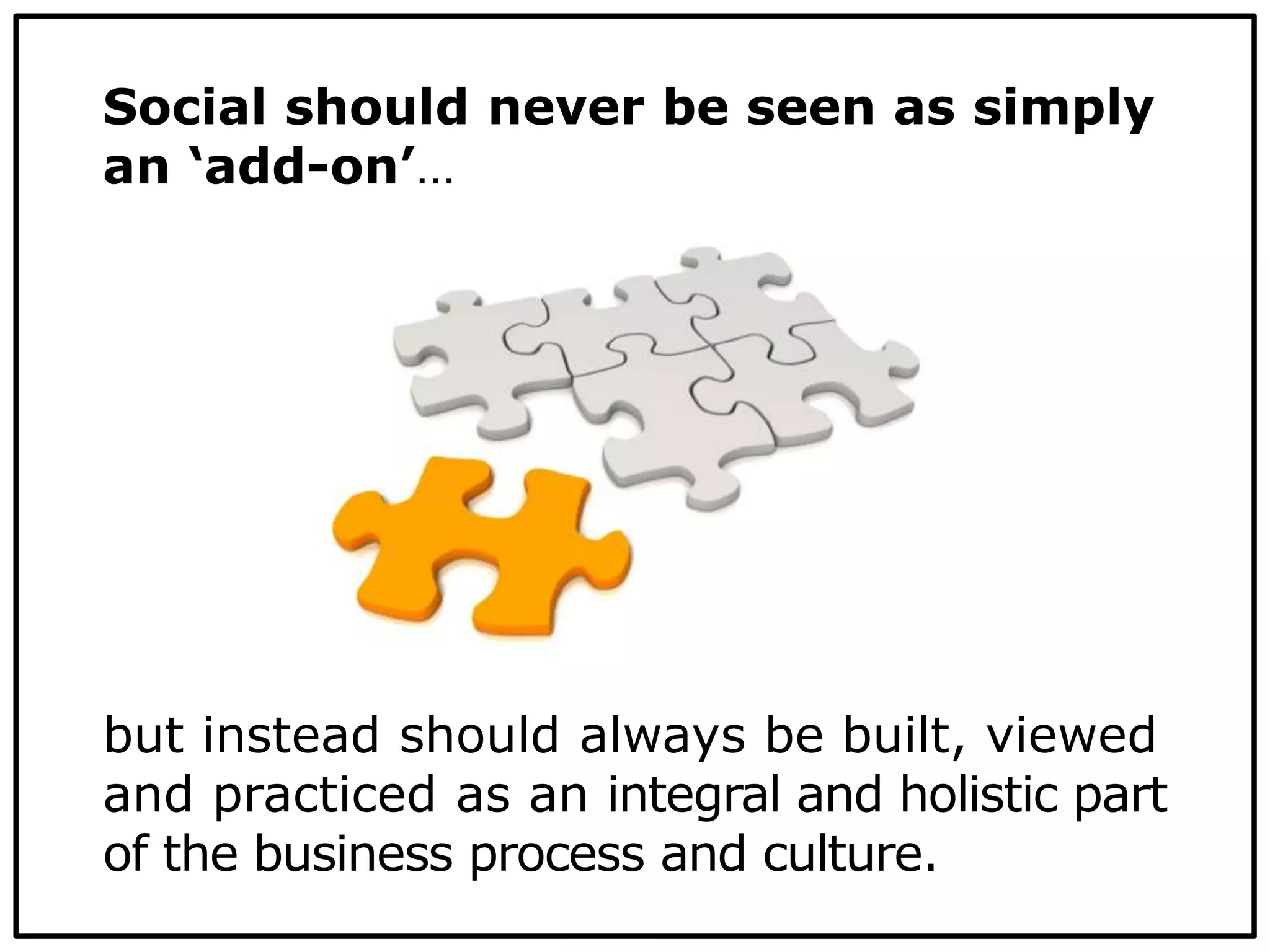
Social should never be seen as simply
an ‘add-on’…
but instead should always be built, viewed
and practiced as an integral and holistic part
of the business process and culture.
Simply participating in Social Media
does not create a social business.
So how do you get from where you are
today to where you want to go in the
future?
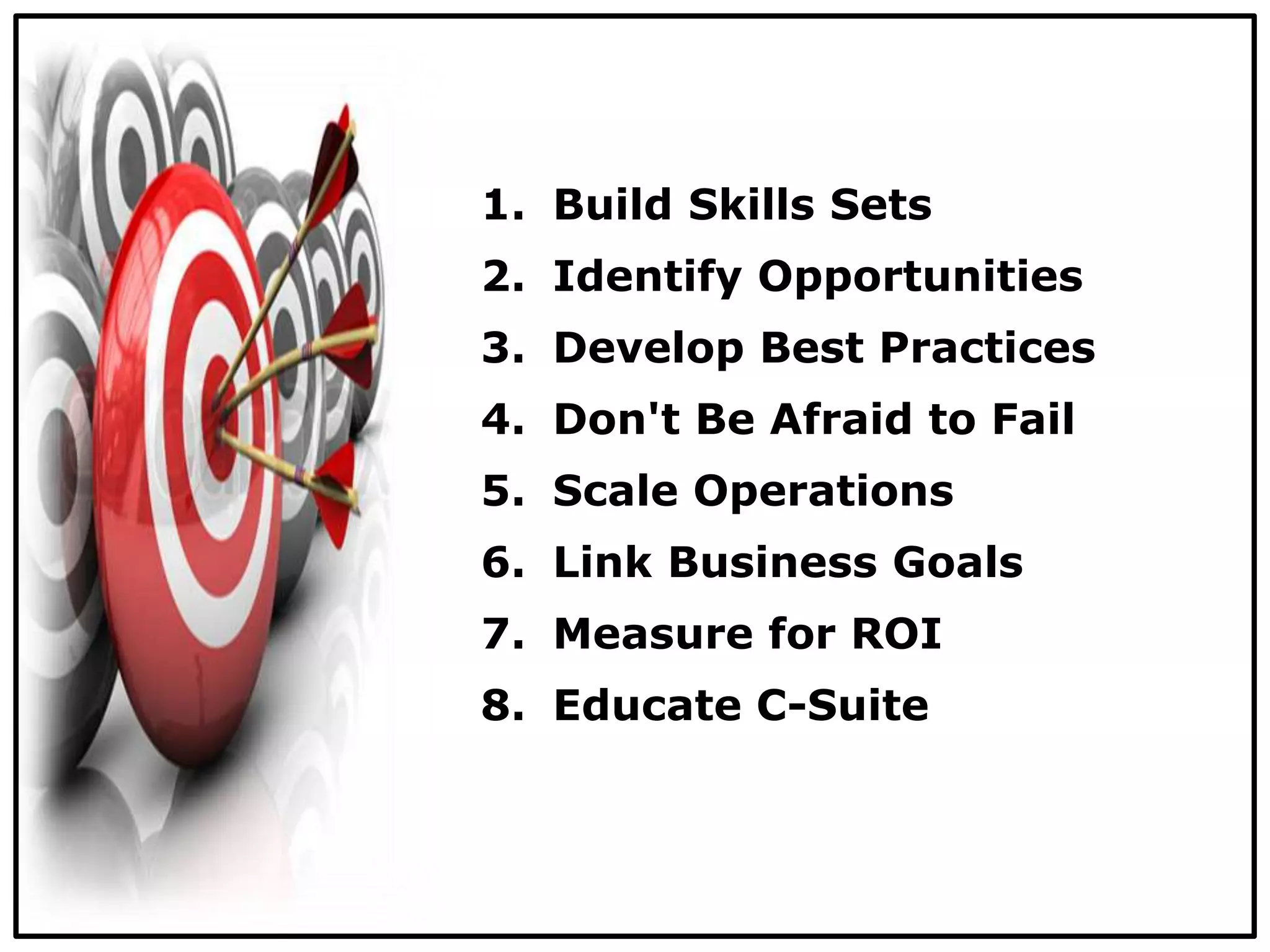
1. Build Skills Sets
2. Identify Opportunities
3. Develop Best Practices
4. Don't Be Afraid to Fail
5. Scale Operations
6. Link Business Goals
7. Measure for ROI
8. Educate C-Suite
So Let's Take a Look At What Lies
Ahead.
2013 proved to be a year marked by
many transformative changes.
What does that mean for the year
ahead – and beyond?
Shifts Underway
Notable
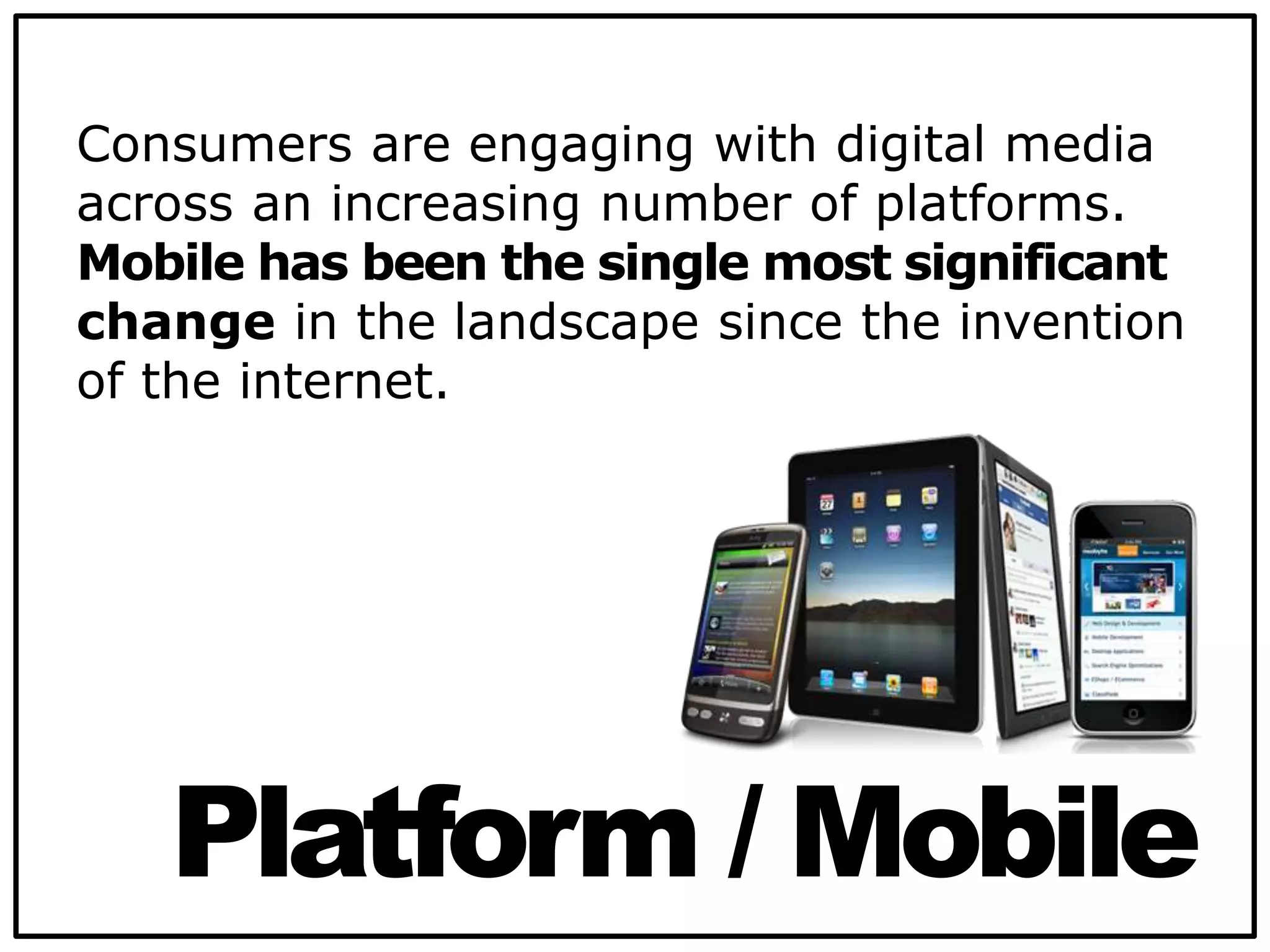
Consumers are engaging with digital media
across an increasing number of platforms.
Mobile has been the single most significant
change in the landscape since the invention
of the internet.
Platform / Mobile
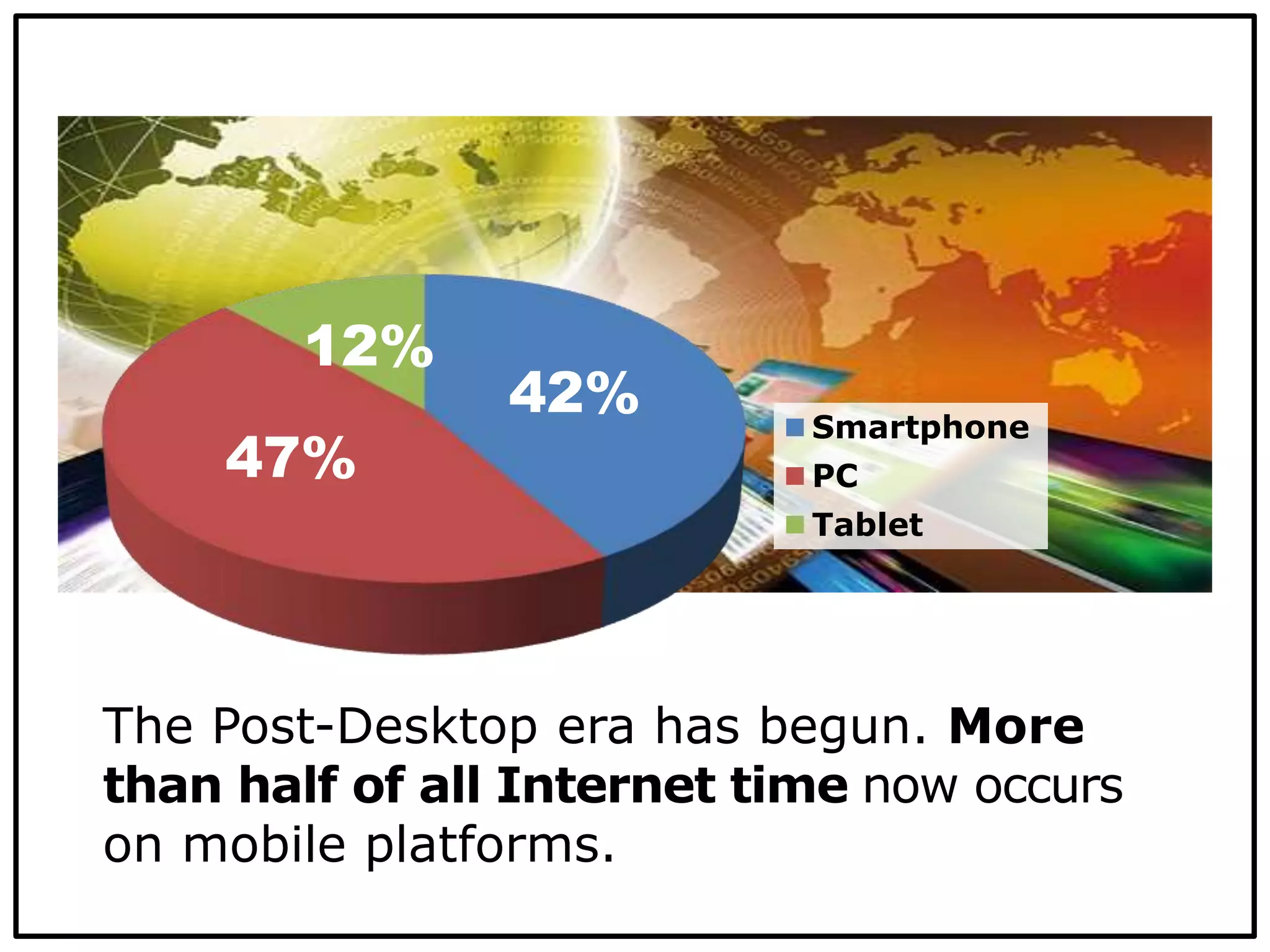
The Post-Desktop era has begun. More
than half of all Internet time now occurs
on mobile platforms.
42%
47%
12%
Smartphone
PC
Tablet
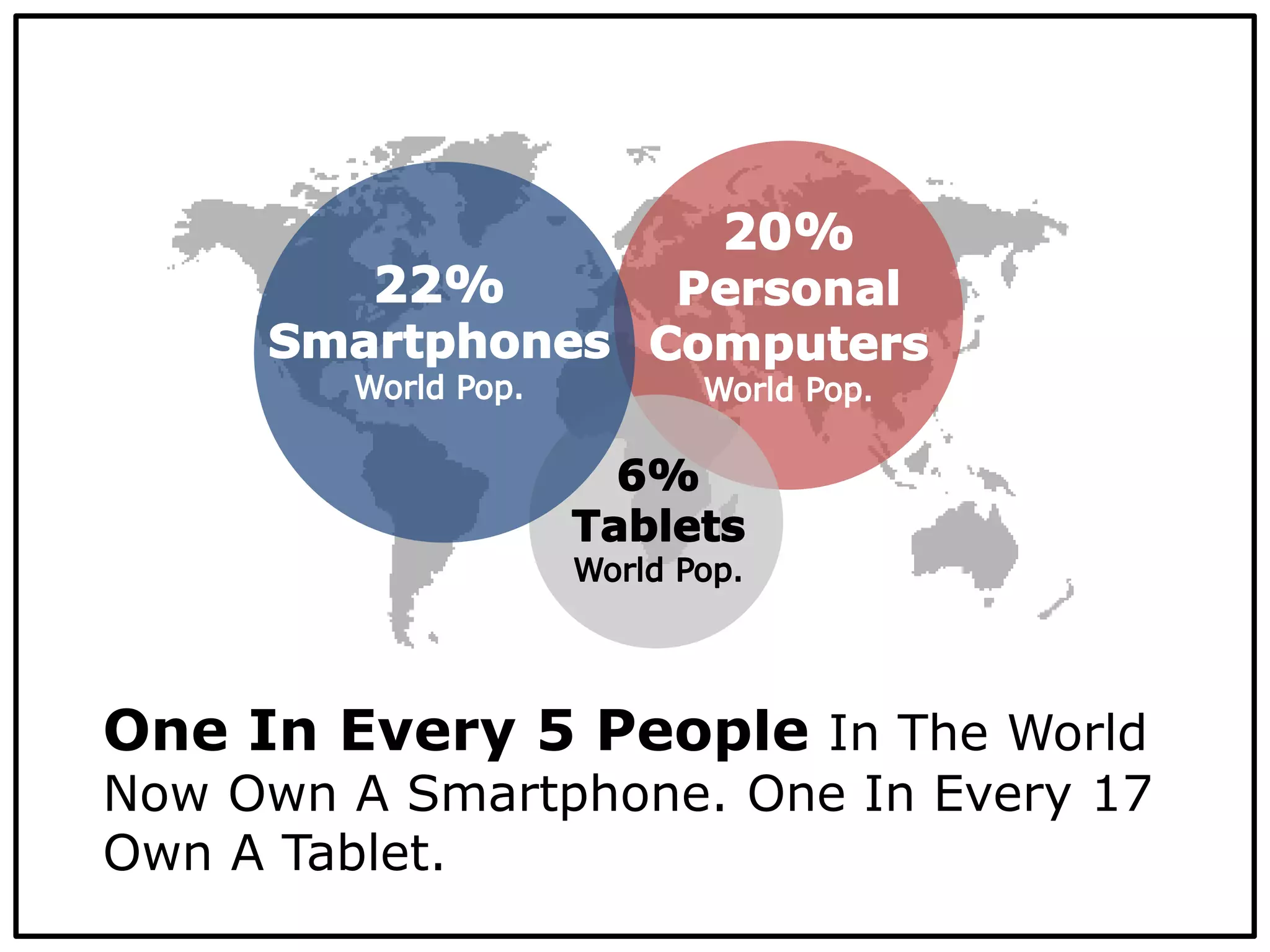
One In Every 5 People In The World
Now Own A Smartphone. One In Every 17
Own A Tablet.
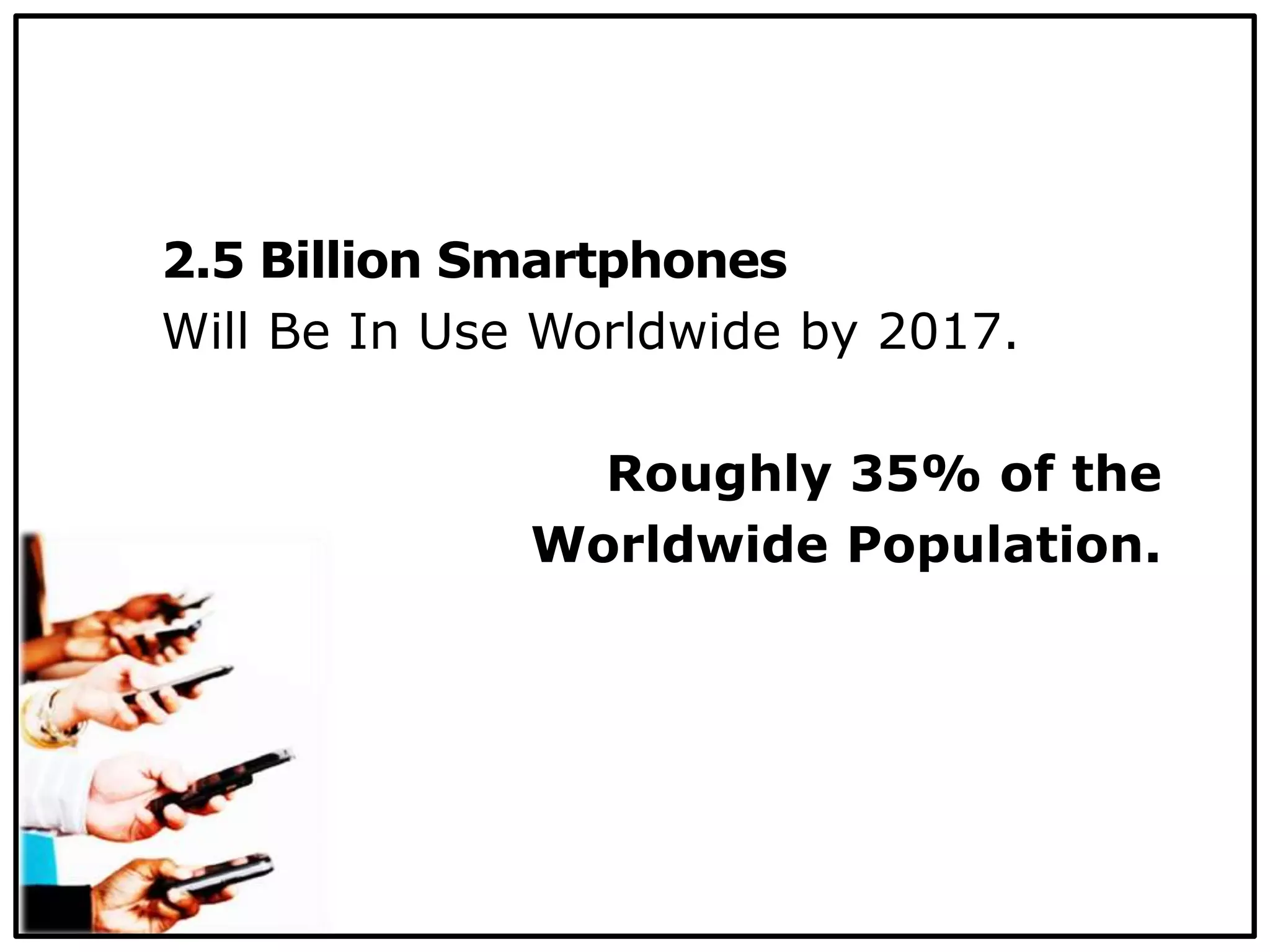
2.5 Billion Smartphones
Will Be In Use Worldwide by 2017.
Roughly 35% of the
Worldwide Population.
As a Result, Smartphone technology
and tablets are drastically altering the
dynamics of consumer behavior.
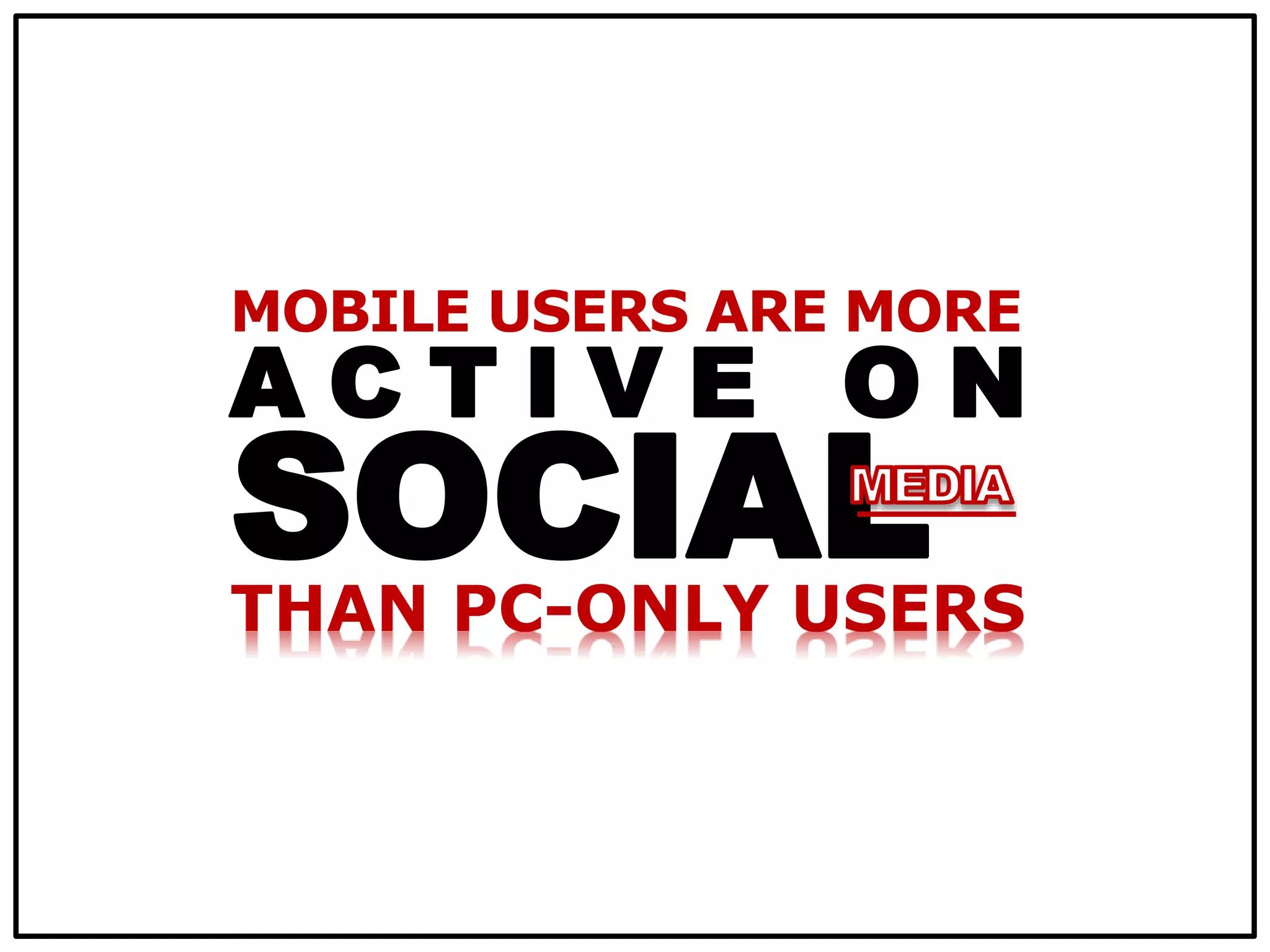
MOBILE USERS ARE MORE
A C T I V E O N
SOCIALTHAN PC-ONLY USERS
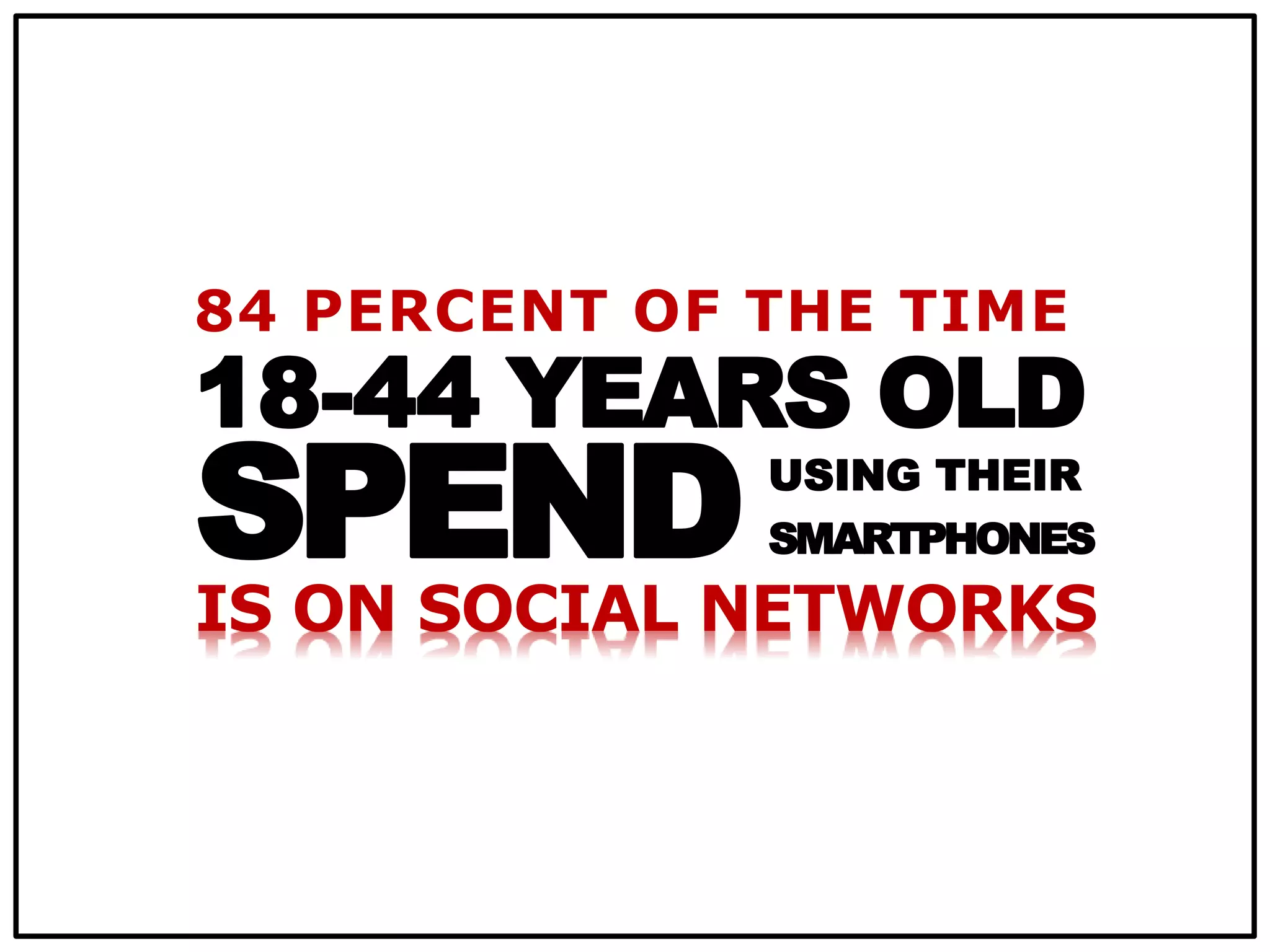
84 PERCENT OF THE TIME
18-44 YEARS OLD
SPENDIS ON SOCIAL NETWORKS
USING THEIR
SMARTPHONES
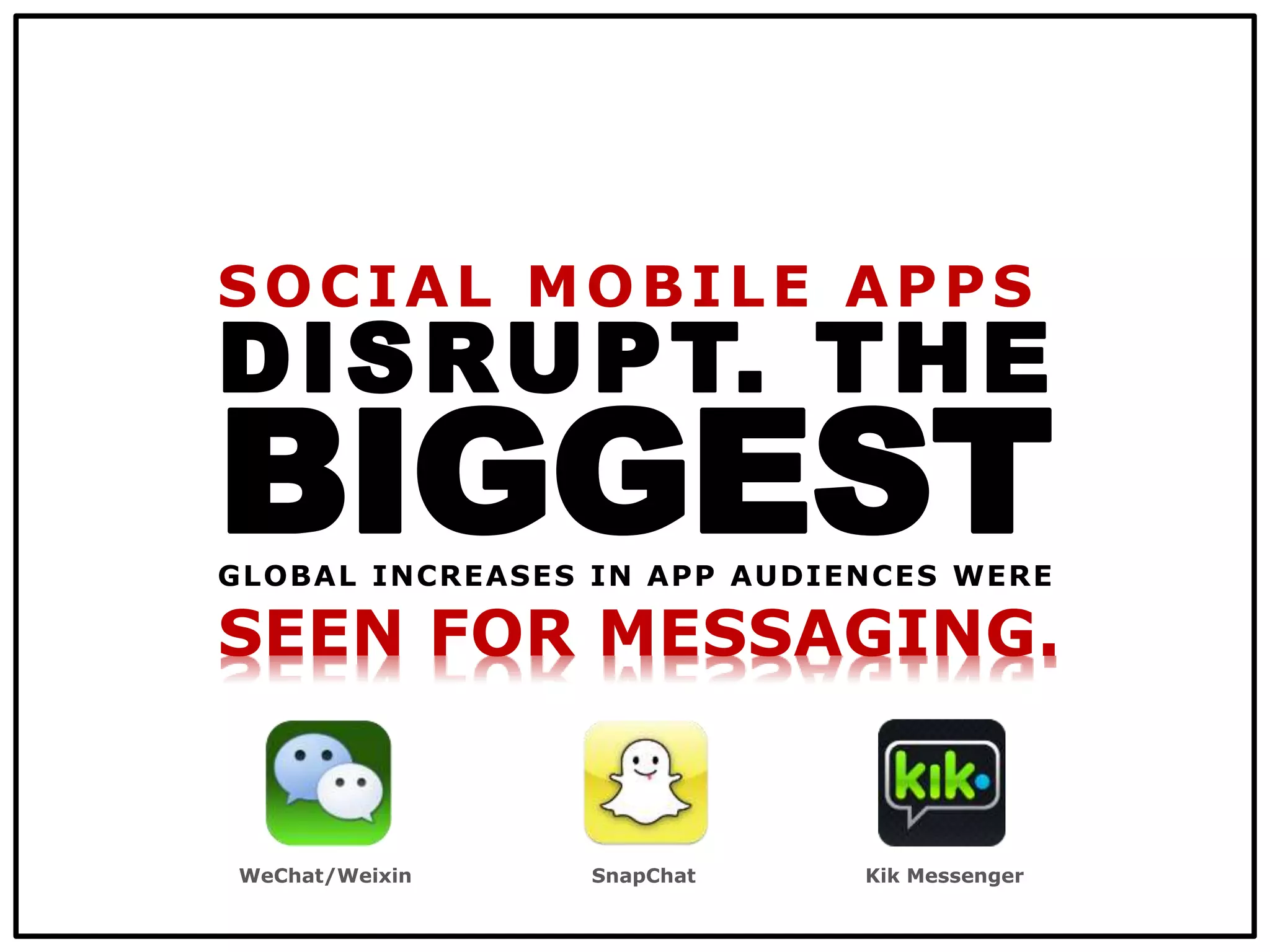
SOCIAL MOBILE APPS
DISRUPT. THE
BIGGESTGLOBAL INCREASES IN APP AUDIENCES WERE
SEEN FOR MESSAGING.
WeChat/Weixin Kik MessengerSnapChat
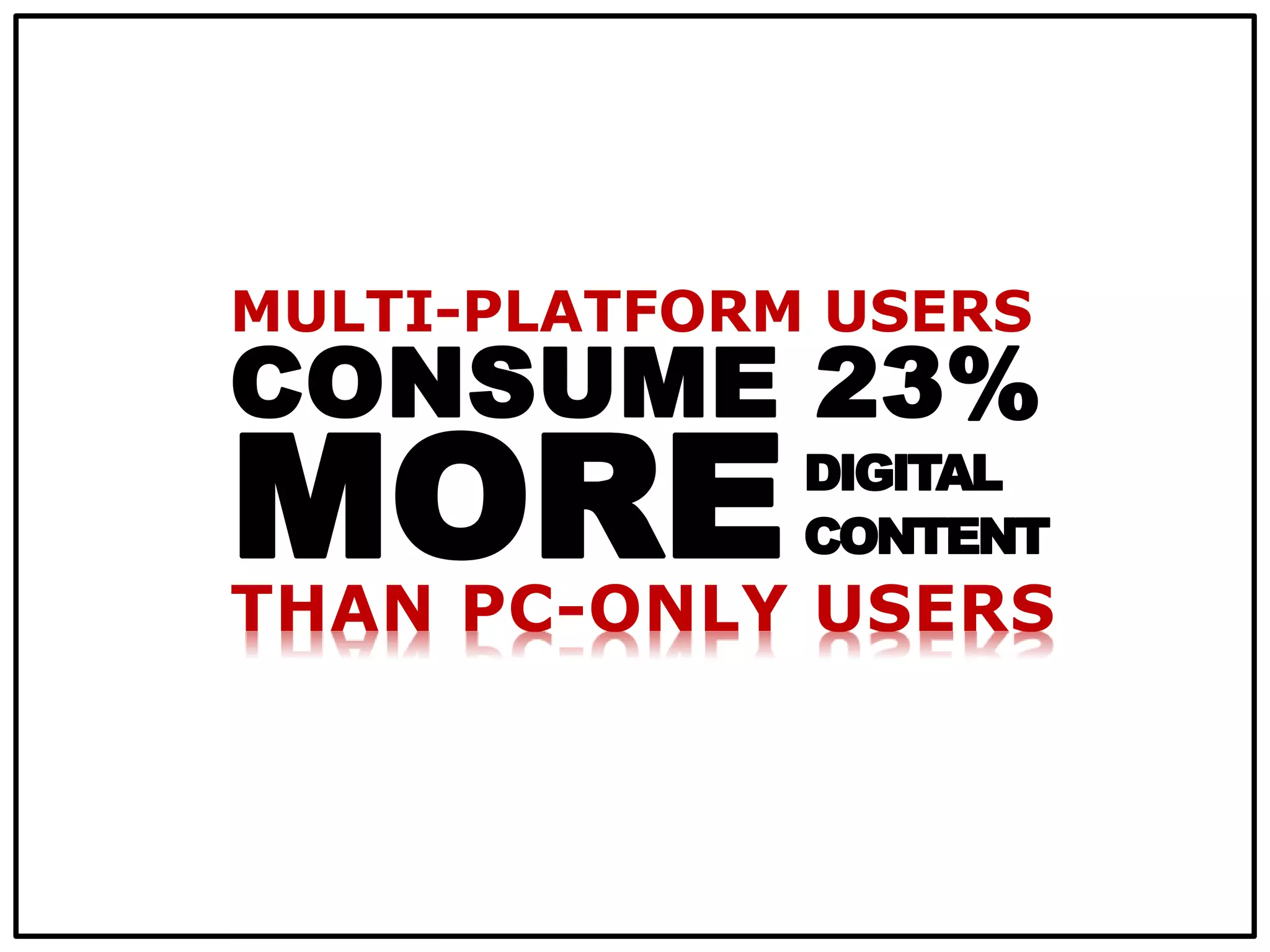
MULTI-PLATFORM USERS
CONSUME 23%
MORETHAN PC-ONLY USERS
DIGITAL
CONTENT
But, it should be recognized that it is
not a zero-sum game:
More Devices Is Resulting in More Time
Spent on All Devices and exponentially
more content consumed.
People are rapidly changing the way
they consume content as they shift from
traditional media to digital media, requiring
companies to rethink content marketing, the
content experience and which formats.
Content Marketing
Only 32% of B2C marketers consider
themselves effective at content marketing.
61% of consumers say they feel better
about, and are more likely to buy from, a
company that delivers custom content.
Interesting content is now a top 3 reason
people follow brands on social media.
Content marketing is moving beyond
experimentation, to full integration and
executions.
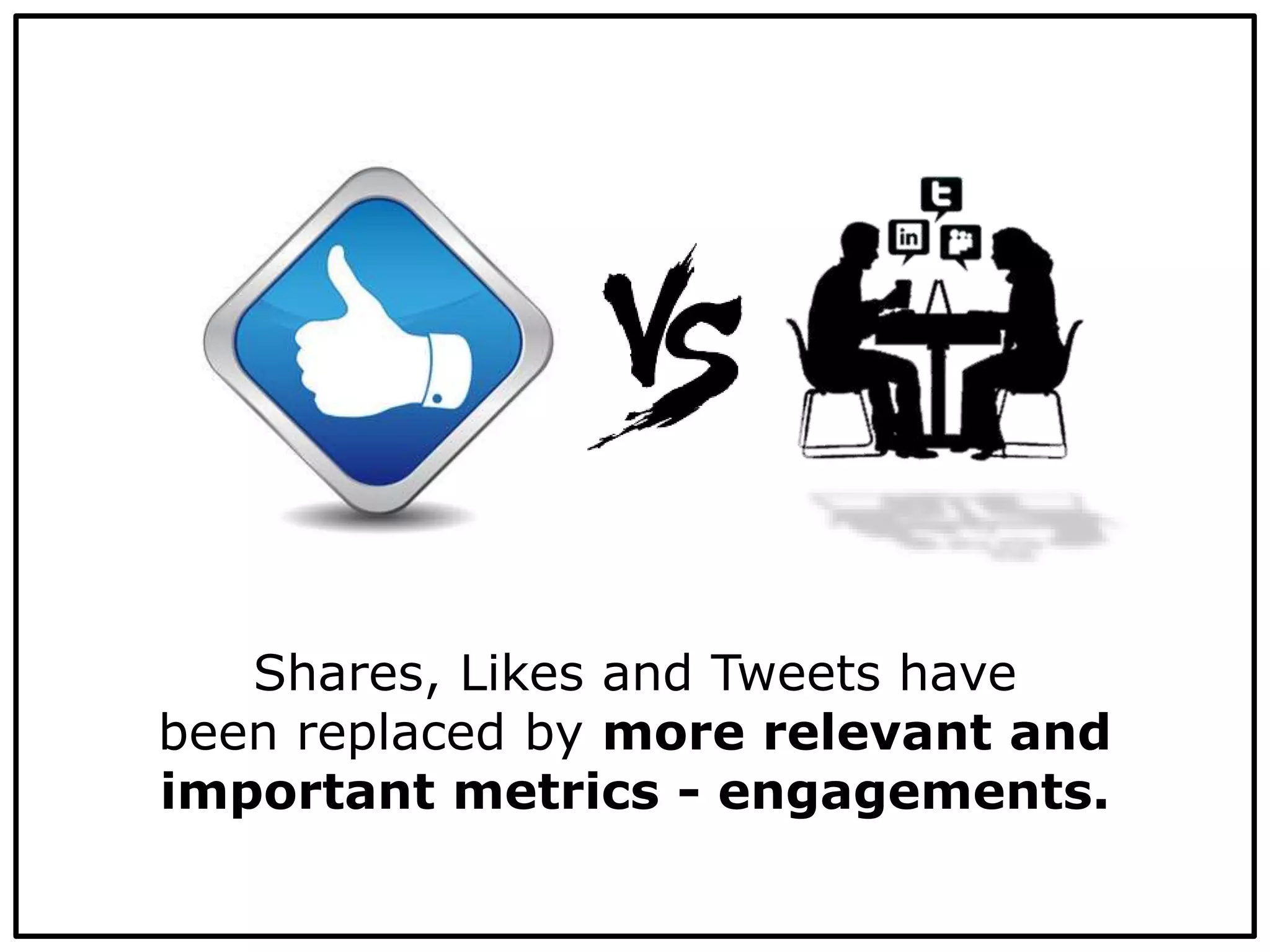
Shares, Likes and Tweets have
been replaced by more relevant and
important metrics - engagements.
Impacting a trend to focus on fewer
channels with higher engaging content.
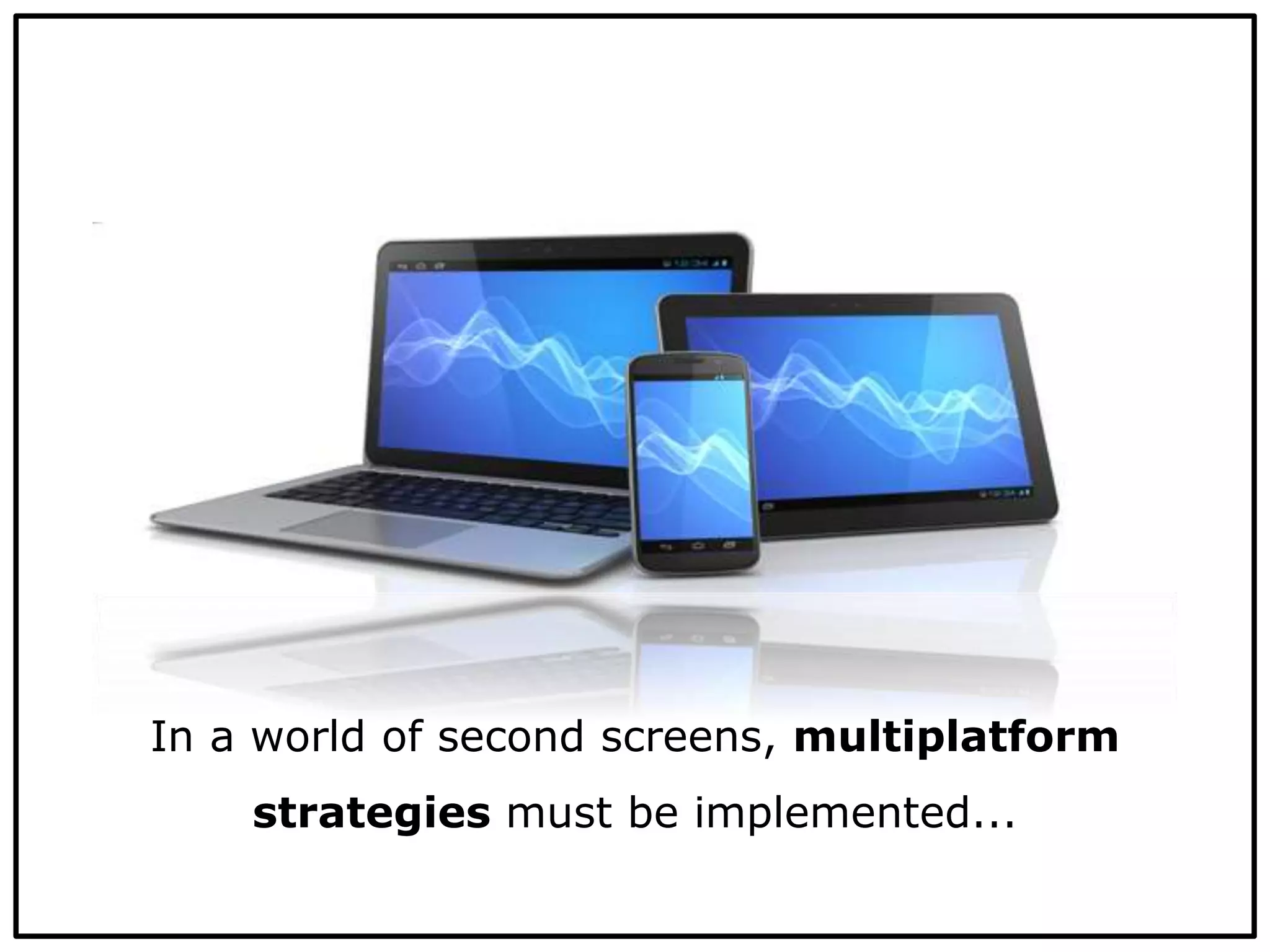
In a world of second screens, multiplatform
strategies must be implemented...
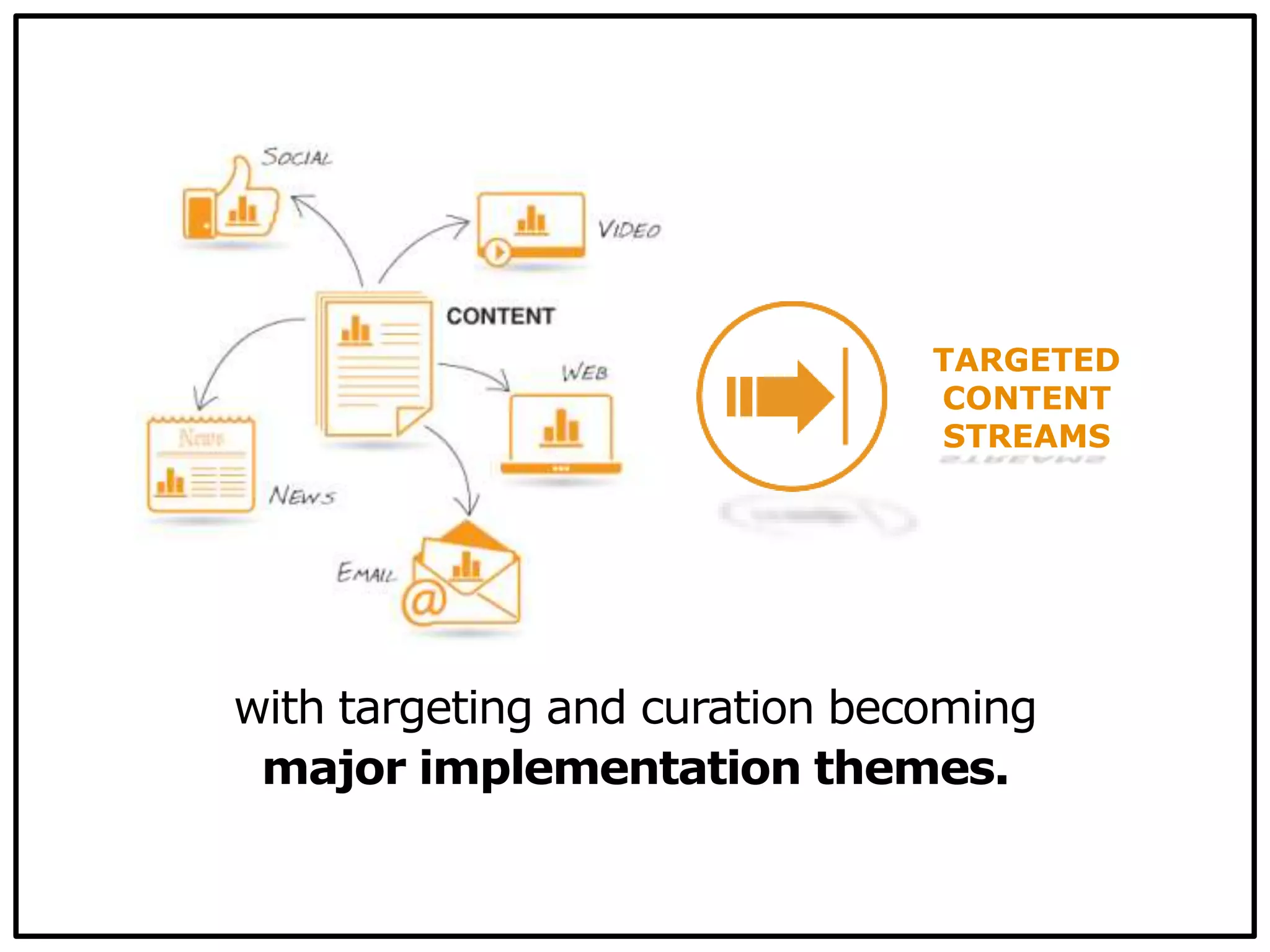
with targeting and curation becoming
major implementation themes.
TARGETED
CONTENT
STREAMS
78% of CMOs now think custom content
is the future of marketing.
and how it is discovered and consumed.
So what does trending shifts in platforms and content
have to do with employer branding?
Today the Employer Brand
is Defined by Content…
take control for how they want to be defined
and perceived as an employer.
Employer Branding
In today’s world where we all have access to real-time information
organizations must…
An employer brand refers to the perceptions key
stakeholders, and more specifically perceptions of current
and potential employees, have of your organization.
Employer Brands are increasingly being
scrutinized by younger generations of
employees.
A strong employer brand demonstrates
why a company is a great place to work.
It must align to your overall
business values.
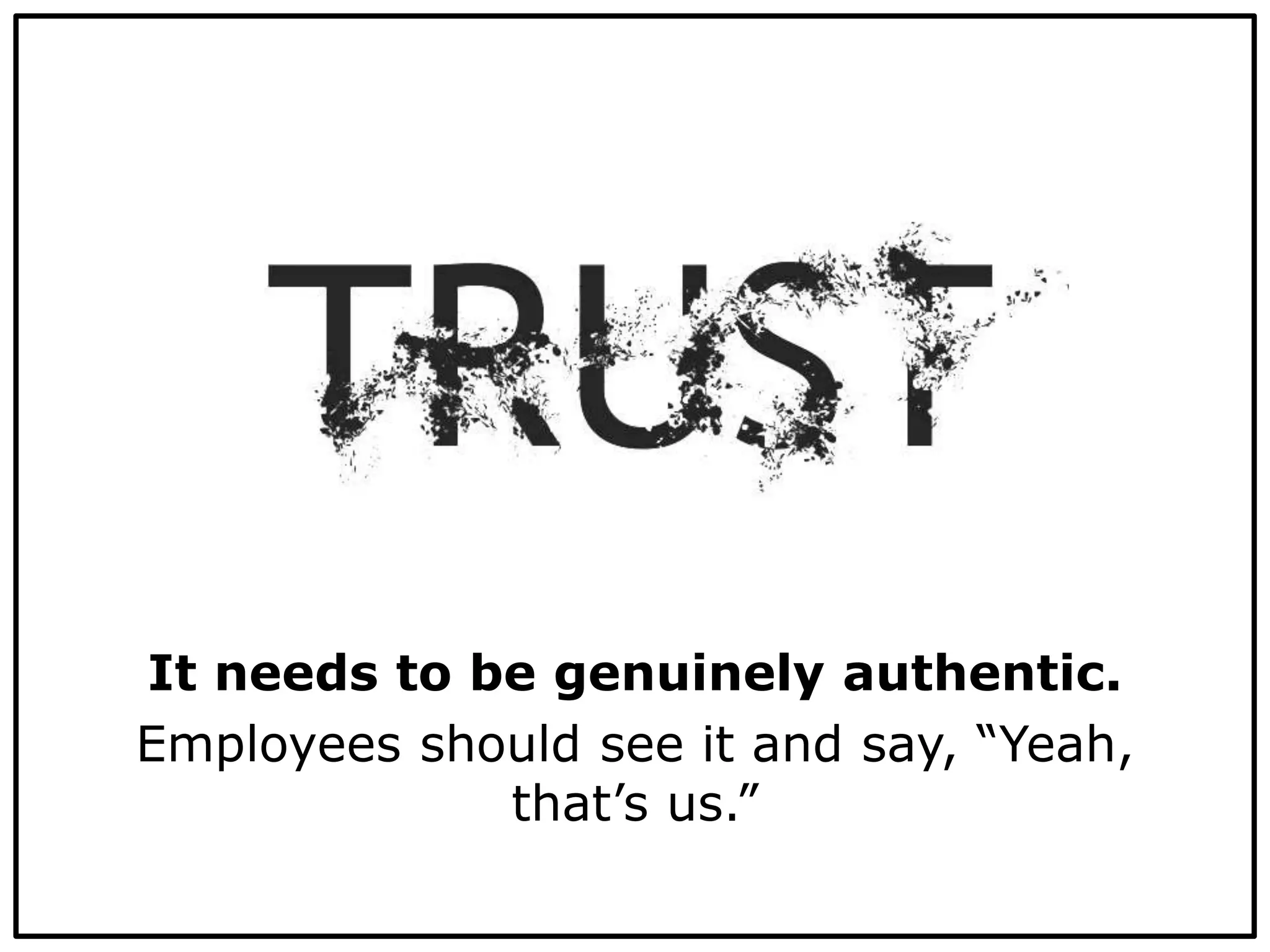
It needs to be genuinely authentic.
Employees should see it and say, “Yeah,
that’s us.”
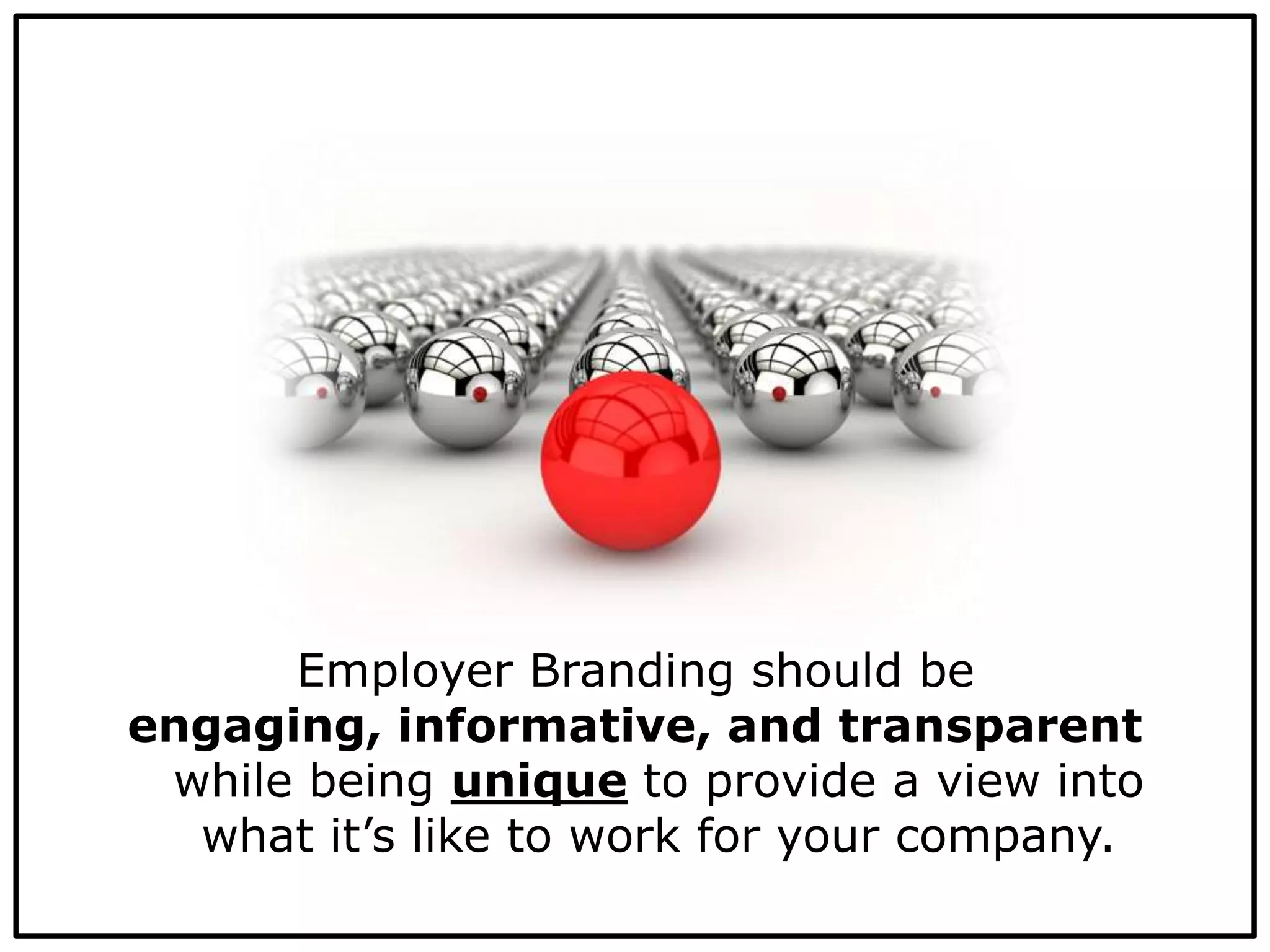
Employer Branding should be
engaging, informative, and transparent
while being unique to provide a view into
what it’s like to work for your company.
With a focus on the strategy first without
being distracted by the discussion of social
media, mobile and more.
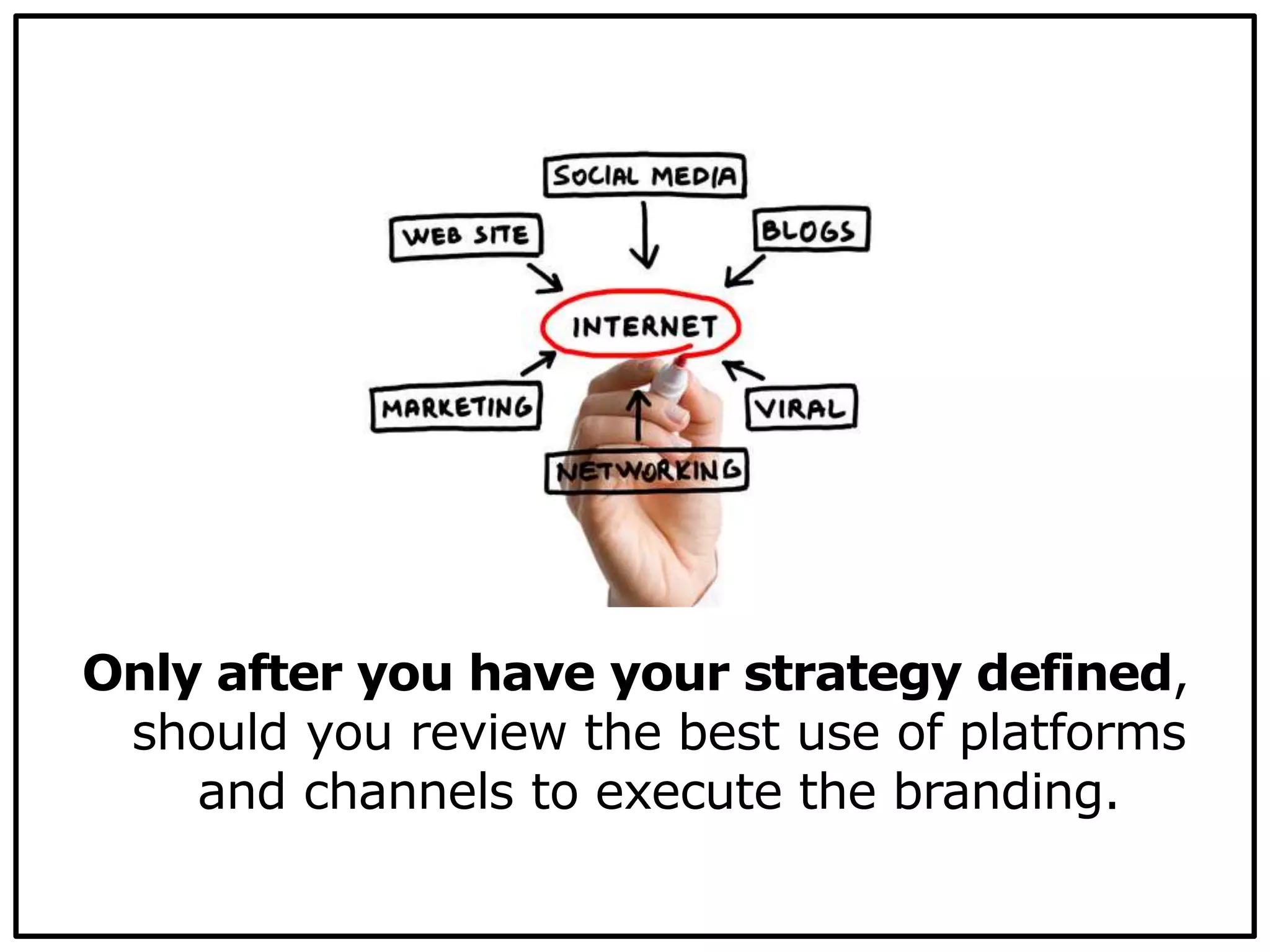
Only after you have your strategy defined,
should you review the best use of platforms
and channels to execute the branding.
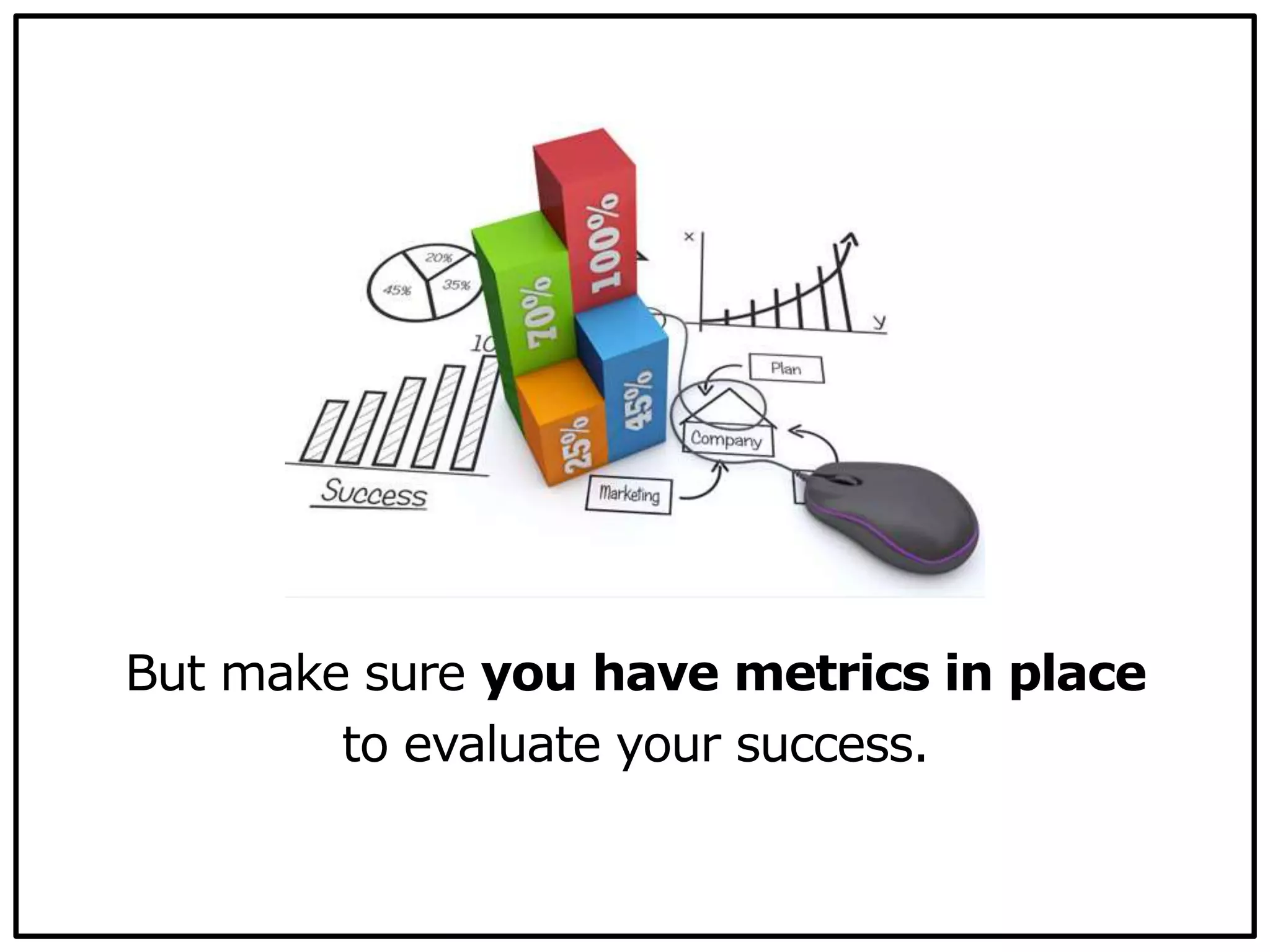
But make sure you have metrics in place
to evaluate your success.
Then once you have the puzzle pieces in
place...
Let Your Employer Brand Shine.
LinkedIn is an excellent place to start.

Geneva Switzerland LinkedIn Employer Branding Event Intro Presentation

  • 1.
    Social Media &Beyond 2014 Outlook Daniel McKean Digital Analyst Los Angeles, California Geneva Switzerland Presentation given as an introduction to a LinkedIn Employer Branding event in Geneva Switzerland on May 24, 2014.
  • 3.
    It touches useach and every day.
  • 4.
  • 5.
    Whether it's inour personal lives... Daily
  • 6.
    or... as abusiness professionals. DailyProfessional
  • 7.
  • 8.
    to more specializedor niche networks,
  • 9.
  • 10.
    Social Media… has changedthe way the world communicates.
  • 11.
    From interactions with friends,friends of friends and lost friends...
  • 12.
    to actively participatingin new social media trends.
  • 13.
    Social media knowsno age boundaries.
  • 14.
    Social Media is... athome, at work, when we are mobile.
  • 15.
    Social Media… as aprimary news source.
  • 16.
    Social Media… as apolitical change tool.
  • 17.
    Social Media… as aplatform for disaster and humanity relief.
  • 18.
    Social Media… as acatalyst in greater worldwide child literacy.
  • 19.
    Social Media… serving asa change agent in business.
  • 20.
    One in fourpeople worldwide are now active social media users.
  • 21.
  • 22.
    Facebook alone has1.2+ Billion users.
  • 23.
    If Facebook werea country, it would rank #3 behind China and India.
  • 24.
    2014 2015 20162017 2.0 Billion 2.2 Billion 2.4 Billion 2.6 Billion Worldwide active users will continue to grow.
  • 25.
    So What's YourGame Plan?
  • 26.
  • 27.
  • 28.
    Do you havea clear direction?
  • 29.
    Social Media Matures,Yet Many Companies Still Lack a Strategic Foundation THE STATE OF SOCIAL BUSINESS
  • 30.
  • 31.
    Those who arebuilding a social business.
  • 32.
  • 33.
    HOW SOCIAL DOYOU WANT TO BE?
  • 34.
    Differences do existfor companies implementing a social media strategy... and those that are building a social business.
  • 35.
    Studies have shownacross business, social media is still largely being operated in a vacuum, focused on bottom-up functional roles rather than guided by a top- down business vision.
  • 36.
    The crux ofthe problem... many so-called social strategies are not innately linked to business goals.
  • 37.
    And, even whenclear goals do exist, social initiatives face challenges from a loosely defined measureable strategies, governance, and funding.
  • 38.
    There are sixunique transformational stages companies go through to becoming a social business.
  • 39.
    Learn how customersuse social channels and identify which business goals can be best met by social. P l a n n i n g
  • 40.
    Test the watersto understand what works, amplify existing content and stake claims on channels with the goal for building engagements through content sharing. P r e s e n c e
  • 41.
    Begin engaging followersto build larger communities of influence and to deepen relationships via dialogue. Engagement
  • 42.
    Begin scaling effortswhile re-aligning the customer journey to the brand experience across channels. For malized
  • 43.
    Integration efforts takeroot across all business areas applying business metrics into the framework. S t r a t e g i c
  • 44.
    Business becomes social.It now operates on a day-to- day basis with a social philosophy at the heart of every aspect of the enterprise. C o n v e r g e d
  • 45.
    Social should neverbe seen as simply an ‘add-on’… but instead should always be built, viewed and practiced as an integral and holistic part of the business process and culture.
  • 46.
    Simply participating inSocial Media does not create a social business.
  • 47.
    So how doyou get from where you are today to where you want to go in the future?
  • 48.
    1. Build SkillsSets 2. Identify Opportunities 3. Develop Best Practices 4. Don't Be Afraid to Fail 5. Scale Operations 6. Link Business Goals 7. Measure for ROI 8. Educate C-Suite
  • 49.
    So Let's Takea Look At What Lies Ahead.
  • 50.
    2013 proved tobe a year marked by many transformative changes. What does that mean for the year ahead – and beyond?
  • 51.
  • 52.
    Consumers are engagingwith digital media across an increasing number of platforms. Mobile has been the single most significant change in the landscape since the invention of the internet. Platform / Mobile
  • 53.
    The Post-Desktop erahas begun. More than half of all Internet time now occurs on mobile platforms. 42% 47% 12% Smartphone PC Tablet
  • 54.
    One In Every5 People In The World Now Own A Smartphone. One In Every 17 Own A Tablet.
  • 55.
    2.5 Billion Smartphones WillBe In Use Worldwide by 2017. Roughly 35% of the Worldwide Population.
  • 56.
    As a Result,Smartphone technology and tablets are drastically altering the dynamics of consumer behavior.
  • 57.
    MOBILE USERS AREMORE A C T I V E O N SOCIALTHAN PC-ONLY USERS
  • 58.
    84 PERCENT OFTHE TIME 18-44 YEARS OLD SPENDIS ON SOCIAL NETWORKS USING THEIR SMARTPHONES
  • 59.
    SOCIAL MOBILE APPS DISRUPT.THE BIGGESTGLOBAL INCREASES IN APP AUDIENCES WERE SEEN FOR MESSAGING. WeChat/Weixin Kik MessengerSnapChat
  • 60.
    MULTI-PLATFORM USERS CONSUME 23% MORETHANPC-ONLY USERS DIGITAL CONTENT
  • 61.
    But, it shouldbe recognized that it is not a zero-sum game: More Devices Is Resulting in More Time Spent on All Devices and exponentially more content consumed.
  • 62.
    People are rapidlychanging the way they consume content as they shift from traditional media to digital media, requiring companies to rethink content marketing, the content experience and which formats. Content Marketing
  • 63.
    Only 32% ofB2C marketers consider themselves effective at content marketing.
  • 64.
    61% of consumerssay they feel better about, and are more likely to buy from, a company that delivers custom content.
  • 65.
    Interesting content isnow a top 3 reason people follow brands on social media.
  • 66.
    Content marketing ismoving beyond experimentation, to full integration and executions.
  • 67.
    Shares, Likes andTweets have been replaced by more relevant and important metrics - engagements.
  • 68.
    Impacting a trendto focus on fewer channels with higher engaging content.
  • 69.
    In a worldof second screens, multiplatform strategies must be implemented...
  • 70.
    with targeting andcuration becoming major implementation themes. TARGETED CONTENT STREAMS
  • 71.
    78% of CMOsnow think custom content is the future of marketing.
  • 72.
    and how itis discovered and consumed. So what does trending shifts in platforms and content have to do with employer branding? Today the Employer Brand is Defined by Content…
  • 73.
    take control forhow they want to be defined and perceived as an employer. Employer Branding In today’s world where we all have access to real-time information organizations must…
  • 74.
    An employer brandrefers to the perceptions key stakeholders, and more specifically perceptions of current and potential employees, have of your organization.
  • 75.
    Employer Brands areincreasingly being scrutinized by younger generations of employees.
  • 76.
    A strong employerbrand demonstrates why a company is a great place to work.
  • 77.
    It must alignto your overall business values.
  • 78.
    It needs tobe genuinely authentic. Employees should see it and say, “Yeah, that’s us.”
  • 79.
    Employer Branding shouldbe engaging, informative, and transparent while being unique to provide a view into what it’s like to work for your company.
  • 80.
    With a focuson the strategy first without being distracted by the discussion of social media, mobile and more.
  • 81.
    Only after youhave your strategy defined, should you review the best use of platforms and channels to execute the branding.
  • 82.
    But make sureyou have metrics in place to evaluate your success.
  • 83.
    Then once youhave the puzzle pieces in place... Let Your Employer Brand Shine.
  • 84.
    LinkedIn is anexcellent place to start.

Editor's Notes

  • #3 SOCIAL MEDIA. It's all around us Isn't it You Gotta love this image It's truly amazing what has transpired over the last 10 or so years
  • #4 Social media is now with us 365 days a year Each and every day.
  • #5 We can't escape it. In some way, shape or form We are connected 24 x 7 And No matter hard we may try We can't get away from it
  • #6 It's in our daily personal lives...
  • #7 And in our business lives.
  • #8 From Facebook, Twitter & YouTube
  • #9 to more specialized or niche networks,
  • #10 to certainly mobile and mobile apps
  • #11 Your presence here today says something about you You recognize the relevance of Social Media And how its changing the world and how it communicates.
  • #12 From interactions with friends, friends of friends and lost friends...
  • #13 to actively participating in new social media trends...
  • #14 Social media adoption has no age boundaries
  • #15 Bottom line - It's ever present and it's found increasingly in every fabric of life Young or old at home, at work, when we are mobile
  • #16 But social media also goes well beyond engaging with friends For many, social media has become a primary preferred news source.
  • #17 Social media has become a political tool Influencing greater political awareness and organization, And rewriting entire political landscapes. Arab Spring, US and Iran elections are just a few testaments.
  • #18 Social Media has become a platform for disaster and humanity relief. With Nearly one million people being affected worldwide by natural disasters each year.  Social media is now a go-to tool for those offering relief for those effected by disasters. Examples: Haiti, Japan, Indonesia, and in the US
  • #19 Social Media has even fostered greater child literacy Studies show Children who start using age appropriate social platforms develop early communication skills, and generally become more literate. Whether its writing blog posts, status updates, text messages, orinstant messages Better reading and writing skills are being developed
  • #20 And Social Media Has certainly impacted business. Impacting Your Relevance [and] Influence While shaping brand preferences and loyalties through customer journey experiences
  • #21 Consider today nearly one in four people worldwide are active social media users.
  • #22 Put another way That's 1.8 Billion Active Worldwide Users.
  • #23 Facebook alone has 1.2 Billion plus users
  • #24 And the ongoing joke... If Facebook were a country, it now would rank #3 in the world behind China and India.
  • #25 And although social media growth may be showing signs of slowing By 2017 Worldwide users will grow to nearly 2.6 Billion users. source: eMarketer
  • #26 So you need to ask yourself What's Your Game Plan? Do you have clear vision and purpose
  • #27 Are you evolving? Learning from past experiences Being responsive to both successes and failures
  • #28 Are you adapting? To fluctuations and swings in user platform adoption While keeping initiatives aligned to business values
  • #29 Do you know where you are heading Are you planning for the future?
  • #30 The Altimeter Group reports there are two levels of business adoption for social media.
  • #31 Those implementing a social media strategy.
  • #32 And Those who are building a social business.
  • #33 So Where do you fit?
  • #34 HOW SOCIAL DO YOU WANT TO BE?
  • #35 Differences do exist Social media strategies lay out channels, platforms, and tactics supporting content publishing, listening, and engagement. Conversely, social businesses use those strategies to integrate social technologies and best practices into measurable business values, processes, and practices.
  • #36 Yet for the vast majority of companies social media is still largely being operated in a vacuum, focused on bottom-up functional roles rather than guided by a top-down business vision
  • #37 The crux of the problem... is many so-called social strategies are simply not linked to business goals.
  • #38 And, even when clear goals do exist, many social initiatives still face challenges
  • #39 The Altimeter Group reports there six unique stages a company may go through to truly become a social business. Planning - Presence - Engagement - Formalized - Strategic - Converged
  • #40 In the Planning Phase, emphasis is on Learning how customers use social channels identifying which business goals can be best met. And conducting audits to assess the competitive and internal readiness
  • #41 In the Presence Phase, Companies test the waters to see what works, Use pilot projects to prioritize social efforts Provide digital proof points. Begin to amplify existing content and stake claims on channels All the while encouraging engagements through content sharing.
  • #42 In the Engagement phase Efforts are increased to Spark or participate in conversations Fans and followers grow And two-way dialogues are established
  • #43 At a watershed moment... And where many companies start to stall Company efforts begin to scale across departments and channels With a consistent 'customer journey' and branded experience Executive sponsors are recruited And a Center of Excellence is created to oversee organizational wide social strategies, governance, and technologies
  • #44 At the Strategic level, If you've been fortunate enough to reach this phase... Social media is now integrated across all areas of business and your applying traditional ROI business metrics into the social framework.
  • #45 Leading to the last and final Convergence Stage, where You have become truly a social business You now operate on a day-to-day basis with a social philosophy at the heart of every aspect of the enterprise. Social is no longer viewed as a separate and distinguishable It now part of a single business strategy process. As part of One set of business objectives to serve the health and well being of the organization
  • #46 The key takeaway... Social should never be seen as simply an ‘add-on’ but instead should be built, viewed and practiced as an integral and holistic part of the business process and culture.
  • #47 Simply participating in social media does not create a social business. There is a natural progression of steps And it doesn't happen quickly or overnight
  • #48 So if you're at a stage asking yourselves So how do we get from where we are today to where we want to go in the future?
  • #49 Map out your goals, objectives, aspirations Assess where you are with adoption and execution And continue to evolve realigning goals as needed as you go Never rest on status quo Always push forward And don't ever be afraid to fail periodically Mis-steps and Failures are valued learned experiences
  • #50 So let's take a look at what lies ahead
  • #51 2013 proved to be a year in marked by transformative changes. What does that mean for the year ahead – and beyond?
  • #52 Let's address Three key and relevant shifts that are underway.
  • #53 Mobile Mobile has and is trending as a major disruptive shift As digital platforms continue to emerge, media fragmentation will only accelerate, which is creating the defining marketing challenge of this era.
  • #54 We can officially declare The Post-Desktop era has begun. More than half of all Internet time now occurs on mobile platforms. Source: © Business Insider Dec 2013
  • #55 Based on world population One In Every 5 People In The World Now Own A Smartphone, One In Every 17 Own A Tablet Source: © Business Insider Dec 2013
  • #56 Forecasts Show 2.5 Billion Smartphones Will Be In Use Worldwide by 2017. Which will be Roughly 35% of the Worldwide Population. Source: © eMarketer
  • #57 If you don't think Smartphone and tablet technology is altering the dynamics of consumer behavior
  • #58 Please reconsider your position Studies have shown mobile users are now more active on social media sites than their desktop counterparts
  • #59 Within the 18-44 demo 84 percent of the time spent using smartphones is on social networks
  • #60 And as mobile grows the proliferation mobile social apps will have a profound effect on how you will reach consumers source: SOMO
  • #61 MULTI-PLATFORM / Multi-Screen users NOW Consume 23% more digital content than PC users alone. source: ComScore
  • #62 But, please recognize it's not a zero-sum game: It's not simply about mobile You'll need to continue to reach consumers wherever they are More devices is actually resulting in more time on all devices, including TV.
  • #63 Content and consumption has and will continue to change This will force you to rethink your content strategy and the content experience
  • #64 Only 32% of B2C marketers consider themselves effective at content marketing. It's one of the biggest challenges facing them today source: content marketing institute
  • #65 61% of consumers say they are more likely to buy from, a company that delivers custom content. source: content marketing institute
  • #66 And studies show, interesting enough Content is now a top 3 reason people follow brands on social media. source: content marketing institute
  • #67 If 2013 was the year in which content marketing came to the forefront of digital marketing strategy 2014 is going to be the year in which we see it refined.
  • #68 Shares, Likes and Tweets have been major defining metrics. But what we will see now is a move towards more relevant metrics – namely conversations and engagement. 
  • #69 For some companies Spam will continue as well as lack of direction with resources spread too thinly The more astute companies will begin focusing on fewer channels to have greater overall success
  • #70 But In a world of second screens It has become mandatory to also consider a multiplatform Strategy All the while maintaining consistent and memorable consumer experiences across all content channels
  • #71 But You'll also need to consider this In the new world order of data overload and reduced attention spans Simply publishing doesn't guarantee success So targeting and curation for specific audiences and buyer personas will be key
  • #72 78% of CMOs now think custom content is the future of marketing. The keys to your future success experiment, measure, refine and scale. source: Hanley-Wood Business Media
  • #74 A topic near to many of you is Employer Branding With the change in real-time access to information Employer Branding is becoming paramount to attracting and retaining top talent
  • #75 So what exactly is an employer brand? It's simply the perceptions and images of your organization formed by stakeholders, employees and candidates.
  • #76 Employer Brands are increasingly being scrutinized by new generations of employees. Today’s younger generation brings a brand new set of values to the workplace.  It's no longer just about high salary, or a long-term successful career. Young people want more. They want purpose. They don't want to be defined by their work. And they want a work/life balance.
  • #77 A strong employer brand demonstrates why your company is a great place to work
  • #78 It aligns to your overall business values.
  • #79 It's genuinely authentic. Employees should see it and say, “Yeah, that’s us.”
  • #80 Branding should be engaging, informative, and transparent to provide a view into what it’s like to work for your company.
  • #81 But you will want to Focus on the strategy first without being distracted by the discussion of social media, mobile and more.
  • #82 Only after you have your strategy defined, should you review the best use of platforms and channels to execute the branding for both internal and external adoption.
  • #83 But make sure you have metrics in place Success will only come from measurement. You can measure by retention rate employee engagement, quality of hire, cost per hire, number of applicants or any other metric meaningful to you.
  • #85 LinkedIn is a great place to start once you have your strategy defined. And other channels including mobile will likely be part of the play book. But before I hand you over to our LinkedIn host, allow me to share with you a brief video Emakina has produced... to showcase what we can do for you.