GENETIC 101
Basic Knowledge
Main Content
1. Cell, Chromosome, DNA/Gene and Its Function
2. Law of Inheritance
3. Genetic Variants and Type of Diseases
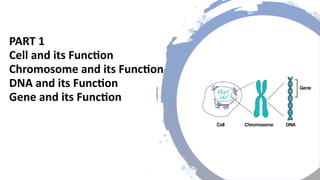
PART 1
Cell and its Function
Chromosome and its Function
DNA and its Function
Gene and its Function
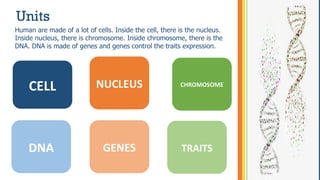
Units
CELL
Human are made of a lot of cells. Inside the cell, there is the nucleus.
Inside nucleus, there is chromosome. Inside chromosome, there is the
DNA. DNA is made of genes and genes control the traits expression.
DNA
NUCLEUS CHROMOSOME
GENES TRAITS
1.1CELL AND ITS FUNCTION
Cell contains nucleus (99.9% genes) and mitochondria (few genes)
1.1 CELL AND ITS FUNCTION
Human made of 50 trillion cells
Fundamental and structural units
Carried Hereditary materials
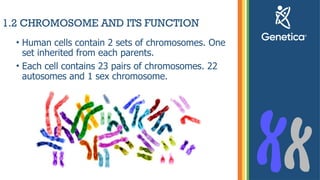
1.2 CHROMOSOME AND ITS FUNCTION
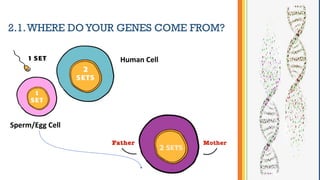
• Human cells contain 2 sets of chromosomes. One
set inherited from each parents.
• Each cell contains 23 pairs of chromosomes. 22
autosomes and 1 sex chromosome.
1.3 DNA AND ITS FUNCTION
DNA made of Chromosome
DNA carried genetic materials
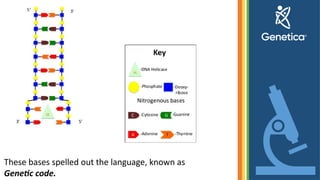
DNA made up of 4 different bases as A,T,G,C
DNA is double stranded
These bases spelled out the language, known as
Genetic code.
1.4 GENE ITS FUNCTION
• Human genomes contain 20,000 to 25,000 genes.
• Each chromosomes contain many genes, basic
physical and functional units of hereditary.
• Each gene has unique DNA sequence.
• Genes are specific sequences of bases that
encode instructions for how to make proteins.
• Genes tell the cell how to function and what traits
to be expressed.
1.4 GENEOTYPES DETERMINED
PHENOTYPES
Genotype: complete heritable
genetic identity.
Phenotypes:
1. Your observable traits.
2. Interaction between genes and
environment.
3. Different phenotypes are
determined by genotypes.
PART 2
Law of Inheritance
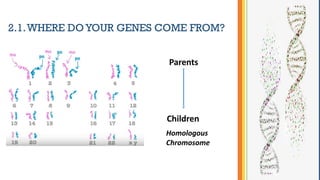
2.1.WHERE DO YOUR GENES COME FROM?
Homologous
Chromosome
Parents
Children
Female: XX vs Male: XY
Differentiate the
GENDER
2.1.WHERE DO YOUR GENES COME FROM?
Human Cell
Sperm/Egg Cell
2.1.WHERE DO YOUR GENES COME FROM?
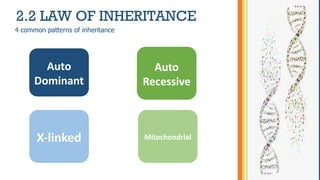
2.2 LAW OF INHERITANCE
Auto
Dominant
4 common patterns of inheritance
X-linked
Auto
Recessive
Mitochondrial
2.2.1 AUTO DOMINANT
2.2.2 AUTO RECESSIVE
2.2.3 X-LINKED
2.2.4 MITOCHONDRIA
PART 3
GENETIC
VARIANTS or
SNPs
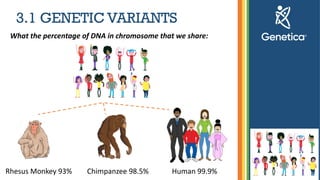
3.1 GENETIC VARIANTS
Rhesus Monkey 93% Chimpanzee 98.5% Human 99.9%
What the percentage of DNA in chromosome that we share:
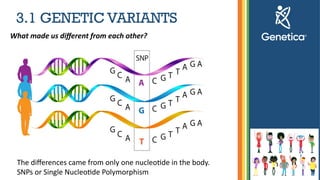
3.1 GENETIC VARIANTS
What made us different from each other?
The differences came from only one nucleotide in the body.
SNPs or Single Nucleotide Polymorphism
3.1 GENETIC VARIANTS - SNPs
SNPs, a single base pair substitute.
10 million SNPs in human genome that made us “unique”
• Account for the appearance differences.
• Account for how we develop diseases or respond to
drugs.
SNPs passed down one generation to the next.
3.2 TYPES OF GENETIC DISEASE
Genetic diseases can be categorized into three major groups:
single-gene, chromosomal, and multifactorial.
• Changes in the DNA sequence of single genes, also known as
mutations, cause thousands of diseases.
• Genetic diseases can be caused by larger mutations in
chromosomes.
• Multifactorial diseases are caused by a complex combination
of genetic, behavioral, and environmental factors.
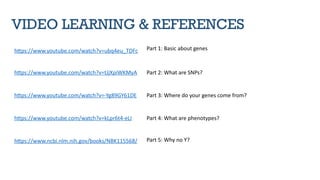
VIDEO LEARNING & REFERENCES
https://www.youtube.com/watch?v=ubq4eu_TDFc
https://www.youtube.com/watch?v=tJjXpiWKMyA
https://www.youtube.com/watch?v=-Yg89GY61DE Part 3: Where do your genes come from?
Part 2: What are SNPs?
Part 1: Basic about genes
https://www.youtube.com/watch?v=kLpr6t4-eLI Part 4: What are phenotypes?
https://www.ncbi.nlm.nih.gov/books/NBK115568/ Part 5: Why no Y?
THANKYOU

Genetic - basic knowledge for dummies about Genetic

  • 1.
  • 2.
    Main Content 1. Cell,Chromosome, DNA/Gene and Its Function 2. Law of Inheritance 3. Genetic Variants and Type of Diseases
  • 3.
    PART 1 Cell andits Function Chromosome and its Function DNA and its Function Gene and its Function
  • 4.
    Units CELL Human are madeof a lot of cells. Inside the cell, there is the nucleus. Inside nucleus, there is chromosome. Inside chromosome, there is the DNA. DNA is made of genes and genes control the traits expression. DNA NUCLEUS CHROMOSOME GENES TRAITS
  • 5.
    1.1CELL AND ITSFUNCTION Cell contains nucleus (99.9% genes) and mitochondria (few genes)
  • 6.
    1.1 CELL ANDITS FUNCTION Human made of 50 trillion cells Fundamental and structural units Carried Hereditary materials
  • 7.
    1.2 CHROMOSOME ANDITS FUNCTION • Human cells contain 2 sets of chromosomes. One set inherited from each parents. • Each cell contains 23 pairs of chromosomes. 22 autosomes and 1 sex chromosome.
  • 8.
    1.3 DNA ANDITS FUNCTION DNA made of Chromosome DNA carried genetic materials DNA made up of 4 different bases as A,T,G,C DNA is double stranded
  • 9.
    These bases spelledout the language, known as Genetic code.
  • 10.
    1.4 GENE ITSFUNCTION • Human genomes contain 20,000 to 25,000 genes. • Each chromosomes contain many genes, basic physical and functional units of hereditary. • Each gene has unique DNA sequence. • Genes are specific sequences of bases that encode instructions for how to make proteins. • Genes tell the cell how to function and what traits to be expressed.
  • 11.
    1.4 GENEOTYPES DETERMINED PHENOTYPES Genotype:complete heritable genetic identity. Phenotypes: 1. Your observable traits. 2. Interaction between genes and environment. 3. Different phenotypes are determined by genotypes.
  • 12.
    PART 2 Law ofInheritance
  • 13.
    2.1.WHERE DO YOURGENES COME FROM? Homologous Chromosome Parents Children
  • 14.
    Female: XX vsMale: XY Differentiate the GENDER 2.1.WHERE DO YOUR GENES COME FROM?
  • 15.
    Human Cell Sperm/Egg Cell 2.1.WHEREDO YOUR GENES COME FROM?
  • 16.
    2.2 LAW OFINHERITANCE Auto Dominant 4 common patterns of inheritance X-linked Auto Recessive Mitochondrial
  • 17.
  • 18.
  • 19.
  • 20.
  • 21.
  • 22.
    3.1 GENETIC VARIANTS RhesusMonkey 93% Chimpanzee 98.5% Human 99.9% What the percentage of DNA in chromosome that we share:
  • 23.
    3.1 GENETIC VARIANTS Whatmade us different from each other? The differences came from only one nucleotide in the body. SNPs or Single Nucleotide Polymorphism
  • 24.
    3.1 GENETIC VARIANTS- SNPs SNPs, a single base pair substitute. 10 million SNPs in human genome that made us “unique” • Account for the appearance differences. • Account for how we develop diseases or respond to drugs. SNPs passed down one generation to the next.
  • 25.
    3.2 TYPES OFGENETIC DISEASE Genetic diseases can be categorized into three major groups: single-gene, chromosomal, and multifactorial. • Changes in the DNA sequence of single genes, also known as mutations, cause thousands of diseases. • Genetic diseases can be caused by larger mutations in chromosomes. • Multifactorial diseases are caused by a complex combination of genetic, behavioral, and environmental factors.
  • 26.
    VIDEO LEARNING &REFERENCES https://www.youtube.com/watch?v=ubq4eu_TDFc https://www.youtube.com/watch?v=tJjXpiWKMyA https://www.youtube.com/watch?v=-Yg89GY61DE Part 3: Where do your genes come from? Part 2: What are SNPs? Part 1: Basic about genes https://www.youtube.com/watch?v=kLpr6t4-eLI Part 4: What are phenotypes? https://www.ncbi.nlm.nih.gov/books/NBK115568/ Part 5: Why no Y?
  • 27.