General Biology 1
Quarter 1-Module 1
Lesson 1- Cell
Theory
The Cell Theory
The development and refinement of
magnifying lenses and light
microscopes made the observation
and description of microscopic
organisms and living cells possible.
Many scientists contributed to the cell
theory.
The Cell Theory
3 parts of the cell theory:
1. The cell is the basic unit of life
2. All living things are made of cells
3. Cells come from pre-existing cells
The Cell Theory
Aristotle (384-322 BC)
 One of the earliest recorded scholars to
articulate the theory of spontaneous
generation, the notion that life can arise
from nonliving matter.
 Life arose from nonliving material if the
material contained pneuma (vital heat).
Jan Baptista van Helmont
 A seventeenth century Flemish scientist,
proposed that mice could arise from rags
and wheat kernels left in an open container
from 3 weeks. In reality, such habitats
provided ideal food sources and shelter for
mouse populations to flourish.
Francisco Redi (1626-1697)
 A seventeenth century Flemish scientist,
proposed that mice could arise from rags
and wheat kernels left in an open container
from 3 weeks. In reality, such habitats
provided ideal food sources and shelter for
mouse populations to flourish.
John Needham (1713-1781)
 Published a report of his own experiments,
in which he briefly boiled broth infused with
plant or animal matter, hoping to kill all
preexisting microbes.
 He argued that the new microbes must
have arisen spontaneously. In reality,
however, he likely did not boil the broth to
kill all preexisting microbes.
John Needham (1713-1781)
 Published a report of his own experiments,
in which he briefly boiled broth infused with
plant or animal matter, hoping to kill all
preexisting microbes.
 He argued that the new microbes must
have arisen spontaneously. In reality,
however, he likely did not boil the broth to
kill all preexisting microbes.
Louis Pasteur
 A prominent French chemist who had been
studying microbial fermentation and the
causes of wine spoilage, accepted the
challenge.
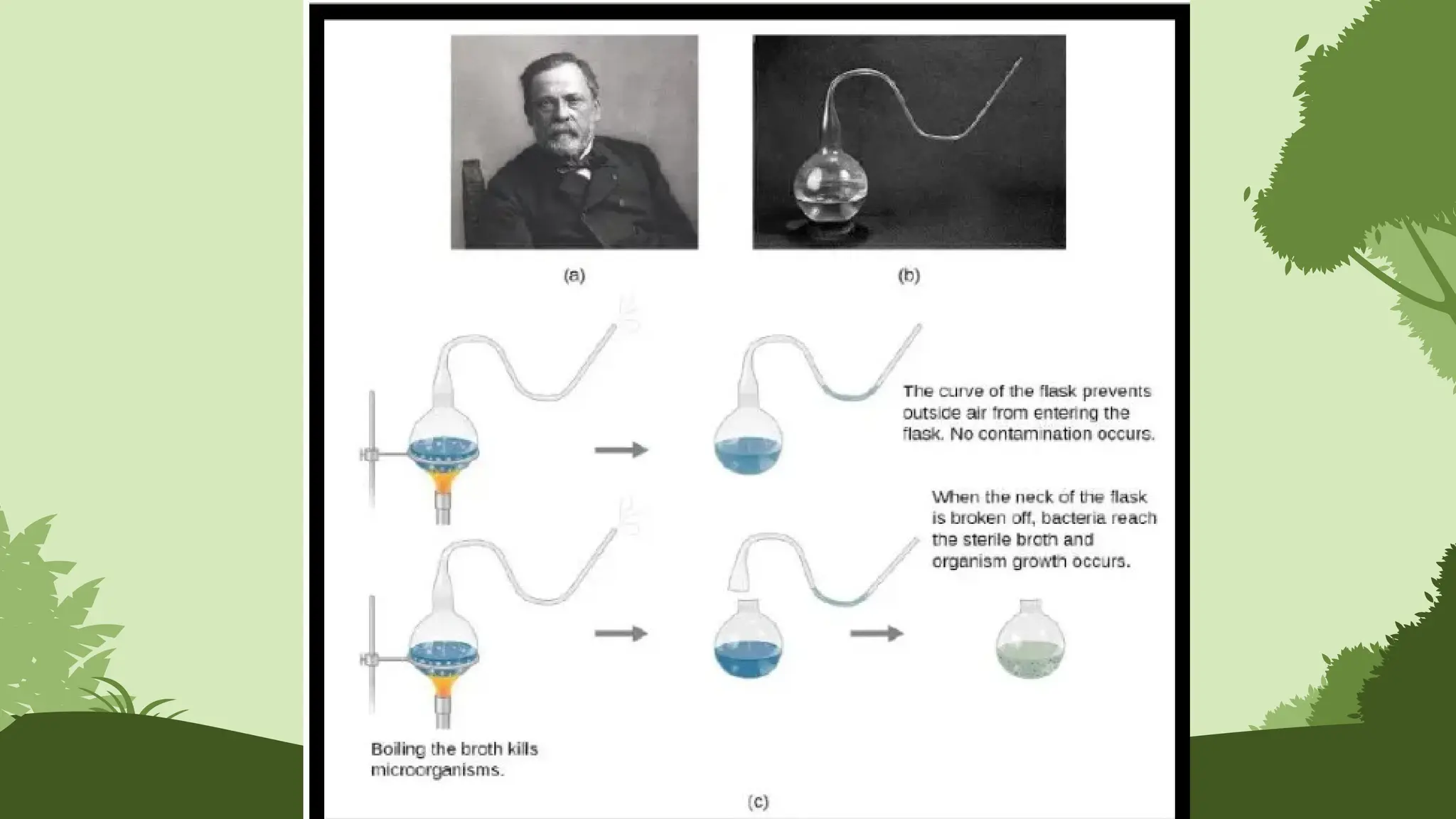
 The unique swan neck feature of the flasks
used in Pasteur’s experiment allowed air to
enter the flask but prevented the entry of
bacterial and fungal spores.
Louis Pasteur
 2 parts of Pasteur’s experiment: In the first
part, the broth in the flask was boiled to
sterilize it. When this broth was cooled, it
remained free of contamination.
 In the second part, the flask was boiled and
then the neck was broken off. The broth in
this flask became contaminated.
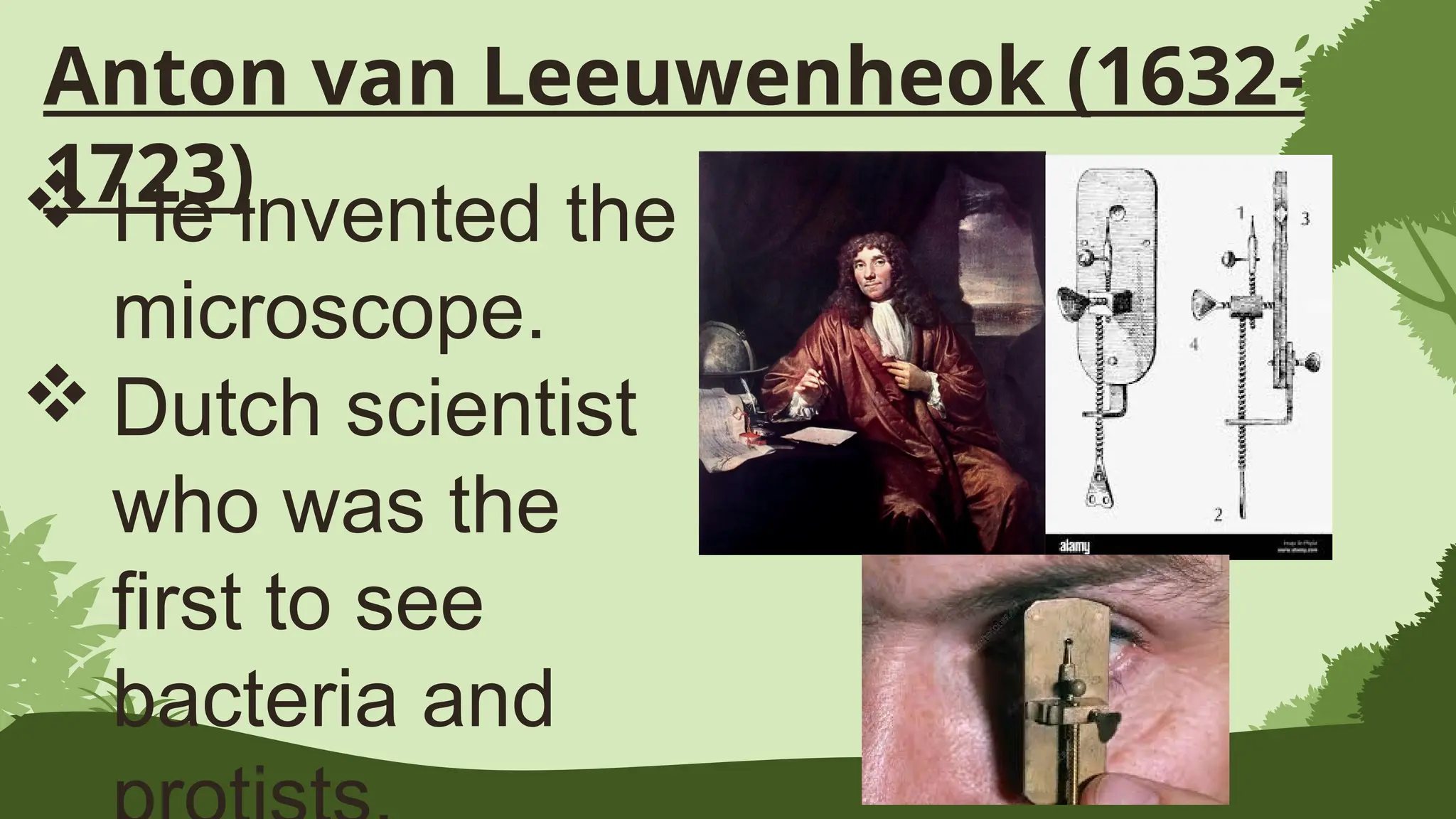
Anton van Leeuwenheok (1632-
1723)
 He invented the
microscope.
 Dutch scientist
who was the
first to see
bacteria and
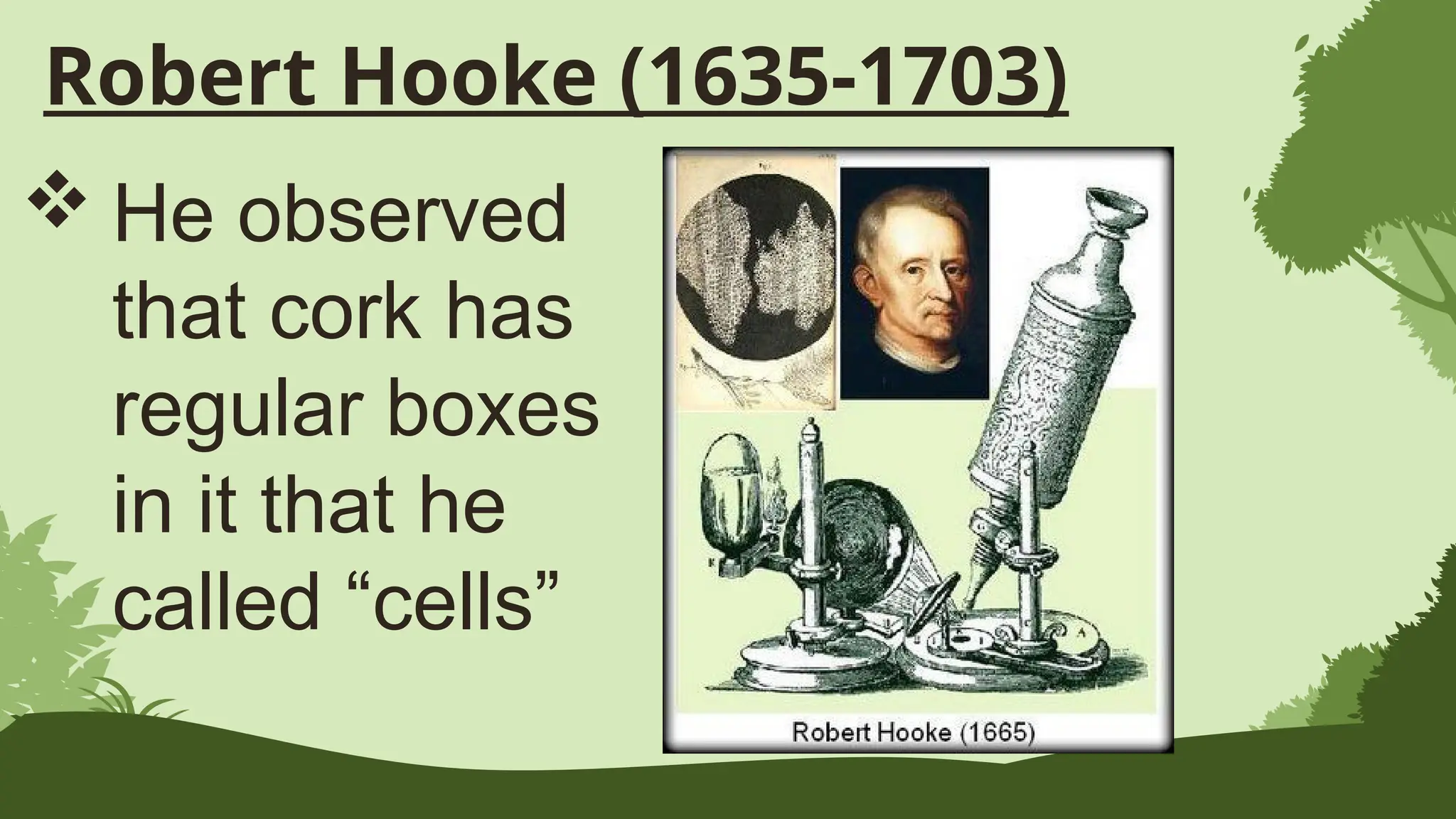
Robert Hooke (1635-1703)
 He observed
that cork has
regular boxes
in it that he
called “cells”
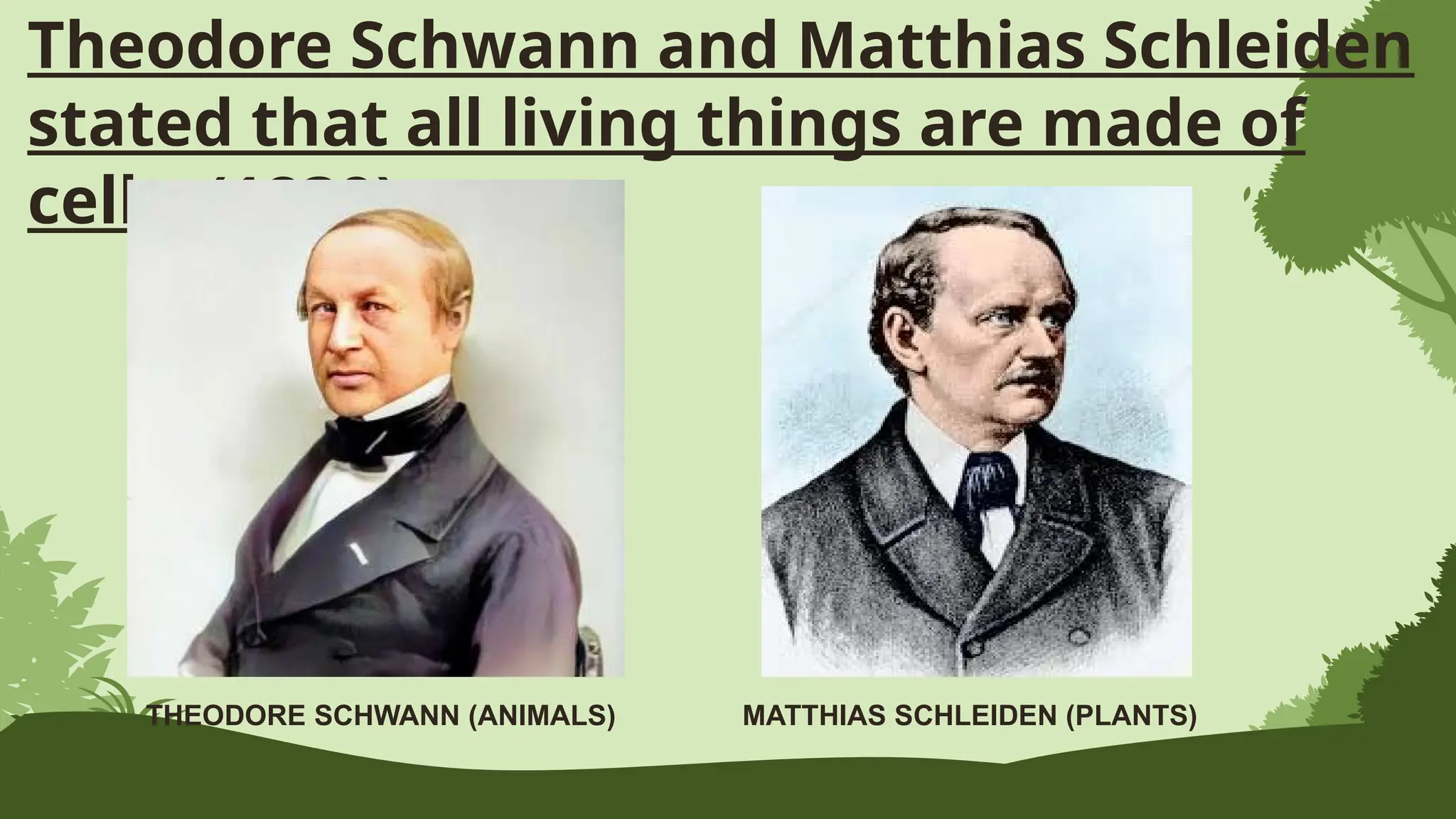
Theodore Schwann and Matthias Schleiden
stated that all living things are made of
cells. (1839)
THEODORE SCHWANN (ANIMALS) MATTHIAS SCHLEIDEN (PLANTS)
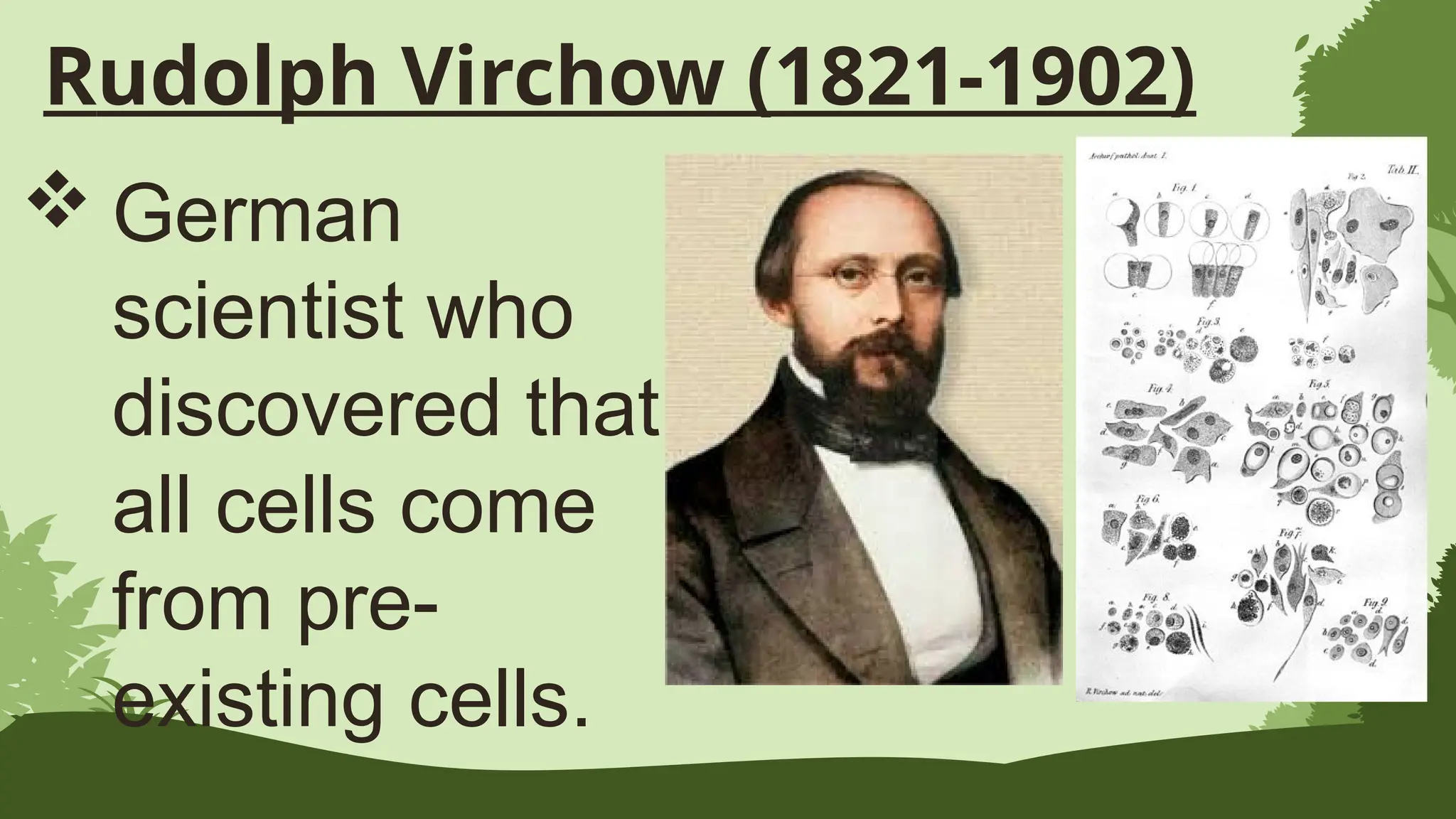
Rudolph Virchow (1821-1902)
 German
scientist who
discovered that
all cells come
from pre-
existing cells.
These observations became the major
components of the cell theory.
The cell theory states that:
1. All living things are composed of one or
more cells and cell products.
2. All living cells come from other living
cells by the process of cell division.
3. Cells are the basic units of structure
and function on organism.
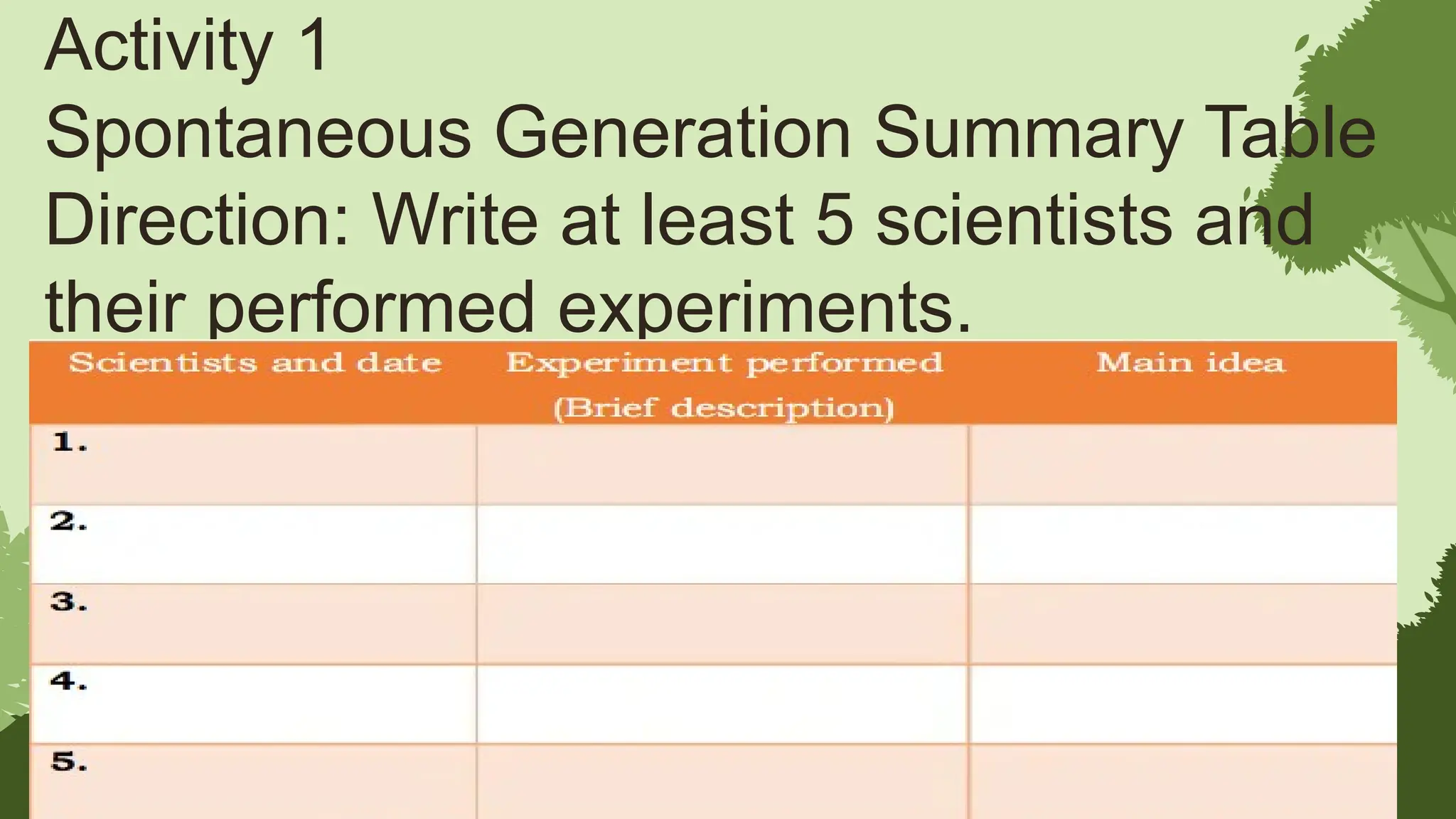
Activity 1
Spontaneous Generation Summary Table
Direction: Write at least 5 scientists and
their performed experiments.
Activity 2
Reflective Writing
Write a short paragraph discussing why is
it necessary for a student like you to
understand and to look back on the history of
the development of the cell theory. Make your
answer brief and concise, express your answer
using 5-10 sentences only.
GENERAL BIOLOGY 1QUARTER 1 MODULE 1 CELL THEORY PPT

  • 1.
    General Biology 1 Quarter1-Module 1 Lesson 1- Cell Theory
  • 2.
    The Cell Theory Thedevelopment and refinement of magnifying lenses and light microscopes made the observation and description of microscopic organisms and living cells possible.
  • 3.
    Many scientists contributedto the cell theory. The Cell Theory
  • 4.
    3 parts ofthe cell theory: 1. The cell is the basic unit of life 2. All living things are made of cells 3. Cells come from pre-existing cells The Cell Theory
  • 5.
    Aristotle (384-322 BC) One of the earliest recorded scholars to articulate the theory of spontaneous generation, the notion that life can arise from nonliving matter.  Life arose from nonliving material if the material contained pneuma (vital heat).
  • 6.
    Jan Baptista vanHelmont  A seventeenth century Flemish scientist, proposed that mice could arise from rags and wheat kernels left in an open container from 3 weeks. In reality, such habitats provided ideal food sources and shelter for mouse populations to flourish.
  • 7.
    Francisco Redi (1626-1697) A seventeenth century Flemish scientist, proposed that mice could arise from rags and wheat kernels left in an open container from 3 weeks. In reality, such habitats provided ideal food sources and shelter for mouse populations to flourish.
  • 8.
    John Needham (1713-1781) Published a report of his own experiments, in which he briefly boiled broth infused with plant or animal matter, hoping to kill all preexisting microbes.  He argued that the new microbes must have arisen spontaneously. In reality, however, he likely did not boil the broth to kill all preexisting microbes.
  • 9.
    John Needham (1713-1781) Published a report of his own experiments, in which he briefly boiled broth infused with plant or animal matter, hoping to kill all preexisting microbes.  He argued that the new microbes must have arisen spontaneously. In reality, however, he likely did not boil the broth to kill all preexisting microbes.
  • 10.
    Louis Pasteur  Aprominent French chemist who had been studying microbial fermentation and the causes of wine spoilage, accepted the challenge.  The unique swan neck feature of the flasks used in Pasteur’s experiment allowed air to enter the flask but prevented the entry of bacterial and fungal spores.
  • 11.
    Louis Pasteur  2parts of Pasteur’s experiment: In the first part, the broth in the flask was boiled to sterilize it. When this broth was cooled, it remained free of contamination.  In the second part, the flask was boiled and then the neck was broken off. The broth in this flask became contaminated.
  • 13.
    Anton van Leeuwenheok(1632- 1723)  He invented the microscope.  Dutch scientist who was the first to see bacteria and
  • 14.
    Robert Hooke (1635-1703) He observed that cork has regular boxes in it that he called “cells”
  • 15.
    Theodore Schwann andMatthias Schleiden stated that all living things are made of cells. (1839) THEODORE SCHWANN (ANIMALS) MATTHIAS SCHLEIDEN (PLANTS)
  • 16.
    Rudolph Virchow (1821-1902) German scientist who discovered that all cells come from pre- existing cells.
  • 17.
    These observations becamethe major components of the cell theory. The cell theory states that: 1. All living things are composed of one or more cells and cell products. 2. All living cells come from other living cells by the process of cell division. 3. Cells are the basic units of structure and function on organism.
  • 18.
    Activity 1 Spontaneous GenerationSummary Table Direction: Write at least 5 scientists and their performed experiments.
  • 19.
    Activity 2 Reflective Writing Writea short paragraph discussing why is it necessary for a student like you to understand and to look back on the history of the development of the cell theory. Make your answer brief and concise, express your answer using 5-10 sentences only.