Gender and inclusivity
Gender and diversity concepts
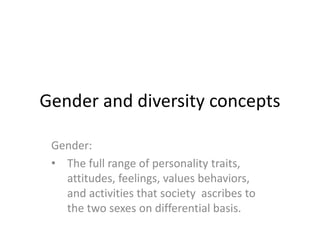
Gender:
• The full range of personality traits,
attitudes, feelings, values behaviors,
and activities that society ascribes to
the two sexes on differential basis.
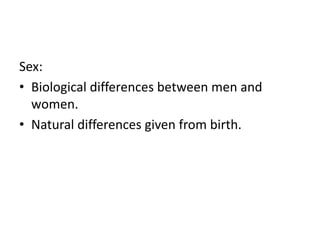
Sex:
• Biological differences between men and
women.
• Natural differences given from birth.
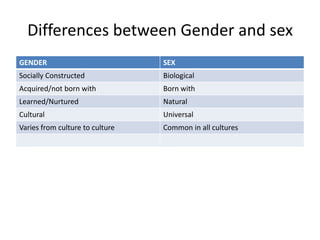
Differences between Gender and sex
GENDER SEX
Socially Constructed Biological
Acquired/not born with Born with
Learned/Nurtured Natural
Cultural Universal
Varies from culture to culture Common in all cultures
Importance of gender in education
• It determines access to education
opportunities.
• Determine which courses are culturally
acceptable to which people, among others.
• It determines how the instructor views each
other, how they view the students and how
the students view themselves.
• It determines whether instruction will be
effective and inclusive.
Gender and diversity
Diversity:
• Is recognizing individual differences e.g
economic status, ethnic and cultural
background, gender, sexual orientation or
special needs.
Relevance of diversity to education
• Each student brings unique experiences,
strengths and ideas to our classroom.
• Diversity and inclusion improves teaching and
learning i.e people learn to and enrich their
abilities to think critically and creatively as
they engage in conversations across
differences, especially when all learners’
abilities and attributes are embraced.
• Classroom are increasingly diverse and
demography assures that this trend will
continue.
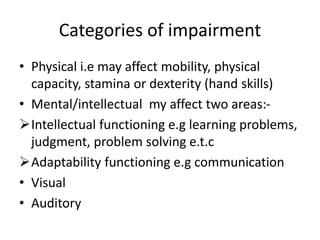
Categories of impairment
• Physical i.e may affect mobility, physical
capacity, stamina or dexterity (hand skills)
• Mental/intellectual my affect two areas:-
Intellectual functioning e.g learning problems,
judgment, problem solving e.t.c
Adaptability functioning e.g communication
• Visual
• Auditory
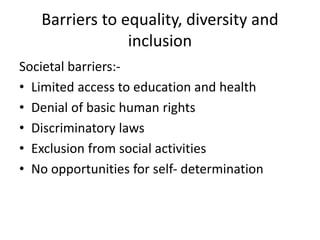
Barriers to equality, diversity and
inclusion
Societal barriers:-
• Limited access to education and health
• Denial of basic human rights
• Discriminatory laws
• Exclusion from social activities
• No opportunities for self- determination
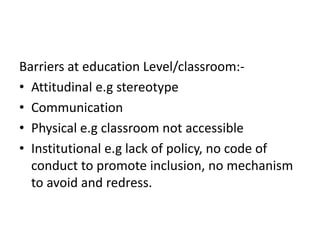
Barriers at education Level/classroom:-
• Attitudinal e.g stereotype
• Communication
• Physical e.g classroom not accessible
• Institutional e.g lack of policy, no code of
conduct to promote inclusion, no mechanism
to avoid and redress.
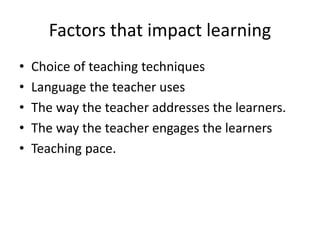
Factors that impact learning
• Choice of teaching techniques
• Language the teacher uses
• The way the teacher addresses the learners.
• The way the teacher engages the learners
• Teaching pace.
Ways that the school/ colleges/teacher
can promote inclusivity
• Create safe and collaborative environment.
• Use multiple methods to deliver course content
• Provide a variety of ways for learners to share
what they know.
• Accessible classroom set up.
• Inclusive teaching and facilitation e.g font large
enough.
• Inclusive language while teaching e.g simple
language(avoid jargon)
• Be mindful of the specific needs of every
learner in class.
• Encourage learners to interact with peers e.g
through group tasks.
• Create opportunity to communicate to all
learners.
• Be a role model.

Gender and diversity notes 2022.pptx

  • 1.
  • 2.
    Gender and diversityconcepts Gender: • The full range of personality traits, attitudes, feelings, values behaviors, and activities that society ascribes to the two sexes on differential basis.
  • 3.
    Sex: • Biological differencesbetween men and women. • Natural differences given from birth.
  • 4.
    Differences between Genderand sex GENDER SEX Socially Constructed Biological Acquired/not born with Born with Learned/Nurtured Natural Cultural Universal Varies from culture to culture Common in all cultures
  • 5.
    Importance of genderin education • It determines access to education opportunities. • Determine which courses are culturally acceptable to which people, among others. • It determines how the instructor views each other, how they view the students and how the students view themselves. • It determines whether instruction will be effective and inclusive.
  • 6.
    Gender and diversity Diversity: •Is recognizing individual differences e.g economic status, ethnic and cultural background, gender, sexual orientation or special needs.
  • 7.
    Relevance of diversityto education • Each student brings unique experiences, strengths and ideas to our classroom. • Diversity and inclusion improves teaching and learning i.e people learn to and enrich their abilities to think critically and creatively as they engage in conversations across differences, especially when all learners’ abilities and attributes are embraced.
  • 8.
    • Classroom areincreasingly diverse and demography assures that this trend will continue.
  • 9.
    Categories of impairment •Physical i.e may affect mobility, physical capacity, stamina or dexterity (hand skills) • Mental/intellectual my affect two areas:- Intellectual functioning e.g learning problems, judgment, problem solving e.t.c Adaptability functioning e.g communication • Visual • Auditory
  • 10.
    Barriers to equality,diversity and inclusion Societal barriers:- • Limited access to education and health • Denial of basic human rights • Discriminatory laws • Exclusion from social activities • No opportunities for self- determination
  • 11.
    Barriers at educationLevel/classroom:- • Attitudinal e.g stereotype • Communication • Physical e.g classroom not accessible • Institutional e.g lack of policy, no code of conduct to promote inclusion, no mechanism to avoid and redress.
  • 12.
    Factors that impactlearning • Choice of teaching techniques • Language the teacher uses • The way the teacher addresses the learners. • The way the teacher engages the learners • Teaching pace.
  • 13.
    Ways that theschool/ colleges/teacher can promote inclusivity • Create safe and collaborative environment. • Use multiple methods to deliver course content • Provide a variety of ways for learners to share what they know. • Accessible classroom set up. • Inclusive teaching and facilitation e.g font large enough. • Inclusive language while teaching e.g simple language(avoid jargon)
  • 14.
    • Be mindfulof the specific needs of every learner in class. • Encourage learners to interact with peers e.g through group tasks. • Create opportunity to communicate to all learners. • Be a role model.