The 100,000 Genomes Project:
the power of genomics in diagnosing
rare diseases
Gemma Chandratillake, MPhil, PhD, MS CGC
Education and Training Lead, East of England Genomic Medicine Centre
Course Director, University of Cambridge Genomic Medicine Programme
Trustee, Cambridge Rare Disease Network
23rd October 2017
Overview
• Genomics Defined
• Genomics for Rare Disease: A Brief History
• The 100,000 Genomes Project
• After the Project: Genomics in the NHS
Genomics
• Genome: An individual's genetic information, made of DNA, contains
genes but lots of other DNA too
• Gene: a sequence of DNA in the genome that is required for the
production of a functional product (polypeptide/protein or RNA)
• We have >20,000 genes in our genome
• Exome: the combined regions of the genome that contain the genes
(only 1-2% of the genome), essentially the bit of the genome that we
can interpret
• Genetics: the study of a particular gene
• Genomics: the study of many genes -> all of a person’s DNA
• Micro-arrays, multi-gene panels, exomes, genomes
• Study made possible by development/advances in microarray technology and DNA
sequencing technology (Next Generation Sequencing, NGS)
Genomics & Rare Disease: The Promise
The problems of traditional genetic testing:
• Many rare genetic disorders are difficult to recognize, even by experienced geneticists
• Many genetic disorders with clinical diagnosis are caused by many genes
• difficult to pin-down exact underlying genetic cause
• e.g. Retinitis pigmentosa, Charcot-Marie Tooth
• Clinical genetic tests have not been developed for all genes that cause disease
• not cost-effective to develop/maintain a test that is never ordered
The promise of genomics for individuals with a rare disease:
• Interrogate the genome to immediately identify the genetic cause of a disorder
without the need for costly, time-consuming sequential genetic testing
• Do away with the “diagnostic odyssey”
Genomics for Rare Disease: A Brief History
• 2010: First research showing exome sequencing could be used to identify new
rare disease genes
• 2010: Lupski sequences his genome to identify molecular basis of his CMT
• March 2011: First paper published using exome sequencing to make a diagnosis,
Nicholas Volkner
• April 2011: Launch of Deciphering Developmental Disorders (DDD) Study in UK
• Sept 2011: Clinical exome sequencing test available in US (Ambry Genetics)
• 2012: ACMG guidelines for exome/genome sequencing
• December 2012: 100,000 Genomes Project announced
• 2013: ACMG guidelines for [incidental] secondary findings
• July 2013: Rare Disease focus for 100,000 Genomes Project announced
• 2015: ~12 US labs offering clinical exome sequencing for rare disease diagnosis
• >>10,000 patients sequenced, considered standard of care in US
100K Genome Project Overview
• Project Goals:
• Sequence 100,000 genomes from around 70,000 people, returning
clinical genetic test reports to recruiting healthcare providers
• Enable medical research through access to data
• Kick-start a UK genomics industry: commission services, data access
• Increase public understanding and support for genomic medicine
• Create an integral genomic medicine service for the NHS:
transform/create necessary infrastructure
• Rare Disease
• Provide a genetic diagnosis for patients with rare disease
• Cancer
• Personalise treatment to biology of patient’s cancer
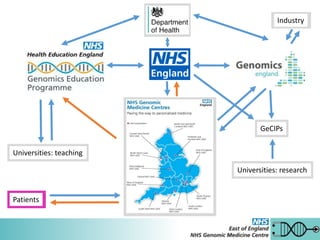
Universities: teaching
Universities: research
GeCIPs
Industry
Patients
niversity Hospitals
East of England Genomic Medicine Centre
Lead: Cambridge University Hospitals
Local Delivery Partners:
• University Hospitals of Leicester
• Nottingham University Hospitals
• Norfolk & Norwich University Hospitals
• Satellite clinics across the region
• 200+ Referring healthcare providers
• Recruitment teams
• Laboratories
• Histopathology
• Tissue Bank
• Clinical informatics
• Communications
• Patient & public involvement
• Education & training
Rare Disease Eligibility Criteria
• Who can participate in the project?
• Who can you refer?
>200 “rare disease” categories
• See Genomics England website
• See East of England Genomic Medicine Centre website:
http://eastgenomics.org.uk/approved-conditions
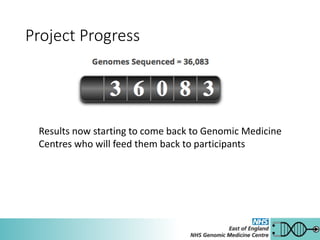
Project Progress
Results now starting to come back to Genomic Medicine
Centres who will feed them back to participants
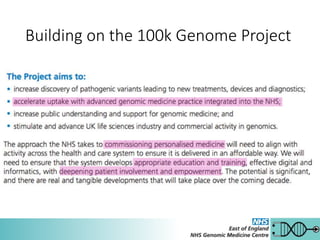
Building on the 100k Genome Project
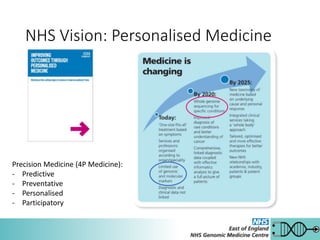
NHS Vision: Personalised Medicine
Precision Medicine (4P Medicine):
- Predictive
- Preventative
- Personalised
- Participatory
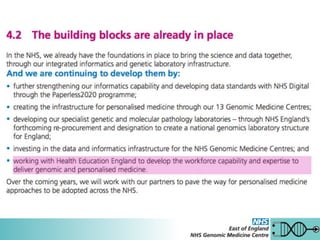
Context of the 100K project
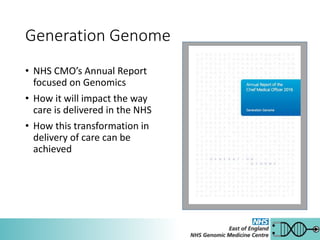
Generation Genome
• NHS CMO’s Annual Report
focused on Genomics
• How it will impact the way
care is delivered in the NHS
• How this transformation in
delivery of care can be
achieved
Find out more…
• Join our mailing list: https://tinyurl.com/EEGMCnews
• Follow us on Twitter: @_eegmc @genomicsedu
@GenomicsEngland #genomes100k
• Medical students: consider a genomic medicine
programme for your intercalated year e.g. University of
Cambridge MPhil in Genomic Medicine
• NHS staff: take advantage of HEE funding for genomics
education (ask me glb28@medschl.cam.ac.uk)
• https://www.genomicseducation.hee.nhs.uk/

Gemma chandratillake crdn crdn summit 2017

  • 1.
    The 100,000 GenomesProject: the power of genomics in diagnosing rare diseases Gemma Chandratillake, MPhil, PhD, MS CGC Education and Training Lead, East of England Genomic Medicine Centre Course Director, University of Cambridge Genomic Medicine Programme Trustee, Cambridge Rare Disease Network 23rd October 2017
  • 2.
    Overview • Genomics Defined •Genomics for Rare Disease: A Brief History • The 100,000 Genomes Project • After the Project: Genomics in the NHS
  • 3.
    Genomics • Genome: Anindividual's genetic information, made of DNA, contains genes but lots of other DNA too • Gene: a sequence of DNA in the genome that is required for the production of a functional product (polypeptide/protein or RNA) • We have >20,000 genes in our genome • Exome: the combined regions of the genome that contain the genes (only 1-2% of the genome), essentially the bit of the genome that we can interpret • Genetics: the study of a particular gene • Genomics: the study of many genes -> all of a person’s DNA • Micro-arrays, multi-gene panels, exomes, genomes • Study made possible by development/advances in microarray technology and DNA sequencing technology (Next Generation Sequencing, NGS)
  • 4.
    Genomics & RareDisease: The Promise The problems of traditional genetic testing: • Many rare genetic disorders are difficult to recognize, even by experienced geneticists • Many genetic disorders with clinical diagnosis are caused by many genes • difficult to pin-down exact underlying genetic cause • e.g. Retinitis pigmentosa, Charcot-Marie Tooth • Clinical genetic tests have not been developed for all genes that cause disease • not cost-effective to develop/maintain a test that is never ordered The promise of genomics for individuals with a rare disease: • Interrogate the genome to immediately identify the genetic cause of a disorder without the need for costly, time-consuming sequential genetic testing • Do away with the “diagnostic odyssey”
  • 5.
    Genomics for RareDisease: A Brief History • 2010: First research showing exome sequencing could be used to identify new rare disease genes • 2010: Lupski sequences his genome to identify molecular basis of his CMT • March 2011: First paper published using exome sequencing to make a diagnosis, Nicholas Volkner • April 2011: Launch of Deciphering Developmental Disorders (DDD) Study in UK • Sept 2011: Clinical exome sequencing test available in US (Ambry Genetics) • 2012: ACMG guidelines for exome/genome sequencing • December 2012: 100,000 Genomes Project announced • 2013: ACMG guidelines for [incidental] secondary findings • July 2013: Rare Disease focus for 100,000 Genomes Project announced • 2015: ~12 US labs offering clinical exome sequencing for rare disease diagnosis • >>10,000 patients sequenced, considered standard of care in US
  • 6.
    100K Genome ProjectOverview • Project Goals: • Sequence 100,000 genomes from around 70,000 people, returning clinical genetic test reports to recruiting healthcare providers • Enable medical research through access to data • Kick-start a UK genomics industry: commission services, data access • Increase public understanding and support for genomic medicine • Create an integral genomic medicine service for the NHS: transform/create necessary infrastructure • Rare Disease • Provide a genetic diagnosis for patients with rare disease • Cancer • Personalise treatment to biology of patient’s cancer
  • 7.
  • 8.
    niversity Hospitals East ofEngland Genomic Medicine Centre Lead: Cambridge University Hospitals Local Delivery Partners: • University Hospitals of Leicester • Nottingham University Hospitals • Norfolk & Norwich University Hospitals • Satellite clinics across the region • 200+ Referring healthcare providers • Recruitment teams • Laboratories • Histopathology • Tissue Bank • Clinical informatics • Communications • Patient & public involvement • Education & training
  • 9.
    Rare Disease EligibilityCriteria • Who can participate in the project? • Who can you refer? >200 “rare disease” categories • See Genomics England website • See East of England Genomic Medicine Centre website: http://eastgenomics.org.uk/approved-conditions
  • 10.
    Project Progress Results nowstarting to come back to Genomic Medicine Centres who will feed them back to participants
  • 11.
    Building on the100k Genome Project
  • 12.
    NHS Vision: PersonalisedMedicine Precision Medicine (4P Medicine): - Predictive - Preventative - Personalised - Participatory
  • 13.
    Context of the100K project
  • 14.
    Generation Genome • NHSCMO’s Annual Report focused on Genomics • How it will impact the way care is delivered in the NHS • How this transformation in delivery of care can be achieved
  • 15.
    Find out more… •Join our mailing list: https://tinyurl.com/EEGMCnews • Follow us on Twitter: @_eegmc @genomicsedu @GenomicsEngland #genomes100k • Medical students: consider a genomic medicine programme for your intercalated year e.g. University of Cambridge MPhil in Genomic Medicine • NHS staff: take advantage of HEE funding for genomics education (ask me glb28@medschl.cam.ac.uk) • https://www.genomicseducation.hee.nhs.uk/

Editor's Notes

  • #3 100K as the infrastructure to deliver the personalised medicine vision in the future
  • #4 100K as the infrastructure to deliver the personalised medicine vision in the future
  • #8 100K as the infrastructure to deliver the personalised medicine vision in the future
  • #9 100K as the infrastructure to deliver the personalised medicine vision in the future
  • #10 100K as the infrastructure to deliver the personalised medicine vision in the future
  • #11 100K as the infrastructure to deliver the personalised medicine vision in the future
  • #15 100K as the infrastructure to deliver the personalised medicine vision in the future