1111 01 100 00100 00011 0001010 101000 111 0101 00010100 10111 00010 1010 101010 100010 10111 100001 10001 1011101 100011 0001100001000010000110101 11 1000 000 S K I L L Z M I D D L E E A S T 0001 000 111 00011 1000110001 1111
GDPR and www
Dieter Hovorka CTO
Skillz Middle East
dieter@skillzme.com
+971 56 101 2480
GDPR IS IT A LAW?
WHAT DOES IT MEAN
The Digital Experts
History of GDPR
The Digital Experts
The General Data Protection Regulation (GDPR) is a regulation in EU law on data
protection and privacy for all individuals within the European Union.
It also addresses the export of personal data outside the EU.
The GDPR aims primarily to give control to citizens and residents over their personal data
and to simplify the regulatory environment for international business by unifying the
regulation within the EU.
It was adopted on 14 April 2016, and after a two-year transition period, becomes
enforceable on 25 May 2018. The GDPR replaces the 1995 Data Protection Directive.
Because the GDPR is a regulation, not a directive.
It does not require national governments to pass any enabling legislation and is directly
binding and applicable.
What does it mean?
The Digital Experts
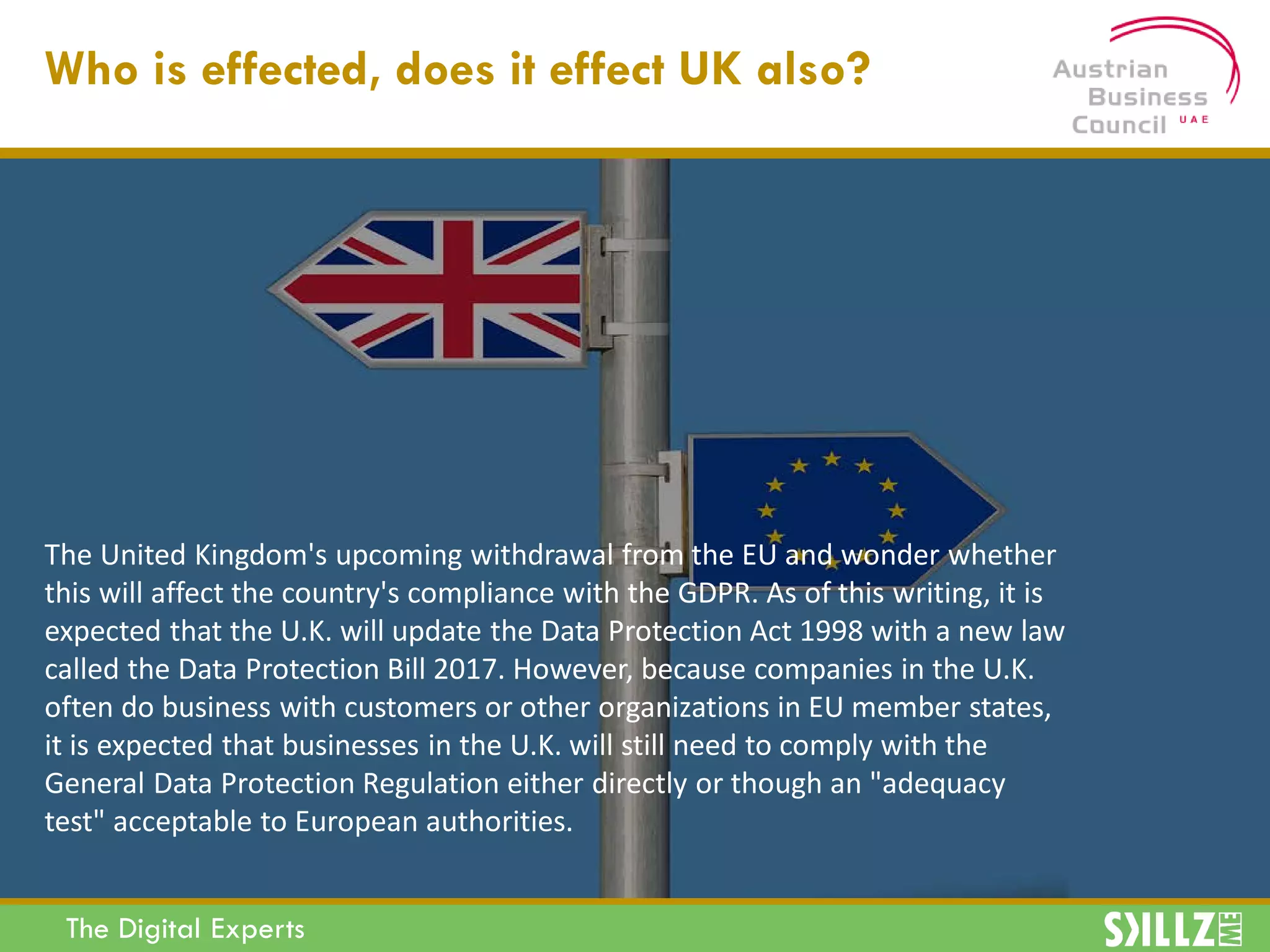
Who is effected, does it effect UK also?
The United Kingdom's upcoming withdrawal from the EU and wonder whether
this will affect the country's compliance with the GDPR. As of this writing, it is
expected that the U.K. will update the Data Protection Act 1998 with a new law
called the Data Protection Bill 2017. However, because companies in the U.K.
often do business with customers or other organizations in EU member states,
it is expected that businesses in the U.K. will still need to comply with the
General Data Protection Regulation either directly or though an "adequacy
test" acceptable to European authorities.
The Digital Experts
Why change?
The Digital Experts
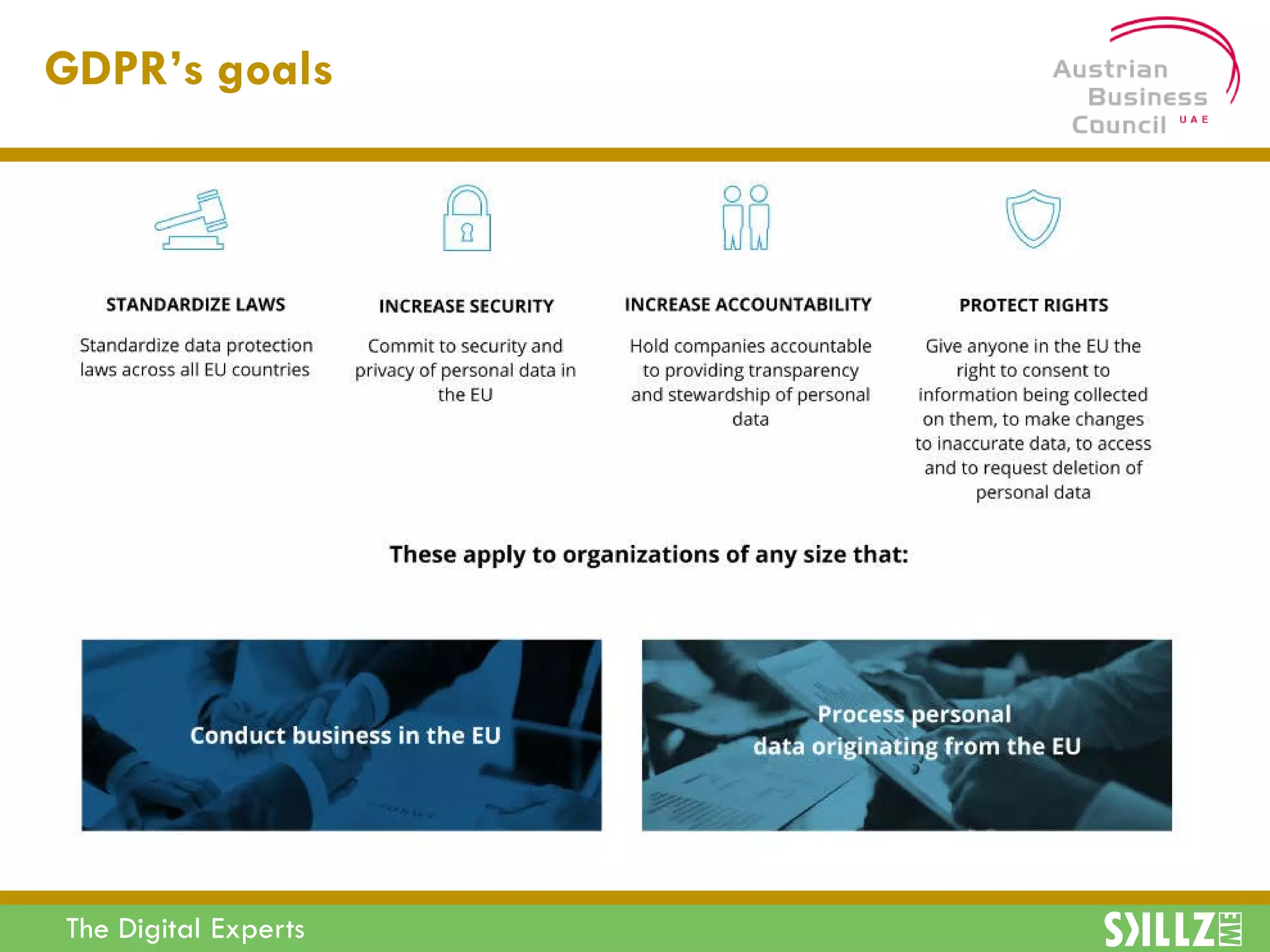
GDPR’s goals
The Digital Experts
The expanded definition of personal data
The Digital Experts
The expanded definition of personal data
The Digital Experts
How does it help consumers?
The Digital Experts
Under GDPR, companies may not legally process any person's personally
identifiable information without meeting at least one of six conditions.
1. Express consent of the data subject.
2. Processing is necessary for the performance of a contract with the data
subject or to take steps to enter into a contract.
3. Processing is necessary for compliance with a legal obligation.
4. Processing is necessary to protect the vital interests of a data subject or
another person.
5. Processing is necessary for the performance of a task carried out in the public
interest or in the exercise of official authority vested in the controller.
6. Processing is necessary for the purposes of legitimate interests pursued by
the controller or a third party, except where such interests are overridden by
the interests, rights or freedoms of the data subject.
When are companies allowed to use data?
The Digital Experts
Why should you be worried?
The Digital Experts
How will the GDPR change Businesses?
The Digital Experts
Personal Data Handling Process
The Digital Experts
The Road to Compliance
The Digital Experts
Data Protection Officer
do you need to appoint one?
Does company Size matter?
No it is looking into data processing, in most of the
cases a compliance officer or CIO or CFO can carry
the duty
The Digital Experts
While this part of the regulation likely isn't enough to give foreign
nationals cause for concern, there is one particular aspect of the
regulation that makes it much more far-reaching than it would
otherwise be: The GDPR applies to any organization, anywhere in
the world, that collects data on citizens of the EU. As such, even a
small, web-based business located on a different continent would
have to be GDPR compliant.
What about he rest of the world?
The Digital Experts
The Consequences of not complying
can be gave
The Digital Experts
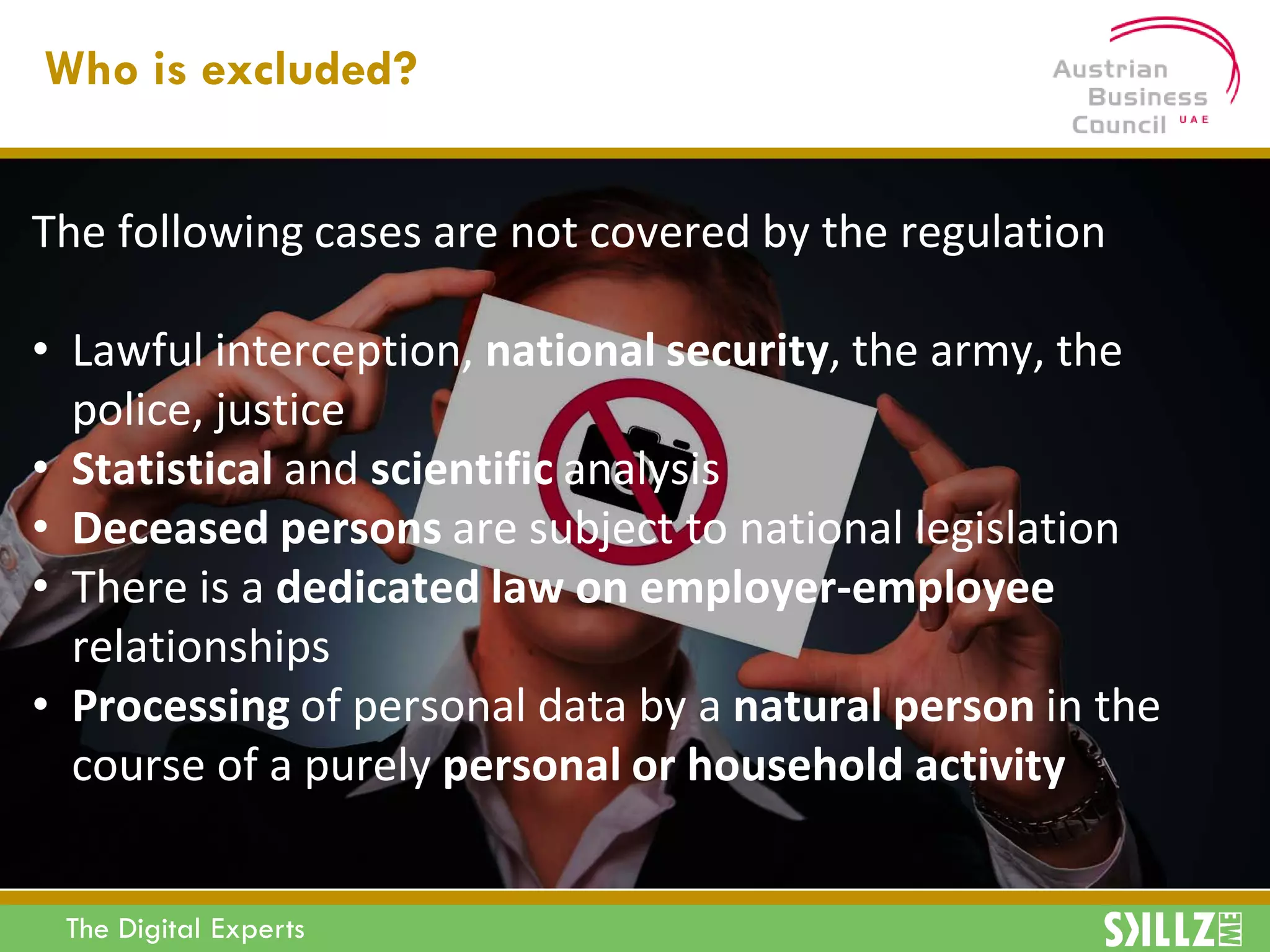
The following cases are not covered by the regulation
• Lawful interception, national security, the army, the
police, justice
• Statistical and scientific analysis
• Deceased persons are subject to national legislation
• There is a dedicated law on employer-employee
relationships
• Processing of personal data by a natural person in the
course of a purely personal or household activity
Who is excluded?
The Digital Experts
Sample: Usage of a Photo, does GDPR apply?
Source of Picture: Private, yourself
Usage: Blog, own Website, social Media
PRIVAT NO GDPR
Source of Picture: Private, friend
Usage: Blog, own Website, social Media
GDPR
Source of Picture: Private, friend
Usage: company website, company social Media
GDPR
The Digital Experts
Will Cybersecurity be the next biggest concern?
The Digital Experts
Sample of statements from Companies
The Digital Experts
Experts in Digital Content and Marketing
Dieter Hovorka CTO
Skillz Middle East
dieter@skillzme.com
+971 56 1012480
Q&A
The Digital Experts
Under the General Data Protection Regulation, data subject rights include:
Right to be forgotten - data subjects can request personally identifiable data to be erased
from a company's storage. The company has the right to refuse requests if they can
successfully demonstrate the legal basis for their refusal.
Right of access - data subjects can review the data that an organization has stored about
them.
Right to object - data subjects can refuse permission for a company to use or process the
subject's personal data. The company can ignore the refusal if they can satisfy one of the
legal conditions for processing the subject's personal data, but must notify the subject and
explain their reasoning behind doing so.
Right to rectification - data subjects can expect inaccurate personal information to be
corrected.
Right of portability - data subjects can access the personal data that a company has about
them and transfer it.
What are the covered rights for EU Citizens?
The Digital Experts
If a company does not comply with the GDPR
when it becomes effective, 25.May 2018.
What’s the risk on Fines?
20 million euros or 4 percent
of annual global turnover.
The following sanctions can be imposed (extract):
• a warning in writing in cases of first and non-
intentional noncompliance
• regular periodic data protection audits
• the obligations of the certification body
• the obligations of the monitoring body
The Digital Experts
EU Digital Single Market

GDPR Overview

  • 1.
    1111 01 10000100 00011 0001010 101000 111 0101 00010100 10111 00010 1010 101010 100010 10111 100001 10001 1011101 100011 0001100001000010000110101 11 1000 000 S K I L L Z M I D D L E E A S T 0001 000 111 00011 1000110001 1111 GDPR and www Dieter Hovorka CTO Skillz Middle East dieter@skillzme.com +971 56 101 2480
  • 2.
    GDPR IS ITA LAW? WHAT DOES IT MEAN
  • 3.
  • 4.
    The Digital Experts TheGeneral Data Protection Regulation (GDPR) is a regulation in EU law on data protection and privacy for all individuals within the European Union. It also addresses the export of personal data outside the EU. The GDPR aims primarily to give control to citizens and residents over their personal data and to simplify the regulatory environment for international business by unifying the regulation within the EU. It was adopted on 14 April 2016, and after a two-year transition period, becomes enforceable on 25 May 2018. The GDPR replaces the 1995 Data Protection Directive. Because the GDPR is a regulation, not a directive. It does not require national governments to pass any enabling legislation and is directly binding and applicable. What does it mean?
  • 5.
    The Digital Experts Whois effected, does it effect UK also? The United Kingdom's upcoming withdrawal from the EU and wonder whether this will affect the country's compliance with the GDPR. As of this writing, it is expected that the U.K. will update the Data Protection Act 1998 with a new law called the Data Protection Bill 2017. However, because companies in the U.K. often do business with customers or other organizations in EU member states, it is expected that businesses in the U.K. will still need to comply with the General Data Protection Regulation either directly or though an "adequacy test" acceptable to European authorities.
  • 6.
  • 7.
  • 8.
    The Digital Experts Theexpanded definition of personal data
  • 9.
    The Digital Experts Theexpanded definition of personal data
  • 10.
    The Digital Experts Howdoes it help consumers?
  • 11.
    The Digital Experts UnderGDPR, companies may not legally process any person's personally identifiable information without meeting at least one of six conditions. 1. Express consent of the data subject. 2. Processing is necessary for the performance of a contract with the data subject or to take steps to enter into a contract. 3. Processing is necessary for compliance with a legal obligation. 4. Processing is necessary to protect the vital interests of a data subject or another person. 5. Processing is necessary for the performance of a task carried out in the public interest or in the exercise of official authority vested in the controller. 6. Processing is necessary for the purposes of legitimate interests pursued by the controller or a third party, except where such interests are overridden by the interests, rights or freedoms of the data subject. When are companies allowed to use data?
  • 12.
    The Digital Experts Whyshould you be worried?
  • 13.
    The Digital Experts Howwill the GDPR change Businesses?
  • 14.
    The Digital Experts PersonalData Handling Process
  • 15.
    The Digital Experts TheRoad to Compliance
  • 16.
    The Digital Experts DataProtection Officer do you need to appoint one? Does company Size matter? No it is looking into data processing, in most of the cases a compliance officer or CIO or CFO can carry the duty
  • 17.
    The Digital Experts Whilethis part of the regulation likely isn't enough to give foreign nationals cause for concern, there is one particular aspect of the regulation that makes it much more far-reaching than it would otherwise be: The GDPR applies to any organization, anywhere in the world, that collects data on citizens of the EU. As such, even a small, web-based business located on a different continent would have to be GDPR compliant. What about he rest of the world?
  • 18.
    The Digital Experts TheConsequences of not complying can be gave
  • 19.
    The Digital Experts Thefollowing cases are not covered by the regulation • Lawful interception, national security, the army, the police, justice • Statistical and scientific analysis • Deceased persons are subject to national legislation • There is a dedicated law on employer-employee relationships • Processing of personal data by a natural person in the course of a purely personal or household activity Who is excluded?
  • 20.
    The Digital Experts Sample:Usage of a Photo, does GDPR apply? Source of Picture: Private, yourself Usage: Blog, own Website, social Media PRIVAT NO GDPR Source of Picture: Private, friend Usage: Blog, own Website, social Media GDPR Source of Picture: Private, friend Usage: company website, company social Media GDPR
  • 21.
    The Digital Experts WillCybersecurity be the next biggest concern?
  • 22.
    The Digital Experts Sampleof statements from Companies
  • 23.
    The Digital Experts Expertsin Digital Content and Marketing Dieter Hovorka CTO Skillz Middle East dieter@skillzme.com +971 56 1012480 Q&A
  • 24.
    The Digital Experts Underthe General Data Protection Regulation, data subject rights include: Right to be forgotten - data subjects can request personally identifiable data to be erased from a company's storage. The company has the right to refuse requests if they can successfully demonstrate the legal basis for their refusal. Right of access - data subjects can review the data that an organization has stored about them. Right to object - data subjects can refuse permission for a company to use or process the subject's personal data. The company can ignore the refusal if they can satisfy one of the legal conditions for processing the subject's personal data, but must notify the subject and explain their reasoning behind doing so. Right to rectification - data subjects can expect inaccurate personal information to be corrected. Right of portability - data subjects can access the personal data that a company has about them and transfer it. What are the covered rights for EU Citizens?
  • 25.
    The Digital Experts Ifa company does not comply with the GDPR when it becomes effective, 25.May 2018. What’s the risk on Fines? 20 million euros or 4 percent of annual global turnover. The following sanctions can be imposed (extract): • a warning in writing in cases of first and non- intentional noncompliance • regular periodic data protection audits • the obligations of the certification body • the obligations of the monitoring body
  • 26.
    The Digital Experts EUDigital Single Market