SEPTEMBER 28
CASSANDRA GAUL
JOYCE BEARDEN
GAVS GAME
NIGHT
What will you play
next?
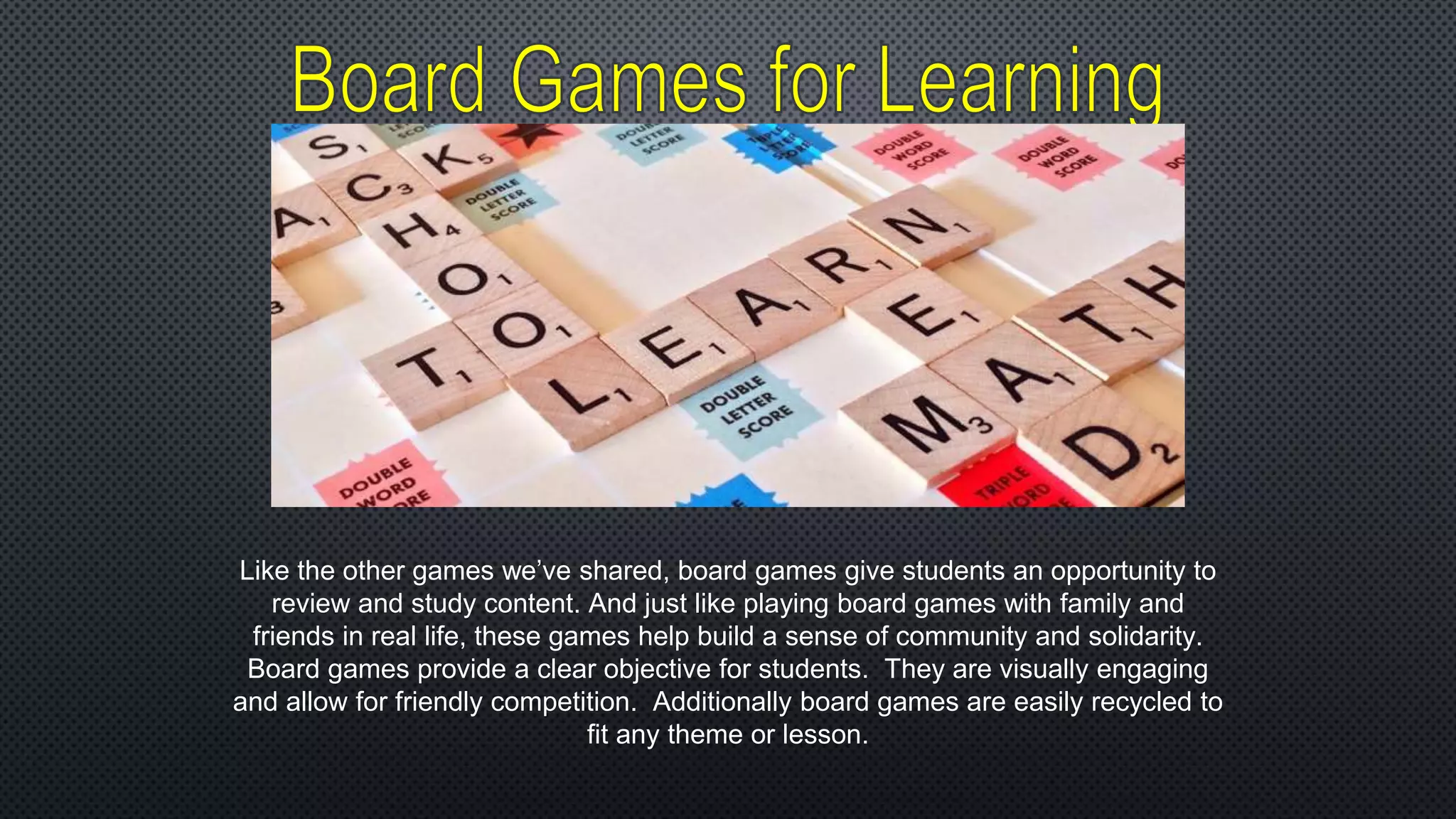
Like the other games we’ve shared, board games give students an opportunity to
review and study content. And just like playing board games with family and
friends in real life, these games help build a sense of community and solidarity.
Board games provide a clear objective for students. They are visually engaging
and allow for friendly competition. Additionally board games are easily recycled to
fit any theme or lesson.
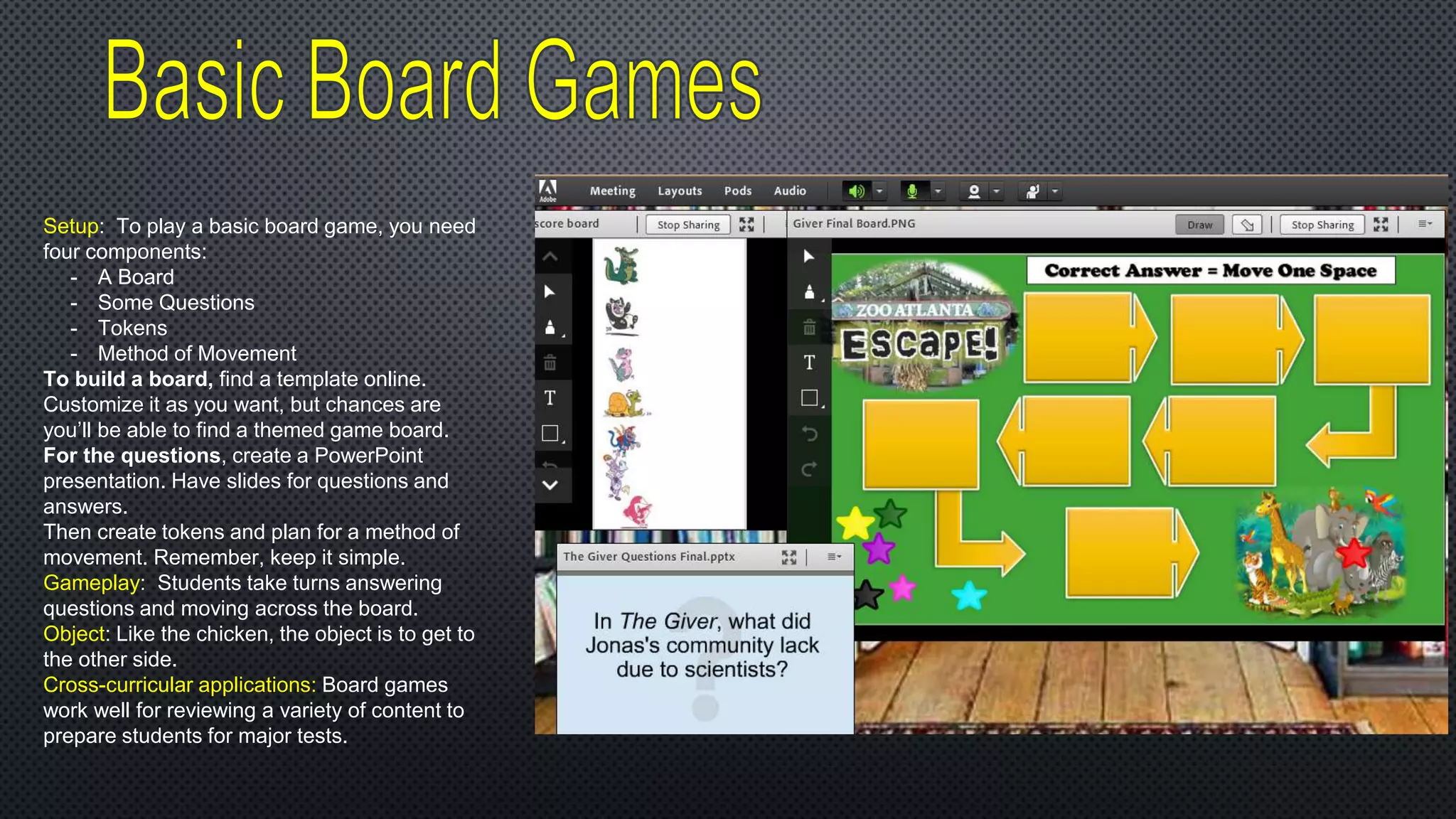
Setup: To play a basic board game, you need
four components:
- A Board
- Some Questions
- Tokens
- Method of Movement
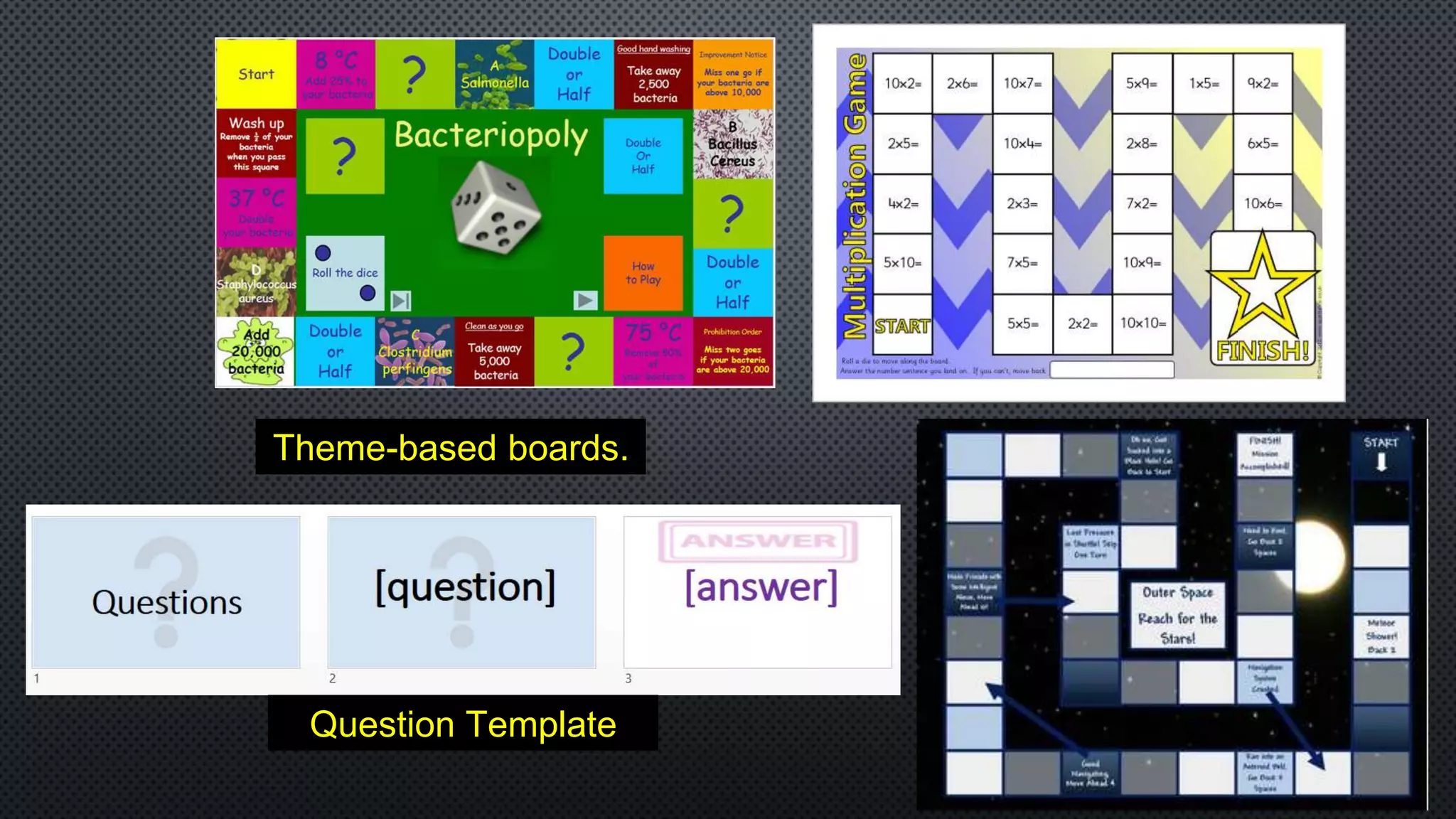
To build a board, find a template online.
Customize it as you want, but chances are
you’ll be able to find a themed game board.
For the questions, create a PowerPoint
presentation. Have slides for questions and
answers.
Then create tokens and plan for a method of
movement. Remember, keep it simple.
Gameplay: Students take turns answering
questions and moving across the board.
Object: Like the chicken, the object is to get to
the other side.
Cross-curricular applications: Board games
work well for reviewing a variety of content to
prepare students for major tests.
Theme-based boards.
Question Template
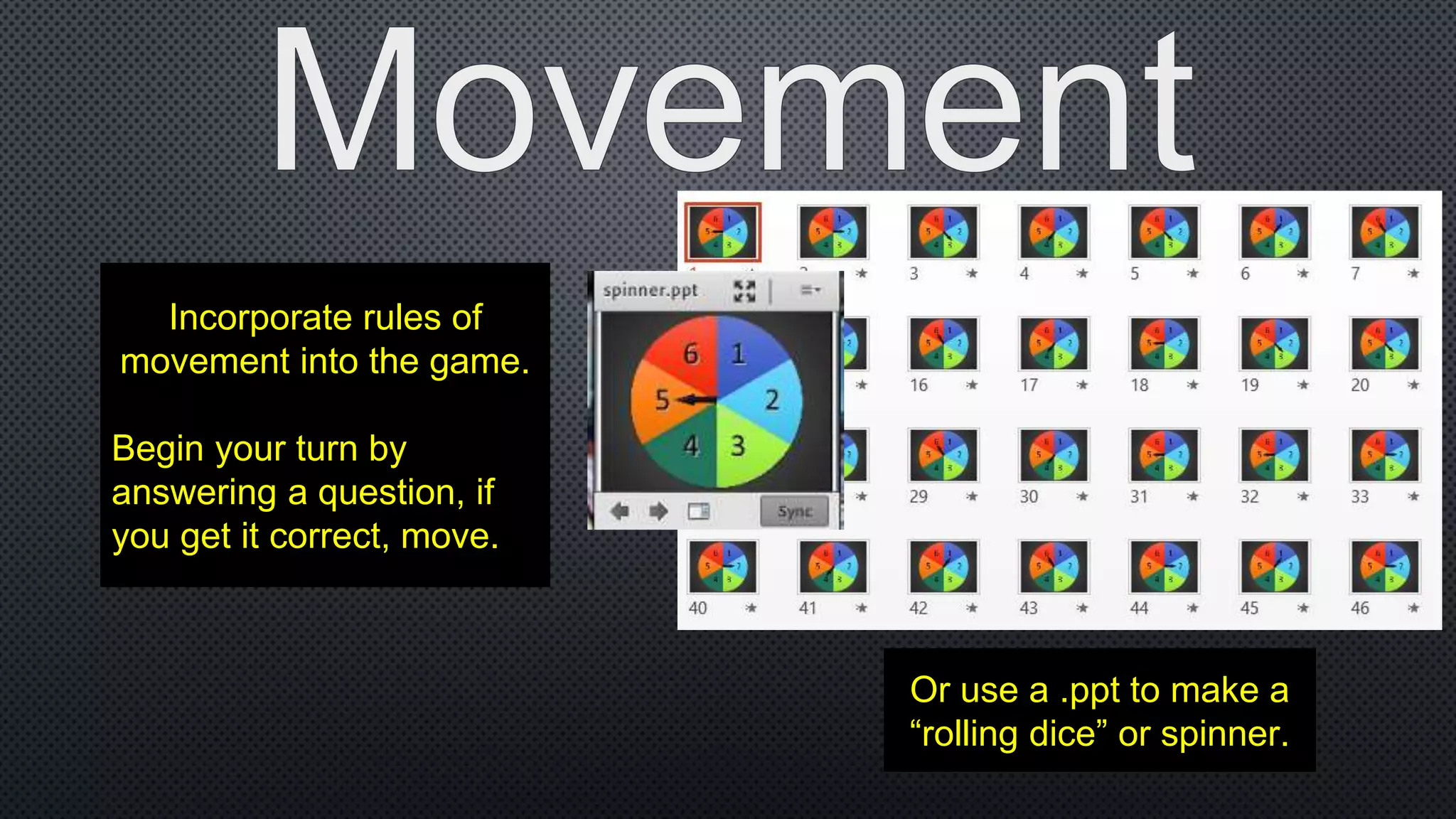
Incorporate rules of
movement into the game.
Begin your turn by
answering a question, if
you get it correct, move.
Or use a .ppt to make a
“rolling dice” or spinner.
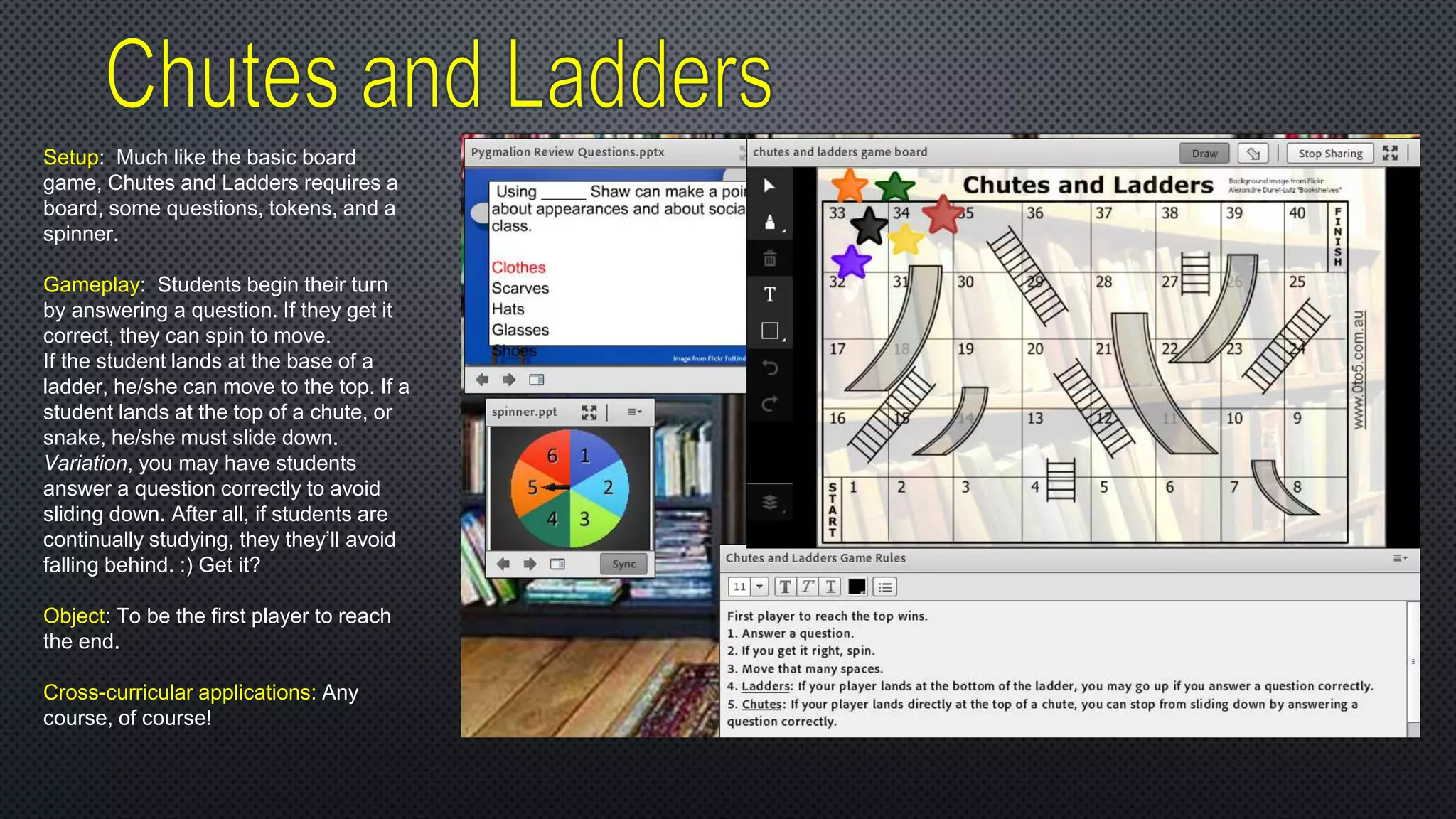
Setup: Much like the basic board
game, Chutes and Ladders requires a
board, some questions, tokens, and a
spinner.
Gameplay: Students begin their turn
by answering a question. If they get it
correct, they can spin to move.
If the student lands at the base of a
ladder, he/she can move to the top. If a
student lands at the top of a chute, or
snake, he/she must slide down.
Variation, you may have students
answer a question correctly to avoid
sliding down. After all, if students are
continually studying, they they’ll avoid
falling behind. :) Get it?
Object: To be the first player to reach
the end.
Cross-curricular applications: Any
course, of course!
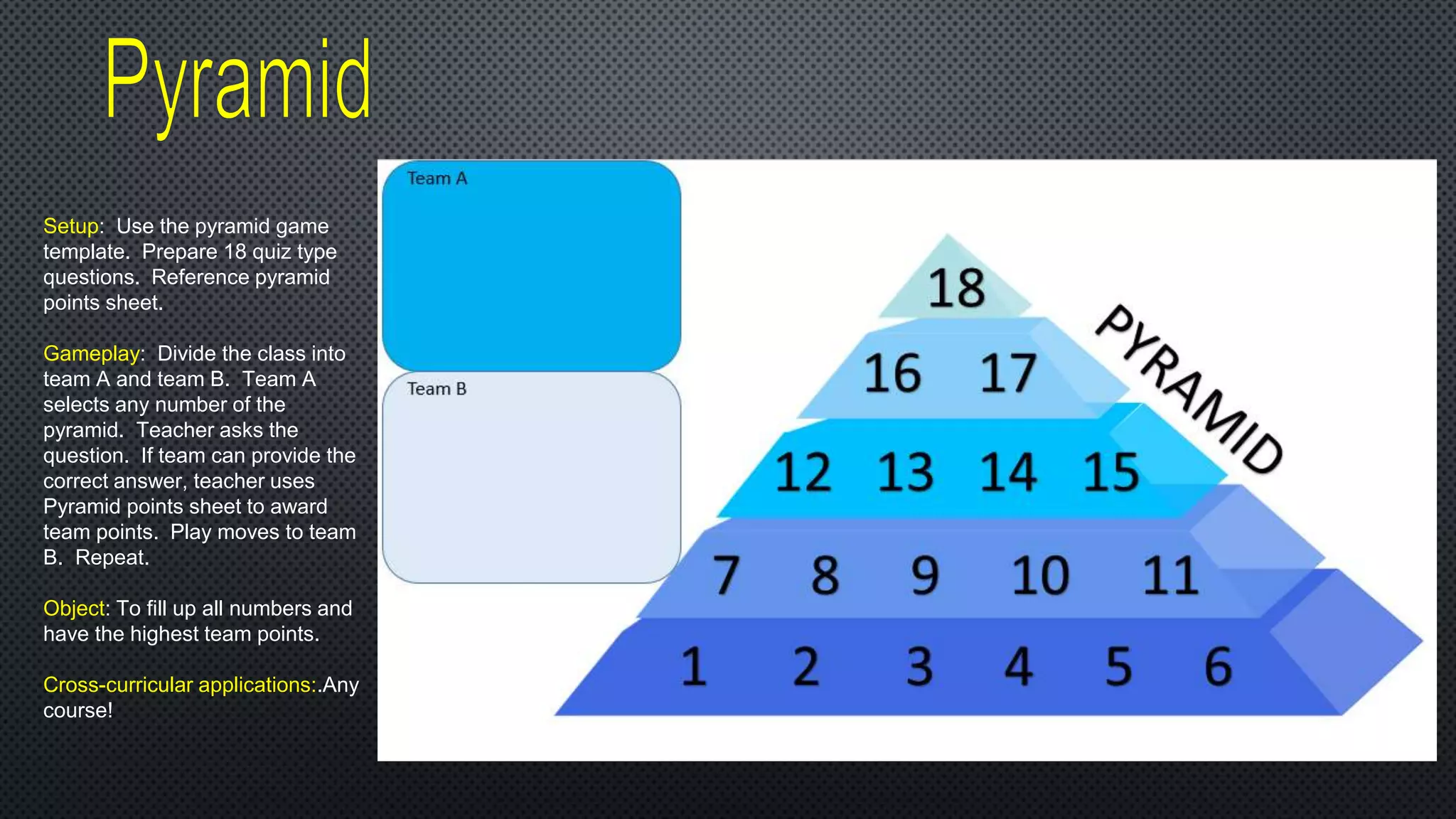
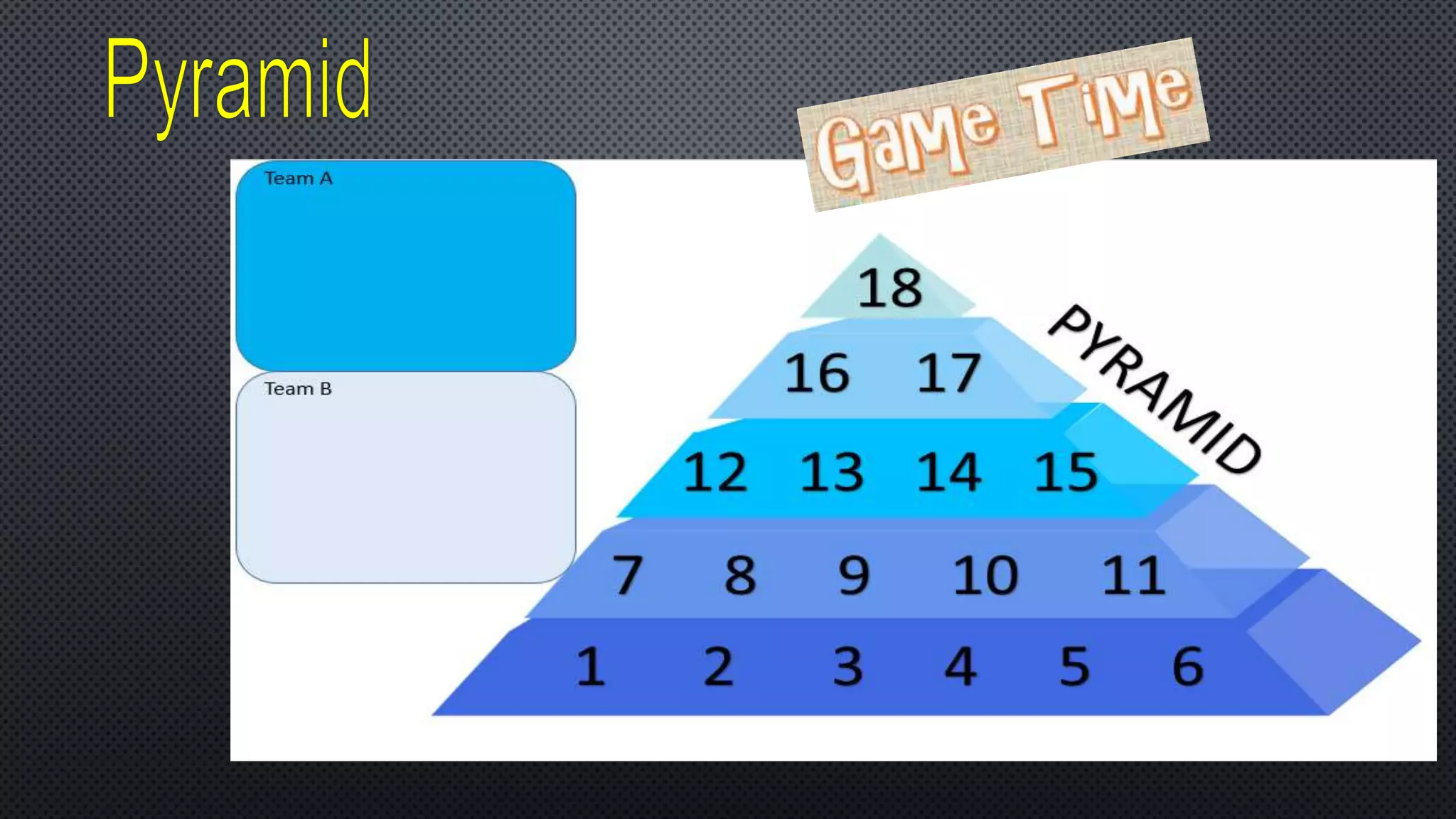
Setup: Use the pyramid game
template. Prepare 18 quiz type
questions. Reference pyramid
points sheet.
Gameplay: Divide the class into
team A and team B. Team A
selects any number of the
pyramid. Teacher asks the
question. If team can provide the
correct answer, teacher uses
Pyramid points sheet to award
team points. Play moves to team
B. Repeat.
Object: To fill up all numbers and
have the highest team points.
Cross-curricular applications:.Any
course!
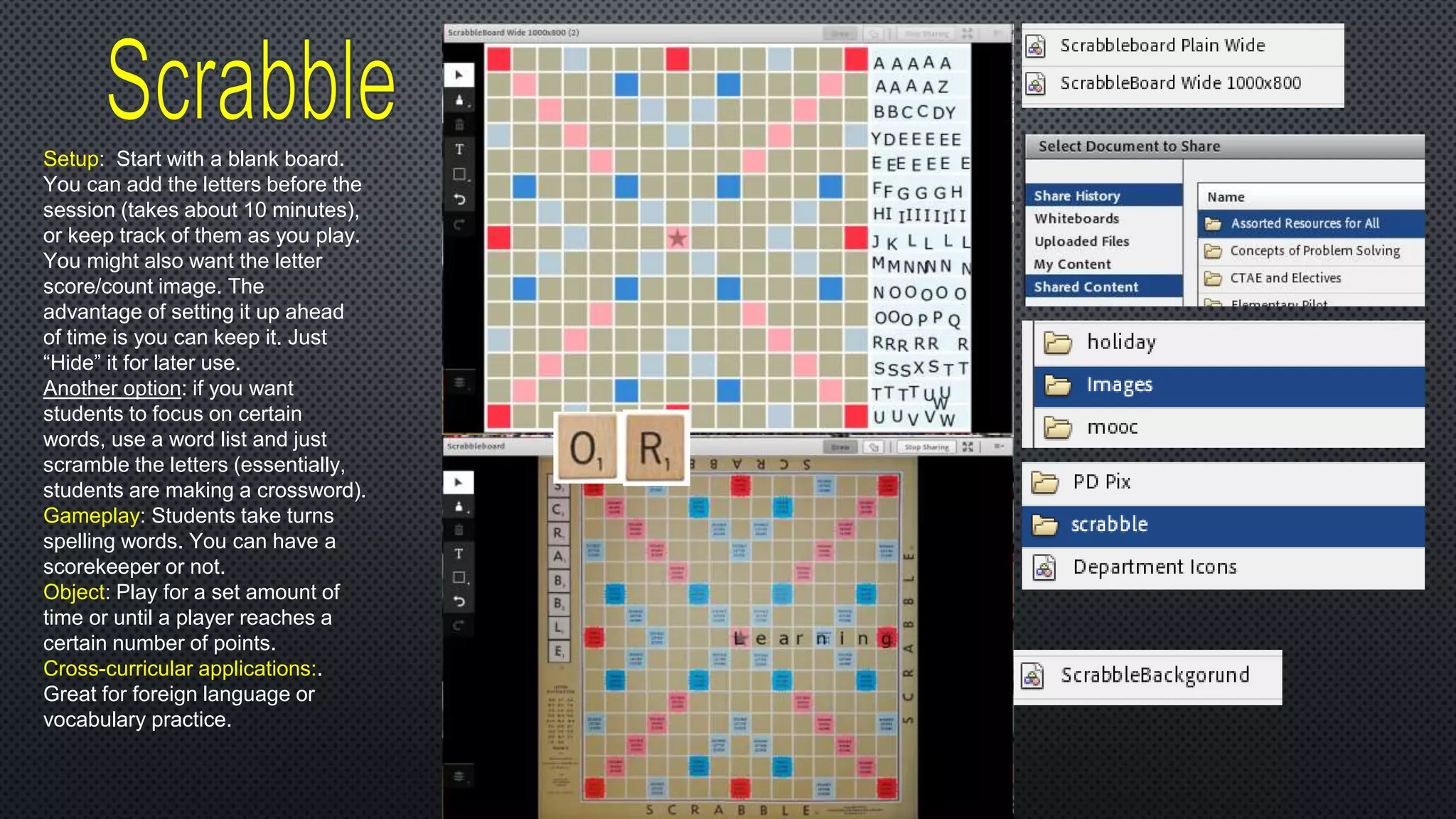
Setup: Start with a blank board.
You can add the letters before the
session (takes about 10 minutes),
or keep track of them as you play.
You might also want the letter
score/count image. The
advantage of setting it up ahead
of time is you can keep it. Just
“Hide” it for later use.
Another option: if you want
students to focus on certain
words, use a word list and just
scramble the letters (essentially,
students are making a crossword).
Gameplay: Students take turns
spelling words. You can have a
scorekeeper or not.
Object: Play for a set amount of
time or until a player reaches a
certain number of points.
Cross-curricular applications:.
Great for foreign language or
vocabulary practice.
Challenge?
Create your own board game.
Use the template.
Play it.
Share it in OneNote.

Game Night Session 3

  • 1.
    SEPTEMBER 28 CASSANDRA GAUL JOYCEBEARDEN GAVS GAME NIGHT
  • 2.
    What will youplay next?
  • 3.
    Like the othergames we’ve shared, board games give students an opportunity to review and study content. And just like playing board games with family and friends in real life, these games help build a sense of community and solidarity. Board games provide a clear objective for students. They are visually engaging and allow for friendly competition. Additionally board games are easily recycled to fit any theme or lesson.
  • 4.
    Setup: To playa basic board game, you need four components: - A Board - Some Questions - Tokens - Method of Movement To build a board, find a template online. Customize it as you want, but chances are you’ll be able to find a themed game board. For the questions, create a PowerPoint presentation. Have slides for questions and answers. Then create tokens and plan for a method of movement. Remember, keep it simple. Gameplay: Students take turns answering questions and moving across the board. Object: Like the chicken, the object is to get to the other side. Cross-curricular applications: Board games work well for reviewing a variety of content to prepare students for major tests.
  • 5.
  • 6.
    Incorporate rules of movementinto the game. Begin your turn by answering a question, if you get it correct, move. Or use a .ppt to make a “rolling dice” or spinner.
  • 7.
    Setup: Much likethe basic board game, Chutes and Ladders requires a board, some questions, tokens, and a spinner. Gameplay: Students begin their turn by answering a question. If they get it correct, they can spin to move. If the student lands at the base of a ladder, he/she can move to the top. If a student lands at the top of a chute, or snake, he/she must slide down. Variation, you may have students answer a question correctly to avoid sliding down. After all, if students are continually studying, they they’ll avoid falling behind. :) Get it? Object: To be the first player to reach the end. Cross-curricular applications: Any course, of course!
  • 9.
    Setup: Use thepyramid game template. Prepare 18 quiz type questions. Reference pyramid points sheet. Gameplay: Divide the class into team A and team B. Team A selects any number of the pyramid. Teacher asks the question. If team can provide the correct answer, teacher uses Pyramid points sheet to award team points. Play moves to team B. Repeat. Object: To fill up all numbers and have the highest team points. Cross-curricular applications:.Any course!
  • 11.
    Setup: Start witha blank board. You can add the letters before the session (takes about 10 minutes), or keep track of them as you play. You might also want the letter score/count image. The advantage of setting it up ahead of time is you can keep it. Just “Hide” it for later use. Another option: if you want students to focus on certain words, use a word list and just scramble the letters (essentially, students are making a crossword). Gameplay: Students take turns spelling words. You can have a scorekeeper or not. Object: Play for a set amount of time or until a player reaches a certain number of points. Cross-curricular applications:. Great for foreign language or vocabulary practice.
  • 12.
    Challenge? Create your ownboard game. Use the template. Play it. Share it in OneNote.

Editor's Notes

  • #4 There are games where there is a clear winner and there are games everyone plays together, no on is left out and everyone has fun learning.
  • #5 http://www.donnayoung.org/homeschooling/games/game-boards.htm http://teachtech.westernu.edu/adding-interactivity-powerpoint-presentations/
  • #13 http://www.take-a-screenshot.org/