
Victoria López
@victoriademates
www.tecnologiaUCM.es
Universidad Complutense de Madrid
1b
2
1b
3
1b
4
5
6
7
8
9
10
11
12
13
14
15
16
17
18
19
20
21
22
23
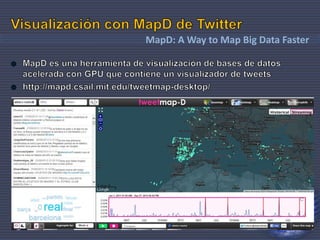
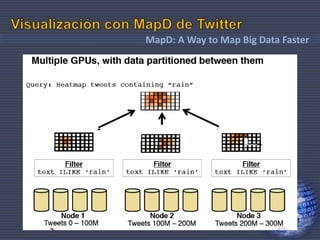
MapD: A Way to Map Big Data Faster
24
MapD: A Way to Map Big Data Faster
25
MapD: A Way to Map Big Data Faster
26
MapD: A Way to Map Big Data Faster
27
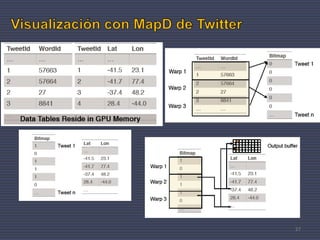
• Una vez programado el procesamiento en paralelo,
el sistema con sentencias clásicas SQL
• Consiguiendo un escalado a cientos de millones de
puntos en milisegundos
August
26th
2014
55 Exchange
Place
NYC
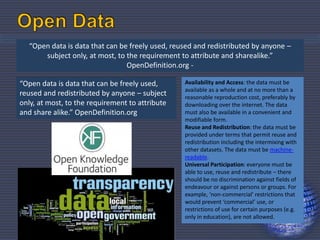
“Open data is data that can be freely used, reused and redistributed by anyone –
subject only, at most, to the requirement to attribute and sharealike.”
OpenDefinition.org -
“Open data is data that can be freely used,
reused and redistributed by anyone – subject
only, at most, to the requirement to attribute
and share alike.” OpenDefinition.org
Availability and Access: the data must be
available as a whole and at no more than a
reasonable reproduction cost, preferably by
downloading over the internet. The data
must also be available in a convenient and
modifiable form.
Reuse and Redistribution: the data must be
provided under terms that permit reuse and
redistribution including the intermixing with
other datasets. The data must be machine-
readable.
Universal Participation: everyone must be
able to use, reuse and redistribute – there
should be no discrimination against fields of
endeavour or against persons or groups. For
example, ‘non-commercial’ restrictions that
would prevent ‘commercial’ use, or
restrictions of use for certain purposes (e.g.
only in education), are not allowed.
30
31
32
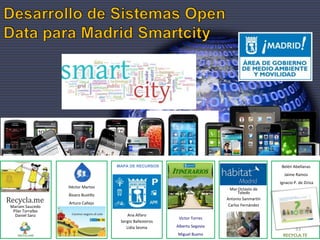
Mariam Saucedo
Pilar Torralbo
Daniel Sanz
Recycla.me
Ana Alfaro
Sergio Ballesteros
Lidia Sesma
Héctor Martos
Álvaro Bustillo
Arturo Callejo
Belén Abellanas
Jaime Ramos
Ignacio P. de Ziriza
Victor Torres
Alberto Segovia
Miguel Bueno
Mar Octavio de
Toledo
Antonio Sanmartín
Carlos Fernández
MAPA DE RECURSOS
RECYCLA.TE
33
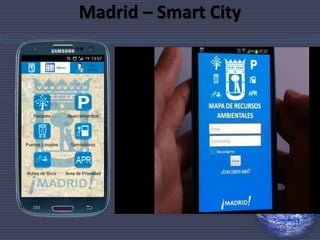
Madrid – Smart City
34

G te c sesion1b-casos de uso

  • 1.
  • 2.
  • 3.
  • 4.
  • 5.
  • 6.
  • 7.
  • 8.
  • 9.
  • 10.
  • 11.
  • 12.
  • 13.
  • 14.
  • 15.
  • 16.
  • 17.
  • 18.
  • 19.
  • 20.
  • 21.
  • 22.
  • 23.
    23 MapD: A Wayto Map Big Data Faster
  • 24.
    24 MapD: A Wayto Map Big Data Faster
  • 25.
    25 MapD: A Wayto Map Big Data Faster
  • 26.
    26 MapD: A Wayto Map Big Data Faster
  • 27.
  • 28.
    • Una vezprogramado el procesamiento en paralelo, el sistema con sentencias clásicas SQL • Consiguiendo un escalado a cientos de millones de puntos en milisegundos
  • 29.
  • 30.
    “Open data isdata that can be freely used, reused and redistributed by anyone – subject only, at most, to the requirement to attribute and sharealike.” OpenDefinition.org - “Open data is data that can be freely used, reused and redistributed by anyone – subject only, at most, to the requirement to attribute and share alike.” OpenDefinition.org Availability and Access: the data must be available as a whole and at no more than a reasonable reproduction cost, preferably by downloading over the internet. The data must also be available in a convenient and modifiable form. Reuse and Redistribution: the data must be provided under terms that permit reuse and redistribution including the intermixing with other datasets. The data must be machine- readable. Universal Participation: everyone must be able to use, reuse and redistribute – there should be no discrimination against fields of endeavour or against persons or groups. For example, ‘non-commercial’ restrictions that would prevent ‘commercial’ use, or restrictions of use for certain purposes (e.g. only in education), are not allowed. 30
  • 31.
  • 32.
  • 33.
    Mariam Saucedo Pilar Torralbo DanielSanz Recycla.me Ana Alfaro Sergio Ballesteros Lidia Sesma Héctor Martos Álvaro Bustillo Arturo Callejo Belén Abellanas Jaime Ramos Ignacio P. de Ziriza Victor Torres Alberto Segovia Miguel Bueno Mar Octavio de Toledo Antonio Sanmartín Carlos Fernández MAPA DE RECURSOS RECYCLA.TE 33
  • 34.

Editor's Notes

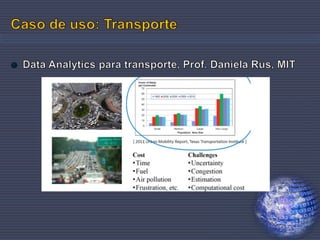
  • #5 Todos queremos mejores formas de comunicación, vías más rápidas, más cómodas, pero es impensable cambiar o ampliar las redes de carreteras, por ejemplo, para solventar un problema de horas punta, o acumulación de tráfico o falta de aparcamiento en una zona
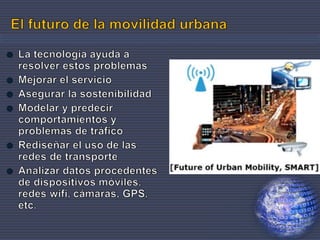
  • #6 La tecnología ayuda a resolver estos problemas. Es posible mejorar el nivel de servicio del transporte público, la sostenibilidad, modelar y predecir el comportamiento y los problemas de tráfico. Personalizar y optimizar. Repensar como diseñar y analizar las redes de transporte.
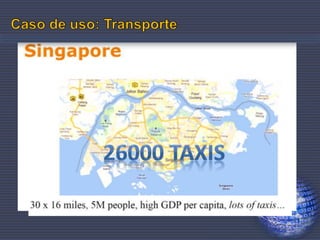
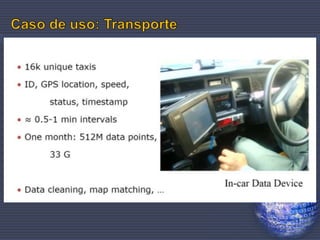
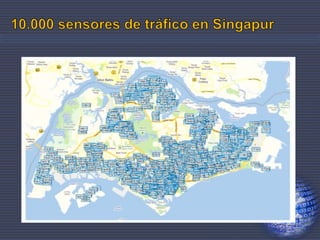
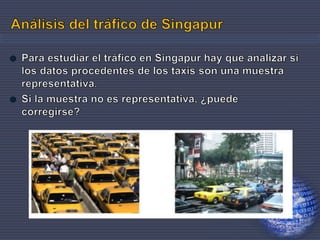
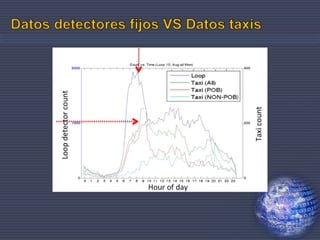
  • #9 Se recolectaron durante meses los datos de 16.000 taxis: identificador, geolocalización, velocidad, estatus (libre, ocupado, …), tarifa cobrada,… los datos se recolectan en intervalos de tiempo de medio a un minuto. En un solo mes se recolectaron 512 megas y de datos y
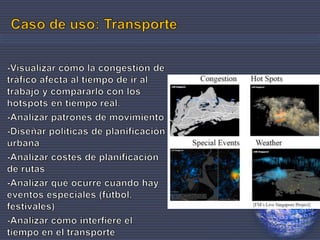
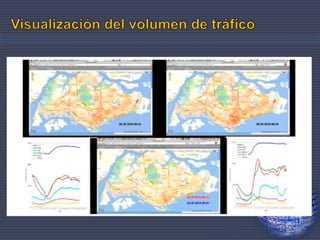
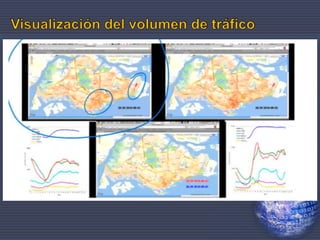
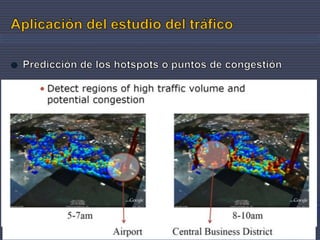
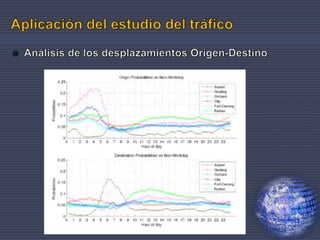
  • #18 Mediante la monitorización de los taxis se puede predecir el movimiento de las personas. Donde está la gente en cada momento.
  • #19 Casi todos los taxis entre las 5 y las 8 de la mañana van al aeropuerto, porque salen los vuelos nacionales e internacionales
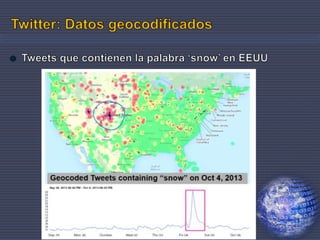
  • #22 Se marca la zona de Denver muy popular por los resorts de sky y abajo se marca pro zoas