Promoting yourself via social media
                            Dirk Singer, Twitter - dirktherabbit
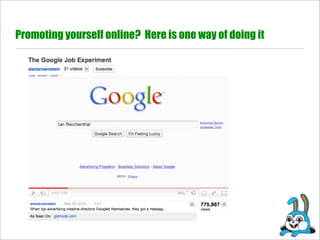
Promoting yourself online? Here is one way of doing it
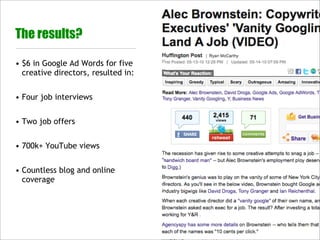
The results?

• $6 in Google Ad Words for five
  creative directors, resulted in:


• Four job interviews


• Two job offers


• 700k+ YouTube views


• Countless blog and online
  coverage
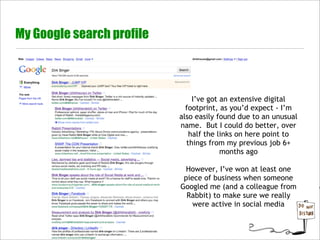
My Google search profile


                               I’ve got an extensive digital
                             footprint, as you’d expect - I’m
                           also easily found due to an unusual
                           name. But I could do better, over
                              half the links on here point to
                             things from my previous job 6+
                                        months ago

                             However, I’ve won at least one
                            piece of business when someone
                           Googled me (and a colleague from
                             Rabbit) to make sure we really
                               were active in social media
Where to find me

• Twitter - twitter.com/dirktherabbit

• Blog - liesdamnedliesstatistics.com

• LinkedIn

• Netvibes - netvibes.com/dirkthecow

• Slideshare - dirkthecow

• Flavors.me/dirktherabbit

• (Also Foursquare, Gowalla)

• I am on Facebook...but have enabled all the privacy settings, and encourage
  anyone using social media professionally to do the same!
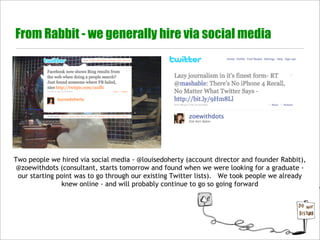
From Rabbit - we generally hire via social media


Two people we hired via social media - @louisedoherty (account director and founder Rabbit),
 @zoewithdots (consultant, starts tomorrow and found when we were looking for a graduate -
 our starting point was to go through our existing Twitter lists). We took people we already
               knew online - and will probably continue to go so going forward
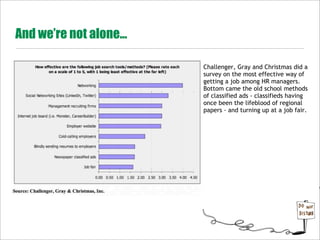
And we’re not alone...

                         Challenger, Gray and Christmas did a
                         survey on the most effective way of
                         getting a job among HR managers.
                         Bottom came the old school methods
                         of classified ads - classifieds having
                         once been the lifeblood of regional
                         papers - and turning up at a job fair.
And we’re not alone...
• A US survey from careerbuilder.com:

• 45% of employers will research a candidate via social media: 29% use Facebook, 26% use
  LinkedIn and 21% use MySpace, the survey found.  One-in-ten (11% ) search blogs, while 7%
  follow candidates on Twitter

• 53% of survey respondents rejected candidates because they posted provocative or
  inappropriate photographs or information.

• 44% passed on a candidate because they saw content related to the person drinking or
  using drugs.

• 35% rejected candidates because they bad-mouthed their previous employer, co-workers
  or clients.

• 24% rejected a candidate because that person lied about his/her qualifications.

• 20% did not hire a candidate because social media revealed that person had shared
  confidential information from a previous employer
Why is a good online footprint important?

• It gives an idea of your personality - much more than a CV (or printed
  document through the post) ever will


• It shows how you communicate and your interests


• It’s convenient - click through links to find out more


• If a job seeker - it shows you are proactive


• It protects your search engine reputation (which is your reputation)
(When looking at an online profile or website): “Customers make a decision within
50 milliseconds about whether or not they trust the firm, and want to do business
with them...or not.”
(Brandflakesforbreakfast)


But it’s important to get what
     you say absolutely right
A look at different tools to
                        use
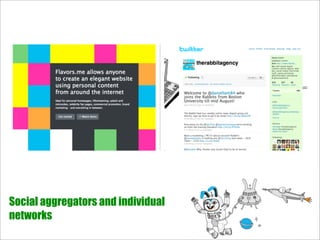
Social aggregators and individual
networks
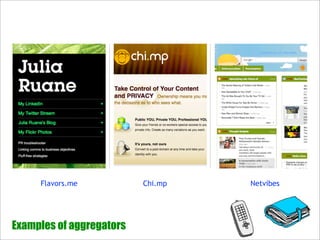
Flavors.me           Chi.mp   Netvibes


Examples of aggregators
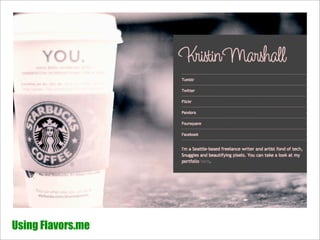
Using Flavors.me
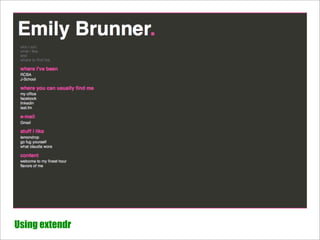
Using extendr
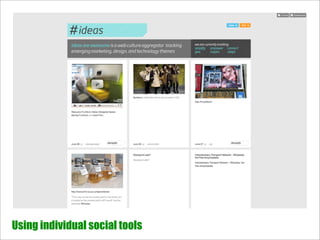
Using individual social tools
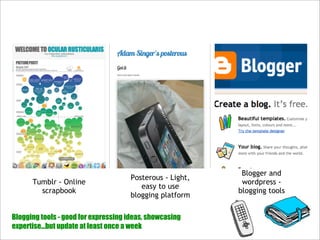
Blogger and
                                     Posterous - Light,
      Tumblr - Online                                      wordpress -
                                        easy to use
        scrapbook                                         blogging tools
                                     blogging platform

Blogging tools - good for expressing ideas, showcasing
expertise...but update at least once a week
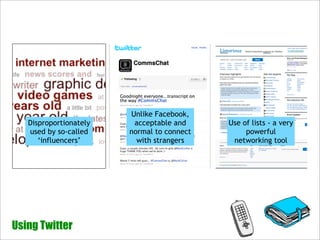
Unlike Facebook,
   Disproportionately    acceptable and     Use of lists - a very
   used by so-called    normal to connect        powerful
      ‘influencers’       with strangers     networking tool


Using Twitter
Starting a Twitter profile

• Create a biog and profile that tells people a bit about yourself with link


• Select 50 people you’d like to follow - mix of industry influencers (use lists)
  and people you know


• Grow your follower / following list organically - don’t (e.g.) follow 500, and
  only have 50 following you back


• Listen but say something too - people won’t follow back a blank page


• Start by responding to what people are saying (means they will see you),
  then move onto to posting links / interesting news
LinkedIn

• Bottom line - make sure you have a profile. It can serve as a substitute CV
  (send out the link)


• Fill in all the career information, find people from previous jobs / companies


• If a small business, claim it on LinkedIn


• Don’t be shy to ask for recommendations - what people say can be used in
  future job applications


• Link to blogs, presentations etc on LinkedIn


• Join the special interest groups
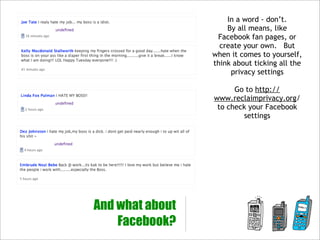
In a word - don’t.
                     By all means, like
                  Facebook fan pages, or
                   create your own. But
                 when it comes to yourself,
                 think about ticking all the
                      privacy settings

                       Go to http://
                 www.reclaimprivacy.org/
                  to check your Facebook
                         settings


And what about
    Facebook?
Contact me - email dirk at therabbitagency.com


Thank you for your time!

Futurising

  • 1.
    Promoting yourself viasocial media Dirk Singer, Twitter - dirktherabbit
  • 2.
    Promoting yourself online?Here is one way of doing it
  • 3.
    The results? • $6in Google Ad Words for five creative directors, resulted in: • Four job interviews • Two job offers • 700k+ YouTube views • Countless blog and online coverage
  • 4.
    My Google searchprofile I’ve got an extensive digital footprint, as you’d expect - I’m also easily found due to an unusual name. But I could do better, over half the links on here point to things from my previous job 6+ months ago However, I’ve won at least one piece of business when someone Googled me (and a colleague from Rabbit) to make sure we really were active in social media
  • 5.
    Where to findme • Twitter - twitter.com/dirktherabbit • Blog - liesdamnedliesstatistics.com • LinkedIn • Netvibes - netvibes.com/dirkthecow • Slideshare - dirkthecow • Flavors.me/dirktherabbit • (Also Foursquare, Gowalla) • I am on Facebook...but have enabled all the privacy settings, and encourage anyone using social media professionally to do the same!
  • 6.
    From Rabbit -we generally hire via social media Two people we hired via social media - @louisedoherty (account director and founder Rabbit), @zoewithdots (consultant, starts tomorrow and found when we were looking for a graduate - our starting point was to go through our existing Twitter lists). We took people we already knew online - and will probably continue to go so going forward
  • 7.
    And we’re notalone... Challenger, Gray and Christmas did a survey on the most effective way of getting a job among HR managers. Bottom came the old school methods of classified ads - classifieds having once been the lifeblood of regional papers - and turning up at a job fair.
  • 8.
    And we’re notalone... • A US survey from careerbuilder.com: • 45% of employers will research a candidate via social media: 29% use Facebook, 26% use LinkedIn and 21% use MySpace, the survey found.  One-in-ten (11% ) search blogs, while 7% follow candidates on Twitter • 53% of survey respondents rejected candidates because they posted provocative or inappropriate photographs or information. • 44% passed on a candidate because they saw content related to the person drinking or using drugs. • 35% rejected candidates because they bad-mouthed their previous employer, co-workers or clients. • 24% rejected a candidate because that person lied about his/her qualifications. • 20% did not hire a candidate because social media revealed that person had shared confidential information from a previous employer
  • 9.
    Why is agood online footprint important? • It gives an idea of your personality - much more than a CV (or printed document through the post) ever will • It shows how you communicate and your interests • It’s convenient - click through links to find out more • If a job seeker - it shows you are proactive • It protects your search engine reputation (which is your reputation)
  • 10.
    (When looking atan online profile or website): “Customers make a decision within 50 milliseconds about whether or not they trust the firm, and want to do business with them...or not.” (Brandflakesforbreakfast) But it’s important to get what you say absolutely right
  • 11.
    A look atdifferent tools to use
  • 12.
    Social aggregators andindividual networks
  • 13.
    Flavors.me Chi.mp Netvibes Examples of aggregators
  • 14.
  • 15.
  • 16.
  • 17.
    Blogger and Posterous - Light, Tumblr - Online wordpress - easy to use scrapbook blogging tools blogging platform Blogging tools - good for expressing ideas, showcasing expertise...but update at least once a week
  • 18.
    Unlike Facebook, Disproportionately acceptable and Use of lists - a very used by so-called normal to connect powerful ‘influencers’ with strangers networking tool Using Twitter
  • 19.
    Starting a Twitterprofile • Create a biog and profile that tells people a bit about yourself with link • Select 50 people you’d like to follow - mix of industry influencers (use lists) and people you know • Grow your follower / following list organically - don’t (e.g.) follow 500, and only have 50 following you back • Listen but say something too - people won’t follow back a blank page • Start by responding to what people are saying (means they will see you), then move onto to posting links / interesting news
  • 20.
    LinkedIn • Bottom line- make sure you have a profile. It can serve as a substitute CV (send out the link) • Fill in all the career information, find people from previous jobs / companies • If a small business, claim it on LinkedIn • Don’t be shy to ask for recommendations - what people say can be used in future job applications • Link to blogs, presentations etc on LinkedIn • Join the special interest groups
  • 21.
    In a word- don’t. By all means, like Facebook fan pages, or create your own. But when it comes to yourself, think about ticking all the privacy settings Go to http:// www.reclaimprivacy.org/ to check your Facebook settings And what about Facebook?
  • 22.
    Contact me -email dirk at therabbitagency.com Thank you for your time!