The Future of Digital Identity
An Initial View for Global Debate and Challenge
15 October 2018
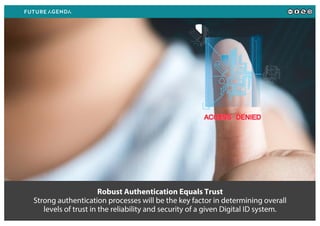
Robust Authentication Equals Trust
Strong authentication processes will be the key factor in determining overall
levels of trust in the reliability and security of a given Digital ID system.
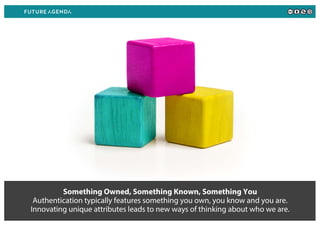
Something Owned, Something Known, Something You
Authentication typically features something you own, you know and you are.
Innovating unique attributes leads to new ways of thinking about who we are.
Convenience Rules
Continuing consumer appetite for convenience drives development of Digital
ID, especially as many processes requiring formal ID feel so old-fashioned today.
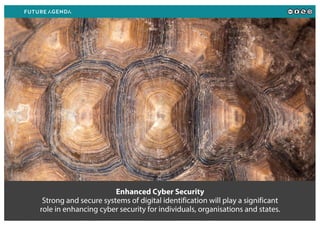
Enhanced Cyber Security
Strong and secure systems of digital identification will play a significant
role in enhancing cyber security for individuals, organisations and states.
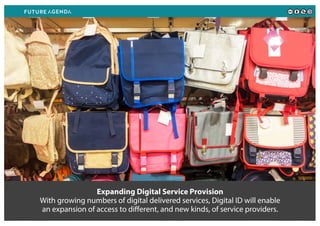
Expanding Digital Service Provision
With growing numbers of digital delivered services, Digital ID will enable
an expansion of access to different, and new kinds, of service providers.
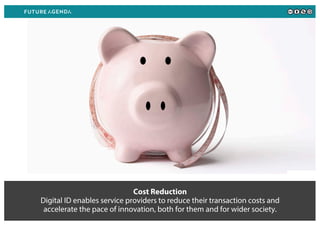
Cost Reduction
Digital ID enables service providers to reduce their transaction costs and
accelerate the pace of innovation, both for them and for wider society.
Blueprint for Success
Global financial transactions and payments infrastructures will provide
us with the ‘blueprint’ for building a truly interoperable Digital ID system.
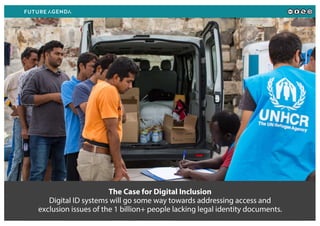
The Case for Digital Inclusion
Digital ID systems will go some way towards addressing access and
exclusion issues of the 1 billion+ people lacking legal identity documents.
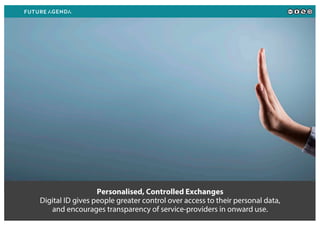
Personalised, Controlled Exchanges
Digital ID gives people greater control over access to their personal data,
and encourages transparency of service-providers in onward use.
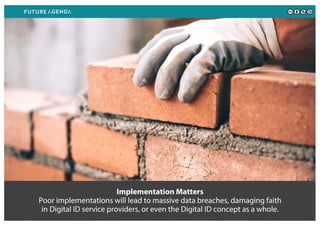
Implementation Matters
Poor implementations will lead to massive data breaches, damaging faith
in Digital ID service providers, or even the Digital ID concept as a whole.
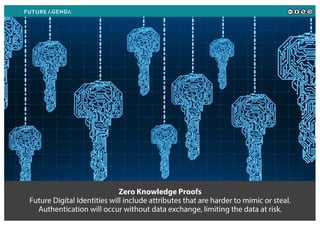
Zero Knowledge Proofs
Future Digital Identities will include attributes that are harder to mimic or steal.
Authentication will occur without data exchange, limiting the data at risk.
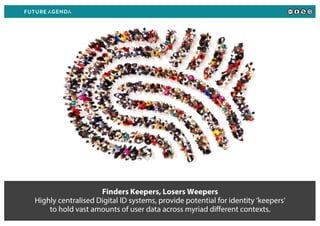
Finders Keepers, Losers Weepers
Highly centralised Digital ID systems, provide potential for identity ‘keepers’
to hold vast amounts of user data across myriad different contexts.
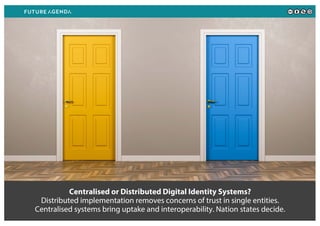
Centralised or Distributed Digital Identity Systems?
Distributed implementation removes concerns of trust in single entities.
Centralised systems bring uptake and interoperability. Nation states decide.
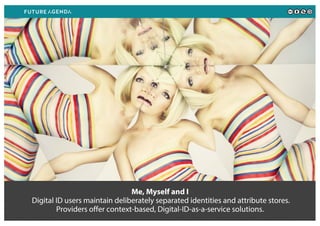
Me, Myself and I
Digital ID users maintain deliberately separated identities and attribute stores.
Providers offer context-based, Digital-ID-as-a-service solutions.
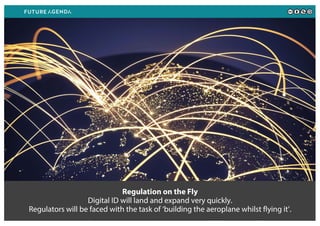
Regulation on the Fly
Digital ID will land and expand very quickly.
Regulators will be faced with the task of ‘building the aeroplane whilst flying it’.
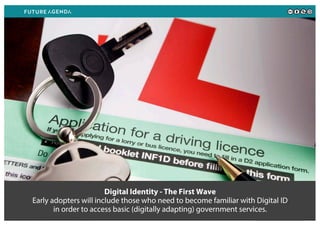
Digital Identity - The First Wave
Early adopters will include those who need to become familiar with Digital ID
in order to access basic (digitally adapting) government services.
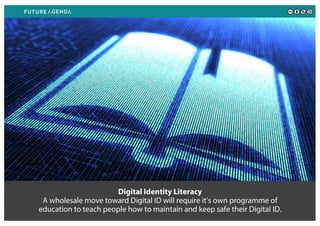
Digital Identity Literacy
A wholesale move toward Digital ID will require it’s own programme of
education to teach people how to maintain and keep safe their Digital ID.
New Biometric Fingerprints
New identity markers, including our ‘routines’, prove useful in detecting fraud,
especially where AI sees changes in behavioural patterns.
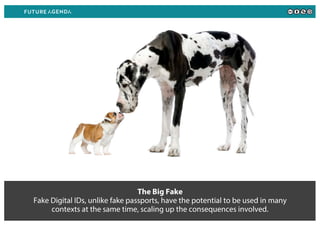
The Big Fake
Fake Digital IDs, unlike fake passports, have the potential to be used in many
contexts at the same time, scaling up the consequences involved.
Re-evaluation of Cyber-risk
Breaches to digital ID systems have the potential to cause catastrophic damage.
Organisations will radically re-evaluate their investment to mitigate it.
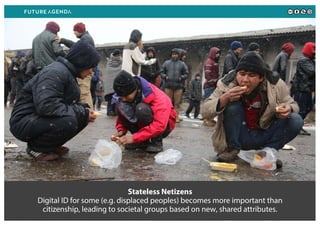
Stateless Netizens
Digital ID for some (e.g. displaced peoples) becomes more important than
citizenship, leading to societal groups based on new, shared attributes.
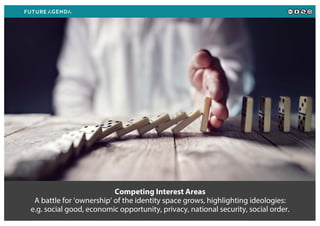
Competing Interest Areas
A battle for ‘ownership’ of the identity space grows, highlighting ideologies:
e.g. social good, economic opportunity, privacy, national security, social order.
Assertion of My Digital Rights
A DI Bill of Rights is already demanded by many. How this is built, by who,
what it includes, and critically, how it is enforced, will be hotly contested.
Data-less business models
Innovations allow users to give access to data without sharing it.
New models centre on positive, privacy-preserving, consumer propositions.
Many Internets
Lacking a single global solution, the internet splits into different realms: e.g.
Open-Internet, Dark Internet and Internet Islands (local Digital ID systems).
Super-surveillance
Digital ID’s highly accurate and relatively clean surveillance data,
will lead to mass surveillance in some states and market economies.
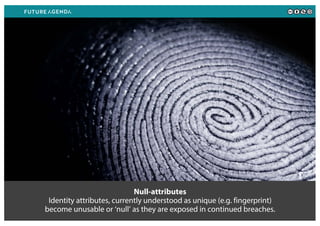
Null-attributes
Identity attributes, currently understood as unique (e.g. fingerprint)
become unusable or ‘null’ as they are exposed in continued breaches.
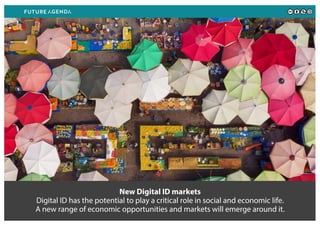
New Digital ID markets
Digital ID has the potential to play a critical role in social and economic life.
A new range of economic opportunities and markets will emerge around it.
Future Agenda, 84 Brook Street, London W1K 5EH +44 203 0088 141
www.futureagenda.org | www.futureagenda.net | @futureagenda

Future of digital identity initial perspective - final lr

  • 1.
    The Future ofDigital Identity An Initial View for Global Debate and Challenge 15 October 2018
  • 2.
    Robust Authentication EqualsTrust Strong authentication processes will be the key factor in determining overall levels of trust in the reliability and security of a given Digital ID system.
  • 3.
    Something Owned, SomethingKnown, Something You Authentication typically features something you own, you know and you are. Innovating unique attributes leads to new ways of thinking about who we are.
  • 4.
    Convenience Rules Continuing consumerappetite for convenience drives development of Digital ID, especially as many processes requiring formal ID feel so old-fashioned today.
  • 5.
    Enhanced Cyber Security Strongand secure systems of digital identification will play a significant role in enhancing cyber security for individuals, organisations and states.
  • 6.
    Expanding Digital ServiceProvision With growing numbers of digital delivered services, Digital ID will enable an expansion of access to different, and new kinds, of service providers.
  • 7.
    Cost Reduction Digital IDenables service providers to reduce their transaction costs and accelerate the pace of innovation, both for them and for wider society.
  • 8.
    Blueprint for Success Globalfinancial transactions and payments infrastructures will provide us with the ‘blueprint’ for building a truly interoperable Digital ID system.
  • 9.
    The Case forDigital Inclusion Digital ID systems will go some way towards addressing access and exclusion issues of the 1 billion+ people lacking legal identity documents.
  • 10.
    Personalised, Controlled Exchanges DigitalID gives people greater control over access to their personal data, and encourages transparency of service-providers in onward use.
  • 11.
    Implementation Matters Poor implementationswill lead to massive data breaches, damaging faith in Digital ID service providers, or even the Digital ID concept as a whole.
  • 12.
    Zero Knowledge Proofs FutureDigital Identities will include attributes that are harder to mimic or steal. Authentication will occur without data exchange, limiting the data at risk.
  • 13.
    Finders Keepers, LosersWeepers Highly centralised Digital ID systems, provide potential for identity ‘keepers’ to hold vast amounts of user data across myriad different contexts.
  • 14.
    Centralised or DistributedDigital Identity Systems? Distributed implementation removes concerns of trust in single entities. Centralised systems bring uptake and interoperability. Nation states decide.
  • 15.
    Me, Myself andI Digital ID users maintain deliberately separated identities and attribute stores. Providers offer context-based, Digital-ID-as-a-service solutions.
  • 16.
    Regulation on theFly Digital ID will land and expand very quickly. Regulators will be faced with the task of ‘building the aeroplane whilst flying it’.
  • 17.
    Digital Identity -The First Wave Early adopters will include those who need to become familiar with Digital ID in order to access basic (digitally adapting) government services.
  • 18.
    Digital Identity Literacy Awholesale move toward Digital ID will require it’s own programme of education to teach people how to maintain and keep safe their Digital ID.
  • 19.
    New Biometric Fingerprints Newidentity markers, including our ‘routines’, prove useful in detecting fraud, especially where AI sees changes in behavioural patterns.
  • 20.
    The Big Fake FakeDigital IDs, unlike fake passports, have the potential to be used in many contexts at the same time, scaling up the consequences involved.
  • 21.
    Re-evaluation of Cyber-risk Breachesto digital ID systems have the potential to cause catastrophic damage. Organisations will radically re-evaluate their investment to mitigate it.
  • 22.
    Stateless Netizens Digital IDfor some (e.g. displaced peoples) becomes more important than citizenship, leading to societal groups based on new, shared attributes.
  • 23.
    Competing Interest Areas Abattle for ‘ownership’ of the identity space grows, highlighting ideologies: e.g. social good, economic opportunity, privacy, national security, social order.
  • 24.
    Assertion of MyDigital Rights A DI Bill of Rights is already demanded by many. How this is built, by who, what it includes, and critically, how it is enforced, will be hotly contested.
  • 25.
    Data-less business models Innovationsallow users to give access to data without sharing it. New models centre on positive, privacy-preserving, consumer propositions.
  • 26.
    Many Internets Lacking asingle global solution, the internet splits into different realms: e.g. Open-Internet, Dark Internet and Internet Islands (local Digital ID systems).
  • 27.
    Super-surveillance Digital ID’s highlyaccurate and relatively clean surveillance data, will lead to mass surveillance in some states and market economies.
  • 28.
    Null-attributes Identity attributes, currentlyunderstood as unique (e.g. fingerprint) become unusable or ‘null’ as they are exposed in continued breaches.
  • 29.
    New Digital IDmarkets Digital ID has the potential to play a critical role in social and economic life. A new range of economic opportunities and markets will emerge around it.
  • 30.
    Future Agenda, 84Brook Street, London W1K 5EH +44 203 0088 141 www.futureagenda.org | www.futureagenda.net | @futureagenda