2022
FUNDAMENTAL SKILLS
OF VOLLEYBALL GAME
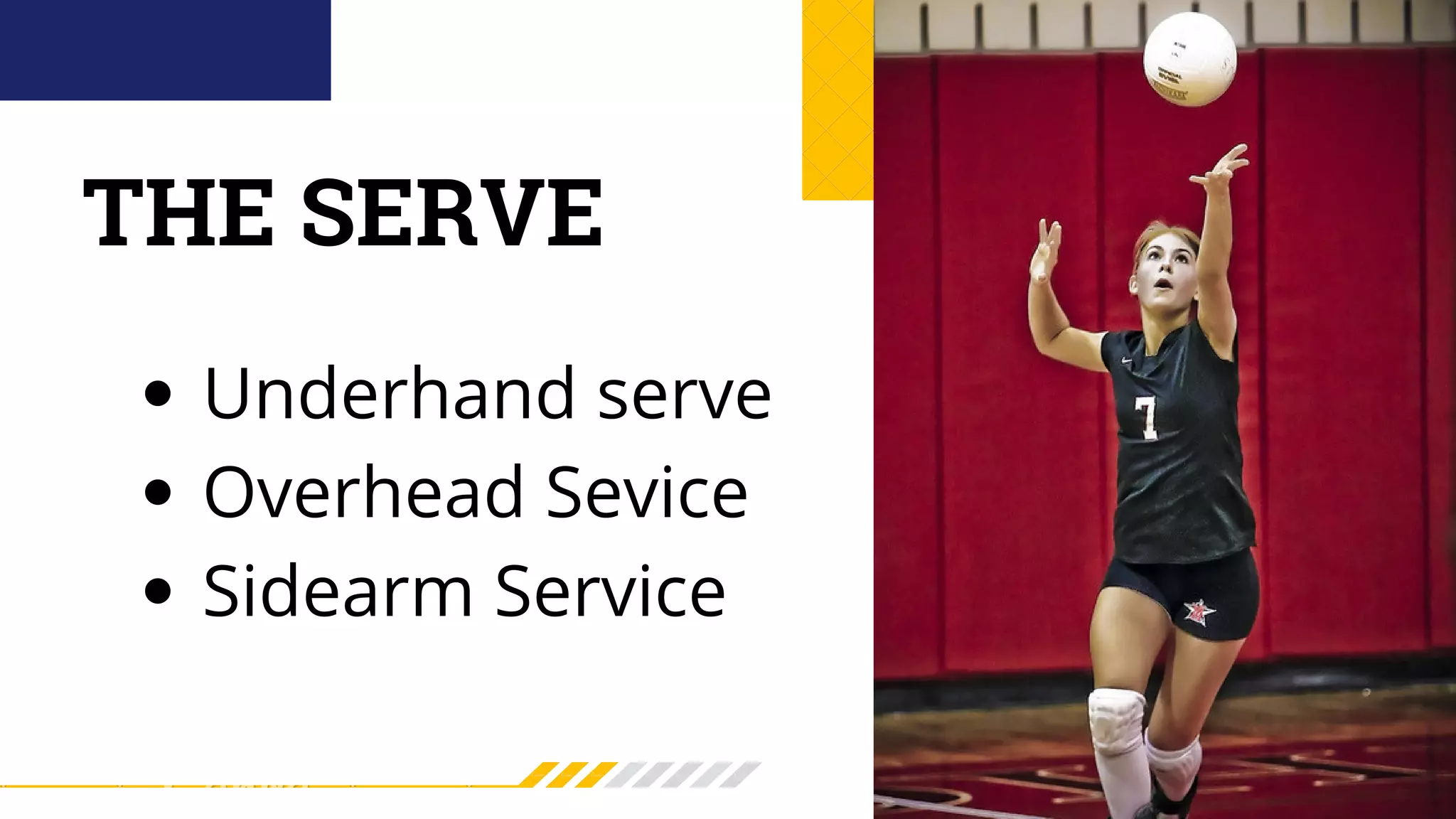
THE SERVE
Underhand serve
Overhead Sevice
Sidearm Service
UNDERHAND SERVICE
Preparatory Position:
Server faces net with L foot frward. ball is held
about waist level palm of L hand in front of the
right leg.
Body Action:
Swing R arm backward shifting weight to rear
foot. to strike ball swing R arm forward from the
shoulder shifting weight to front foot, and striken
or hit ball with open hand or fist closed a left
hand release of ball.
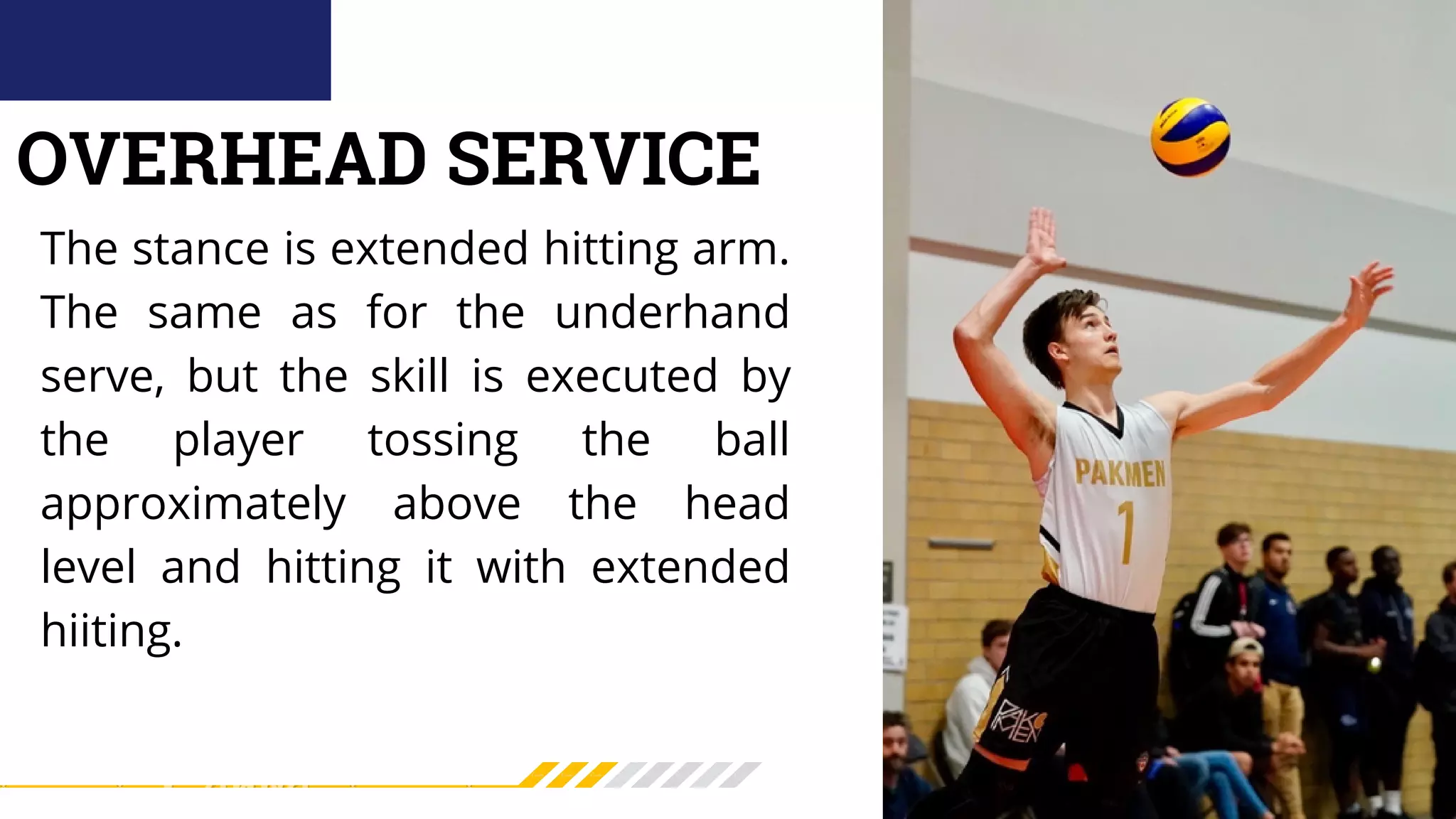
OVERHEAD SERVICE
The stance is extended hitting arm.
The same as for the underhand
serve, but the skill is executed by
the player tossing the ball
approximately above the head
level and hitting it with extended
hiiting.
SIDEARM SERVICE
The chief advantage of this method
is the deceptive twist or curve
which secured if skill is done
properly. However, like overhand
serve, it is very unreliable.
SIDE ARM SERVICE
Preparatory Position:
Server is turned with left side
closer to the net. Ball is held
shoulder level palm of L hand with
stretched or half- strecthed
SIDE ARM SERVICE
Body action
Right arm is drawn back and then it
swing forwar follows throghd
contacting the ball. Ball may be hit
directly out of the hand or it may
tossed into the air few inches high.
The hitting arm follows through
parallel floor.
THE PASS
UNDERHAND
PASS
OVERHAND
PASS
SPECIAL
PASS
THE PASS
A served ball or any ball coming
from the opponent's side recieved
or stopped by the other team with
any parts of the body, but the most
usual and effective way is with the
hand. Common fault in recieving is
holding. To avoid this, most coaches
advocate putting close of hands
together and sometimes up to the
lebows so that the ball is stopped
by the fists , wrists or forearms.
Preparatory Position:
Elbow are bent so that the arms extend in front of
body. Hand are close together. finger cupped.
Body Action:
As ball comes down , knees bend and forearms
lowered to a position lower that the waist. Upward
force is applied to ball by straightening knees and
lifting arms in continous or simultaneous
movement. Play ball on " cushions " of fingers and
thumbs, the ball not touching the palm of hands .
UNDERHAND PASS
Preparatory Position:
Arms are raised with elbows bent and held away from
body at shoulder level. Hands are in front of the chest ,
finger pointing toward opposite hand. palms are facing
away from the body, fingers cupped so that the ball is
played with the finger.
Body Action:
As ball approaches , knees are bent and trunk leans
back slightly. A backward step may be taken by either
foot. to impart force to ball, straight the knees and
trunk with an upward extension of arms. Play ball with
"ten points" formed by finger in front of face.
OVERHAND PASS
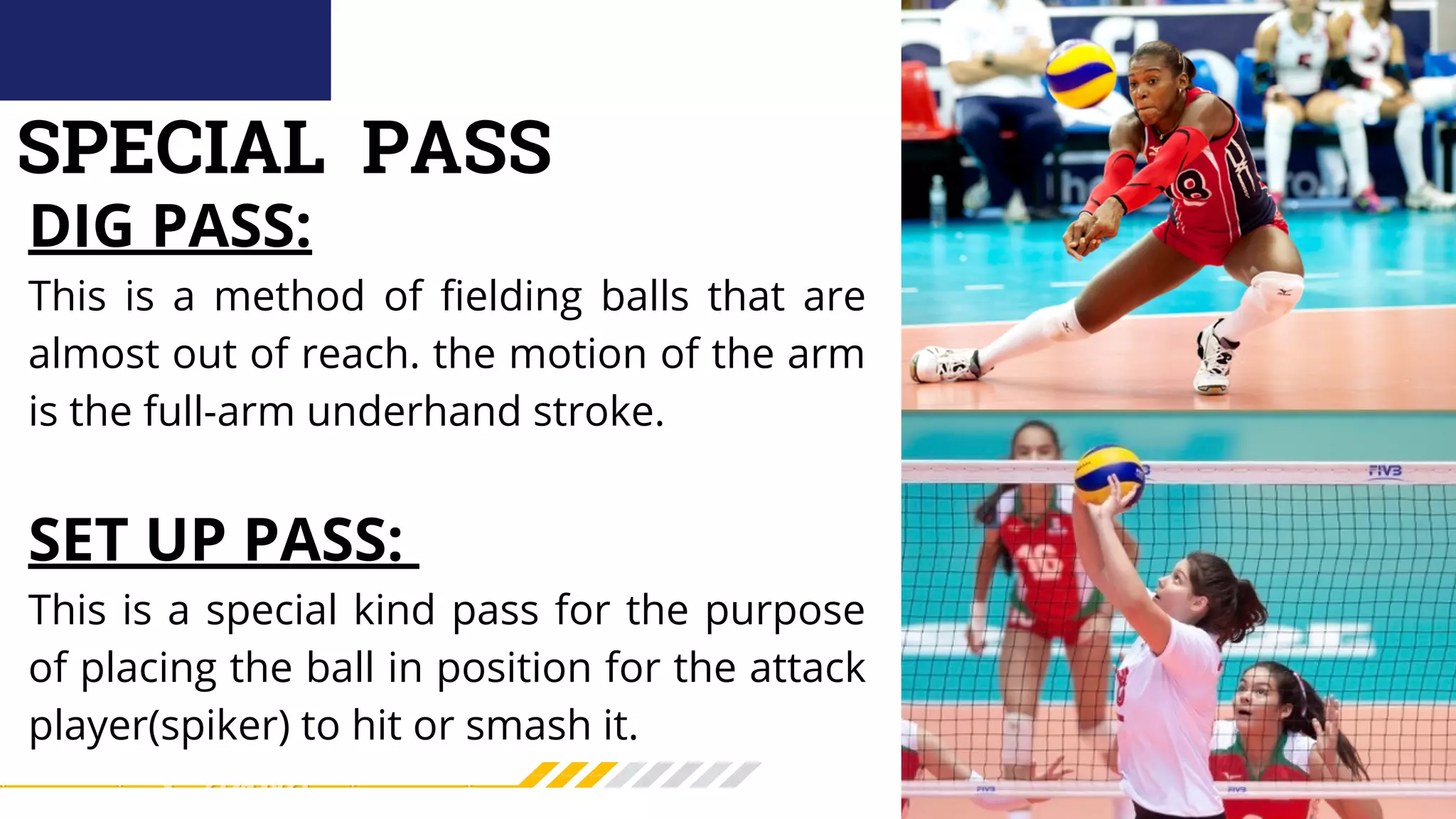
DIG PASS:
This is a method of fielding balls that are
almost out of reach. the motion of the arm
is the full-arm underhand stroke.
SET UP PASS:
This is a special kind pass for the purpose
of placing the ball in position for the attack
player(spiker) to hit or smash it.
SPECIAL PASS
Spiking is done by hitting the ball over or
above the net with any strong force or
smash such that ball falls in a downward
direction. For an effective startegy,
however, the spike can be modified by just
making the ball roll of the hands over the
net into the opponents ' court. The
objective is to make the opponents commit
faults or error.
THE ATTACK
Blocking is the effort of the
defensive team to stop a spike. This
is done by putting the finger and
hand above the the net and in front
of the ball so that the spiked ball
may be returned to the spiker's
court with diminished or lesser
force in order for the other players
to be able to handle it.
THE DEFENSE

Fundamental Skills volleyball.pdf

  • 1.
  • 2.
    THE SERVE Underhand serve OverheadSevice Sidearm Service
  • 3.
    UNDERHAND SERVICE Preparatory Position: Serverfaces net with L foot frward. ball is held about waist level palm of L hand in front of the right leg. Body Action: Swing R arm backward shifting weight to rear foot. to strike ball swing R arm forward from the shoulder shifting weight to front foot, and striken or hit ball with open hand or fist closed a left hand release of ball.
  • 4.
    OVERHEAD SERVICE The stanceis extended hitting arm. The same as for the underhand serve, but the skill is executed by the player tossing the ball approximately above the head level and hitting it with extended hiiting.
  • 5.
    SIDEARM SERVICE The chiefadvantage of this method is the deceptive twist or curve which secured if skill is done properly. However, like overhand serve, it is very unreliable.
  • 6.
    SIDE ARM SERVICE PreparatoryPosition: Server is turned with left side closer to the net. Ball is held shoulder level palm of L hand with stretched or half- strecthed
  • 7.
    SIDE ARM SERVICE Bodyaction Right arm is drawn back and then it swing forwar follows throghd contacting the ball. Ball may be hit directly out of the hand or it may tossed into the air few inches high. The hitting arm follows through parallel floor.
  • 8.
  • 9.
    THE PASS A servedball or any ball coming from the opponent's side recieved or stopped by the other team with any parts of the body, but the most usual and effective way is with the hand. Common fault in recieving is holding. To avoid this, most coaches advocate putting close of hands together and sometimes up to the lebows so that the ball is stopped by the fists , wrists or forearms.
  • 10.
    Preparatory Position: Elbow arebent so that the arms extend in front of body. Hand are close together. finger cupped. Body Action: As ball comes down , knees bend and forearms lowered to a position lower that the waist. Upward force is applied to ball by straightening knees and lifting arms in continous or simultaneous movement. Play ball on " cushions " of fingers and thumbs, the ball not touching the palm of hands . UNDERHAND PASS
  • 11.
    Preparatory Position: Arms areraised with elbows bent and held away from body at shoulder level. Hands are in front of the chest , finger pointing toward opposite hand. palms are facing away from the body, fingers cupped so that the ball is played with the finger. Body Action: As ball approaches , knees are bent and trunk leans back slightly. A backward step may be taken by either foot. to impart force to ball, straight the knees and trunk with an upward extension of arms. Play ball with "ten points" formed by finger in front of face. OVERHAND PASS
  • 12.
    DIG PASS: This isa method of fielding balls that are almost out of reach. the motion of the arm is the full-arm underhand stroke. SET UP PASS: This is a special kind pass for the purpose of placing the ball in position for the attack player(spiker) to hit or smash it. SPECIAL PASS
  • 13.
    Spiking is doneby hitting the ball over or above the net with any strong force or smash such that ball falls in a downward direction. For an effective startegy, however, the spike can be modified by just making the ball roll of the hands over the net into the opponents ' court. The objective is to make the opponents commit faults or error. THE ATTACK
  • 14.
    Blocking is theeffort of the defensive team to stop a spike. This is done by putting the finger and hand above the the net and in front of the ball so that the spiked ball may be returned to the spiker's court with diminished or lesser force in order for the other players to be able to handle it. THE DEFENSE