Lecture 4
Pulse &Respiratory Rate
Prepared by
Mrs :Najya Yusif Ahmed
Pulse rate(PR)
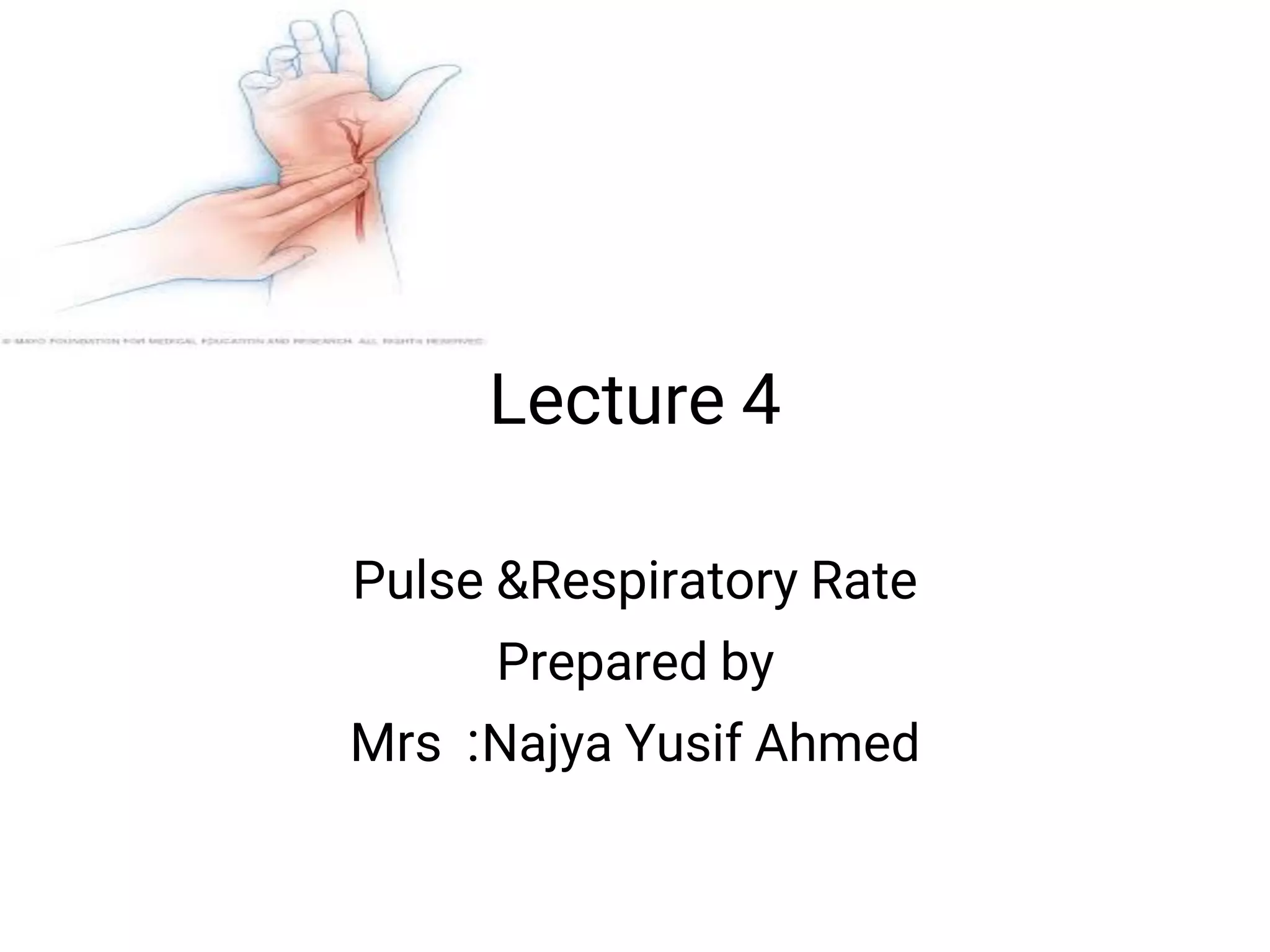
Pulse/heart rate is the wave of blood in the artery
created by contraction of the left ventricle during a
cardiac cycle.
Normal pulse rate range for an adult is between 60-100
beats per minute .
Types of Pulse rate
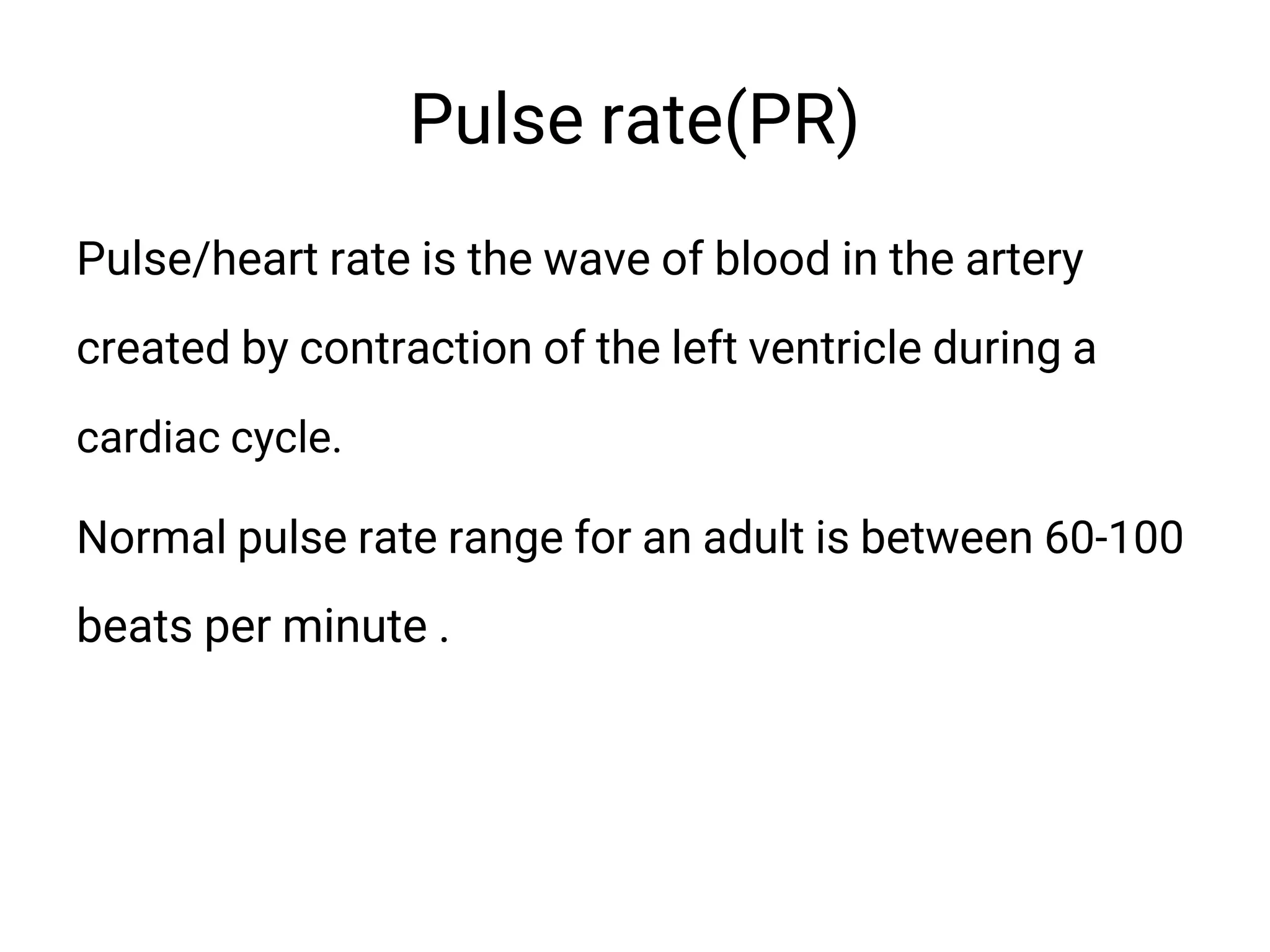
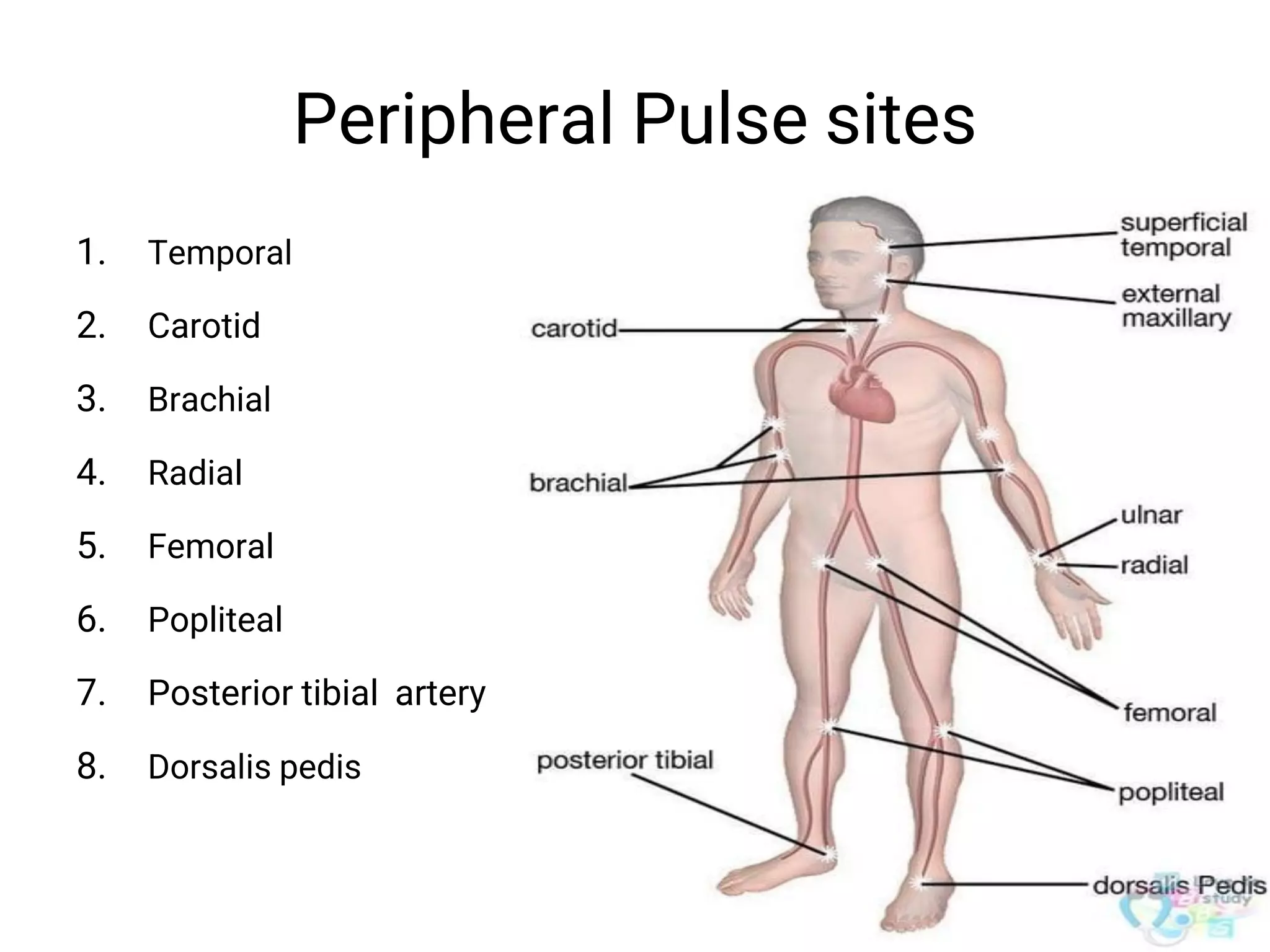
• Peripheral pulses that can be felt at the periphery of the body
by palpating an artery over a bony prominence.
Examples are
carotid, radial and popliteal pulses.
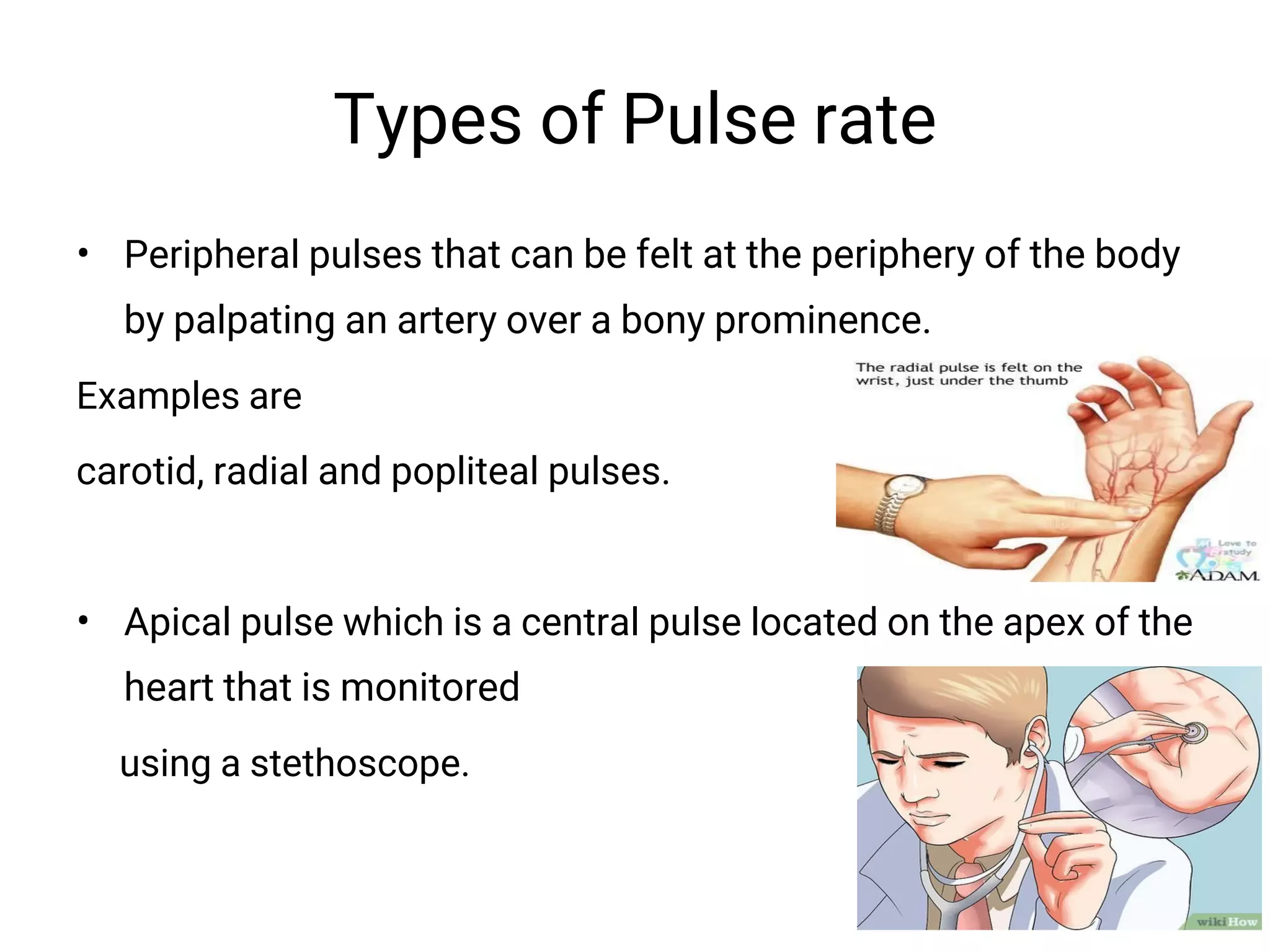
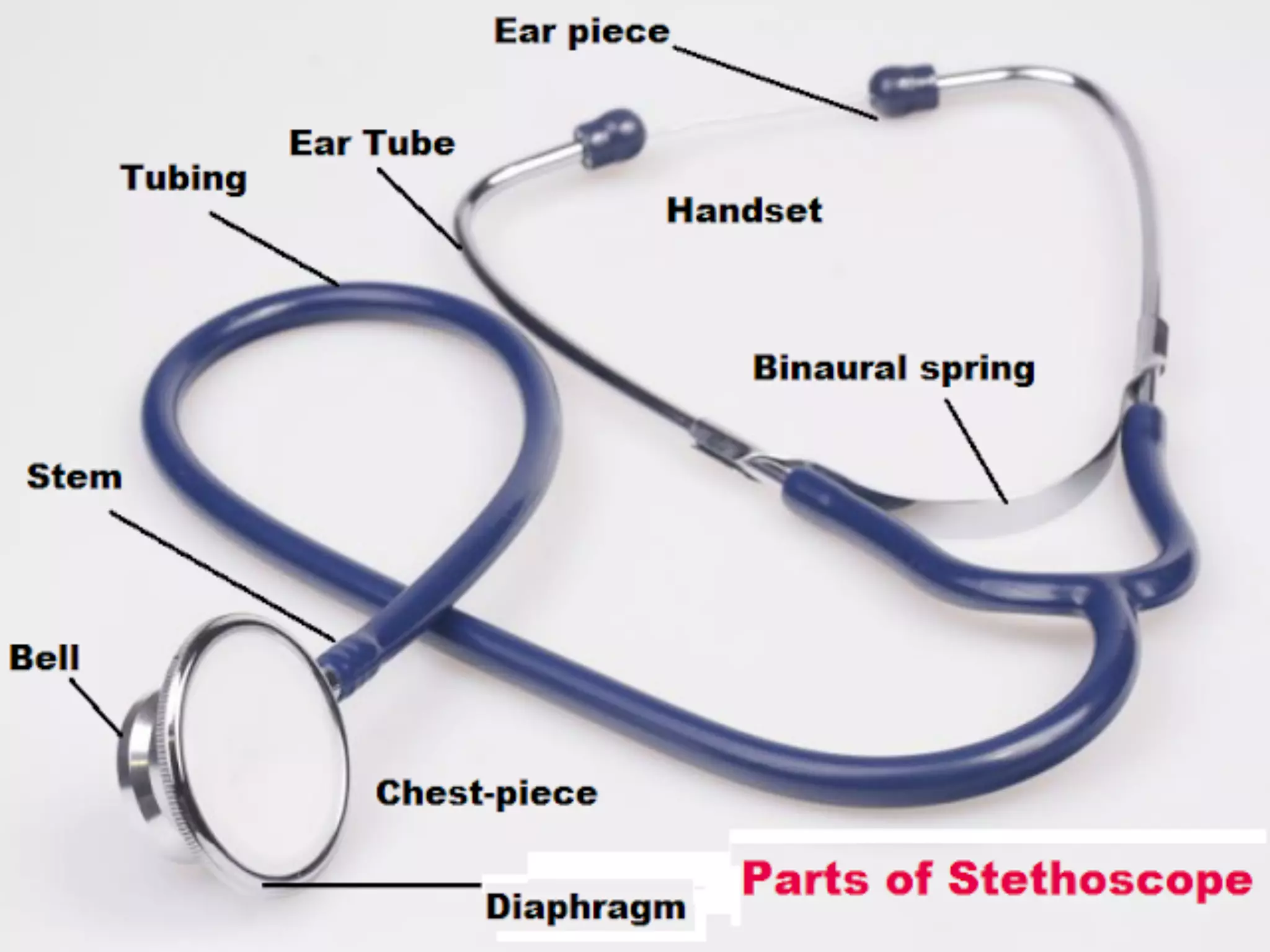
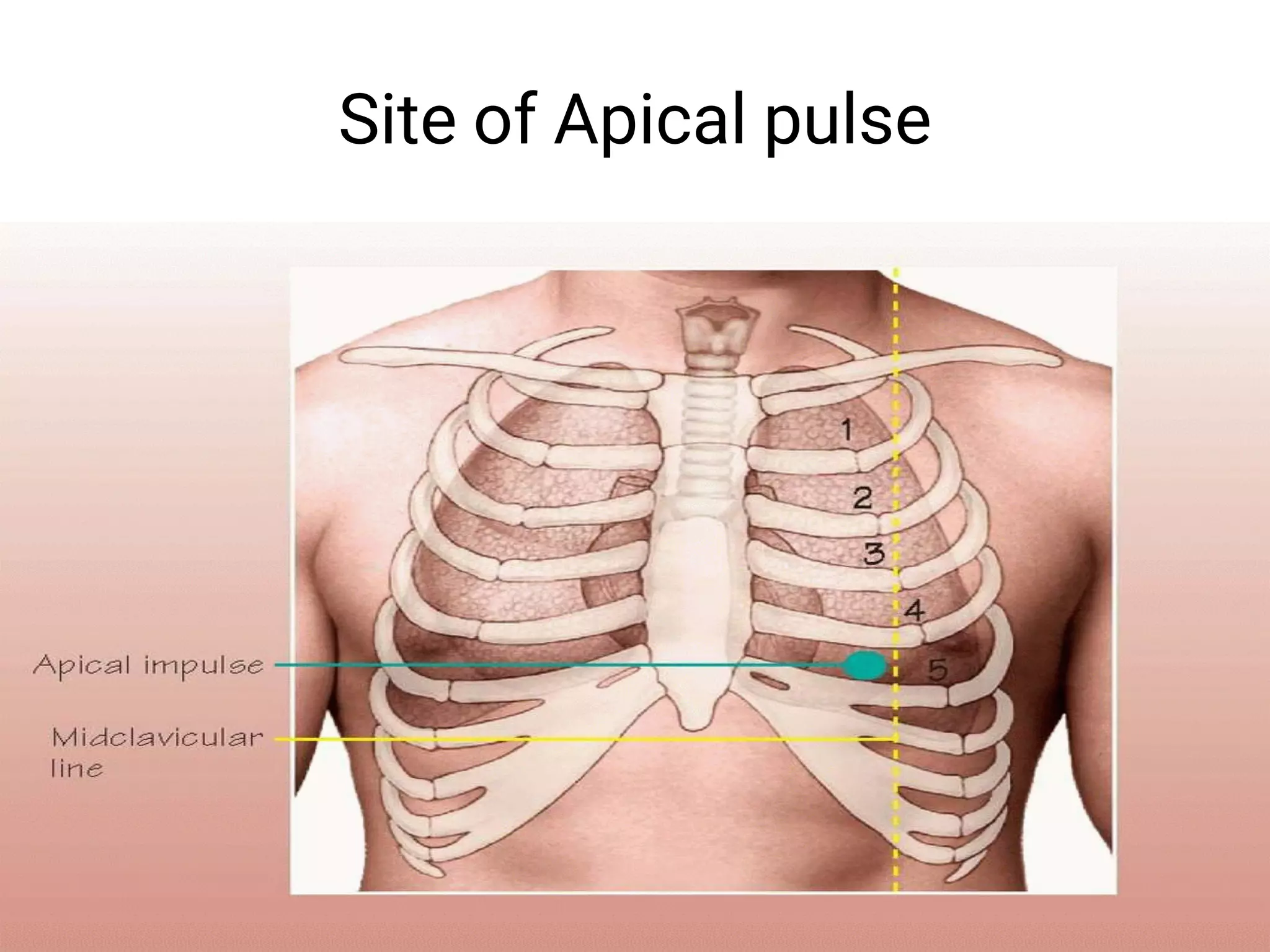
• Apical pulse which is a central pulse located on the apex of the
heart that is monitored
using a stethoscope.
Site of Apical pulse
Peripheral Pulse sites
1. Temporal
2. Carotid
3. Brachial
4. Radial
5. Femoral
6. Popliteal
7. Posterior tibial artery
8. Dorsalis pedis
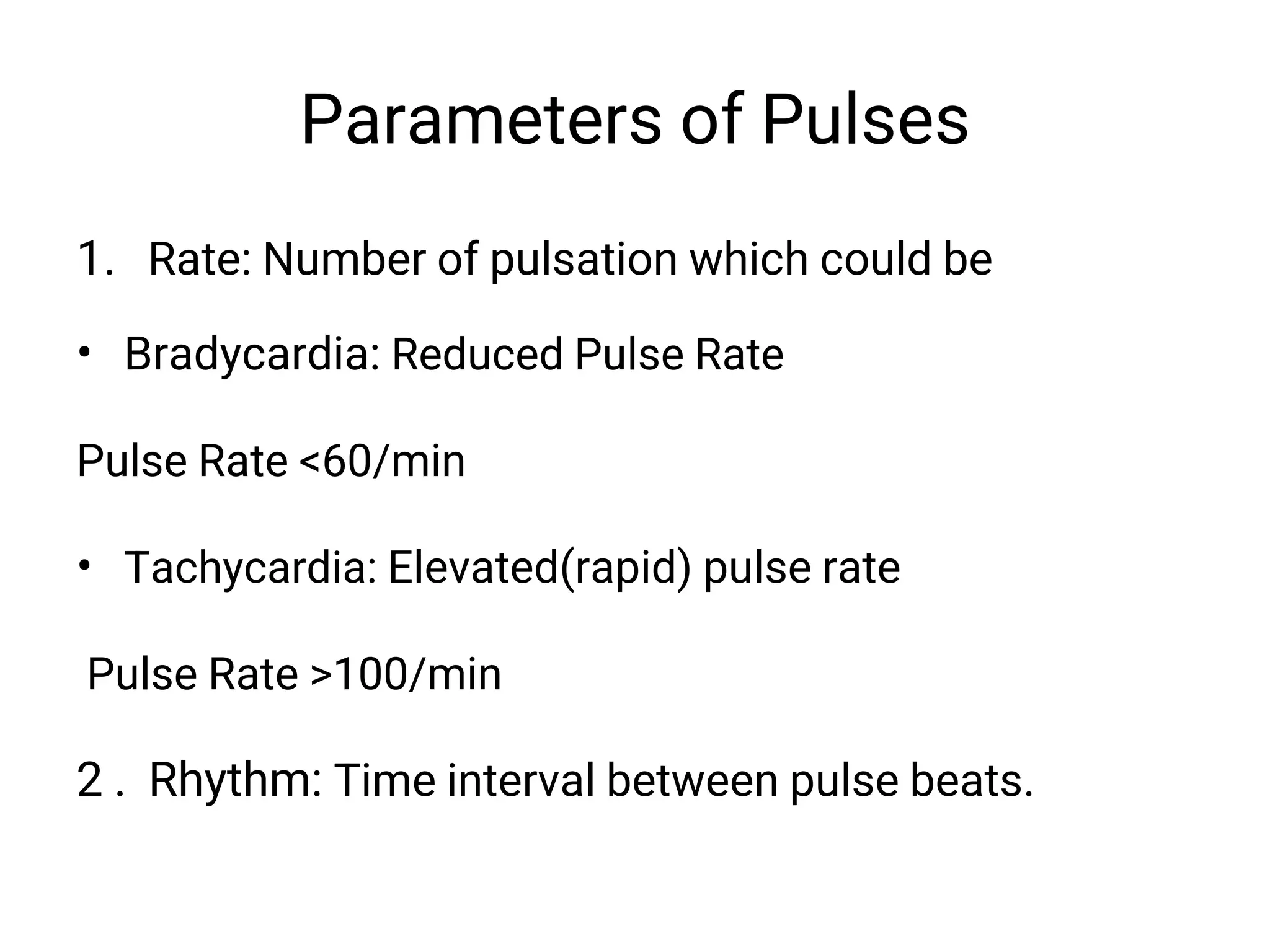
Parameters of Pulses
1. Rate: Number of pulsation which could be
• Bradycardia: Reduced Pulse Rate
Pulse Rate <60/min
• Tachycardia: Elevated(rapid) pulse rate
Pulse Rate >100/min
2 . Rhythm: Time interval between pulse beats.
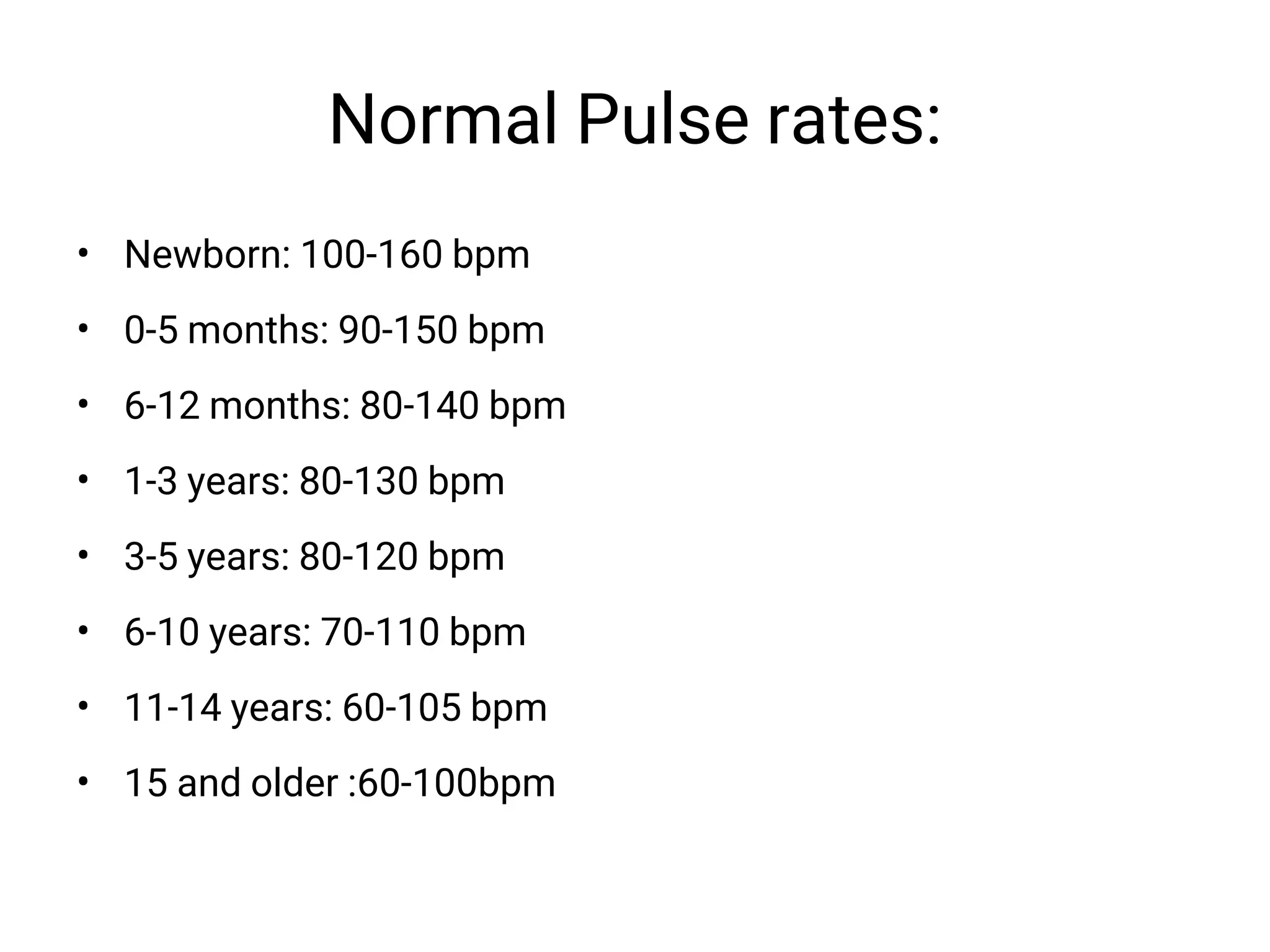
Normal Pulse rates:
• Newborn: 100-160 bpm
• 0-5 months: 90-150 bpm
• 6-12 months: 80-140 bpm
• 1-3 years: 80-130 bpm
• 3-5 years: 80-120 bpm
• 6-10 years: 70-110 bpm
• 11-14 years: 60-105 bpm
• 15 and older :60-100bpm
Respiratory rate(RR)
Respiratory rate is the number of breaths you take per minute. The
normal respiration rate for an adult at rest is 12 to 20 breaths per
minute.
• Bradypnea is the medical term used to define breathing that is
abnormally slow.
• Less than 12 breathes per minute.
• Tachypnea is the medical term used to define an elevated
respiratory rate.
• more than 20 breathes per minute.
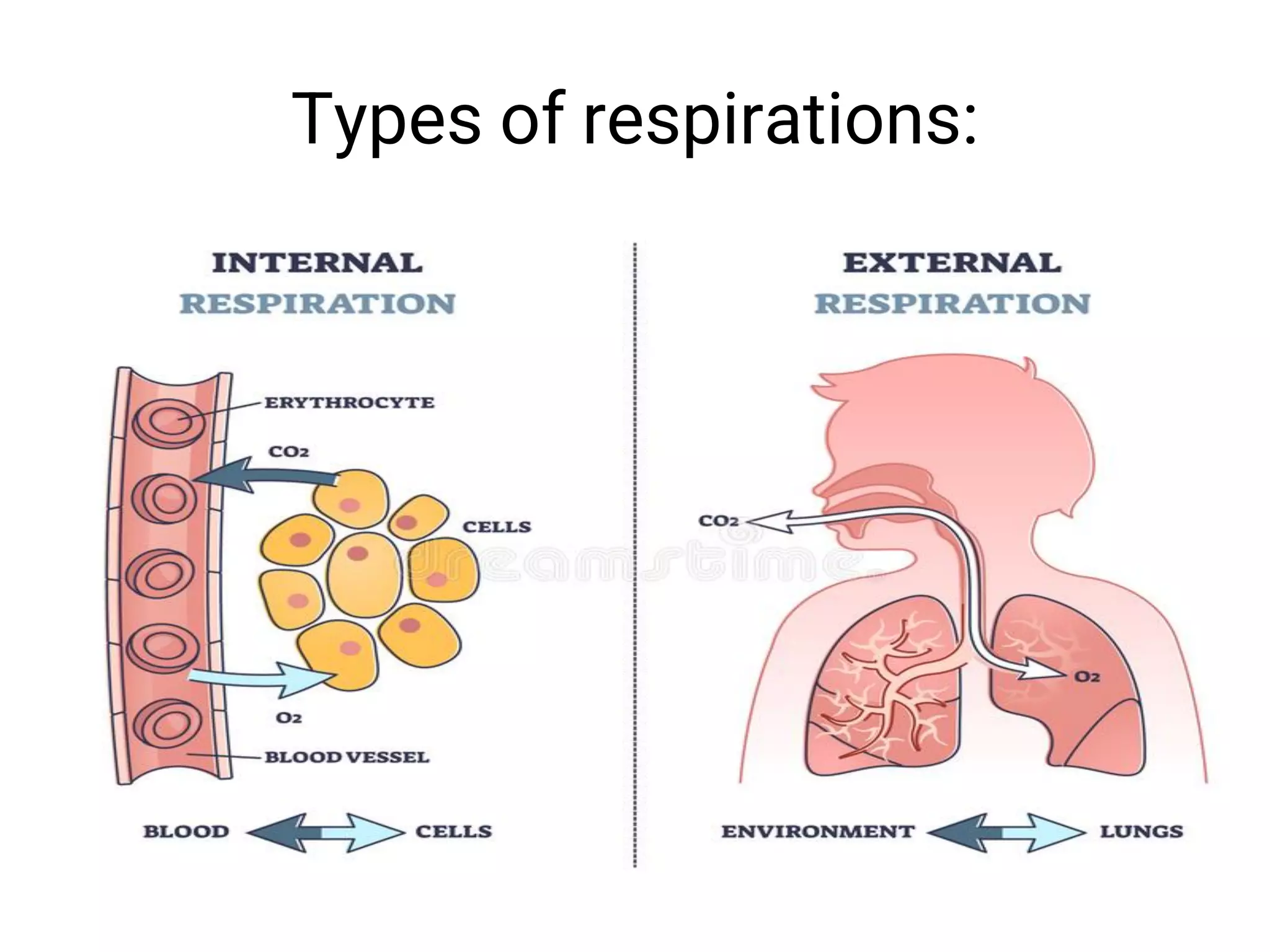
Types of respirations:
Normal respiratory rates:
• Newborn: 30-60 breaths per minute
• Infant (1 to 12 months): 30-60 breaths per minute
• Toddler (1-2 years): 24-40 breaths per minute
• Preschooler (3-5 years): 22-34 breaths per minute
• School-age child (6-12 years): 18-30 breaths per
minute
• Adolescent (13-17 years): 12-16 breaths per minute
• Adults:12-20breaths per minute.

fundamental practice 2.pdf

  • 1.
    Lecture 4 Pulse &RespiratoryRate Prepared by Mrs :Najya Yusif Ahmed
  • 2.
    Pulse rate(PR) Pulse/heart rateis the wave of blood in the artery created by contraction of the left ventricle during a cardiac cycle. Normal pulse rate range for an adult is between 60-100 beats per minute .
  • 3.
    Types of Pulserate • Peripheral pulses that can be felt at the periphery of the body by palpating an artery over a bony prominence. Examples are carotid, radial and popliteal pulses. • Apical pulse which is a central pulse located on the apex of the heart that is monitored using a stethoscope.
  • 5.
  • 6.
    Peripheral Pulse sites 1.Temporal 2. Carotid 3. Brachial 4. Radial 5. Femoral 6. Popliteal 7. Posterior tibial artery 8. Dorsalis pedis
  • 7.
    Parameters of Pulses 1.Rate: Number of pulsation which could be • Bradycardia: Reduced Pulse Rate Pulse Rate <60/min • Tachycardia: Elevated(rapid) pulse rate Pulse Rate >100/min 2 . Rhythm: Time interval between pulse beats.
  • 8.
    Normal Pulse rates: •Newborn: 100-160 bpm • 0-5 months: 90-150 bpm • 6-12 months: 80-140 bpm • 1-3 years: 80-130 bpm • 3-5 years: 80-120 bpm • 6-10 years: 70-110 bpm • 11-14 years: 60-105 bpm • 15 and older :60-100bpm
  • 9.
    Respiratory rate(RR) Respiratory rateis the number of breaths you take per minute. The normal respiration rate for an adult at rest is 12 to 20 breaths per minute. • Bradypnea is the medical term used to define breathing that is abnormally slow. • Less than 12 breathes per minute. • Tachypnea is the medical term used to define an elevated respiratory rate. • more than 20 breathes per minute.
  • 10.
  • 12.
    Normal respiratory rates: •Newborn: 30-60 breaths per minute • Infant (1 to 12 months): 30-60 breaths per minute • Toddler (1-2 years): 24-40 breaths per minute • Preschooler (3-5 years): 22-34 breaths per minute • School-age child (6-12 years): 18-30 breaths per minute • Adolescent (13-17 years): 12-16 breaths per minute • Adults:12-20breaths per minute.