Unlocking Potential: Understanding
Functional Capacity Evaluation
Functional Capacity Evaluation (FCE) is a comprehensive assessment that evaluates an
individual’s physical and functional abilities, often used in the context of rehabilitation, return-to-
work evaluations, and disability determinations. It provides valuable insights into a person’s
capacity to perform work-related tasks, helping healthcare professionals, employers, and insurers
make informed decisions about work restrictions, accommodations, and rehabilitation programs.
Understanding Functional Capacity Evaluation:
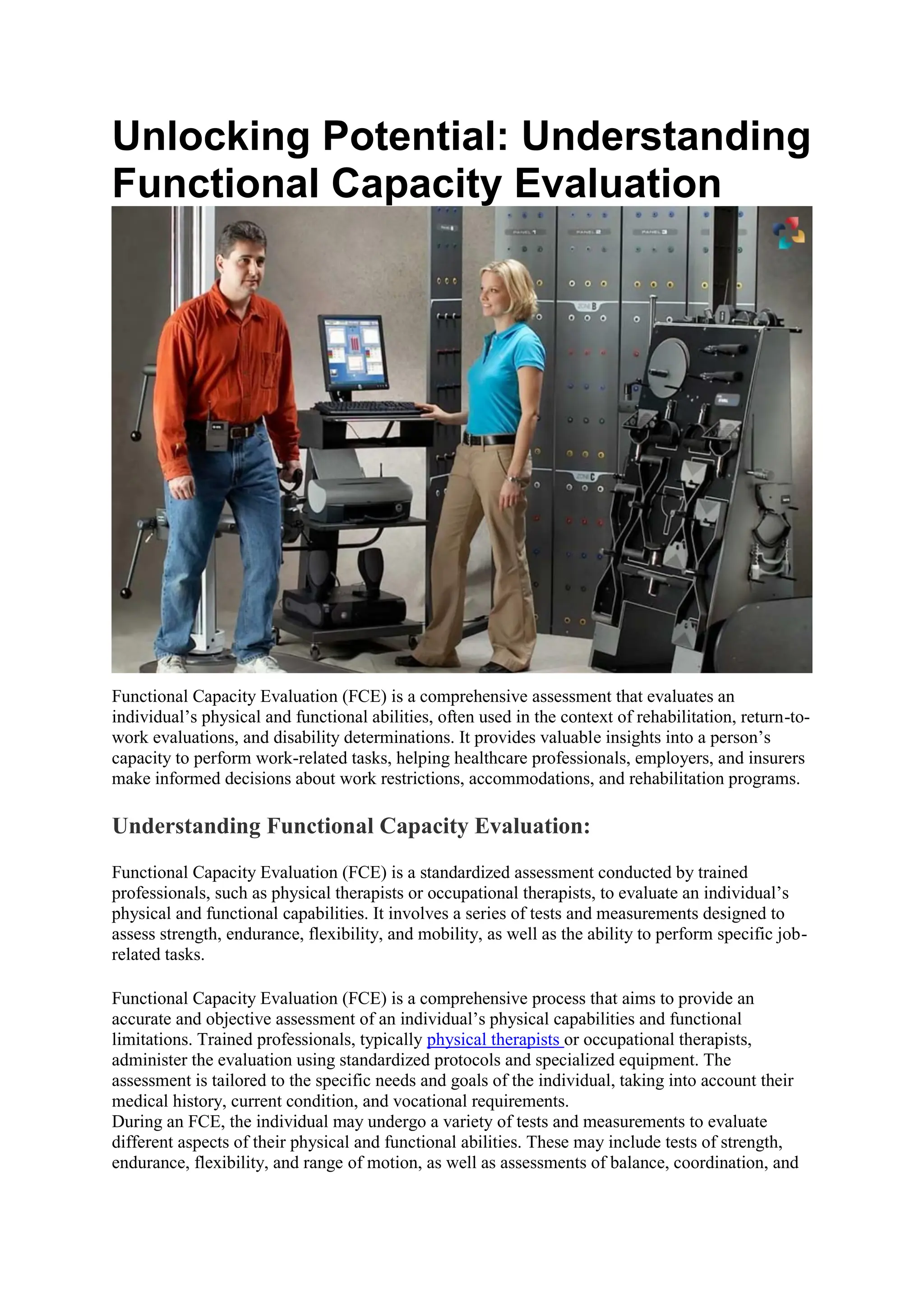
Functional Capacity Evaluation (FCE) is a standardized assessment conducted by trained
professionals, such as physical therapists or occupational therapists, to evaluate an individual’s
physical and functional capabilities. It involves a series of tests and measurements designed to
assess strength, endurance, flexibility, and mobility, as well as the ability to perform specific job-
related tasks.
Functional Capacity Evaluation (FCE) is a comprehensive process that aims to provide an
accurate and objective assessment of an individual’s physical capabilities and functional
limitations. Trained professionals, typically physical therapists or occupational therapists,
administer the evaluation using standardized protocols and specialized equipment. The
assessment is tailored to the specific needs and goals of the individual, taking into account their
medical history, current condition, and vocational requirements.
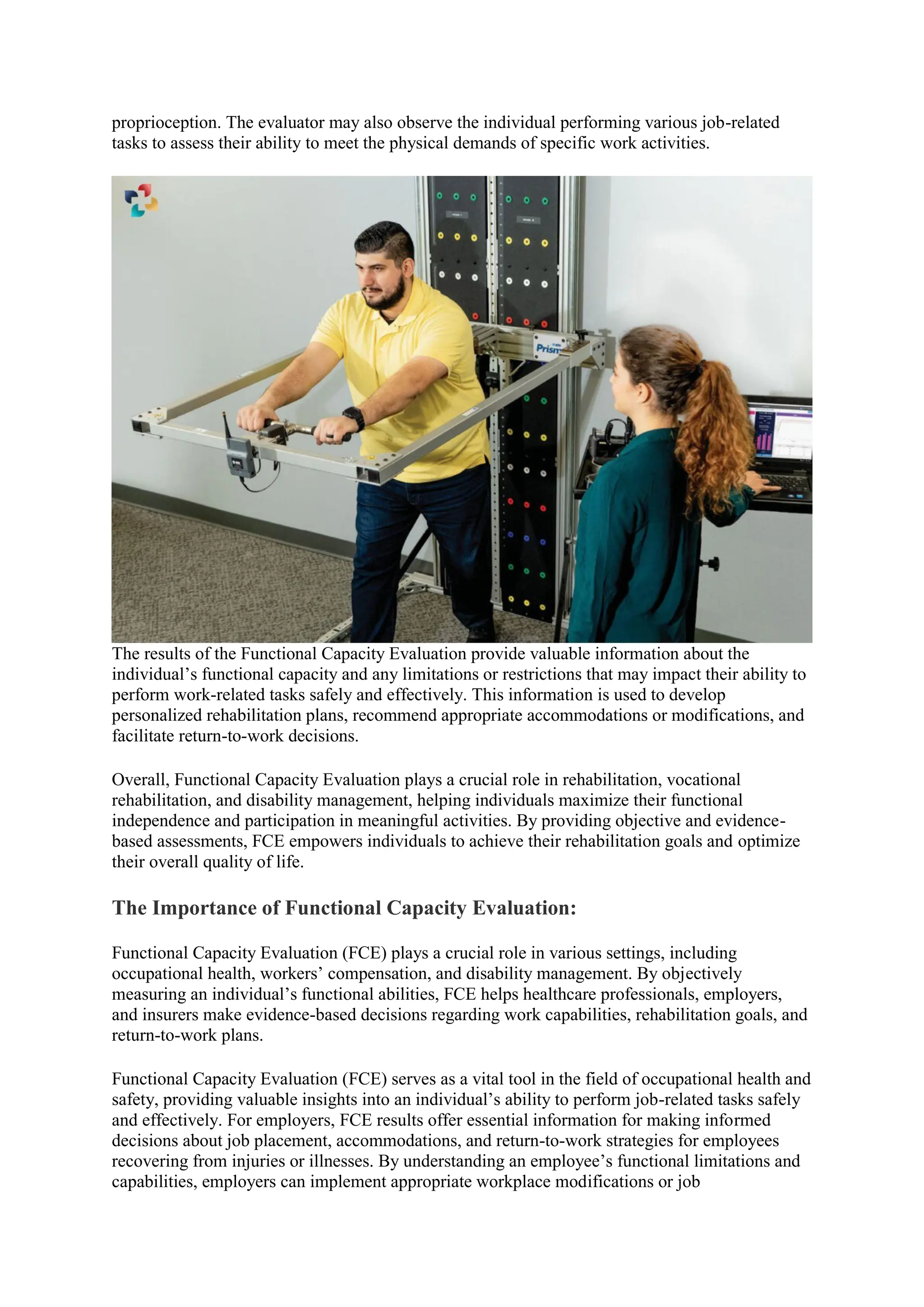
During an FCE, the individual may undergo a variety of tests and measurements to evaluate
different aspects of their physical and functional abilities. These may include tests of strength,
endurance, flexibility, and range of motion, as well as assessments of balance, coordination, and
proprioception. The evaluator may also observe the individual performing various job-related
tasks to assess their ability to meet the physical demands of specific work activities.
The results of the Functional Capacity Evaluation provide valuable information about the
individual’s functional capacity and any limitations or restrictions that may impact their ability to
perform work-related tasks safely and effectively. This information is used to develop
personalized rehabilitation plans, recommend appropriate accommodations or modifications, and
facilitate return-to-work decisions.
Overall, Functional Capacity Evaluation plays a crucial role in rehabilitation, vocational
rehabilitation, and disability management, helping individuals maximize their functional
independence and participation in meaningful activities. By providing objective and evidence-
based assessments, FCE empowers individuals to achieve their rehabilitation goals and optimize
their overall quality of life.
The Importance of Functional Capacity Evaluation:
Functional Capacity Evaluation (FCE) plays a crucial role in various settings, including
occupational health, workers’ compensation, and disability management. By objectively
measuring an individual’s functional abilities, FCE helps healthcare professionals, employers,
and insurers make evidence-based decisions regarding work capabilities, rehabilitation goals, and
return-to-work plans.
Functional Capacity Evaluation (FCE) serves as a vital tool in the field of occupational health and
safety, providing valuable insights into an individual’s ability to perform job-related tasks safely
and effectively. For employers, FCE results offer essential information for making informed
decisions about job placement, accommodations, and return-to-work strategies for employees
recovering from injuries or illnesses. By understanding an employee’s functional limitations and
capabilities, employers can implement appropriate workplace modifications or job
accommodations to facilitate a smooth transition back to work while minimizing the risk of re-
injury.
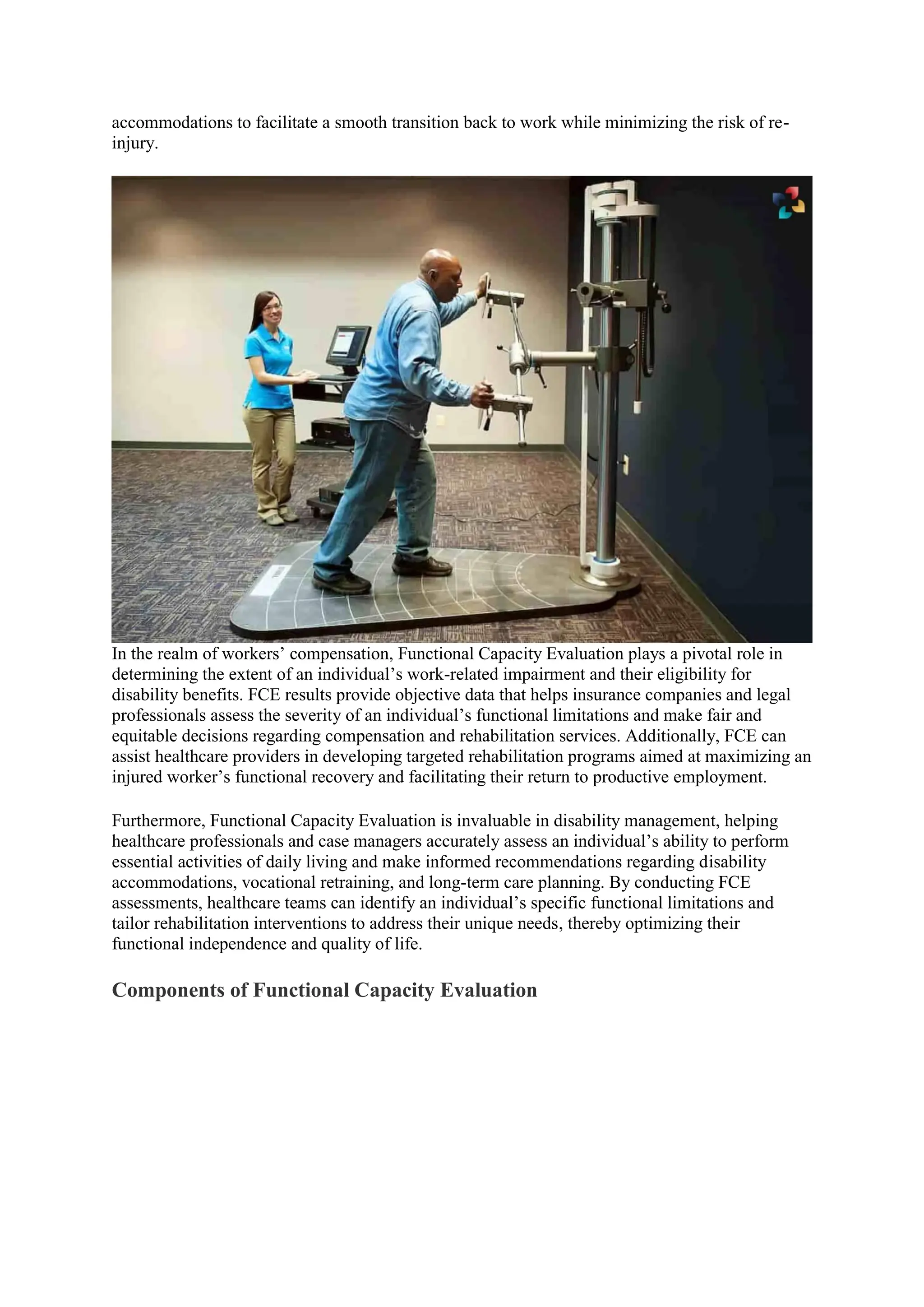
In the realm of workers’ compensation, Functional Capacity Evaluation plays a pivotal role in
determining the extent of an individual’s work-related impairment and their eligibility for
disability benefits. FCE results provide objective data that helps insurance companies and legal
professionals assess the severity of an individual’s functional limitations and make fair and
equitable decisions regarding compensation and rehabilitation services. Additionally, FCE can
assist healthcare providers in developing targeted rehabilitation programs aimed at maximizing an
injured worker’s functional recovery and facilitating their return to productive employment.
Furthermore, Functional Capacity Evaluation is invaluable in disability management, helping
healthcare professionals and case managers accurately assess an individual’s ability to perform
essential activities of daily living and make informed recommendations regarding disability
accommodations, vocational retraining, and long-term care planning. By conducting FCE
assessments, healthcare teams can identify an individual’s specific functional limitations and
tailor rehabilitation interventions to address their unique needs, thereby optimizing their
functional independence and quality of life.
Components of Functional Capacity Evaluation
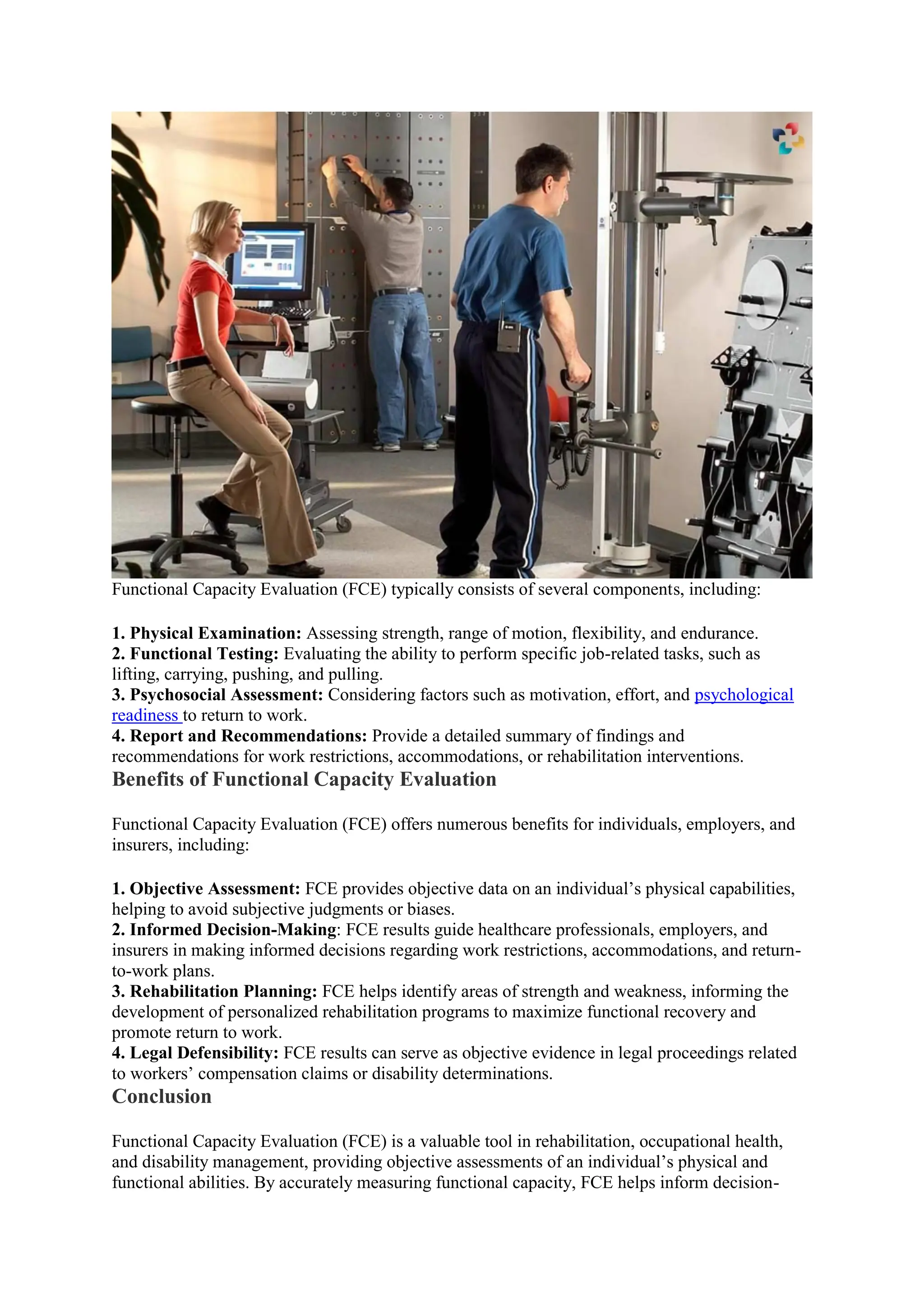
Functional Capacity Evaluation (FCE) typically consists of several components, including:
1. Physical Examination: Assessing strength, range of motion, flexibility, and endurance.
2. Functional Testing: Evaluating the ability to perform specific job-related tasks, such as
lifting, carrying, pushing, and pulling.
3. Psychosocial Assessment: Considering factors such as motivation, effort, and psychological
readiness to return to work.
4. Report and Recommendations: Provide a detailed summary of findings and
recommendations for work restrictions, accommodations, or rehabilitation interventions.
Benefits of Functional Capacity Evaluation
Functional Capacity Evaluation (FCE) offers numerous benefits for individuals, employers, and
insurers, including:
1. Objective Assessment: FCE provides objective data on an individual’s physical capabilities,
helping to avoid subjective judgments or biases.
2. Informed Decision-Making: FCE results guide healthcare professionals, employers, and
insurers in making informed decisions regarding work restrictions, accommodations, and return-
to-work plans.
3. Rehabilitation Planning: FCE helps identify areas of strength and weakness, informing the
development of personalized rehabilitation programs to maximize functional recovery and
promote return to work.
4. Legal Defensibility: FCE results can serve as objective evidence in legal proceedings related
to workers’ compensation claims or disability determinations.
Conclusion
Functional Capacity Evaluation (FCE) is a valuable tool in rehabilitation, occupational health,
and disability management, providing objective assessments of an individual’s physical and
functional abilities. By accurately measuring functional capacity, FCE helps inform decision-
making regarding work capabilities, rehabilitation interventions, and return-to-work plans,
ultimately promoting optimal outcomes for individuals recovering from injury or illness.
FAQs
1. What is a Functional Capacity Evaluation (FCE)?
A Functional Capacity Evaluation (FCE) is a comprehensive assessment conducted by trained
professionals to evaluate an individual’s physical and functional abilities, focusing on factors
such as strength, flexibility, endurance, and mobility.
2. Who performs Functional Capacity Evaluations?
Functional Capacity Evaluations are typically conducted by licensed physical therapists or
occupational therapists who have received specialized training in administering and interpreting
FCE tests.
3. What does a Functional Capacity Evaluation involve?
A Functional Capacity Evaluation involves a series of standardized tests and measurements
designed to assess an individual’s ability to perform various physical tasks, such as lifting,
carrying, bending, reaching, and standing, based on the requirements of their job or daily
activities.
4. Why is a Functional Capacity Evaluation important?
A Functional Capacity Evaluation provides objective data about an individual’s functional
abilities, which can inform decisions related to return-to-work planning, job accommodations,
disability benefits, rehabilitation programs, and overall care management.
5. How long does a Functional Capacity Evaluation take?
The duration of a Functional Capacity Evaluation can vary depending on the complexity of the
assessment and the individual’s specific needs. Generally, FCE sessions may last several hours
and may be conducted over one or more days to ensure thorough evaluation and accurate results.

Functional Capacity Evaluation (FCE): Importance, Components, and Benefits | The Lifesciences Magazine

  • 1.
    Unlocking Potential: Understanding FunctionalCapacity Evaluation Functional Capacity Evaluation (FCE) is a comprehensive assessment that evaluates an individual’s physical and functional abilities, often used in the context of rehabilitation, return-to- work evaluations, and disability determinations. It provides valuable insights into a person’s capacity to perform work-related tasks, helping healthcare professionals, employers, and insurers make informed decisions about work restrictions, accommodations, and rehabilitation programs. Understanding Functional Capacity Evaluation: Functional Capacity Evaluation (FCE) is a standardized assessment conducted by trained professionals, such as physical therapists or occupational therapists, to evaluate an individual’s physical and functional capabilities. It involves a series of tests and measurements designed to assess strength, endurance, flexibility, and mobility, as well as the ability to perform specific job- related tasks. Functional Capacity Evaluation (FCE) is a comprehensive process that aims to provide an accurate and objective assessment of an individual’s physical capabilities and functional limitations. Trained professionals, typically physical therapists or occupational therapists, administer the evaluation using standardized protocols and specialized equipment. The assessment is tailored to the specific needs and goals of the individual, taking into account their medical history, current condition, and vocational requirements. During an FCE, the individual may undergo a variety of tests and measurements to evaluate different aspects of their physical and functional abilities. These may include tests of strength, endurance, flexibility, and range of motion, as well as assessments of balance, coordination, and
  • 2.
    proprioception. The evaluatormay also observe the individual performing various job-related tasks to assess their ability to meet the physical demands of specific work activities. The results of the Functional Capacity Evaluation provide valuable information about the individual’s functional capacity and any limitations or restrictions that may impact their ability to perform work-related tasks safely and effectively. This information is used to develop personalized rehabilitation plans, recommend appropriate accommodations or modifications, and facilitate return-to-work decisions. Overall, Functional Capacity Evaluation plays a crucial role in rehabilitation, vocational rehabilitation, and disability management, helping individuals maximize their functional independence and participation in meaningful activities. By providing objective and evidence- based assessments, FCE empowers individuals to achieve their rehabilitation goals and optimize their overall quality of life. The Importance of Functional Capacity Evaluation: Functional Capacity Evaluation (FCE) plays a crucial role in various settings, including occupational health, workers’ compensation, and disability management. By objectively measuring an individual’s functional abilities, FCE helps healthcare professionals, employers, and insurers make evidence-based decisions regarding work capabilities, rehabilitation goals, and return-to-work plans. Functional Capacity Evaluation (FCE) serves as a vital tool in the field of occupational health and safety, providing valuable insights into an individual’s ability to perform job-related tasks safely and effectively. For employers, FCE results offer essential information for making informed decisions about job placement, accommodations, and return-to-work strategies for employees recovering from injuries or illnesses. By understanding an employee’s functional limitations and capabilities, employers can implement appropriate workplace modifications or job
  • 3.
    accommodations to facilitatea smooth transition back to work while minimizing the risk of re- injury. In the realm of workers’ compensation, Functional Capacity Evaluation plays a pivotal role in determining the extent of an individual’s work-related impairment and their eligibility for disability benefits. FCE results provide objective data that helps insurance companies and legal professionals assess the severity of an individual’s functional limitations and make fair and equitable decisions regarding compensation and rehabilitation services. Additionally, FCE can assist healthcare providers in developing targeted rehabilitation programs aimed at maximizing an injured worker’s functional recovery and facilitating their return to productive employment. Furthermore, Functional Capacity Evaluation is invaluable in disability management, helping healthcare professionals and case managers accurately assess an individual’s ability to perform essential activities of daily living and make informed recommendations regarding disability accommodations, vocational retraining, and long-term care planning. By conducting FCE assessments, healthcare teams can identify an individual’s specific functional limitations and tailor rehabilitation interventions to address their unique needs, thereby optimizing their functional independence and quality of life. Components of Functional Capacity Evaluation
  • 4.
    Functional Capacity Evaluation(FCE) typically consists of several components, including: 1. Physical Examination: Assessing strength, range of motion, flexibility, and endurance. 2. Functional Testing: Evaluating the ability to perform specific job-related tasks, such as lifting, carrying, pushing, and pulling. 3. Psychosocial Assessment: Considering factors such as motivation, effort, and psychological readiness to return to work. 4. Report and Recommendations: Provide a detailed summary of findings and recommendations for work restrictions, accommodations, or rehabilitation interventions. Benefits of Functional Capacity Evaluation Functional Capacity Evaluation (FCE) offers numerous benefits for individuals, employers, and insurers, including: 1. Objective Assessment: FCE provides objective data on an individual’s physical capabilities, helping to avoid subjective judgments or biases. 2. Informed Decision-Making: FCE results guide healthcare professionals, employers, and insurers in making informed decisions regarding work restrictions, accommodations, and return- to-work plans. 3. Rehabilitation Planning: FCE helps identify areas of strength and weakness, informing the development of personalized rehabilitation programs to maximize functional recovery and promote return to work. 4. Legal Defensibility: FCE results can serve as objective evidence in legal proceedings related to workers’ compensation claims or disability determinations. Conclusion Functional Capacity Evaluation (FCE) is a valuable tool in rehabilitation, occupational health, and disability management, providing objective assessments of an individual’s physical and functional abilities. By accurately measuring functional capacity, FCE helps inform decision-
  • 5.
    making regarding workcapabilities, rehabilitation interventions, and return-to-work plans, ultimately promoting optimal outcomes for individuals recovering from injury or illness. FAQs 1. What is a Functional Capacity Evaluation (FCE)? A Functional Capacity Evaluation (FCE) is a comprehensive assessment conducted by trained professionals to evaluate an individual’s physical and functional abilities, focusing on factors such as strength, flexibility, endurance, and mobility. 2. Who performs Functional Capacity Evaluations? Functional Capacity Evaluations are typically conducted by licensed physical therapists or occupational therapists who have received specialized training in administering and interpreting FCE tests. 3. What does a Functional Capacity Evaluation involve? A Functional Capacity Evaluation involves a series of standardized tests and measurements designed to assess an individual’s ability to perform various physical tasks, such as lifting, carrying, bending, reaching, and standing, based on the requirements of their job or daily activities. 4. Why is a Functional Capacity Evaluation important? A Functional Capacity Evaluation provides objective data about an individual’s functional abilities, which can inform decisions related to return-to-work planning, job accommodations, disability benefits, rehabilitation programs, and overall care management. 5. How long does a Functional Capacity Evaluation take? The duration of a Functional Capacity Evaluation can vary depending on the complexity of the assessment and the individual’s specific needs. Generally, FCE sessions may last several hours and may be conducted over one or more days to ensure thorough evaluation and accurate results.