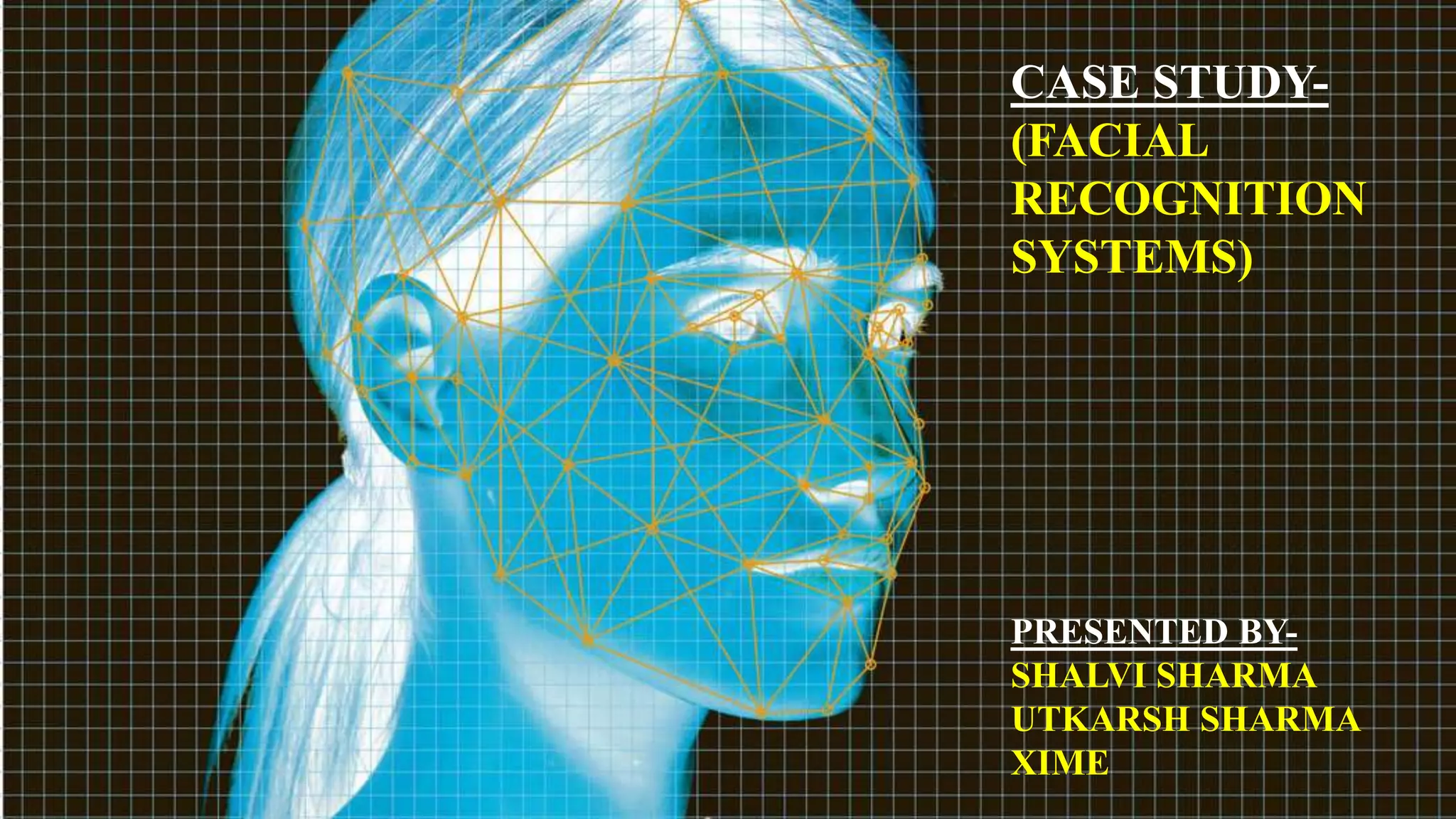

CASE STUDY-
(FACIAL
RECOGNITION
SYSTEMS)
PRESENTED BY-
SHALVI SHARMA
UTKARSH SHARMA
XIME
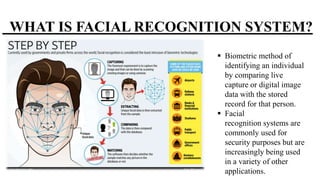
WHAT IS FACIAL RECOGNITION SYSTEM?
 Biometric method of
identifying an individual
by comparing live
capture or digital image
data with the stored
record for that person.
 Facial
recognition systems are
commonly used for
security purposes but are
increasingly being used
in a variety of other
applications.
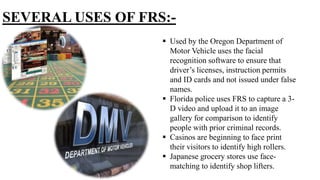
SEVERAL USES OF FRS:-
 Used by the Oregon Department of
Motor Vehicle uses the facial
recognition software to ensure that
driver’s licenses, instruction permits
and ID cards and not issued under false
names.
 Florida police uses FRS to capture a 3-
D video and upload it to an image
gallery for comparison to identify
people with prior criminal records.
 Casinos are beginning to face print
their visitors to identify high rollers.
 Japanese grocery stores use face-
matching to identify shop lifters.
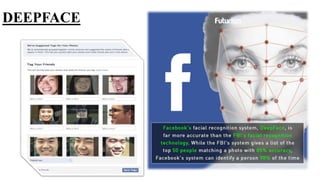
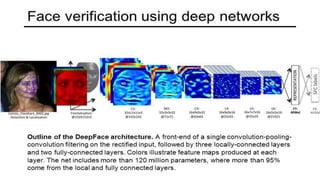
DEEPFACE
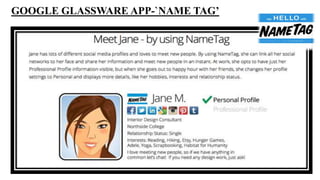
GOOGLE GLASSWARE APP-`NAME TAG’
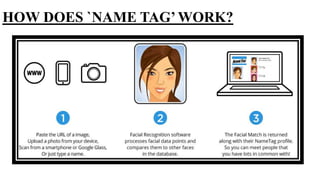
HOW DOES `NAME TAG’ WORK?
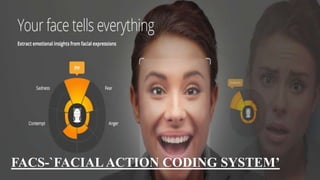
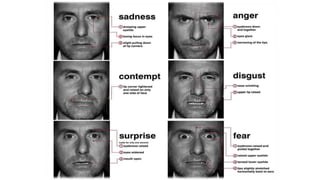
FACS-`FACIAL ACTION CODING SYSTEM’
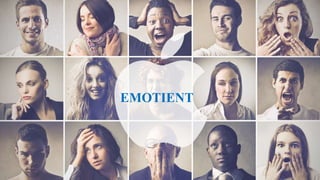
EMOTIENT
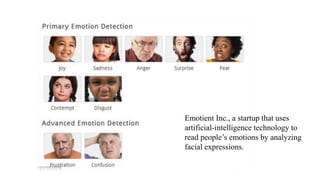
Emotient Inc., a startup that uses
artificial-intelligence technology to
read people’s emotions by analyzing
facial expressions.
SOME CONCERNS RELATED TO FRS-
 The lack of legal framework for complying with requests for facial matching
from government agencies.
 Rising alarm among piracy advocates, who are worried about the far reaching
usage of people’s photos without their consent.
 Answers and opinions of people will vary. Some people may not be
concerned at all about the ability of DeepFace to track their Facebook
activities whereas others will not want any part of it.
 Facebook will use the technology to enhance the company’s advertising
revenue as it does with all of its features. That may be a detriment to users.
CASE STUDY QUESTIONS
Q1) What are some of the benefits of using facial recognition technology? Describe some
current and future applications of this technology?
Answer:
Facial recognition technology can be used to-
-Verify identities and reduce abuse of false identification methods and identity theft.
-To ensure that driver licenses, instruction permits, and ID cards are not issued under false
names.
-Identifies criminals and terrorists from amongst the crowd.
-Police departments use facial recognition technologies to identify people with
prior criminal records or outstanding warrants.
-To record the names of people that the viewer meets and makes available the
name, occupation, and public Facebook profile of any passer-by.
-Future applications may include instantaneous psychological analysis of
individuals based on their facial expressions. Online learning could be improved
using Webcams that perceive confusion in a student’s expression and trigger
additional tutoring sessions. It’s also possible that facial recognition technology
could be used in the future to reduce and eliminate voter fraud.
Q2) How does facial recognition technology threaten the protection of individual
privacy? Give several examples?
Answer:
-The ability to instantly analyse an individual’s facial expressions to detect moods or inner
feelings may be a real threat to individual privacy, especially if the person does not want to
reveal their feelings, moods, or thoughts.
-The technology could be used by authorities to identify peaceful protesters at rallies and
target them for selective jailing and prosecution.
-Can be used to identify strangers and gain their personal information such as social security
numbers.
-Citizens can’t take any measures to prevent their personal information such as images from
being collected.
Q.3)Would you like DeepFace to track your activities on Facebook and in the physical
world? Why or why not?
Answer:
-Answers and opinions of people will vary. Some people may not be concerned at all about
the ability of DeepFace to track their Facebook activities whereas others will not want any
part of it.
-Facebook will use the technology to enhance the company’s advertising revenue as it does
with all of its features.
-Those applications can make photo-sharing faster and more fun, and they can add security
and convenience to real-world venues.
-Looking ahead, MasterCard is experimenting with a system that lets users
validate purchases by snapping a selfie. Like fingerprint scanners and other
biometric technologies, facial recognition has the potential to offer
alternatives to passwords and PINs.
-Disney’s four cruise ships, photographers roam the decks and dining rooms
taking pictures of passengers. The images are sorted using facial recognition
software so that photos of people registered to the same set of staterooms are
grouped together. Passengers can later swipe their Disney ID at an onboard
kiosk to easily call up every shot taken of their families throughout the trip.
Frs

Frs

  • 1.
  • 2.
    WHAT IS FACIALRECOGNITION SYSTEM?  Biometric method of identifying an individual by comparing live capture or digital image data with the stored record for that person.  Facial recognition systems are commonly used for security purposes but are increasingly being used in a variety of other applications.
  • 3.
    SEVERAL USES OFFRS:-  Used by the Oregon Department of Motor Vehicle uses the facial recognition software to ensure that driver’s licenses, instruction permits and ID cards and not issued under false names.  Florida police uses FRS to capture a 3- D video and upload it to an image gallery for comparison to identify people with prior criminal records.  Casinos are beginning to face print their visitors to identify high rollers.  Japanese grocery stores use face- matching to identify shop lifters.
  • 4.
  • 6.
  • 7.
    HOW DOES `NAMETAG’ WORK?
  • 8.
  • 10.
  • 11.
    Emotient Inc., astartup that uses artificial-intelligence technology to read people’s emotions by analyzing facial expressions.
  • 12.
    SOME CONCERNS RELATEDTO FRS-  The lack of legal framework for complying with requests for facial matching from government agencies.  Rising alarm among piracy advocates, who are worried about the far reaching usage of people’s photos without their consent.  Answers and opinions of people will vary. Some people may not be concerned at all about the ability of DeepFace to track their Facebook activities whereas others will not want any part of it.  Facebook will use the technology to enhance the company’s advertising revenue as it does with all of its features. That may be a detriment to users.
  • 13.
  • 14.
    Q1) What aresome of the benefits of using facial recognition technology? Describe some current and future applications of this technology? Answer: Facial recognition technology can be used to- -Verify identities and reduce abuse of false identification methods and identity theft. -To ensure that driver licenses, instruction permits, and ID cards are not issued under false names. -Identifies criminals and terrorists from amongst the crowd.
  • 15.
    -Police departments usefacial recognition technologies to identify people with prior criminal records or outstanding warrants. -To record the names of people that the viewer meets and makes available the name, occupation, and public Facebook profile of any passer-by. -Future applications may include instantaneous psychological analysis of individuals based on their facial expressions. Online learning could be improved using Webcams that perceive confusion in a student’s expression and trigger additional tutoring sessions. It’s also possible that facial recognition technology could be used in the future to reduce and eliminate voter fraud.
  • 16.
    Q2) How doesfacial recognition technology threaten the protection of individual privacy? Give several examples? Answer: -The ability to instantly analyse an individual’s facial expressions to detect moods or inner feelings may be a real threat to individual privacy, especially if the person does not want to reveal their feelings, moods, or thoughts. -The technology could be used by authorities to identify peaceful protesters at rallies and target them for selective jailing and prosecution. -Can be used to identify strangers and gain their personal information such as social security numbers. -Citizens can’t take any measures to prevent their personal information such as images from being collected.
  • 17.
    Q.3)Would you likeDeepFace to track your activities on Facebook and in the physical world? Why or why not? Answer: -Answers and opinions of people will vary. Some people may not be concerned at all about the ability of DeepFace to track their Facebook activities whereas others will not want any part of it. -Facebook will use the technology to enhance the company’s advertising revenue as it does with all of its features. -Those applications can make photo-sharing faster and more fun, and they can add security and convenience to real-world venues.
  • 18.
    -Looking ahead, MasterCardis experimenting with a system that lets users validate purchases by snapping a selfie. Like fingerprint scanners and other biometric technologies, facial recognition has the potential to offer alternatives to passwords and PINs. -Disney’s four cruise ships, photographers roam the decks and dining rooms taking pictures of passengers. The images are sorted using facial recognition software so that photos of people registered to the same set of staterooms are grouped together. Passengers can later swipe their Disney ID at an onboard kiosk to easily call up every shot taken of their families throughout the trip.