Combined Cycle Plant Applications

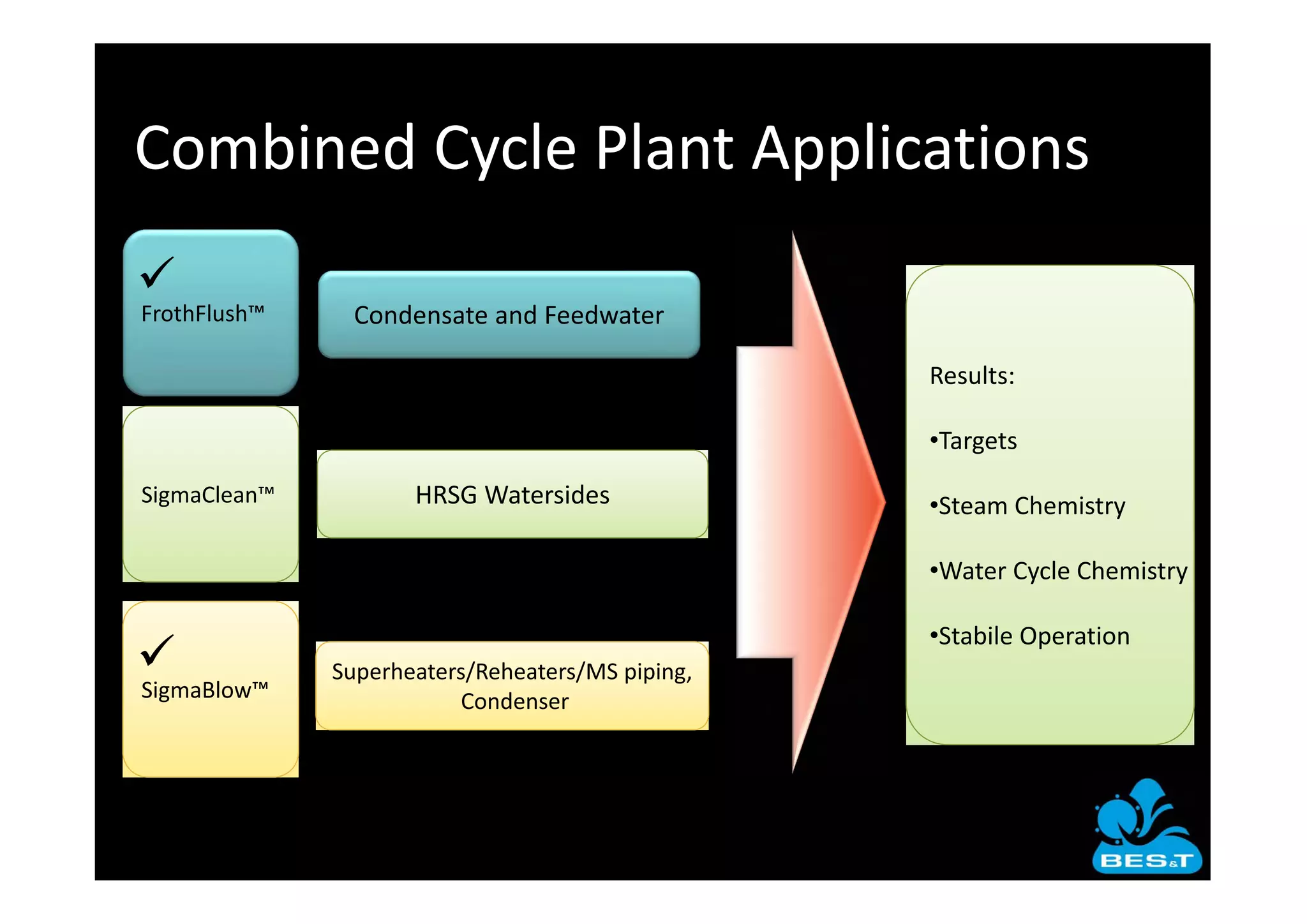
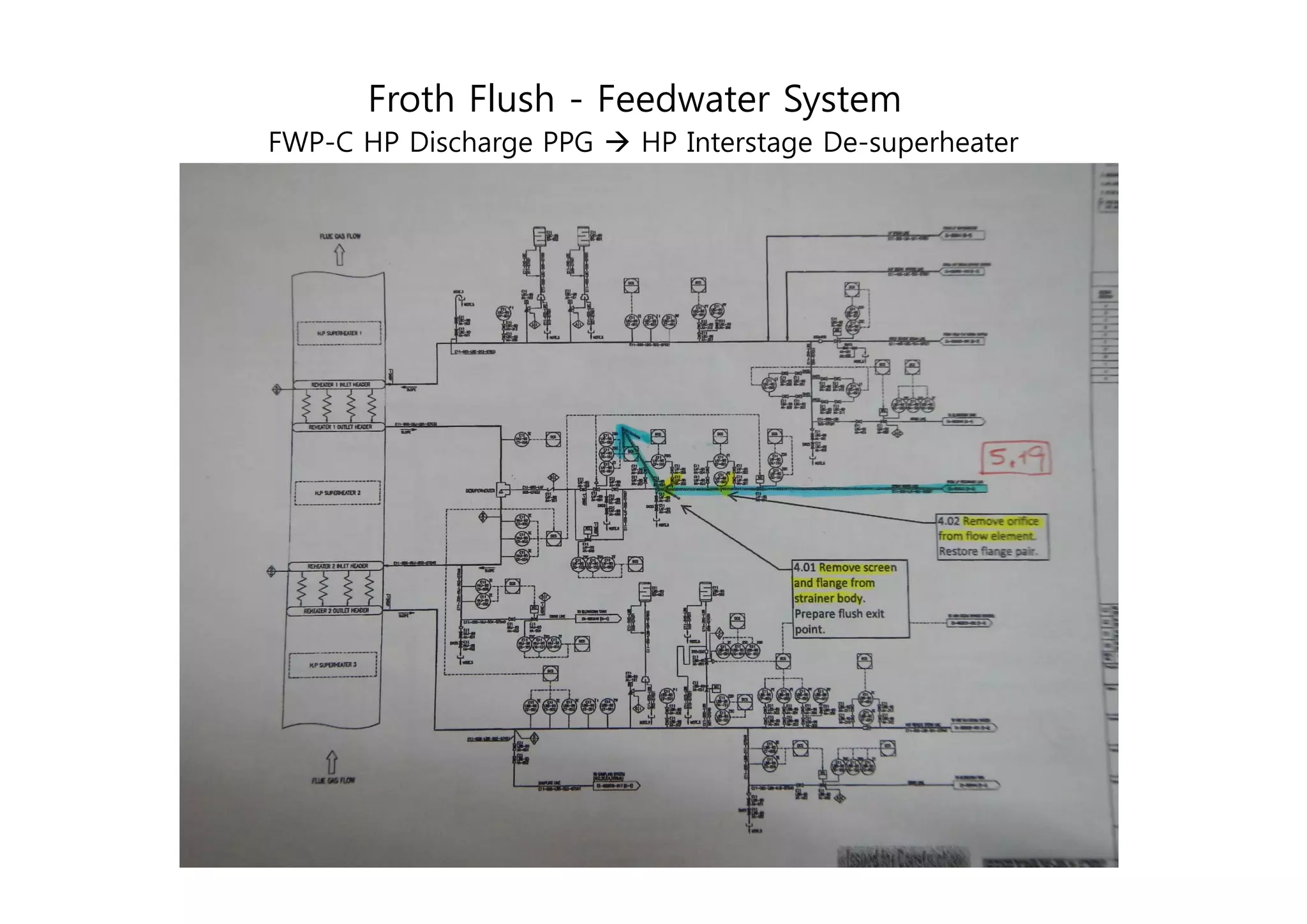
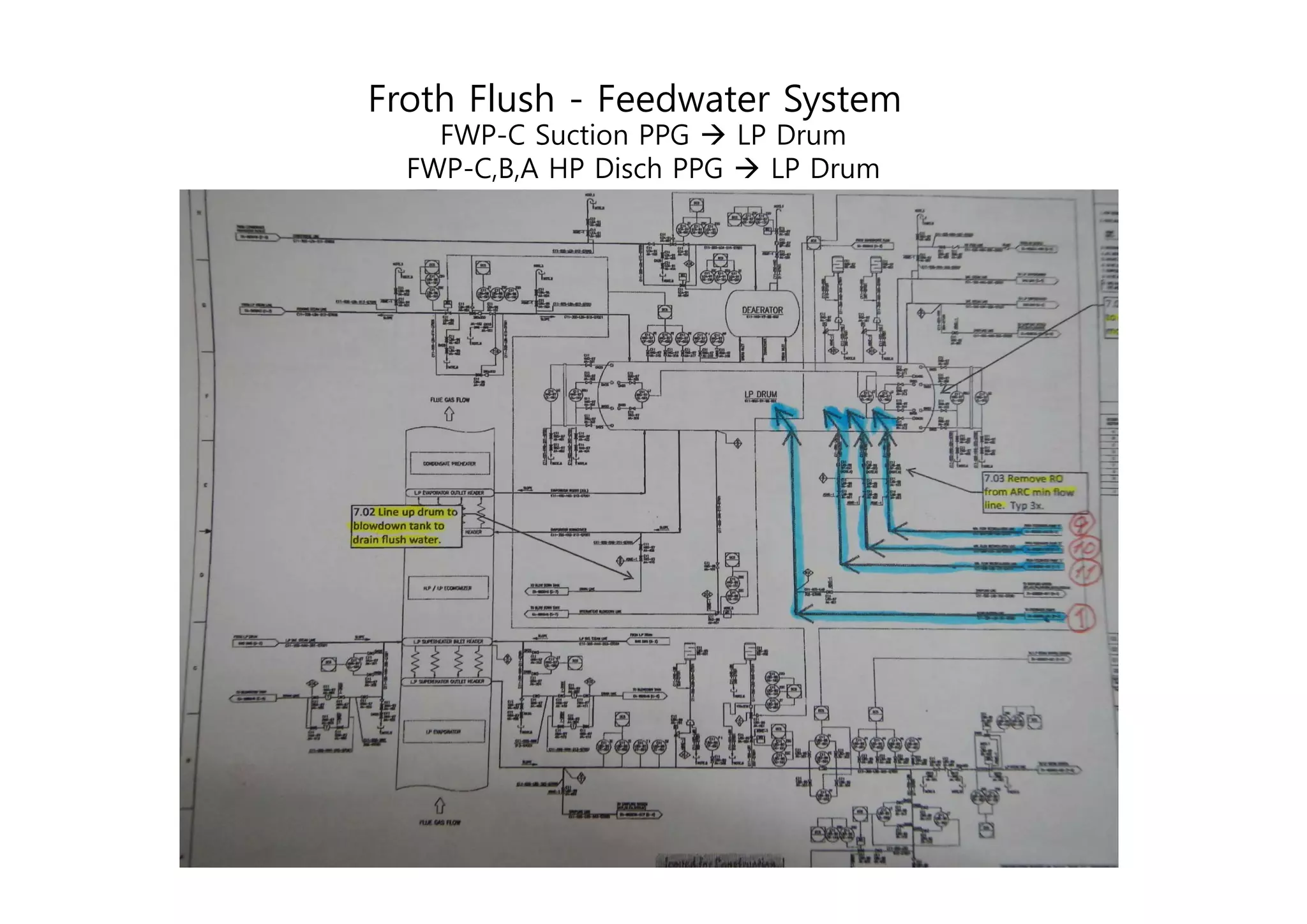
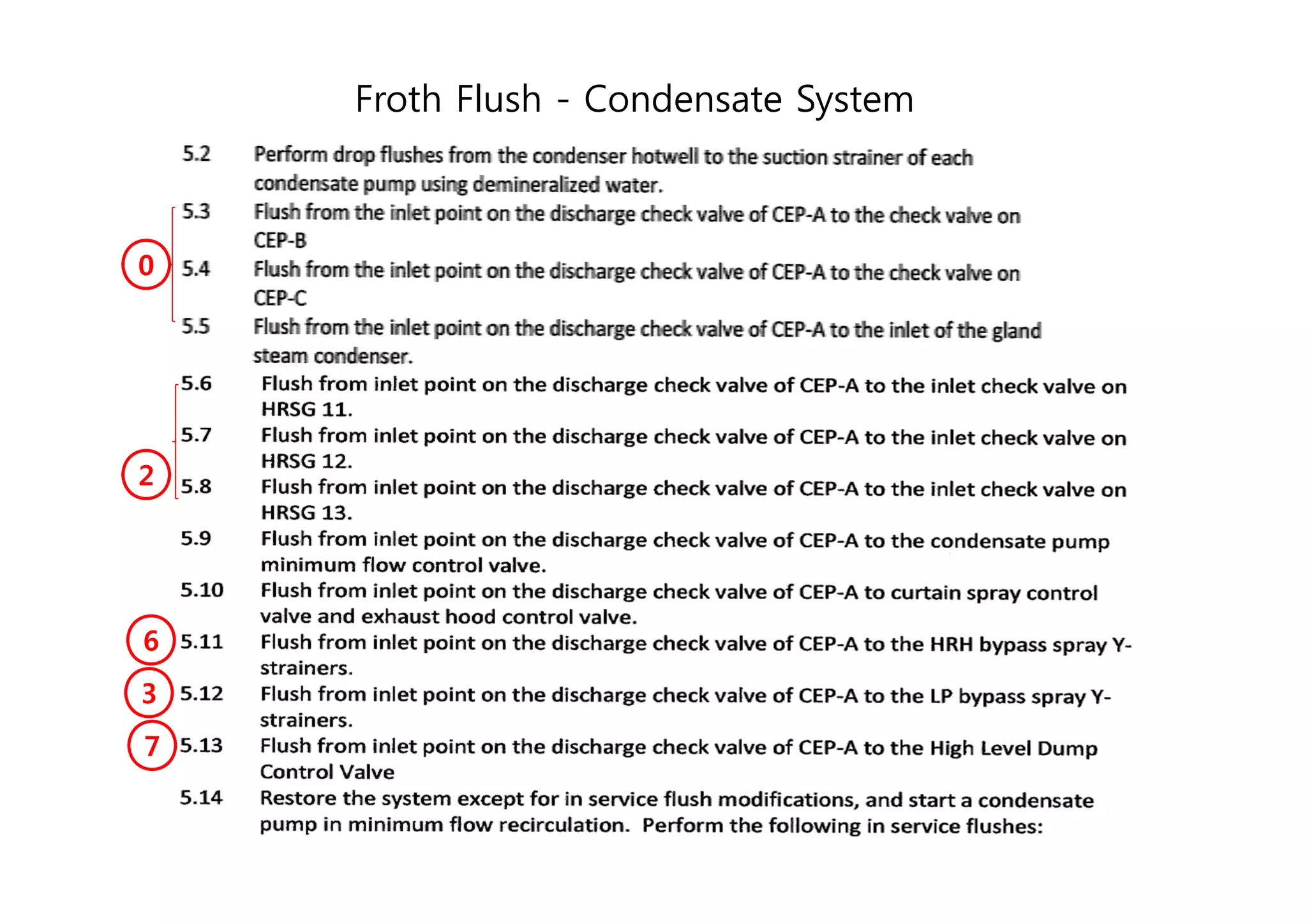
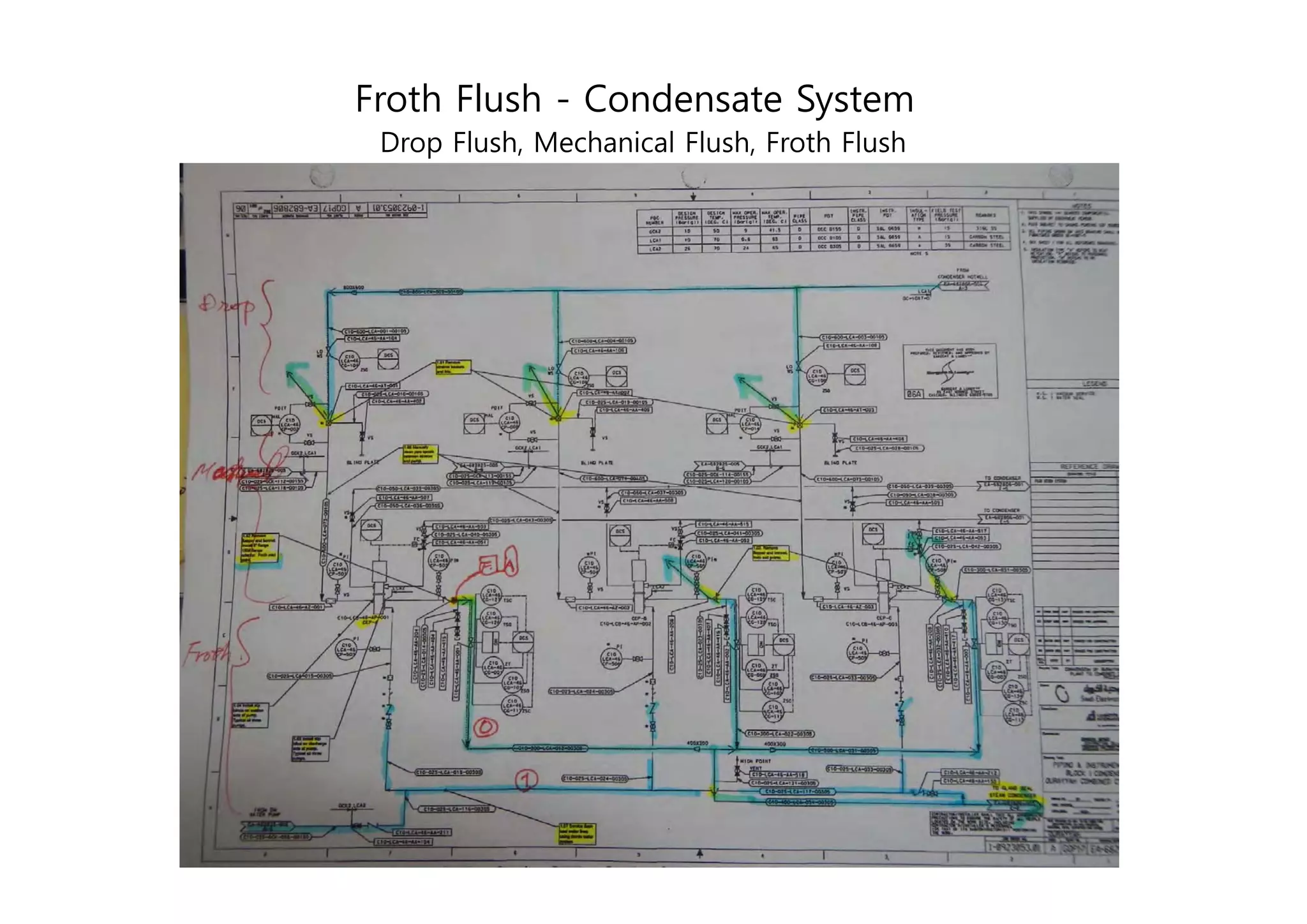
FrothFlush™     Condensate and Feedwater

                                                  Results:

                                                  •Targets
SigmaClean™          HRSG Watersides              •Steam Chemistry

                                                  •Water Cycle Chemistry

                                                  •Stabile Operation
              Superheaters/Reheaters/MS piping,
SigmaBlow™               Condenser
•
•
•
•
•


•
•
•

•


•
•

•
•
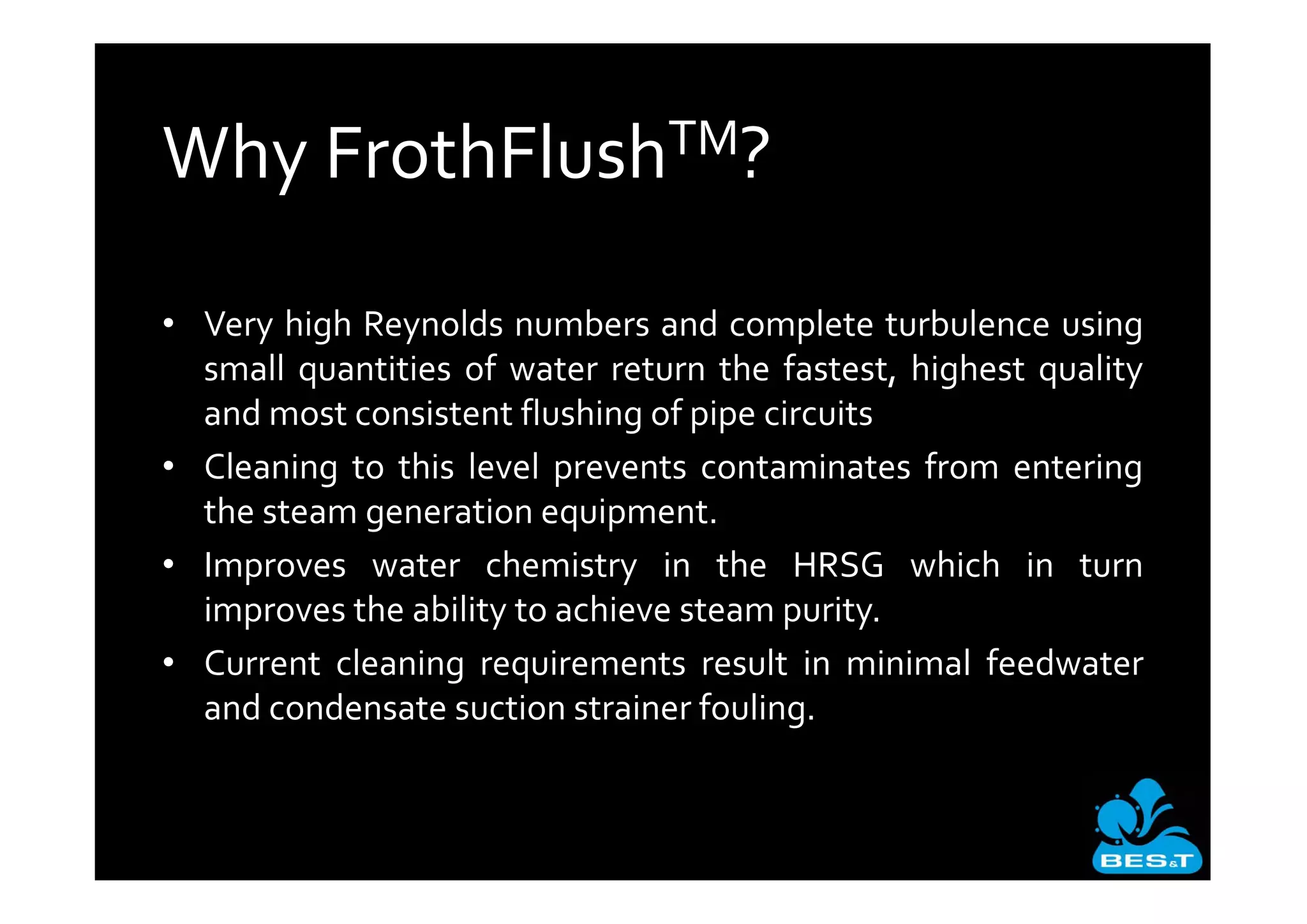
Why       FrothFlush TM?


• Very high Reynolds numbers and complete turbulence using
  small quantities of water return the fastest, highest quality
  and most consistent flushing of pipe circuits
• Cleaning to this level prevents contaminates from entering
  the steam generation equipment.
• Improves water chemistry in the HRSG which in turn
  improves the ability to achieve steam purity.
• Current cleaning requirements result in minimal feedwater
  and condensate suction strainer fouling.
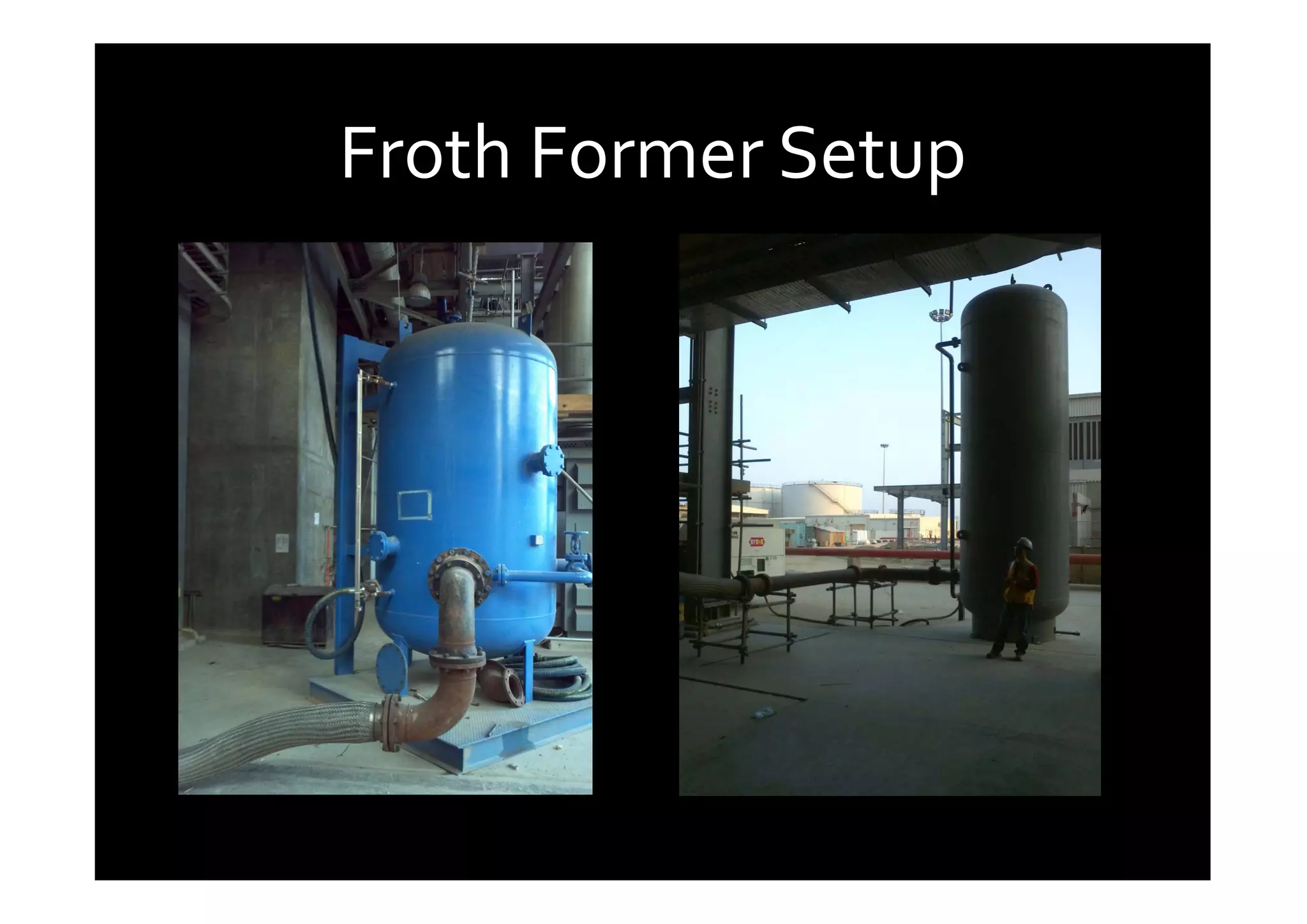
Froth Former Setup
FrothFlush™


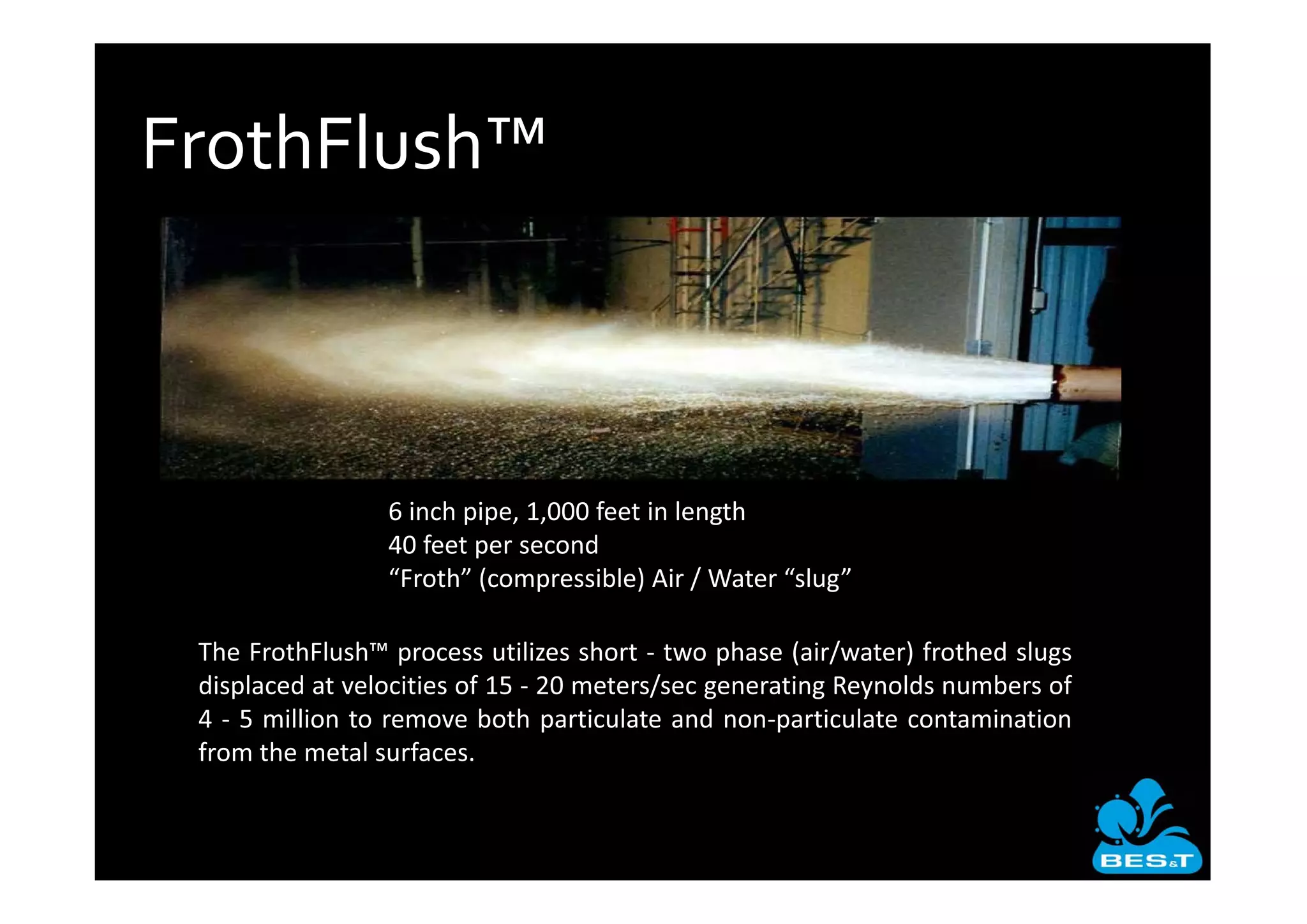
                 6 inch pipe, 1,000 feet in length
                 40 feet per second
                 “Froth” (compressible) Air / Water “slug”

 The FrothFlush™ process utilizes short two phase (air/water) frothed slugs
 displaced at velocities of 15 20 meters/sec generating Reynolds numbers of
 4 5 million to remove both particulate and non particulate contamination
 from the metal surfaces.
FrothFlush™
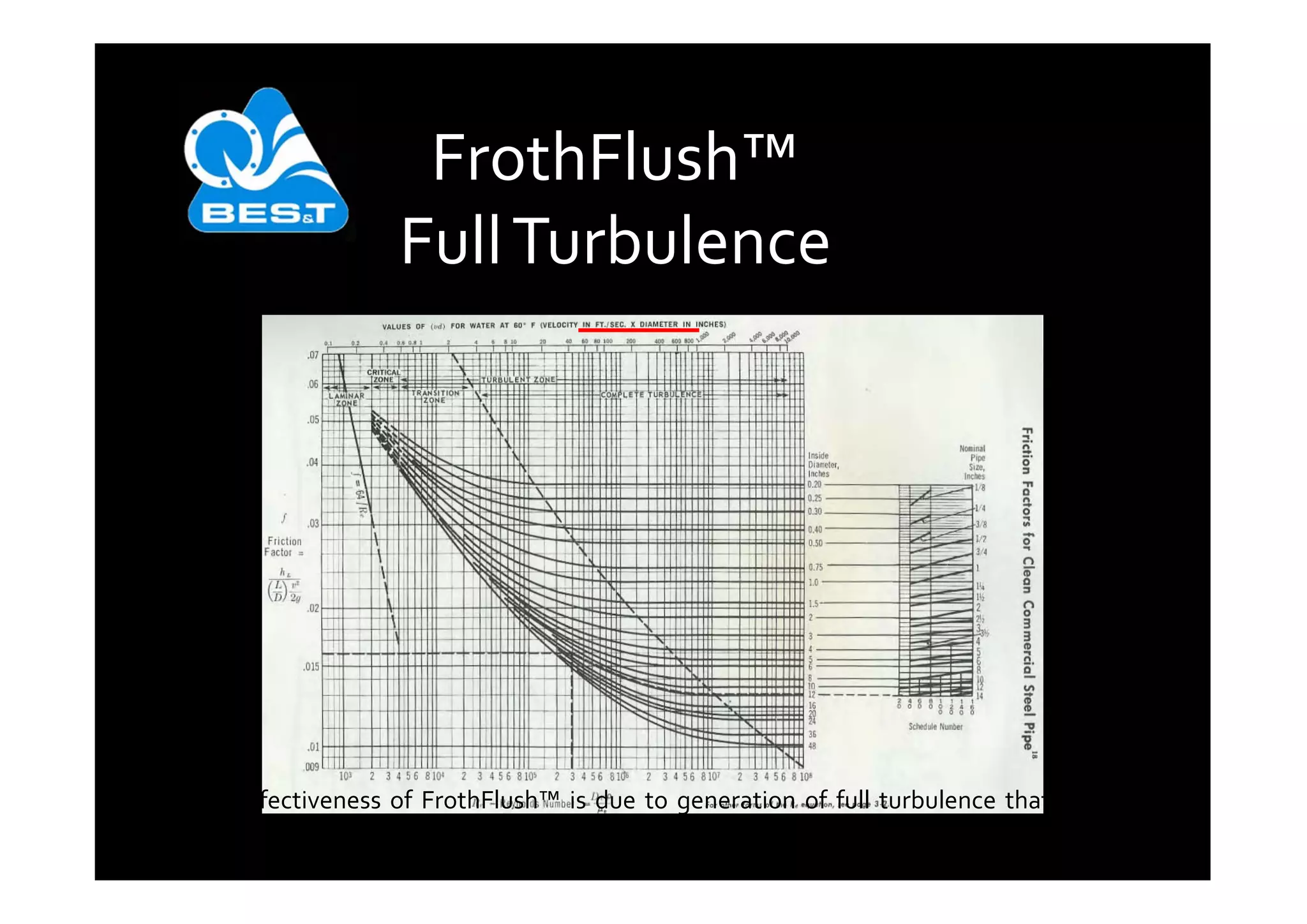
              Full Turbulence


Effectiveness of FrothFlush™ is due to generation of full turbulence that
scrubs particles and salts from pipe & tube surfaces
Improved
                           Cleanliness
•   The FrothFlush™ effectiveness in removal of particulate contamination is
    monitored by means of Millipore filters. Samples of the flush effluent water
    are taken and filters using fine Millipore filters.
•   Millipore filters are so fine that the water sample will not flow through the filter
    without the aid of a vacuum to draw the sample water through the filter.
•


•   The effectiveness of the FrothFlush™ process in removal of salts from the
    metal surfaces is monitored by measurement of the conductivity of the
    effluent flush water.
•   VGB Guideline for acceptable solids in flush water is < 5 mg/l.
    FrothFlush™ will typically achieve cleanliness of < 0.05 mg/l.
•   The VGB Guideline for acceptable flush water conductivity is < 1,000 S/cm.
    The FrothFlush™ process typically achieves flush water effluent < 50 S/cm.

VGB(ISO-3166-1, British Virgin Islands)
Typical
                     FrothFlush™
                        Results


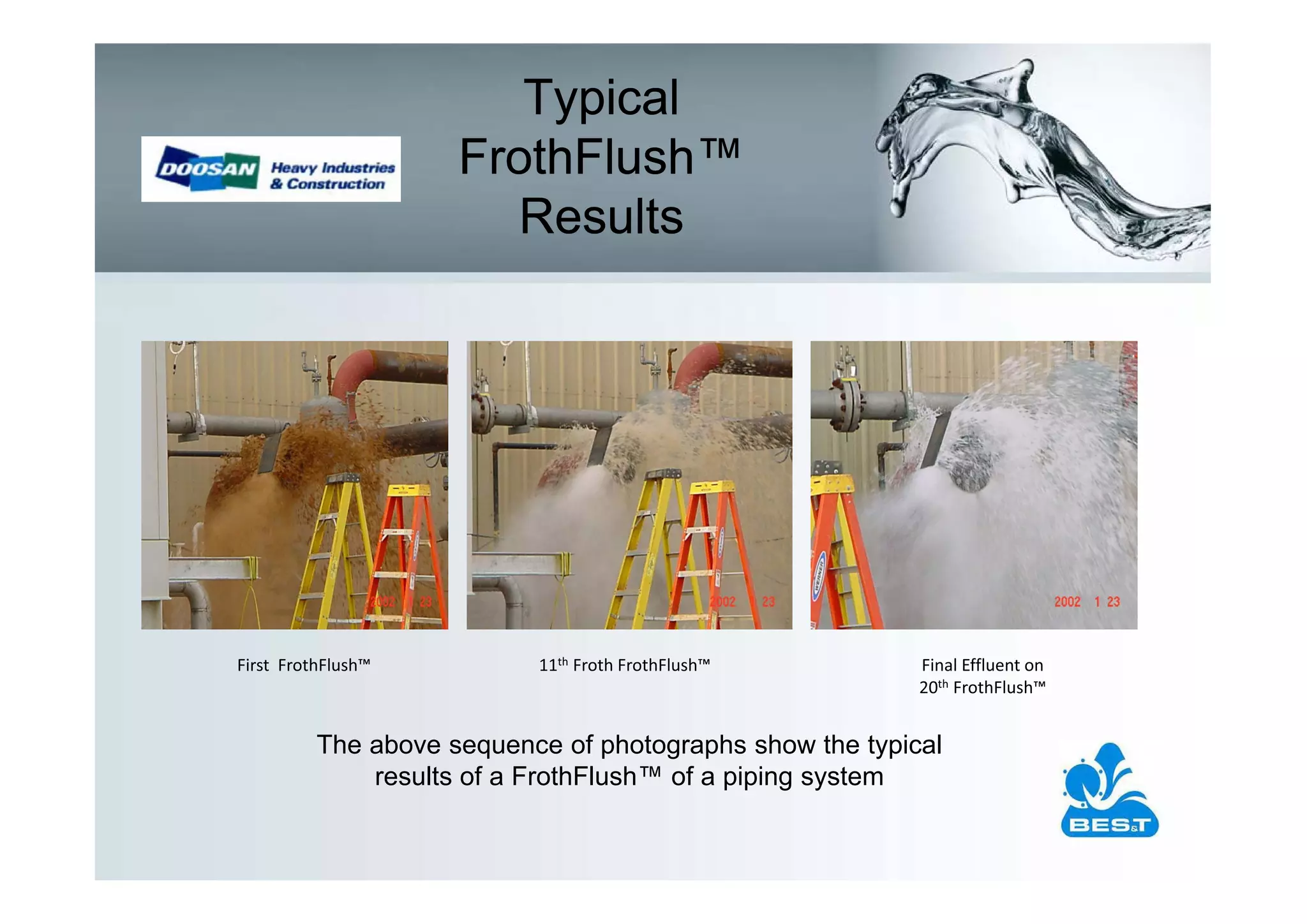
First FrothFlush™          11th Froth FrothFlush™         Final Effluent on
                                                          20th FrothFlush™


          The above sequence of photographs show the typical
              results of a FrothFlush™ of a piping system
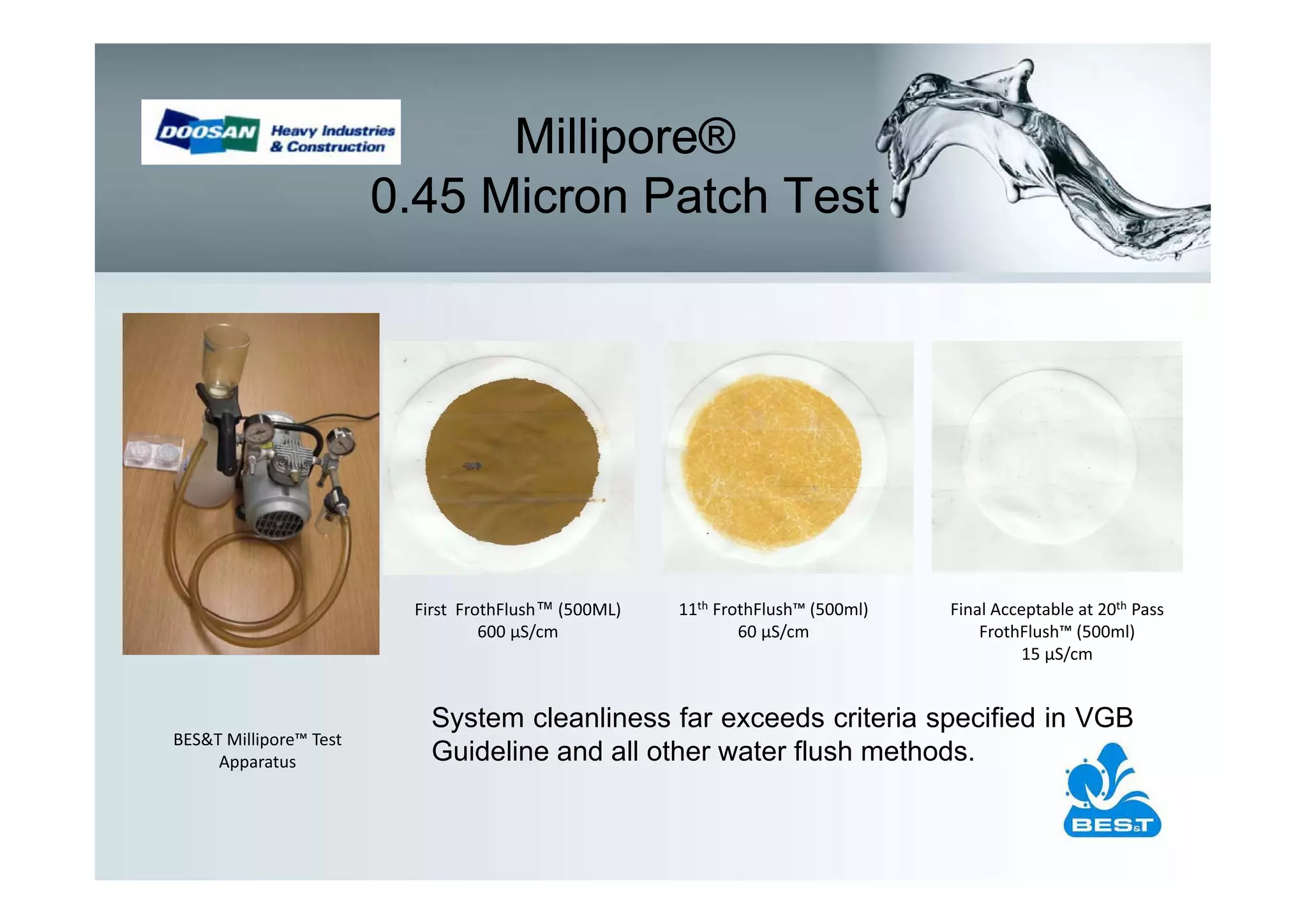
Millipore®
                        0.45 Micron Patch Test


                         First FrothFlush™ (500ML)   11th FrothFlush™ (500ml)   Final Acceptable at 20th Pass
                                  600 S/cm                   60 S/cm                FrothFlush™ (500ml)
                                                                                         15 S/cm


                           System cleanliness far exceeds criteria specified in VGB
BES&T Millipore™ Test
     Apparatus             Guideline and all other water flush methods.
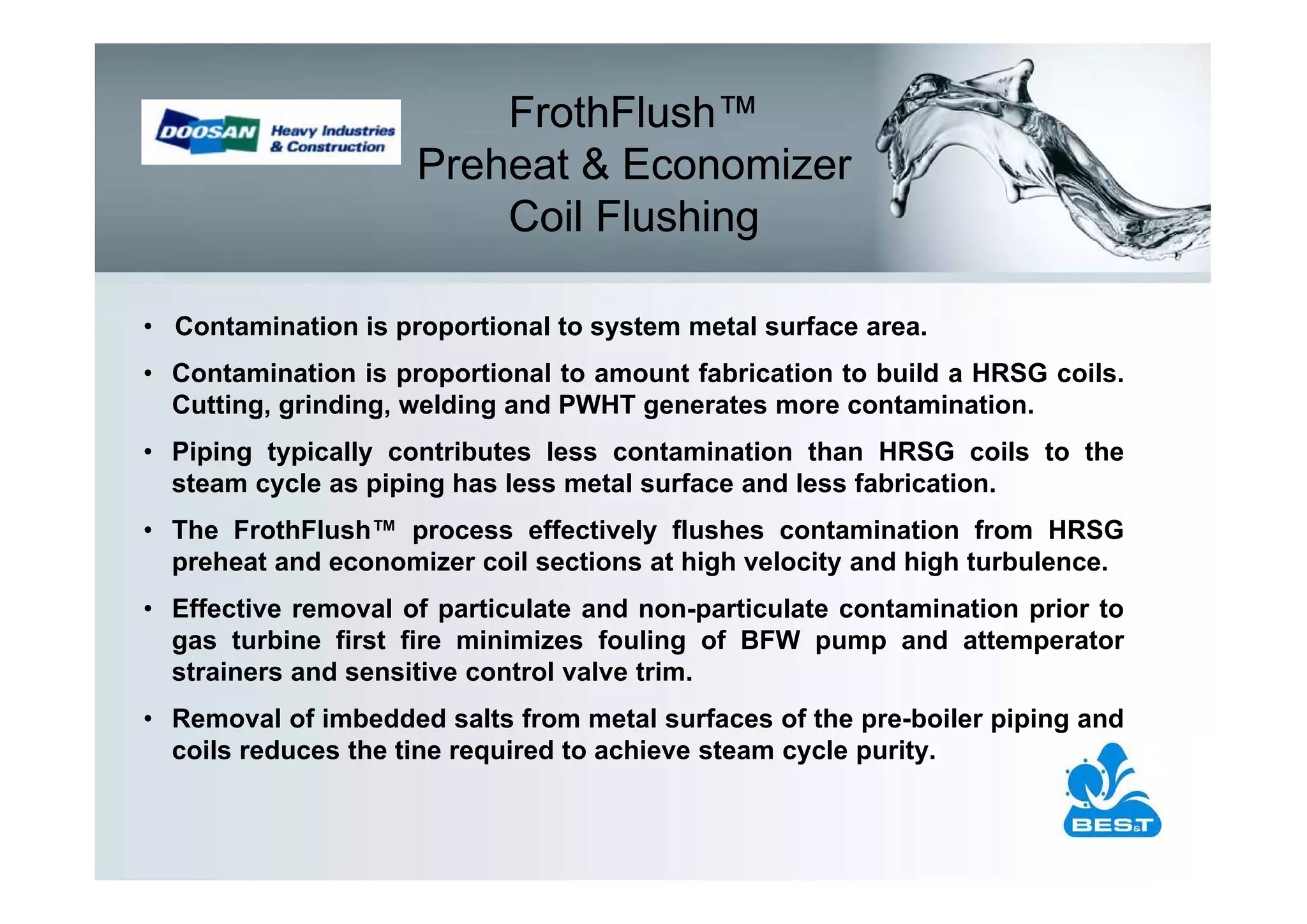
FrothFlush™
                     Preheat & Economizer
                         Coil Flushing

• Contamination is proportional to system metal surface area.
• Contamination is proportional to amount fabrication to build a HRSG coils.
  Cutting, grinding, welding and PWHT generates more contamination.
• Piping typically contributes less contamination than HRSG coils to the
  steam cycle as piping has less metal surface and less fabrication.
• The FrothFlush™ process effectively flushes contamination from HRSG
  preheat and economizer coil sections at high velocity and high turbulence.
• Effective removal of particulate and non-particulate contamination prior to
  gas turbine first fire minimizes fouling of BFW pump and attemperator
  strainers and sensitive control valve trim.
• Removal of imbedded salts from metal surfaces of the pre-boiler piping and
  coils reduces the tine required to achieve steam cycle purity.
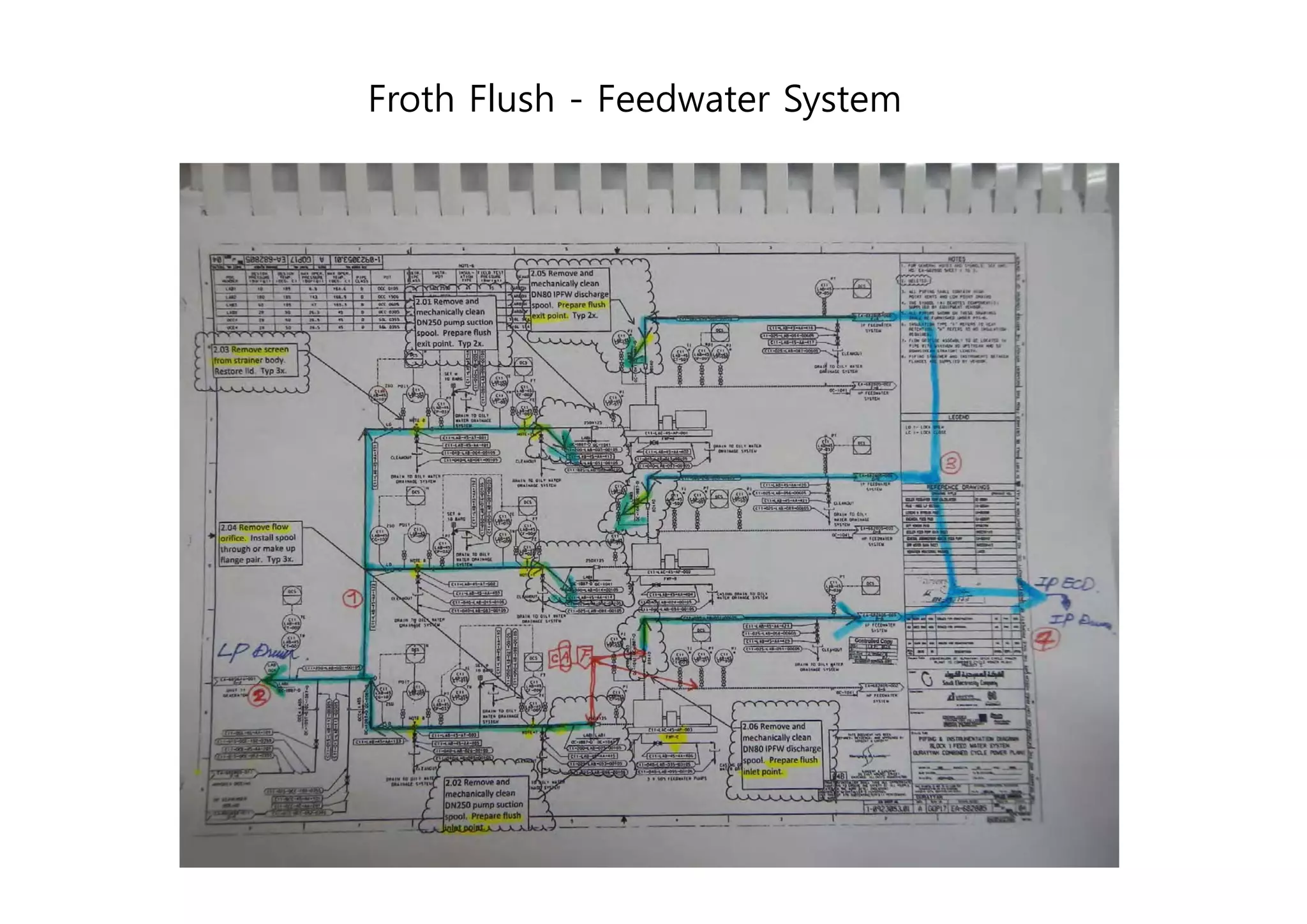
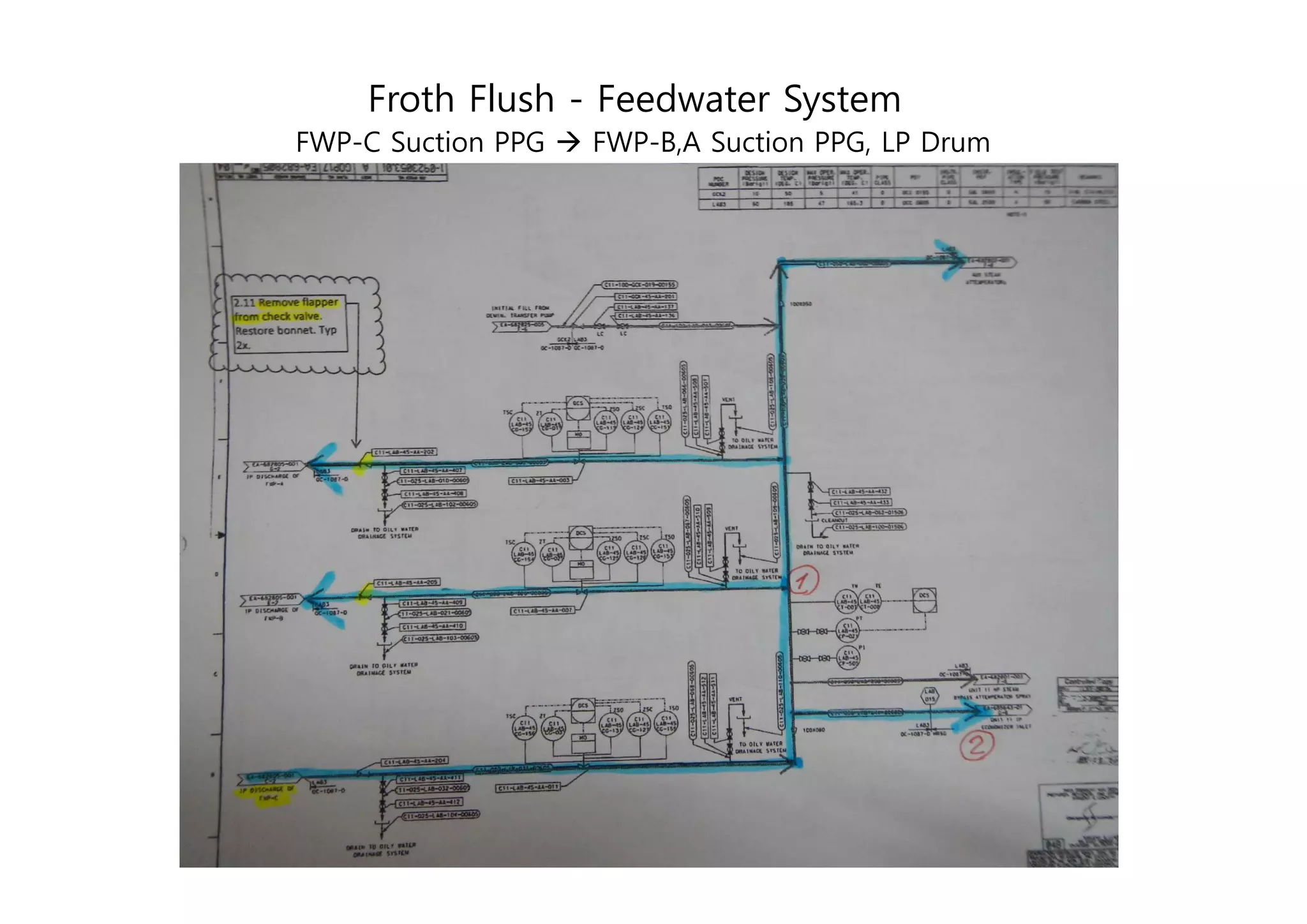
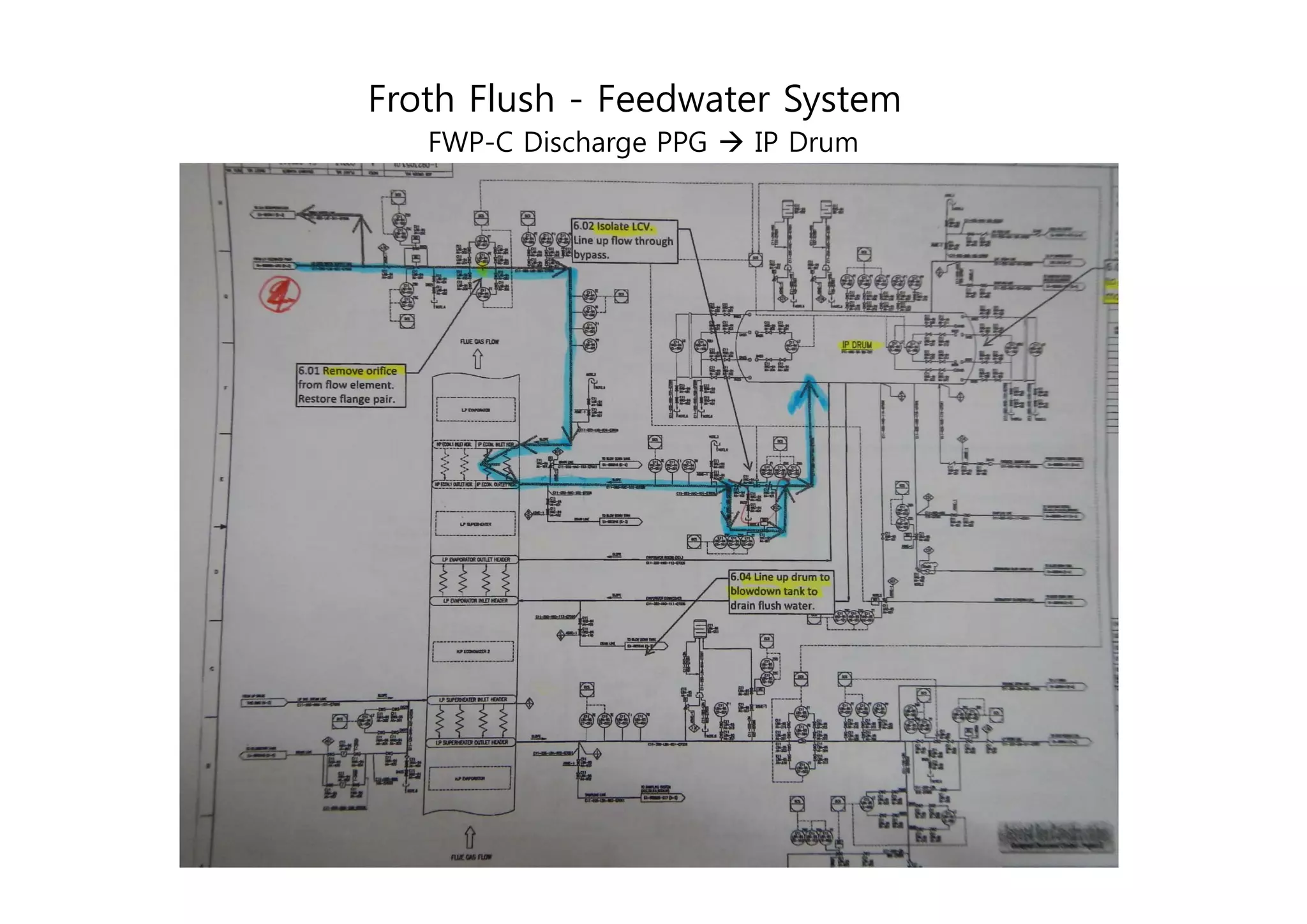
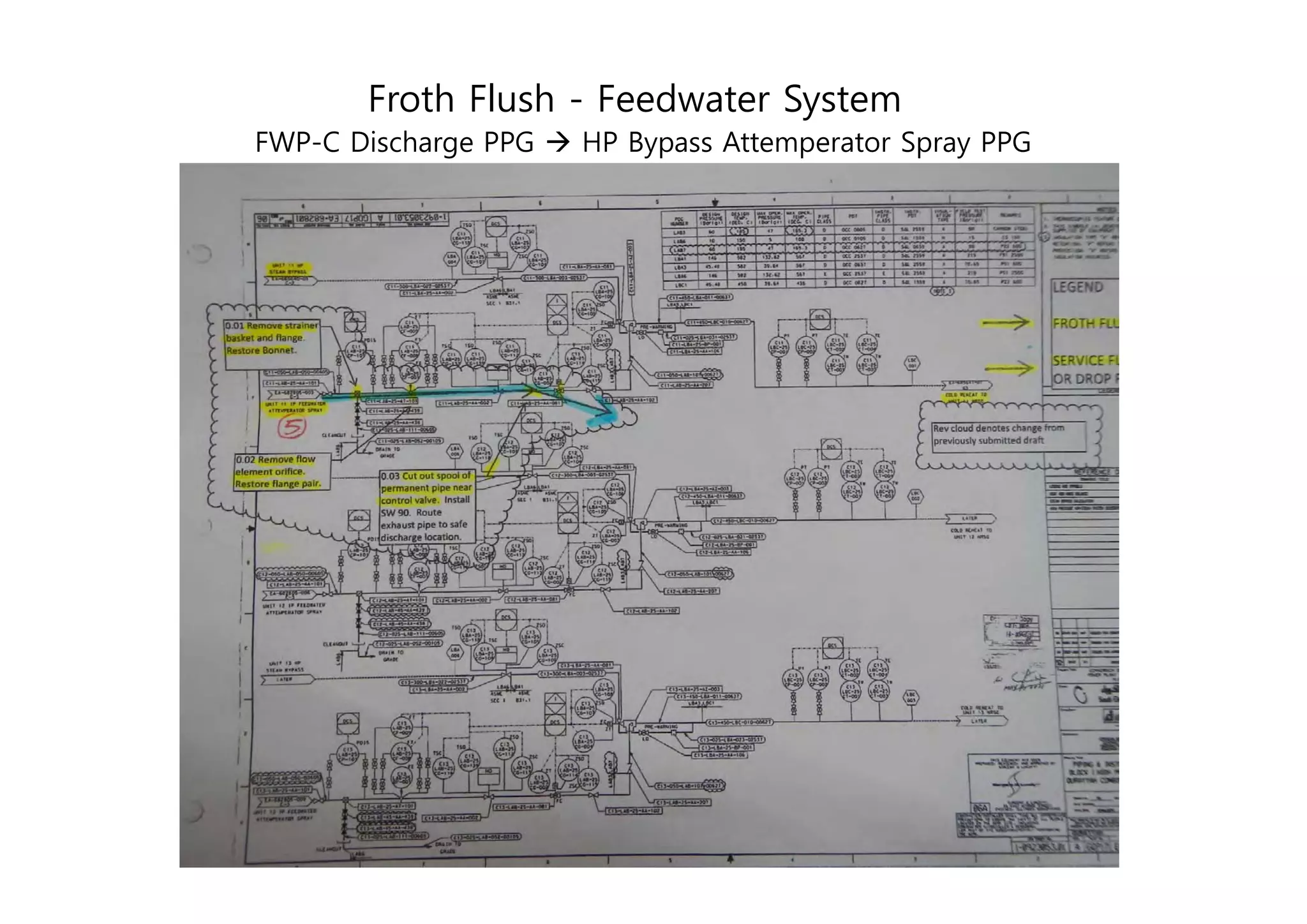
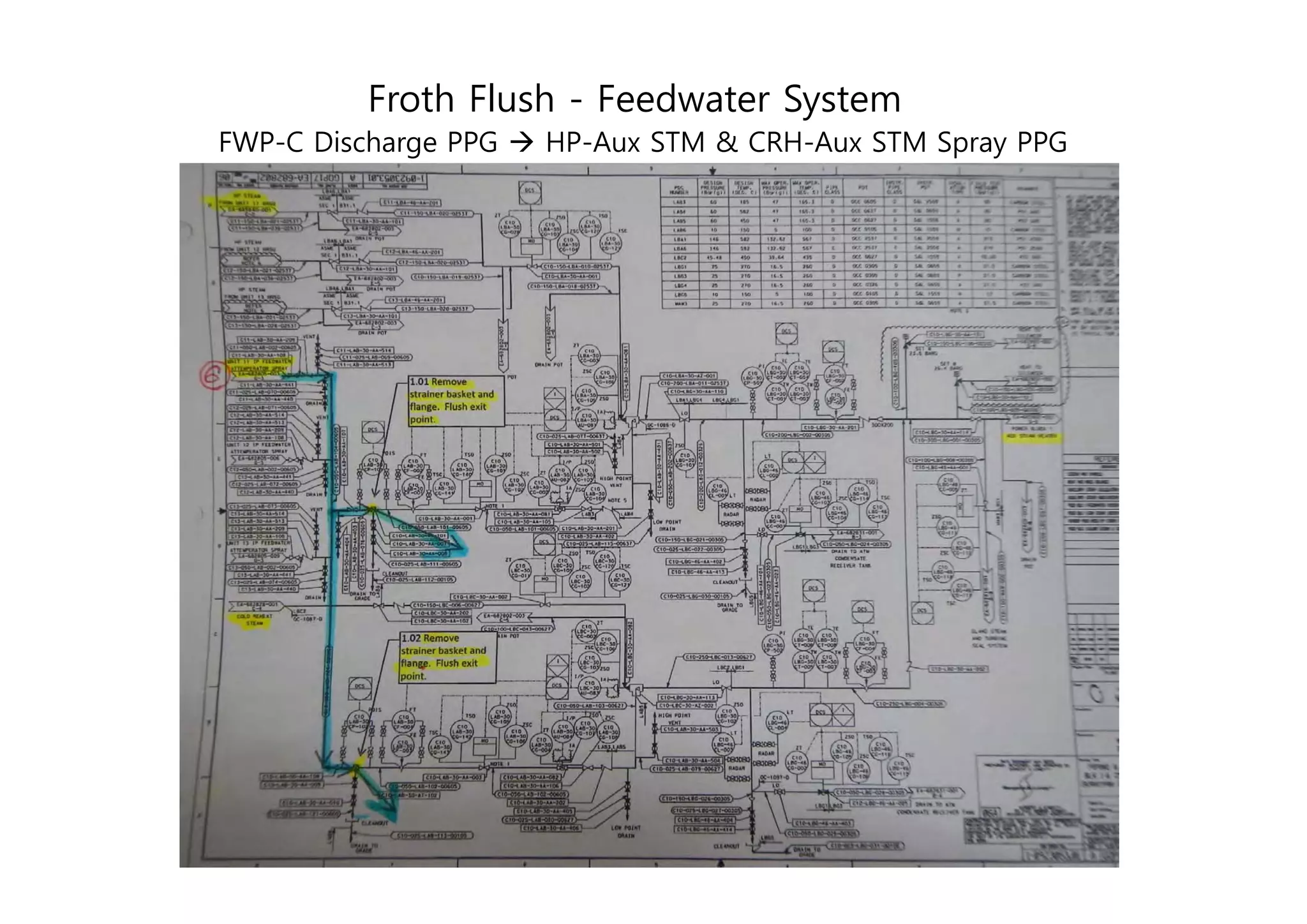
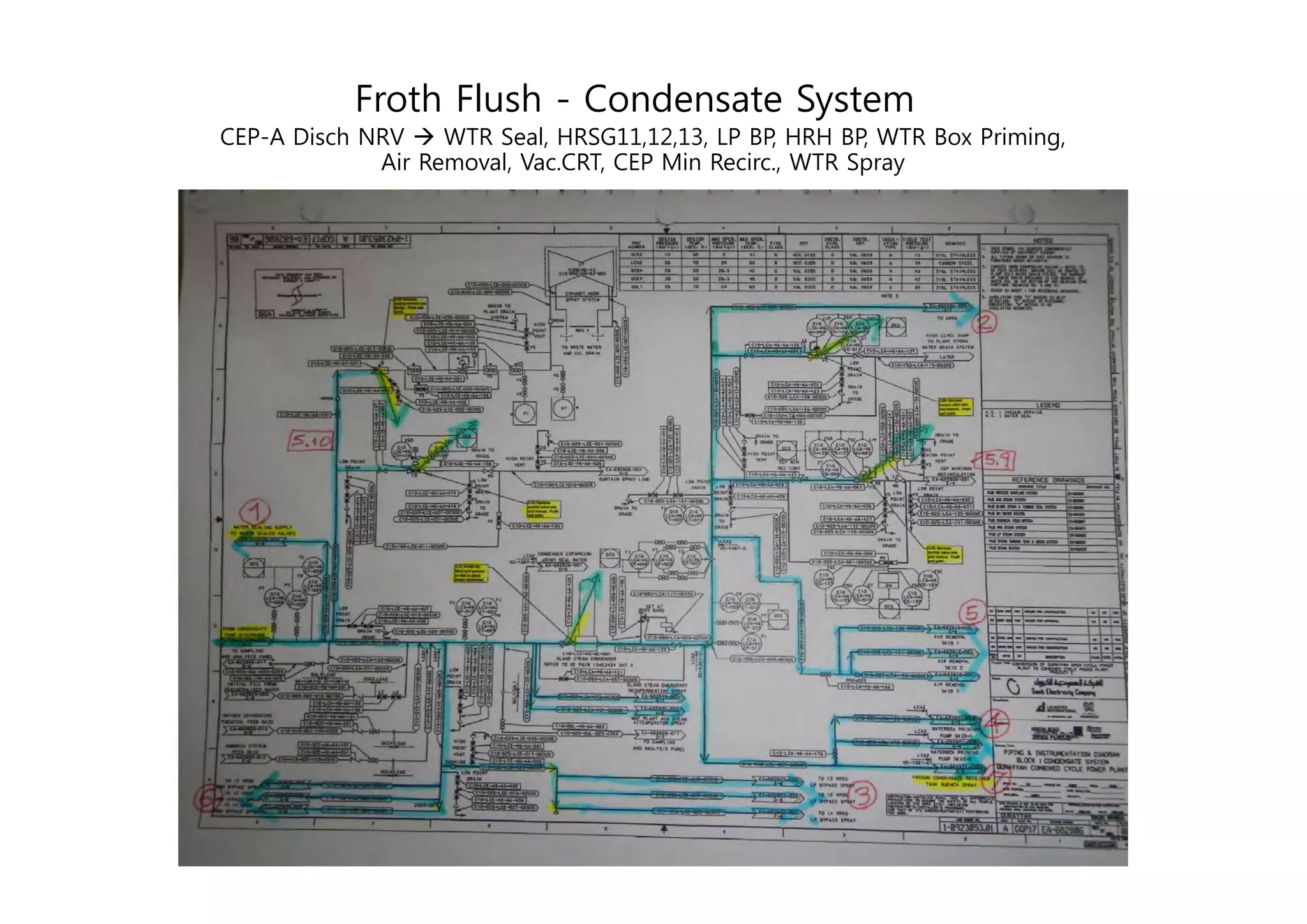
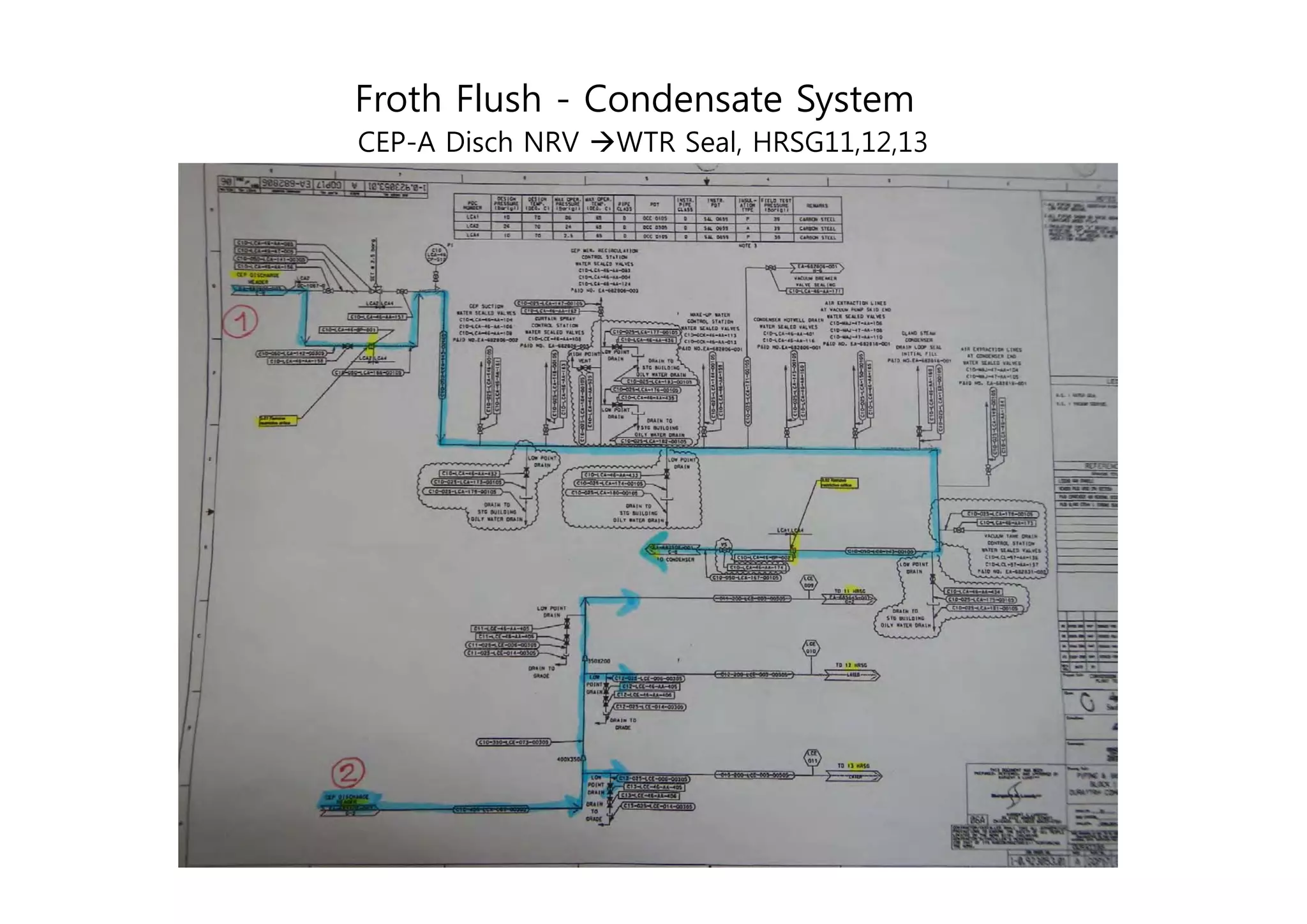
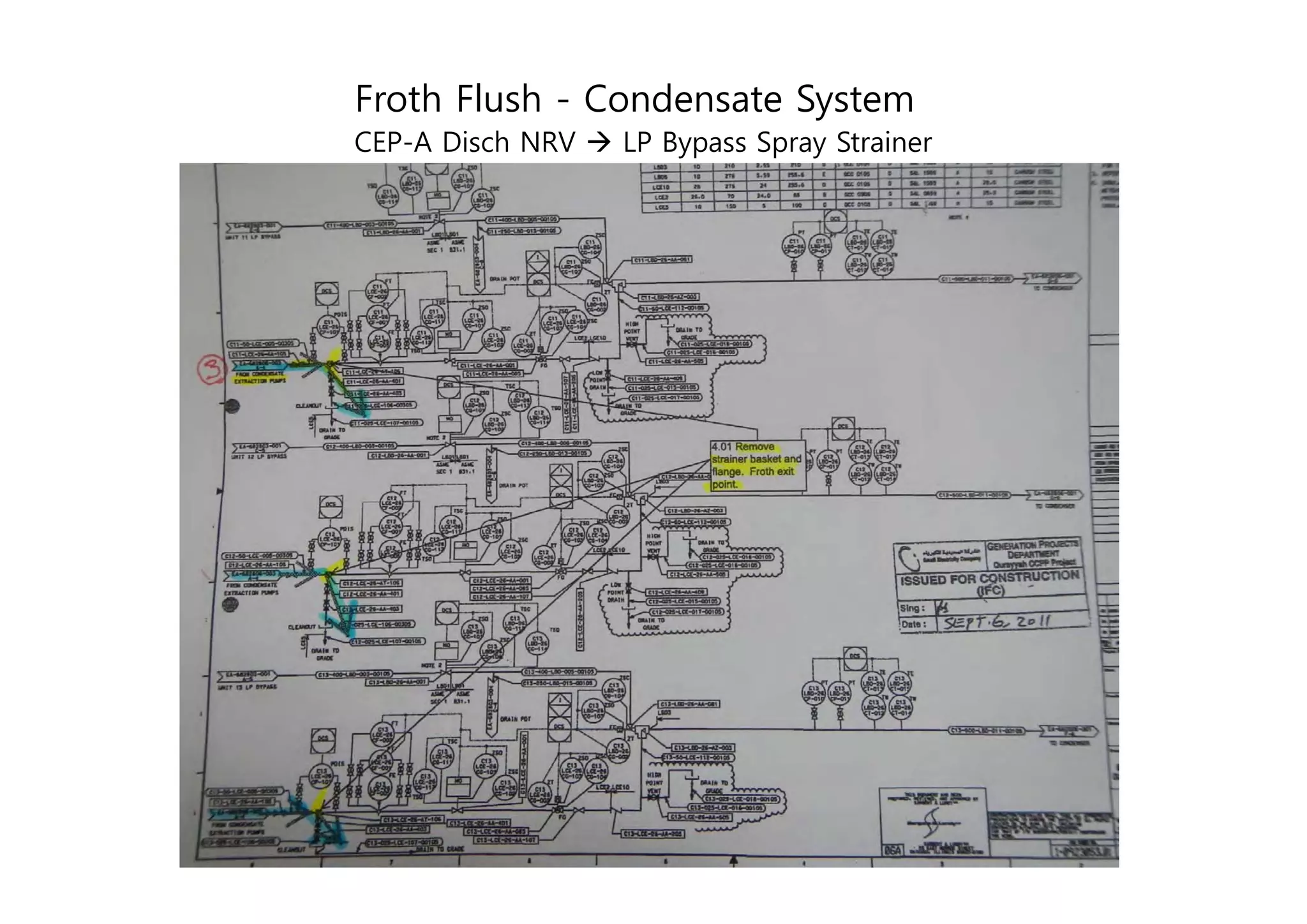
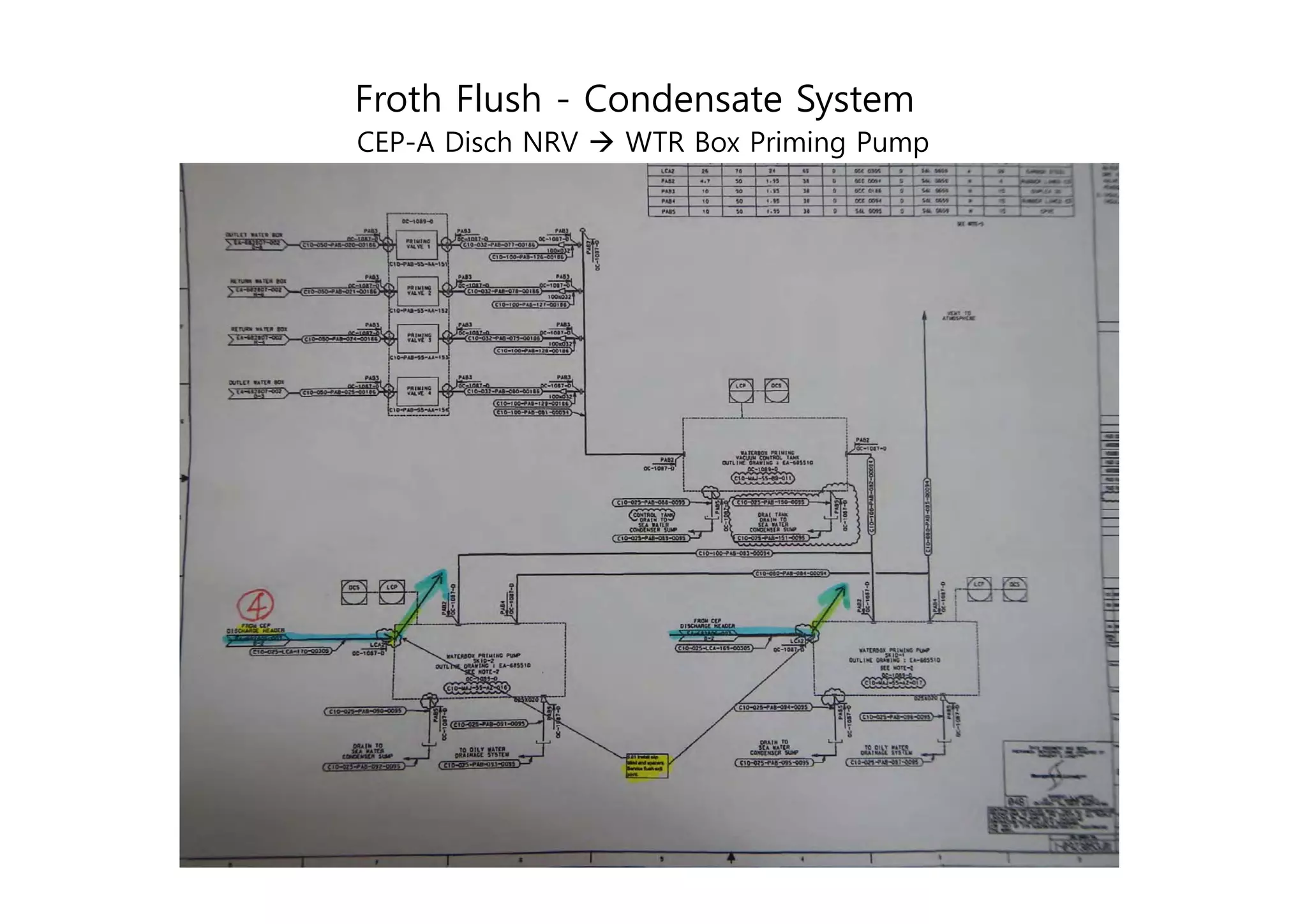
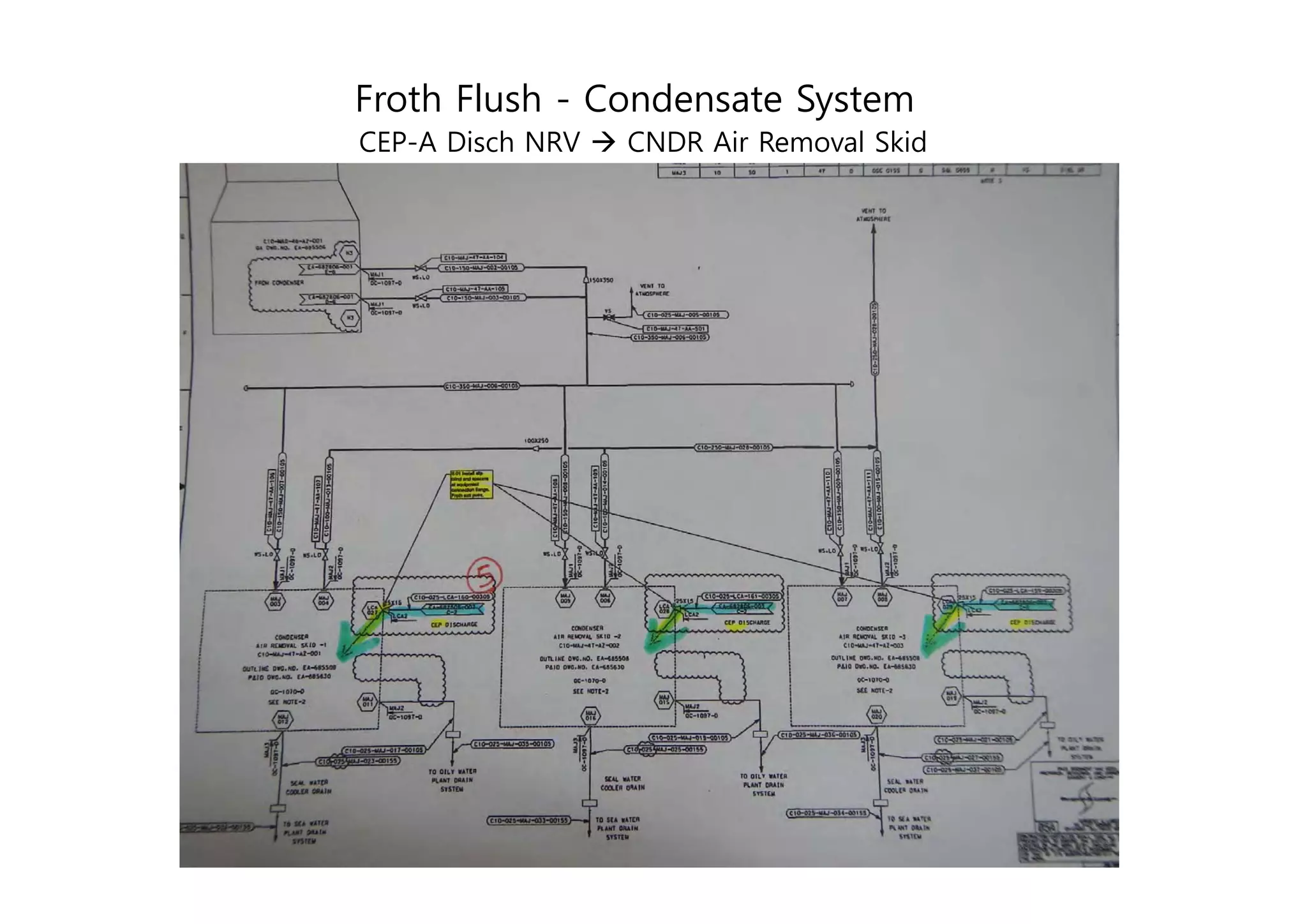
Froth flush process
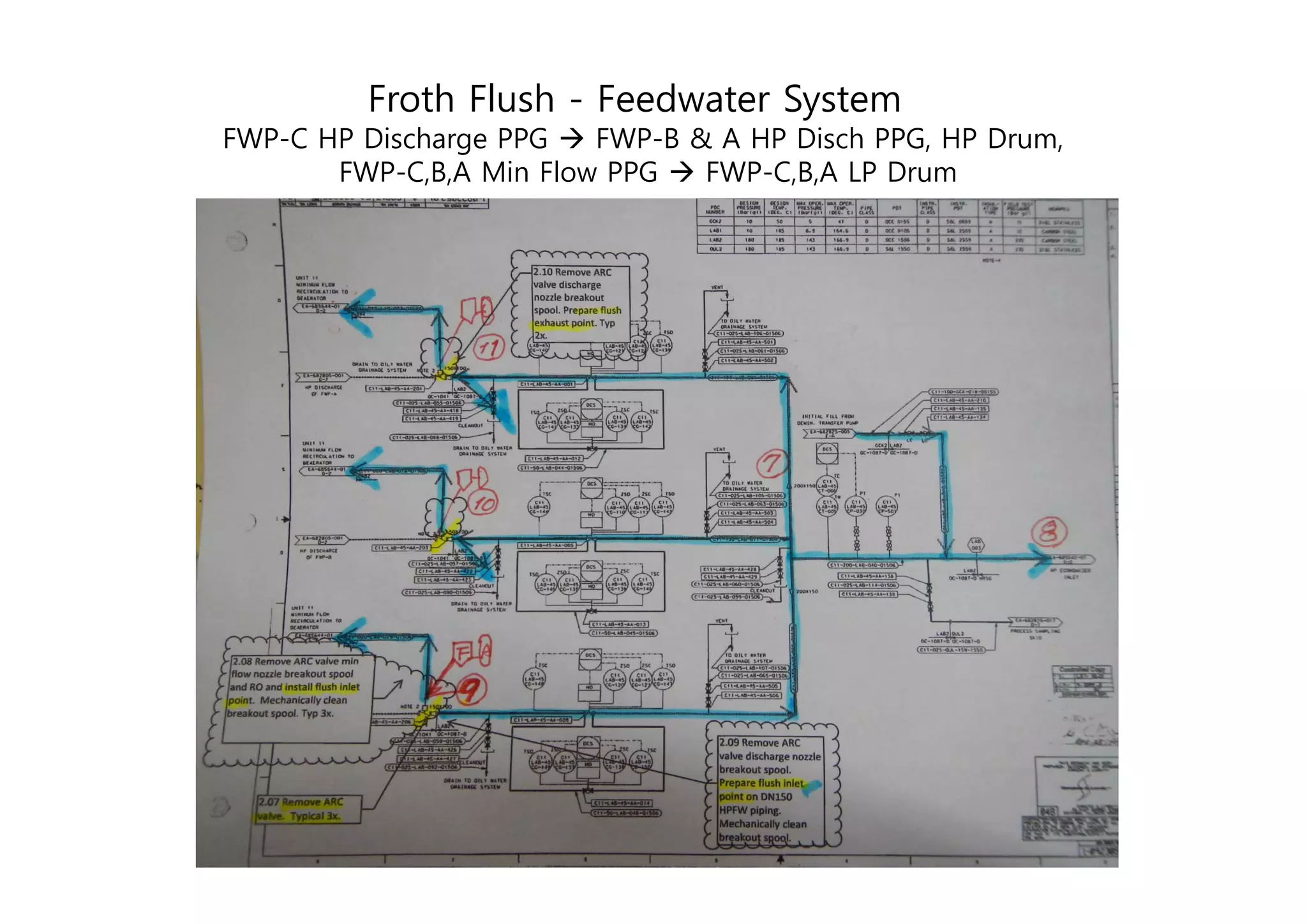
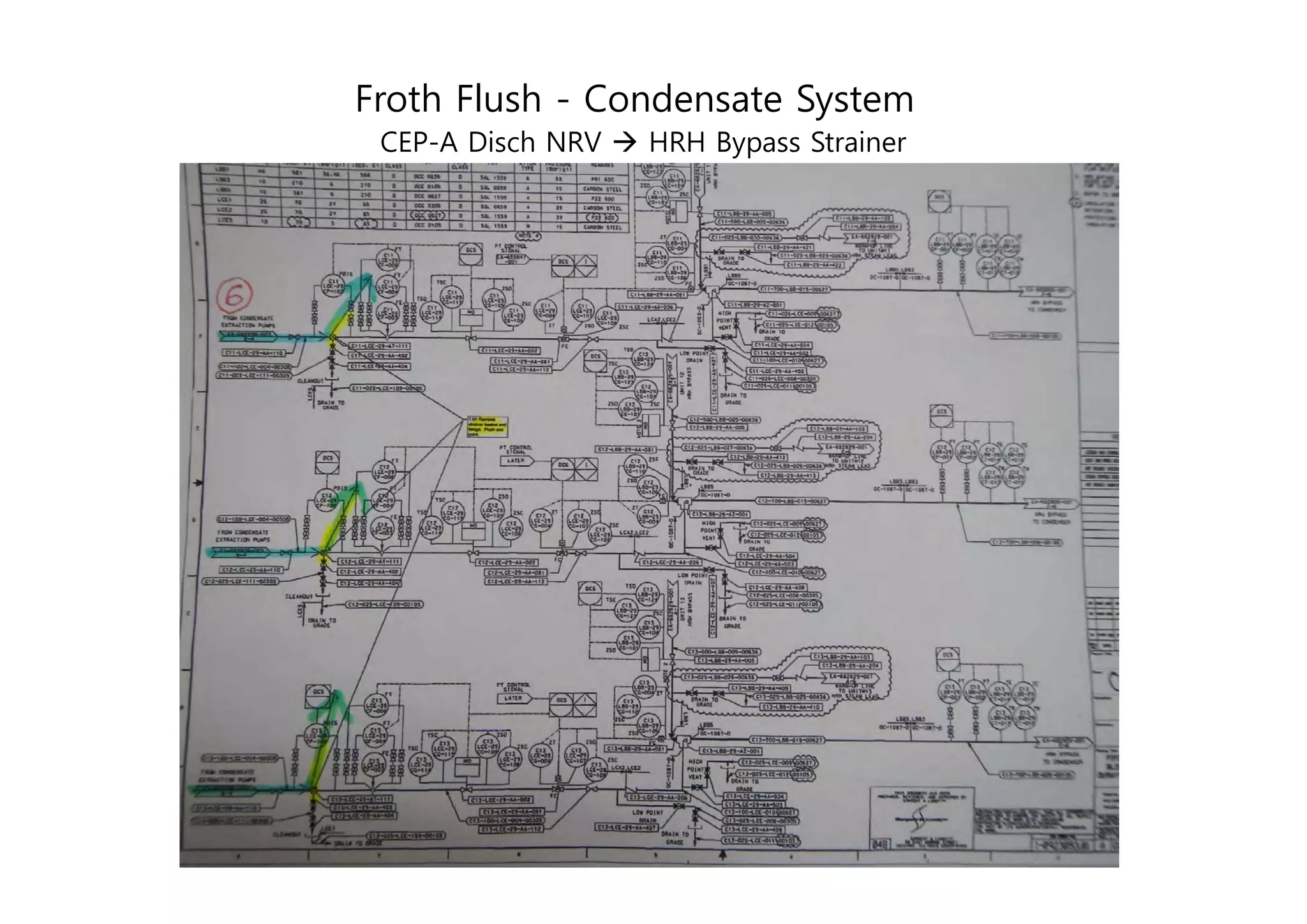
Froth flush process
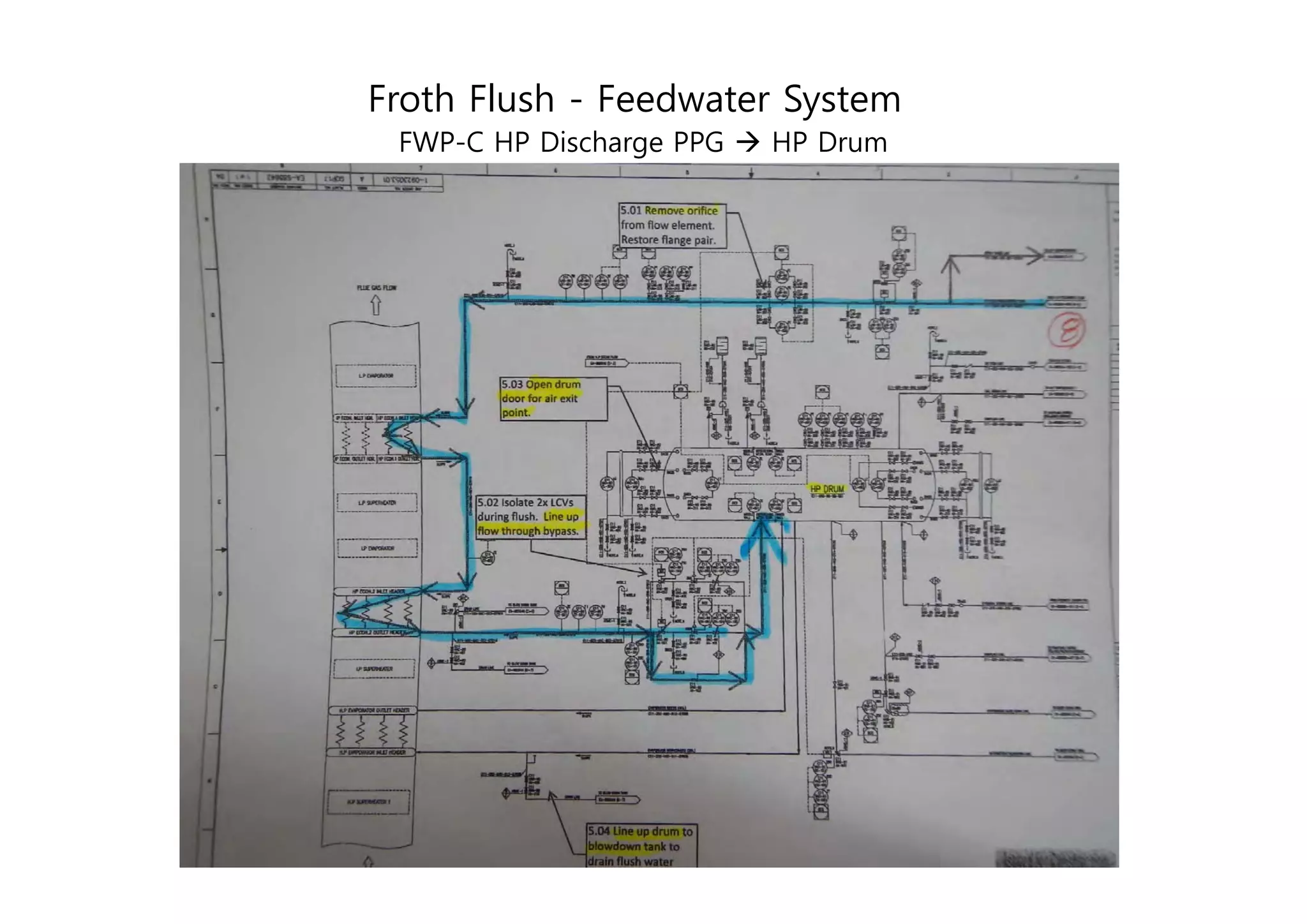
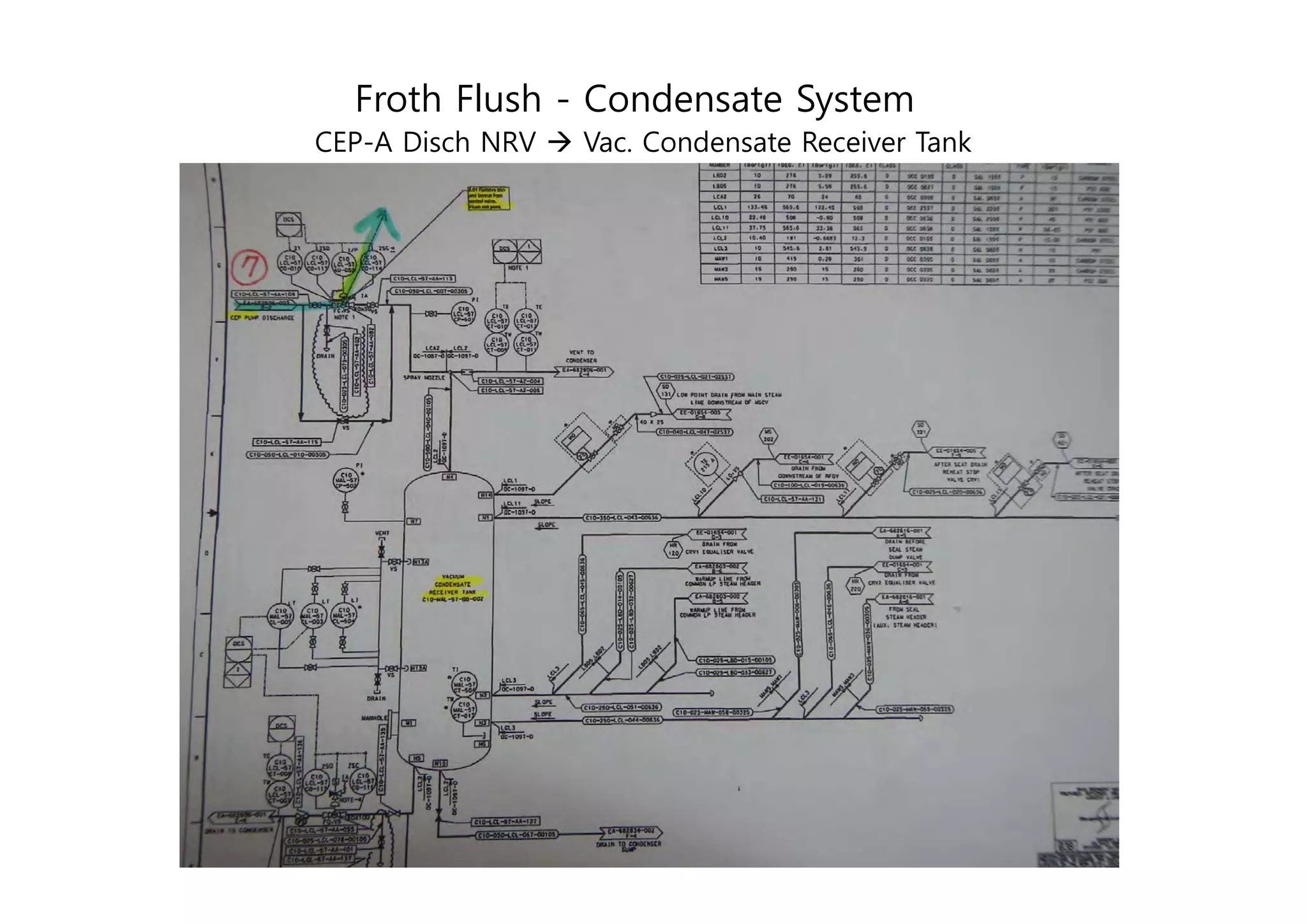
Froth flush process
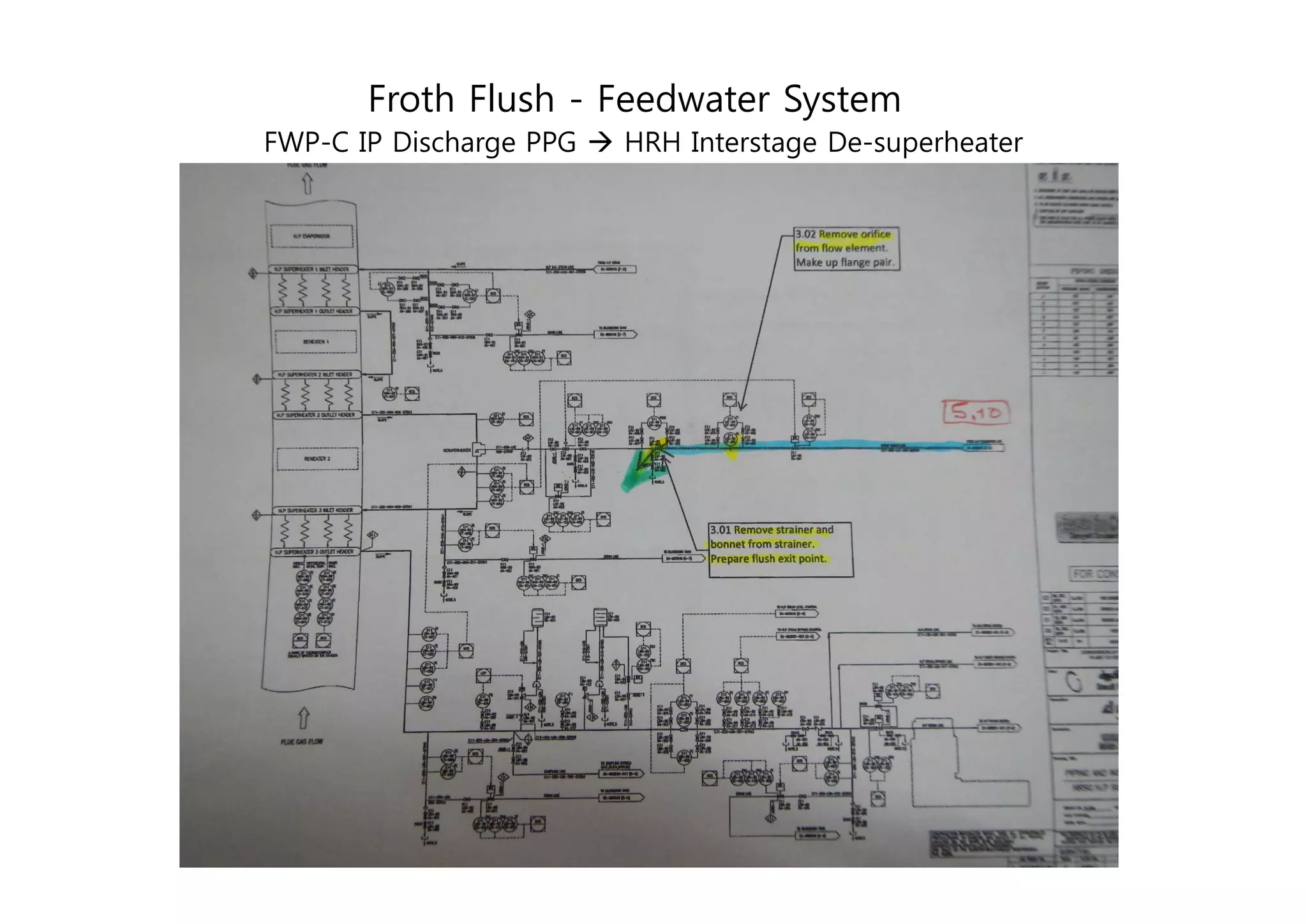
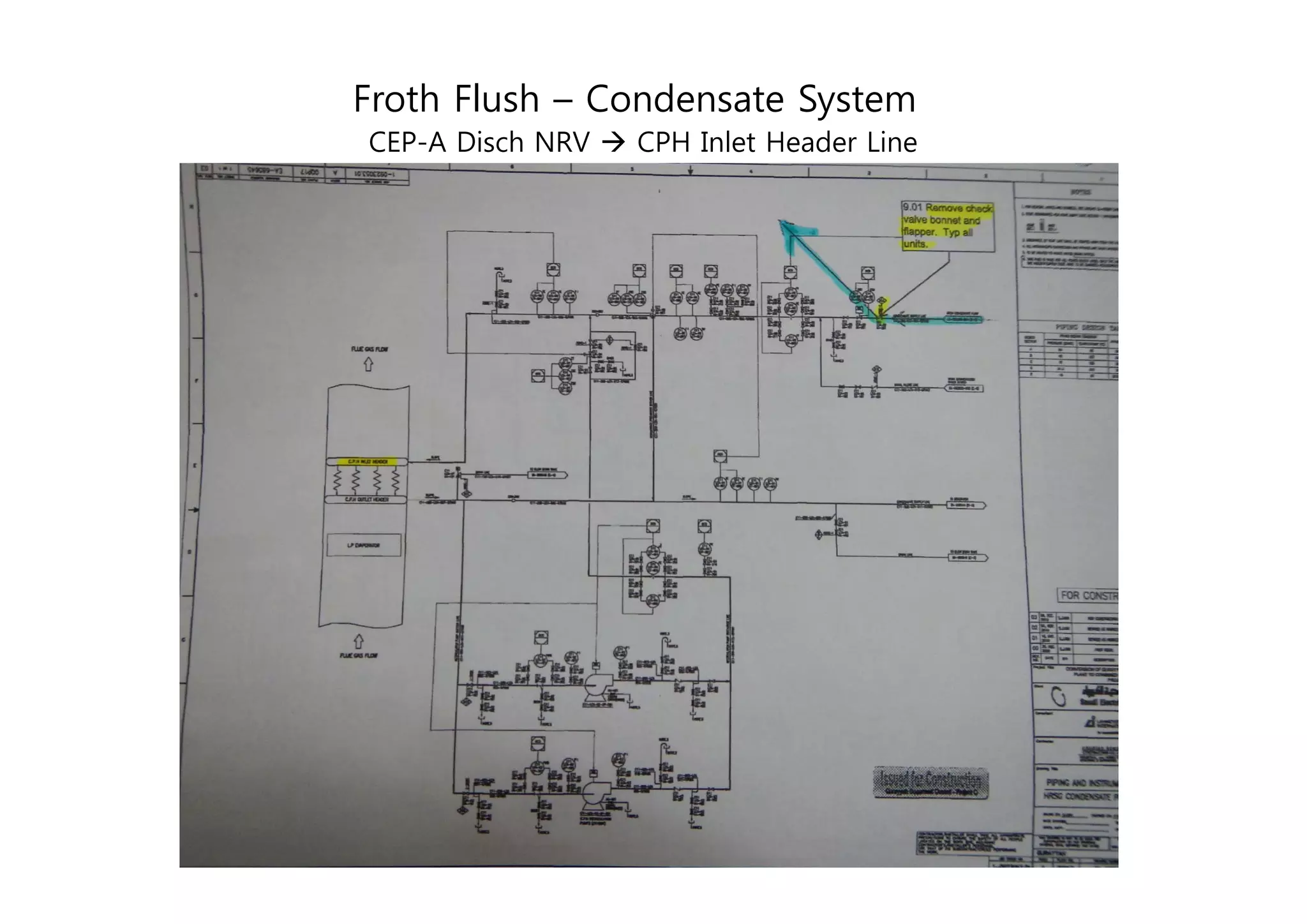
Froth flush process
Froth flush process
Froth flush process
Froth flush process
Froth flush process
Froth flush process
Froth flush process
Froth flush process
Froth flush process
Froth flush process
Froth flush process
Froth flush process
Froth flush process
Froth flush process
Froth flush process
Froth flush process
Froth flush process
Froth flush process
Froth flush process
Froth flush process

Froth flush process

  • 1.
    Combined Cycle PlantApplications FrothFlush™ Condensate and Feedwater Results: •Targets SigmaClean™ HRSG Watersides •Steam Chemistry •Water Cycle Chemistry •Stabile Operation Superheaters/Reheaters/MS piping, SigmaBlow™ Condenser
  • 2.
  • 3.
    Why FrothFlush TM? • Very high Reynolds numbers and complete turbulence using small quantities of water return the fastest, highest quality and most consistent flushing of pipe circuits • Cleaning to this level prevents contaminates from entering the steam generation equipment. • Improves water chemistry in the HRSG which in turn improves the ability to achieve steam purity. • Current cleaning requirements result in minimal feedwater and condensate suction strainer fouling.
  • 4.
  • 5.
    FrothFlush™ 6 inch pipe, 1,000 feet in length 40 feet per second “Froth” (compressible) Air / Water “slug” The FrothFlush™ process utilizes short two phase (air/water) frothed slugs displaced at velocities of 15 20 meters/sec generating Reynolds numbers of 4 5 million to remove both particulate and non particulate contamination from the metal surfaces.
  • 6.
    FrothFlush™ Full Turbulence Effectiveness of FrothFlush™ is due to generation of full turbulence that scrubs particles and salts from pipe & tube surfaces
  • 7.
    Improved Cleanliness • The FrothFlush™ effectiveness in removal of particulate contamination is monitored by means of Millipore filters. Samples of the flush effluent water are taken and filters using fine Millipore filters. • Millipore filters are so fine that the water sample will not flow through the filter without the aid of a vacuum to draw the sample water through the filter. • • The effectiveness of the FrothFlush™ process in removal of salts from the metal surfaces is monitored by measurement of the conductivity of the effluent flush water. • VGB Guideline for acceptable solids in flush water is < 5 mg/l. FrothFlush™ will typically achieve cleanliness of < 0.05 mg/l. • The VGB Guideline for acceptable flush water conductivity is < 1,000 S/cm. The FrothFlush™ process typically achieves flush water effluent < 50 S/cm. VGB(ISO-3166-1, British Virgin Islands)
  • 8.
    Typical FrothFlush™ Results First FrothFlush™ 11th Froth FrothFlush™ Final Effluent on 20th FrothFlush™ The above sequence of photographs show the typical results of a FrothFlush™ of a piping system
  • 9.
    Millipore® 0.45 Micron Patch Test First FrothFlush™ (500ML) 11th FrothFlush™ (500ml) Final Acceptable at 20th Pass 600 S/cm 60 S/cm FrothFlush™ (500ml) 15 S/cm System cleanliness far exceeds criteria specified in VGB BES&T Millipore™ Test Apparatus Guideline and all other water flush methods.
  • 10.
    FrothFlush™ Preheat & Economizer Coil Flushing • Contamination is proportional to system metal surface area. • Contamination is proportional to amount fabrication to build a HRSG coils. Cutting, grinding, welding and PWHT generates more contamination. • Piping typically contributes less contamination than HRSG coils to the steam cycle as piping has less metal surface and less fabrication. • The FrothFlush™ process effectively flushes contamination from HRSG preheat and economizer coil sections at high velocity and high turbulence. • Effective removal of particulate and non-particulate contamination prior to gas turbine first fire minimizes fouling of BFW pump and attemperator strainers and sensitive control valve trim. • Removal of imbedded salts from metal surfaces of the pre-boiler piping and coils reduces the tine required to achieve steam cycle purity.