From a Stormwater
Study to a Community
Resilience Toolkit
NOVEMBER 16, 2022
An Unexpected Journey to Make a Case
for Trees
 Overview of the Project Journey
 Exploration of Project Phase I
 Exploration of Project Phase II
 Review Resources
2
Presentation Outline
3
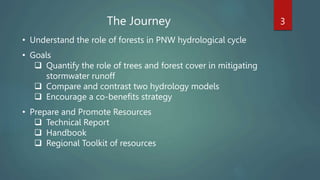
The Journey
• Understand the role of forests in PNW hydrological cycle
• Goals
 Quantify the role of trees and forest cover in mitigating
stormwater runoff
 Compare and contrast two hydrology models
 Encourage a co-benefits strategy
• Prepare and Promote Resources
 Technical Report
 Handbook
 Regional Toolkit of resources
Phase I
Puget Sound Trees
& Stormwater Project
4
Trees and Stormwater 5
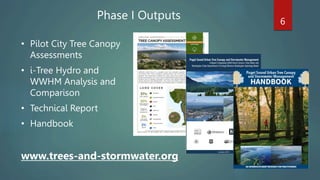
• Pilot City Tree Canopy
Assessments
• i-Tree Hydro and
WWHM Analysis and
Comparison
• Technical Report
• Handbook
Phase I Outputs 6
www.trees-and-stormwater.org
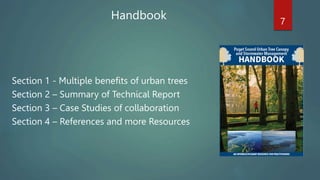
Section 1 - Multiple benefits of urban trees
Section 2 – Summary of Technical Report
Section 3 – Case Studies of collaboration
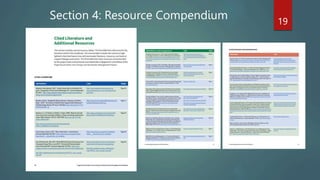
Section 4 – References and more Resources
Handbook 7
8
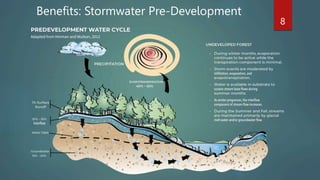
Benefits: Stormwater Pre-Development
9
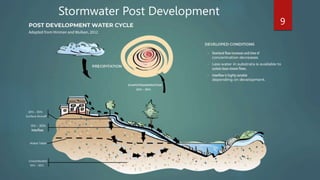
Stormwater Post Development
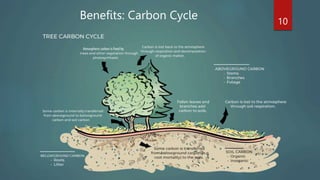
Benefits: Carbon Cycle 10
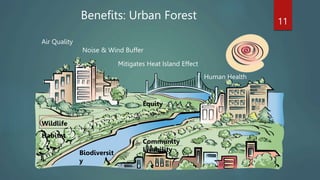
Benefits: Urban Forest 11
Human Health
Air Quality
Mitigates Heat Island Effect
Wildlife
Habitat
Noise & Wind Buffer
Community
Livability
Equity
Biodiversit
y
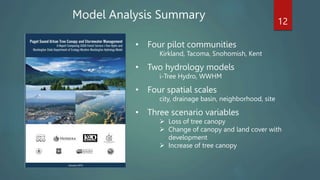
• Four pilot communities
Kirkland, Tacoma, Snohomish, Kent
• Two hydrology models
i-Tree Hydro, WWHM
• Four spatial scales
city, drainage basin, neighborhood, site
• Three scenario variables
 Loss of tree canopy
 Change of canopy and land cover with
development
 Increase of tree canopy
Model Analysis Summary 12
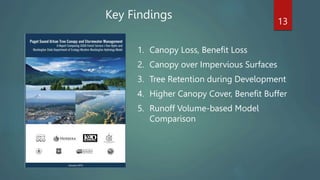
Key Findings 13
1. Canopy Loss, Benefit Loss
2. Canopy over Impervious Surfaces
3. Tree Retention during Development
4. Higher Canopy Cover, Benefit Buffer
5. Runoff Volume-based Model
Comparison
14
Scenarios where tree canopy is replaced (1A,
1B, 2A, and 2B) with any other land cover
type (herbaceous, shrub, impervious)
increases runoff volume.
Recommendation –
Retain and plant trees wherever
possible (overhanging impervious
areas, increasing canopy over pervious
areas) to reduce stormwater runoff
volume and pollution loads
Key Finding 1
Photo Credit: National Association of
Conservation Districts
15
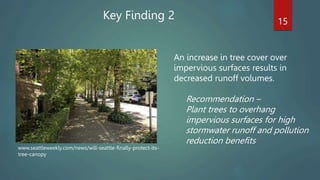
An increase in tree cover over
impervious surfaces results in
decreased runoff volumes.
Recommendation –
Plant trees to overhang
impervious surfaces for high
stormwater runoff and pollution
reduction benefits
www.seattleweekly.com/news/will-seattle-finally-protect-its-
tree-canopy
Key Finding 2
16
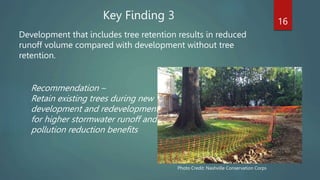
Development that includes tree retention results in reduced
runoff volume compared with development without tree
retention.
Recommendation –
Retain existing trees during new
development and redevelopment
for higher stormwater runoff and
pollution reduction benefits
Key Finding 3
Photo Credit: Nashville Conservation Corps
17
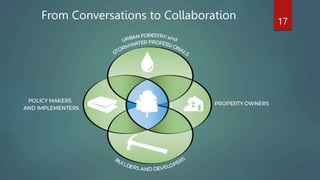
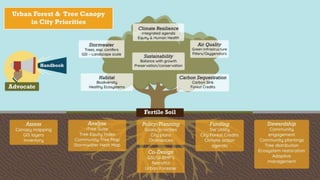
From Conversations to Collaboration
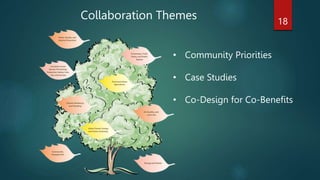
• Community Priorities
• Case Studies
• Co-Design for Co-Benefits
18
Collaboration Themes
19
Section 4: Resource Compendium
Phase II
Community
Resilience Toolkit
20
Phase II - Toolkit 21
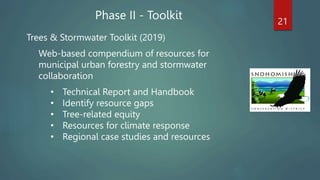
Trees & Stormwater Toolkit (2019)
Web-based compendium of resources for
municipal urban forestry and stormwater
collaboration
• Technical Report and Handbook
• Identify resource gaps
• Tree-related equity
• Resources for climate response
• Regional case studies and resources
Click to add text
23
25
27
28
29
30
31
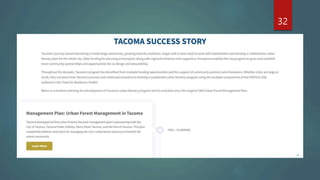
32
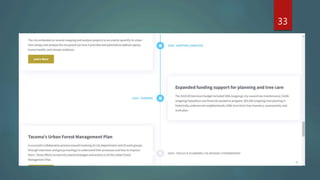
33
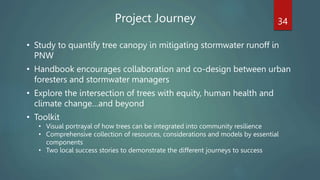
• Study to quantify tree canopy in mitigating stormwater runoff in
PNW
• Handbook encourages collaboration and co-design between urban
foresters and stormwater managers
• Explore the intersection of trees with equity, human health and
climate change…and beyond
• Toolkit
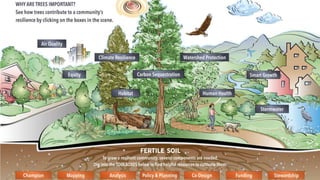
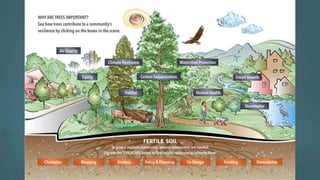
• Visual portrayal of how trees can be integrated into community resilience
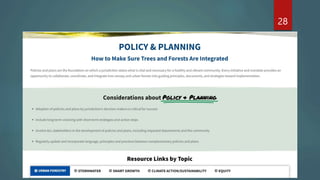
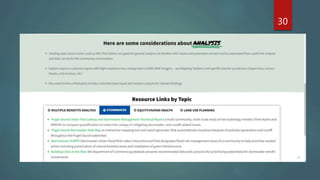
• Comprehensive collection of resources, considerations and models by essential
components
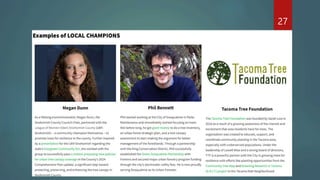
• Two local success stories to demonstrate the different journeys to success
34
Project Journey
Snohomish CD
outreach@snohomishcd.org
Printed Handbook
35
Online Access to Toolkit, PDF Handbook & Technical Report​
www.betterground.org/urban-forests​
www.trees-and-stormwater.org
Printed Technical Report King CD
district@kingcd.org
Project Resources
This project has been funded wholly or in part by the United
States Environmental Protection Agency under assistance
agreement PC-01J18101 to the Washington State
Department of Ecology.
WA DNR Urban and Community Forestry  Washington Stormwater Center
Kathleen Wolf, PhD University of Washington
Pierce, King, Snohomish Counties - Surface Water
Puget Sound Conservation District Caucus
Pierce, King, Snohomish & Whatcom Conservation Districts
Phase I Pilot Cities of Kirkland and Tacoma
Cities of Snoqualmie and Edmonds
Stewardship Partners  The Nature Conservancy - Washington
King County - Cities Climate Collaboration (K4C)
And Funders!
36
Thank You Project Partners!
QUESTIONS?
37
Brandy Reed
b.reed@whatcomcd.org
District Manager
Whatcom Conservation District
Elizabeth Walker
ewtreelady@gmail.com
Principal
Terra Firma Consulting

From a Stormwater Study to a Community Resilience Toolkit

  • 1.
    From a Stormwater Studyto a Community Resilience Toolkit NOVEMBER 16, 2022 An Unexpected Journey to Make a Case for Trees
  • 2.
     Overview ofthe Project Journey  Exploration of Project Phase I  Exploration of Project Phase II  Review Resources 2 Presentation Outline
  • 3.
    3 The Journey • Understandthe role of forests in PNW hydrological cycle • Goals  Quantify the role of trees and forest cover in mitigating stormwater runoff  Compare and contrast two hydrology models  Encourage a co-benefits strategy • Prepare and Promote Resources  Technical Report  Handbook  Regional Toolkit of resources
  • 4.
    Phase I Puget SoundTrees & Stormwater Project 4
  • 5.
  • 6.
    • Pilot CityTree Canopy Assessments • i-Tree Hydro and WWHM Analysis and Comparison • Technical Report • Handbook Phase I Outputs 6 www.trees-and-stormwater.org
  • 7.
    Section 1 -Multiple benefits of urban trees Section 2 – Summary of Technical Report Section 3 – Case Studies of collaboration Section 4 – References and more Resources Handbook 7
  • 8.
  • 9.
  • 10.
  • 11.
    Benefits: Urban Forest11 Human Health Air Quality Mitigates Heat Island Effect Wildlife Habitat Noise & Wind Buffer Community Livability Equity Biodiversit y
  • 12.
    • Four pilotcommunities Kirkland, Tacoma, Snohomish, Kent • Two hydrology models i-Tree Hydro, WWHM • Four spatial scales city, drainage basin, neighborhood, site • Three scenario variables  Loss of tree canopy  Change of canopy and land cover with development  Increase of tree canopy Model Analysis Summary 12
  • 13.
    Key Findings 13 1.Canopy Loss, Benefit Loss 2. Canopy over Impervious Surfaces 3. Tree Retention during Development 4. Higher Canopy Cover, Benefit Buffer 5. Runoff Volume-based Model Comparison
  • 14.
    14 Scenarios where treecanopy is replaced (1A, 1B, 2A, and 2B) with any other land cover type (herbaceous, shrub, impervious) increases runoff volume. Recommendation – Retain and plant trees wherever possible (overhanging impervious areas, increasing canopy over pervious areas) to reduce stormwater runoff volume and pollution loads Key Finding 1 Photo Credit: National Association of Conservation Districts
  • 15.
    15 An increase intree cover over impervious surfaces results in decreased runoff volumes. Recommendation – Plant trees to overhang impervious surfaces for high stormwater runoff and pollution reduction benefits www.seattleweekly.com/news/will-seattle-finally-protect-its- tree-canopy Key Finding 2
  • 16.
    16 Development that includestree retention results in reduced runoff volume compared with development without tree retention. Recommendation – Retain existing trees during new development and redevelopment for higher stormwater runoff and pollution reduction benefits Key Finding 3 Photo Credit: Nashville Conservation Corps
  • 17.
  • 18.
    • Community Priorities •Case Studies • Co-Design for Co-Benefits 18 Collaboration Themes
  • 19.
  • 20.
  • 21.
    Phase II -Toolkit 21 Trees & Stormwater Toolkit (2019) Web-based compendium of resources for municipal urban forestry and stormwater collaboration • Technical Report and Handbook • Identify resource gaps • Tree-related equity • Resources for climate response • Regional case studies and resources
  • 23.
    Click to addtext 23
  • 25.
  • 27.
  • 28.
  • 29.
  • 30.
  • 31.
  • 32.
  • 33.
  • 34.
    • Study toquantify tree canopy in mitigating stormwater runoff in PNW • Handbook encourages collaboration and co-design between urban foresters and stormwater managers • Explore the intersection of trees with equity, human health and climate change…and beyond • Toolkit • Visual portrayal of how trees can be integrated into community resilience • Comprehensive collection of resources, considerations and models by essential components • Two local success stories to demonstrate the different journeys to success 34 Project Journey
  • 35.
    Snohomish CD outreach@snohomishcd.org Printed Handbook 35 OnlineAccess to Toolkit, PDF Handbook & Technical Report​ www.betterground.org/urban-forests​ www.trees-and-stormwater.org Printed Technical Report King CD district@kingcd.org Project Resources
  • 36.
    This project hasbeen funded wholly or in part by the United States Environmental Protection Agency under assistance agreement PC-01J18101 to the Washington State Department of Ecology. WA DNR Urban and Community Forestry  Washington Stormwater Center Kathleen Wolf, PhD University of Washington Pierce, King, Snohomish Counties - Surface Water Puget Sound Conservation District Caucus Pierce, King, Snohomish & Whatcom Conservation Districts Phase I Pilot Cities of Kirkland and Tacoma Cities of Snoqualmie and Edmonds Stewardship Partners  The Nature Conservancy - Washington King County - Cities Climate Collaboration (K4C) And Funders! 36 Thank You Project Partners!
  • 37.
    QUESTIONS? 37 Brandy Reed b.reed@whatcomcd.org District Manager WhatcomConservation District Elizabeth Walker ewtreelady@gmail.com Principal Terra Firma Consulting

Editor's Notes

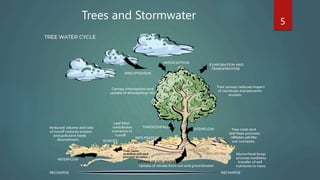
  • #6 Water Quallity and Quantity Stormwater runoff reduction Better soil infiltration and capacity Erosion control stabilizing soil/slopes Phytoremediation of pollutants
  • #7 Project Goal - Support collaboration across professional sectors (UF/Stormwater) Tech Report & Handbook Present on all the work using the Handbook as a guide
  • #11 Water Quallity and Quantity Stormwater runoff reduction Better soil infiltration and capacity Erosion control stabilizing soil/slopes Phytoremediation of pollutants