INTRO
• Introduce Speakers
• History of TIC
• Industrial Construction Challenges
• Traditional Planning/Scheduling Solutions
– Time-Scaled Resource Analysis
• 4D-Scheduling Solutions
– Workspace Efficiency
– Spatial Resource Analysis
• Safety
– Data and Analysis
– Benefits of 4D
Presenters
• Kenneth Meding, EIT
– District Virtual Design and Construction Lead
• Steve Moore, PMP, PSP, PMI-SP, LEED AP
– District Scheduling Manager
Overview of TIC
• TIC – The Industrial Company (Founded 1974)
– Heavy Industrial Contractor
• Owned by Kiewit (Founded 1884)
– 3rd largest contractor in the U.S.
– One of the largest equipment fleets in the U.S.
• Engineering/Design
• http://www.tic-inc.com/
• http://www.kiewit.com/
Challenges
• Challenges in Industrial Construction
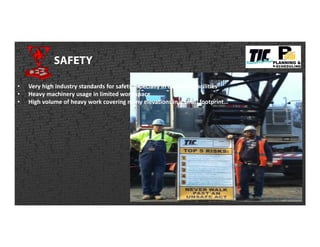
SAFETY
• Very high industry standards for safety especially in operating facilities
• Heavy machinery usage in limited work space
• High volume of heavy work covering many elevations in a small footprint…
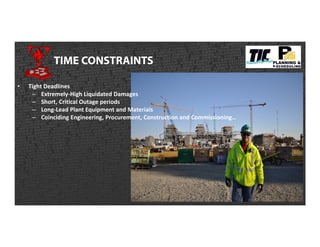
TIME CONSTRAINTS
• Tight Deadlines
– Extremely-High Liquidated Damages
– Short, Critical Outage periods
– Long-Lead Plant Equipment and Materials
– Coinciding Engineering, Procurement, Construction and Commissioning…
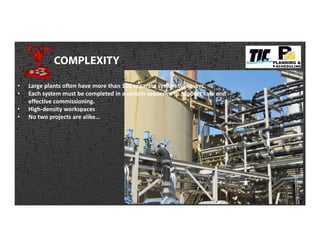
COMPLEXITY
• Large plants often have more than 100 separate system turnovers.
• Each system must be completed in a certain sequence to support safe and
effective commissioning.
• High-density workspaces
• No two projects are alike…
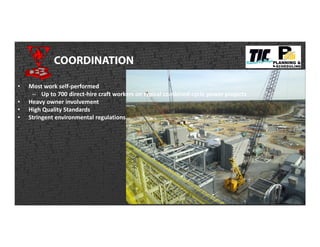
COORDINATION
• Most work self-performed
– Up to 700 direct-hire craft workers on typical combined-cycle power projects
• Heavy owner involvement
• High Quality Standards
• Stringent environmental regulations…
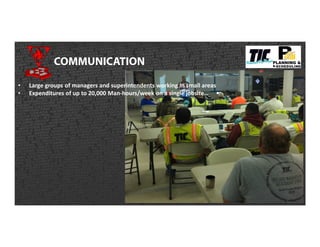
COMMUNICATION
• Large groups of managers and superintendents working in small areas
• Expenditures of up to 20,000 Man-hours/week on a single jobsite…
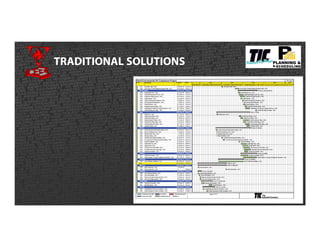
TRADITIONAL SOLUTIONS
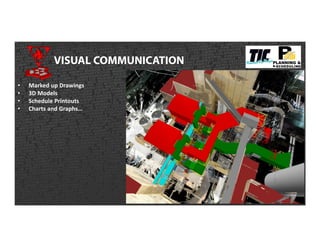
VISUAL COMMUNICATION
• Marked up Drawings
• 3D Models
• Schedule Printouts
• Charts and Graphs…
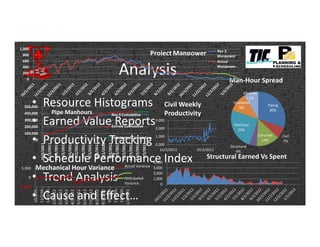
Analysis
• Resource Histograms
• Earned Value Reports
• Productivity Tracking
• Schedule Performance Index
• Trend Analysis
• Cause and Effect…
Piping
30%
Civil
7%
Concrete
14%
Structural
4%
Electrical
25%
Mechan
11%
Insulation
9%
Man-Hour Spread
0
100,000
200,000
300,000
400,000
500,000
10/2/2011
11/2/2011
12/2/2011
1/2/2012
2/2/2012
3/2/2012
4/2/2012
5/2/2012
6/2/2012
7/2/2012
8/2/2012
9/2/2012
10/2/2012
11/2/2012
12/2/2012
1/2/2013
Rev 3 Cumulative
Earned Cumulative
Anticipated Cumulative
Pipe Manhours
0
1,000
2,000
3,000
4,000
Structural Earned Vs Spent
0.000
1.000
2.000
3.000
10/2/2011 10/2/2012
Civil Weekly
Productivity
(5,000)
0
5,000
10/2/20…
11/2/20…
12/2/20…
1/2/2012
2/2/2012
3/2/2012
4/2/2012
5/2/2012
6/2/2012
7/2/2012
8/2/2012
9/2/2012
10/2/20…
11/2/20…
12/2/20…
1/2/2013
Mechanical Hour Variance Actual Variance
Anticipated
Variance
0
200
400
600
800
1,000
Rev 3
Manpower
Actual
Manpower
Project Manpower
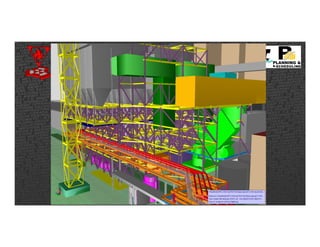
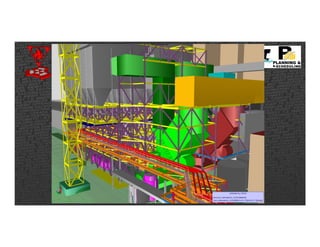
• Teams can view the project model with current progress.
• Future jobsite conditions will be easier to visualize and discuss as a team.
• Workspace conflicts easier to discuss and mitigate…
VISUAL COMMUNICATION
Schedule Validation
EQUIPMENT COORDINATION
• Major equipment needs for upcoming work are easier to assess.
• Equipment sharing options (cranes, lifts, etc.) are more easy to plan.
• Equipment access and congestion can be identified…
SAFETY ANALYSIS
• Safety specialists can understand future site conditions and plan ahead more
accurately.
• Issues with trades working too closely or above/below each other can be
identified and mitigated…
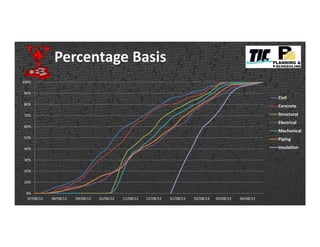
TIME-SCALED RESOURCE ANALYSIS
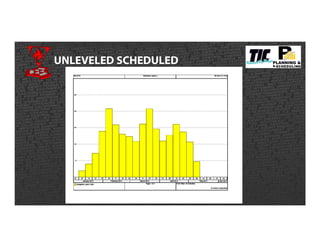
UNLEVELED SCHEDULED
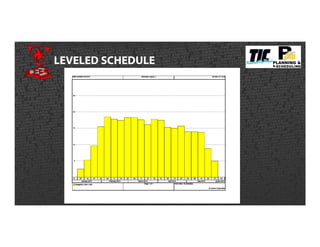
LEVELED SCHEDULE
0%
10%
20%
30%
40%
50%
60%
70%
80%
90%
100%
07/08/12 08/08/12 09/08/12 10/08/12 11/08/12 12/08/12 01/08/13 02/08/13 03/08/13 04/08/13
Percentage Basis
Civil
Concrete
Structural
Electrical
Mechanical
Piping
Insulation
Workspace Efficiency
Tools Required
• Just as we level resources across time, we should level resources across space.
• We need a different tool to identify work front availability across a jobsite.
• We need to level resources within a physical area (not just through time)…
-50
50
150
250
350
450
550
650
Dec-11
Feb-12
Apr-12
Jun-12
Aug-12
Oct-12
Dec-12
Feb-13
Apr-13
Jun-13
Aug-13
Oct-13
Dec-13
Feb-14
Apr-14
Jun-14
Aug-14
Oct-14
Dec-14
Feb-15
Apr-15
Jun-15
Aug-15
Oct-15
Dec-15
Feb-16
Apr-16
Jun-16
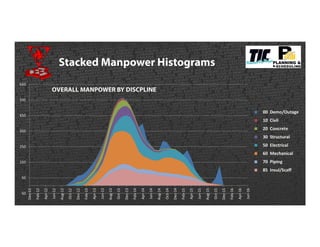
OVERALL MANPOWER BY DISCPLINE
00 Demo/Outage
10 Civil
20 Concrete
30 Structural
50 Electrical
60 Mechanical
70 Piping
85 Insul/Scaff
Stacked Manpower Histograms
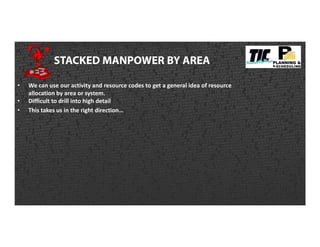
STACKED MANPOWER BY AREA
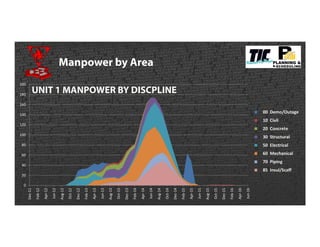
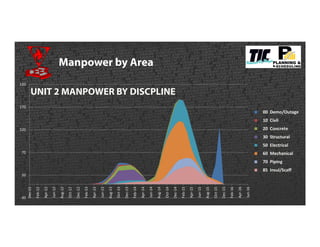
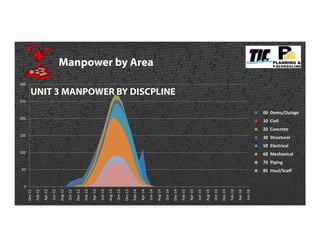
• We can use our activity and resource codes to get a general idea of resource
allocation by area or system.
• Difficult to drill into high detail
• This takes us in the right direction…
0
20
40
60
80
100
120
140
160
180
200
Dec-11
Feb-12
Apr-12
Jun-12
Aug-12
Oct-12
Dec-12
Feb-13
Apr-13
Jun-13
Aug-13
Oct-13
Dec-13
Feb-14
Apr-14
Jun-14
Aug-14
Oct-14
Dec-14
Feb-15
Apr-15
Jun-15
Aug-15
Oct-15
Dec-15
Feb-16
Apr-16
Jun-16
UNIT 1 MANPOWER BY DISCPLINE
00 Demo/Outage
10 Civil
20 Concrete
30 Structural
50 Electrical
60 Mechanical
70 Piping
85 Insul/Scaff
Manpower by Area
-30
20
70
120
170
220
Dec-11
Feb-12
Apr-12
Jun-12
Aug-12
Oct-12
Dec-12
Feb-13
Apr-13
Jun-13
Aug-13
Oct-13
Dec-13
Feb-14
Apr-14
Jun-14
Aug-14
Oct-14
Dec-14
Feb-15
Apr-15
Jun-15
Aug-15
Oct-15
Dec-15
Feb-16
Apr-16
Jun-16
UNIT 2 MANPOWER BY DISCPLINE
00 Demo/Outage
10 Civil
20 Concrete
30 Structural
50 Electrical
60 Mechanical
70 Piping
85 Insul/Scaff
Manpower by Area
0
50
100
150
200
250
300
Dec-11
Feb-12
Apr-12
Jun-12
Aug-12
Oct-12
Dec-12
Feb-13
Apr-13
Jun-13
Aug-13
Oct-13
Dec-13
Feb-14
Apr-14
Jun-14
Aug-14
Oct-14
Dec-14
Feb-15
Apr-15
Jun-15
Aug-15
Oct-15
Dec-15
Feb-16
Apr-16
Jun-16
UNIT 3 MANPOWER BY DISCPLINE
00 Demo/Outage
10 Civil
20 Concrete
30 Structural
50 Electrical
60 Mechanical
70 Piping
85 Insul/Scaff
Manpower by Area
-40
10
60
110
160
210
260
Dec-11
Feb-12
Apr-12
Jun-12
Aug-12
Oct-12
Dec-12
Feb-13
Apr-13
Jun-13
Aug-13
Oct-13
Dec-13
Feb-14
Apr-14
Jun-14
Aug-14
Oct-14
Dec-14
Feb-15
Apr-15
Jun-15
Aug-15
Oct-15
Dec-15
Feb-16
Apr-16
Jun-16
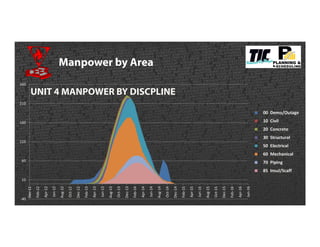
UNIT 4 MANPOWER BY DISCPLINE
00 Demo/Outage
10 Civil
20 Concrete
30 Structural
50 Electrical
60 Mechanical
70 Piping
85 Insul/Scaff
Manpower by Area
SPATIAL RESOURCE ANALYSIS
• Workspace crowding can lead to:
– Lower productivity
– Higher safety incident rates
– Poor schedule performance
– Lower Morale
– Quality and Environmental Issues…
POSSIBLE WORKSPACE
SOLUTIONS
• Longer hours with fewer workers ($)
• Additional shifts ($)
• Detailed coordination and planning within tight constraints
– Must be planned at a detailed level
– Involves an ever-changing, three-dimensional space
– How?...
4D SOLUTIONS
• 4D Schedules can show us exactly when and where resources are utilized.

• It is a great tool for identifying sequencing issues.

• It can also help to identify workspace crowding and trade conflicts…
4D SOLUTIONS
4D PROFILE MODIFICATIONS
• Only ongoing work is displayed, then fades to grey
• Separate use profiles were created for each trade
• Colors correspond to stacked manpower charts
• Trade-specific workspace conflicts can be easily identified…
4D Discipline Overview
A MORE DETAILED VIEW
• That was a high-level view of over 1M man-hours worked over three-years.
• Let’s dive into more detail to gain greater insight.
• These custom use profiles will help us to identify issues and opportunities in:
– Safety
– Productivity
– Equipment Usage
– Etc…
4D Detailed Discipline View
SPACIAL RESOURCE ANALYSIS
• Alternate plans can be identified which lead to:
– Safety improvements
– Higher productivity
– Etc…
SUMMARY
• Introduce Speakers
• History of TIC
• Industrial Construction Challenges
• Traditional Planning/Scheduling Solutions
– Time-Scaled Resource Analysis
• 4D-Scheduling Solutions
– Workspace Efficiency
– Spatial Resource Analysis
• Safety
– Data and Analysis
– Benefits of 4D
4D SAFETY
• What does safety planning look like?
• Can you plan for safety?
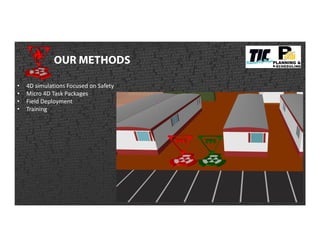
OUR METHODS
• 4D simulations Focused on Safety
• Micro 4D Task Packages
• Field Deployment
• Training
OUR METHODS
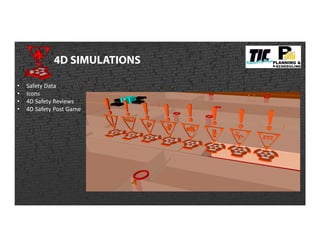
4D SIMULATIONS
• Safety Data
• Icons
• 4D Safety Reviews
• 4D Safety Post Game
4D SIMULATIONS
• Safety Data
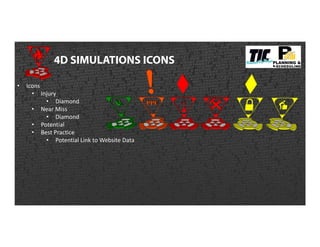
4D SIMULATIONS ICONS
• Icons
• Injury
• Diamond
• Near Miss
• Diamond
• Potential
• Best Practice
• Potential Link to Website Data
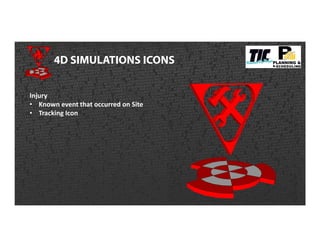
4D SIMULATIONS ICONS
Injury
• Known event that occurred on Site
• Tracking Icon
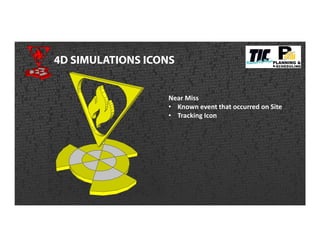
4D SIMULATIONS ICONS
Near Miss
• Known event that occurred on Site
• Tracking Icon
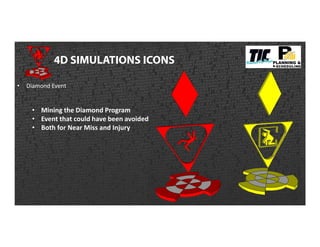
4D SIMULATIONS ICONS
• Diamond Event
• Mining the Diamond Program
• Event that could have been avoided
• Both for Near Miss and Injury
4D SIMULATIONS ICONS
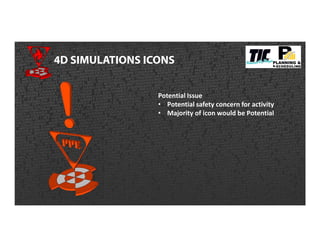
Potential Issue
• Potential safety concern for activity
• Majority of icon would be Potential
4D SIMULATIONS ICONS
Best Practice
• Best known practice for activity
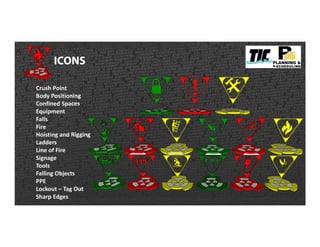
ICONS
Crush Point
Body Positioning
Confined Spaces
Equipment
Falls
Fire
Hoisting and Rigging
Ladders
Line of Fire
Signage
Tools
Falling Objects
PPE
Lockout – Tag Out
Sharp Edges
LINE OF FIRE (LOF)
0
5
10
15
20
25
2011 2012 2013 2014
Series1
DROPPED OBJECTS (DO)
0
5
10
15
20
25
2011 2012 2013 2014
Series1
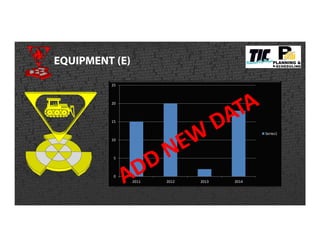
EQUIPMENT (E)
0
5
10
15
20
25
2011 2012 2013 2014
Series1
4D SIMULATIONS
• 4D Safety Reviews
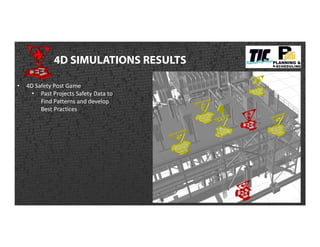
4D SIMULATIONS RESULTS
• 4D Safety Post Game
• Past Projects Safety Data to
Find Patterns and develop
Best Practices
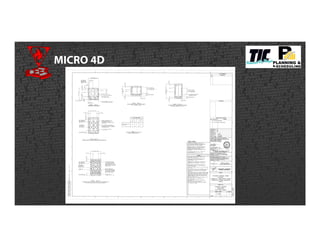
MICRO 4D
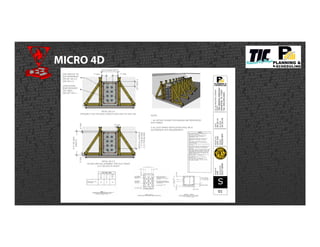
MICRO 4D
MICRO 4D
OUR METHODS
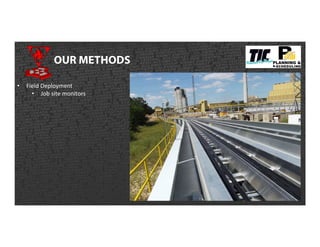
• Field Deployment
• Job site monitors
OUR METHODS
• Training
RESULTS
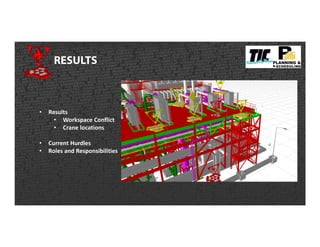
• Results
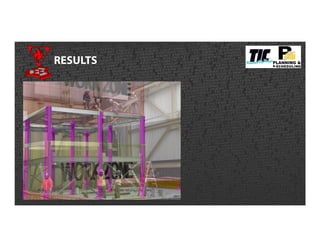
• Workspace Conflict
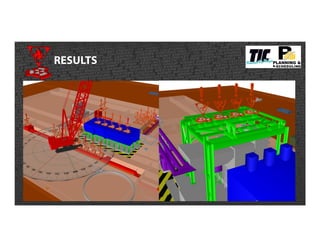
• Crane locations
• Current Hurdles
• Roles and Responsibilities
RESULTS
RESULTS
RESULTS
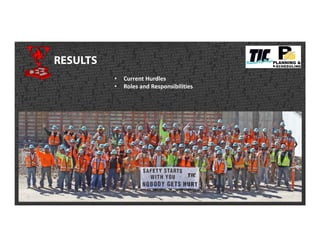
• Current Hurdles
• Roles and Responsibilities
QUESTIONS
CONTACT INFORMATION
Ken Meding, EIT
Virtual Design and Construction Specialist
315-212-1980 cell
832-707-4830 cell
kenneth.meding@ticus.com
Steve Moore, PSP PMP PMI
District Scheduling Manager
720-438-5674 cell
steve.moore@ticus.com

FRI44 Safe Planning Through 4D Schedule Integration Cardiff 3rd Level