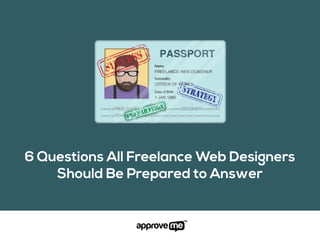
6 Questions All Freelance Web Designers
Should Be Prepared to Answer
Freelance web designers who are just starting out
have an exciting career ahead of them, but it's
important to be prepared for some inevitable
questions…
1
“How much do you charge?”
Let the clients know what your rates are, whether you
charge by project or hourly, and make sure to outline
the different pieces of your process that they’ll be
paying for.
2
“What if I’m not satisfied
with your work?”
The more detailed you can be when discussing your
web design process, the better.
Be explicit in your contract about revisions, and
impart the importance of specific detail during the
planning phase.
3
“Can I see some of your
previous work?”
As a freelance web designer, you need to have a
portfolio. A potential client will not be satisfied by
your word alone, so having a beautiful and easily-
accessible web design portfolio is a must.
4
“How can I keep track of
your progress?”
Whether you want to add your client to your project
management software, create a shared Google Doc
containing a checklist, or simply schedule a weekly phone
call, the point is to show your client that your are working
diligently, and that you have nothing to hide when it
comes to their project.
5
“How long will this take?”
By timing each designated portion of your process, you’ll
be able to create an accurate timeline that you can
present to potential clients. Look at your process and
think about your previous projects. With the map of your
web design process to guide you, a fairly accurate time
estimate should not be a problem.
6
“What sets you apart
from your competition?”
What do you love about web design? What are you
especially good at? Highlight these parts of your work and
create a descriptive-but-concise elevator pitch.
Thinking ahead to questions like these can be a little daunting, but at
the root of them are these three traits:
Intention, confidence, and honesty.
• Be intentional in your process.
• Be confident in your process and skills.
• Be honest with clients.
Want to learn more?
READ FULL ARTICLE
Don’t get caught in a courtroom... with a contract
that’s not legally binding.
www.approveme.me

Freelance web designers

  • 1.
    6 Questions AllFreelance Web Designers Should Be Prepared to Answer
  • 2.
    Freelance web designerswho are just starting out have an exciting career ahead of them, but it's important to be prepared for some inevitable questions…
  • 3.
    1 “How much doyou charge?” Let the clients know what your rates are, whether you charge by project or hourly, and make sure to outline the different pieces of your process that they’ll be paying for.
  • 4.
    2 “What if I’mnot satisfied with your work?” The more detailed you can be when discussing your web design process, the better. Be explicit in your contract about revisions, and impart the importance of specific detail during the planning phase.
  • 5.
    3 “Can I seesome of your previous work?” As a freelance web designer, you need to have a portfolio. A potential client will not be satisfied by your word alone, so having a beautiful and easily- accessible web design portfolio is a must.
  • 6.
    4 “How can Ikeep track of your progress?” Whether you want to add your client to your project management software, create a shared Google Doc containing a checklist, or simply schedule a weekly phone call, the point is to show your client that your are working diligently, and that you have nothing to hide when it comes to their project.
  • 7.
    5 “How long willthis take?” By timing each designated portion of your process, you’ll be able to create an accurate timeline that you can present to potential clients. Look at your process and think about your previous projects. With the map of your web design process to guide you, a fairly accurate time estimate should not be a problem.
  • 8.
    6 “What sets youapart from your competition?” What do you love about web design? What are you especially good at? Highlight these parts of your work and create a descriptive-but-concise elevator pitch.
  • 9.
    Thinking ahead toquestions like these can be a little daunting, but at the root of them are these three traits: Intention, confidence, and honesty. • Be intentional in your process. • Be confident in your process and skills. • Be honest with clients.
  • 10.
    Want to learnmore? READ FULL ARTICLE
  • 11.
    Don’t get caughtin a courtroom... with a contract that’s not legally binding. www.approveme.me