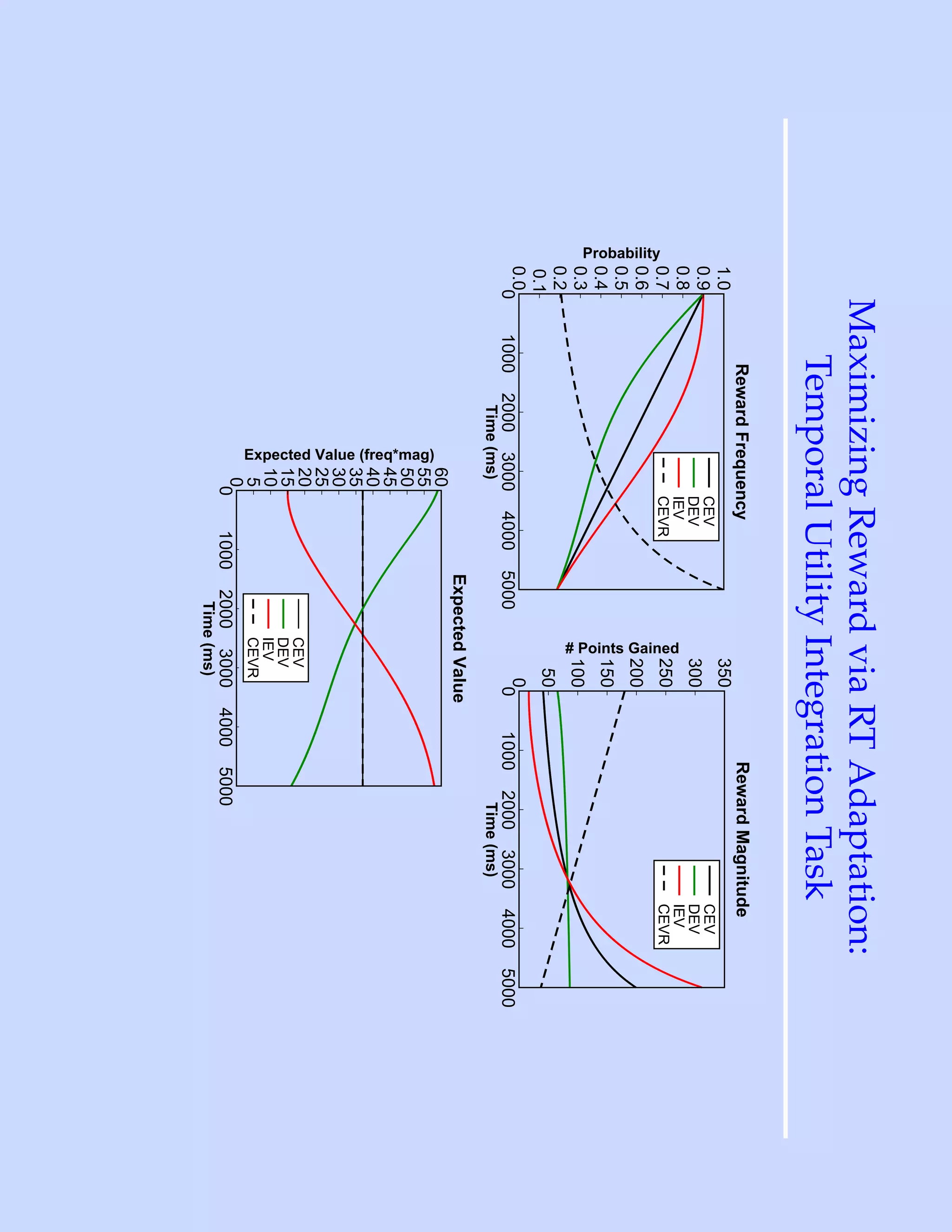
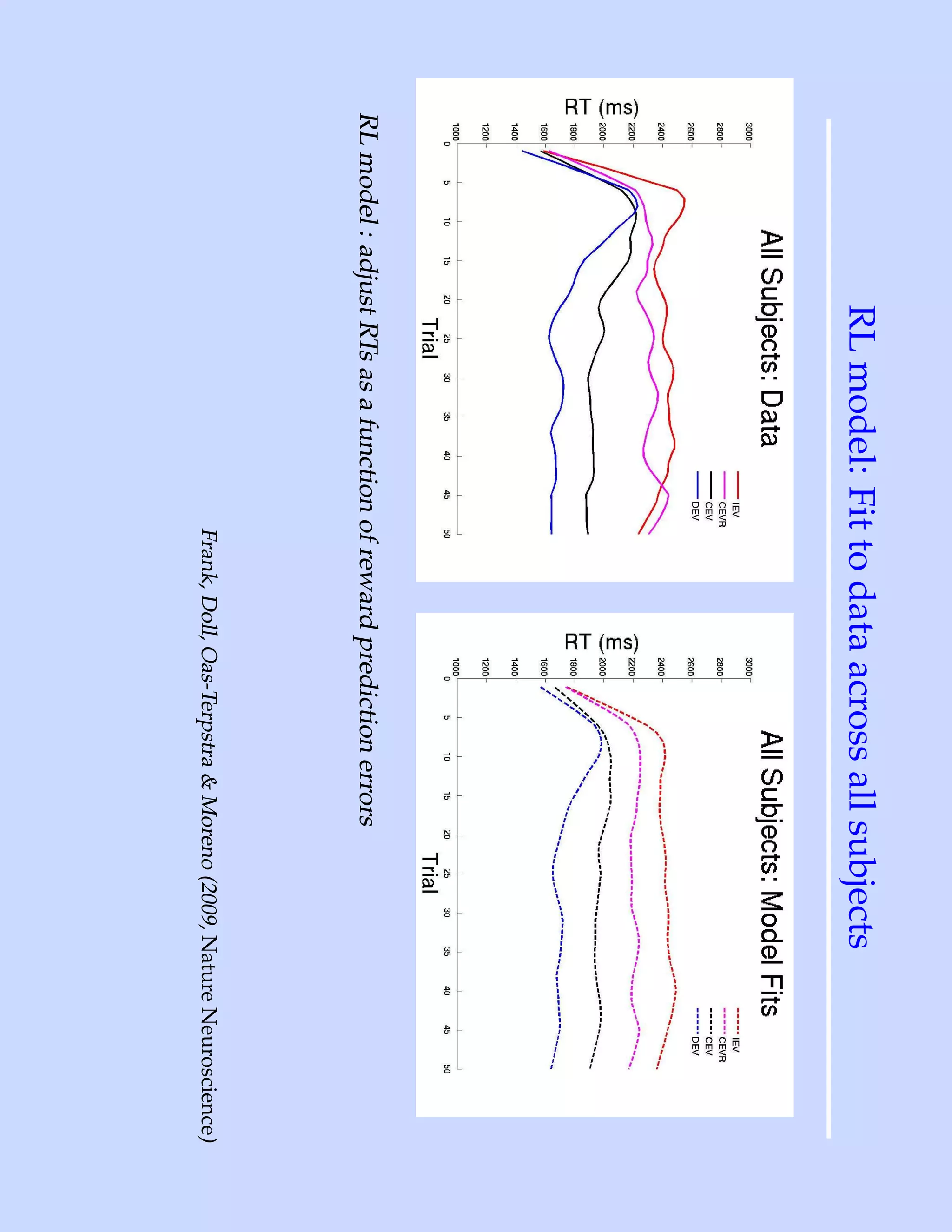
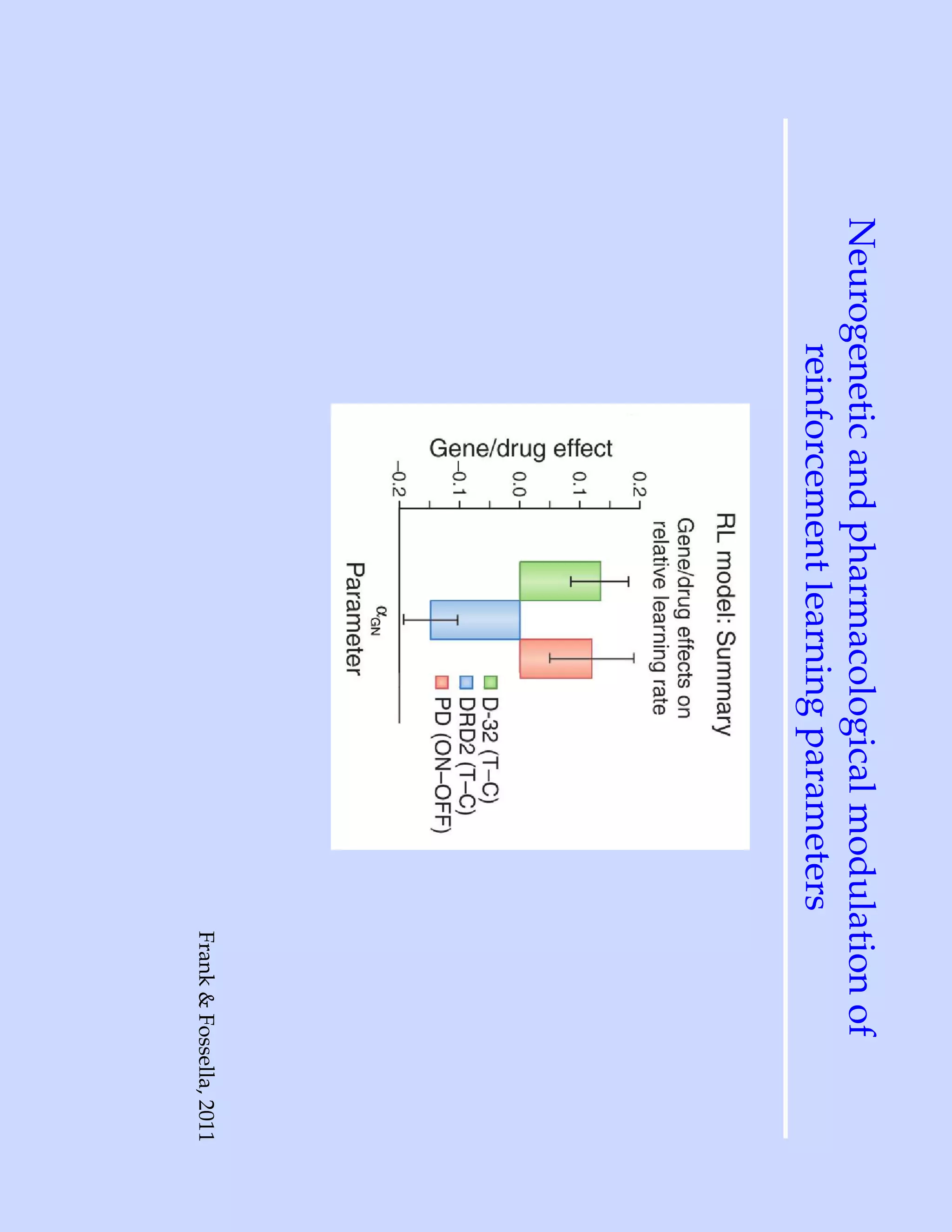
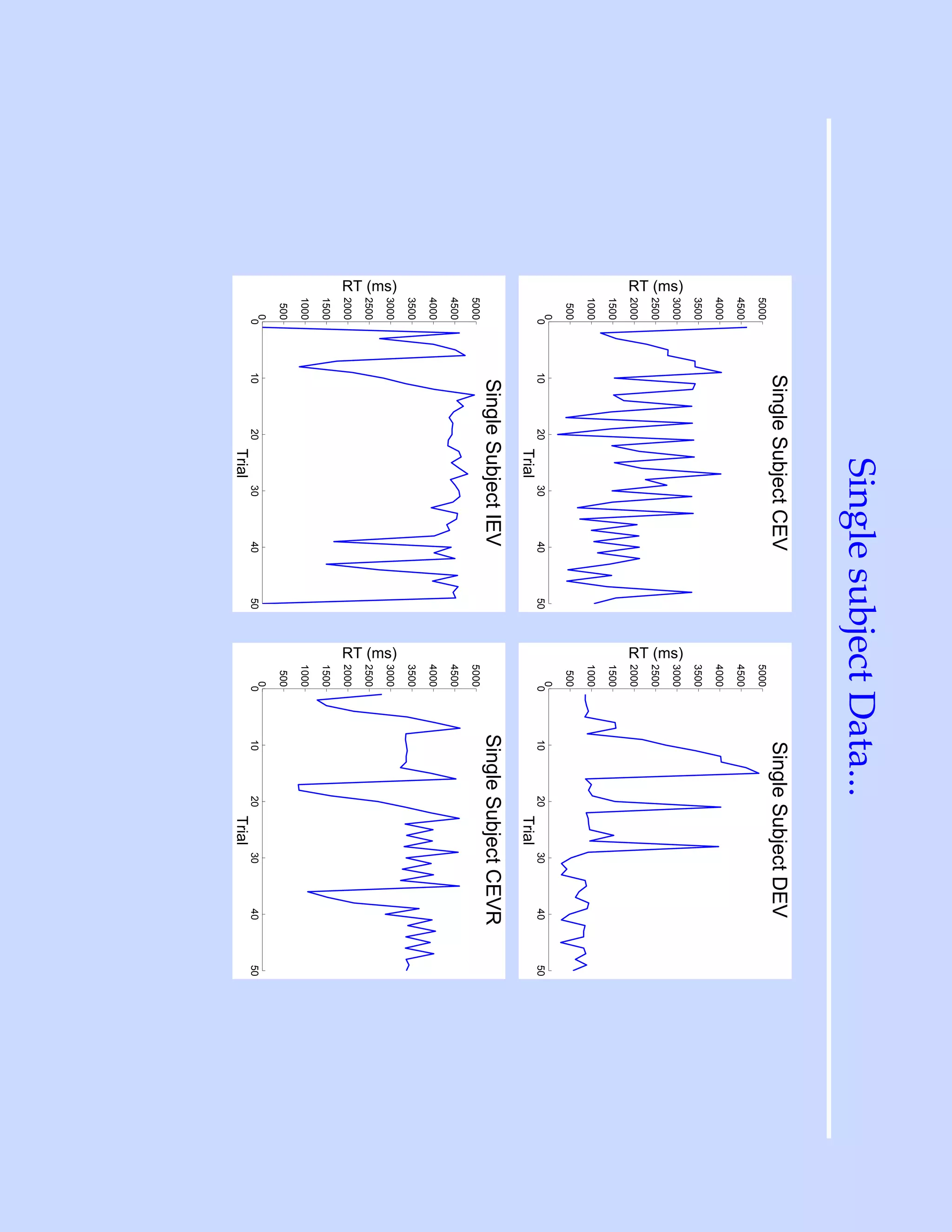
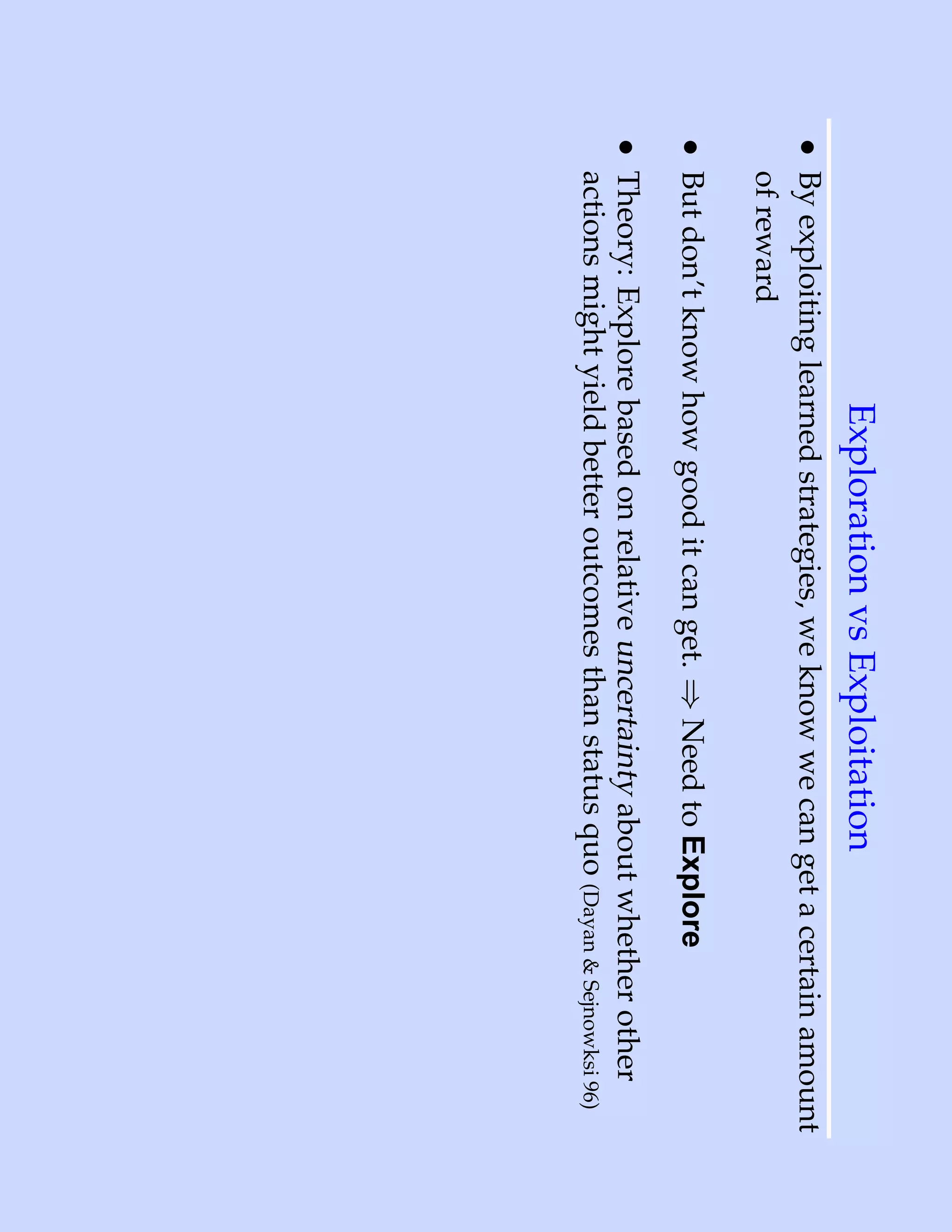
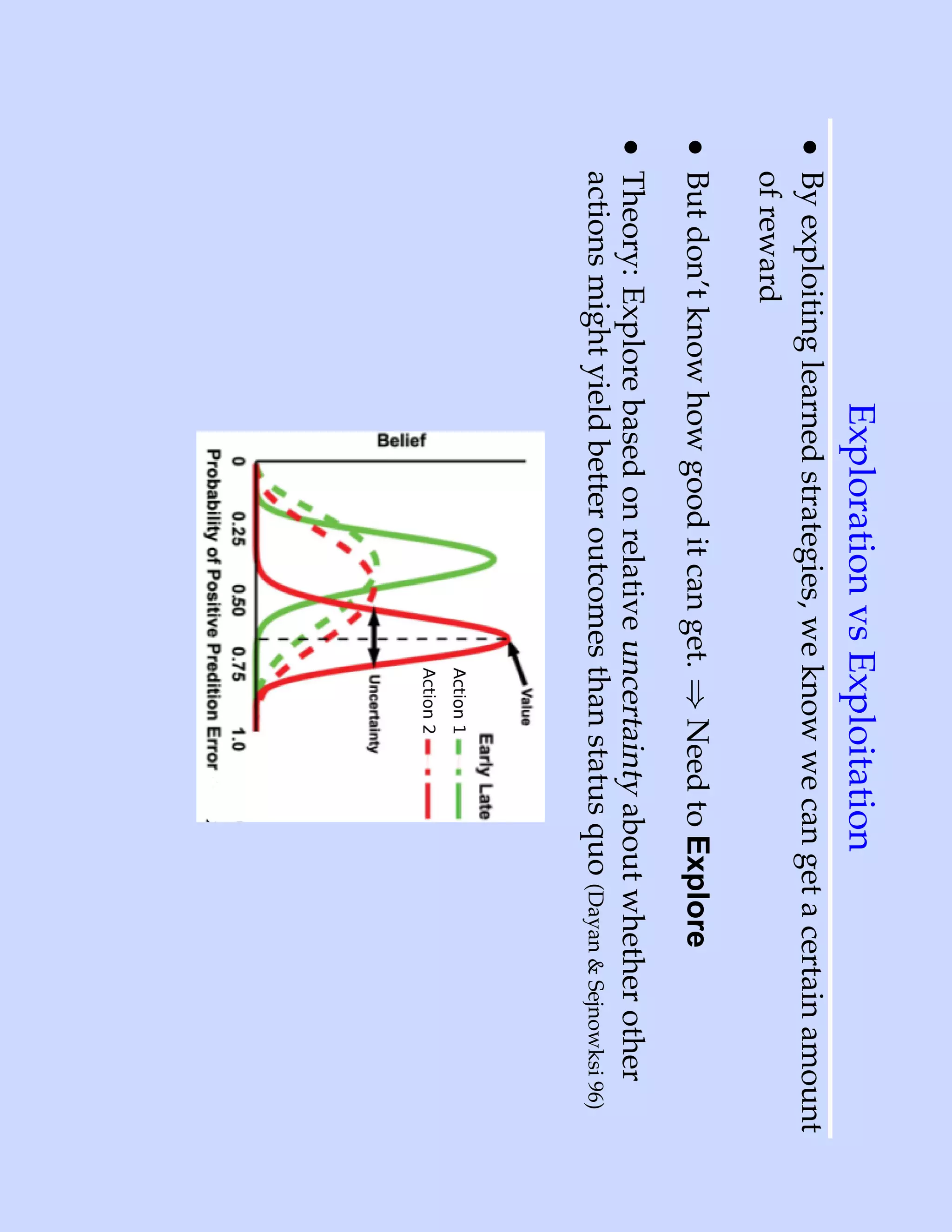
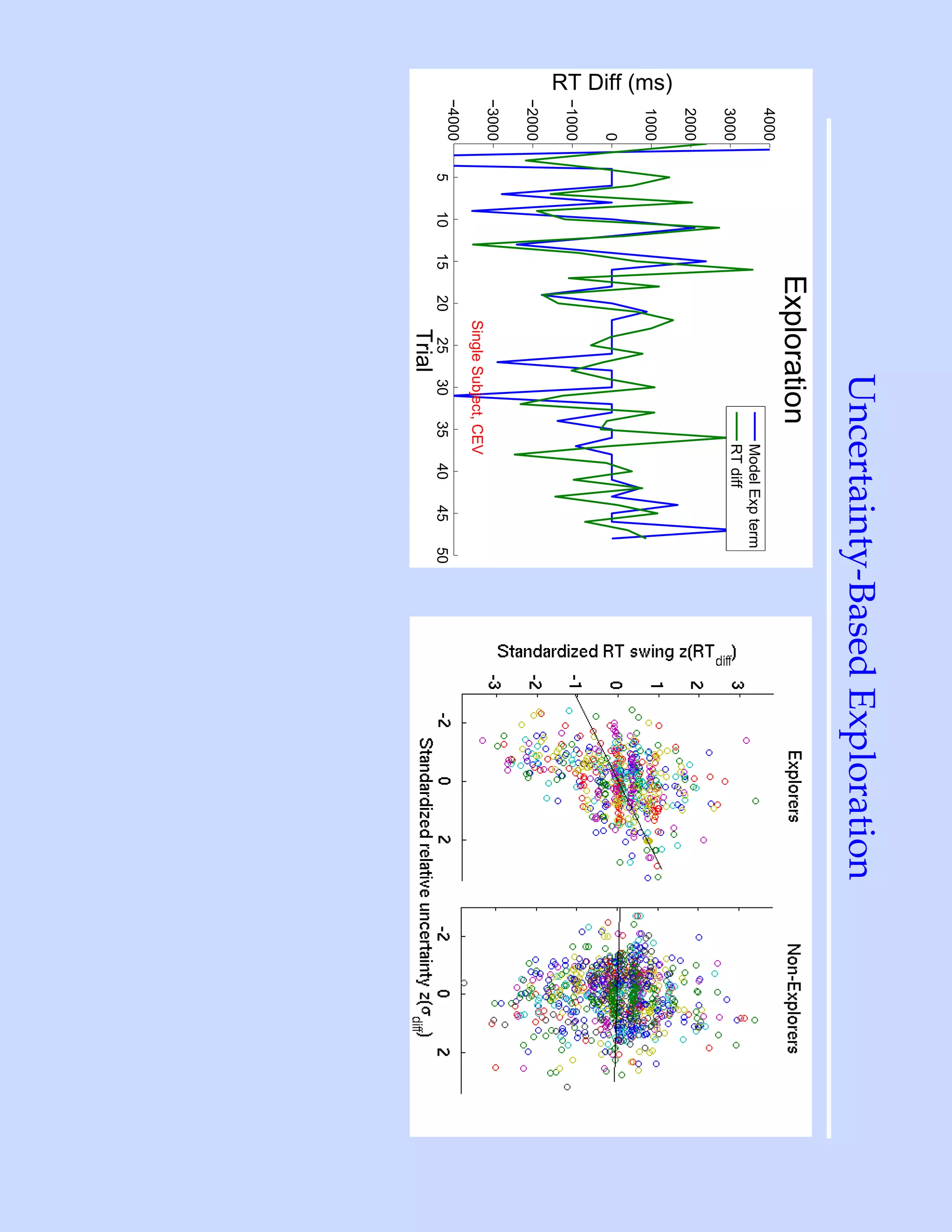
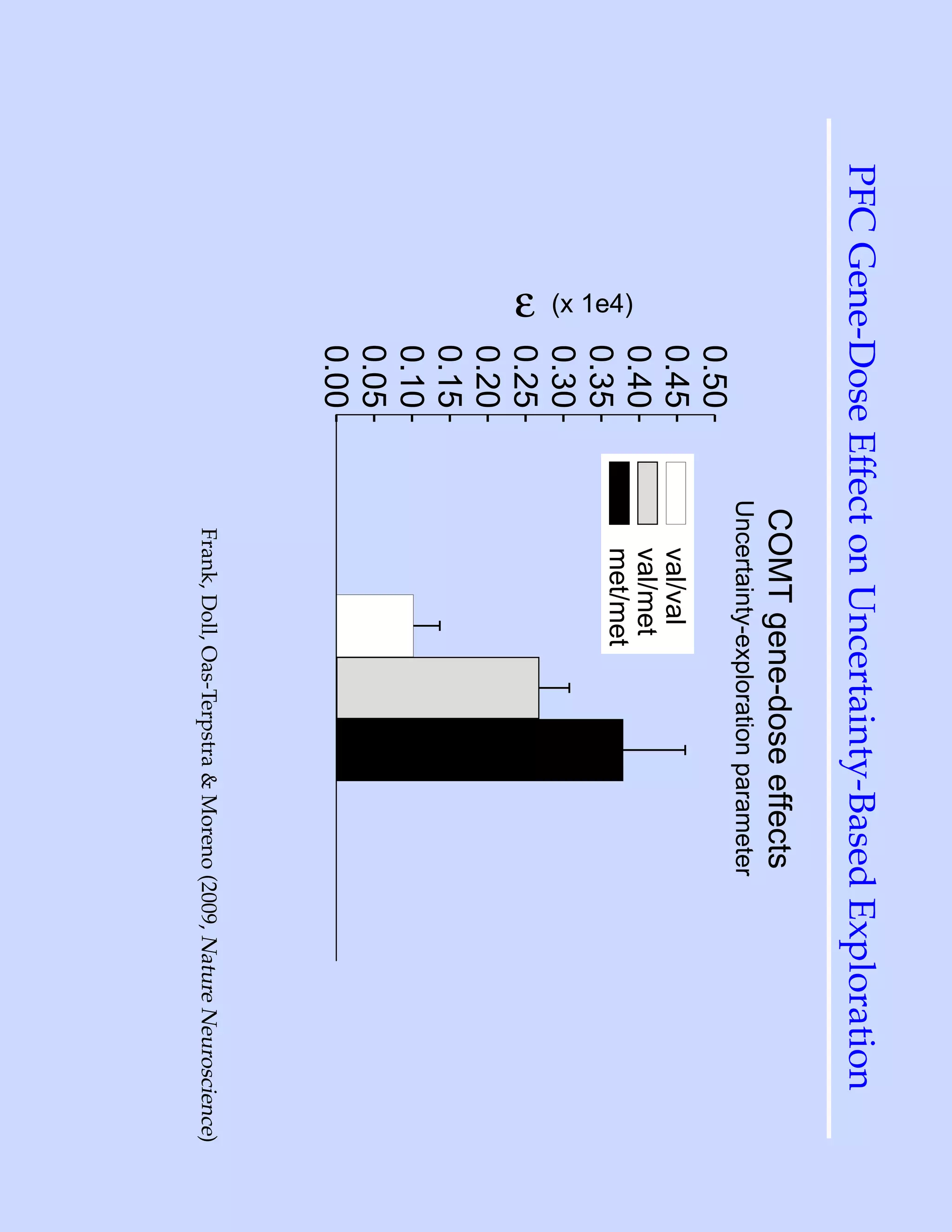
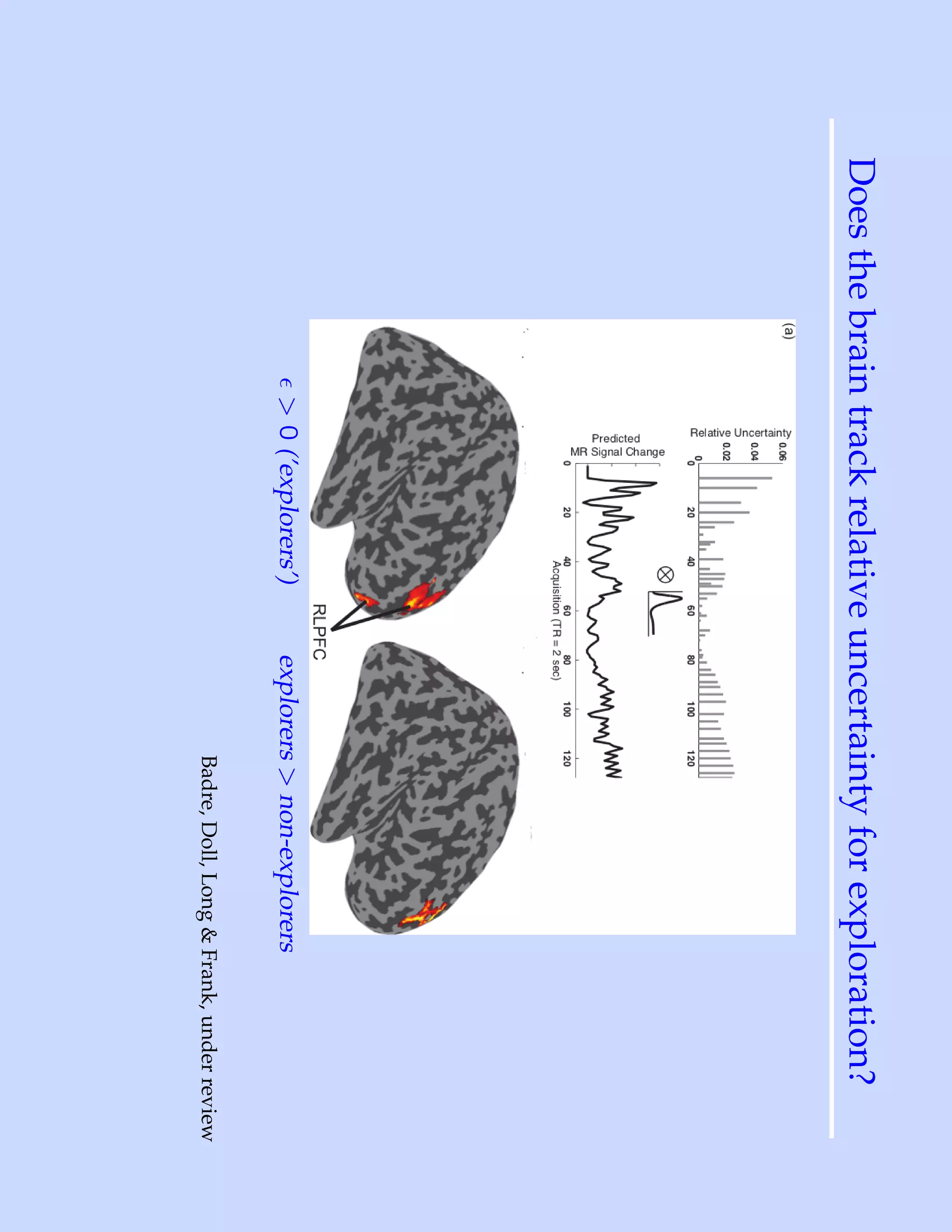
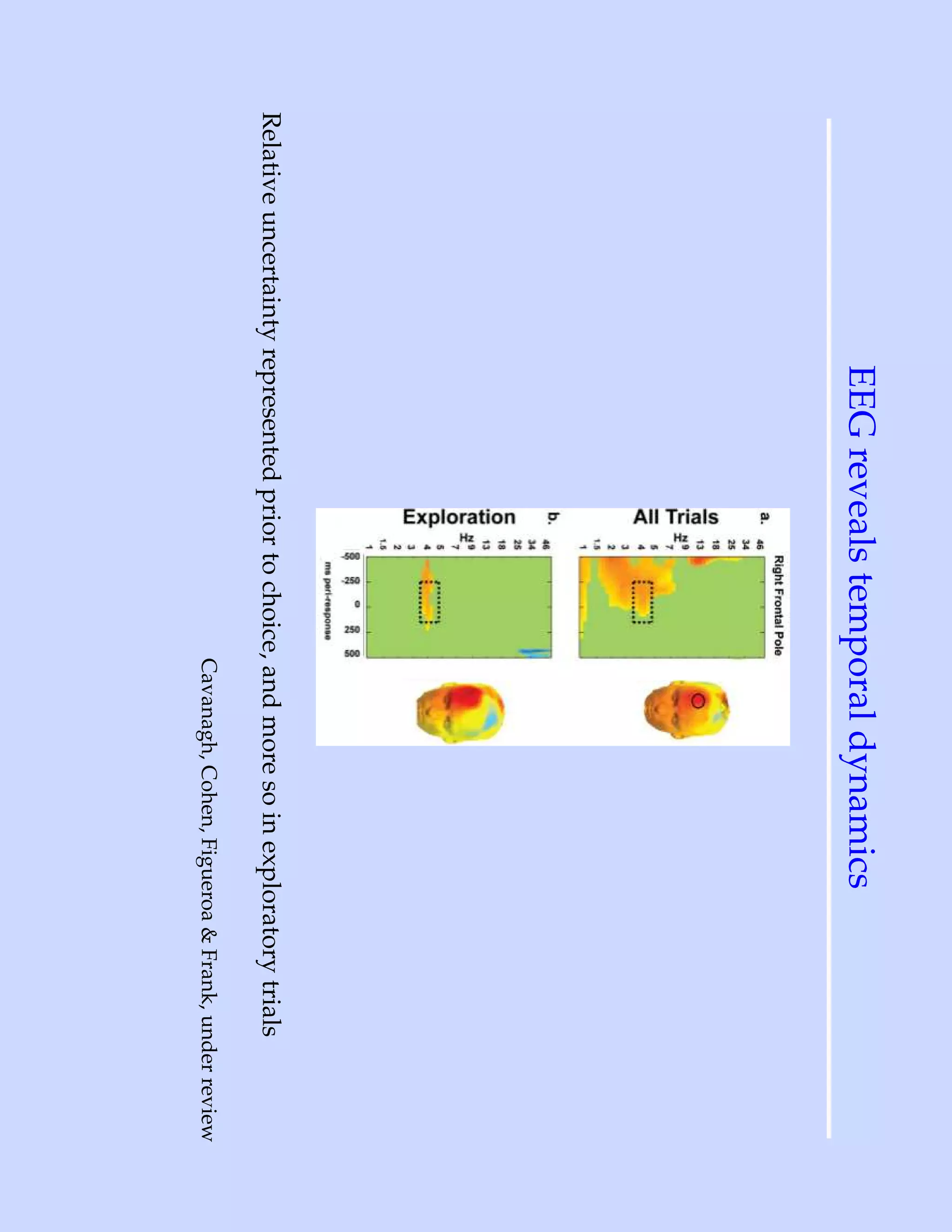
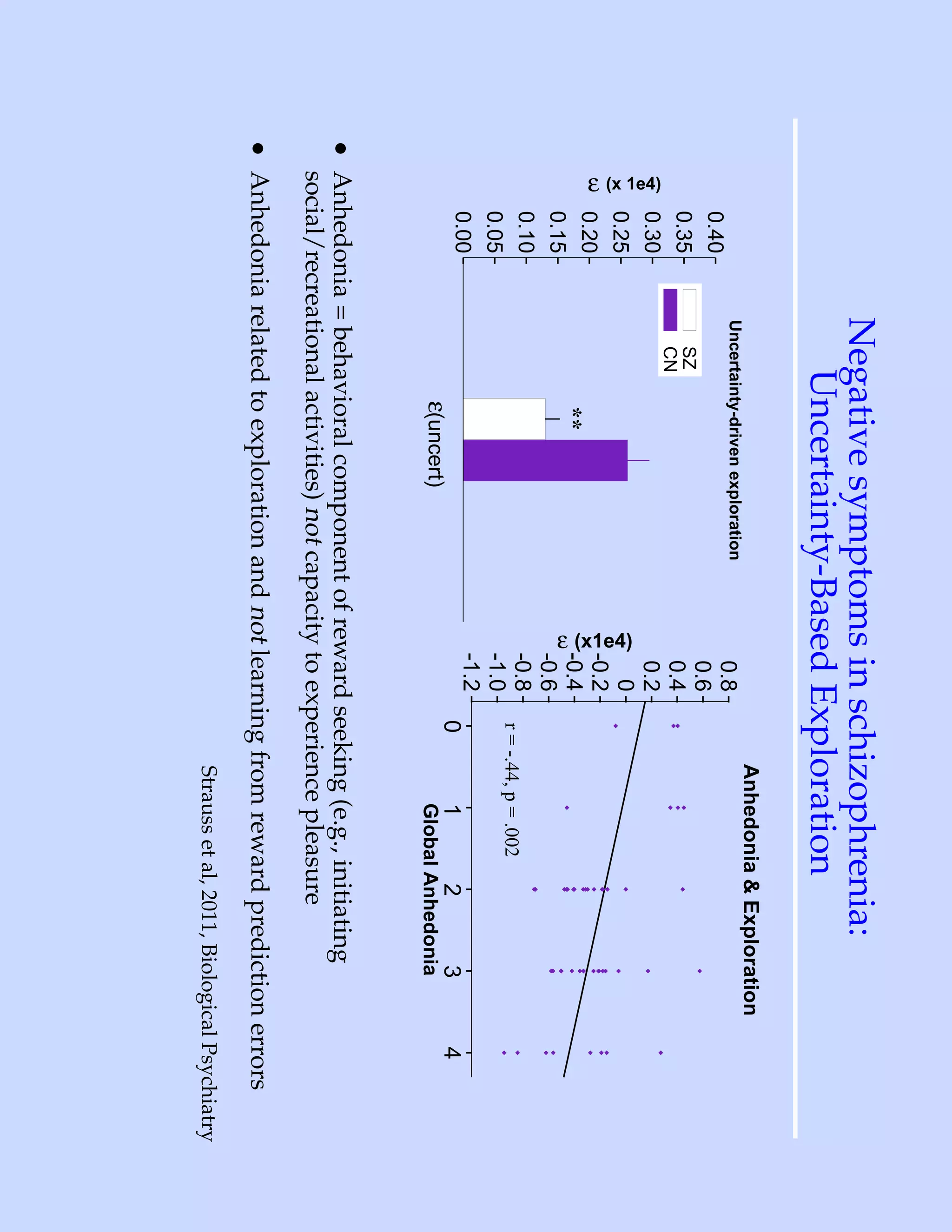
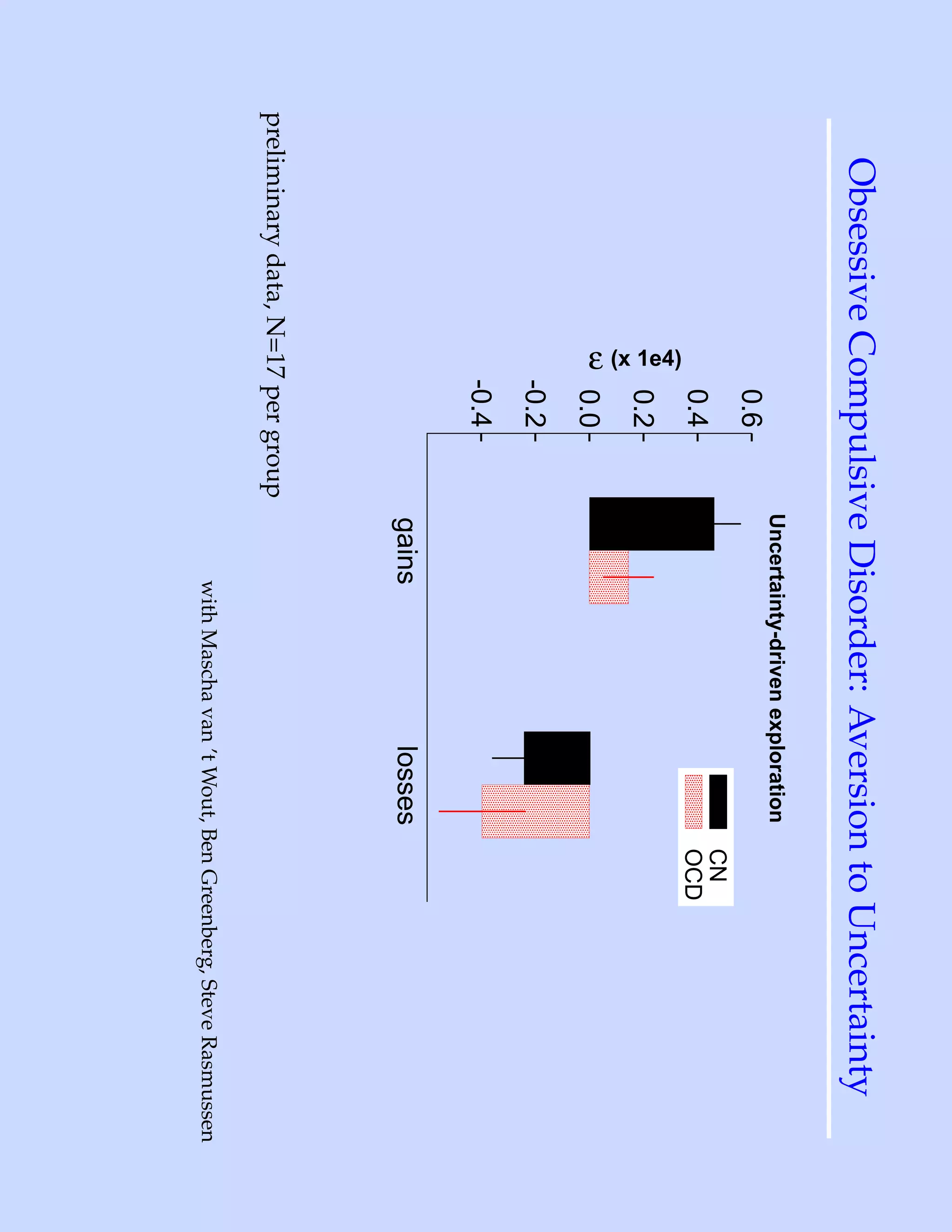
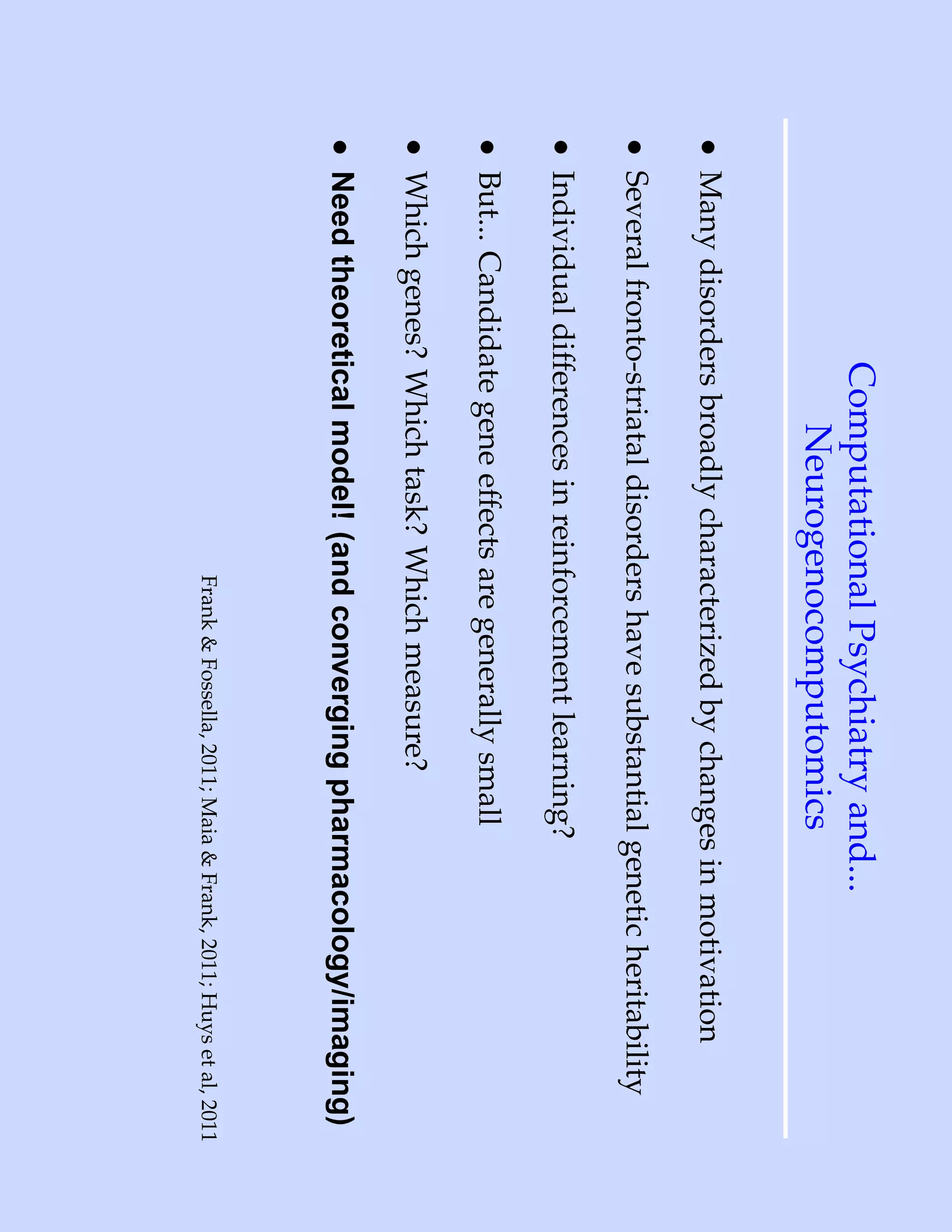
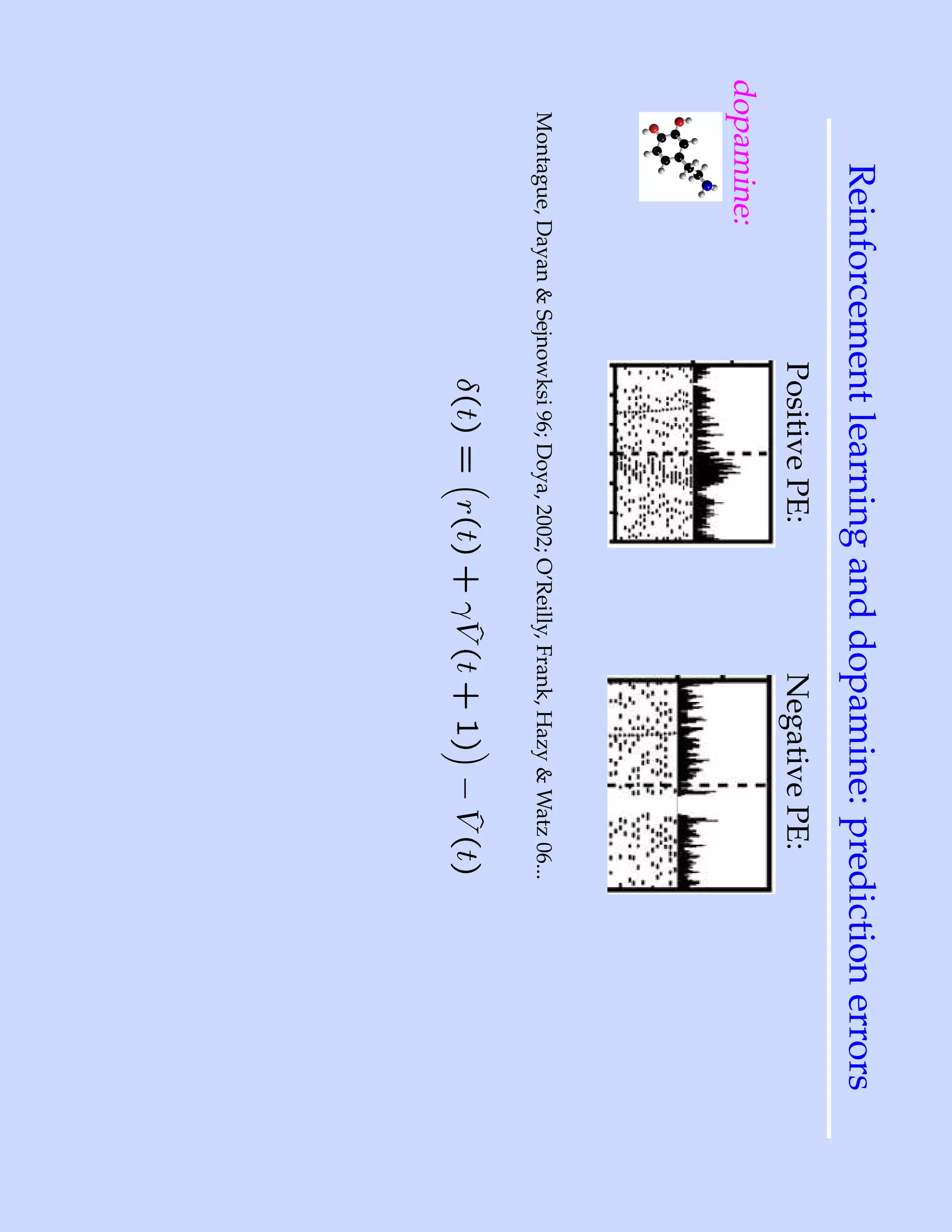
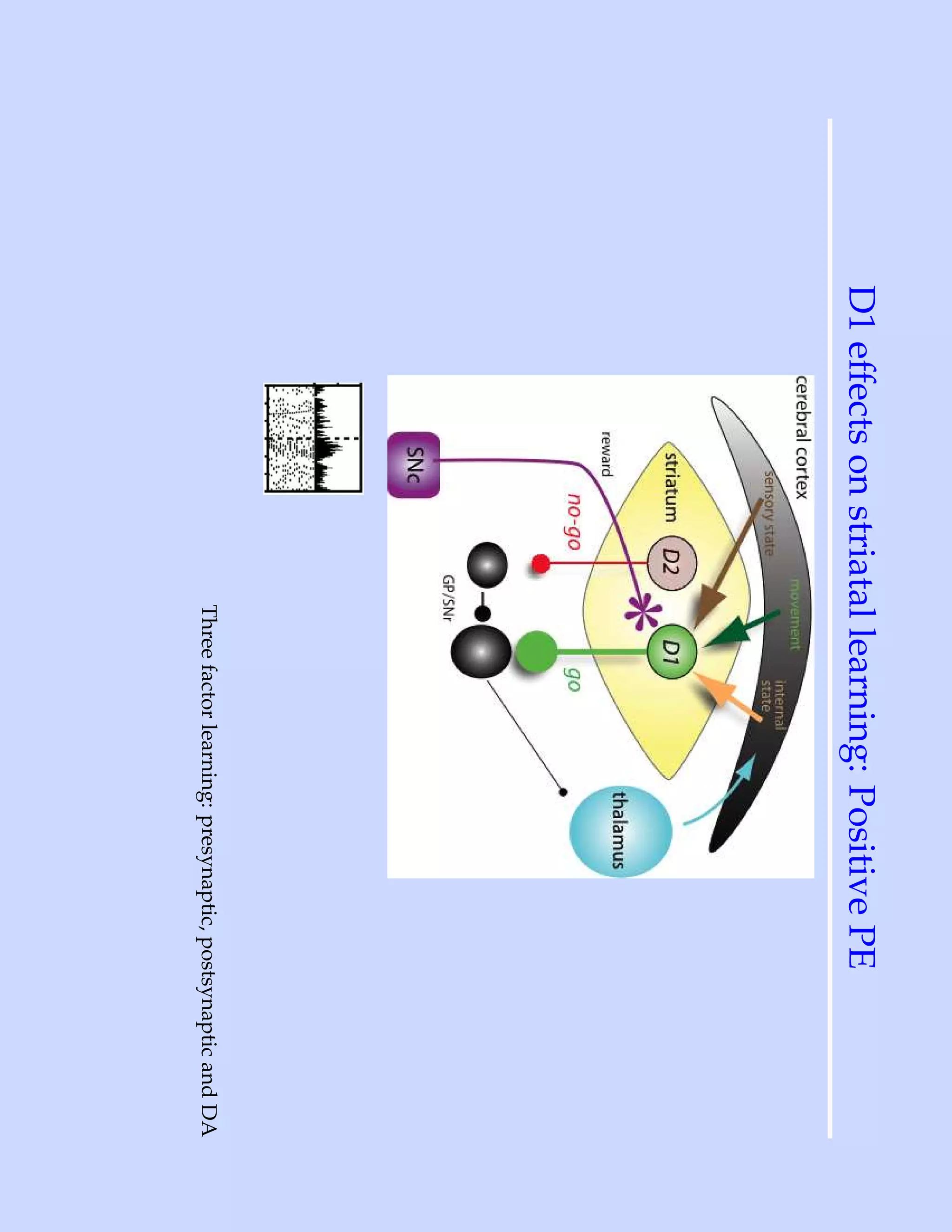
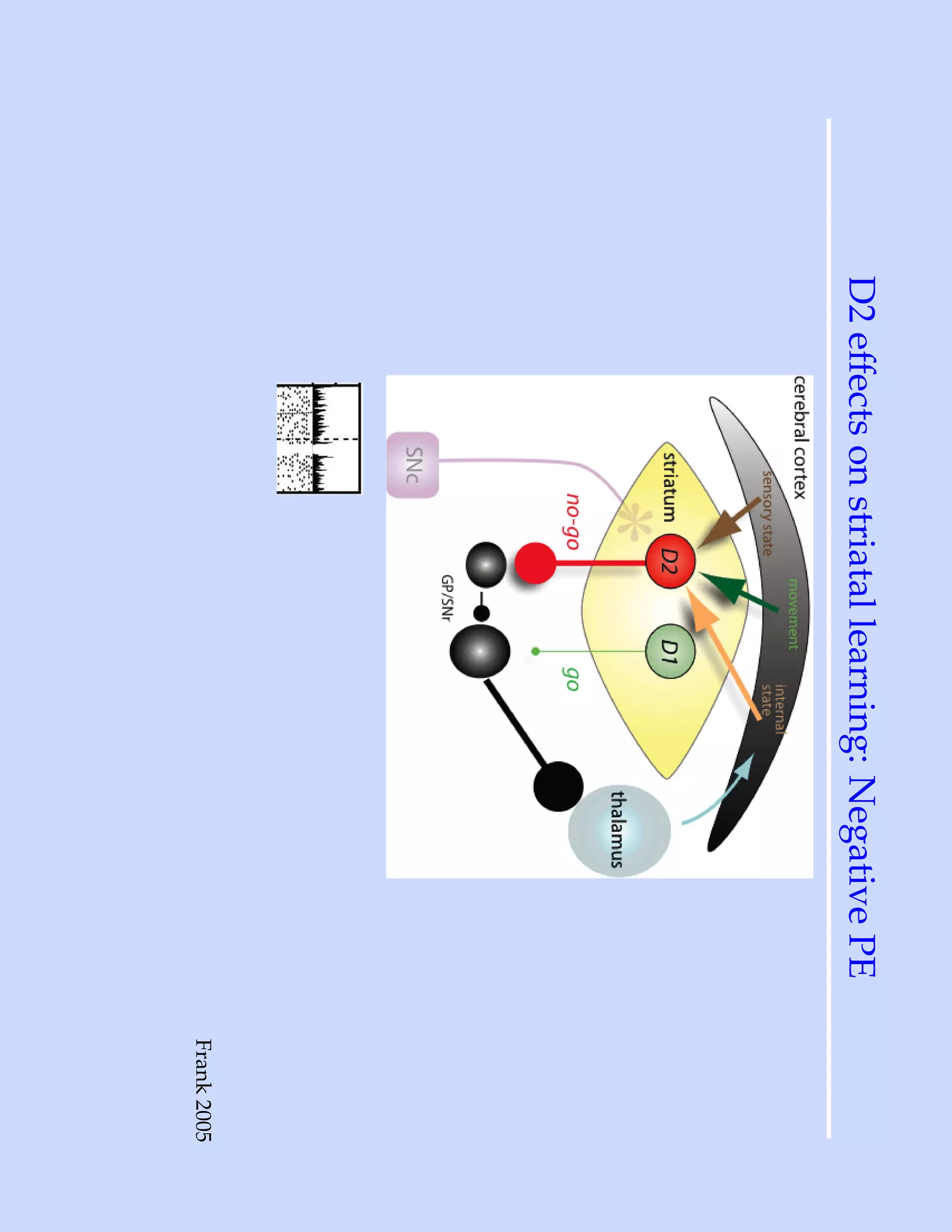
The document discusses modeling decision making deficits in disorders that impact the frontostriatal system using computational models of reinforcement learning. It notes that many such disorders involve changes in motivation and some have genetic heritability. However, the effects of candidate genes are generally small. The author proposes using a theoretical model of reinforcement learning that incorporates data on dopamine prediction errors and the basal ganglia to help identify which genes, tasks, and measures are most relevant. The model aims to integrate findings on how dopamine affects striatal learning of positive and negative prediction errors. Data from a temporal decision making task is presented that the model can fit at both group and single subject levels. The model may help modulate reinforcement learning parameters based on neurogenetic and pharmacological

![Neural model of basal ganglia and dopamine
Integrates a wide range of data into a single coherent framework
Separate Go and NoGo populations integrate statistics of reinforcement
preSMA
Input
Striatum γ [Vm− Θ]
cVm = gege[E Vm] y j ≈ γ [V − ] + 1
+
m Θ+
e
+ g g [E V ]
i i i m
+ g g [E Vm] β
l l l net = ge ≈ <x i w ij > +
N
STN + ...
w ij
GPe
xi
Go NoGo Thalamus
p p t t
∆wij ≈ (xi yj )−(xi yj )
SNc GPi/SNr
Frank, 2005, 2006 J Cog Neurosci, Neural Networks](https://image.slidesharecdn.com/neuroinf11-110916134611-phpapp01/75/Frank_NeuroInformatics11-pdf-10-2048.jpg)