HORROR FILMS
INDEX
• LOCATIONS
• CHARACTERS
• SOUND
• COSTUMES & MAKEUP
• LIGHTING
LOCATION
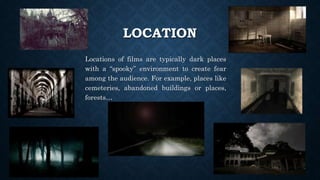
Locations of films are typically dark places
with a “spooky” environment to create fear
among the audience. For example, places like
cemeteries, abandoned buildings or places,
forests…
CHARACTERS
• Characters in horror films are normally quite innocent and don’t anticipate what
might happen in the case that they may be in. In the first half of the film, the movie
describes the characters’ personalities being that there isn’t enough room in the film
to describe them.
• There are the stereotypical characters in films like; the one that always trips up on
random objects, the over confident one, the comedian who makes a joke out of
everything, the one who always wants to investigate… and so many more.
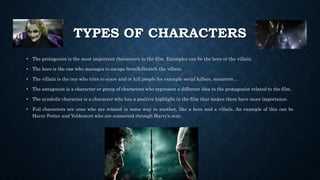
TYPES OF CHARACTERS
• The protagonist is the most important character/s in the film. Examples can be the hero or the villain.
• The hero is the one who manages to escape from/kill/catch the villain.
• The villain is the one who tries to scare and or kill people for example serial killers, monsters…
• The antagonist is a character or group of characters who represent a different idea to the protagonist related to the film.
• The symbolic character is a character who has a positive highlight in the film that makes them have more importance.
• Foil characters are ones who are related in some way to another, like a hero and a villain. An example of this can be
Harry Potter and Voldemort who are connected through Harry’s scar.
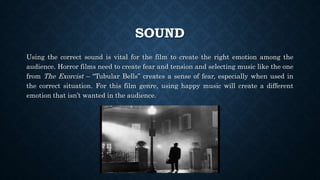
SOUND
Using the correct sound is vital for the film to create the right emotion among the
audience. Horror films need to create fear and tension and selecting music like the one
from The Exorcist – “Tubular Bells” creates a sense of fear, especially when used in
the correct situation. For this film genre, using happy music will create a different
emotion that isn’t wanted in the audience.
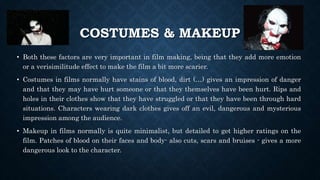
COSTUMES & MAKEUP
• Both these factors are very important in film making, being that they add more emotion
or a verisimilitude effect to make the film a bit more scarier.
• Costumes in films normally have stains of blood, dirt (…) gives an impression of danger
and that they may have hurt someone or that they themselves have been hurt. Rips and
holes in their clothes show that they have struggled or that they have been through hard
situations. Characters wearing dark clothes gives off an evil, dangerous and mysterious
impression among the audience.
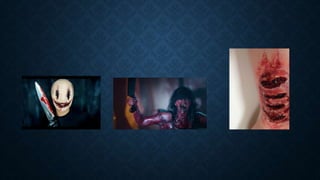
• Makeup in films normally is quite minimalist, but detailed to get higher ratings on the
film. Patches of blood on their faces and body- also cuts, scars and bruises - gives a more
dangerous look to the character.
LIGHTING
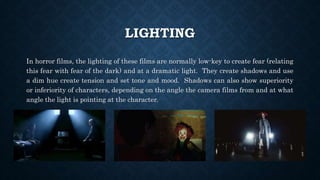
In horror films, the lighting of these films are normally low-key to create fear (relating
this fear with fear of the dark) and at a dramatic light. They create shadows and use
a dim hue create tension and set tone and mood. Shadows can also show superiority
or inferiority of characters, depending on the angle the camera films from and at what
angle the light is pointing at the character.

Fran

  • 1.
  • 2.
    INDEX • LOCATIONS • CHARACTERS •SOUND • COSTUMES & MAKEUP • LIGHTING
  • 3.
    LOCATION Locations of filmsare typically dark places with a “spooky” environment to create fear among the audience. For example, places like cemeteries, abandoned buildings or places, forests…
  • 4.
    CHARACTERS • Characters inhorror films are normally quite innocent and don’t anticipate what might happen in the case that they may be in. In the first half of the film, the movie describes the characters’ personalities being that there isn’t enough room in the film to describe them. • There are the stereotypical characters in films like; the one that always trips up on random objects, the over confident one, the comedian who makes a joke out of everything, the one who always wants to investigate… and so many more.
  • 5.
    TYPES OF CHARACTERS •The protagonist is the most important character/s in the film. Examples can be the hero or the villain. • The hero is the one who manages to escape from/kill/catch the villain. • The villain is the one who tries to scare and or kill people for example serial killers, monsters… • The antagonist is a character or group of characters who represent a different idea to the protagonist related to the film. • The symbolic character is a character who has a positive highlight in the film that makes them have more importance. • Foil characters are ones who are related in some way to another, like a hero and a villain. An example of this can be Harry Potter and Voldemort who are connected through Harry’s scar.
  • 6.
    SOUND Using the correctsound is vital for the film to create the right emotion among the audience. Horror films need to create fear and tension and selecting music like the one from The Exorcist – “Tubular Bells” creates a sense of fear, especially when used in the correct situation. For this film genre, using happy music will create a different emotion that isn’t wanted in the audience.
  • 7.
    COSTUMES & MAKEUP •Both these factors are very important in film making, being that they add more emotion or a verisimilitude effect to make the film a bit more scarier. • Costumes in films normally have stains of blood, dirt (…) gives an impression of danger and that they may have hurt someone or that they themselves have been hurt. Rips and holes in their clothes show that they have struggled or that they have been through hard situations. Characters wearing dark clothes gives off an evil, dangerous and mysterious impression among the audience. • Makeup in films normally is quite minimalist, but detailed to get higher ratings on the film. Patches of blood on their faces and body- also cuts, scars and bruises - gives a more dangerous look to the character.
  • 9.
    LIGHTING In horror films,the lighting of these films are normally low-key to create fear (relating this fear with fear of the dark) and at a dramatic light. They create shadows and use a dim hue create tension and set tone and mood. Shadows can also show superiority or inferiority of characters, depending on the angle the camera films from and at what angle the light is pointing at the character.