FRAMING
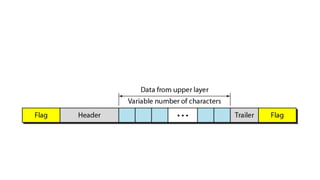
•The data link layer needs to pack bits into
frames, so that each frame is distinguishable
from another. Our postal system practices a type
of framing. The simple act of inserting a letter
into an envelope separates one piece of
information from another; the envelope serves as
the delimiter.
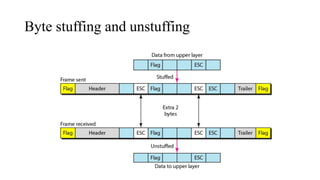
Byte stuffing and unstuffing
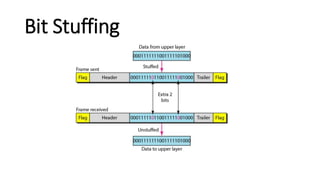
Bit Stuffing
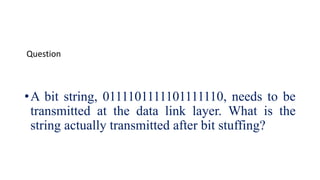
Question
•A bit string, 0111101111101111110, needs to be
transmitted at the data link layer. What is the
string actually transmitted after bit stuffing?
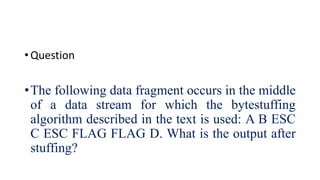
• Question
•The following data fragment occurs in the middle
of a data stream for which the bytestuffing
algorithm described in the text is used: A B ESC
C ESC FLAG FLAG D. What is the output after
stuffing?
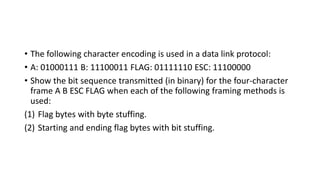
• The following character encoding is used in a data link protocol:
• A: 01000111 B: 11100011 FLAG: 01111110 ESC: 11100000
• Show the bit sequence transmitted (in binary) for the four-character
frame A B ESC FLAG when each of the following framing methods is
used:
(1) Flag bytes with byte stuffing.
(2) Starting and ending flag bytes with bit stuffing.

Framing.pptx

  • 1.
  • 2.
    •The data linklayer needs to pack bits into frames, so that each frame is distinguishable from another. Our postal system practices a type of framing. The simple act of inserting a letter into an envelope separates one piece of information from another; the envelope serves as the delimiter.
  • 4.
  • 5.
  • 7.
    Question •A bit string,0111101111101111110, needs to be transmitted at the data link layer. What is the string actually transmitted after bit stuffing?
  • 8.
    • Question •The followingdata fragment occurs in the middle of a data stream for which the bytestuffing algorithm described in the text is used: A B ESC C ESC FLAG FLAG D. What is the output after stuffing?
  • 9.
    • The followingcharacter encoding is used in a data link protocol: • A: 01000111 B: 11100011 FLAG: 01111110 ESC: 11100000 • Show the bit sequence transmitted (in binary) for the four-character frame A B ESC FLAG when each of the following framing methods is used: (1) Flag bytes with byte stuffing. (2) Starting and ending flag bytes with bit stuffing.