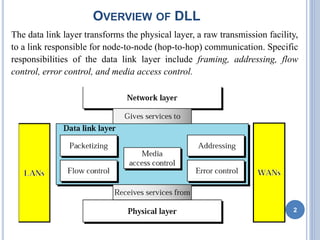
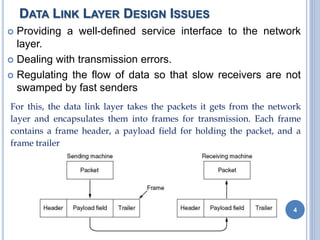
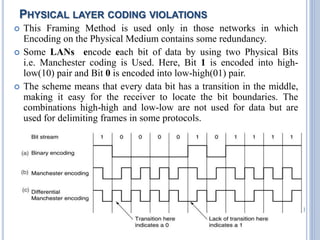
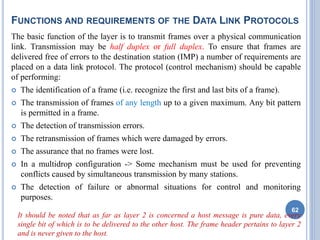
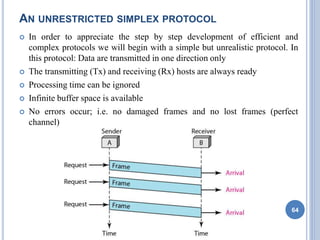
1. The data link layer transforms the physical layer into a link responsible for node-to-node communication. It provides framing, addressing, error control, flow control, and media access control.
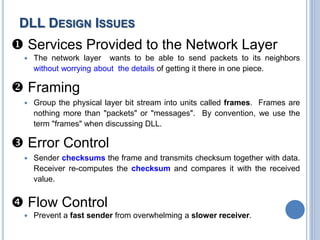
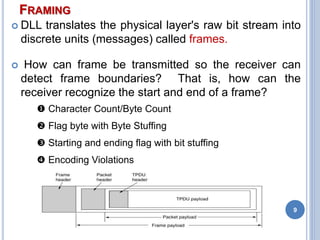
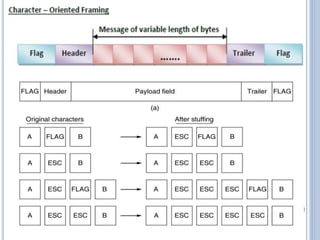
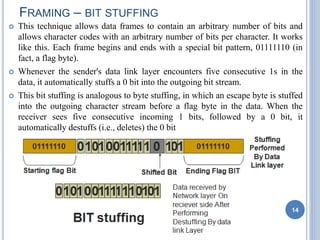
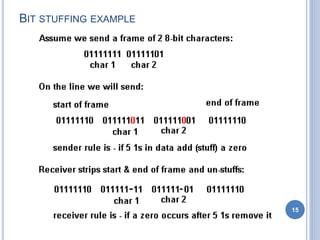
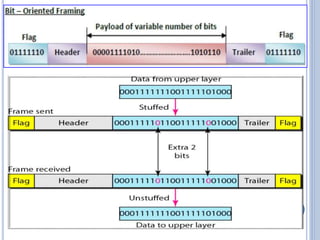
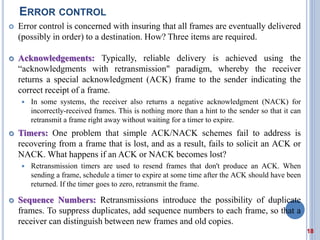
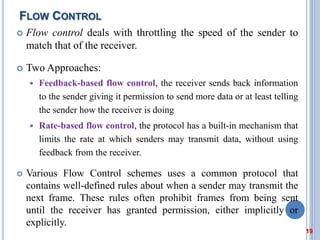
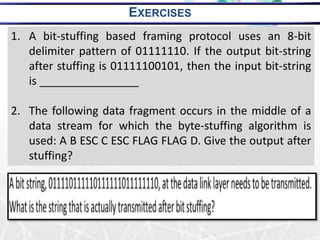
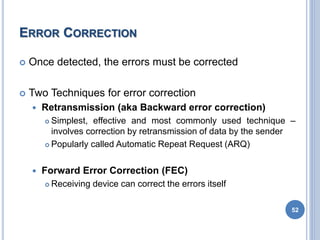
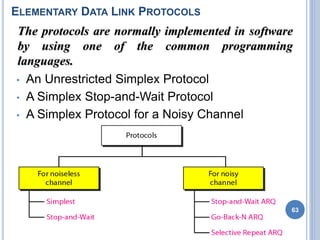
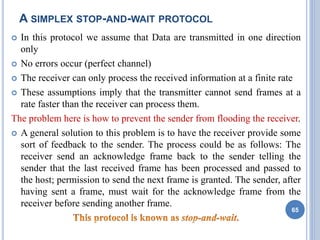
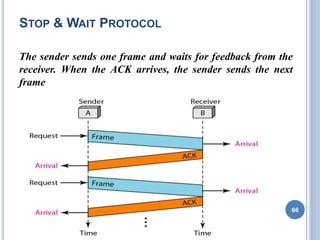
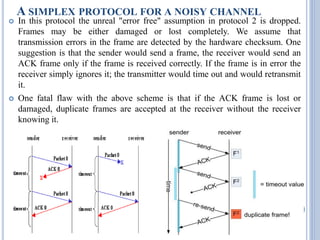
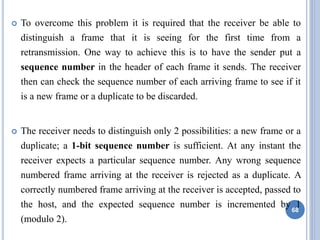
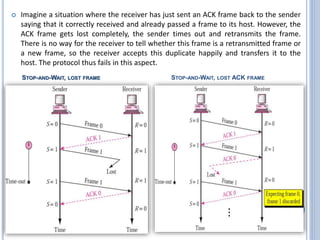
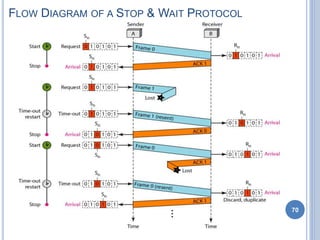
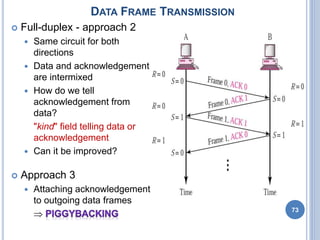
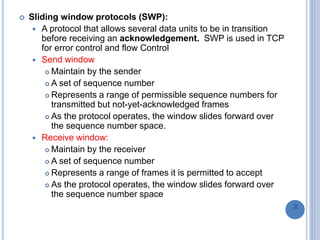
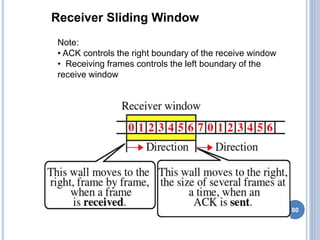
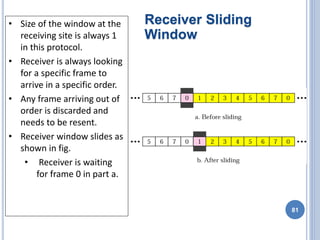
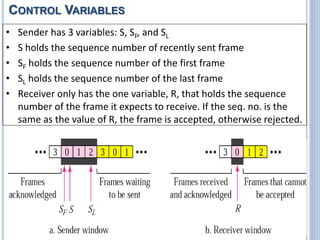
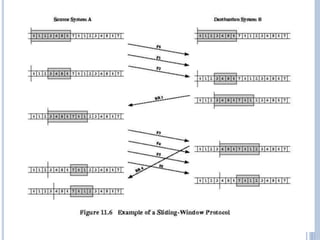
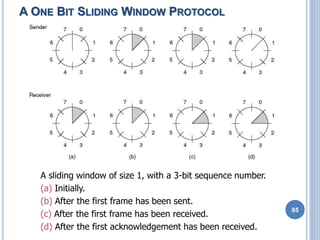
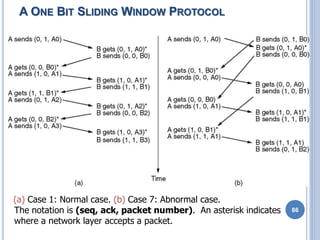
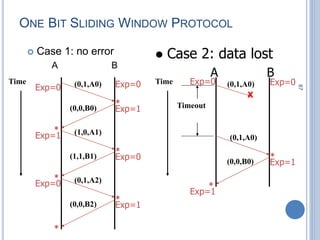
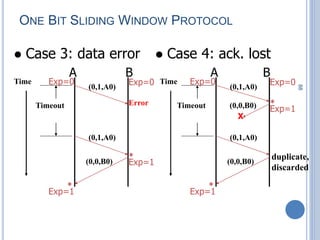
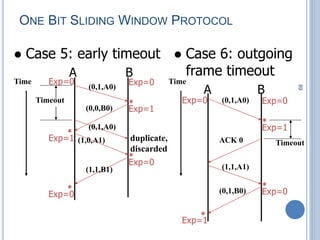
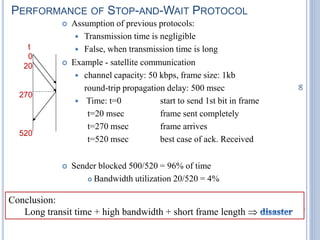
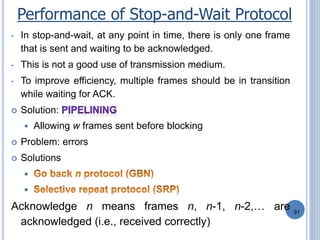
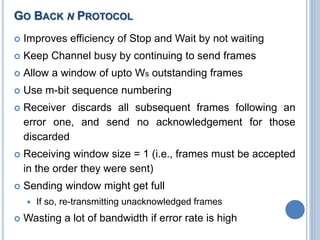
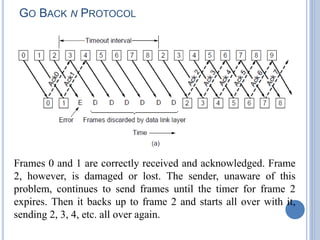
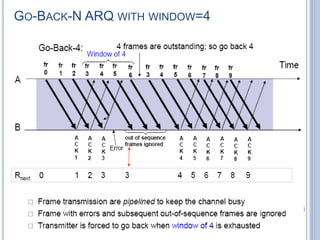
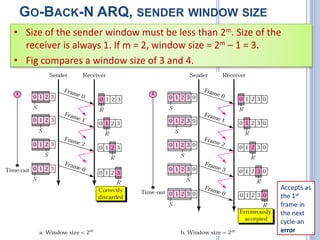
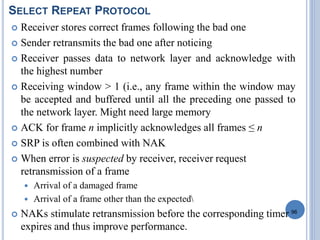
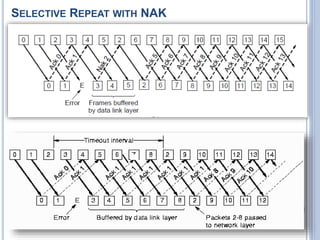
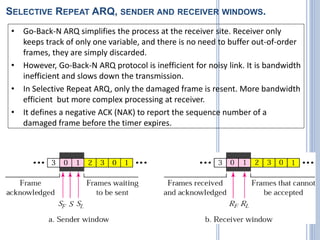
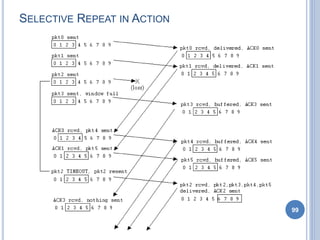
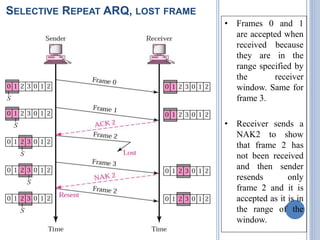
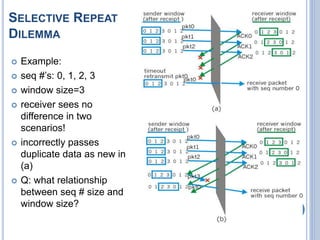
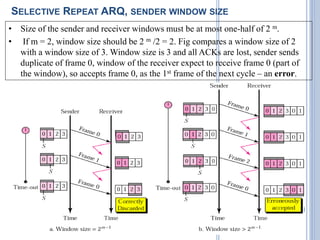
2. Error control uses acknowledgements, timers, and sequence numbers to ensure reliable delivery of frames. Framing groups bits into frames using techniques like bit stuffing. Flow control regulates data flow between sender and receiver.
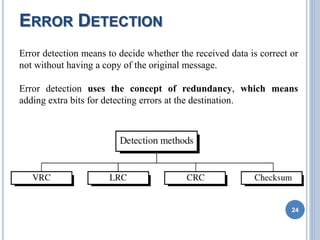
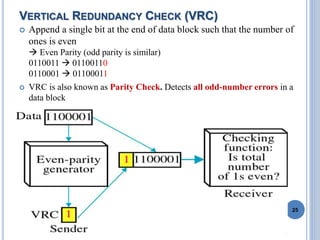
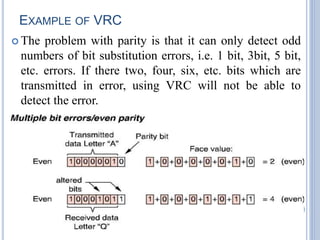
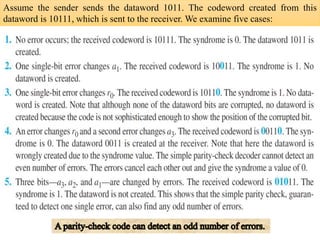
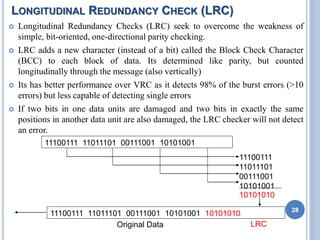
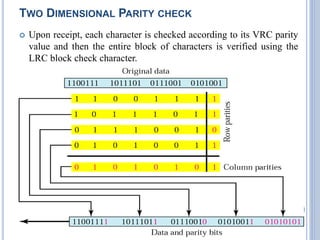
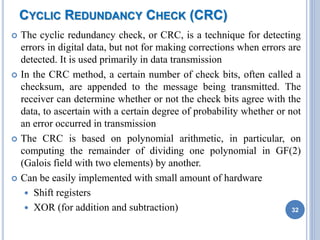
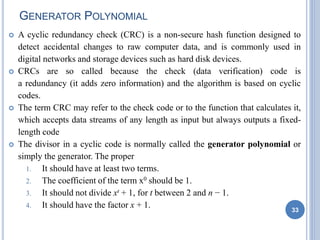
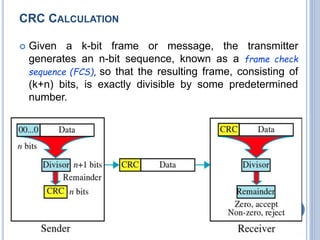
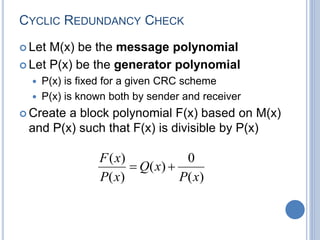
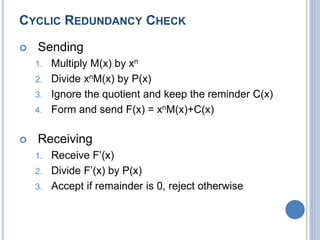
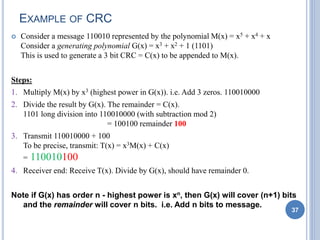
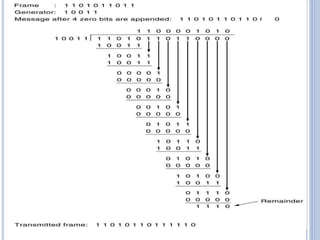
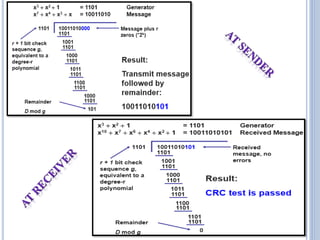
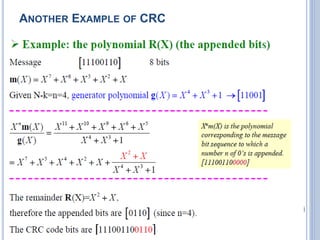
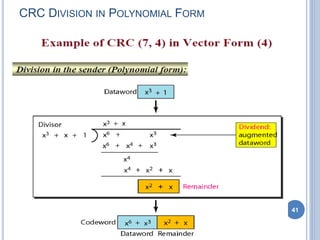
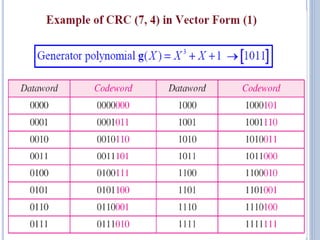
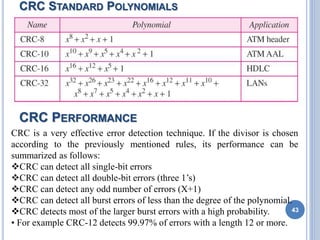
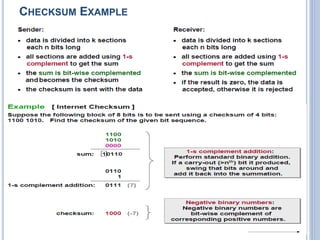
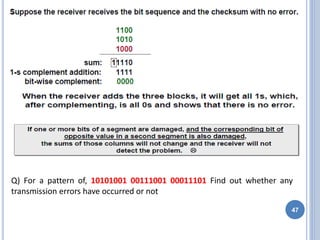
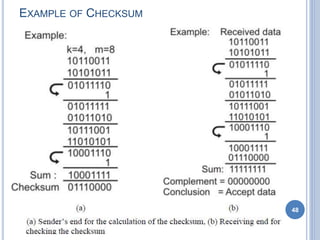
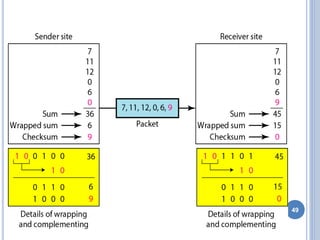
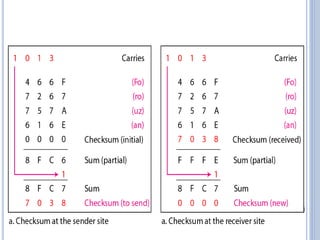
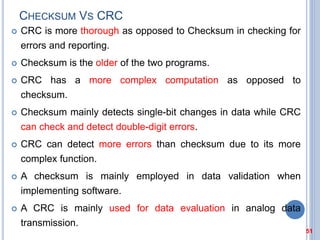
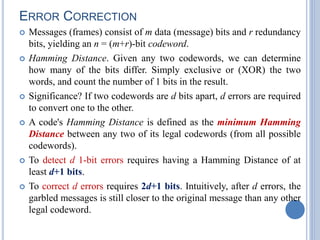
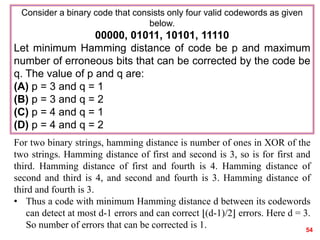
3. Cyclic redundancy checks (CRCs) are commonly used for error detection. A CRC calculates a checksum by dividing the data by a fixed generator polynomial, allowing errors to be detected on receipt.