Fisheries and Oceans Canada:
Offsets and the Fisheries Protection Program

Presentation for Biodiversity Offsets in Canada
Institute of the Environment, University of Ottawa
1
February 13-14, 2014
The Fisheries Act
• New Fisheries Protection
Provisions:
• Purpose of decision-making to
provide for sustainability and
ongoing productivity of fisheries
• Prohibition against causing serious
harm to fish that are part of or
support a commercial, recreational
or Aboriginal fishery
• Framework for decision-making
3
New national policy on fisheries protection
• Policy goal: provide for
sustainability and ongoing
productivity of fisheries
• discusses key elements of the
Fisheries Protection Provisions
• interprets “serious harm to fish” and
the scope of application
• describes the factors to be
considered prior to authorizing
projects that cause serious harm to
fish
4
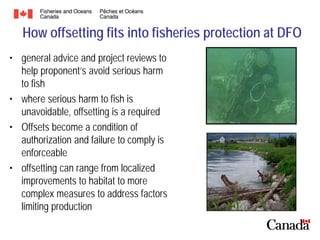
How offsetting fits into fisheries protection at DFO
• general advice and project reviews to
help proponent’s avoid serious harm
to fish
• where serious harm to fish is
unavoidable, offsetting is a required
• Offsets become a condition of
authorization and failure to comply is
enforceable
• offsetting can range from localized
improvements to habitat to more
complex measures to address factors
limiting production
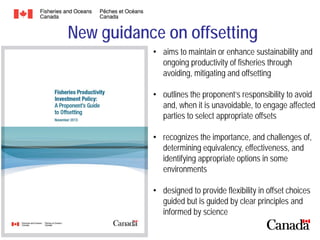
New guidance on offsetting
• aims to maintain or enhance sustainability and
ongoing productivity of fisheries through
avoiding, mitigating and offsetting
• outlines the proponent’s responsibility to avoid
and, when it is unavoidable, to engage affected
parties to select appropriate offsets
• recognizes the importance, and challenges of,
determining equivalency, effectiveness, and
identifying appropriate options in some
environments
• designed to provide flexibility in offset choices
guided but is guided by clear principles and
informed by science
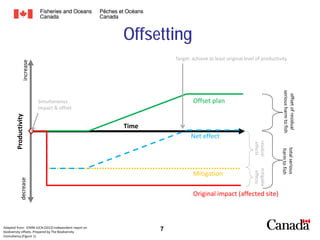
Offsetting
increase

Target: achieve at least original level of productivity

Net effect

decrease

mitigable
effects

Mitigation

Original impact (affected site)

7

total serious
harm to fish

Productivity

Time
residual
effects

Adapted from: ICMM IUCN (2012) Independent report on
biodiversity offsets. Prepared by The Biodiversity
Consultancy.(Figure 1).

offset of residual
serious harm to fish

Offset plan

Simultaneous
impact & offset
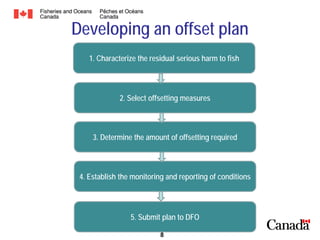
Developing an offset plan
1. Characterize the residual serious harm to fish

2. Select offsetting measures

3. Determine the amount of offsetting required

4. Establish the monitoring and reporting of conditions

5. Submit plan to DFO
8
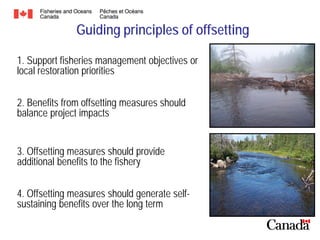
Guiding principles of offsetting
1. Support fisheries management objectives or
local restoration priorities
2. Benefits from offsetting measures should
balance project impacts
3. Offsetting measures should provide
additional benefits to the fishery
4. Offsetting measures should generate selfsustaining benefits over the long term
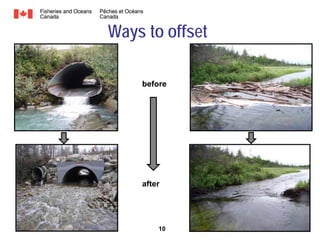
Ways to offset
before

after

10
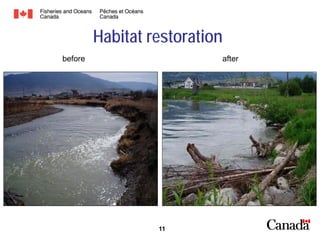
Habitat restoration
before

after

11
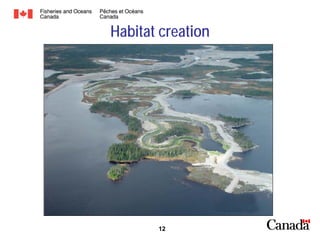
Habitat creation

12
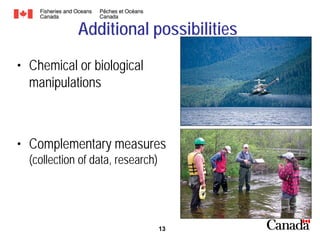
Additional possibilities
• Chemical or biological
manipulations

• Complementary measures
(collection of data, research)

13
Summary
• The Fisheries Act and associated policies have
provided an opportunity to revise the way DFO
thinks about offsetting
• The emphasis is on outcomes that maintain or
enhance fisheries productivity
• Development of more detailed guidance is ongoing
with continued collaboration from scientists,
regulatory partners and stakeholders
14
Thank you
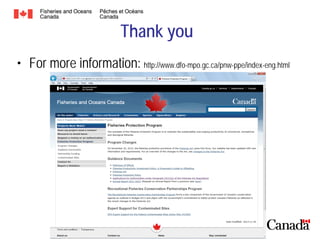
• For more information: http://www.dfo-mpo.gc.ca/pnw-ppe/index-eng.html

15

Fisheries and Oceans Canada: Offsets and the Fisheries Protection Program

  • 1.
    Fisheries and OceansCanada: Offsets and the Fisheries Protection Program Presentation for Biodiversity Offsets in Canada Institute of the Environment, University of Ottawa 1 February 13-14, 2014
  • 2.
    The Fisheries Act •New Fisheries Protection Provisions: • Purpose of decision-making to provide for sustainability and ongoing productivity of fisheries • Prohibition against causing serious harm to fish that are part of or support a commercial, recreational or Aboriginal fishery • Framework for decision-making 3
  • 3.
    New national policyon fisheries protection • Policy goal: provide for sustainability and ongoing productivity of fisheries • discusses key elements of the Fisheries Protection Provisions • interprets “serious harm to fish” and the scope of application • describes the factors to be considered prior to authorizing projects that cause serious harm to fish 4
  • 4.
    How offsetting fitsinto fisheries protection at DFO • general advice and project reviews to help proponent’s avoid serious harm to fish • where serious harm to fish is unavoidable, offsetting is a required • Offsets become a condition of authorization and failure to comply is enforceable • offsetting can range from localized improvements to habitat to more complex measures to address factors limiting production
  • 5.
    New guidance onoffsetting • aims to maintain or enhance sustainability and ongoing productivity of fisheries through avoiding, mitigating and offsetting • outlines the proponent’s responsibility to avoid and, when it is unavoidable, to engage affected parties to select appropriate offsets • recognizes the importance, and challenges of, determining equivalency, effectiveness, and identifying appropriate options in some environments • designed to provide flexibility in offset choices guided but is guided by clear principles and informed by science
  • 6.
    Offsetting increase Target: achieve atleast original level of productivity Net effect decrease mitigable effects Mitigation Original impact (affected site) 7 total serious harm to fish Productivity Time residual effects Adapted from: ICMM IUCN (2012) Independent report on biodiversity offsets. Prepared by The Biodiversity Consultancy.(Figure 1). offset of residual serious harm to fish Offset plan Simultaneous impact & offset
  • 7.
    Developing an offsetplan 1. Characterize the residual serious harm to fish 2. Select offsetting measures 3. Determine the amount of offsetting required 4. Establish the monitoring and reporting of conditions 5. Submit plan to DFO 8
  • 8.
    Guiding principles ofoffsetting 1. Support fisheries management objectives or local restoration priorities 2. Benefits from offsetting measures should balance project impacts 3. Offsetting measures should provide additional benefits to the fishery 4. Offsetting measures should generate selfsustaining benefits over the long term
  • 9.
  • 10.
  • 11.
  • 12.
    Additional possibilities • Chemicalor biological manipulations • Complementary measures (collection of data, research) 13
  • 13.
    Summary • The FisheriesAct and associated policies have provided an opportunity to revise the way DFO thinks about offsetting • The emphasis is on outcomes that maintain or enhance fisheries productivity • Development of more detailed guidance is ongoing with continued collaboration from scientists, regulatory partners and stakeholders 14
  • 14.
    Thank you • Formore information: http://www.dfo-mpo.gc.ca/pnw-ppe/index-eng.html 15