Learning Outcomes
1. Describethe concept of stakeholders and identify the stakeholder
groups relevant to an organization
2. Discuss and be able to apply the macro-business-environment
model to an industry or emerging technology
3. Explain other key terms related to this chapter including:
entrepreneur; profit; revenue
3.
Analyzing Apple’s Success
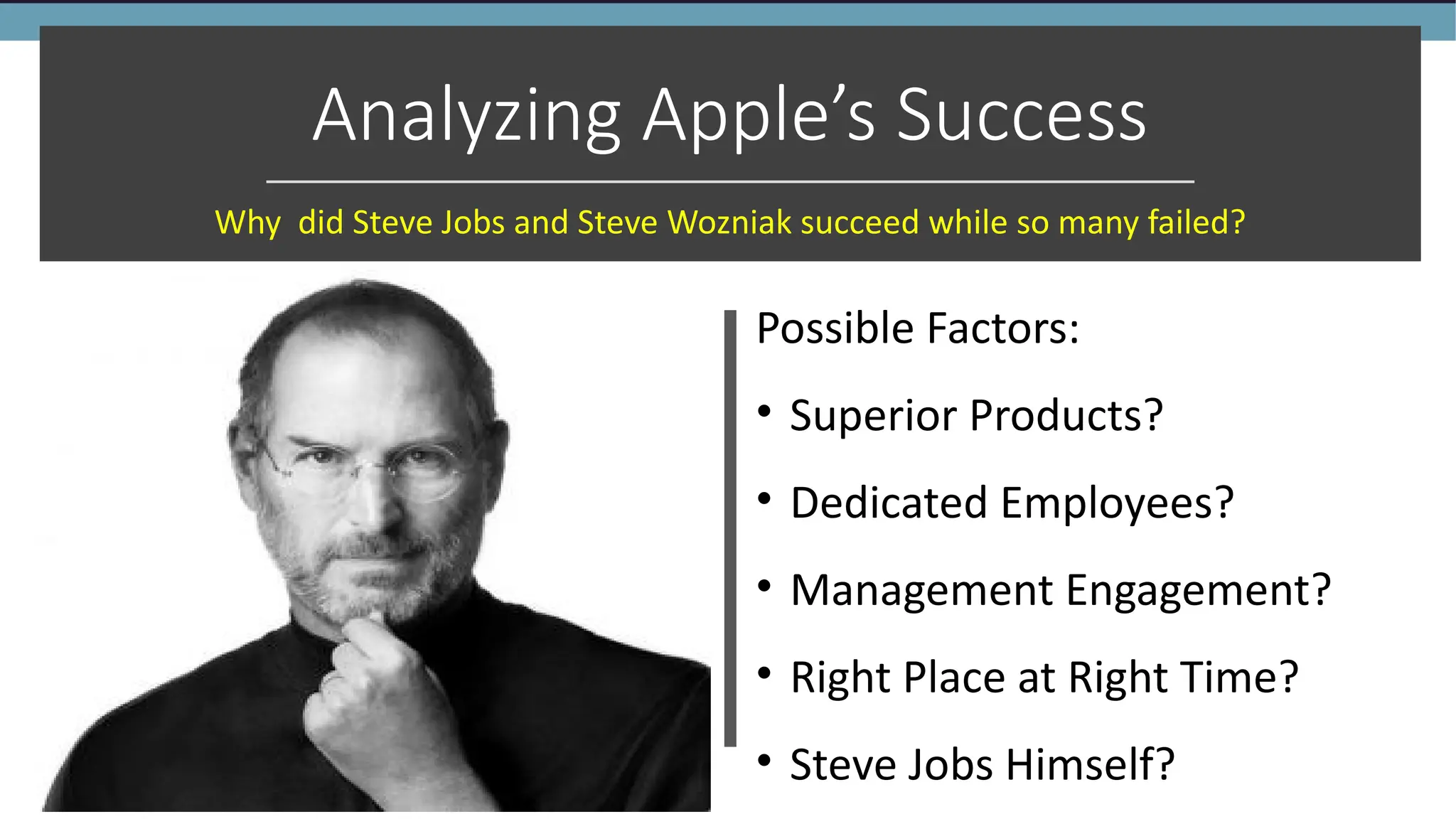
Whydid Steve Jobs and Steve Wozniak succeed while so many failed?
Possible Factors:
• Superior Products?
• Dedicated Employees?
• Management Engagement?
• Right Place at Right Time?
• Steve Jobs Himself?
4.
Profit: Who isthe Recipient?
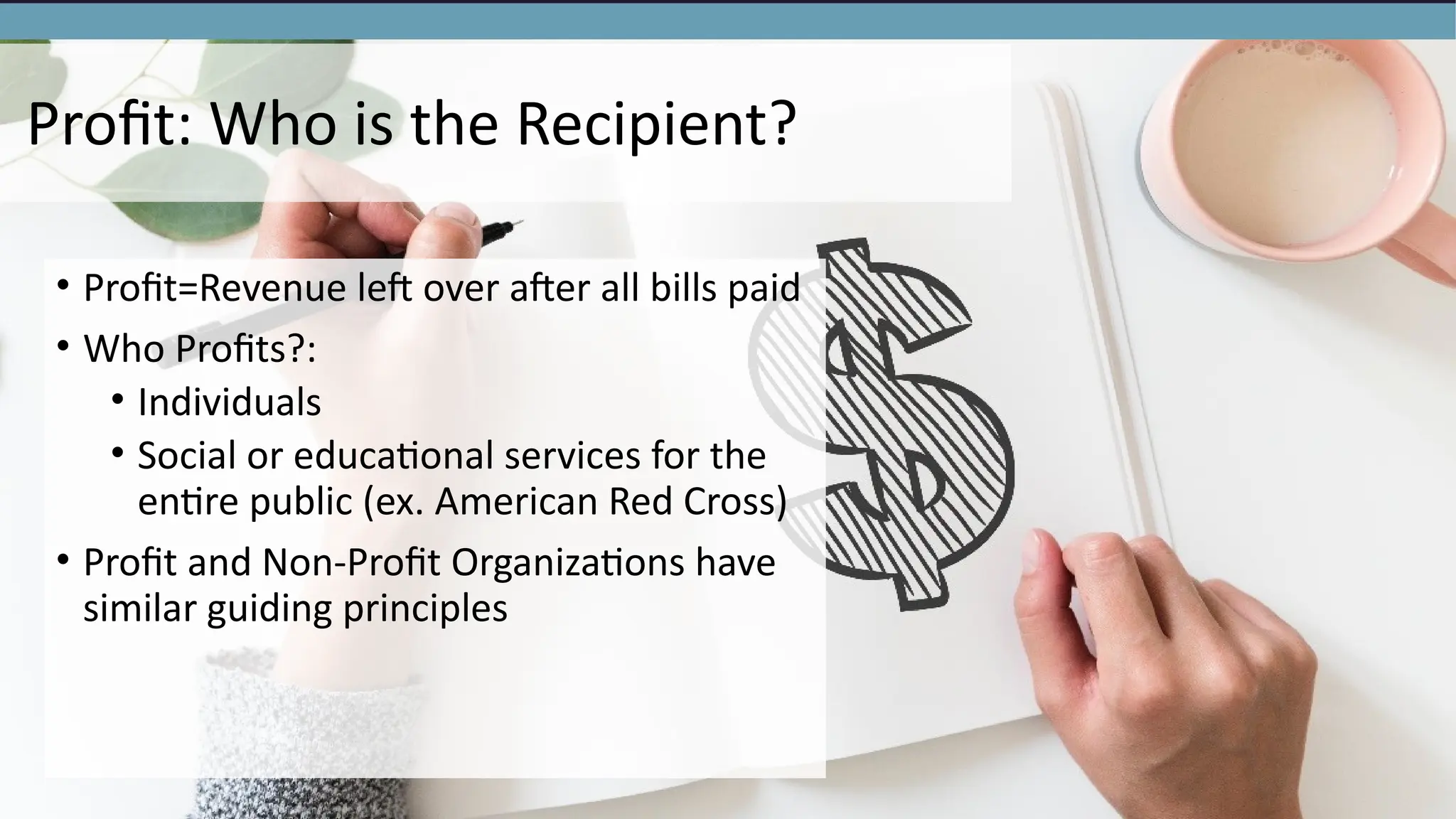
• Profit=Revenue left over after all bills paid
• Who Profits?:
• Individuals
• Social or educational services for the
entire public (ex. American Red Cross)
• Profit and Non-Profit Organizations have
similar guiding principles
5.
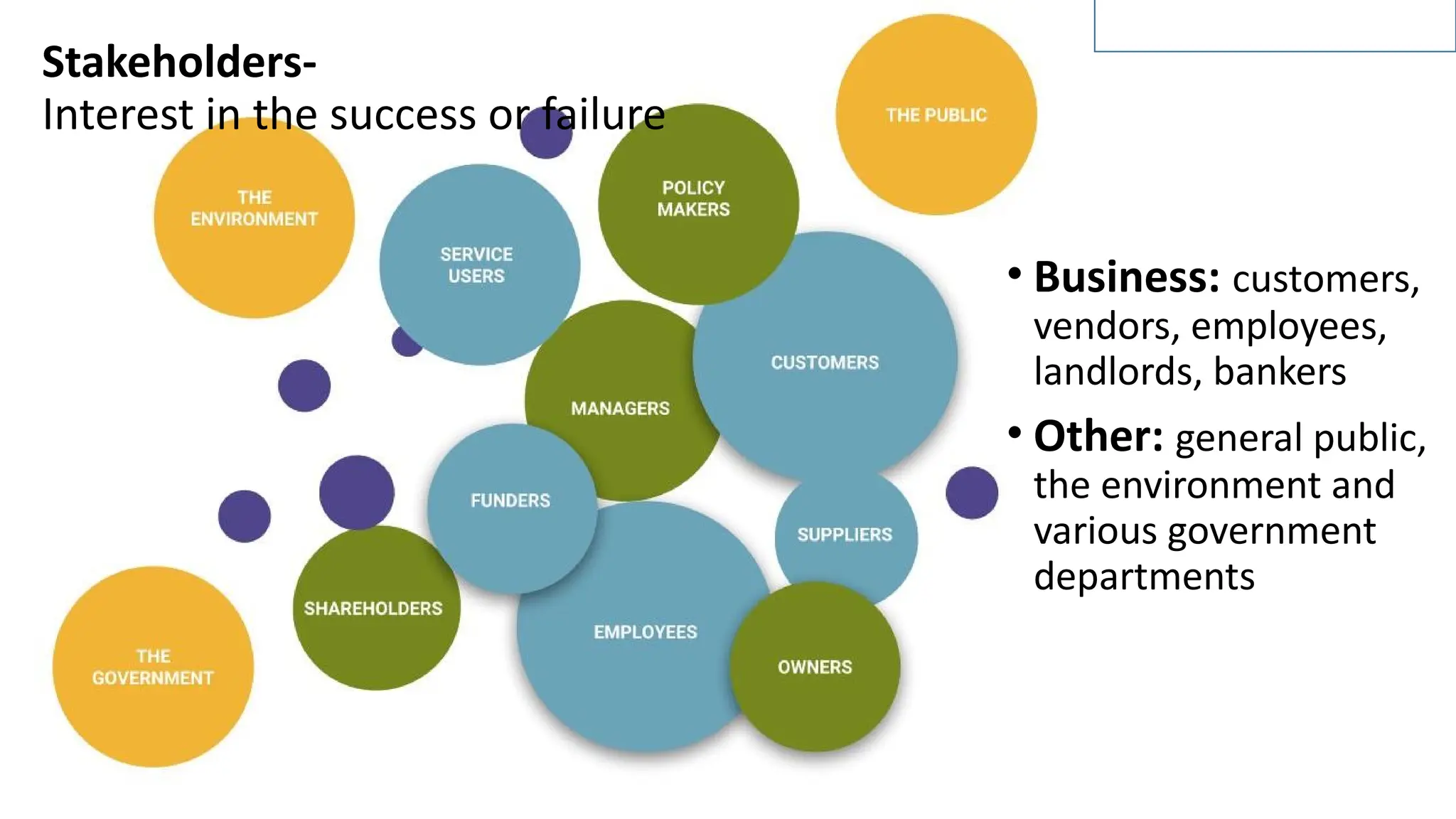
Stakeholders-
Interest in thesuccess or failure
• Business: customers,
vendors, employees,
landlords, bankers
• Other: general public,
the environment and
various government
departments
6.
1. Human Resources
2.Operations
3. Marketing
4. Accounting
5. Finance
6. Information Technology
Functional Areas of Business
7.
Functional Areas ofBusiness-
Human Resources
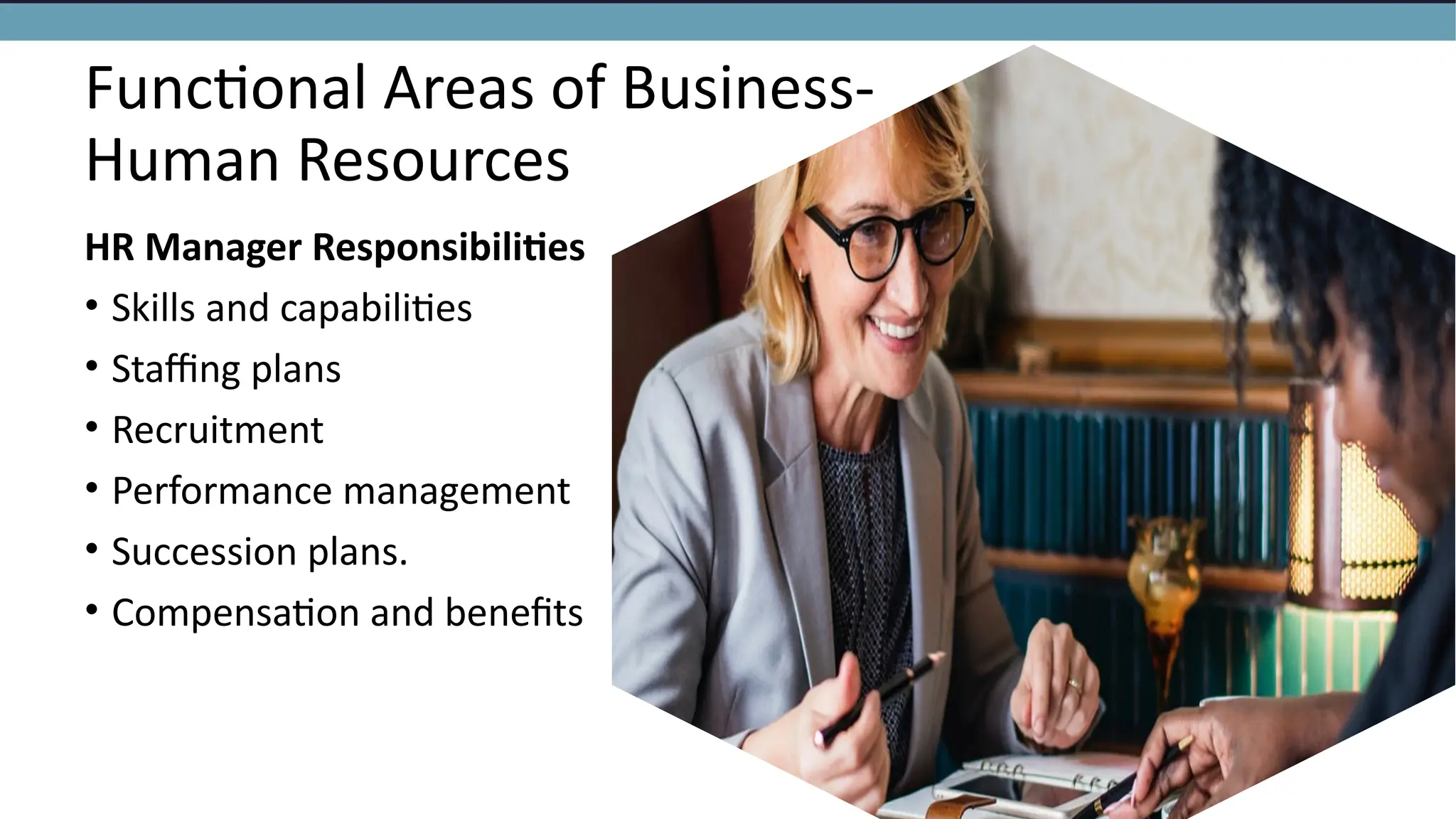
HR Manager Responsibilities
• Skills and capabilities
• Staffing plans
• Recruitment
• Performance management
• Succession plans.
• Compensation and benefits
8.
Functional Areas ofBusiness
Operations
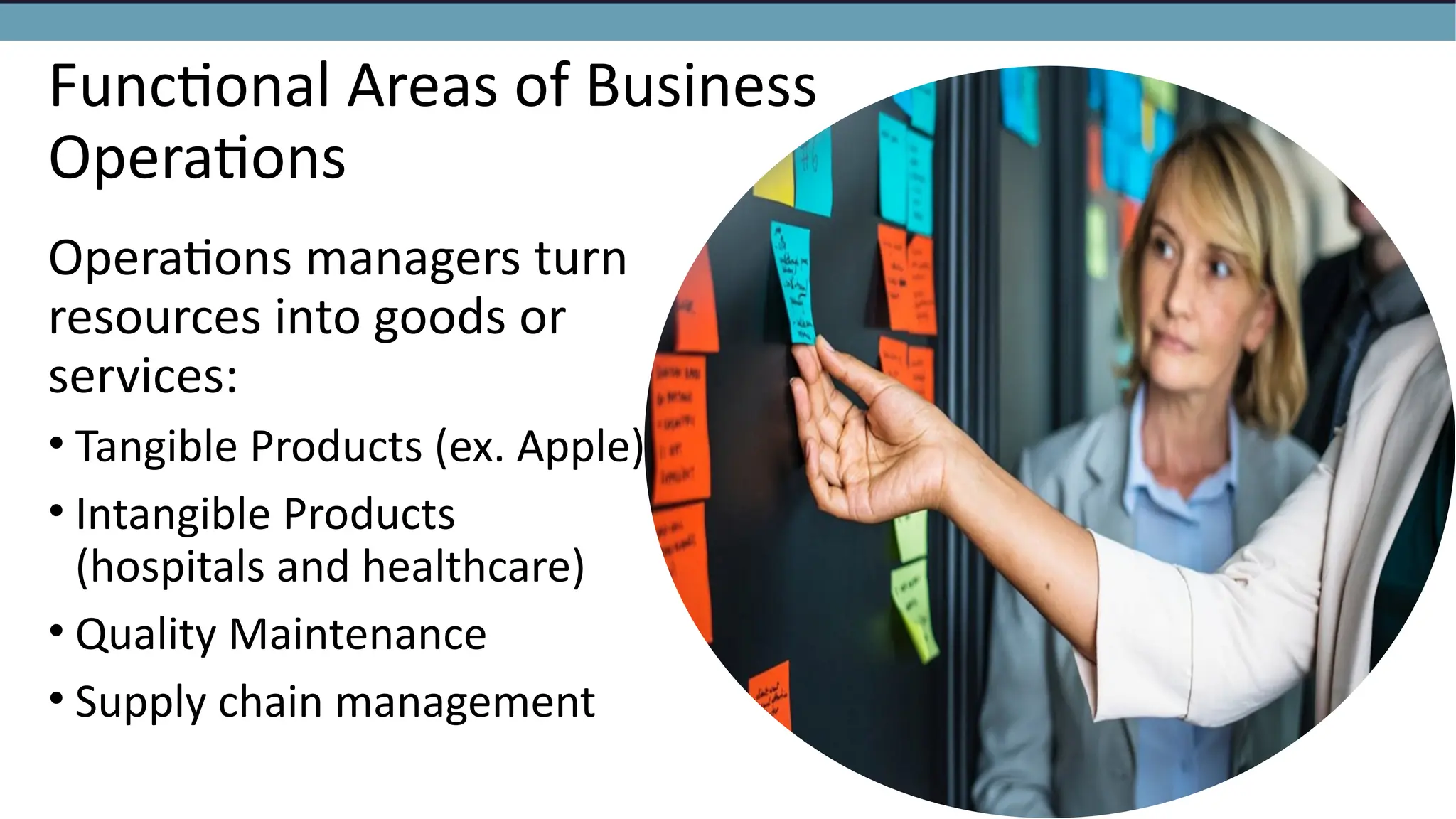
Operations managers turn
resources into goods or
services:
• Tangible Products (ex. Apple)
• Intangible Products
(hospitals and healthcare)
• Quality Maintenance
• Supply chain management
9.
Functional Areas ofBusiness-
Marketing
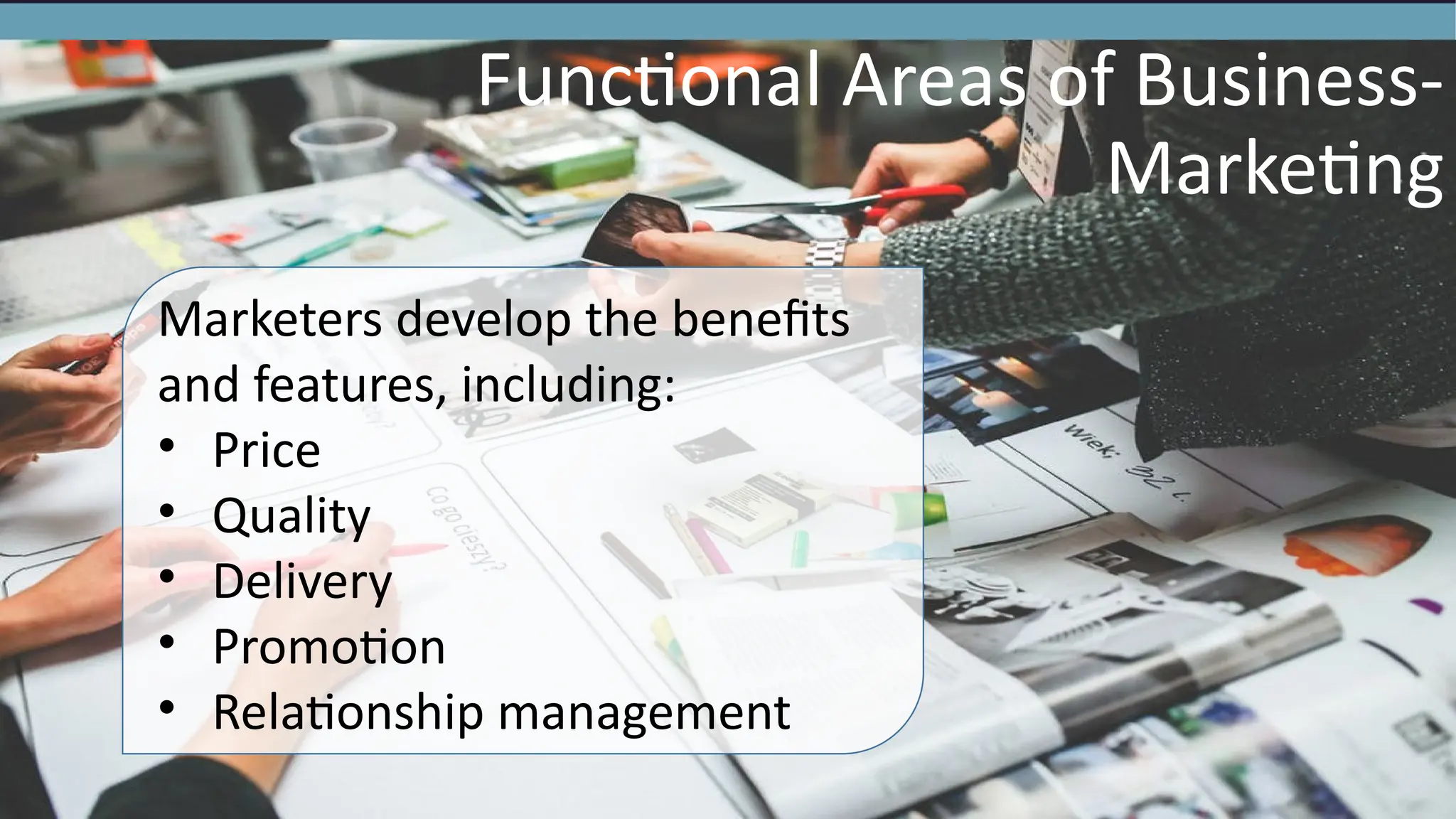
Marketers develop the benefits
and features, including:
• Price
• Quality
• Delivery
• Promotion
• Relationship management
10.
Functional Areas ofBusiness-
Accounting
What Accountants Do?
• Measure, Summarize, and Communicate
Financial & Managerial Info
• Advise on Financial Matters
Two Fields of Accounting:
• Financial
• Managerial
11.
Functional Areas ofBusiness-
Finance
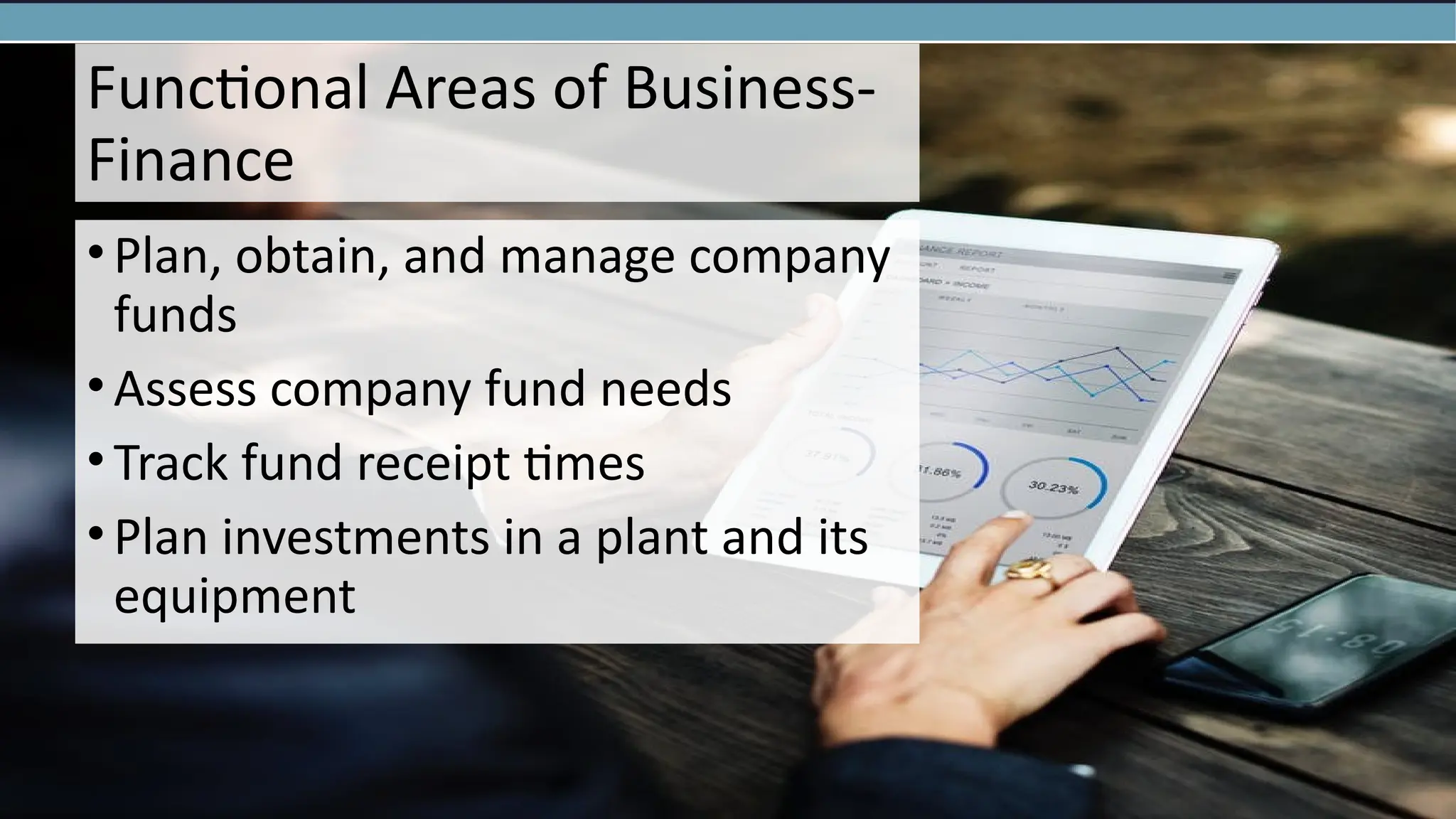
•Plan, obtain, and manage company
funds
•Assess company fund needs
•Track fund receipt times
•Plan investments in a plant and its
equipment
12.
Functional Areas ofBusiness-
Information Technology
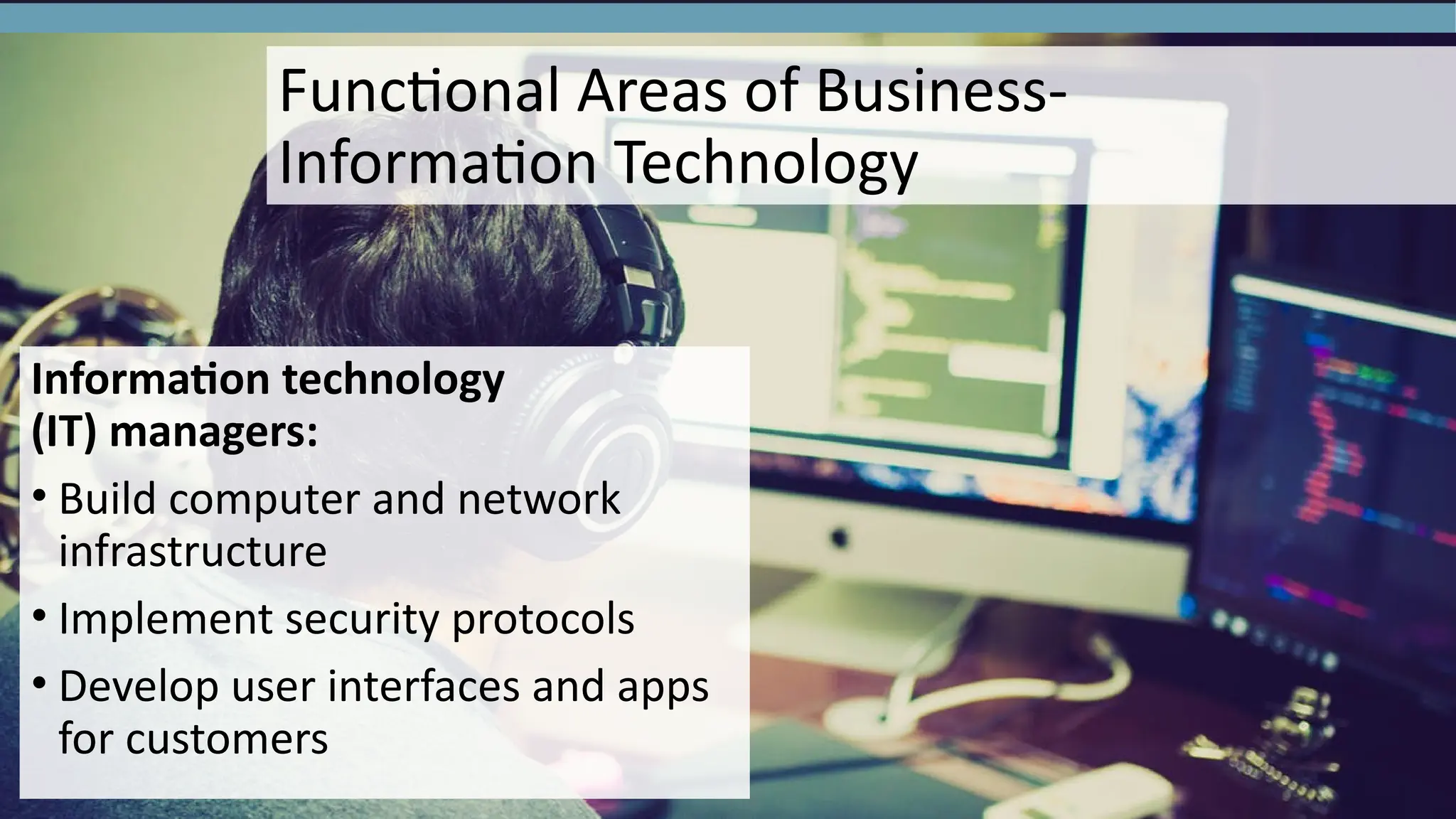
Information technology
(IT) managers:
• Build computer and network
infrastructure
• Implement security protocols
• Develop user interfaces and apps
for customers
13.
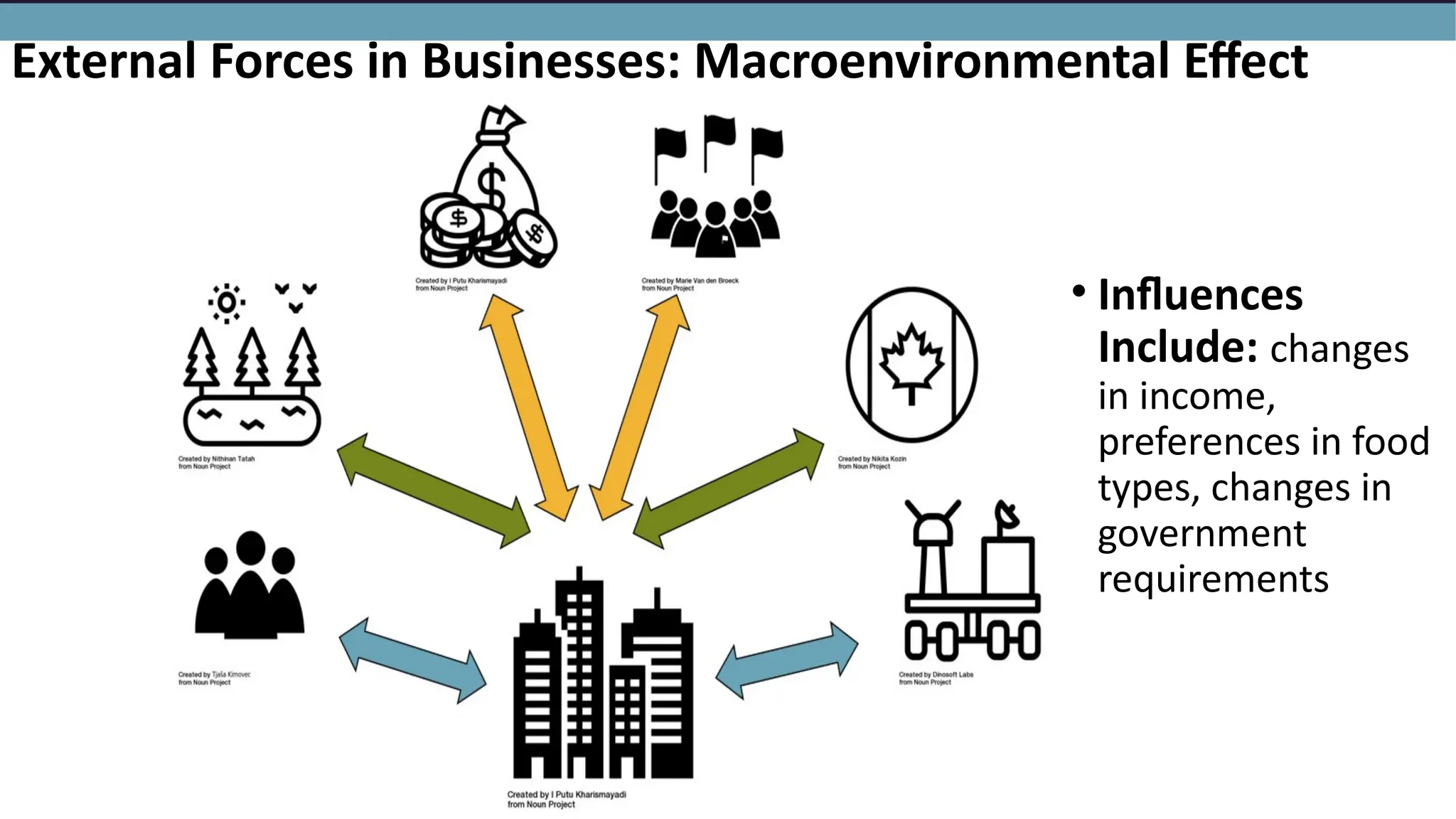
External Forces inBusinesses: Macroenvironmental Effect
• Influences
Include: changes
in income,
preferences in food
types, changes in
government
requirements
The Fundamentals ofBusiness slide decks by Obada Al-Dimashki, Alfonsina Chang, Deanna
Davies, Edward Perry, Zachary Russell, and Robin Yap are licensed under a
Creative Commons Attribution-ShareAlike 4.0 International License, except where otherwise
noted.
16.
This slide deckwas created with the support of eCampusOntario as
part of the Open at Scale Business project.
eCampusOntario is a not-for-profit corporation funded by the
Government of Ontario.
Funded by
Editor's Notes
#2 See online at https://ecampusontario.pressbooks.pub/businessfuncdn/chapter/foundations-of-business/
Learning Outcomes
Describe the concept of stakeholders and identify the stakeholder groups relevant to an organization
Discuss and be able to apply the macro-business-environment model to an industry or emerging technology
Explain other key terms related to this chapter including: entrepreneur; profit; revenue
#3 See online at https://ecampusontario.pressbooks.pub/businessfuncdn/chapter/foundations-of-business/
Did you ever wonder why Apple flourished while so many other young companies failed? There are many possible scenarios:
Apple came out with superior products: Apple I and II, the Macintosh, or more recently its wildly popular iPod, iPhone, and iPad
Amazingly dedicated employees
Management’s wiliness to take calculated risks
Apple being in the market at the right place at the right time.
Steve Jobs himself:
Previous experience at Apple
Experience at Atari
Experience at Hewlett-Packard
Unprecedented drive and hard line reputation with staff
Image by segagman licensed CC by Flickr
#4 See online at https://ecampusontario.pressbooks.pub/businessfuncdn/chapter/foundations-of-business/
Who profits in a business?
For profit:
Individuals: Steve Jobs and Steve Wozniak
Banks
Service companies: hotels, airlines, law firms, movie theaters, and hospitals
Goods and Services: car dealerships
Not for Profit (Nonprofit): United Way of America, Habitat for Humanity, the Boys and Girls Clubs, the Sierra Club, the American Red Cross
Photo by rawpixel.com from Pexels
#5 See online at https://ecampusontario.pressbooks.pub/businessfuncdn/chapter/foundations-of-business/
There are a variety of stakeholders in every business.
They include:
Business: customers, vendors, employees, landlords, bankers
Other: general public, the environment and various government departments
Not every stakeholder sees the business the same way. Pleasing stakeholders is always a big challenge.
Image:
https://ecampusontario.pressbooks.pub/businessfuncdn/chapter/foundations-of-business/
#6 See online at https://ecampusontario.pressbooks.pub/businessfuncdn/chapter/foundations-of-business/
There are six fundamental areas of business. They will be discussed in the next slides.
Human Resources
Operations
Marketing
Accounting
Finance
Information Technology
Photo by Trang Doan from Pexels
#7 See online at https://ecampusontario.pressbooks.pub/businessfuncdn/chapter/foundations-of-business/
Human resource managers are responsible for monitoring and implementing a variety of functionalities:
Skills and capabilities necessary to run the business
Staffing plans
Recruit and select new employees
Monitor the performance management process
Develop succession plans.
Develop standards for compensation and benefits
Photo by rawpixel.com from Pexels
#8 See online at https://ecampusontario.pressbooks.pub/businessfuncdn/chapter/foundations-of-business/
All companies must convert resources (labor, materials, money, information, and so forth) into goods or services. Some companies, such as Apple, convert resources into tangible products—Macs, iPhones, etc. Others, such as hospitals, convert resources into intangible products — e.g., health care. The person who designs and oversees the transformation of resources into goods or services is called an operations manager. This individual is also responsible for ensuring that products are of high quality. In many organizations, operations management includes managing the supply chain which controls the delivery of raw materials and the distribution of finished goods.
Photo by rawpixel.com from Pexels
#9 See online at https://ecampusontario.pressbooks.pub/businessfuncdn/chapter/foundations-of-business/
Marketing consists of everything that a company does to identify customers’ needs (i.e. market research) and design products to meet those needs. Marketers develop the benefits and features of products, including price and quality. They also decide on the best method of delivering products and the best means of promoting them to attract and keep customers. They manage relationships with customers and make them aware of the organization’s desire and ability to satisfy their needs
Photo by Kaboompics .com from Pexels
#10 See online at https://ecampusontario.pressbooks.pub/businessfuncdn/chapter/foundations-of-business/
Accountants: measure, summarize, and communicate financial and managerial information and advise other managers on financial matters.
Two fields of accounting:
Financial accountants prepare financial statements to help users, both inside and outside the organization, assess the financial strength of the company.
Managerial accountants prepare information, such as reports on the cost of materials used in the production process, for internal use only.
Photo by Pixabay from Pexels
#11 See online at https://ecampusontario.pressbooks.pub/businessfuncdn/chapter/foundations-of-business/
Finance involves planning for, obtaining, and managing a company’s funds.
Financial managers address such questions as the following: How much money does the company need? How and where will it get the necessary money? How and when will it pay the money back? What investments should be made in plant and equipment?
Photo by rawpixel.com from Pexels
#12 See online at https://ecampusontario.pressbooks.pub/businessfuncdn/chapter/foundations-of-business/
Information technology (IT) managers are concerned with building computer and network infrastructure, implementing security protocols, and developing user interfaces and apps for customers.
High level of integration between the business's website or application and other departments within the business, such as finance, marketing and operations.
Build interfaces to send and receive information from other companies, including suppliers, logistics and shipping suppliers.
Photo by hitesh choudhary from Pexels
#13 See online at https://ecampusontario.pressbooks.pub/businessfuncdn/chapter/foundations-of-business/
External forces that drive business activities: macroeconomic in nature
Examples:
Food Industry: Taco Bell, McDonald’s
Food Standards: Canadian Food and Drug Inspection Agency
Food Calorie Count Requirements: The Ministry of Health and Long-Term Care
Good Corporate Citizenry: Eliminating Styrofoam containers
Image page 31 in text and https://ecampusontario.pressbooks.pub/businessfuncdn/chapter/foundations-of-business/